
Second Fattest Nation to Host 2016 World Road Cycling Championship

Cycling, Qatar, Environment, Fitness, Obesity, GulfEven though Qatar is the world’s second fattest nation, it will host four international sporting events in the next decade, including the 2016 World Road Cycling Championship and the 2022 World Cup.

With Sheikh Saoud bin Abdulrahman Al Thani at the helm, Qatar’s bid committee spent years fighting to host this prestigious cycling event for two reasons: first, Al Thani thinks the presence of ultra lean athletes from other countries will convince Qatari nationals that physical fitness is more fun than shisha and McDonalds, and second, the State wants to send the message that bicycles are better for the environment than cars.

In addition to the UCI Road World Cycling Championship in 2016, the Gulf nation with one of the highest carbon footprints and percentage of fat people will host the 2014 FINA World Swimming Championship, the IHF World Handball Championship (for men only) in 2015, and then the much-discussed FIFA World Cup in 2022.

Al Thani is on a fat-melting, emissions-slashing crusade and he’s using international sporting events to spread his vision.

“Apart from the fact that Qatar will be the first country in the Middle East to host the Road World Championships, the most important aspect of the event is the legacy it will create in terms of physical fitness and awareness about protecting the environment,” Sheikh Saoud said.

In preparation for building a culture of cycling, the state has already starting building some bicycle lanes in Al Waab and near the airport, which doesn’t sound like the most exciting place to burn off calories and choke down soot.

And if Doha is anything like its Gulf cousin Abu Dhabi, cyclists better wear armor when they hit the roads.

Still, we can’t fault Qatar for striving, as part of its National Vision 2030, to build a healthier nation, and for the sake of humanity and the environment, we hope this worldly flurry of athleticism will have its intended effect.

:: The Peninsula Qatar

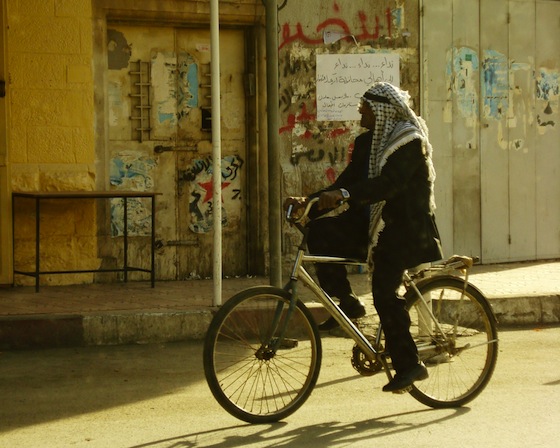
Image credit: Arab Man on Bicycle, Shutterstock
 

Tafline Laylin
Tafline Laylinhttp://www.greenprophet.com
As a tour leader who led “eco-friendly” camping trips throughout North America, Tafline soon realized that she was instead leaving behind a trail of gas fumes, plastic bottles and Pringles. In fact, wherever she traveled – whether it was Viet Nam or South Africa or England – it became clear how inefficiently the mandate to re-think our consumer culture is reaching the general public. Born in Iran, raised in South Africa and the United States, she currently splits her time between Africa and the Middle East. Tafline can be reached at tafline (at) greenprophet (dot) com.

Read More

TRENDING

Self-repairing contact lenses and desalination membranes that fix themselves?

Could the humble contact lens become a sustainability breakthrough? Researchers in Korea have developed a self-healing hydrogel lens that repairs scratches with just one hour of UV light exposure. Beyond reducing waste from disposable contacts, the technology could one day help extend the life of solar panels, water filtration systems, and other plastic-based products.

Collecting kinetic energy from roads; REPS turns traffic into a power plant

REPS announced a $23.6M equity financing round to scale...

Exploring Bangkok by electric bike with teenagers

With two teenagers in tow and four nights to spare, we decided to give Thailand’s capital the attention it deserved. My son had one request: he wanted to rent electric bikes. A friend of his had explored Japan this way, and he was convinced Bangkok would be just as exciting.

Baby teeth read like tree rings paint a picture of toxins in early life

A new study from the Icahn School of Medicine at Mount Sinai in New York offers a striking insight into how the environments we are born into can quietly shape our brains years later. By analyzing naturally shed baby teeth, the ones tucked under pillows for the tooth fairy, researchers have reconstructed a detailed timeline of exposure to environmental metals during pregnancy and early infancy.

Saving Gourmet Wild Plants For The Future

Think of truffles, a gourmet wild food. The European...

Yerukim Forms a New Green Economy Where the Money is Really Green

The Yerukim members who pick up the recyclables get to keep the monetary reward, the public earns "green" bills that can be used in shops, and business owners get to be associated with environmentalism.

Choosing Riyadh over Dubai? What Investors Should Know

Saudi Arabia is deploying capital at unmatched scale to catalyze tourism and advanced industry while rewiring its power-and-water backbone. The investable frontier is widening—especially in renewables, grid storage, water efficiency/desal retrofits, and hospitality operating platforms. Prudent investors will insist on phased delivery, enforceable KPIs (energy, water, biodiversity), and RHQ/zone compliance—while pricing political-economy and reputational risks alongside growth upside.

Sell your cooking oil for biodiesel money

Want to make money on old french fry oil? Sell it.

Qatar Alternative Energy Summit Pairs Investors And Innovators

Alternative energy investors and innovators can meet n' greet in Doha, Qatar March 16 and 17.

Here’s How To Implement The Four Pillars Of Employee Engagement

If you throw a party for your work team and they are vegans, don't make it a barbecue. Know the sustainability values of your team to boost moral and retain good people.

Locals From Rishon Fight IKEA

Big Box stores are a pretty new concept in Israel, and thank God that not every Israeli city wants them in their backyard. A word from someone who has see the beautiful farmland around her hometown Newmarket, Ontario stripped and converted into vulgar strip malls of big box shops: they have no place in a healthy and sustainable town or city.

The Jewish National Fund Meets An Inconvenient Truth

According to the JNF, it has transformed thousands of acres of barren land into green forests in Israel. They state that each person emits about 23 tons of carbon per year, estimating that each tree planted can absorb one ton of carbon in its lifetime. That's a whole lot of trees you'd need to be planting. Could so many fit in Israel?

How to quiet noise from construction in your office

Streets need to be resurfaced in New York but the humming and grinding noise is unsettling. Noise is environmental pollution. 

Popular Categories