Poverty Group Objects to Clean Technology Fund in Morocco

Concentrated-Solar-Power

Big Solar drives a wedge between the need to abate climate change and end poverty, says The World Development Movement.

Claiming the the World Bank’s Clean Technology Fund is supposed to be used to alleviate poverty, a British group is objecting to the use of World Bank funds in Morocco to deploy a Desertec solar project in Morocco that will export power to Europe.

The Moroccan Agency for Solar Energy (MASEN) is expected to award the contract for the first phase of the 500 MW Ouarzazate solar project within weeks to one of three energy developers from outside Morocco.

MASEN intends to develop four 500 MW solar projects by 2020, which would allow it to source nearly half of its electricity from renewables, as well as become a net exporter of energy to Europe thanks to its interconnector stretching to Spain. In anticipation of becoming a renewables powerhouse, Morocco doubled the capacity of the interconnector to 400MW in 2007.

After accepting bids from 200 companies, Spain’s Abesinsa ICI  Abengoa’s industrial engineering and construction unit, Italy’s Enel SpA  and Saudi-owned ACWA Power International are in the lead to develop the project. While Abengoa has developed projects like this before, Enel has only 230 MW in solar development.

Major industrial giants like Siemens, Mitsubishi, Daewoo, Lockheed Martin and Sener were shut out.

The World Development Movement claims that using Clean Technology Fund money for the solar project would be a misuse of funds, as it claims that the program is intended partly to reduce poverty, and “to prioritise projects that tackle poverty and aid transition to a low carbon economy, instead of subsidising multinational companies.”

But the objective of the Clean Technology Fund is to invest in clean energy projects in developing nations to cut greenhouse gas emissions of the recipient country over the long term, according to WRI.

As solar projects go mainstream, they are increasingly developed by very large engineering firms. Saudi  Arabia has a $109 billion solar plan to power one third of its country, for example. This will not be developed by small companies.

According to the World Bank [PDF] the bids must support local manufacturers within a regulatory framework that requires investment locally, where bids must specify local content clauses, including technical education and R&D.

Morocco is ideally situated for hosting this giant solar project for the Desertec plan to power Europe from the Sahara, because it has the solar insolation, the strong government support and existing grid connections with ALgeria and Spain.

But another key reason that the World Bank selected Morocco for funding was the existence of a local manufacturing base with already existing industries, with the ability to supply the project from the most basic raw materials through to the final metal structures, electric and electronic equipment.

As the North African deserts becomes a hub for CSP solar power, driven by Desertec, it will increasingly develop and hone an expertise in solar project development that will add jobs as a thriving clean technology sector develops in the region.

It would be a pity if changing the emphasis to poverty reduction within the Clean Technology Fund program led to weakening its far more far-reaching good it can do in reducing greenhouse gas emissions by helping the developing world hurdle the pollutants that threaten us all, and most particularly, the poor, by developing a solar power industry supply chain in Morocco.

Related:
Morocco to Build Cars in Zero Carbon Factory
Interview: SolarReserve For the MENA Region?
Egypt to Test Unique CSP Solar/Biomass Hybrid Plant

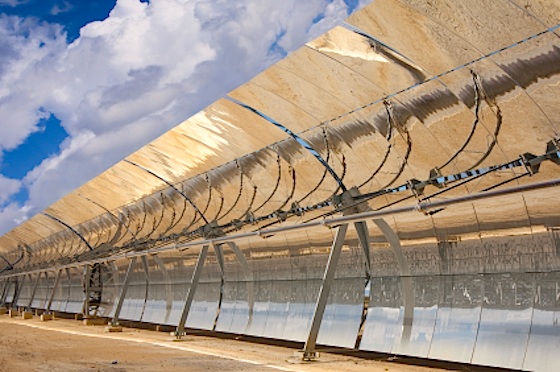
Image of solar thermal from Abengoa

Read More

1 COMMENT

TRENDING

Essaouira Offshore Wind and what it means for surfers, music festivals and the wild

Morocco’s proposed 1,000 MW offshore wind project near Essaouira promises climate leadership and renewable energy for this Magreb country, but along this stretch of Atlantic coast, wind is more than energy. The coastline is culture, economy, and identity.

Haman’s Fingers, A Moroccan Purim Specialty

There’s feasting at home on the night and the next day, and to make sure everyone gets good things to eat, families send out packages of treats to friends and neighbors. Traditional goodies are hamentaschen, and other treats like our chocolate nut clusters .

Atlas Mountain eco retreat at the Kasbah

Walking well-trodden mountain pathways, eating fresh local food, and learning about the transformative work embedded in the Kasbah’s approach to tourism has now been imparted to our children. We hope, in turn, these experiences will serve to inform their contributions in the world as they continue to grow. Don’t wait, Morocco is on everyone’s bucket list. Growth and change are inevitable. 

Arab agricultural land is on the brink

Across the Arab world, croplands face a perfect storm of stressors. Excessive fertilizers and pesticides erode soil ecology. Poor drainage and over-irrigation drive salinization, leaving fields crusted with salt. Rising temperatures, dwindling groundwater, and more frequent sand-and-dust storms—all amplified by climate change—compound the crisis.

Morocco loses half its wheat crop this year from drought

A prolonged drought in Morocco is causing serious problems...

Yerukim Forms a New Green Economy Where the Money is Really Green

The Yerukim members who pick up the recyclables get to keep the monetary reward, the public earns "green" bills that can be used in shops, and business owners get to be associated with environmentalism.

Choosing Riyadh over Dubai? What Investors Should Know

Saudi Arabia is deploying capital at unmatched scale to catalyze tourism and advanced industry while rewiring its power-and-water backbone. The investable frontier is widening—especially in renewables, grid storage, water efficiency/desal retrofits, and hospitality operating platforms. Prudent investors will insist on phased delivery, enforceable KPIs (energy, water, biodiversity), and RHQ/zone compliance—while pricing political-economy and reputational risks alongside growth upside.

Sell your cooking oil for biodiesel money

Want to make money on old french fry oil? Sell it.

Qatar Alternative Energy Summit Pairs Investors And Innovators

Alternative energy investors and innovators can meet n' greet in Doha, Qatar March 16 and 17.

Here’s How To Implement The Four Pillars Of Employee Engagement

If you throw a party for your work team and they are vegans, don't make it a barbecue. Know the sustainability values of your team to boost moral and retain good people.

Locals From Rishon Fight IKEA

Big Box stores are a pretty new concept in Israel, and thank God that not every Israeli city wants them in their backyard. A word from someone who has see the beautiful farmland around her hometown Newmarket, Ontario stripped and converted into vulgar strip malls of big box shops: they have no place in a healthy and sustainable town or city.

The Jewish National Fund Meets An Inconvenient Truth

According to the JNF, it has transformed thousands of acres of barren land into green forests in Israel. They state that each person emits about 23 tons of carbon per year, estimating that each tree planted can absorb one ton of carbon in its lifetime. That's a whole lot of trees you'd need to be planting. Could so many fit in Israel?

How to quiet noise from construction in your office

Streets need to be resurfaced in New York but the humming and grinding noise is unsettling. Noise is environmental pollution. 

Popular Categories