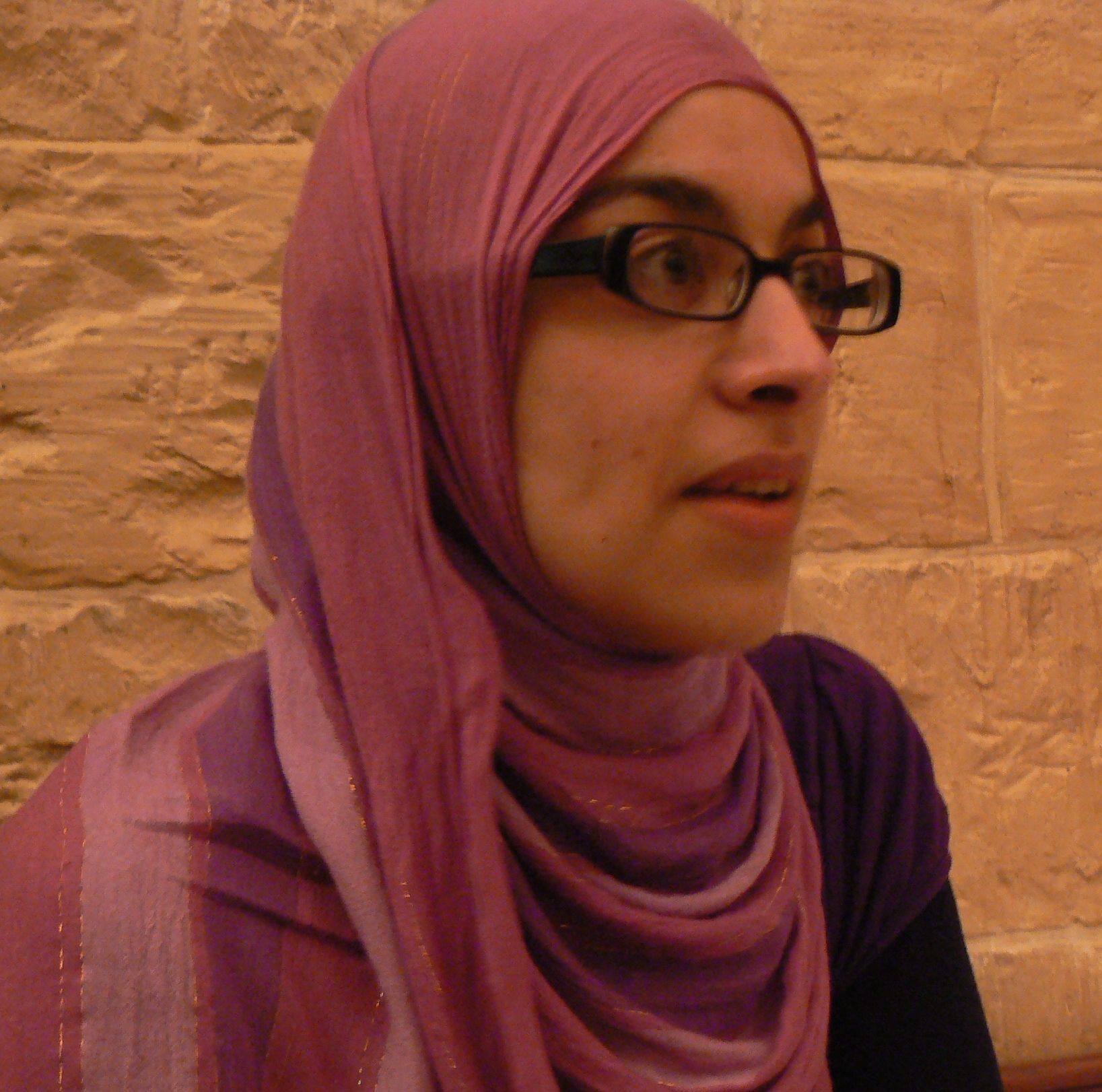
 We speak to Bashar Masri, the man behind Rawabi, which means “The Hills”, Palestine’s first planned and green city.
Since announcing plans to build Palestine’s first planned and green city back in 2008, the Rawabi project has faced its fair share of criticism. From political complications over using Jewish National Fund trees, concerns by environmentalists over the lack of water and waste-water management plans to threats by Israel to shut down access roads and boycotts– the project really has seen it all.
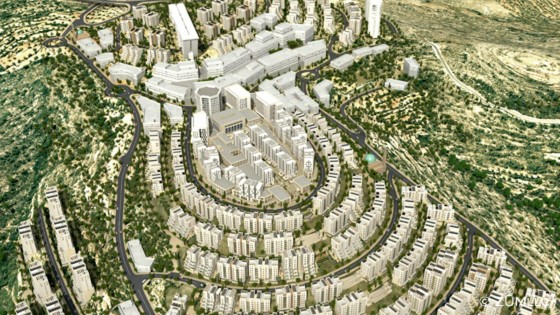
Rawabi (which means hills in Arabic) is an ambitious $800 million USD project which aims to build houses for up to 25,000 people in a location between Jerusalem and Nablus whilst respecting the environment. Despite these good intentions the Rawabi project does seems to pose more questions then it answer.
For example, how does it plan to navigate the political conflict between Israel and Palestine during construction? Does the Rawabi project really live up to its green credentials? And what do Palestinians think of the project? In a bid to get to the bottom of these questions we caught up with Bashar Masri, the man behind the Rawabi project to find out more.
Green Prophet: Why was it so important to champion environmental principles in the Rawabi project?
Masri: Rawabi is built to provide a sustainable place for Palestinians to live and work for generations. The environment here is very fragile, given the shortage of water and challenging topography, and already stressed by urban sprawl and massive illegal Israeli settlement expansion. We understand that if we stress the environment more, it will not be here for our children and grandchildren. Rawabi is pioneering new environmental principles that we hope will be implemented across Palestine and the region.
Green Prophet: As Palestine’s first planned city, you have had the opportunity to shape how the city of Rawabi will look. What are the main environmental features of Rawabi and their benefit to the planet and people?
We focused on proven green, liveable design during our two-year master plan process, executed by a team of both international and local urban planners. Rawabi is both walkable and has plenty of green space: over 40% of the city is dedicated to open, green spaces, including pocket gardens/communal courtyards in each neighbourhood. Ample stairways and neighbourhood planning ensure that despite the 45% topographical slope, Rawabi will be walkable. Rawabi will also be the first Palestinian city with bike paths, and will have the first large-scale public park in Palestine, filled with indigenous plants, walking trails, and ways to enjoy and experience nature.
All of Rawabi’s green areas will be irrigated with reclaimed water from the Rawabi Regional Waste Water Treatment Plant, which will also provide water for agriculture for the surrounding villages. Water is very expensive and often difficult for our local farmers to obtain, given political restrictions, so we are glad to be able to help the surrounding community. Rawabi will have comprehensive local and regional public transportation, including electric vehicles. We’re looking at other models that are being implemented around the world, including car or bike sharing, as well.
Green Prophet: The political environment that you are constructing Rawabi in is tough. In a recent incident you forced to uproot JNF trees and replace them with indigenous Palestinian olive trees. Is it difficult to always balance your green aspirations with the political values of Rawabi?
As a first point, all the trees being planted in Rawabi are in fact indigenous trees – the olive tree is not the only species of tree native to Palestine. Second, it is a completely impractical proposition to plant fruit bearing trees, like the olive tree, on community sidewalks or in public urban spaces. We try to take a charitable stance towards these critics, who appear to be motivated by nostalgia and sentiment, and have not considered the issue on the grounds of fact, logic or practicality.
As well, the unpredictable nature of the political situation does not change the importance of preserving the environment: Rawabi will prove that Palestinians are capable of protecting the environment, and will do so better than the residents of the settlements. Therefore, our green aspirations are actually intertwined with our political values – both are good for Palestine.
That said, building under occupation is the most difficult part of constructing Rawabi. We face a lot of circular, time-and resource-wasting political arguments. On a practical level, right now we are forced to use trucks – and therefore increase CO2 emissions – to bring in water, because both our road and water access are blocked at the political level by Israel. The demand for us to uproot trees was similarly distracting to our overall objectives. Both force us to allocate money to non-efficient uses that could be otherwise be dedicated to our efforts to make Rawabi more sustainable.
Green Prophet: Rawabi has faced criticism for trying to emulate Western cities and even for resembling an Israeli settlement. What would you say to these critics? What is uniquely Palestinian about Rawabi?
First of all, the concepts of urban planning are not “Western” and most certainly not “Israeli” in origin. Planned cities throughout the world are based on design principles that make happier, healthier communities. Good urban planning reduces or completely eliminates the inconveniences of modern urban life; traffic jams, noise pollution, inadequate on-street and off-street parking, undesirable placement of commercial establishment next to residences and children’s play areas, and the myriad other problems that come from uncontrolled growth.
We are extremely proud of the fact that the urban design standards for Rawabi beautifully reflect the local culture in both aesthetic and practical ways. Just to give you a few examples, we knew that Rawabi should be structured around the traditional “hai” neighborhood system that is all across places in Palestine, where neighbors know each other and can gather. We ensured that our apartments were large enough for the middle-income families we are building for, and had the layouts they were interested in.
We had dozens of focus work groups where actually the same concerns about Rawabi looking like an Israeli settlement was brought up, and our clients vehemently declared that they did not want red roofs, for example, which are thought of as the strongest aesthetic indicators of a settlement. Rawabi also won’t be hidden behind a wall and surrounded by guard towers.
Remember, too, that as important as design elements are, Rawabi’s most critical contribution to Palestine is the jobs it will create, the housing it will provide and the launch pad it will offer to new businesses striving to gain a foothold in our very difficult economy. The World Bank recently published a report reminding us that a vibrant private sector infrastructure is absolutely essential to the country’s long-term growth. Our challenge is to answer that need for growth in an environmentally sustainable way.
Green Prophet: There is a saying that nature knows no boundaries. Some of the most pressing environmental issues in Palestine (water scarcity and poor waste water management) require regional co-operation and for Israelis and Palestinians to put away their difference to work at a solution. Is Rawabi prepared to do this?
We are actually required to work together to make water decisions. Rawabi’s water access, for example, is being held up at the Joint Water Committee level where Palestinians and Israelis are supposed to work together to determine water solutions. The Israelis don’t want to give Rawabi water access, obviously.
Green Prophet: Finally, do you hope that Rawabi will become the model of a sustainable Palestinian city to be emulated across the country?
We are very clear in stating our hope that Rawabi becomes a model for new urban planning standards across Palestine, yes. All of us who live in Palestine realize that as much as we revere the past, and cherish it, it is equally important to take advantage of technological advances and international best practices in community development, housing construction. These debates are taking place all over the world, not just in Rawabi – how do you preserve a way of life, while at the same time, ensuring quality of life for future generations?
Growing populations grapple with this dilemma across the world. We believe that by bringing the very best planners to the table, those who are expert in the challenges we face as well as those who are intimately familiar with Palestinian culture and values, Rawabi will ultimately become the symbol and the standard of everything that is wonderful and worth working for in Palestine.
Read all about Rawabi:
Palestine’s Green City Tackles Water and Wastewater Management
Palestine’s Green City Faces New Criticism- this time about JNF Trees
Construction Underway on Rawabi, First Planned Palestinian City