Before promoting sustainability progress, companies must ensure their initiatives are genuine and measurable. Today’s audiences are increasingly skeptical of vague environmental claims, particularly as awareness of “greenwashing” has grown.
Sydney is best known for the Opera House and the Harbour Bridge. If you’re looking to enjoy dinner with views of these landmarks, here are some great options.
It's sea turtles which may in the end save islands in the Seychelles. They may also better help us understand climate change. Like rings on a tree, scientists have found a way to read sea turtle shells and how they are impacted by climate change tells a story.
For centuries, the Sámi shaman drum was one of the most powerful sacred objects in northern Europe, and one of the most feared by church and state. If ISIS looks bad to us today for its religious fundamentalism, Christians were just as fervent.
Before promoting sustainability progress, companies must ensure their initiatives are genuine and measurable. Today’s audiences are increasingly skeptical of vague environmental claims, particularly as awareness of “greenwashing” has grown.
Sydney is best known for the Opera House and the Harbour Bridge. If you’re looking to enjoy dinner with views of these landmarks, here are some great options.
It's sea turtles which may in the end save islands in the Seychelles. They may also better help us understand climate change. Like rings on a tree, scientists have found a way to read sea turtle shells and how they are impacted by climate change tells a story.
For centuries, the Sámi shaman drum was one of the most powerful sacred objects in northern Europe, and one of the most feared by church and state. If ISIS looks bad to us today for its religious fundamentalism, Christians were just as fervent.
Before promoting sustainability progress, companies must ensure their initiatives are genuine and measurable. Today’s audiences are increasingly skeptical of vague environmental claims, particularly as awareness of “greenwashing” has grown.
Sydney is best known for the Opera House and the Harbour Bridge. If you’re looking to enjoy dinner with views of these landmarks, here are some great options.
It's sea turtles which may in the end save islands in the Seychelles. They may also better help us understand climate change. Like rings on a tree, scientists have found a way to read sea turtle shells and how they are impacted by climate change tells a story.
For centuries, the Sámi shaman drum was one of the most powerful sacred objects in northern Europe, and one of the most feared by church and state. If ISIS looks bad to us today for its religious fundamentalism, Christians were just as fervent.
Before promoting sustainability progress, companies must ensure their initiatives are genuine and measurable. Today’s audiences are increasingly skeptical of vague environmental claims, particularly as awareness of “greenwashing” has grown.
Sydney is best known for the Opera House and the Harbour Bridge. If you’re looking to enjoy dinner with views of these landmarks, here are some great options.
It's sea turtles which may in the end save islands in the Seychelles. They may also better help us understand climate change. Like rings on a tree, scientists have found a way to read sea turtle shells and how they are impacted by climate change tells a story.
For centuries, the Sámi shaman drum was one of the most powerful sacred objects in northern Europe, and one of the most feared by church and state. If ISIS looks bad to us today for its religious fundamentalism, Christians were just as fervent.
Before promoting sustainability progress, companies must ensure their initiatives are genuine and measurable. Today’s audiences are increasingly skeptical of vague environmental claims, particularly as awareness of “greenwashing” has grown.
Sydney is best known for the Opera House and the Harbour Bridge. If you’re looking to enjoy dinner with views of these landmarks, here are some great options.
It's sea turtles which may in the end save islands in the Seychelles. They may also better help us understand climate change. Like rings on a tree, scientists have found a way to read sea turtle shells and how they are impacted by climate change tells a story.
For centuries, the Sámi shaman drum was one of the most powerful sacred objects in northern Europe, and one of the most feared by church and state. If ISIS looks bad to us today for its religious fundamentalism, Christians were just as fervent.
Before promoting sustainability progress, companies must ensure their initiatives are genuine and measurable. Today’s audiences are increasingly skeptical of vague environmental claims, particularly as awareness of “greenwashing” has grown.
Sydney is best known for the Opera House and the Harbour Bridge. If you’re looking to enjoy dinner with views of these landmarks, here are some great options.
It's sea turtles which may in the end save islands in the Seychelles. They may also better help us understand climate change. Like rings on a tree, scientists have found a way to read sea turtle shells and how they are impacted by climate change tells a story.
For centuries, the Sámi shaman drum was one of the most powerful sacred objects in northern Europe, and one of the most feared by church and state. If ISIS looks bad to us today for its religious fundamentalism, Christians were just as fervent.
Before promoting sustainability progress, companies must ensure their initiatives are genuine and measurable. Today’s audiences are increasingly skeptical of vague environmental claims, particularly as awareness of “greenwashing” has grown.
Sydney is best known for the Opera House and the Harbour Bridge. If you’re looking to enjoy dinner with views of these landmarks, here are some great options.
It's sea turtles which may in the end save islands in the Seychelles. They may also better help us understand climate change. Like rings on a tree, scientists have found a way to read sea turtle shells and how they are impacted by climate change tells a story.
For centuries, the Sámi shaman drum was one of the most powerful sacred objects in northern Europe, and one of the most feared by church and state. If ISIS looks bad to us today for its religious fundamentalism, Christians were just as fervent.
Before promoting sustainability progress, companies must ensure their initiatives are genuine and measurable. Today’s audiences are increasingly skeptical of vague environmental claims, particularly as awareness of “greenwashing” has grown.
Sydney is best known for the Opera House and the Harbour Bridge. If you’re looking to enjoy dinner with views of these landmarks, here are some great options.
It's sea turtles which may in the end save islands in the Seychelles. They may also better help us understand climate change. Like rings on a tree, scientists have found a way to read sea turtle shells and how they are impacted by climate change tells a story.
For centuries, the Sámi shaman drum was one of the most powerful sacred objects in northern Europe, and one of the most feared by church and state. If ISIS looks bad to us today for its religious fundamentalism, Christians were just as fervent.
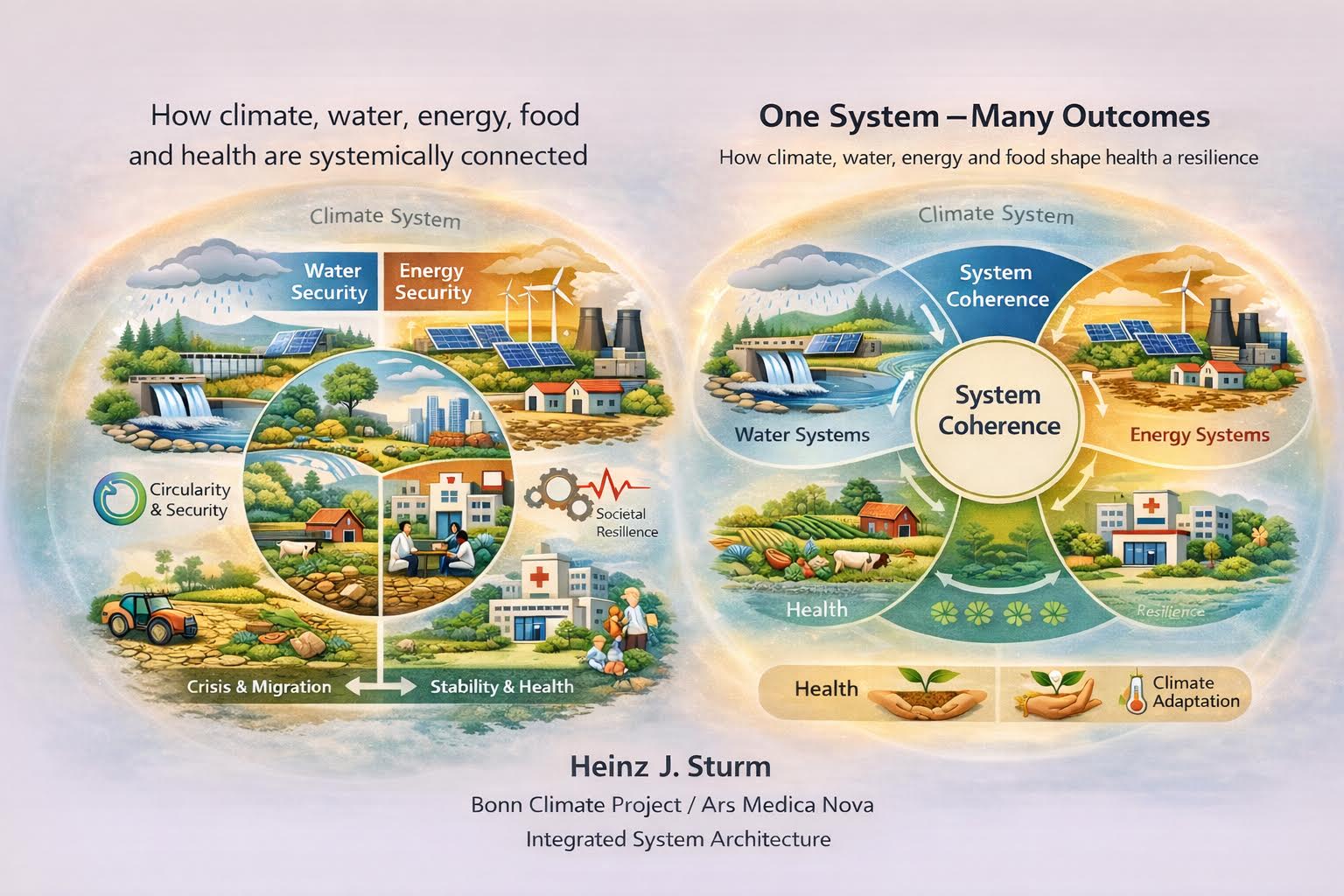
Heinz J. Sturm is a system architect and analyst exploring integrated climate, energy, water, and health systems as initiator of the Bonn Climate Project and developer of Ars Medica Nova. Image: supplied.
Across the Middle East and North Africa, large investments are being made in green hydrogen, renewable energy, water infrastructure and sustainability. Most of these efforts are discussed in the context of climate change, decarbonization and economic diversification. That framing is important, but it may not capture their full value. If these systems are designed well, they can do more than produce clean energy or reduce emissions. They can help create healthier societies and greater long-term stability. Today, health is usually treated as a medical issue. We think of hospitals, drugs and treatments. From a systems and economic perspective, this approach is becoming increasingly expensive and limited. Health does not begin in hospitals. It begins much earlier, in the conditions people live in every day. Clean water, healthy soil, reliable energy, nutritious food and safe environments shape human health long before anyone sees a doctor. When these foundations are weak, chronic illness increases, healthcare costs rise and societies become more fragile. Medical systems then try to manage the consequences, often treating symptoms rather than underlying causes. This challenge exists everywhere, but it is especially visible in regions facing water scarcity, climate stress, rapid urban growth and demographic change, including the Levant, the Gulf states and the wider MENA region. From a health-economics perspective, many modern healthcare systems function as repair systems. They step in late, once disease has already developed, and continue treatment over long periods of time.
As a result, healthcare spending grows faster than the economy, chronic disease consumes a growing share of public budgets, and long-term affordability becomes a serious concern. For many countries, copying high-cost Western healthcare models is neither realistic nor necessary. The more important question is how societies can reduce the need for medical intervention in the first place. This is where green energy, water and food systems become relevant in a different way. When renewable energy and green hydrogen are developed together with clean water supply, sustainable agriculture and resilient food systems, they form the real infrastructure of prevention. Clean energy supports water security. Clean water supports fertile soil and healthy food. Good food supports stable human health.
The Bonn Climate Program: supplied.
Seen this way, health is not something that constantly needs to be repaired. It emerges naturally when systems are designed properly. This way of thinking is not new in the Middle East. The Levant and surrounding regions were once centers of advanced medical and scientific knowledge. Thinkers such as Hippocrates, and later scholars including Ibn Sina, ar-Razi and al-Kindi, understood health as a balance between the human body, the environment and daily life. Their focus was on water quality, nutrition, lifestyle and the relationship between people and their surroundings. In modern terms, this was forward-looking knowledge. Not mystical, but practical. It recognized that the way systems are designed determines long-term outcomes. What is new today is our ability to explain this older systems wisdom using modern science, including biochemistry, electrochemistry and economics, and to apply it to today’s policy and investment decisions. If green hydrogen and renewable energy projects are seen only as climate measures, their potential remains limited. When they are connected to water, food and health systems, they become foundations of societal resilience. This has clear economic benefits: lower healthcare costs over time, fewer chronic diseases, better returns on sustainability investments and greater social stability. The next phase of the energy transition is therefore not only about reducing emissions. It is about creating the conditions in which healthy societies can emerge. Medical care will always be important, but it cannot carry the system alone. Health grows upstream, in water, energy, food and living conditions. When these systems work, health follows naturally, at lower cost and with greater stability. This idea is old. But in a time of rising costs and increasing pressure on societies, it may be more relevant than ever.
Heinz J. Sturm is a system architect and analyst working at the intersection of energy, water, health, and societal resilience. He is the initiator of the Bonn Climate Project, where he develops integrated system frameworks linking climate action with public health and long-term stability. Sturm is also the developer of Ars Medica Nova, a conceptual platform exploring new models of preventive health that draw on systems thinking, biology, and infrastructure design. His work focuses on translating complex system architectures into practical narratives for policymakers, researchers, and civil society.
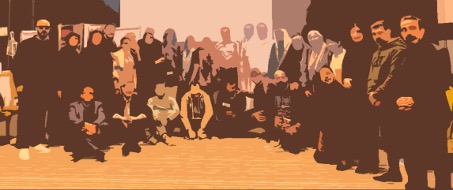
People from all faiths meet in Istanbul for peace. Credit: Eric Roux
Istanbul, mid-December 2025. The global interfaith organization* of which I am currently the president organized, for the first time since October 7, 2023, a meeting of its Middle East – North Africa branch, with 50 participants chosen from among the leaders of the many “cooperation circles” that the organization has in these regions, for 4 full days.
They came from Israel, Palestine, Jordan, Iraq, Yemen, Morocco, Tunisia, Lebanon, Egypt… There are Sunni Muslims, Shiite Muslims, Jews (Orthodox and Reform), Orthodox Christians, Coptic Christians, Protestant Christians, Druze, Baha’is, a Scientologist.
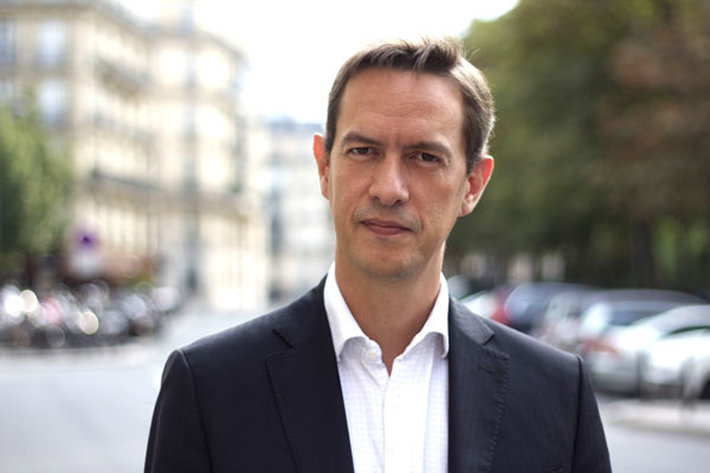
Eric Roux is the President of the European Interreligious Forum for Religious Freedom (EIFRF)
I was, how can I put it, a little anxious about having Israeli Jews and Palestinians, and other worthy representatives of the Arab world, in the same room. I was wrong.
You don’t learn about the world through the media, whether social or otherwise. You learn by traveling, and for the past two years, Israel and Palestine haven’t been among my destinations. You also learn by listening to people who live what you want to learn about. And I learned so much in four days.
Everything that happened in Istanbul is shrouded in secrecy for the safety of the participants, especially regarding their identities. That is why I will primarily use fictitious first names.
From anti-Jewish fighter to peacekeeper
One of us, Amin, came to tell me his story. He’s in his fifties, slim, with an elegant bearing, a weathered face, and dark eyes that sparkle with life. Amin has lived in a refugee camp in Palestine, seemingly his whole life. He told me that when he was younger, he was a “fighter” against Israel. He was convinced that a good Jew was a dead Jew, and that he would earn his place in paradise by killing the enemy. Until the day he met our interfaith organization, fifteen years ago. In short, this encounter made him realize that he could talk to a Jew. And that if he could talk to him, it meant that the Jew was also a human being. With this realization, he understood that he had been lied to all his life, and he decided to dedicate his life to helping people see their humanity as something that transcends all prejudice. “ We are first and foremost human beings, before we are Jews, Muslims, Christians, or anything else, ” he told me. “ Without that, we are nothing, and war begins .”
Not only has Amin come a long way, but in his refugee camp, he faces daily the influence of Hamas and others who don’t share his view of the enemy’s humanity. He also has to deal with the abuses sometimes (or often, depending on who I listen to) committed by Israeli soldiers, which only complicate matters. But he remains steadfast. He explains that he teaches young people how to pass checkpoints by observing Israeli soldiers and imagining them at home, with their families, at the beach—anywhere they would find a human image, regardless of the soldiers’ behavior. The result, he tells me, is often (though not always) miraculous. It’s the soldiers who then change their attitude and become, in effect, more humane.
His analysis is this: each of the two groups (Israelis and Palestinians) sees the other as something devoid of humanity. If one of them infuses humanity into their gaze, then the other receives it and becomes what they have always been: human. It’s not much, but it’s all they have to fight for, and ultimately, it’s all that can make a difference in this part of the world. For him, that’s a divine mission.
The enemy children
Steven is a devout Israeli Jew who runs an organization in Tel Aviv that teaches dialogue for peace to young people. When the October 13th massacre occurred, he felt compelled to do something to prevent succumbing to hatred. He knew that nothing would ever be the same again, and even before, things weren’t great… So he launched a project for the young people who followed him—Palestinian Muslims and Christians, and Israeli Jews, Muslims, and Druze—to preserve and strengthen what he calls “the connection beyond divisions.” Through writing, young Israelis and Palestinians collaborate to express their suffering, their difficulties, their hopes, their resilience, and their courage—the courage to imagine a future of peace where the present seems to contradict them. Two books have already emerged from this project.
Yet his project was not universally accepted. Many of his students’ parents called him to criticize the fact that their children might sympathize “with the enemy.” He, too, remained steadfast. Often, it was the children themselves who convinced their parents of the merits of the approach, and of the “lack of merit” in the enemy’s rhetoric.
Do they hate it a little, a lot, passionately, or not at all?
One day, I asked Mohamed, a Palestinian from Bethlehem, if it was true that people in the West Bank hated Israelis. A somewhat silly, naive question, but if I didn’t ask him, who would I ask? Mohamed was Muslim, but he told me he didn’t really practice. He didn’t really care about practice. For him, God doesn’t express himself through practice. To each their own path. He replied, ” That’s true, but not only that. You have to understand that for many Palestinians, all they know about Jews are the soldiers, those they encounter at checkpoints, those who regularly mistreat them, those who have sometimes killed children in their neighborhoods. Before, there were more Palestinians who went to work in Israel and had more opportunities to interact. Since October 2023, that number has drastically decreased, and the divide has widened even further.” So yes, many people hate Israelis. Perhaps you would hate them too if you were in their situation. And then there’s the propaganda. Propaganda has a field day. It dehumanizes Jews, and every time a Jew commits a wrong here, it wins. There’s only one solution: dialogue and the recognition of our shared humanity. This shared humanity comes up like a recurring theme, day after day, conversation after conversation.
Equal height and equal rights?
Then there’s Karin, an Israeli journalist, who manages to speak to me privately. She tells me I absolutely must talk to Sara, a young Baha’i woman from Jordan, because she’s convinced that a solution in the Middle East might come from the Scientologists and the Baha’is, because the Jews (including herself), Muslims, and Christians are too entangled in these age-old conflicts; they’re trapped in existential struggles that prevent them from seeing things from a broader perspective. They want to save their own skin, and to do that, they have to destroy “the other.”
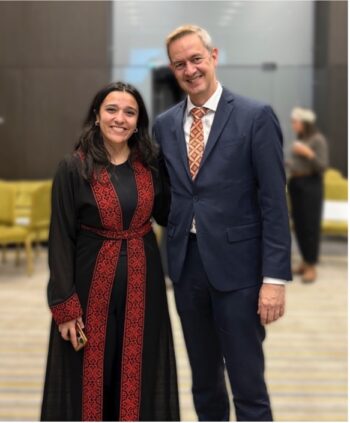
Sara, a Baha’i in Istanbul with Eric Roux. Credit: Eric Roux
So I talk to Sara, who is absolutely fantastic. Every day she takes five hours on trains (yes, trains, not just one) to help children in a refugee camp on the border with Palestine. Once, I ask her if Baha’is face discrimination in Jordan. She immediately says no, but when I ask her a little more, I learn that they don’t have the same rights as others (which, of course, is the very definition of discrimination). The difference in rights, from what she tells me, mainly concerns family rights, but the more I talk to her, the more she shows me that they are, in fact, discriminated against. We get used to everything, to the point where we don’t even see the problem anymore. She says she loves her country, and that for that reason, she’s willing to accept the hardships. I tell myself that I love my country too, but that doesn’t change my rejection of discrimination. I think we’re being taken for a ride when they manage to make us believe we have to accept the unacceptable in the name of some kind of patriotism. But anyway, it doesn’t matter, Sara is brilliant and full of genuine kindness.
There’s also Kamal, a Lebanese Druze. When Kamal learns that I’m friends with Sheikh Bader Kasem, a prominent figure in Druze Islam (who lives in Israel), he wants to learn more about Scientology . When he learns that I, too, believe we are immortal spiritual beings who pass from body to body, life after life, he’s happy because he’s no longer alone.
All these religions are a breath of fresh air.
There’s also Mina, a Christian from Egypt, a renowned professor of medicine, who didn’t even know my religion existed. It’s the first time he’s heard its name. He knows me, but it had never occurred to him. So, he starts talking about it while we’re all gathered together. And everyone begins discussing how there’s nothing better than learning that there aren’t just five major religions in the world (Christianity, Islam, Druze, Judaism, and Baha’i). They want me to tell them about all these religions they know so little about. It’s a breath of fresh air for them. The world is vast, diverse, and rich. It reinforces their belief that the most important thing is that we are all human. Hallelujah.
Adar, for his part, is Kurdish, from Iraq. He talks about Mandaeism , an ancient religion that now only has a few thousand followers, mainly in Iraq. I ask him if he practices it; he says no, he’s Christian. But he says that in Kurdistan, everyone does what they want. I doubt it, but I don’t really know. So he invites me, along with his two companions, one of whom is part of the Kurdish government. I said I’d go. And I will.
The other’s language
And then there’s Shlomo. Shlomo is Jewish, but he taught Arabic in Israel his whole life. For him, language is the gateway to peace. If you speak the language, you understand. If you understand, you don’t wage war. He published a Hebrew/Arabic dictionary, which has been reprinted several times. He explained to me that his parents, in his younger years, were very disappointed with his life path. Teaching Arabic, you have to be a little crazy. But anyway, he became the National Inspector of the Arabic Language, a lecturer at the Faculty of Education of the Hebrew University of Jerusalem, and Israel’s representative to the European Committee for Reading and Literacy. So they were forced to admit that he had made something of his life, and they changed their minds. Shlomo seems not to care; he’s old and he’s seen it all. And yet he is still present at all the gatherings, even at over 80 years old.
Mariam, from Hebron in Palestine, is a Christian. She speaks a grating Arabic, not because it isn’t beautiful, but because she speaks so loudly and always seems to be yelling at you, even when she smiles and you understand that she likes you. She complains. She complains about Israel, which “makes her life miserable.” She complains about Hamas, which “makes her life miserable,” she complains about the Palestinian Authority and its “corrupt President,” which “makes her life miserable.” But she pats everyone on the shoulder, Jews included, with an energy that knows no bounds.
She also tells me about the Israeli settlers. She says that in many places the settlers and the Palestinians get along very well. They live together and work together. Why am I surprised?
Peace?
Understand this clearly: these are not pro-Israel Arabs. They are not pro-Palestine Jews. They are not eccentric dreamers from some beatnik fantasy. These are people who have lived through the harsh realities of war, and who continue to grapple with them, but who have not lost their intelligence or their humanity.
Finally, on the last evening, we celebrated Hanukkah, lit the candles, and listened to the prayers in Hebrew. No photos, please; it’s not like we’re having a village festival. And taking photos is dangerous. But we celebrated anyway. Together.
And then everyone went their separate ways. On the group messaging app, which some had to leave and delete from their phones before returning to their countries, the conversations continued for several days. Everyone went back home, to the fight, the fight for a better world, for a better region, for a better neighborhood, for better people. We promised we would see each other again. And we did.
And we know. We know that peace is possible and that those who say otherwise are, deep down, the ones who don’t want it. We know that war is not inherent to humankind, because, precisely, humanity is the solution to war. From the moment we see it, recognize it, and grant it its humanity. Does that sound naive? No, it’s a flower nourished by the blood of victims, which, despite everything, has grown, and which defies the status quo.
* This is the world’s largest grassroots interreligious organization, with over 1,200 affiliated groups in more than 110 countries. Founded by the former Episcopal Bishop of California, Reverend Bill Swing, it celebrated its 25th anniversary last year. Beyond its creation and scale, these 25 years have primarily demonstrated the strength of its model: decentralized interreligious cooperation, driven by local actors themselves. URI has enabled very diverse communities to meet, overcome religious and cultural divides, and work together for peace, reconciliation, education, equality, social justice, and the care of the Earth. By prioritizing inclusion, shared governance, and concrete action over rhetoric, it has helped to embed interreligious dialogue in daily life and make it a genuine driver of lasting social transformation.
This article was first printed in French, on Rebelles. It is reprinted with permission.
New York Carbon has a facility located between the Catskill Mountains and the Hudson River. They produce high carbon biochar from local waste biomass in their Tigercat Carbonator 6050. Image via NY Carbon.
PFAS — often called “forever chemicals” — are among the most stubborn pollutants on Earth. Used for decades in firefighting foams, industrial coatings, and consumer products, their carbon–fluorine bonds make them extraordinarily persistent in soil, water, and living organisms. Worse, PFAS don’t just stay put. Even at low concentrations, they can be taken up by crops and move through the food chain, with short-chain PFAS proving especially mobile.
A growing body of research suggests that biohacking soil chemistry, rather than removing contaminated soil entirely, may offer a practical way forward. One promising tool: biochar.
A study published in Environmental and Biogeochemical Processes (27 November 2025) by Jason C. White and colleagues at The Connecticut Agricultural Experiment Station shows that iron-fortified biochar can significantly reduce PFAS uptake in food crops. In controlled soil–plant experiments, iron-modified biochar lowered total PFAS accumulation in radish plants by nearly 50%, and reduced PFAS concentrations in the edible bulb by more than 25%.
The researchers worked with PFAS-contaminated sandy loam soil impacted by legacy firefighting foams. They tested hemp-derived biochar produced at different temperatures, with and without iron fortification. While standard biochar showed mixed results, low-temperature (500 °C) biochar fortified with ~8% iron proved highly effective, immobilizing PFAS and preventing them from moving into plant tissue.
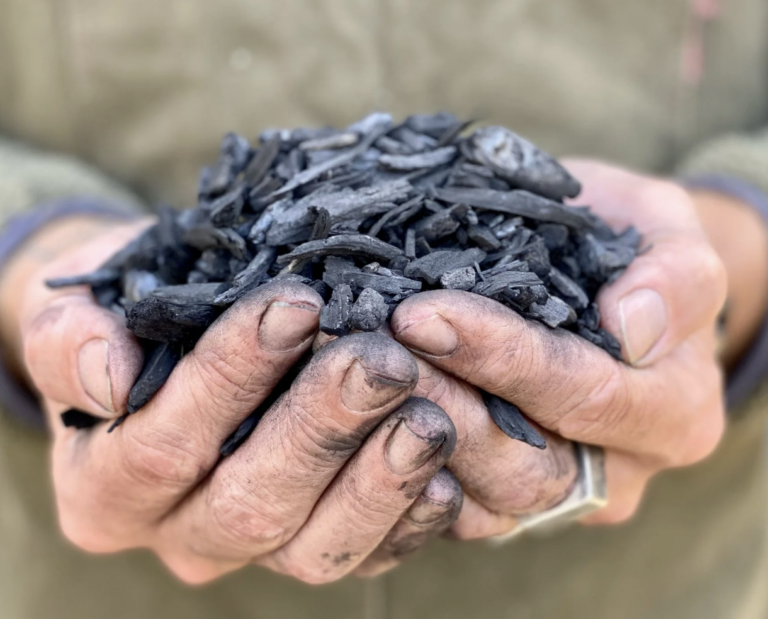
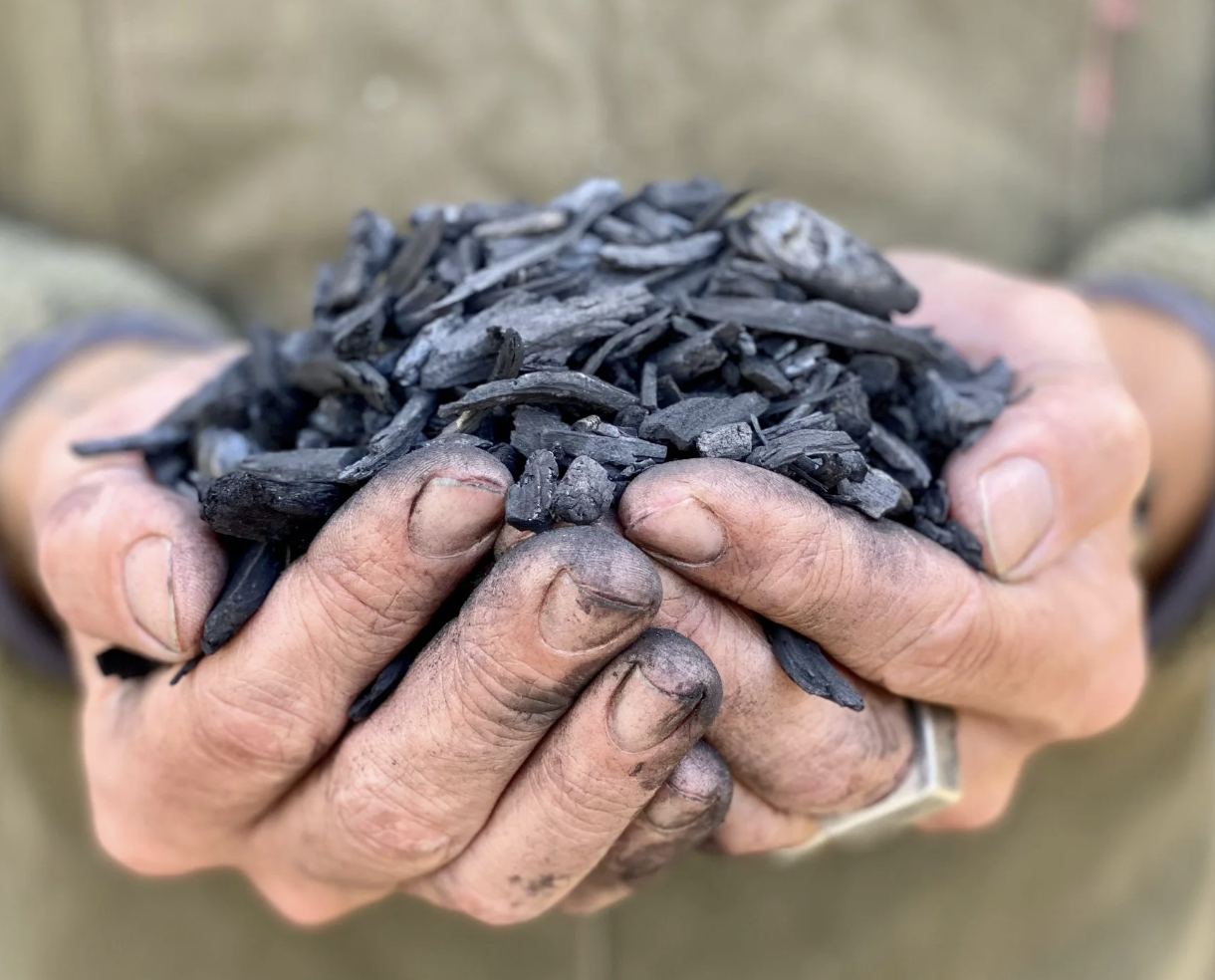
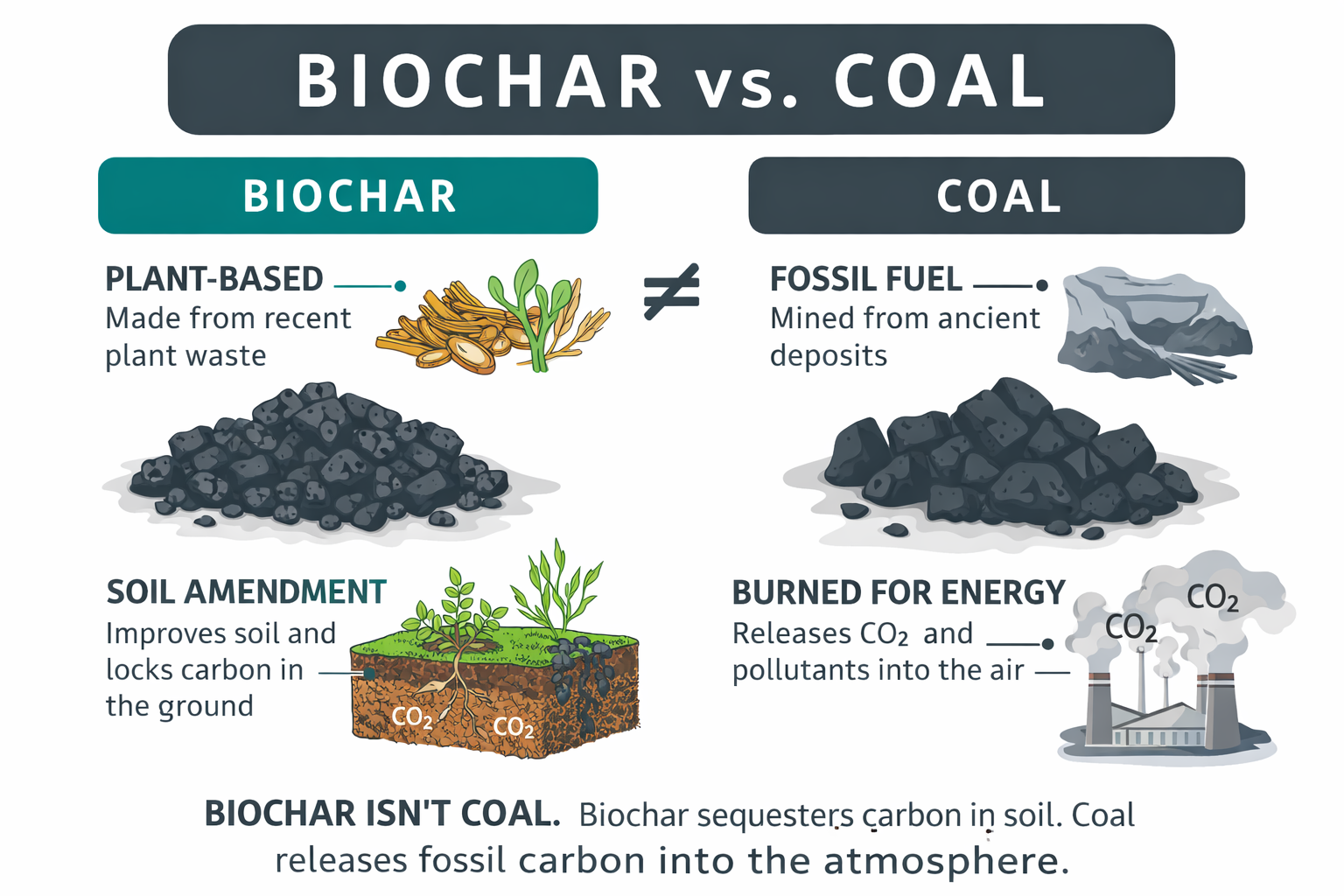
Biochar is not the same as coal. Image copyright Green Prophet
Why iron? Lab analysis revealed that iron fortification dramatically increased biochar’s surface area and pore volume, creating reactive sites that bind PFAS molecules through electrostatic and ligand-exchange interactions. Importantly, the biochar caused no phytotoxic effects and often improved plant growth — a critical factor for agricultural use.
The implications are significant. Instead of costly soil removal or long-term land abandonment, farmers could use iron-enhanced biochar as a soil amendment to lock PFAS in place, reducing human exposure through food. Because biochar can be made from agricultural waste like hemp and applied using existing farming practices, the approach fits neatly within circular-economy and climate-smart agriculture frameworks.
Biohacking soil won’t erase PFAS from the planet. But this research suggests it may help break the chain between polluted land and polluted food — a meaningful step toward safer agriculture in a contaminated world.
How Biochar Is Made
Biochar is produced by heating organic material in a low-oxygen environment so it does not burn. This process, known as pyrolysis, transforms plant matter into a stable, carbon-rich material.
The feedstock can include agricultural residues such as wood chips, crop waste, nutshells, hemp stalks, or manure. These materials are first dried, then heated to temperatures typically ranging from 350 to 700 degrees Celsius in a sealed kiln or reactor where oxygen is limited. Because oxygen is absent, the biomass does not combust; instead, volatile gases are driven off, and the remaining carbon reorganizes into a porous, charcoal-like structure.
Once the heating phase is complete, the material is cooled in low oxygen to prevent ignition. The resulting biochar contains a network of microscopic pores that give it a large surface area and unique chemical properties. These pores allow biochar to retain water, nutrients, and contaminants when added to soil.
Biochar can also be engineered after production. It may be steam-activated to increase surface area, fortified with minerals such as iron to bind pollutants, or “charged” with compost or nutrients before soil application. When applied correctly, biochar can persist in soil for hundreds to thousands of years.
How Biochar Is Different From Coal
Although biochar and coal may look similar, they are fundamentally different materials with very different roles in the carbon cycle.
Coal is a fossil fuel formed from ancient plant matter that was buried and transformed under heat and pressure over millions of years. It is mined from the ground and burned for energy, releasing carbon that has been locked away since prehistoric times. Coal often contains sulfur, heavy metals, and other impurities, and its primary purpose is combustion.
Biochar, by contrast, is made from recent plant material and produced intentionally in modern systems over hours or days. It is not designed to be burned. Instead, biochar is meant to remain stable in soil, where it can improve soil structure, retain nutrients, immobilize pollutants, and store carbon.
From a climate perspective, the distinction matters. Burning coal releases ancient carbon into the atmosphere, increasing net emissions. Biochar locks up carbon from the current biological cycle, helping reduce atmospheric carbon when used as a soil amendment.
KEMET addresses the limited access to capital that restricts the development and scaling of biochar carbon capture projects. Image via KEMET
In short, coal is an energy source. Biochar is a soil tool. And it’s an investable commodity. A new fund manager in Texas has her eye on the growing demand for carbon credit projects that remove carbon from the atmosphere. Biochar, created through a process called pyrolysis that involves heating biomass and biowaste, is an emerging solution for trapping carbon. The biochar not only sequesters carbon, it can restore soil health and enable soil to store greater amounts of carbon. Founder Heather Stiles and her firm Kemet make debt and equity investments in companies supporting biochar production and use, waste-to-energy projects, and carbon trading. “The nascent biochar market lacks dominant players,” the company says. And now they have a new market: in agriculture.
Biochar companies in the US and Canada
NY Carbon – Large-scale biochar producer serving New York and New England markets
Finger Lakes Biochar – Regional biochar production for agriculture and remediation
Vermont Biochar – Farm- and soil-focused biochar production
The Biochar Company – Biochar for agriculture, remediation, and carbon storage
Integro Earth Fuels – Biomass pyrolysis and biochar production
Re:char – Mobile and modular biochar systems, soil and waste applications
Seattle Biochar – Biochar production from regional biomass waste
Whitfield Biochar – Biochar and carbon materials for soil and remediation
Carbonity (Airex Energy subsidiary) – Industrial-scale biochar and biocarbon production (Canada)
Canadian Biochar Investments (CBCI) – Modular biochar systems and carbon removal projects across Canada
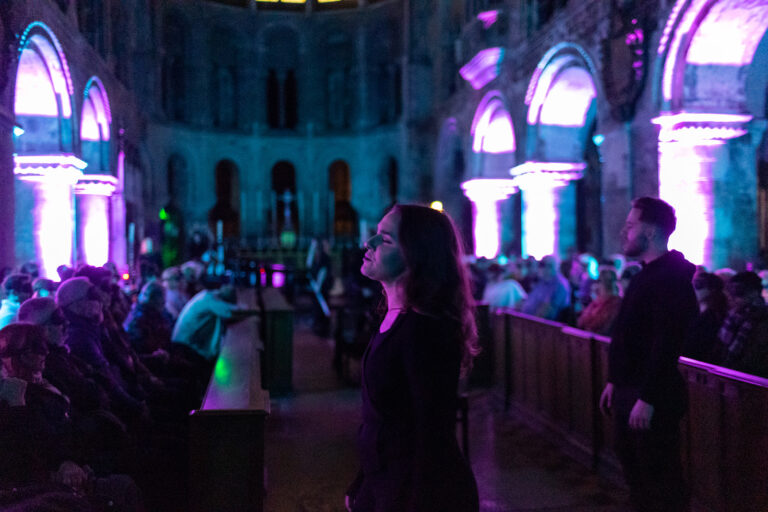
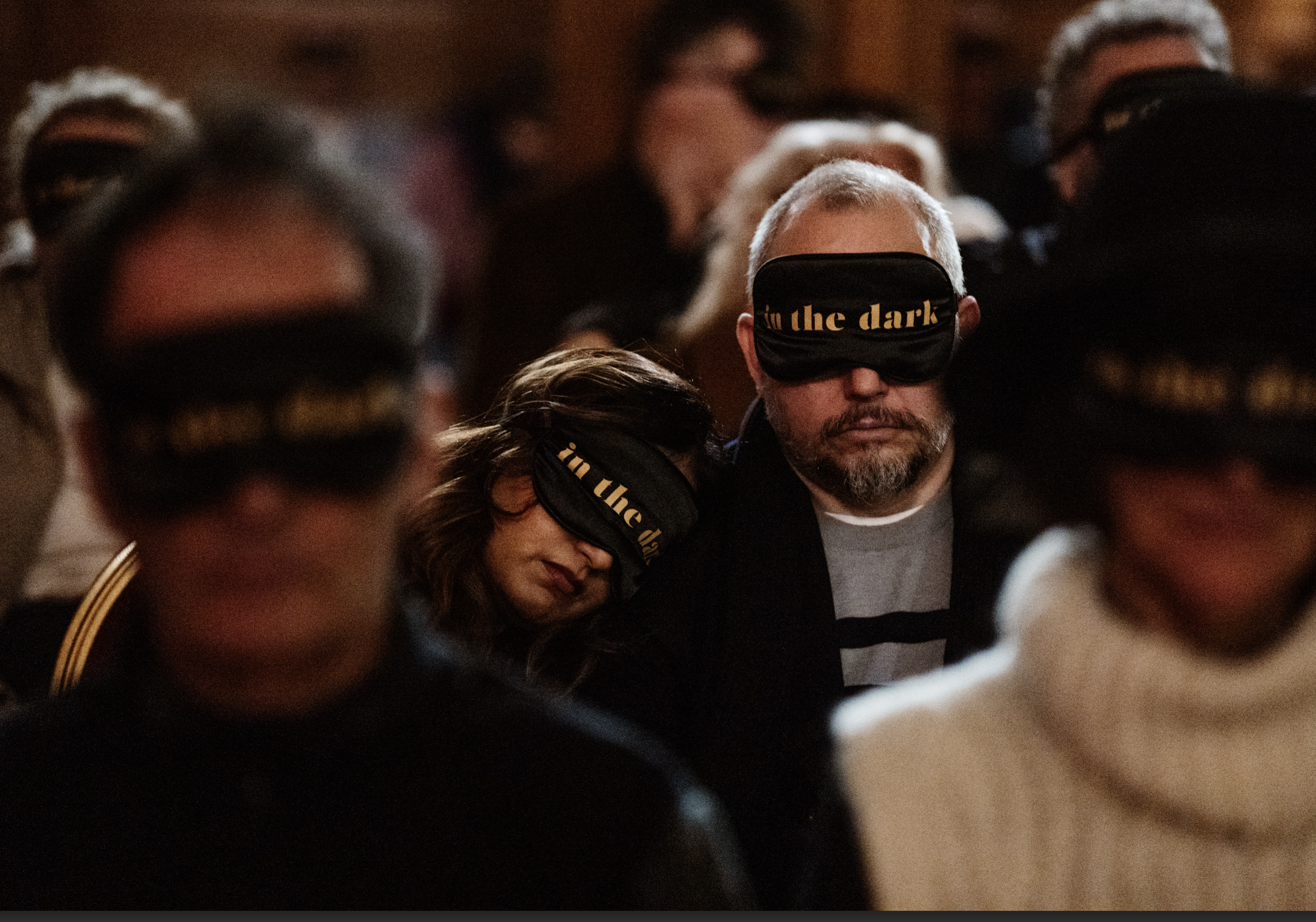
‘In The Dark’ Press Pack (credit Alice the Camera)
I was delighted to get invited to a special performance of ‘In The Dark’ this week in London, after seeing the project get birthed and thrive in my home city of Cambridge quite a few years ago.
Dynamic cultural producer Andrea Cockerton has worked within music for many years, and knew that the idea of giving audiences an immersive live musical experience – in darkness – could bring tremendous benefits, and over several iterations, this project is thriving, and has now been brought to London audiences – with the hope it will grow into the projects permanent home.
The Space:
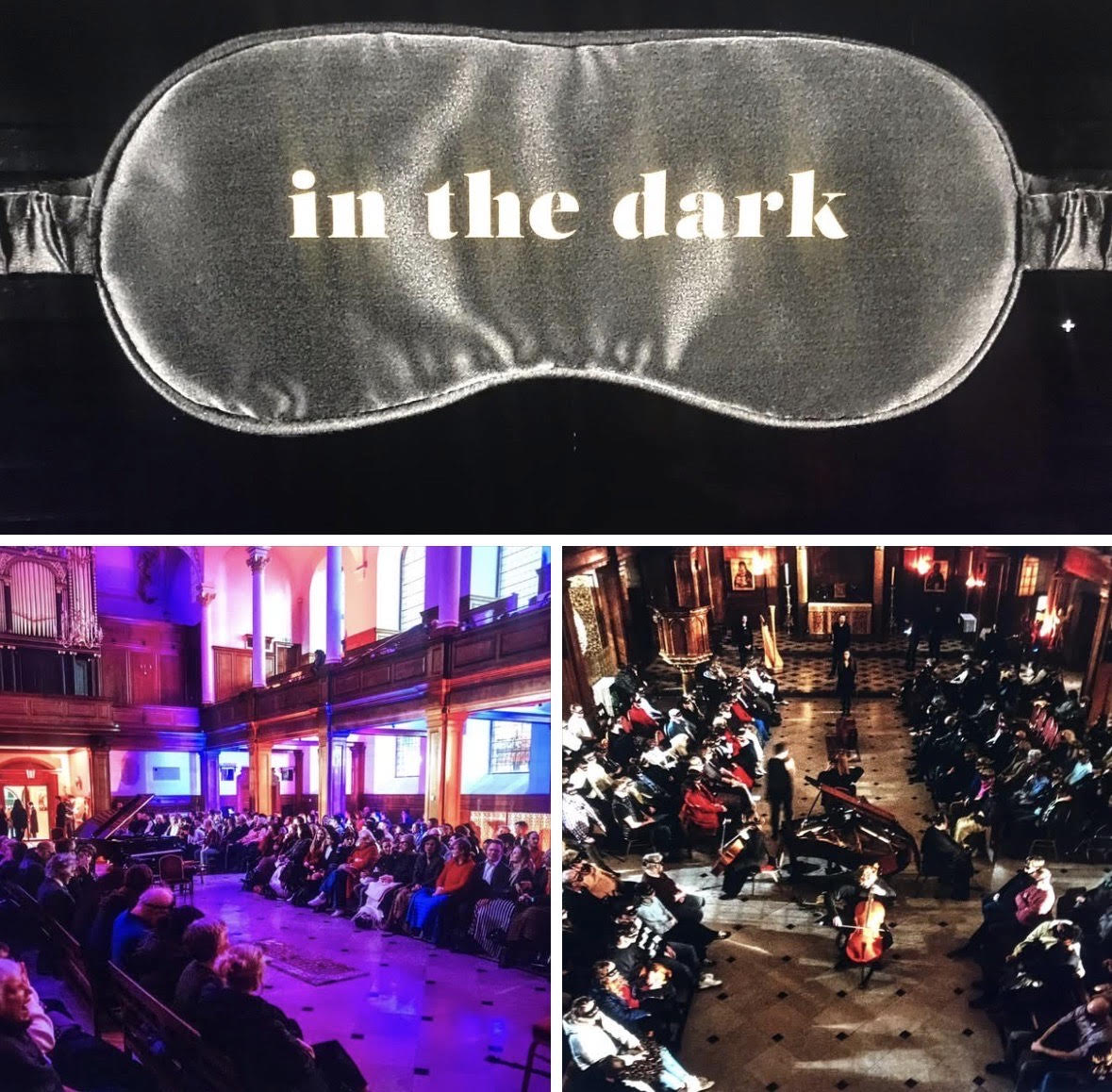
‘In The Dark’ Press Pack (credit Alice the Camera)
The current venue is St Andrew Church in Holborn, on Chancery Lane, right in the heart of London’s economic district – and as I stepped out of the tube station into the street, the grey gloom of the capital City greeted me, with all the busyness and throng of a Thursday evening at rush hour. I often feel a special thrill at going to an arts event in such a mercantile environment: arts, culture and the imagination so often feel threatened by the push for finance and economic stabilty within this current political climate, in funding the sciences for instance, and this was no exception, particularly as it was in a church in the heart of it all. While inside this very special church, restored and renovated in 1668 by the eminent architect Sir Christopher Wren, outside us office blocks are reaching up high, whereas for many years previously only sky would peer in.
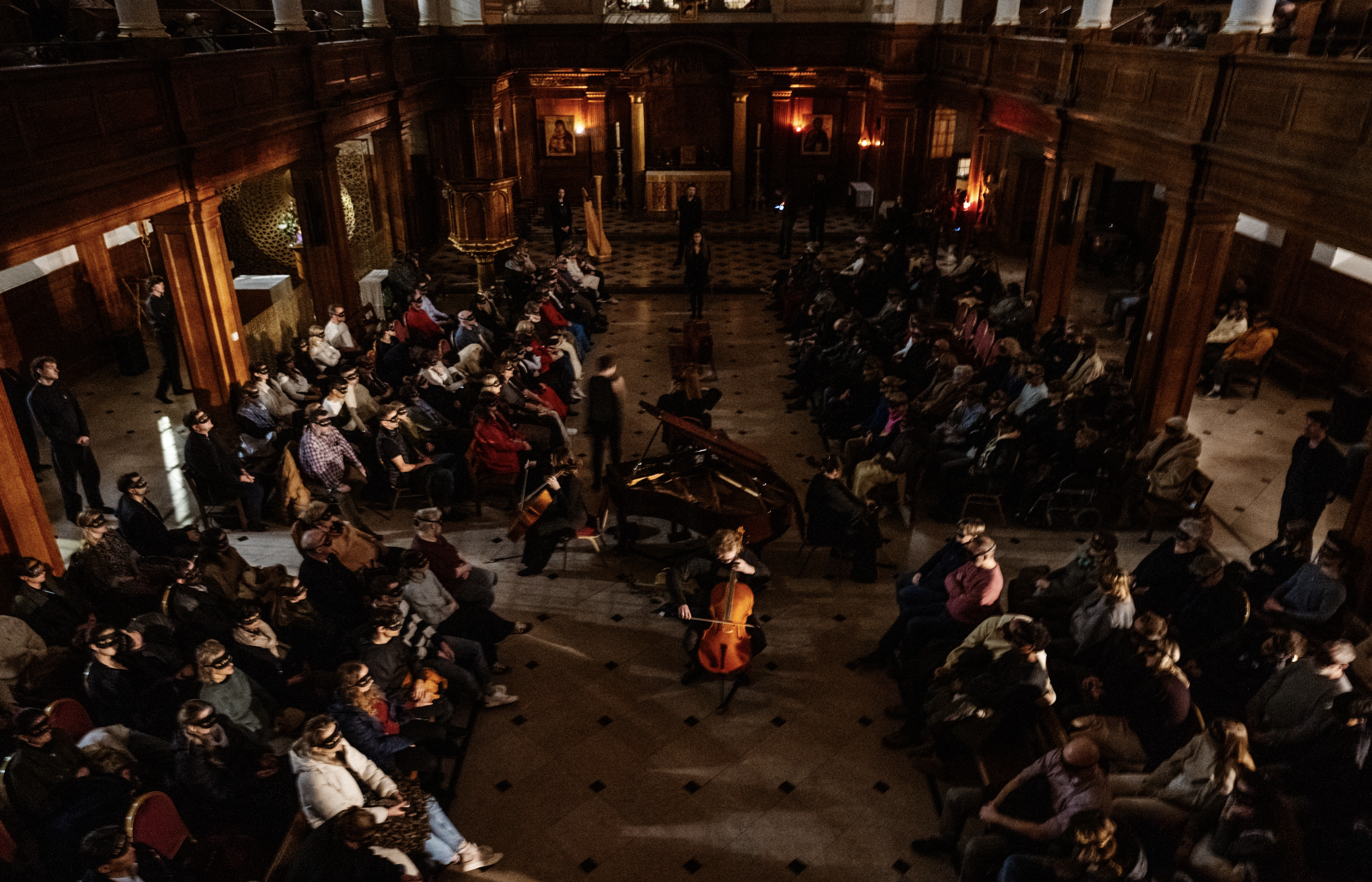
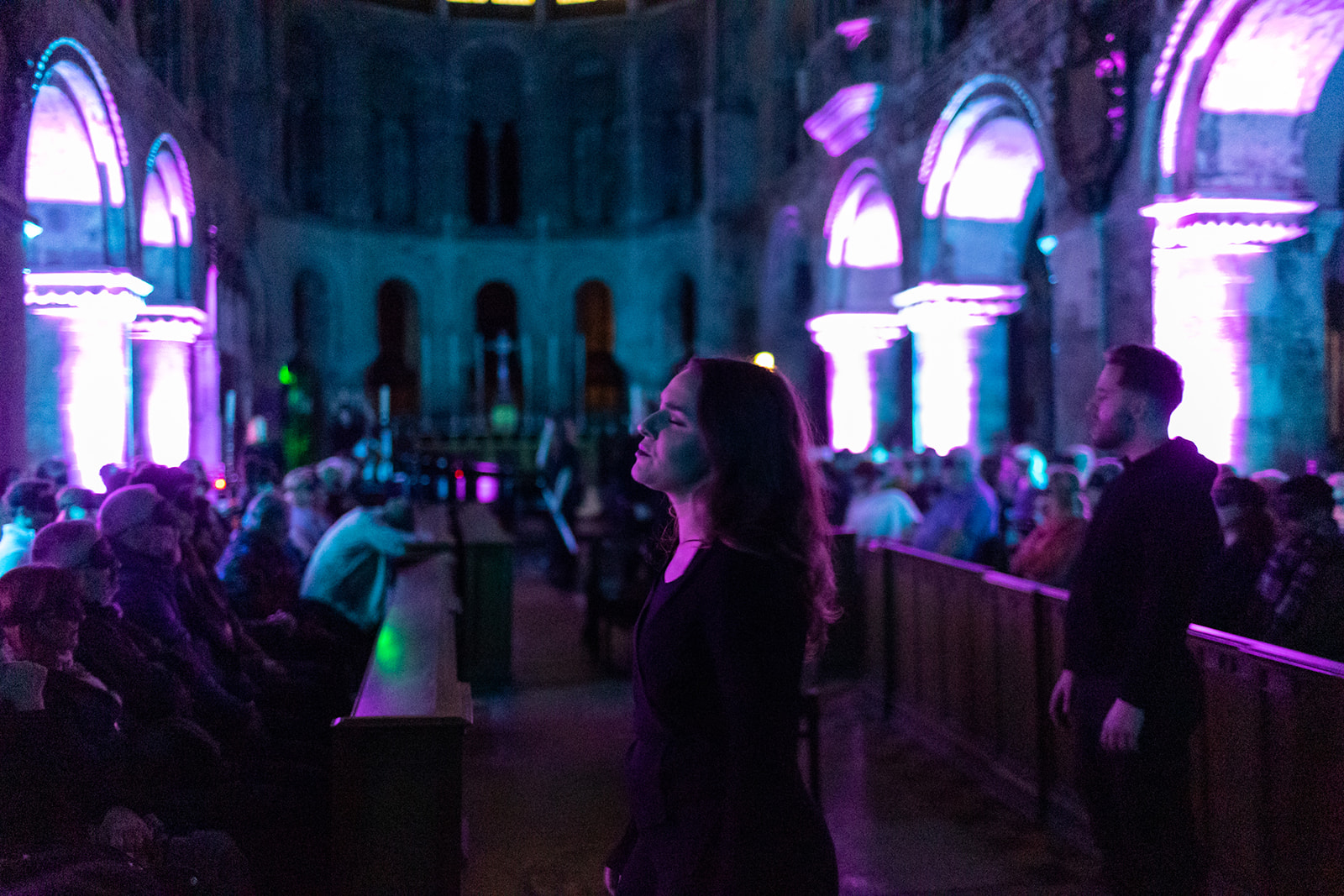
‘In The Dark’ Press Pack (credit Alice the Camera)
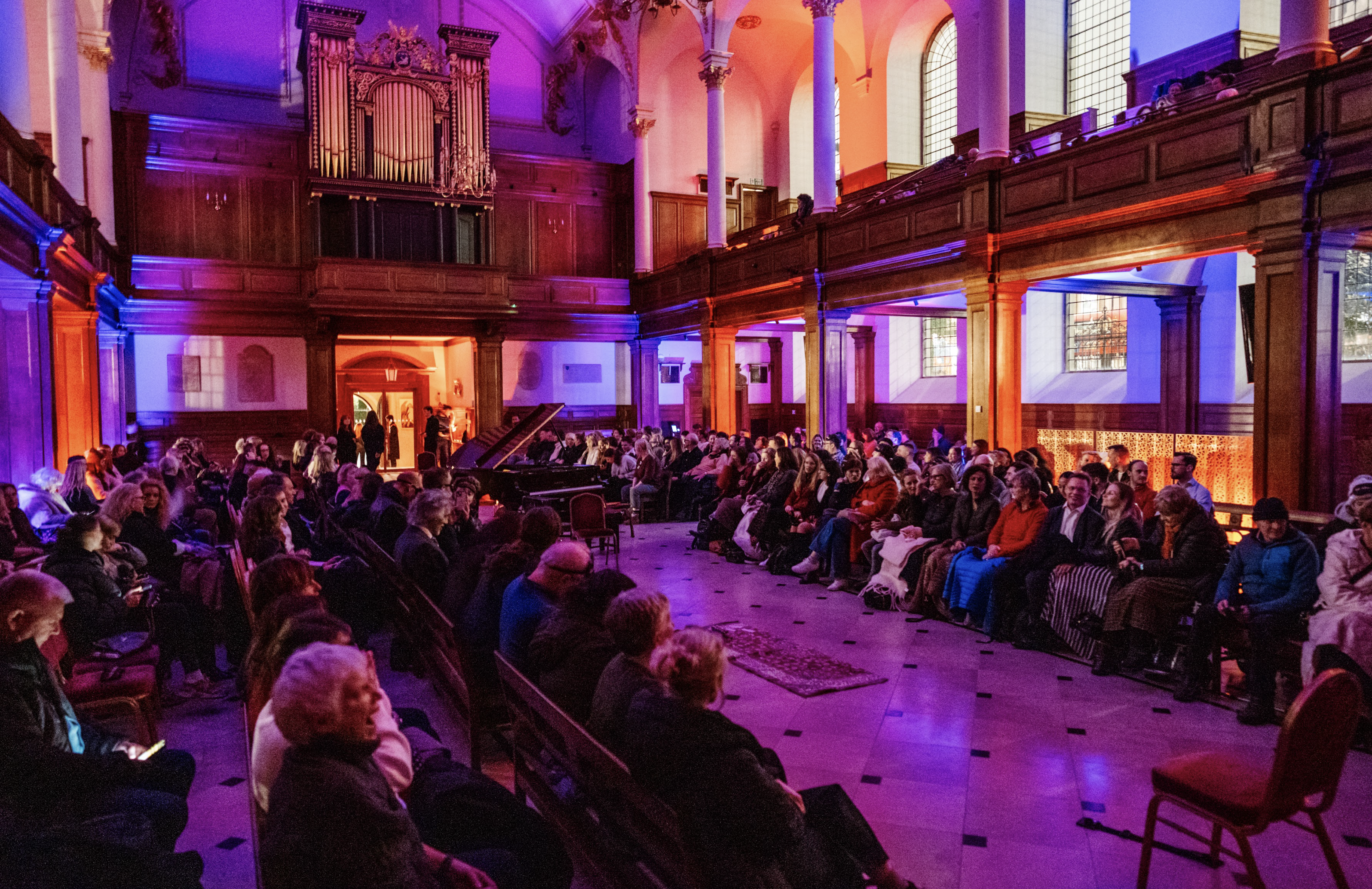
St Andrew’s has vaulting pillars, beautiful golden screens, some sculptures and statues, and uplighting that matches the pillars, alongside oak panelling, all in a straightforward display – a fresh simple and yet deeply spiritual space for prayer, contemplation, and tonight, immersive live sound! The space had been lit with reds, blues, and greens, enhancing the atmosphere greatly.
I took my dear friend, Mick Collins, Norwich-based therapist and writer, who talked in rhapsodic terms about the venue and the whole experience afterwards.
Music:
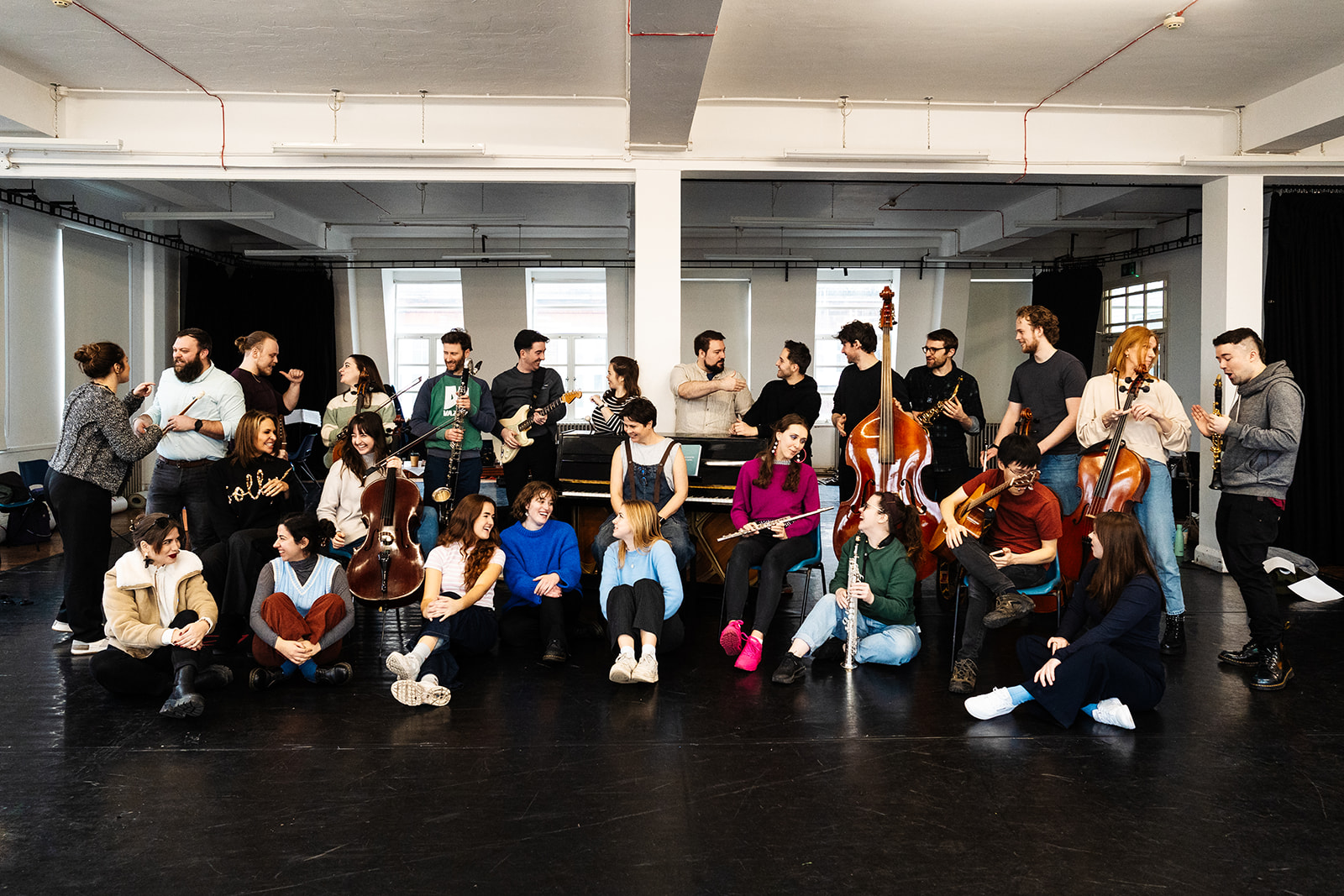
‘In The Dark’ Press Pack (credit Alice the Camera)The band after rehearsals for ‘In The Dark’ Press Pack (credit Alice the Camera)Listening like a prayer – ‘In The Dark’ Press Pack,(credit Alice the Camera)
Transported by the choral and instrumental offerings that popped up across the space, in corners, in front of us, and alongside us. The performance was genuinely breathtaking and profound, and it needed some quiet time to fully digest the experience. Those first moments after the concert had ended were gloriously ineffable. At no stage in the hour was I tempted to lift the eye mask and peek at the scene, though I did wonder if I might have loved this even more were I lying on the floor! I particularly loved hearing male voices starting, and solo female voices, as well as elements of rhythm and percussion leading some of the pieces.
Singers envelope the audience in rapture at ‘In The Dark’ Dr. Barts, Credit: Ian Olsen
We could hear the voices and instruments travel around the space, and I felt a sharper sense of hearing sounds thrown between instruments, bouncing off each other and responding to the piece. Maybe a sound came from my row of seats, then a singer was in front, and then a chorus of voice rose from the far left. And so forth, punctuated by silences between each of the pieces.
For some of the music, I really felt there was a watery theme (having spent much of last years promoting films and activism engaging with water and rivers), which delighted me, and scanning through the programme we were cleverly handed afterwards, the titles of some of the tracks bear this out. I won’t spoil the surprise and talk about the specifics and the songs that are part of the event as I really want to maintain the joy and surprise of the not knowing, and absolutely want to encourage everyone to go and experience this event if they are able. There was a glory in sitting and having the sounds wash over me, with no knowledge, anticipation, or even expectation of anything specific. Seeing the musicians as we peeled off the provided (very thick and comfortable and available to take home! ) eye masks who clearly were as happy as the audience were, and receptive to our cheers and applause, brought us all into rapt synergy.
Laying down some contrabass ‘In The Dark’ Press Pack,(credit Alice the Camera)
All my neurons were buzzing and melting, and after a few thank you’s, hugs, enjoyment of the space and the folk we had shared this with, we melted out of the church, lifted divinely by having been ‘In The Dark’.
The projects publicity says “no phones and no distractions” and absolutely, what a joy that is.
Reflection:
Walking back to the tube, and then the train home, we were both pretty speechless, unable to find words for what we have both witnessed through our audible senses. We thought a bit, sat in quiet reverie, danced with some words, and then decided to reflect overnight and see the next day how we felt. After a deep slumber, all my neutrons moulded back into the shape of me, and we checked in with each other –
Mick: “ at one stage I felt I was inside a prayer – the experience was effervescent on the inside, like champagne bubbles: certain pieces brought this up. A very sacred experience. Afterwards I was left with a sense of oneness, in a true sense of the word. Very light in the body, and my mind had been cleansed – the vibration of the sound and the instrumentation. A beautiful beautiful experience. “
‘In The Dark’ is an exceptional immersive cultural experience like no other. Hearing these musicians perform together, to us and with us, in this unique and held spiritual environment of St Andrew Holborn, is both restful and stirring, joyful and deeply prayerful, beyond words.
Hiring office workers in New York. Photo by Vitaly Gariev
Key Takeaways
Quality of hire is emerging as a central recruitment metric, emphasizing long-term results over speed or hiring cost.
Technological innovation, including AI, adds value to recruitment but still requires thoughtful integration for lasting impact on hire quality.
Workplace evolution is driving employers to prioritize soft skills, adaptability, and cultural alignment.
Table of Contents
Introduction
Defining Quality of Hire
The Shift Towards Quality Metrics
Technological Advancements in Recruitment
Challenges in Measuring Quality of Hire
Strategies to Enhance Quality of Hire
The Role of Soft Skills and Adaptability
Conclusion
Introduction
The shifting landscape of talent acquisition is propelling organizations to evaluate the actual effectiveness of their recruitment efforts. Instead of merely trying to fill positions quickly, hiring teams are exploring how each candidate contributes to the organization’s longer-term performance, cultural growth, and resilience. This emphasis on quality of hire marks a profound evolution from traditional recruitment KPIs that prioritized speed, volume, or hiring costs alone.
As businesses face tighter competition for top talent and the relentless pace of market changes, hiring the right people becomes crucial—not just for immediate productivity, but for adaptability and future success. Industry leaders now recognize that recruitment strategies that foster enduring value are fundamental to sustainable growth and innovation.
Quality of hire is about more than a flawless resume or technical competency. It integrates cultural match, career alignment, and employee engagement—qualities that have far-reaching impacts on workplace morale, retention, and business performance. Companies are investing more resources into uncovering these less tangible attributes while fostering environments where high-quality hires can thrive and grow.
A 2024 survey by Deloitte found that 76% of talent leaders now consider long-term retention and workforce contribution among their most important hiring success metrics—far surpassing time-to-fill or cost-per-hire. As the expectations for new hires deepen, companies must also confront the inherent challenges in redefining and accurately measuring hiring quality.
Creative Commons
Defining Quality of Hire
Quality of hire refers to the total value a new employee brings to the organization, going beyond surface qualifications. Key indicators include job performance, return on investment, retention, and cultural alignment. This multifaceted approach enables companies to move beyond the “fastest-to-hire” mentality that has historically dominated recruitment, instead focusing on outcomes that matter most to long-term business health.
Establishing a shared organizational definition of quality of hire can bridge gaps between HR, hiring managers, and executive leadership. Metrics may include performance evaluations at key milestones, input from team members and supervisors, and retention data, as per guidance from the Society for Human Resource Management (SHRM). While no universal formula exists, a data-driven approach—calibrated for industry, role, and company values—provides essential clarity.
The Shift Towards Quality Metrics
The evolution toward quality-focused recruitment is reflected in the growing adoption of robust hiring metrics. A 2025 industry report revealed that nearly one-third of staffing agencies now rank quality of hire as their top measure of recruiting effectiveness, surpassing historically dominant benchmarks like cost-per-hire and time-to-fill.
This shift signals a more profound understanding that every new hire has a significant impact on morale, team productivity, and ultimately, business outcomes. Companies that invest in monitoring post-hire performance—by tracking employee output, cultural alignment, and retention—are more likely to sustain competitive advantage and lower long-term recruitment costs.
Technological Advancements in Recruitment
Innovative technologies, particularly artificial intelligence and machine learning, are reshaping how companies identify and evaluate potential talent. AI-powered tools are now standard for resume parsing, skills matching, and pre-employment assessments, expediting the screening process and uncovering qualified candidates faster than ever before.
Despite the efficiencies these tools provide, recent studies suggest that technology alone cannot guarantee higher-quality hires. Human insight remains crucial in contextualizing technical data, evaluating soft skills, and making informed hiring decisions. As Forbes reports, organizations that blend intelligent automation with structured human interviews see the most significant improvements in hiring quality.
Challenges in Measuring Quality of Hire
Achieving accurate and meaningful assessments of hire quality presents several obstacles. First, each organization must determine which factors (e.g., performance, retention, peer feedback) are most relevant to its goals. Second, the subjective nature of qualities like cultural fit and adaptability can complicate consistent measurement from one department or manager to another.
Moreover, insufficient data collection or analysis capabilities may undermine efforts to track hire performance over time. Inconsistent processes and a lack of standardized benchmarks can also prevent teams from identifying systemic recruiting issues or areas for improvement.
Strategies to Enhance Quality of Hire
Comprehensive Job Descriptions: Defining precise duties and required competencies in job postings attracts applicants whose values and expertise genuinely fit the organization’s needs.
Structured Interview Processes: Standardizing assessment criteria and using evidence-based interview techniques minimizes unconscious bias and ensures impartial candidate comparisons.
Data-Driven Assessments: Leveraging skills tests, predictive analytics, and reference checks delivers objective insights into potential job performance and future loyalty.
Effective Onboarding Programs: Thoughtfully structured onboarding programs boost early engagement, align expectations, and increase the likelihood of new hire retention and success.
Industry case studies highlight that companies implementing multiple improvement strategies not only see higher retention rates but also report greater employee satisfaction and business growth.
The Role of Soft Skills and Adaptability
The modern workplace increasingly values soft skills, such as communication, active listening, and resilience, over purely technical qualifications. LinkedIn’s Global Talent Trends 2024 report emphasizes that six of the top ten in-demand skills are interpersonal in nature, reflecting the premium employers now place on teamwork and leadership.
Adaptability and emotional intelligence are now critical predictors of future job performance, particularly as industries and technologies continue to evolve rapidly. Research indicates that employees who demonstrate empathy and flexibility adapt more quickly to new challenges and achieve better team results than those with technical strengths alone. This insight is prompting organizations to refine their sourcing, interviewing, and evaluation techniques to gauge these essential traits more effectively.
Conclusion
Centering recruitment strategies on the quality of hire helps organizations secure the talent needed for sustained growth and resilience. By adopting comprehensive, data-informed, and human-centric approaches—paired with the right balance of technology—companies can elevate not only the caliber of their hires but the vibrancy and stability of their workforces.
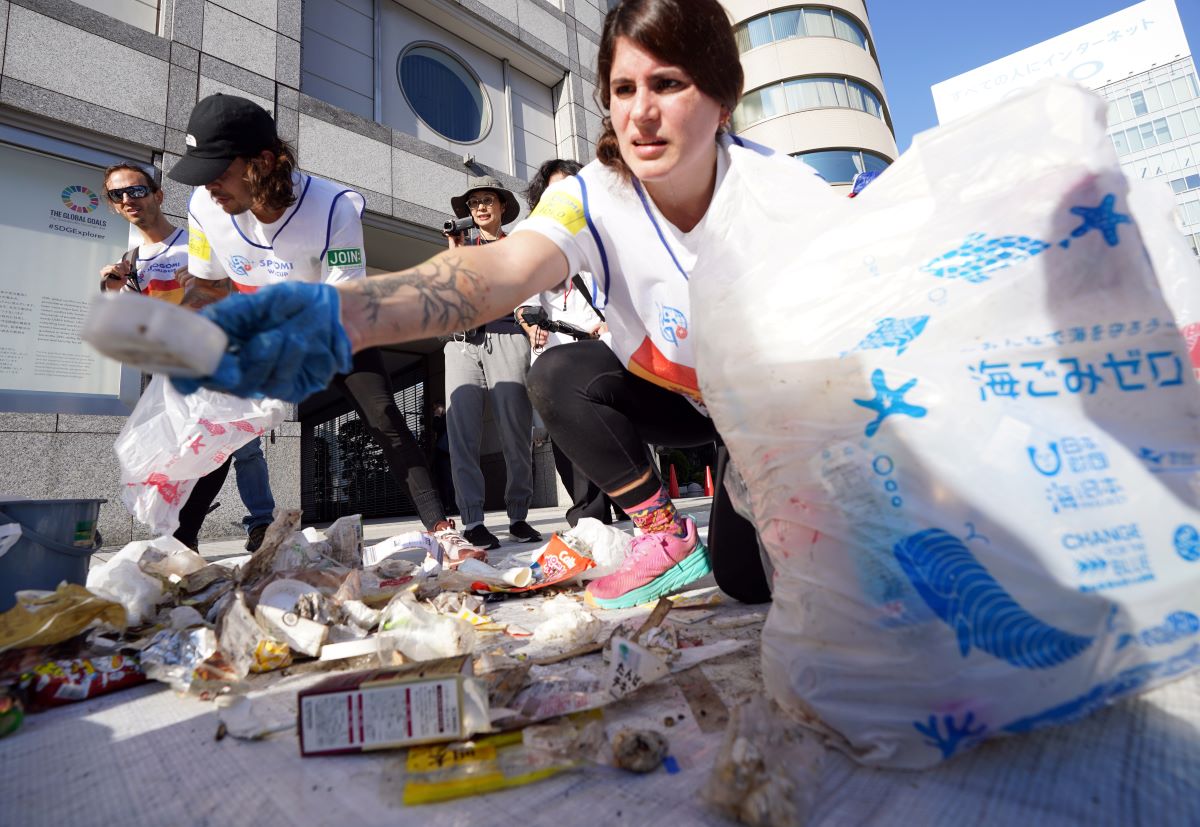
“People who had never picked up trash before, and people who weren’t particularly interested in environmental issues, were starting to join. I think that’s because we presented litter picking as a sport.”
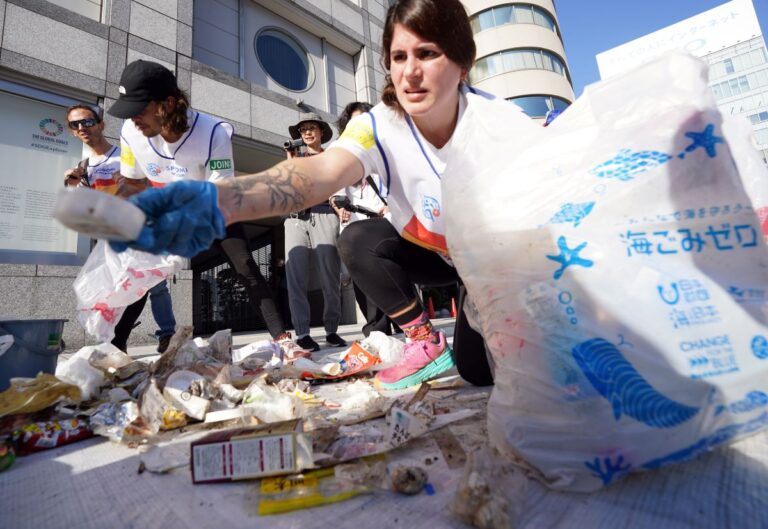
That insight comes from Kenichi Mamitsuka, the Japanese innovator who turned garbage collection into a competitive team sport known as spogomi — a portmanteau of sport and gomi, the Japanese word for trash. If you’ve ever visited Tokyo, you will get a taste for just how fussy the Japanese are about picking up trash. They use claw graspers for tiny bits of things, and scrub brushes on sidewalks.
What began as a local experiment has grown into something unexpectedly global. Spogomi now includes organized leagues, referees, time limits, scoring systems, and even a World Cup, drawing participants who might otherwise never attend a beach cleanup or environmental rally. The story, recently highlighted by National Geographic, points to a powerful truth: behavior change doesn’t always start with ideology. Sometimes, it starts with play.
Want to know the rules?
Environmental movements have long struggled with a perception problem. Too often, they feel moralistic, joyless, or reserved for the already converted. Spogomi flips that script. It reframes responsibility as action, and action as something social, physical, and — crucially — fun. Teams compete not just on volume of trash collected, but on sorting accuracy and teamwork. Winning isn’t symbolic – you can measure it.
There’s something quietly radical about this approach. By removing guilt and replacing it with momentum, spogomi attracts people motivated by camaraderie, competition, and pride rather than climate anxiety. It also sidesteps politics. You don’t need to agree on why waste is a problem to agree that it shouldn’t be on the street.
In a world saturated with environmental messaging, spogomi offers a reminder that solutions don’t always need to be heavier. Sometimes they need to be lighter — structured like a game, grounded in community, and designed to meet people where they already are.
It seems like a no-brainer, but sometimes you need to give evidence to city councillors: A new multi-institutional study led by UC Davis Health suggests that not all green space is created equal. Living in urban neighborhoods with more visible trees is associated with a 4% lower incidence of cardiovascular disease, while areas dominated by grass or low shrubs may be linked to higher cardiovascular risk.
The research, published in Environmental Epidemiology, analyzed more than 350 million street-level images using machine learning to distinguish between trees, grass, and other types of vegetation. The findings challenge long-held assumptions that simply adding “green space” to cities is enough to improve public health.
“Public health interventions should prioritize the preservation and planting of tree canopies,” said Peter James, associate professor in the UC Davis Department of Public Health Sciences and lead author of the study. “Urban forestry initiatives and policies that protect mature trees are likely to yield greater cardiovascular health benefits than investments in grass planting.”
MIT city tree researcher maps trees in cities around the world to check their health. Via MIT.
Why trees outperform lawns
Unlike satellite imagery, which often lumps all vegetation into one category, the researchers used street-level images—similar to what pedestrians see via platforms like Google Street View—to capture real neighborhood conditions. Deep-learning models identified trees, grass, sidewalks, cars, and other features, creating a granular picture of urban environments.
Those visual data were then linked to nearly 89,000 participants in the long-running Nurses’ Health Study, tracking 18 years of medical records and death certificates. The results were striking: More visible trees → 4% lower cardiovascular disease incidence
More grass → 6% higher incidence: Other green vegetation (shrubs, bushes) → 3% higher incidence
The protective effect of trees held steady even after accounting for air pollution, population density, regional differences, and neighborhood socioeconomic status.
Green Prophet’s reporting played a significant role in saving Jaffa Boulevard’s trees in Jaffa from being cut down for a Light Rail Train. Image credit: Karin Kloosterman
Researchers suspect the negative associations with grass may be linked to pesticide use, emissions and dust from from mowing equipment, reduced cooling capacity, and weaker noise and air-pollution filtering compared to trees.
With cardiovascular disease responsible for over 900,000 deaths annually in the U.S.—nearly one in three deaths, according to the Centers for Disease Control and Prevention—even small shifts matter.
“This opens a promising avenue: improving heart health through community-level environmental change, not just individual behavior,” said Eric B. Rimm, professor at Harvard T.H. Chan School of Public Health.
Solar energy in the Mojave Desert. Credit: Ivanpah, supplied.
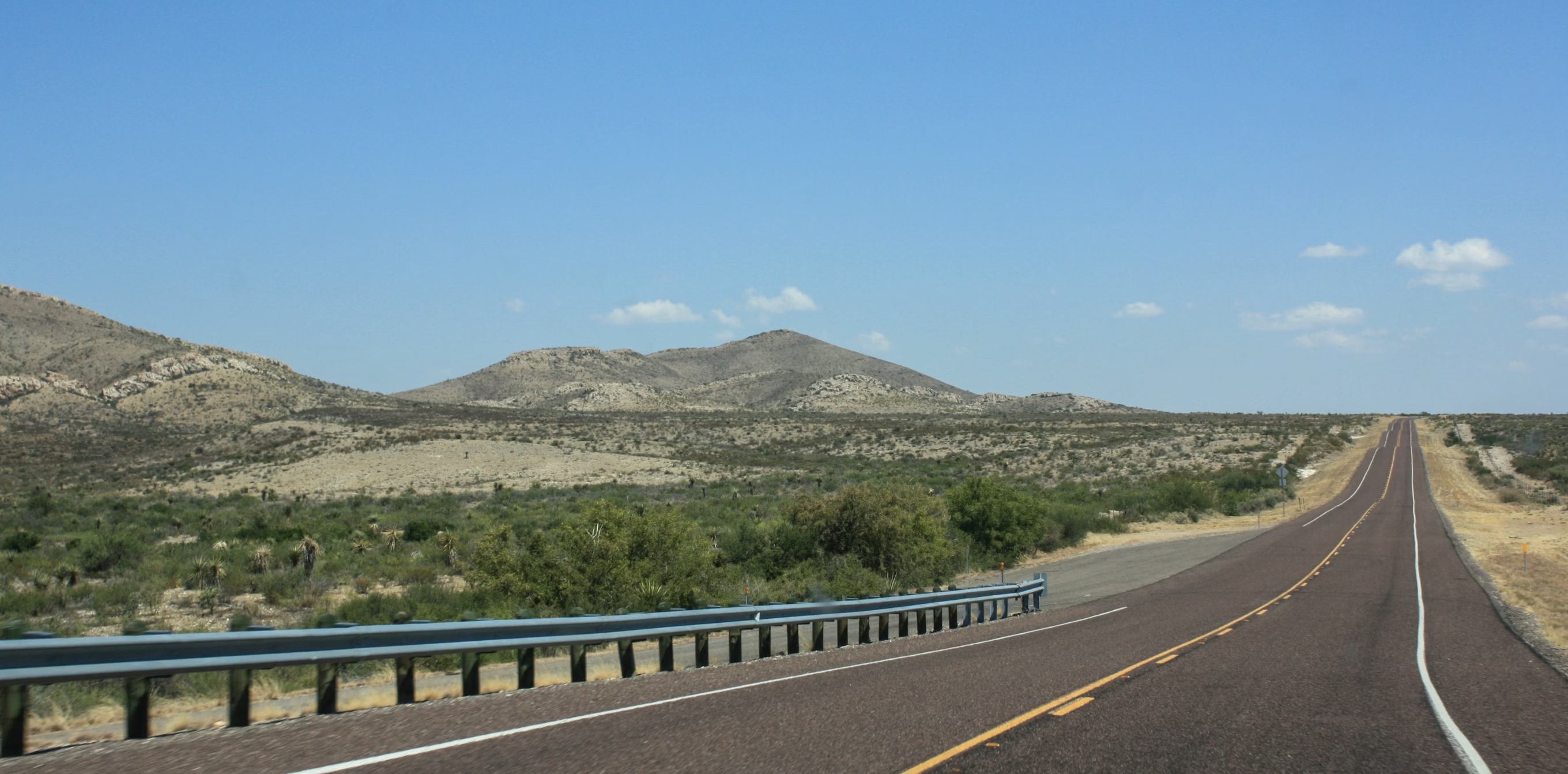
The American Southwest is where the EV transition faces its most unforgiving conditions. Extreme heat degrades EV batteries, causing range loss of 15% to over 30% when temperatures exceed 95°F to 100°F. Long travel corridors strain range limits of commuters and long-haul trucks. Grid access remains patchy across vast desert and rural zones. In much of Arizona, Nevada, New Mexico, West Texas, and inland California, electric mobility is not constrained by consumer interest, but by infrastructure reality. This is despite these regions being a hub for EV battery production to be close to the source of building lithium batteries.
This is the environment where M2PV Capital is building its business.
The company frames electric mobility infrastructure as requiring more than chargers. It argues that technical precision, grid independence, and operational excellence are essential in regions where traditional infrastructure does not exist. M2PV Capital develops, owns, and operates off-grid EV charging assets through an in-house technical model designed to bypass grid dependence entirely. Micro-grids are the key.
For Southwest communities and transport corridors, that approach addresses a core bottleneck: grid expansion timelines that stretch years beyond mobility demand. M2PV Capital’s strategy is structured around designing energy independence directly into each project.
The company positions its work around locations where conventional developers often hesitate to operate: desert regions, remote corridors, and underserved communities. Where the grid is absent or unreliable, its systems are designed to function independently and perform reliably for decades. This model reflects the Southwest’s physical realities. Solar resources are abundant. Population density is low. Travel distances are long and infrastructure must operate with minimal external support.
An endless American highway. Credit: Pete Alexopoulos
M2PV Capital is currently developing two primary business capabilities: Charging Plazas and power plant development. These projects are intended to demonstrate technical execution while establishing repeatable models for scalable deployment. In practical terms, this means EV charging stations paired with dedicated power assets, allowing each site to operate as an integrated energy system rather than a grid-dependent endpoint.
For Southwest planners and investors, the approach offers a potential blueprint for EV expansion without waiting for large-scale transmission upgrades. That balance is increasingly important as public agencies seek infrastructure models that align climate objectives with regional resilience and fiscal accountability.
M2PV Capital describes its role as building the infrastructure backbone for electric mobility in overlooked markets, combining technical depth, operational ownership, and long-term asset discipline to deliver predictable performance. Green Prophet speaks with M2PV Capital to learn more about opportunities as it tests the ground in the United States, bringing proof-of-concept for regions in Canada where extreme cold is the other side of the same coin, or the Middle East where thousands of miles of relentless desert could be charging station and energy opportunities as the world weans off oil and natural gas.
GREENPROPHET: What is M2PV Capital’s main focus? M2PV Capital: We develop, own, and operate off-grid EV charging infrastructure in underserved and remote regions where traditional grid access is limited or nonexistent.
Why off-grid?
It allows us to deploy infrastructure where it’s needed most, without waiting for grid expansion. We engineer energy independence into every project.
What business capabilities are you building?
Two core businesses: Charging Plazas for public EV infrastructure and power plant development to generate the energy that powers them independently. Both demonstrate our technical execution and create scalable models.
Why focus on desert and underserved regions?
These areas lack infrastructure but have critical mobility needs. They also require sophisticated engineering—our core strength.
What makes your technical approach different?
Everything is in-house: feasibility analysis, system design, construction oversight, and operations. We control quality and performance at every stage.
How do you ensure long-term asset performance?
Through rigorous upfront planning, robust system design, and continuous operational management. Our assets are built to perform reliably for 20+ years.
What do investors and policymakers gain from this approach?
Confidence. Our projects are technically sound, operationally proven, and financially disciplined. They deliver infrastructure that works and returns that are predictable.
What is the core opportunity you see in the market right now?
We can build power plants rapidly, because we don’t have to wait for grid interconnection (we are off-grid).
This fund aims to reduce downside risk and capitalize on the accelerating EV market by acquiring prime land on which we build off-grid, clean-energy-powered EV charging stations, particularly in the rapidly appreciating desert Southwest. Our differentiation lies in our ability to bypass grid interconnection bottlenecks, enabling faster development and mitigating risks from grid instability, while having a clear path to funding subsequent EV station construction. Because we invest in Opportunity Zones, the gains can be tax free. Creating power generation facilities in areas where the grid is weak or has not reached yet enables industry to co-locate, further increasing the value of the land we invest in.
What types of assets and geographic markets will your fund focus on and why?
Our fund will focus on companies operating in the Southwest United States, specifically land in Opportunity Zones with access to water, highways, and data lines. The Southwest allows us to generate energy at a low cost due to low land cost and high solar irradiation.
How will your fund create value across its portfolio?
By investing in companies that start with low-cost greenfield land and develop energy and transportation infrastructure, we invest in land that increases in value rapidly. While competitors focus on areas with grid connection, our investments can operate slightly outside the range of the grid and generate their own electricity, avoiding competition with large corporations in the current land grab.
Our CEO has 30 years of experience in the solar industry, 10 years in power plant development, five years in batteries, and two years in EV charging stations. He has designed, procured, built, and developed gigawatts of power plants.
Our COO has a background in transportation and logistics as well as EV chargers. We know how to design and build power plants fast.
Our portfolio companies acquire low-cost land and raise its value by creating local infrastructure through EV charging stations for trucks and passenger vehicles. Our strength is the ability to build power infrastructure anywhere.
Why the Southwest comes first
M2PV Capital identifies the Southwest United States as its primary growth region because extreme climate conditions, long travel corridors, and limited grid access create a persistent EV infrastructure gap. While desert regions are a natural fit, the company’s focus extends to any underserved or infrastructure-constrained areas within the region.
Its target audience includes infrastructure- and energy-focused investors, government and regional development decision makers, and participants across the EV and clean energy ecosystem.
Although initial deployments are concentrated in the Southwest, the company’s technical and operational model is designed to be repeatable in similar climates globally. Regions such as the Middle East share many of the same challenges, including extreme heat, remote locations, and the need for energy independence. International markets are viewed as longer-term extensions of the platform rather than immediate priorities.
M2PV Capital frames its five-year outlook around disciplined execution, foundation building, and long-term profitable operation of EV assets.
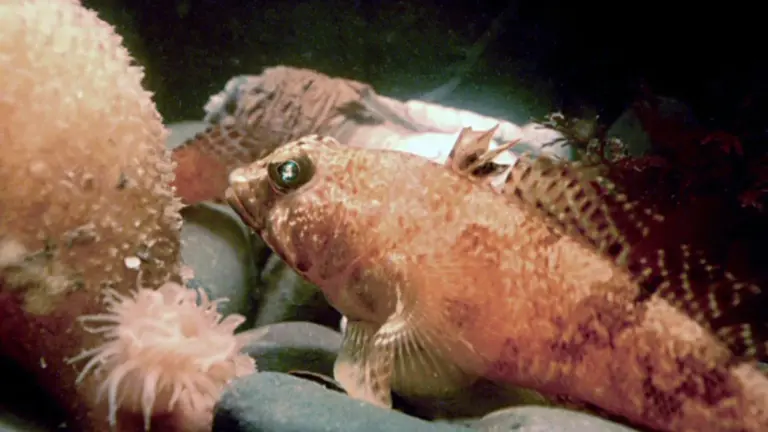
In 2019, an underwater robot camera exploring the seabed in part of the Antarctica’s Southern Ocean brought up footage of something no one suspected:a huge breeding ground of yellowfin rockcod fish.
You wouldn’t think that the freezing Arctic waters can sustain much life. One startling phenomenon is the greening of Antarctica due to climate change.The icy continent’s dim light, ever-present ice and extreme cold forbid human habitation and make research challenging.
The discovery occurred when the Larsen C ice shelf in the Wedell Sea calved; that is, an iceberg broke off the body of the ice shelf. Ice shelves play a large role in the rise and fall of global sea levels and contribute significantly to global ocean circulation and climate.
“The Weddell Sea, located within the Southern Ocean, is significant for its biological richness and its contribution to global ocean circulation and climate. It plays a critical role in forming water mass interactions that drive large-scale ocean currents, regulate global gas exchanges, and influence climate patterns. These interactions make the area a hotspot for biological productivity, activity, and abundance .”
The splitting off of the iceberg revealed part of the seabed that had been unaccessible until then. The opportunity to explore was there. A research team formed: the Weddell Sea Expedition 2019 onboard the SA Agulhas II.
In addition to studying conditions on the seabed, the research team hoped to locate the remains of the Endurance, a ship on an British exploration mission that sank in 1915 (the Endurance was found in 2020). Researchers dropped a camera robot dubbed “Lassie” into the sea.
The footage showed thousands of circular or oval shapes on the sea floor, arranged in a pattern covering hundreds of kilometers. They are fish egg nests, shallow forms scooped out of the sea bed, each with a protective raised edge of sediment packed around it. Parent fish keep guard, hovering over the eggs and fluttering their fins to keep them oxygenated.
The colonies are geometrically formed so that larger fish nest on the farther edges, while weaker, smaller fish, more vulnerable to predators, lay their eggs inside the pattern, preferably close to the shelter of rocks. When the eggs hatch, leaving empty nests, some fish even return and clear out debris that currents bring, to prepare for the next generation.
At first these shapes were a mystery. No one expected to find a vastfish colony thriving in one of Earth’s most extreme environments. Marine biologist Russ Connelly, of the University of Essex, England, said, “We weren’t actually sure what the videos were showing us at the time. We thought maybe it was a Weddell seal snout that was going down and bonking down into the seabed. Or that it was pockmarks from stones dropping from the ice and making craters.”
We already knew about diverse life form thriving in Antarctica. Penguins, seals, whales, seabirds, sponges, fish and squid are some, without even considering krill, the tiny crustaceans that almost everything else eats. The huge rockfish nurseries are a link in the wildlife food chain that came to light only after the Eclipse/Weddell Sea Expedition.
The Commission for the Conservation of Antarctic Marine Living Resources has proposed designating the Weddell Sea as a protected area. This would prevent international businesses with an eye on this huge fish nursery from mining the seabed and endangering the entire wildlife chain.
Thomas Desvignes, a fish biologist at the University of Alabama at Birmingham says, “A lot of Antarctic ecosystems are under pressure from different countries to be released for mining, fishing and basically exploitation of the environment. The new research offers one more reason why we should protect the Weddell Sea.”
Connelly adds, ““In general, we need to explore more of the oceans, because … we’re so surprised at every single time that we see life exists at these depths. We need to see what’s out there before species that we didn’t even know existed have been lost.”
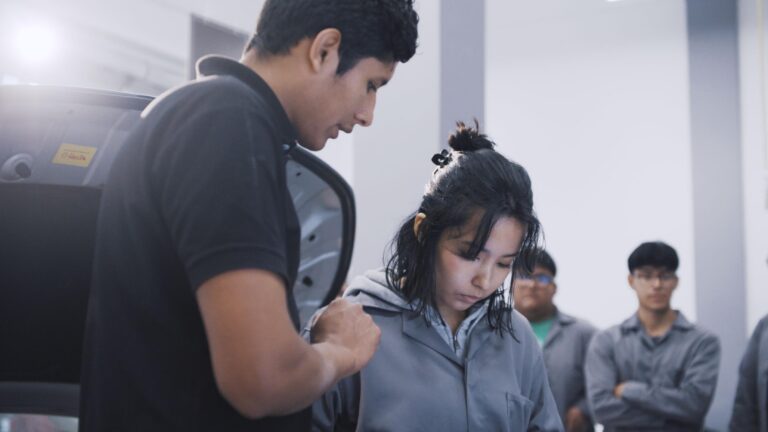
Kia trains mechanics of the future as part of its move to make meaning in the world. Image supplied by Kia to Greenprophet.
For decades, corporate social responsibility often meant a logo on a football jersey, a banner at a marathon, or a handshake photo with a charity. Visibility mattered more than durability. But that model is changing.
Kia’s new Bootcamp program is a clear example of this shift. This week, Kia Corporation (listed on the Korean Stock Exchange KRX: 000270) unveiled a documentary highlighting its flagship CSR initiative, which provides hands-on technological education to young people in Mexico, Peru, the Philippines, and Morocco, with expansion planned to Ecuador, South Africa, and Singapore in 2026. The goal is not short-term aid, but something far more radical in corporate philanthropy: self-reliance. They are training young people how to be mechanics – on combustion engines, hybrids and electric vehicles.
“Bootcamp is a very meaningful and valuable activity that draws a bright future from the deep well of global youth potential,” said Tae-Hun (Ted) Lee, Head of Global Operations Division at Kia. “We will continue to expand various programs that provide local partners with opportunities to acquire new technologies at world-class educational facilities while experiencing the Kia brand firsthand.”
From donations to “priming water”
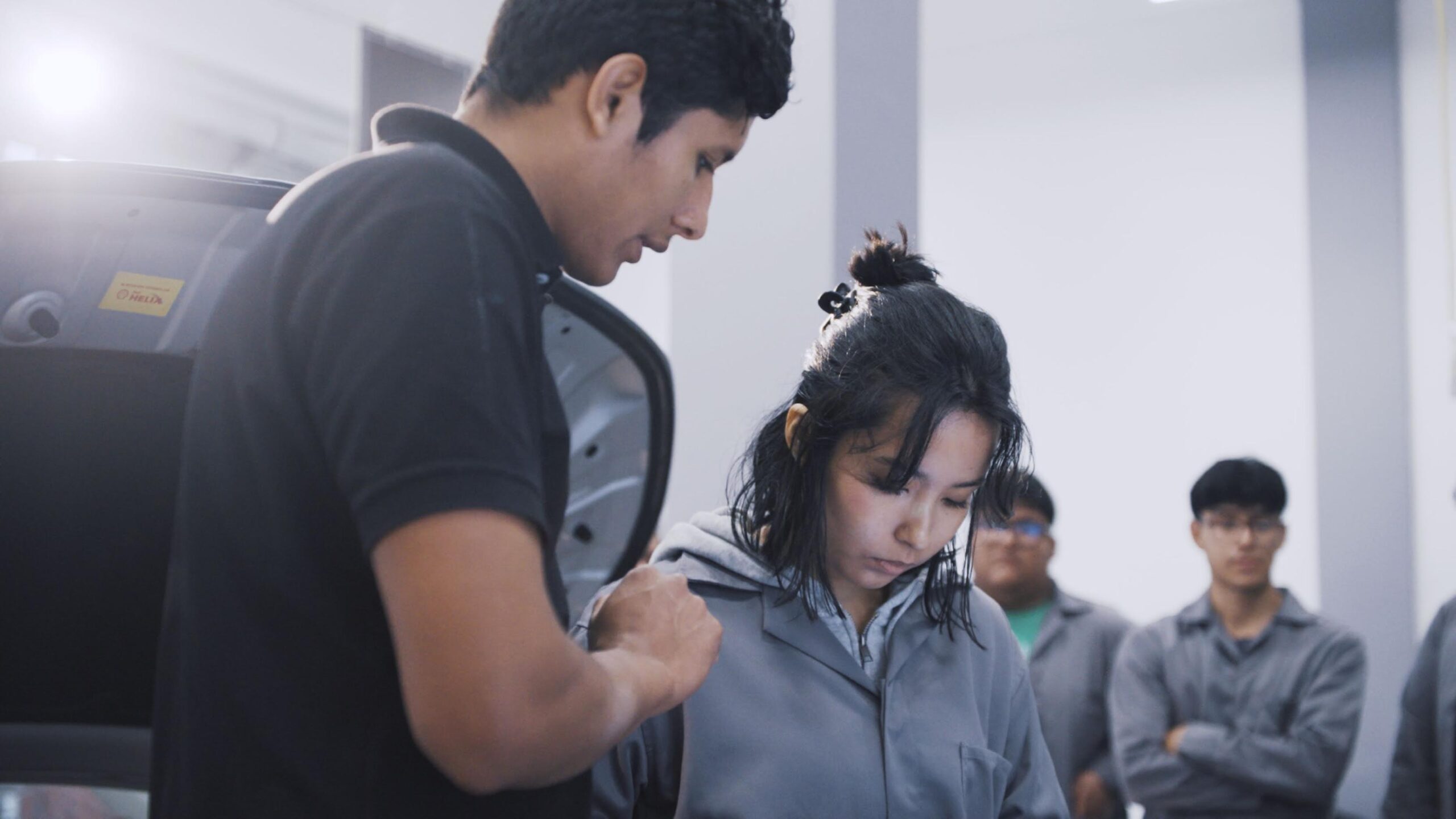
A student mechanic at the Kia Bootcamp program. Image supplied by Kia.
Kia describes Bootcamp (which made the news in the US over carjackings using a USB cable) using a metaphor borrowed from rural life: “priming water.” Just as a small amount of water is poured into a pump to start drawing water from a deep well, Bootcamp is designed to activate long-term capacity rather than deliver one-off charity.
Instead of giving money or equipment alone, Kia provides: Training vehicles, automotive tools and diagnostic equipment, instruction in combustion, hybrid, and electric vehicle technologies, partnerships with Kia retailers, garages and local schools. During Bootcamp 1.0 in 2025, their pilot program, Kia trained 87 professional mechanics, and 34 have already secured jobs at local dealerships. Another 50 trainees are currently in training in Morocco.
Kia is not alone.
Levi’s, for example, has shifted its sustainability focus beyond recycled denim into human skills. Through repair programs in schools and community spaces, Levi’s is teaching teenagers how to fix jeans — turning clothing care into an act of climate literacy and self-reliance.
Image by Emma Chamberlain for Levis
Patagonia has built its Worn Wear program around repair, resale, and repair education.
Microsoft funds cloud and AI skills programs in underserved regions.
And in the financial fintech world world, a similar shift is underway. My Say On Pay, a new intelligence platform for C-level compensation, monitors publicly traded companies to evaluate how CEO pay compares with shareholder value creation. Instead of celebrating executive excess (see our story on Rodney McMullen), the platform asks a harder question: Does leadership compensation reflect real performance? Its education arm, 36North, extends this philosophy to young investors, offering practical training in sound wealth management, long-term thinking, and responsible financial decision-making, with women investors at the core.
Together, these programs reflect the same emerging philosophy as Kia’s Bootcamp: empower people in the entire business ecosystem your business operates in with skills, not slogans.
We are entering an era where water, energy, labor, and skills are all becoming climate-sensitive resources. Societies cannot rely on governments alone to fill the gaps and AI is going to be fast replacing entry level jobs. This gives us hope that humans will still have work and purpose.
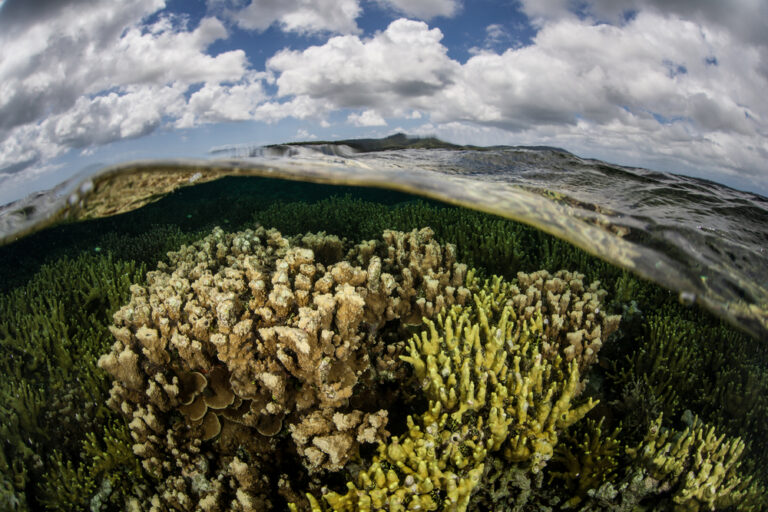
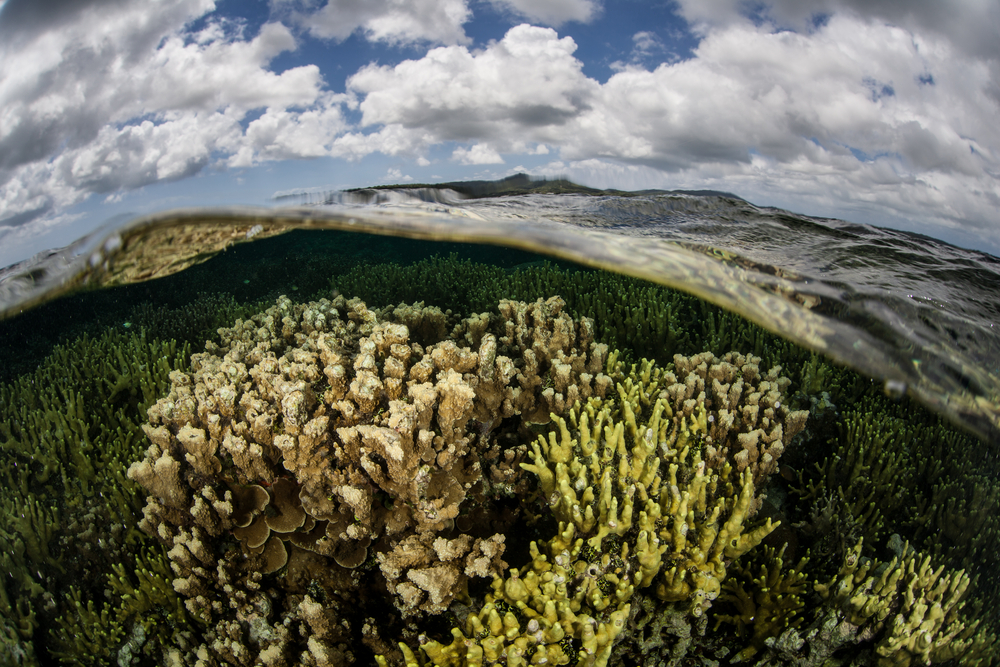
A study on corals. Image from Green Prophet archives.
A joint study by Tel Aviv University (TAU) and the University of Haifa set out to solve a scientific mystery: how a soft coral is able to perform the rhythmic, pulsating movements of its tentacles without a central nervous system. The study’s findings may change the way we understand movement in the animal kingdom in general and particularly in corals.
The study was led by Elinor Nadir, a PhD student at TAU, under the joint supervision of Professor Yehuda Benayahu of the School of Zoology at TAU’s George S. Wise Faculty of Life Sciences and Professor Tamar Lotan of the Department of Marine Biology at the Leon H. Charney School of Marine Sciences at the University of Haifa. The findings were published on November 11, 2025, in the scientific journal PNAS.
The research team discovered that the soft coral Xenia umbellata, one of the most spectacular corals on Red Sea reefs, drives the rhythmic movements of its eight polyp tentacles through a decentralized neural pacemaker system. Rather than relying on a central control center, a network of neurons distributed along the coral’s tentacle enables each one to perform the movement independently, while still achieving precise, collective synchronization.
“It’s a bit like an orchestra without a conductor,” explains Professor Tamar Lotan of the School of Marine Sciences at the University of Haifa. “Each tentacle acts independently, but they are somehow able to ‘listen’ to each other and move in that perfect harmony that so captivates observers. This is a completely different model from how we understand rhythmic movement in other animals.”
Corals of the Xeniidae family are known for their hypnotic movements — the cyclic opening and closing of their tentacles. Until now, however, it was unclear how they perform this. To investigate, the researchers conducted cutting experiments on the coral’s tentacles and examined how they regenerated and restored their rhythmic motion. To their surprise, even when the tentacles were cut off and separated from the coral — and even when further divided into smaller fragments — each piece retained its ability to pulse independently.
Subsequently, the researchers conducted advanced genetic analyses and examined gene expression at different stages of tentacle regeneration after separation from the coral. They found that the coral uses the same genes and proteins involved in neural signal transmission in far more complex animals, including acetylcholine receptors and ion channels that regulate rhythmic activity. According to the researchers, this discovery suggests that the origin of rhythmic movements — familiar to us from those underlying breathing, heartbeat, or walking — is far more ancient than previously thought. The corals demonstrate how coordinated movement can emerge from a simple, distributed system, long before sophisticated control centers evolved in the brains of advanced animals.
“It is fascinating to reach the conclusion that the same molecular components that activate the pacemaker of the human heart are also at work in a coral that appeared in the oceans hundreds of millions of years ago,” Professor Benayahu adds. “The coral we studied allows us to look back in time, to the dawn of the evolution of the nervous system in the animal kingdom. It shows that rhythmic and harmonious movement can be generated even without a brain — through remarkable communication among nerve cells acting together as a smart network. There is no doubt that this study adds an important layer to our understanding of the wonders of the coral reef animal world in general, and of corals in particular, and underscores the paramount need to preserve these extraordinary natural ecosystems.”
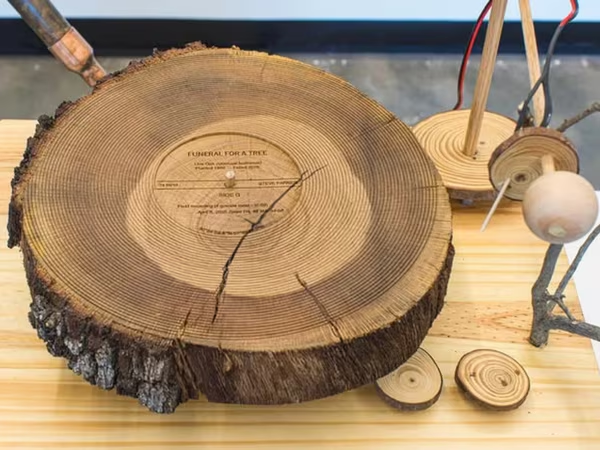
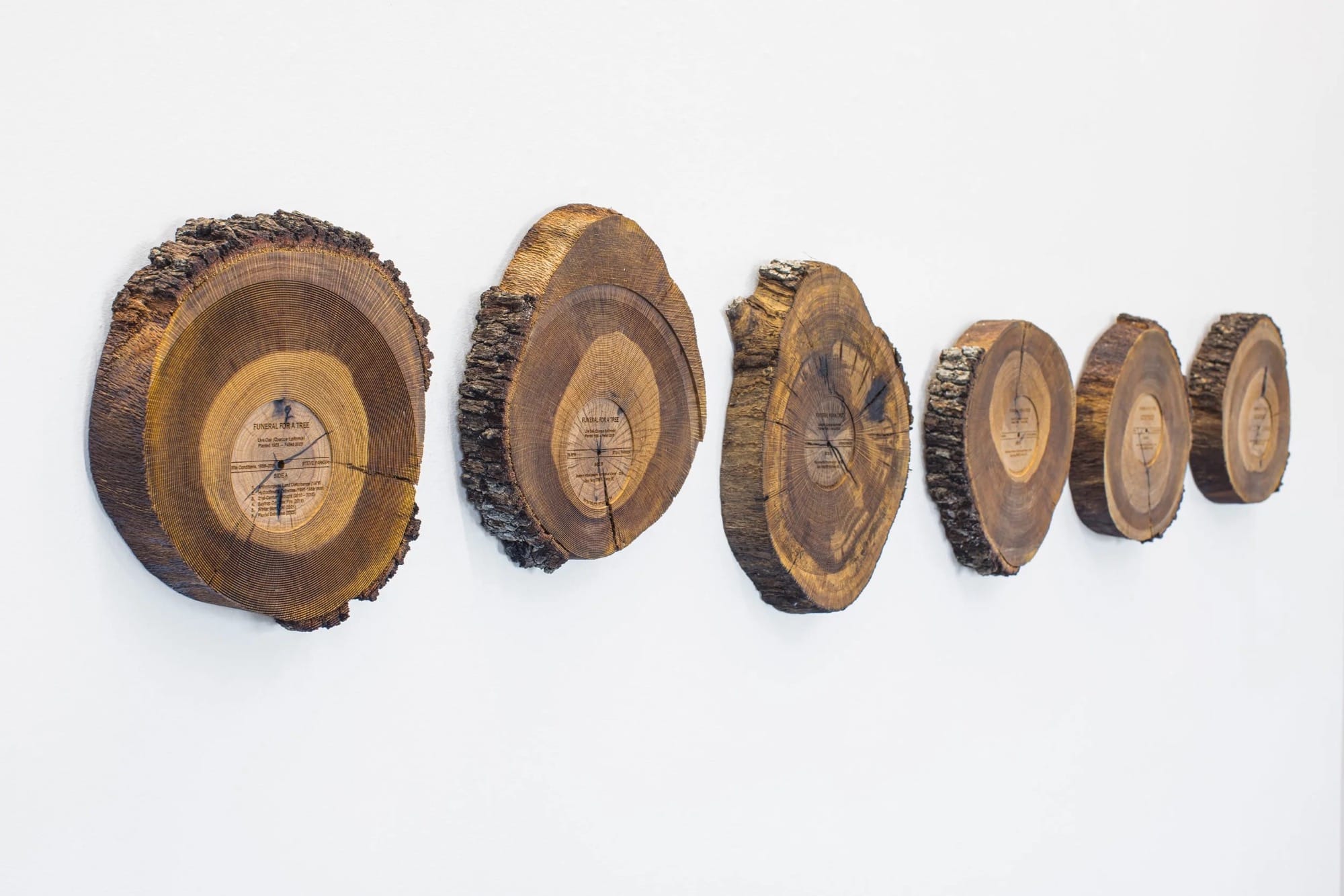
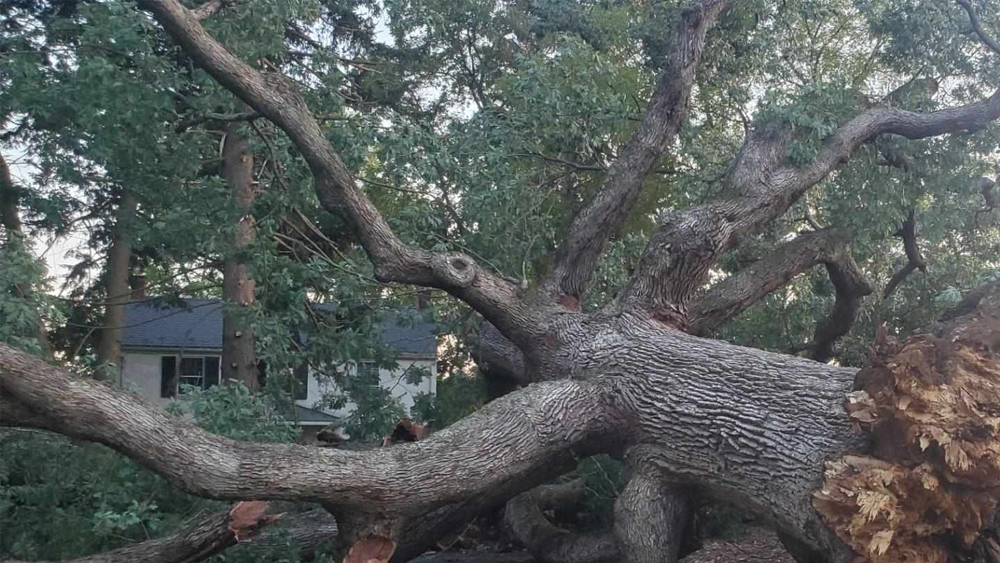
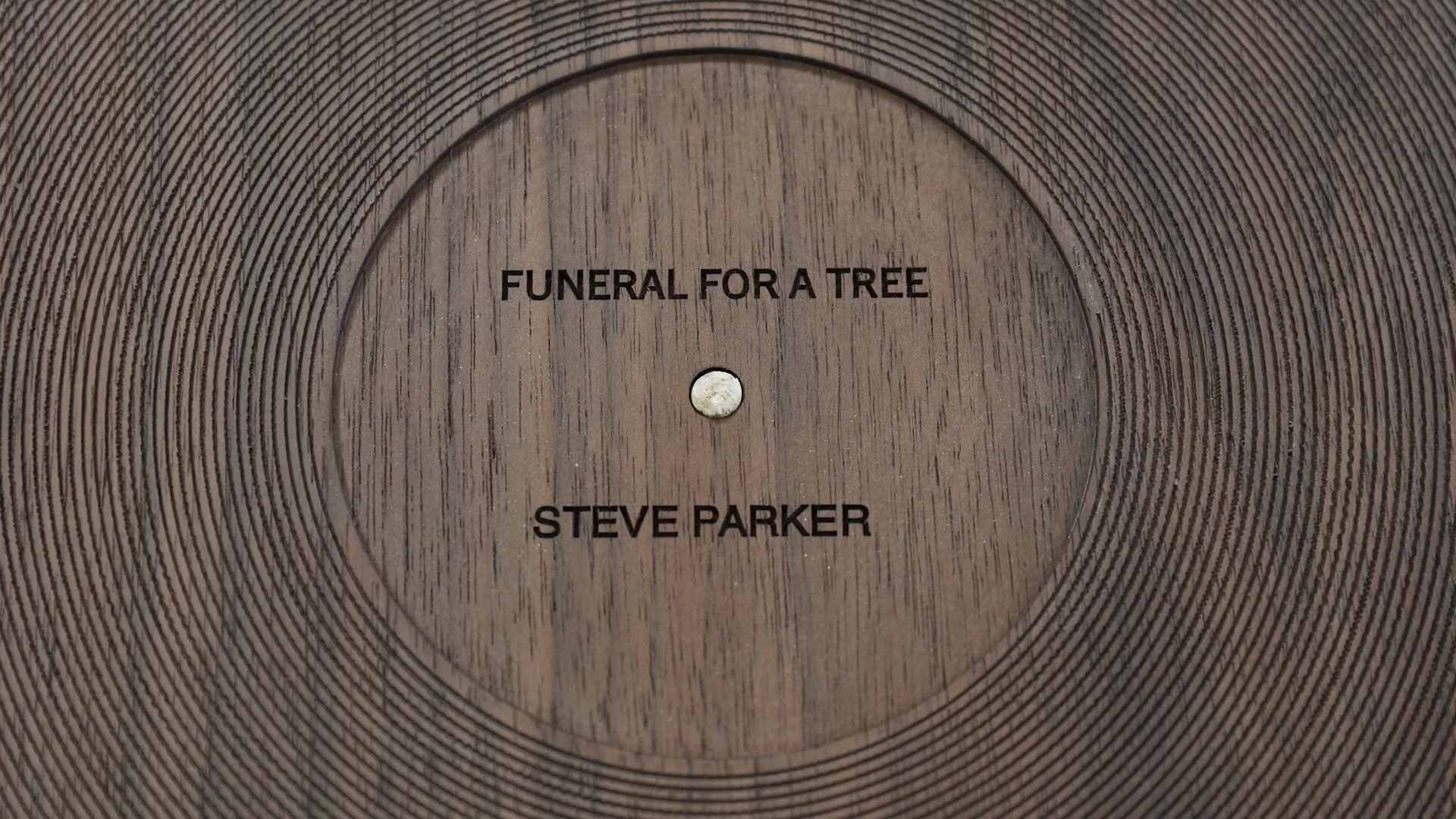
When a 65-year-old oak tree in Steve Parker’s yard died from fungal disease, he did not cut it into firewood or haul it away. He did not erase it. He cut the tree into disks and then turned them into records that play birdsong –– a touching tribute to the years that the tree was house and home to birds and all manners of creatures.
Parker, a Texas-based sound artist known online as @parkerstevesounds played the disks of wood on a Victrola-style turntable, and from the it the wooden records emit layered avian soundscapes, transforming dead wood into a living archive. He called the project Funeral for a Tree.
I once worked on a similar project in clay. I created a series of vessels designed to hold seeds. While shaping each one, I spoke to it — prayers, fragments of thought, small conversations with the material itself. I recorded my voice and the surrounding landscape of sound into the walls of the ceramic. Today’s machines cannot retrieve those recordings. But future instruments — capable of hearing at finer scales — may. The vessels are simply waiting for the right ears.
Funeral for a tree; Promotional material – Steve Parker.Funeral for a tree; Promotional material – Steve Parker.A disk from the old oak, Funeral for a tree; Promotional material – Steve Parker.The oak tree featured in Funeral for a tree; Promotional material – Steve Parker.Funeral for a tree; Promotional material – Steve Parker.
Trees are not neutral objects. Their rings hold records of rainfall, drought, heat, and cold. Their fibers contain chemical traces of stress, recovery, and time. In scientific terms, trees are environmental witnesses. In Parker’s hands, they become storytellers.
The project was later exhibited at Ivester Contemporary in East Austin, Texas where visitors encountered both the wooden records and the physical remains of the tree itself. The installation did not explain the tree. It allowed people to sit with it.
In a time when climate loss is reported in numbers — hectares, parts per million, extinction rates — Funeral for a Tree insists on intimacy. It is easy to talk about forests. It is harder to mourn a single trunk. It’s like people fighting for Gaza or Iran or places thousands of miles beyond their city limits, but they don’t have time to call their grandmother or check on the sick boy down the street.
Parker’s work invites us to create rituals and intimacy with objects and meaning close to our homes and hearts.
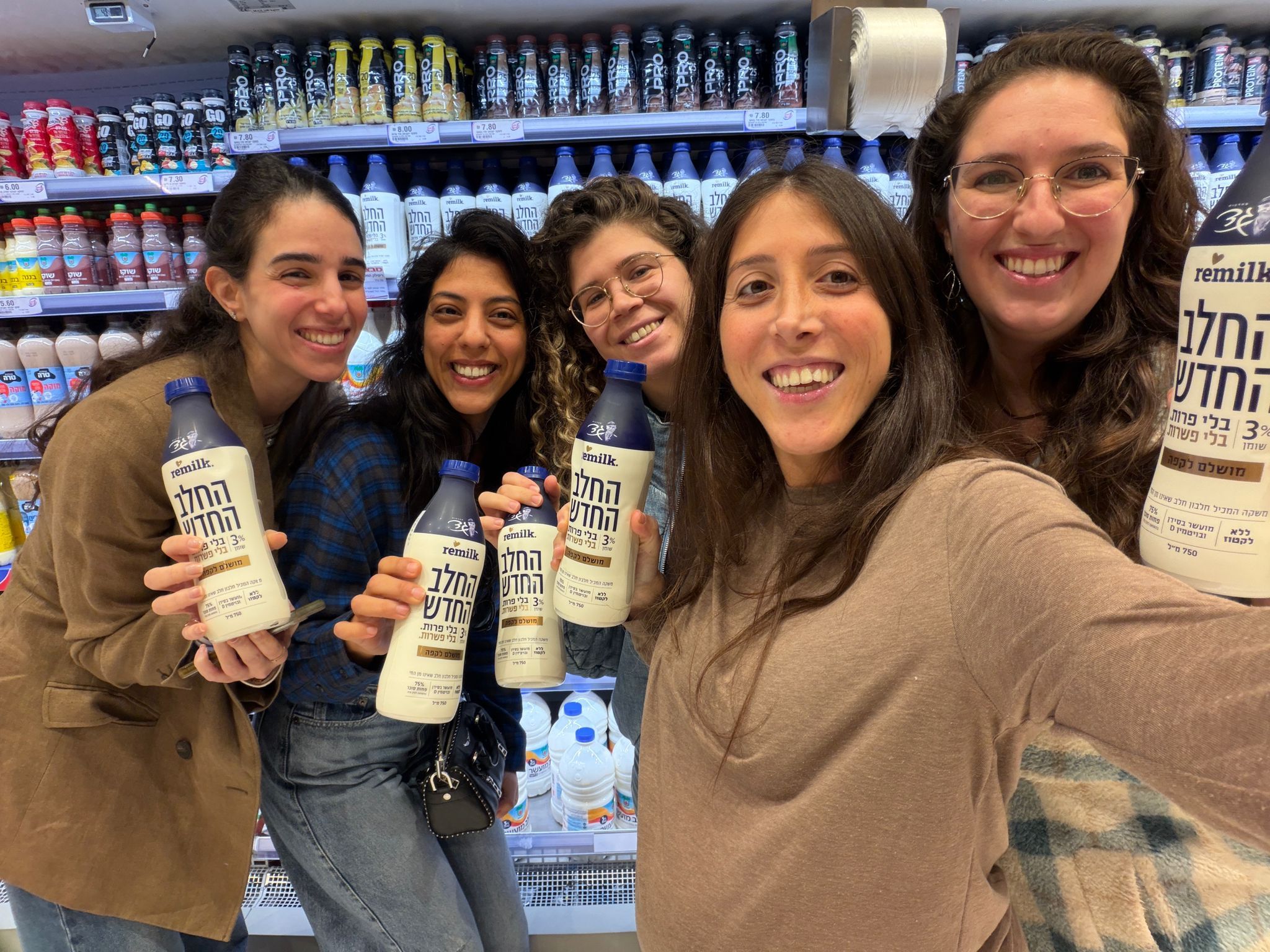
Remilk is now hitting the shelves in Israel. Courtesy Remilk.
This week, Israel’s precision-fermentation milk from Remilk is finally appearing on supermarket shelves. Staff members have been posting photos in Hebrew, smiling, tasting, and clearly enjoying the moment — not because it’s science fiction, but because it tastes like the real thing.
Remilk doesn’t come from cows. It uses microorganisms programmed to produce the same milk proteins found in dairy. The result is real milk protein — without the animal.
Having fun in the supermarket. Courtesy of Remilk.
Why does that matter? Because traditional dairy is one of the most resource-intensive foods we produce. It requires land, water, feed, antibiotics, and creates methane emissions. Precision-fermented milk needs far less land, far less water, and produces dramatically lower greenhouse gas emissions.
Why many scientists say cloned (fermented) milk is better:
No cows → no methane emissions that cause climate change
No antibiotics or hormones
Much lower land and water use
Identical proteins → same taste and texture
Suitable for people with lactose intolerance (depending on formulation)
Stable, scalable, and climate-resilient
It doesn’t mean traditional dairy and the taste of brie disappears tomorrow. But it offers a serious alternative in a world facing climate pressure, food security concerns, and ethical debates about industrial farming.
Israel has become a global leader in this field, alongside companies working on cultivated meat, egg proteins, and cheese alternatives. What once sounded futuristic is now simply… food. How do you say mooooo in Hebrew?
Lebanon’s environmental crisis is not abstract. It is shaped by war, neglect, corruption, and silence. Rivers carry untreated sewage and industrial waste into the Mediterranean. Dynamite fishing shatters fragile marine ecosystems along the coast. In many areas, Hezbollah’s military presence and decades of instability have made environmental accountability nearly impossible. What flows into the sea is not only pollution — it is politics, poverty, and unresolved war.
And yet, these stories are rarely told with depth, care, or courage. Silat Wassel’s Environmental Justice Journalism Fellowship is opening space for exactly that. They are looking for a few brave souls.
Rooted in South Lebanon and guided by feminist, youth-led, and independent journalism values, the Rooted Voices Rising initiative invites young journalists to document the environmental injustices shaping daily life — from contaminated water and illegal dumping to land exploitation, unsafe construction, and the invisible costs of conflict.
This is not a workshop for press releases and sound bytes but a five-day Environmental Justice Journalism Lab designed to equip six selected journalists with tools, mentorship, and editorial backing to produce two publishable investigations each. This will set the stage for helping more people become honest, environmental reporters.
Participants will explore environmental justice frameworks, solutions journalism, digital safety, and advanced storytelling methods — while remaining grounded in ethical reporting and lived community realities.
The fellowship is open to journalists across Lebanon, with priority for:
– Conflict-affected and underrepresented regions
– Women and rural youth
– Displaced individuals
– Marginalized communities
In a country where environmental damage is often normalized as collateral damage of politics, this fellowship insists that land, water, and life still matter.
The deadline to apply is 24 January 2026. Only shortlisted applicants will be contacted. Training details will be shared with selected fellows.
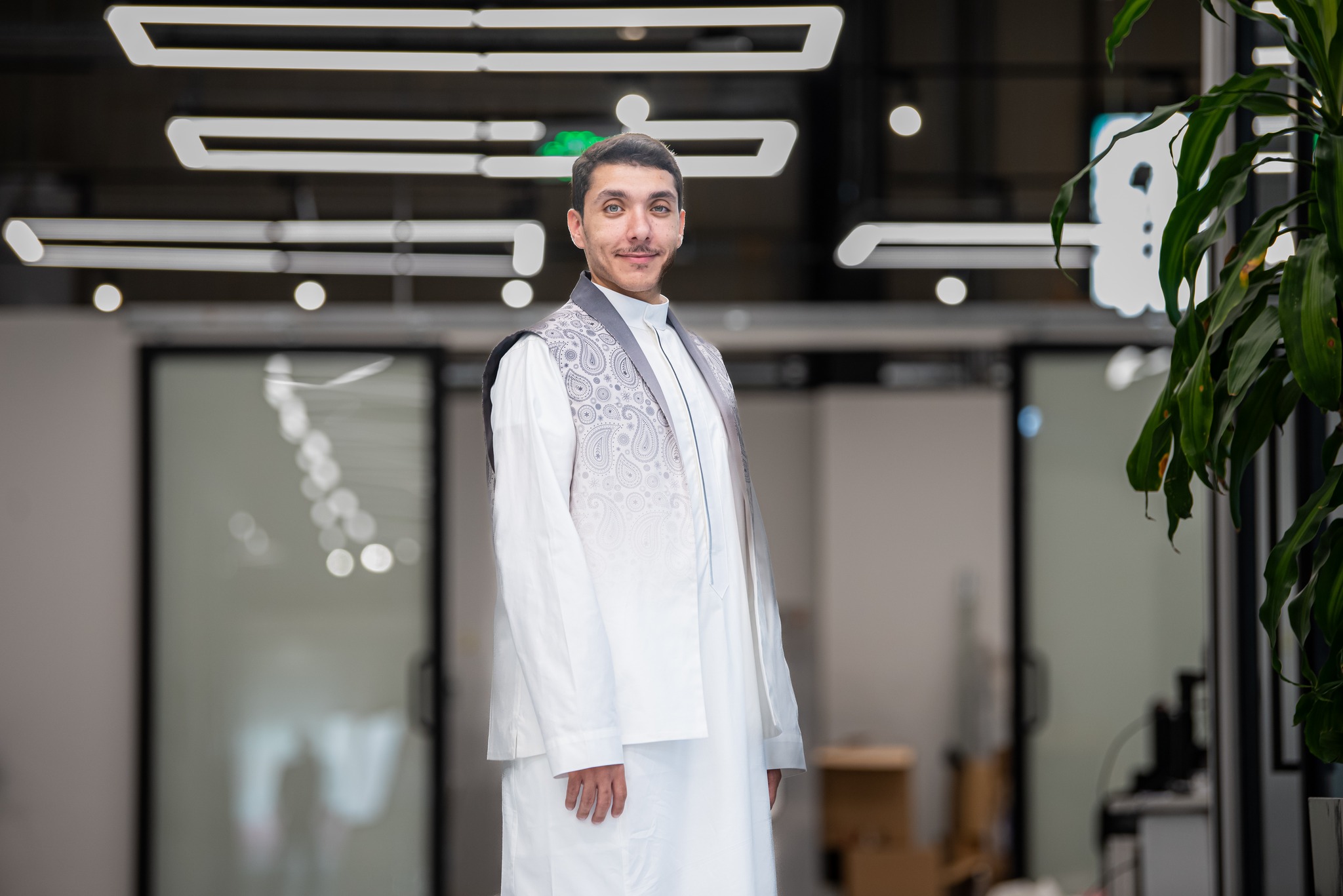
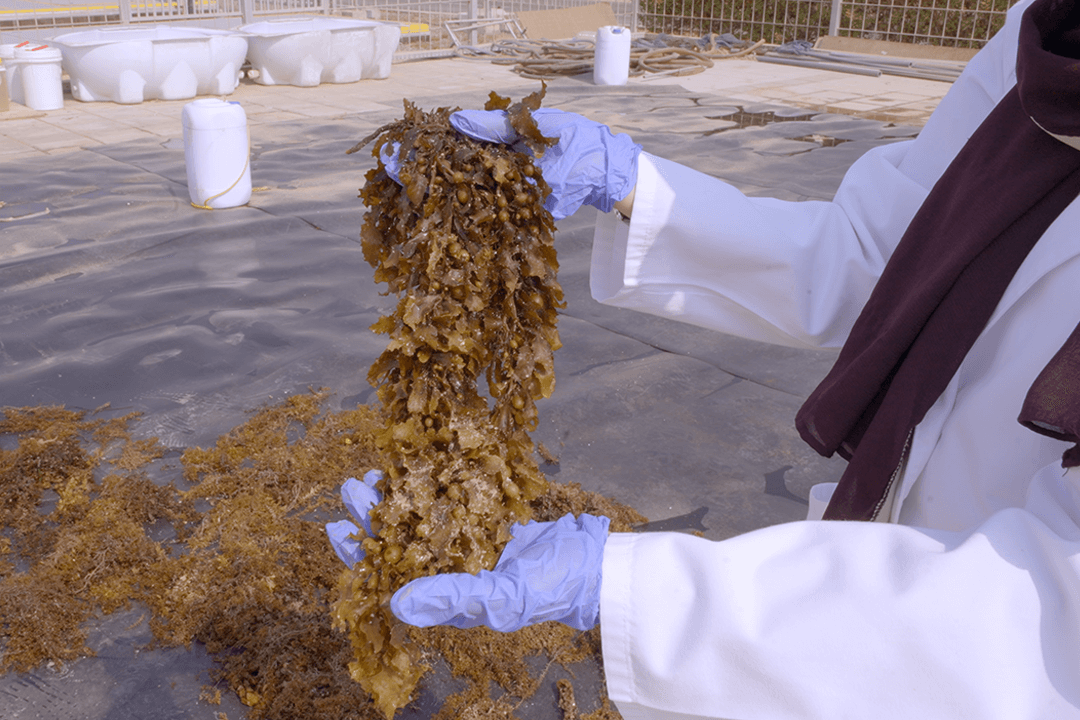
Seaweed abaya courtesy of King Abdullah University of Science and Technology (KAUST)
Fashion’s next material revolution may not come from a lab in Paris or Milan — but from the tides of the Red Sea. Along Saudi Arabia’s coastline, scientists, designers, and textile innovators are transforming Sargassum seaweed into a wearable fabric, turning a fast-growing marine biomass into a new generation of sustainable textile. The initiative, led by KAUST Beacon Development in collaboration with the Saudi Fashion Commission and PYRATEX, is part of a broader effort to rethink how fashion sources its raw materials.
The project was recently presented as the Red Sea Seaweed Textile, demonstrating how locally sourced algae can be converted into blended yarns and finished garments. Stella McCartney does it. So why not Saudis?
“This material represents a milestone in our mission to build a future-focused, sustainable fashion ecosystem in Saudi Arabia. It demonstrates how local resources, scientific excellence, and creative talent can come together to deliver solutions for the global fashion industry,” said Burak Çakmak, CEO of the Saudi Fashion Commission.
KAUST’s role has been central. Its marine scientists studied the biochemical structure of Red Sea seaweed and developed responsible harvesting methods that preserve both the ecosystem and the algae’s functional properties.
An abaya made from seaweed?
Seaweed abaya courtesy of King Abdullah University of Science and Technology (KAUST)
“By researching the biochemical properties of Red Sea seaweed, we were able to integrate local algae species into an innovative blended yarn,” said Fiona Symes, COO of KAUST Beacon Development.
PYRATEX then translated that biomass into textile form, blending the algae with Lyocell and organic cotton to produce a fabric that is breathable, traceable, and suitable for garment production. The Saudi Fashion Commission’s development studio produced complete garments from the material — not as conceptual pieces, but as real clothing.
Saudi fashion week features Moroccan designer Yasmina Qanzal. Courtesy photo.
These shows reflect a larger shift in how fashion in the Middle East engages global trends while honoring local sensibilities — moving beyond traditional expectations to embrace broader stylistic expressions that include functional, climate-appropriate swimwear alongside couture and everyday wear.
The seaweed fabric project reflects a growing shift across the fashion world. Designers such as Stella McCartney have long argued that sustainability cannot rely only on recycled synthetics or reduced harm. McCartney has repeatedly called for materials that are regenerative, ethical, and transparent — fibers that restore ecosystems rather than merely slow damage.
Luxury and performance brands alike are now experimenting with algae, mycelium, pineapple fiber, cactus leather, and agricultural waste. But what makes the Red Sea initiative distinctive is its regional grounding: a local marine resource transformed locally, with scientific validation and design integration.
Men’s suit courtesy of King Abdullah University of Science and Technology (KAUST)Men’s suit courtesy of King Abdullah University of Science and Technology (KAUST)
Fashion is one of the most environmentally demanding industries on Earth, responsible for heavy water use, chemical pollution, and carbon emissions. Changing fabrics may seem small, but materials determine supply chains, farming practices, and waste streams.
Seaweed offers a radically different model. It grows without freshwater irrigation, fertilizers, or farmland. It absorbs carbon and regenerates rapidly. It does not compete with food systems. And it invites coastal stewardship rather than land exploitation.
Images of seaweed courtesy of King Abdullah University of Science and Technology (KAUST). From Red Sea seaweed to runway-ready fabric, Saudi Arabia is quietly reshaping fashion’s material future. KAUST scientists, designers, and textile innovators are proving that sustainability can begin in local ecosystems. As seaweed becomes wearable, fashion is learning to grow not from fields — but from tides.Images of seaweed courtesy of King Abdullah University of Science and Technology (KAUST)
For Saudi Arabia, this project also signals a broader narrative shift. The Kingdom is increasingly positioning itself not only as an energy producer, but as a knowledge and innovation economy — where science, sustainability, and culture intersect.
For fashion, the message is equally clear: the future of luxury will not be defined only by design houses, but by material intelligence. Garments made from seaweed may not replace cotton or polyester tomorrow. But they challenge designers, investors, and consumers to imagine clothing that begins in ecosystems rather than factories.
As Stella McCartney and other sustainability leaders have shown, fashion does not change when trends shift. It changes when materials do.