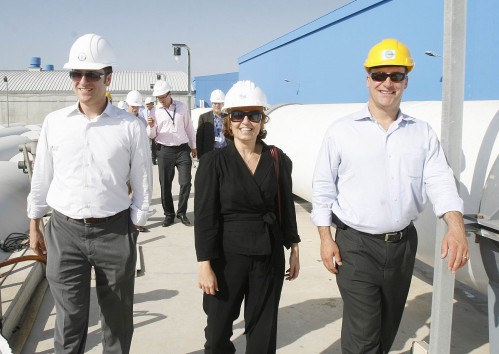

 Collecting water from thin air is not an odd idea. The ancient Israelites did it back in the day and they have a prayer for the dew, suggesting they collected it. A while back, I wrote an article about the new desalination plant in operation in Ashkelon, Israel, which is currently said to be supplying enough fresh water to satisfy about 6% of the entire country’s fresh water needs.
I later wrote about an even larger desalination project in Saudi Arabia which together with other desalination plants supplies about 70% of Saudi’s water needs for fresh drinking water. Israel and the United Arab Emirates have recently partnered. Water desalination projects together likely will come to the table.
All of this sounds grand, except for one thing, which was politely pointed out to me by a reader. And that “small point” is the immense amount of energy needed to run the plant, and what happens to all the salt that is produced during the desalination process? It’s polluting. The greenhouse gases extraordinary. Yemen is about to implement a new low tech solution.
The salt is simply dumped somewhere, contributing to pollution of natural ground aquifers, or returned back to the sea to make the sea water even more salty? The commenter then suggested that a much better way to produce fresh water, without the drawbacks of desalination is through condensation and evaporation of water vapors present in the atmosphere.
Condensation, evaporation; why not? There was also something written earlier about a device, originating in the US that removes water vapor from the air and turns it into drinking water. The principle works in a similar manner to what happens when water is created in air conditioning systems and simply runs or drips out to the ground, being wasted instead of used.
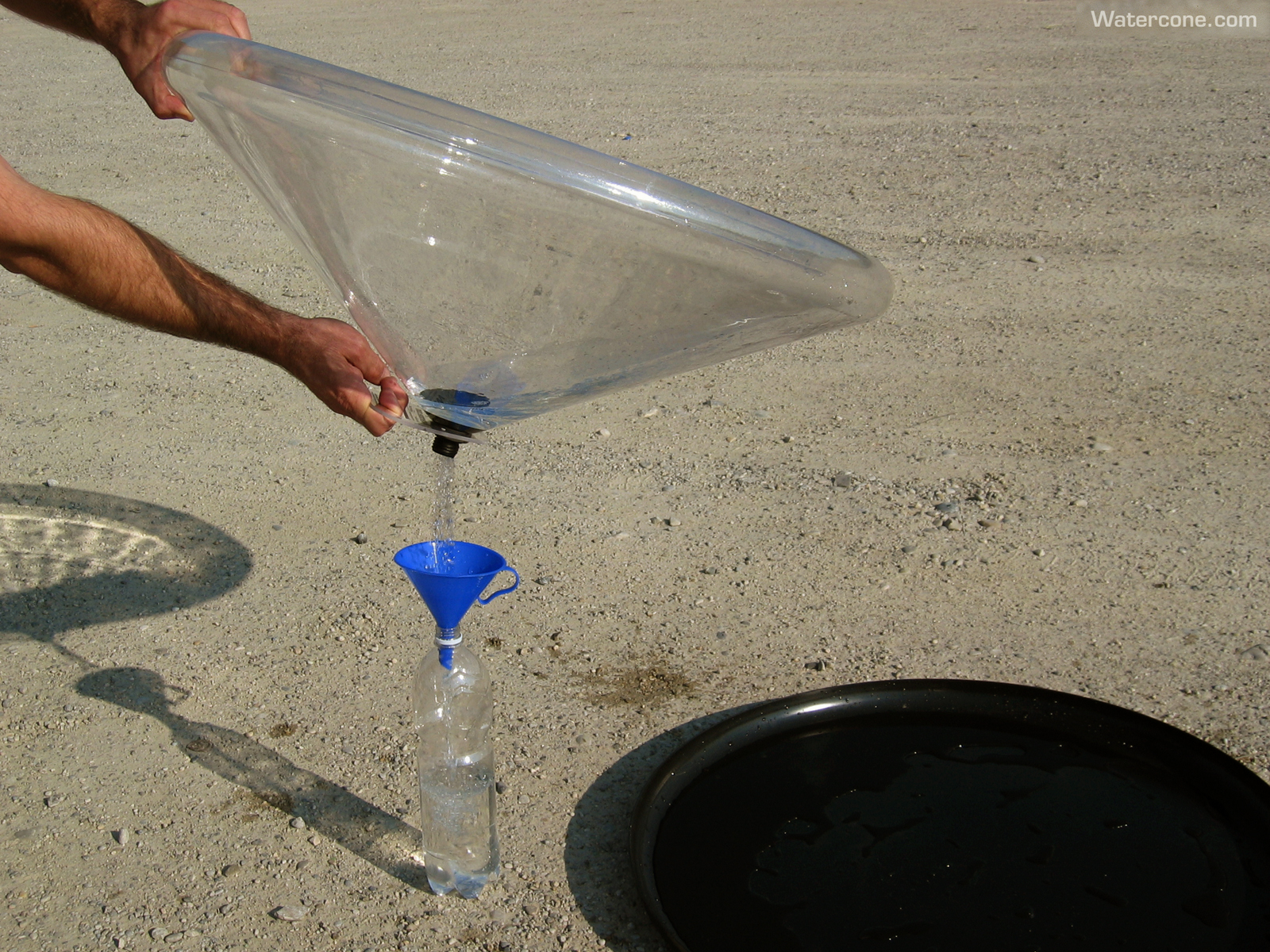
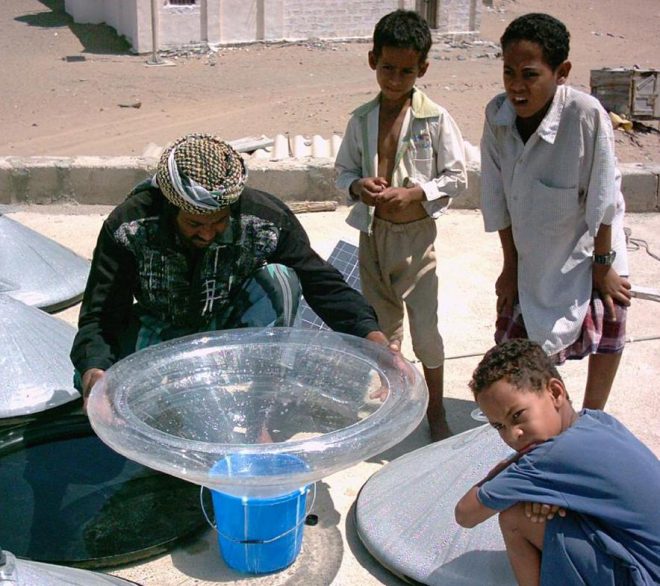
After doing some investigation, I found some very simple, yet ingenious methods for creating fresh water from dew, saltwater, brackish, and other sources of water from the air. One method involves the use of an inverted plastic cone a “Watercone” that is placed over a salt water source, such as a marsh, or even put on the ground, taking advantage of the simple process of evaporation. Yemen has announced that it will be using the “technology” in a new pilot project to supply much needed water to its citizens.
One of these inverted cones, which measure about 1/2 meter in diameter and are about 35 to 40 cm high, can create as much of one liter of water per day. See the video on how it works below. (And here are instructions links to PDF)
[youtube]http://www.youtube.com/watch?v=On7gbKIa5zc&feature=player_embedded[/youtube]
Now one liter per day doesn’t sound like a lot, but think of how much fresh water could be created if a many as 1,000 of these cones are placed in an area.
Like Tal Ya water irrigation trays for agriculture which use passive energy to water and keep water in these plastic cones cost little to make, and can even be constructed form recycled plastic bags and bottles, thus solving another environmental problem that is still causing considerable pollution to our open spaces and beaches. And they are like a miniature version of the seawater greenhouse project in Qatar. Also in Abu Dhabi.
The Watercones are an excellent idea for under-developed locations, and for more developed ones as well. They literally pay for themselves in a relatively short period of time, and require very little attention and maintenance. I think it might be worth a visit to the Water Cone website and I’m sure you’ll afterwards agree that this idea is not as far fetched as might be believed. Although the site does not look like it has been updated in years. This is often the case: great ideas are not marketed well.

Fresh water, from both the sea and the ground without the need for power plants and expensive equipment; what’s more environmentally friendly than that?
More water collecting stories:
EWA Collects Water From Thin Air
See Tal Ya in this Agritech conference story
Going On A Water Cequesta
Seawater Greenhouses in Qatar

 The massive swine flu cull in Egypt has impacted the city’s garbage collectors, the Zabaleen. Normally they fed organic waste to the pigs. Now what?








 Ecomum has already sung the praises of Israeli company