For oil-rich, environmentally vigilant Gulf states, Astro isn’t just another startup story. It is a blueprint for accelerating an energy transition that is now existential, not optional.
Christ’s thorn jujube (Ziziphus spina-christi) also known as the sidr tree is a real, identifiable tree native to the Middle East, and it appears—directly or indirectly—in Islam, Judaism, and later Christian tradition. The connections between the three faiths are not theological agreements but overlapping uses, names, and symbolic associations rooted in the same landscape.
For oil-rich, environmentally vigilant Gulf states, Astro isn’t just another startup story. It is a blueprint for accelerating an energy transition that is now existential, not optional.
Christ’s thorn jujube (Ziziphus spina-christi) also known as the sidr tree is a real, identifiable tree native to the Middle East, and it appears—directly or indirectly—in Islam, Judaism, and later Christian tradition. The connections between the three faiths are not theological agreements but overlapping uses, names, and symbolic associations rooted in the same landscape.
For oil-rich, environmentally vigilant Gulf states, Astro isn’t just another startup story. It is a blueprint for accelerating an energy transition that is now existential, not optional.
Christ’s thorn jujube (Ziziphus spina-christi) also known as the sidr tree is a real, identifiable tree native to the Middle East, and it appears—directly or indirectly—in Islam, Judaism, and later Christian tradition. The connections between the three faiths are not theological agreements but overlapping uses, names, and symbolic associations rooted in the same landscape.
For oil-rich, environmentally vigilant Gulf states, Astro isn’t just another startup story. It is a blueprint for accelerating an energy transition that is now existential, not optional.
Christ’s thorn jujube (Ziziphus spina-christi) also known as the sidr tree is a real, identifiable tree native to the Middle East, and it appears—directly or indirectly—in Islam, Judaism, and later Christian tradition. The connections between the three faiths are not theological agreements but overlapping uses, names, and symbolic associations rooted in the same landscape.
For oil-rich, environmentally vigilant Gulf states, Astro isn’t just another startup story. It is a blueprint for accelerating an energy transition that is now existential, not optional.
Christ’s thorn jujube (Ziziphus spina-christi) also known as the sidr tree is a real, identifiable tree native to the Middle East, and it appears—directly or indirectly—in Islam, Judaism, and later Christian tradition. The connections between the three faiths are not theological agreements but overlapping uses, names, and symbolic associations rooted in the same landscape.
For oil-rich, environmentally vigilant Gulf states, Astro isn’t just another startup story. It is a blueprint for accelerating an energy transition that is now existential, not optional.
Christ’s thorn jujube (Ziziphus spina-christi) also known as the sidr tree is a real, identifiable tree native to the Middle East, and it appears—directly or indirectly—in Islam, Judaism, and later Christian tradition. The connections between the three faiths are not theological agreements but overlapping uses, names, and symbolic associations rooted in the same landscape.
For oil-rich, environmentally vigilant Gulf states, Astro isn’t just another startup story. It is a blueprint for accelerating an energy transition that is now existential, not optional.
Christ’s thorn jujube (Ziziphus spina-christi) also known as the sidr tree is a real, identifiable tree native to the Middle East, and it appears—directly or indirectly—in Islam, Judaism, and later Christian tradition. The connections between the three faiths are not theological agreements but overlapping uses, names, and symbolic associations rooted in the same landscape.
For oil-rich, environmentally vigilant Gulf states, Astro isn’t just another startup story. It is a blueprint for accelerating an energy transition that is now existential, not optional.
Christ’s thorn jujube (Ziziphus spina-christi) also known as the sidr tree is a real, identifiable tree native to the Middle East, and it appears—directly or indirectly—in Islam, Judaism, and later Christian tradition. The connections between the three faiths are not theological agreements but overlapping uses, names, and symbolic associations rooted in the same landscape.
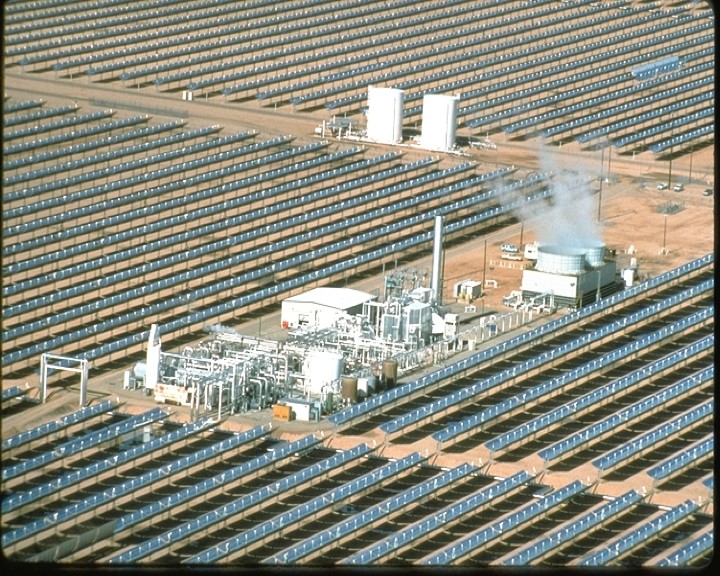
Sunday Energy, a solar energy service provider in Israel, and Ormat Technologies, one of the world’s largest geothermal power solutions companies, recently announced they will build a 1MWp photovoltaic solar installation on the roof of Ormat’s factory in Yavne, Israel.
Once complete, the 16,000 square meter installation will be the largest PV roof in the Middle East and will generate over NIS 60 million from solar energy sales over the next 20 years.
The project will cost approximately NIS 20 million to construct and is expected to be completed by the first half of 2010.
So we all know that the Middle East is biospherically fascinating, but at the ongoing meeting of the UN International Coordinating Council of the Man and Biosphere last Tuesday, UNESCO took notice as well, adding more Middle Eastern sites to UNESCO’s World Network of Biosphere Reserves.
In fact, for the first time, a site in Syria was declared.
So what is a Biosphere Reserve? Biosphere reserves are sites recognized under UNESCO’s Man and the Biosphere Programme, which innovate and demonstrate approaches to conservation and sustainable development. They are of course under national sovereign jurisdiction, yet share their experience and ideas nationally, regionally and internationally within the World Network of Biosphere Reserves. There are 531 sites worldwide in 105 countries.
I can’t be here in person to address you, since I passed into oblivion long ago. But as a member of a U.S. graduating class of 1971 at a small college in Boston, I wanted to leave you with a brief message — from the past to the future — about global warming and climate change.
As the class of 2099 here at Tel Aviv University in Israel, you are about to enter the 22nd Century in a few more months, and you will bring with you not only your university experience but also your career expectations and personal anxieties as citizens living on a planet in the midst of a climate crisis.
I’m sure you’ve heard this term a lot in the past four years — “climate crisis” — but you should know that in my days as a student in the 1960s, we never used the phrase. Back then, we had not even heard of the term yet!
Ben Gurion University of the Negev, one of Israel’s finest academic institutions, and one in which its environmental and alternative energy projects have received world-wide acclaim, honored six outstanding individuals with Honorary Doctoral degrees at the University’s 39th Annual Board of Governors Meeting at the Campus on May 25th.
One of these individuals, Dani Karavan, is one of Israel’s most outstanding environmental sculptors, who has won numerous awards for his monumental memorials which “blend into the environment” in which they are created.
“Jordan needs to develop sustainable or ‘green’ construction practices based on traditional concepts with modern material and practices,” said Jordan’s Princess Sumaya, president of the Royal Scientific Society, at the opening of the two day Think Green 2 in Real Estate Development Conference in Amman on Tuesday, May 26.
The country has started with its groundbreaking on its 50 story LEEDS certified skyscraper, the Samaya Amman.
The conference was attended by corporate delegates from a number of Arab countries, as well as architects, contractors, designers, environmentalists was hosted for the purpose of promoting the use of more efficient and environmental friendly building construction methods, over more conventional ones used in Jordan and elsewhere up to now.
Tigo develops photovoltaic systems optimization solutions, squeezing more energy from your solar energy system; and the financing was secured by Israel Cleantech Ventures Funds.
Despite the economic downturn in the US, sending shockwaves around the world, there appears to be no declining interest in funding companies in the renewable and alternative energy fields. Israel clean technology companies are among those which remain very popular.
Tigo develops photovoltaic systems optimization solutions, and current investors, including the US venture capital funds Matrix Partners and OVP Venture Partners, participated in the round.
The second a nuclear bomb detonates, not only human life is vaporized at Ground Zero but so is every breath taken by “lesser” life forms, animal or plant.
A nuclear attack anywhere will make all the world’s conservation efforts (and past conflicts in the Middle East) look like child’s play, so as a Middle East-centric environment news site, we are concerned about last week’s nuclear bomb testing in North Korea, and Iran’s ambitions to obtain the bomb.
Qatar, one of the largest polymer-producing countries in the Middle East region has new ambitions for recycling its plastic waste. Qatar University has paired up with The University of Sheffield, UK, to launch a new centre for the production of environmentally-friendly materials for local industries.
Called the Polymer Centre, according to the Sheffield Telegraph it will focus on recycling plastic waste in Qatar and will bring researchers from the two countries together for optimizing the mechanical properties of blends from plastic waste.
Dr Alma Hodzic, a senior lecturer at the University of Sheffield’s Department of Mechanical Engineering, said: “The research carried out at the Centre will focus on recycling polymer waste in Qatar. The main target is to optimise the plastic products to withstand the high temperature prevalent here.”
Who knew that for the last 16 years Istanbul has been host to the International Environment Project Olympiad? According to Todays Zaman an international jury has selected 101 projects from 41 countries to compete in the final competition of the 16th International Environmental Project Olympics in Istanbul between June 1 and 4.
Tying in with World Environment Week, participating countries from the Middle East region include Turkey, Afghanistan, Azerbaijan, Iraq, Egypt, Tajikistan, Turkmenistan, Jordan, and Yemen.
Gold has always fascinated mankind with its beauty and its durability. An Israeli artisan named David Weitzman is now involved in turning this precious metal, as well as silver and other metals into beautiful talisman and amulet pieces that promote environmental awareness as well as spiritual ties to Mother Earth.
Weitzman, through his Ka Gold Jewelry website has embarked on a campaign to help promote more awareness to environmental problems that people on this planet are all very much involved in.
Weitzman so much believes in the preserving our natural environment that all of the proceeds of a special Mother Earth pendent he has created are being donated to several environmental organizations including EcoEarth and Nature.org.
Collecting water from thin air is not an odd idea. The ancient Israelites did it back in the day and they have a prayer for the dew, suggesting they collected it. A while back, I wrote an article about the new desalination plant in operation in Ashkelon, Israel, which is currently said to be supplying enough fresh water to satisfy about 6% of the entire country’s fresh water needs.
Watercones being used in Yemen, the thirstiest place on earth.
I later wrote about an even larger desalination project in Saudi Arabia which together with other desalination plants supplies about 70% of Saudi’s water needs for fresh drinking water. Israel and the United Arab Emirates have recently partnered. Water desalination projects together likely will come to the table.
All of this sounds grand, except for one thing, which was politely pointed out to me by a reader. And that “small point” is the immense amount of energy needed to run the plant, and what happens to all the salt that is produced during the desalination process? It’s polluting. The greenhouse gases extraordinary. Yemen is about to implement a new low tech solution.
The salt is simply dumped somewhere, contributing to pollution of natural ground aquifers, or returned back to the sea to make the sea water even more salty? The commenter then suggested that a much better way to produce fresh water, without the drawbacks of desalination is through condensation and evaporation of water vapors present in the atmosphere.
Condensation, evaporation; why not? There was also something written earlier about a device, originating in the US that removes water vapor from the air and turns it into drinking water. The principle works in a similar manner to what happens when water is created in air conditioning systems and simply runs or drips out to the ground, being wasted instead of used.
The watercone releasing its captured water for drinking.
After doing some investigation, I found some very simple, yet ingenious methods for creating fresh water from dew, saltwater, brackish, and other sources of water from the air. One method involves the use of an inverted plastic cone a “Watercone” that is placed over a salt water source, such as a marsh, or even put on the ground, taking advantage of the simple process of evaporation. Yemen has announced that it will be using the “technology” in a new pilot project to supply much needed water to its citizens.
One of these inverted cones, which measure about 1/2 meter in diameter and are about 35 to 40 cm high, can create as much of one liter of water per day. See the video on how it works below. (And here are instructions links to PDF)
Now one liter per day doesn’t sound like a lot, but think of how much fresh water could be created if a many as 1,000 of these cones are placed in an area.
The Watercones are an excellent idea for under-developed locations, and for more developed ones as well. They literally pay for themselves in a relatively short period of time, and require very little attention and maintenance. I think it might be worth a visit to the Water Cone website and I’m sure you’ll afterwards agree that this idea is not as far fetched as might be believed. Although the site does not look like it has been updated in years. This is often the case: great ideas are not marketed well.
Watercone founder Charlie Paton
Fresh water, from both the sea and the ground without the need for power plants and expensive equipment; what’s more environmentally friendly than that?
The massive swine flu cull in Egypt has impacted the city’s garbage collectors, the Zabaleen. Normally they fed organic waste to the pigs. Now what?
Not long ago Green Prophet reported the Egyptian government’s plan to cull the country’s 300,000 pigs as panic of the swine influenza spread across the world.
Now the effects of the massive cull, which was criticised by international agencies and within Egypt itself, are being felt – by both Egyptians who rely on pigs for their livelihoods, and the environment which has been burdened with thousand of extra tons of rotting organic waste that was previously fed to the pigs.
According to a report in the International Herald Tribune, the government said that the cull was not just to prevent swine flu (which had not been detected in Egypt), but also to clean up the zabaleen, Christian Egyptians who make a living from the unenviable task of sorting and collecting Cairo’s garbage, including feeding food waste to their pigs.
The authorities say it’s an attempt to allow the zabaleen (a word that shares the same root as the Hebrew for garbage, zevel) to live in more sanitary conditions, a claim rejected by the zabaleen and their supporters.
“They [the government] don’t have a good understanding of what this means to the livelihood of the rubbish collectors,” says Syada Greiss, a member of Parliament and chairwoman of the Association for the Protection of the Environment.
But killing the swine also means killing off a system for recycling organic waste which dates back to the 1940s.
Solar energy giant BP Solar from Maryland, USA, and SolarEdge from Israel today announced a joint agreement to commercialize a power harvesting system embedded directly into BP Solar products.
The companies will test new products designed to help solar modules operate more efficiently in harvesting the sun’s rays.
According to Reuters, BP Solar, a unit of oil giant BP Plc, will integrate into its solar modules SolarEdge’s electronics that are designed to reduce the losses in solar arrays. Those losses can cut their power output by as much as 20 percent.
The combined technologies are currently undergoing rigorous thermal cycle testing to emulate 25 years of volatile solar field conditions, reports the companies.
“BP Solar has contributed enormously to the advancement of the solar industry,” said Guy Sella, Chairman, CEO and Founder of SolarEdge.
Michael Crichton’s “State of Fear” is a thriller, telling the story of eco-terrorists artificially creating extreme weather events in order to convince the world of the non-existent threat known to the rest of us as “anthropogenic (human caused) climate change”. The hero of the story, an MIT professor and special agent by the name of John Kenner, follows the terrorists around the world trying to stop them, and in his free time, educates some lost souls about the truth behind climate change.
The characters in the book are very clearly divided. On the one hand, we have scientists, who know that climate change is a scam. On the other hand, we have rich celebrities, shoddy environmentalists, and lawyers, advocating the reality of climate change, because they’re naïve, lacking in knowledge, or just plain evil.
It’s clear from the start, if only by the way Crichton chooses to represent and frame the issue, that this isn’t an attempt to objectively and honestly examine the issue of climate change. And despite his declaration in the “Author’s Message” at the end of the book – “Everybody has an agenda. Except me” – it’s quite clear that Crichton has his agenda, which is articulated throughout the book and which he presents in this same appendix.
I suggest taking Crichton’s advice when attempting to assess his novel, as he stated in one of his speeches:
“The greatest challenge facing mankind is the challenge of distinguishing reality from fantasy, truth from propaganda…” (Environmentalism as religion, 2003)
A week ago England’s Department of Health published practical recommendations to prepare for a potential heatwave which is also the central theme of their 2009 Heatwave Plan.
The Heatwave Plan for 2009 has been updated with extra guidance that outlines the benefits of insulating houses to keep them cool during summer months, and warm during the winter, while also reducing fuel costs and carbon emissions. More cool in the summer, translates to less use of the aircon, and more warm in the winter, means less use of the furnace.