Home Blog Page 662

Israel Plans Wind-Powered Lighting for Coastal Highway, Takes Initial Step to Buttress Shoreline Cliffs

1

Israel's cabinet okays recommendations to combat cliff erosion

Israel’s cabinet has approved recommendations for preventing the further erosion of coastline cliffs.

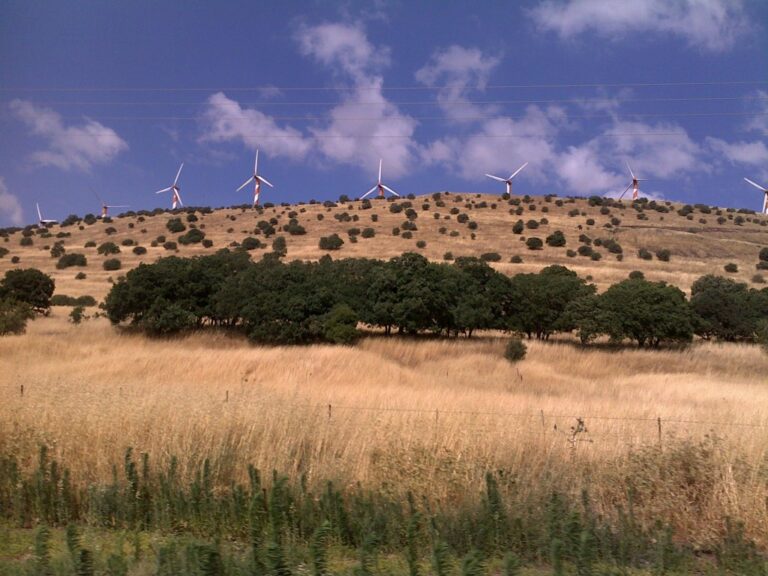
The Israel National Roads Company  is preparing to publish tenders for the supply, installation and maintenance of wind turbines to generate electricity for highway lighting.

According to the Globes business daily, the CFO of Israel National Roads Co., Shay Yiftach, explained at a conference this week that small wind turbines could be installed on lighting poles on the coastal highway running along Israel’s Mediterranean coastline to exploit the sea winds.

Have You Ever Met a Green Sheikh?

green sheik united arab emiratesGreen Prophet interviews the Green Sheikh, from the United Arab Emirates. He’s looking to change the “green” perceptions and reality of the Middle East.

The environment movement is no stranger to royalty: Prince Charles, the Prince of Wales has made his commitment to supporting the green movement, and over in Jordan, Prince Hassan has told Green Prophet that he’s committed to water protection and environmental education for his people. But green royalty from wealthy oil nations? From a ruling royal family in the United Arab Emirates, Green Prophet has befriended Sheikh Abdul Aziz bin Ali Al-Nuaimi, better known as the “Green Sheikh.

Sheikh Abdul Aziz, 44, is the nephew of Highness Sheikh Humaid bin Rashid al-Nuaimi (Arabic: شيخ حميد بن راشد النعيمي‎) – the Ruler of Ajmān and member of supreme council of the United Arab Emirates (UAE), one of the seven emirates of the United Arab Emirates UAE federation.
ajman province UAE
An emirate is a political territory that is ruled by a dynastic Muslim Monarch-styled emir. Ajmān, where the Green Sheikh lives, covers an area of just 260 km2 and is located along the Arabian Gulf. About 95% of the people in Ajman (population of 360,000) live in the city of Ajman. Historically the Emirate was was known for its fishing and trade industries; more recently as guardian of some of the UAE’s oil reserves, and for property development.

Gaining a reputation for his zealous interest in environmental issues, which started as a child, Sheikh Abdul Aziz, today is CEO of the of Al Ihsan Charity Centre, which supplies food and essentials to the needy. He has a life mission which is guided by Islam: “to achieve all manners of excellent deeds for the satisfaction of Allah (God).”

In that mission is protecting the environment.

Educated in chemical and petroleum engineering, with an MA in environmental management, and a PhD in clean production and industrial ecosystems, Green Prophet interviews this newcomer to the green scene, with high hopes that the Green Sheikh will radically reform education and respect for the environment in the Middle East.

He’s won awards for his research, and the Mayor of Miami has given the Green Sheikh a key to the city. He currently advises the public, private and academic sectors on environmental issues.

Here’s our interview:

green sheik sheikh abdulaziz UAE praying snow

How has your passion for the environment influenced any policies in the Middle East?

I’ve activated and coordinated the formation of environmentally and socially responsible non-governmental organizations; I have created partnerships between public, private and local communities; have advised and raised awareness among decision makers, have participated in steering committees for strategic sustainability in major sectors, and have promoted these issues in the media in the regions of the United Arab Emirates, the GCC (Arabian Gulf Region), and in some other Arab countries, like Jordan.

Whatever inspired you to become a “Green Sheikh”?

It started in my childhood, when my father would train falcons to take with him on hunting trips. Subconsciously I had learned the balance of ecosystems without knowing. Also through my education in high school (science), and when I continued my career as a chemical and petroleum engineer, and worked in LNG Plant. This impacted me heavily.

I was the chairman of Environment Friends Society in the UAE for few years and was leading the Union for Youth and Environment in the region: I’ve been to the Antarctic as a polar explorer, have been awarded volunteering and competitions, and I love the colour green: the way to paradise!

Is there any Islamic philosophy guiding your way; or are you self-made?

Yes, I am following the core values of an Islamic philosophy based on appreciation and respect. The environment lies at the core of the Islamic faith, and the underlying principal that forms the foundation of the Prophet Muhammad’s holistic environmental policy is the belief in the interdependency between all natural elements, and the premise that if humans abuse or exhaust one element, the natural world as a whole will suffer direct consequences.

The three pillars of the Prophet’s environmental philosophy are based on the Quranic teachings and the concepts of tawhid (unity), khalifa (stewardship) and amana (trust).

In line with the concept of tawhid, the Prophet acknowledges that God’s knowledge and power covers everything which is why abusing any of his creations (a living being or a natural resource) is considered a sin.

The Quran explains that humankind holds a privileged position among God’s creations on Earth: he or she is chosen as khalifa, “vice-regent” and is entrusted with an amana – the responsibility of caring for God’s earthly creations.

The importance of sustaining the environment was highlighted by Prophet Muhammad:

“When doomsday comes, if someone has a palm shoot in his hand, he or she should plant it,” which suggests that even when all hope is lost for humankind, one should sustain nature’s growth.

How has your family and friends reacted to your green passion?

My family and friends continue inspiring and encouraging my passion, momentum and vision for a noble cause, even though there are many obligations and priorities.

What do you think are the biggest environmental problems in the Middle East, and what can Arab Nations do to change them?

The major challenges:

Water demand in the region is on the rise, as we live in the world’s most dry area, water is represents a challenge to the development and sustainability of the region’s economy.

What can be done:


  • Reinforcement of environmental regulations
  • Environmental awareness among decision makers
  • Databases and required information for environmental planning and policies
  • Public, private partnership is needed to address water challenges
  • Investment needed for the infrastructure and technologies of water and wastewater
  • Adaption of integrated water resources management
  • Put in place national polices for short and long term goals
  • Water demand management programs based on considering water as public goods without depriving the disadvantaged people
  • More efficient wastewater treatment technologies and reducing the cost of desalination processes.

Who do you think has more power to change the green problems in the Arab world: the people, the religion, or governments/ruling family?

If in the Arabian Gulf countries (GCC) it would be the royal families with government support, using religion values and the support of people. If in other than Arabian Gulf Countries, it would be the government, represented by the president.

green sheik sheikh abdulaziz UAE


If you had one wish, what would it be?


Holistic living which describes one as being connected to the daily circle of life; balancing the spiritual, the intellectual, the physical, the emotional, the aesthetic, the environmental and my own inner peace to help spread peace throughout the world and in the process achieve wisdom.

Do you have any criticisms of the environment movement in the West (i.e. Europe and the US)? What are they?

Normally I never criticize anyone involved in noble causes and try to help people with their well being and try to sustain life for all God’s creation.

My values are based on those short letters:

3C’s and 3L’s:

No complaints…No comparison…No criticisms

Learn more…Love more…Lend more

What can the West learn from the Middle East?


  • Learning more about the true values of Islam
  • From Muslim women’s rights and her duties
  • History and heritage
  • Cultural understanding
  • Respect
  • Family relationships and tradition
  • Social responsibility
  • Arabic Hospitality
  • Arabic art and music
  • Our food and spices
  • Arabic medicine
  • Indigenous Arabs (Beduin from Al Badiyah or the deserts) have a lot of wisdom to share

Please let us know about a few of your favourite environment heroes, projects or organization anywhere in the world?


Heroes:

Favourite Organizations:

Favorite Green Projects:

  • Masdar City (World hub of renewable energy)
  • E-base in Antarctica
  • Industrial Symbiosis in Denmark

If you could meet one person, alive or dead, who would it be and what you ask them?

I’d like to meet Abraham the Father of Prophets and ask him: How can we learn in our modern day the lessons from the sacrifice of your son?

What are you currently working on now?

A new charity hospital with capacity of 50 beds specialized for less fortunate families in the UAE, and a new school for talented and less fortunate children, on a training centre for empowering young leaders and endowment projects.

Thank you!

Black Globe for Israel's PM, While Green Goes To Worthy Organizations

0

benjamin netanyahu israel prime ministerNetanyahu ‘wins’ a Black Globe Award as a statement that he should improve his environmental reform plan, and other organizations win positive Green Globes.

Earth Hour wasn’t the only way that Israel celebrated Earth Day this past Thursday – it was also the day that Life and Environment warded its annual Green and Black Globe awards.  Taking place for the seventh year in a row this year, the award recognizes the positive efforts of Israeli environmental organizations, activists, groups, and companies.  It also recognizes, however, parties responsible for actions that harm the environment.

Mulberry chutney recipe

4

mulberry berry bush china native photoMulberries make delightful jams and chutneys. Miriam shows you how.

You know mango chutney from India. It’s eaten well on samosas. But all manners of fruit can create a chutney, especially those fruits that don’t keep in the fridge.

Wherever you see  several old mulberry trees standing together in the Middle East, you can be sure that they are descendants of trees once cultivated to provide fodder for silkworms. And although the leaves have medicinal properties that humans can also enjoy, we two-legged folks are more likely to feast on the fruit.

Chutney and jam are two easy ways to preserve mulberries for eating later. The season is short, just a few weeks at the end of April-beginning of May, so if a tree or two grows near you, now’s the time to go foraging.

This chutney is chunky in texture and a little sweeter than most.

Mulberry Chutney

mulberry chutney and fresh mulberries

Ingredients:

2 cups fresh, ripe mulberries

1 small onion

1 small green apple, grated with the peel on

3/4 cup brown sugar

3/4 cup apple cider vinegar

1/2 teaspoon grated ginger

1 garlic clove

1/2 teaspoon salt

1/8 – 1/4 teaspoon chili flakes

Method:

1. Put the mulberries and the sugar in a saucepan over medium heat. Stir to dissolve the sugar.

2. Add all the other ingredients. Bring to a boil, stirring often.

3. Allow the chutney to boil till it forms a thick jam, about 20 minutes. Stir often.

4. Pack the chutney into a glass jar. Allow to cool, covered. Refrigerate. Wait a week for the flavors to marry. Eat soon afterwards.

If you prefer to make jam,  leave out the onion, vinegar, garlic, and salt. Add three leaves of fragrant, edible rose or lemon geranium for a real Middle-Eastern flavored jam.

Enjoy!

More recipes from Green Prophet:

"Slash and Burn" Clouds in Amazon May Have Telling Consequences for Volcano Ash

0

colin price volcano volcanic ashProf. Colin Price suggests link between volcanic ash, cloud formation and global weather patterns.

Native Americans used smoke signals to indicate danger, and a white plume is sent up by the Vatican when a new Pope is chosen. A new research project by Tel Aviv University and Weizmann Institute researchers has shown that where there’s “smoke” there may be significant consequences for local weather patterns, rainfall and thunderstorms. While the research was done on the smoke emitted from slash and burn forests in the Amazon, the implications of the research may tell us a whole lot about how volcanic ash (you know, the volcano disrupting flights around the world) could influence our climate.

Israel’s Air Force Plans Solar Installations at All its Bases

0

Israel’s Air Force Plans Solar Installations

Not yet swords into plowshares, as depicted in this sculpture at the UN, but the Israel Air Force is embarking on a solar power campaign.

Unfortunately, the Green Prophet cannot report that the nations of the Middle East are beating their swords into plowshares (as another prophet once envisioned), but there is some good news on the military front: The Israel Air Force (IAF) is planning an array of solar installations to generate electricity for all of its bases.

AIA Names Saudi's KAUST In 2010 Top Green Projects

2

aerial view saudi KAUST photoThe king willed it – so it was built…Michael Arndt questions the ‘greenliness’ of KAUST, granted the US Green Building Council’s highest LEED certification possible.

The American Institute of Architecture recently hailed The King Abdullah University of Science and Technology (KAUST) as one of its top ten most environmentally responsible building designs.   This follows other “green” developments in Saudi Arabia, including the largest environmental tourism park, and a solar-powered desalination plant.  KAUST has bagged a few firsts:  it is the country’s first co-ed university as well as its first LEED certified building, and at 6.5 million sq feet, with 26 buildings built on 9,000 acres of land near Jeddah, on the Red Sea, it is also the largest Platinum certified building in the world.

Israel Bars Fishing In Sea of Galilee

sea of galilee fishing boatIt happened to St. Peter when his nets came up empty. Now, new two-year ban on Sea of Galilee hopes to replenish sea nearly emptied by overfishing.

Shaul the fisherman hoses down a load of imported sea bream flown in from Greece, speaking nostalgically of the good old days when the catches were plenty: “When I was a kid, fishermen would toss out 150 hooks and haul in 100 kilos of fish,” says Shaul Rokach, a 57-year-old fishmonger from Jaffa.

“Today the fishermen toss out 3,000 hooks. He starts letting them out and doesn’t know when it will finish and in the end he hauls in 15 kilos, maybe. They can’t even cover the cost of the bait let alone the fuel. “Once my smile spread from ear to ear,” he adds. “My pockets were full of money. We’d strut down the piers. Now, they’re just trying to kill off the profession.”

Rokach is not the first fisherman to complain there are no longer any fish to catch in the holy land. Tradition holds that Jesus and his disciples fished the Sea of Galilee. According to the New Testament, Apostle Simon Peter ran a fishing business on the shores of the lake and complained that his net kept coming up empty. Jesus told him to cast his net again and it came up bursting with fish (Luke 5:4).

Generations have carried on this tradition, and today the most popular fish in the lake is dubbed St. Peter’s Fish, or Tilapia. But after being almost overfished to death, in the coming six weeks the Israeli government will gradually enforce a total ban on fishing in the biblical lake an effort to bring it back to life.

Holyland and Israel’s Commons, The Government’s Song

2

israel army base iaf air force construction projectA real estate scandal in Jerusalem reveals Israel’s government’s dangerous stance on the privatization of land development, and use of open spaces, Yosef argues.

As the Israeli press reveals one new real estate scandal after another including but not limited to the Holyland complex in Jerusalem, the ease with which “developers” were able to purchase zoning clearances through the payment of bribes from leading public officials continues to stun the society. In an article in Haaretz (April 22, 2010, p. 11), Prime Minister Benyamin Netanyahu is reported to have commented on both the scandals and pending government legislation to further liberalize the approval process for building projects by stating:

“It is very important to remove bureaucratic barriers and to make the planning and building process faster and more efficient. That’s exactly what we have done with the proposed legislation to reform planning and building procedure.”

The comments reveals much about the government’s ideological commitments to resource use in the country, part of the general “reform” instituted by Israeli governments since the first Likud-led government came to power in 1977. The party and its allies advocate the predominance of the free market system (see the Likud’s Economic Outlook). In its grand rush to privatize land use in Israel, the government now seeks to further enable free market forces to wrest control of the country’s land resources for private development.

Omani Handicrafts Facing Extinction Versus Machine Made Imitations

1

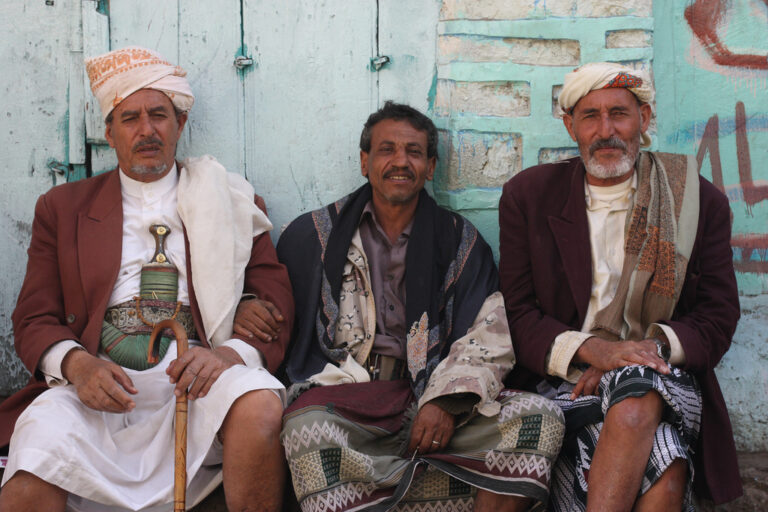
omani handicrafts oman old man photoAt stake for Oman is the extinction of traditional handicrafts in the face of cheaper, machine made imitations.  Man making khanjars (traditional Omani daggers). [image via: v.williams46]

Omani handicrafts – such as silver items, woven cloths, and pottery – may have been passed down from generation to generation and faced difficulties such as material shortages or lack of interest among the younger generation in the past.  But now these crafted items face a new challenge: the machine made imitation product.

Rare Sea Turtles and Other Wildlife Living Happily on Persian Gulf Atoll

1

bu tinah abu dhabi island paradise Not in the Pacific, but near Abu Dhabi: Bu Tinah island is small paradise for birds and marine life

Increasing salinity and higher water temperatures may be causing problems for wildlife in many parts of the Persian Gulf. But in one location at least on Abu Dhabi’s Bu Tinah islands, located 130 km west of the sheikdom’s capital, rare hawksbill sea turtles, dugongs, dolphins, and thousands of birds appear to be very happy on or around the island, according the Abu Dhabi newspaper The National.

H&M Israel's CEO, Andrew Horesh, Speaks About Sustainable Clothing

0

H&M Israel’s CEO talks about his motive for importing H&M’s sustainable fashion line

Thousands of Israelis have flocked to the newly opened H&M stores in Tel Aviv, Jerusalem, and Haifa – many of them unaware that they were, in fact, on their way to buying sustainable fashion.  As we mentioned in a previous post, H&M Israel has featured the Garden Collection – H&M’s first collection made entirely of organic cotton and recyclable materials – prominently as a shop-within-a-shop and in the window displays.  Last week we talked to Andrew Horesh, H&M Israel’s CEO, to learn more about the collection as well as about H&M and sustainable clothing.  

Egypt Nears Completion of Hybrid Solar Thermal Plant

0

solar field for hybrid solar thermal plant in Kuraymat, Egypt

Solar field at Kuraymat, Egypt is now fully assembled. Image via changents.com

Ra, the sun god of the ancient Egyptians, would be proud: Egypt’s first large-scale solar thermal facility is nearing completion. A parabolic trough solar field, incorporating nearly 2,000 collector units and covering 130,000 square meters, has been installed at the Kuraymat project site, located about 100 kilometers south of Cairo. The solar power plant is scheduled to become fully operational in the fall.

Israel Defense Ministry Stalls on Sewage Treatment

3

raw sewage jerusalem dead seaRaw sewage from Jerusalem flows straight into the Dead Sea.

Many of Israel’s army bases were built quickly, in isolated spots, and 150 of them are not even connected to the country’s sewage system. The waste  ends up in the groundwater, contaminating fresh water sources and crops and preventing the water from being recycled for agriculture. Last year, Green Prophet reported that half of Israel’s untreated sewage stems from a lack of IDF sewage infrastructure.

Tel Aviv Requests Public's Help in Boardwalk Redesign

0

A rendering of Tel Aviv’s new central promenade: stairs leading down to the beach, a paved lower level, shade-providing structures and new sidewalk and beach furniture. (image courtesy of Tel Aviv Municipality)

Two years ago, Tel Aviv presented a plan to redesign its central promenade. The plan – vague, unclear and buried inside another policy proposal – drew plenty of opposition from the public.

Last week, however, an improved version of the plan was presented at a public hearing. Over 100 residents showed up, all eager to make their voices heard. City officials listened to their concerns, and promised to take them into consideration as they draw up the plan’s final version. But neither the process nor the plan itself could please everyone.