Know how to apply search engine tactics so people can find your sustainable spa
In today’s digital world, wellness and med spas need to stand out online to attract more clients. Search Engine Optimization (SEO) can help you reach the top of search results, making it easier for potential clients to find your services. Let’s dive into simple ways to use SEO effectively for your wellness and med spa.
1. Understand Your Audience and Keywords
To start, know who you’re targeting. Your clients might be looking for specific treatments like facials, massages, or anti-aging services. Think about what keywords they might type into Google. These words are the building blocks of your SEO strategy.
Choose keywords that match your offerings and add them naturally into your website’s content. Avoid keyword stuffing, as it can hurt your rankings. Focus on clear, helpful content that answers common questions, like “What are the benefits of anti-aging treatments?” or “What should I expect during a med spa consultation?”
2. Use Local SEO for Med Spa Services
One of the most powerful SEO strategies is local SEO for med spa businesses. Local SEO helps you connect with clients near you who are searching for wellness and spa services. Make sure your business appears in local search results by setting up a Google My Business (GMB) listing. It’s free and boosts your local visibility.
In your GMB profile, include accurate contact information, your website link, and quality photos of your spa. This helps clients find you easily and view your services. Encourage happy clients to leave positive reviews, as Google favors businesses with good reviews in local searches. Including local keywords like “med spa in [City]” on your website also improves your chances of ranking well in your area.
3. Optimize Your Website Content
Your website content should be simple, informative, and engaging. Write clear descriptions of your services, and include keywords naturally in the text. Create dedicated pages for each service, such as “Botox Treatment” or “Massage Therapy.” This not only makes it easier for Google to understand your website but also helps clients find the exact information they need.
Include a blog on your site to share tips, news, and answers to frequently asked questions. For example, write a blog post on “The Benefits of Regular Facials” or “What to Expect at Your First Med Spa Visit.” These posts add value and can help you rank higher in search results. Blogging also positions you as an expert, building trust with potential clients.
4. Optimize for Mobile
More people are searching on their phones than ever before. That’s why it’s essential to have a mobile-friendly website. A site that’s slow or difficult to use on a phone will likely drive clients away. Google also favors mobile-friendly websites in its rankings, so make sure your site loads quickly and looks good on all devices.
Compress large images, reduce unnecessary graphics, and use easy-to-read fonts. A fast, user-friendly site improves the client experience and helps your wellness and med spa website rank higher.
5. Use Quality Images and Videos
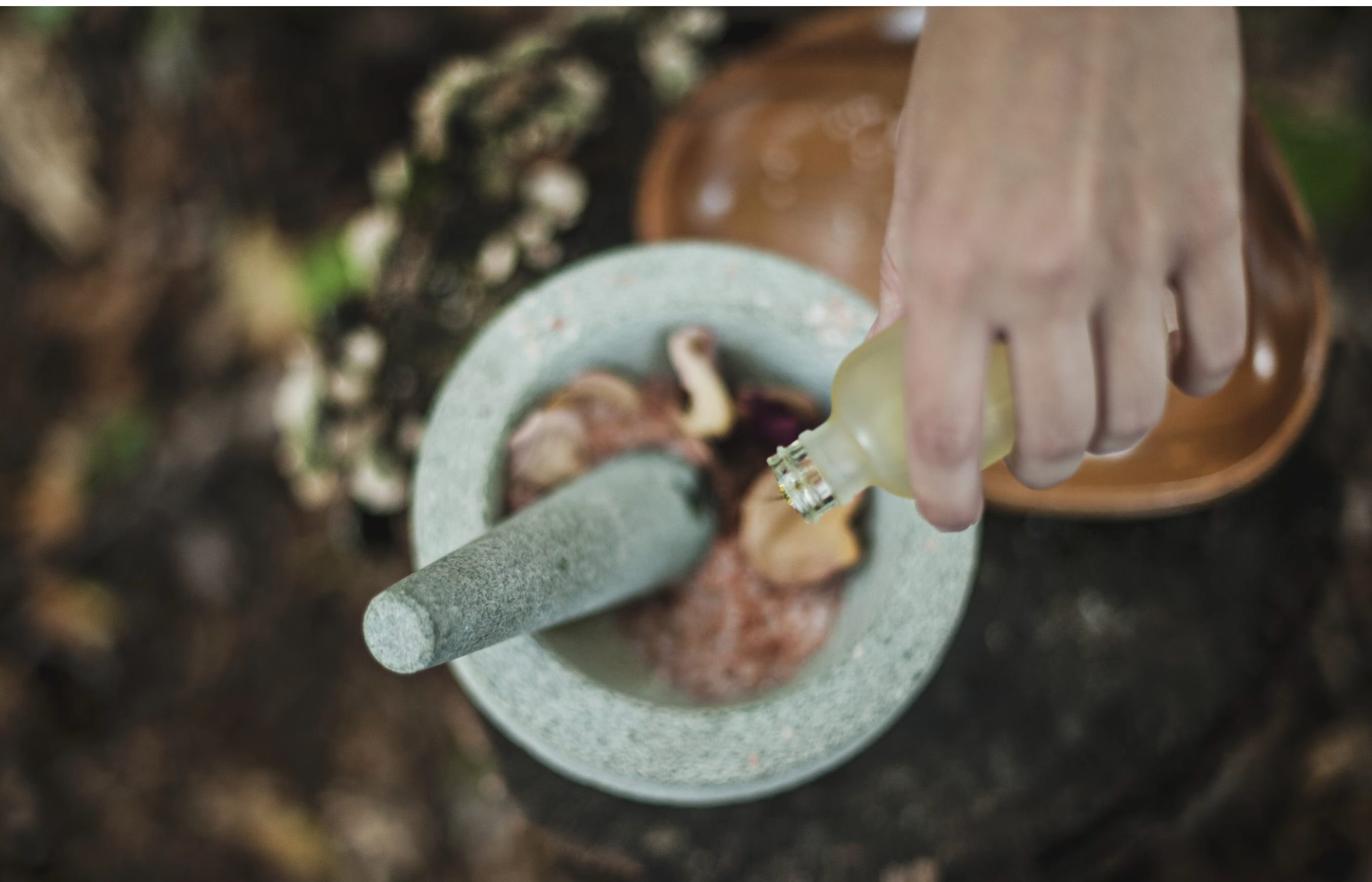
Show off natural oils and eco luxuries in action at your spa
Visuals are a big part of the wellness and spa experience. Clients want to see what they’re signing up for, so add high-quality images and videos to your website. Show photos of your relaxing environment, treatment rooms, and smiling staff. You can also create short videos explaining your services or providing a tour of your spa.
The Just Stop Oil (JSO) activists who vandalized Vincent Van Gogh‘s Sunflowers (1888) painting with a can of soup are waiting to be sentenced, according to JSO press material.
The 22-year-old activists Phoebe Plummer and Anna Holland, “came within the width of a pane of glass of destroying one of the most valuable artworks in the world,” said Southwark Crown Court Judge Christopher Hehir.
It’s been 2 years since the incident and Holland and Plummer were remarkably only sentenced from visiting any museums or galleries, or for carrying glue, paint or adhesive materials in a public setting.
Holland and Plummer launched a can of tomato soup on the glass of the centuries-old painting, stating: “What is worth more, art or life? Is it worth more than food? Worth more than justice? Are you more concerned about the protection of a painting, or the protection of our planet and people?
“The cost of living crisis is part of the cost of oil crisis.”
Data source: Energy Institute – Statistical Review of World Energy (2024); The Shift Data Portal (2019)
Plummer and a third activist, Jane Touil, were imprisoned after painting Heathrow airport a few days ago. Just Stop Oil says they are working to defend them and with groups internationally to demand governments establish a fossil fuel treaty, to end the extraction and burning of oil, gas and coal by 2030.
Phoebe Plummer and Jane Touil appeared before Judge Neeta Minhasat at Westminster magistrates court this afternoon, after taking action at Terminal 5, Heathrow Airport yesterday. They have been remanded to HMP Bronzefield until August 28th at Isleworth Crown Court, where they will appear for a case management hearing.
Yesterday, the pair used fire extinguishers to spray water-based paint at the departure boards in the terminal. The Crown is alleging £50,000 worth of damages.
Plummer said at the hearing: “Sending peaceful protestors like me to prison isn’t going to prevent us from resisting. You’re upholding an abysmal system. And you’re doing that to maintain business as usual. You won’t be protected from the climate emergency.”
Speaking before the hearing Jane Touil said: “I have become increasingly terrified about climate breakdown and increasingly appalled by politicians’ failure to take appropriate action. Convinced that the most effective thing I could do as an ordinary person was to take direct action to highlight the catastrophic situation we’re in, I became a Just Stop Oil supporter.”
“I was arrested for the first time in April 2022 and have been arrested several times since. I spent a short time on remand in prison after climbing an M25 gantry in November 2022. I will continue to act on my conscience to protect life and to challenge the greed, corruption and cowardice that are killing people right now. I refuse to die for fossil fuels.”
The two must be “prepared in practical and emotional terms to go to prison” when their case is heard on September 27 by Judge Hehir, who has sentenced five JSO activists who committed similar offenses to a prison sentence of up to five years:
“The government continuously proves that they have little to no interest in attempting to curb climate change,” said Holland’s lawyer, adding: “They have proven that they have a great deal of interest in investing time and money into prosecuting young people trying to fight for the future of themselves and their children.”
Activists from various countries have targeted art and public spaces and private businesses over the past few years to raise awareness to the climate emergency. The tone was set by Greenpeace in the 70s when it started taking over whaling boats.
While it may seem heroic, Green Prophet does not support acts of violence and vandalism as a means to justify the end. Educating the next generation creatively might develop the next zero-energy super-fuel. Just Stop Oil activists are banging on an old drum that creates divisiveness and hate.
It may not be a question you ask yourself every day in the city, but if you venture north in countries like Canada where wild bears are a mythical creature to be revered and feared, it just may happen that you will be offered bear meat. My friend hunted a bear on my land in Northern Ontario and a number of my friends spoke about eating the wild meat. It was turned into a well-cooked roast and this was probably a good thing.
According to local media sources in Canada wild game, including bear and deer may be harboring a parasite in its muscle called trichinellosis. If the meat is not cooked well this parasite can spread to your muscles. There are some reported cases documented by the CDC, The Centers for Disease Control.
Human trichinellosis cases in the United States are rare and are usually acquired through consumption of wild game according to the CDC.
The Centers for Disease Control presented microscopic evidence of ‘encapsulated larvae in a black bear meat muscle.’ (Centers for Disease Control and Prevention)
They commented on cases of people in the US who had eaten wild black beat from Canada. Among eight people who shared a meal that included the meat of a black bear harvested in Canada and frozen for 45 days, 6 trichinellosis cases were identified. The meat was grilled with vegetables and served rare; two cases occurred in persons who ate only the vegetables. Freeze-resistant Trichinella nativa larvae were identified in remaining meat frozen for less than 15 weeks.
It is possible to eat wild game but it is important to know how to cook it. Cooking meat to an internal temperature of greater than 165°F (74°C) is necessary to kill Trichinella spp. parasites. Trichinella-infected meat can cross-contaminate other foods, and raw meat should be kept and prepared separate from other foods to prevent cross-contamination.
Emily Jenkins, a professor of veterinary microbiology who has done extensive research on zoonotic parasites including trichinella, said the disease “pops up every couple years associated with bear meat” and as recently as 2021, she told the CBC, a state-funded media source from Canada.
She says it often comes up with tourists because Indigenous people who harvest wild animals are aware the meat must be well cooked: “It’s often tourists, hunters coming from away who will take a souvenir home with them … so it’s fairly common that people who don’t have that protective knowledge are the ones who unfortunately become infected and that they’ve also shared the meat widely because it’s a delicacy, a gourmet thing,” Jenkins said.
“We’ve had massive outbreaks in France, for example, associated with bear meat from Canada, just because people didn’t necessarily have that protective knowledge.”
So if you are offered wild meat from beer, deer, moose or any other animal – make sure it is well done. Eating meat from the wild is essential for many people who live in Northern Ontario, where I have a home. A young buck harvested after a road kill a few days ago gave someone in my family about 40 pounds of meat. That helps take the pressure off of rising bills and is a natural way to live with the wild.
Turkish legislators have approved a law that make it legal to kill any number of the estimated 4 million stray dogs that are on the country’s streets.
Thousands of animal lovers have joined protests across Turkey calling for the removal of an article in the law that would allow for strays to be euthanised. Opposition lawmakers say the bill is a “massacre law”. The law was passed this week.
“Unfortunately this is true… we’re so sorry and angry,” our treehugger and activist friend Gökçe Uygun from Istanbul told Green Prophet. It hasn’t started just yet because it was only approved in the parliament 2 days ago, she said.
Turkey’s President Recep Tayyip Erdoğan signed the measure into law, thanked his ruling party: “Despite the opposition’s provocations and campaigns based on lies and distortions, the national assembly once again listened to the people, refusing to ignore the cries of the silent majority,” he said.
Yet there are gentle nature lovers in Turkey who plant forests of trees. There are treehugging journalists in Istanbul. Like Turkey itself which straddles the East and West, there are people actively for and against the killing of pets.
About about 4 million stray dogs roam Turkey’s streets and rural areas. Most are harmless but they sometimes build up in packs and attack people. Many Muslims are terrified of dogs. Turkey is a Muslim majority population.
Why don’t Muslims like dogs?
Dogs are revered in Judaism for not barking when the Jews were escaping Egypt. They are loved by the pharaohs – tomb paintings of the pharaoh Tutankhamun show him in his chariot with his hunting dogs and Rameses the Great is depicted similarly. With Khufu and his companion, dogs were often buried with their masters in order to accompany them closely in the afterlife.
King Mutt: a dog mummy buried in Egypt. As many as eight million dogs and other animals were buried in the tomb found in 2015 [Getty]But meet a Muslim and there is a good chance they will be terrified of your dog. Why?
Dog is kalb in Arabic: كَلْب, dog which is similar to “kelev” in ancient Hebrew and there are different views on dogs and Islam. The Sunni Maliki school of Islamic jurisprudence says the laws of impurity of dogs are different between wild dogs and pet dogs, and only consider the saliva of the former to be impure; on the other hand, some schools of Islamic law consider all dogs as unclean (najis).
Hundreds of people gathered in Istanbul and issued a message to the government which also supports Hamas terrorists: “Your massacre law is just a piece of paper for us. We will write the law on the streets. Life and solidarity, not hatred and hostility, will win.”
Animal lovers in the capital, Ankara read: “We are warning the government again and again, stop the law. Do not commit this crime against this country.”
Turkey’s main opposition party said it would work to cancel this law at the supreme court.
Endorsement, however, by Turkey’s unstable leader, could provoke locals to kill dogs when no one is supervising.
While Turkey had endorsed a law to catch, spay and then release stray dogs, critics say the law was not enforced. The same way building code laws in Turkey exist, but corners are taken and “safe” building crumble when there is an earthquake.
Others blamed the growth in the stray canine population on a failure to implement previous regulations, which required stray dogs to be caught, neutered, spayed and returned to where they were found.
An oyster plague in oysters and now there is a worrying plague that has started in Greece, worrying farmers about their livestock. A goat plague, also known as Peste des Petits Ruminants, was detected for the first time in Greece last month. While the virus does not seem to infect humans, it is highly contagious among goats and sheep and can kill between 80 and 100% of those infected.
To combat the spread of the plague first found in the 1942, Greece has banned the movement of goats and sheep around the country, made up of a mainland and about 6,000 smaller islands. Greece also shares a 150 mile border with Turkey –– also a lover of goat and sheep meat.
“The movement of sheep and goats for breeding, fattening and slaughter is banned throughout Greece,” said Greece’s agriculture minister Costas Tsiaras said.
Iranians love sheep meat and the special fat found in the tail of their special breed.
New infections are active in the central Larissa region and in Corinth in the south.
The ban had been introduced “with the aim of limiting the spread and eradication of the disease”.
The ministry also said an investigation was under way to determine the source of the plague, and it may be from imported meat.
If a case is found an entire group of livestock from the farm must be killed. Since July 11, about 7,000 animals have already been culled according to the BBC.
Greece is a goat loving country and has the highest number of goats in Europe. The milk from Goat and sheep is used to make feta cheese – a trademark Greek product.
There are some very good arguments for Slow Food and eating food grown from smallhold farms, regenerative farms and which are grown locally. Globalism has created an influx of invasive pests. These diseases and insects are kicking down forests in Canada, they are infecting lakes and seas (jellyfish and zebra mussels) and they are affecting our meat and milk.
Life Assure app helps seniors live sustainably at home
Ensuring senior safety is critical as loved ones age and seek independence. Modern senior safety monitoring solutions, like those offered by Life Assure, provide peace of mind by integrating advanced technologies. From discreet exit monitoring to wearable devices, these solutions effectively address seniors’ unique needs.
Advanced systems not only detect emergencies such as falls but also provide continuous monitoring of vital signs and everyday activities. This proactive approach to senior safety ensures timely intervention, which can be crucial in preventing minor issues from becoming serious health concerns. Additionally, having AI-powered devices further enhances the capability to predict and manage potential health risks, making homes safer for seniors.
As technology continues to evolve, so do the options available to ensure the safety and well-being of seniors. Whether it’s through state-of-the-art devices or in-home monitoring systems, these solutions enable seniors to live independently while keeping families connected and informed.
Key Takeaways
Modern technologies enhance senior safety and independence
Continuous monitoring offers timely emergency response and health management
AI and wearable devices predict and prevent potential health risks
Understanding Senior Safety Technologies
Senior safety technologies provide essential support and confidence to both older adults and their caregivers. Key aspects include medical alert systems, fall detection technology, and GPS and wireless monitoring.
Medical Alert Systems: Features and Benefits
Medical alert systems offer 24/7 monitoring and can connect users to emergency responders at the push of a button. These systems often include features like two-way communication to ensure clear dialogue during emergencies. Many systems are now integrated with smartwatches and other wearable devices, adding convenience and ease of use.
Key Features:
Automatic Fall Detection: Alerts sent automatically if a fall occurs.
GPS Tracking: Helps locate the individual in case of an emergency.
Mobile Integration: Syncs with smartphones for instant alerts.
Benefits:
Provides peace of mind for families.
Ensures prompt medical assistance.
Enhances the independence of older adults.
Fall Detection Technology and Sensors
Fall detection technology uses sensors to identify sudden movements or impacts that may indicate a fall. These sensors can be embedded in smartwatches, medical alert systems, or placed throughout the home. When a fall is detected, an alert is sent to emergency responders or designated contacts.
Types of Sensors:
Accelerometers: Detect rapid changes in movement direction.
Gyroscopes: Measure orientation and rotation.
Pressure Sensors: Sense impacts on the ground.
Advantages:
Rapid response to potential injuries.
Reduces the fear of falling for seniors.
Supports a safer living environment.
The Role of GPS and Wireless Monitoring
GPS and wireless monitoring play a significant role in senior safety by offering real-time tracking and location services. GPS technology can be integrated into various devices, such as smartphones and medical alert systems. This enables caregivers to monitor the whereabouts of seniors, especially those at risk of wandering.
Key Functions:
Real-Time Location Tracking: Ensures caregivers know the exact location.
Geofencing: Sends alerts if the senior leaves a predefined area.
Mobile Accessibility: Caregivers can access location data through smartphone apps.
Importance:
Enhances the security of seniors, especially those with memory issues.
Provides caregivers with peace of mind.
Facilitates rapid response in case of emergencies.
Senior Safety in Home Environments
Maintaining the safety of seniors in their home environments is essential. By making specific home modifications, utilizing in-home monitoring systems, and carefully choosing between at-home and mobile solutions, seniors can continue to live independently with a higher level of security.
Home Modifications for Prevention of Falls
Falls are a significant risk for seniors. To minimize this risk, several changes can be made around the home. Grab bars in bathrooms can provide support when getting in and out of the tub or shower. Handrails on both sides of staircases offer stability. Installing ramps instead of stairs can help those with mobility issues.
Proper lighting is crucial, especially in hallways and near steps. Night lights can reduce the risk of tripping in the dark. Non-slip mats in wet areas like kitchens and bathrooms help prevent slips. Finally, removing tripping hazards like loose rugs can make the home safer.
In-Home Monitoring: Systems and Devices
In-home monitoring systems are essential for the safety and security of elderly individuals. These systems can include motion sensors, cameras, and fall detection sensors. If a fall occurs, the sensors can alert caregivers or a monitoring centre.
Systems often feature apps that allow family members to check in on their loved ones in real time. Many companies offer 24/7 monitoring services, providing peace of mind. Amazon Alexa and similar devices can also be integrated for emergency assistance. Pedometers can track activity levels, promoting an active lifestyle while ensuring safety.
Making the Decision: At-Home vs. Mobile Solutions
Deciding between at-home and mobile solutions depends on individual needs. At-home systems, such as those with cameras and stationary sensors, provide comprehensive monitoring within the house. These are ideal for seniors who spend most of their time at home.
Mobile solutions, like wearable monitoring devices, offer protection on the go. These devices often include emergency contacts that can be notified if the senior requires help. Fees for these services vary, and some may offer fall detection features. Choosing the right solution involves assessing the senior’s lifestyle and their need for constant connectivity.
Cost and Service Considerations
When choosing senior safety monitoring solutions, understanding costs and assessing service quality are crucial. Comparing different companies and evaluating their offerings will aid in selecting the best option for specific needs.
Evaluating Costs: What to Expect
Costs for senior safety monitoring solutions can vary significantly. Monthly fees often range from $20 to $50, depending on the services included. Some providers, like Life Alert, may charge higher fees due to their brand reputation.
There can be an activation fee for setting up the equipment, generally between $30 and $100. Battery life of devices is also a factor, as longer-lasting batteries reduce maintenance costs. It’s wise to look for cost-effective options without compromising quality.
Additional costs may include accessories, such as GPS tracking for increased precision, and specialized devices for monitoring chronic health conditions.
Service Quality and Customer Support
A crucial aspect of senior safety monitoring is the service quality provided by the companies. High-quality service ensures that seniors receive prompt help during emergencies. Checking reviews and testimonials from other users can provide insights into a company’s reliability.
Key features include 24/7 monitoring from a response centre and integration with telehealth services for health monitoring. Compatibility with other health services can be essential for seniors with chronic health conditions.
Customer support is also vital. Companies with responsive and knowledgeable support can troubleshoot issues quickly and provide guidance.
Enhancing Independent Living for Seniors
Supporting seniors in living independently requires a blend of effective emergency response systems, helpful lifestyle adaptations, and confidence-building technology. These elements work together to ensure a safe and comfortable environment for older adults.
Monitoring and Emergencies: Response and Support
Medical alert systems play a crucial role in providing safety and peace of mind. These systems, such as personal emergency response systems (PERS), are designed to detect emergencies like falls, health crises, and burglaries, sending immediate alerts to emergency services and caregivers.
Alongside working with a compassionate senior care team, these technologies ensure seniors receive the attentive support they need while maintaining their independence.
Mobile medical alert systems allow seniors to feel safe even outside their homes, ensuring help is always available. In emergencies, responders can quickly assess the situation and provide necessary support, reducing the chance of severe injury or complications from accidents.
Lifestyle Adaptation and Support Products
Seniors benefit greatly from products that adapt the home environment to their needs, minimizing tripping hazards and improving overall safety. Smart home devices like automated lighting, thermostats, and security systems can be controlled remotely, creating a safe and comfortable living space.
Simple tools, such as grab bars in bathrooms or a fire extinguisher within easy reach, make daily activities safer. These adaptations not only prevent injuries but also support seniors’ independence by enabling them to handle tasks confidently and safely without constant assistance.
Building Confidence with Technology
Technology helps seniors stay independent and connected. Devices like wearable health monitors track vital signs and alert healthcare providers to potential health issues, ensuring timely medical intervention.
Cognitive assistance applications support mental health by offering memory aids and reminders for medication, appointments, and daily tasks. These tools foster self-reliance and reduce the stress of managing chronic health conditions. Seniors gain confidence using technology, knowing it enhances their safety and well-being.
Incorporating these solutions empowers seniors and their families, offering effective support for independent living.
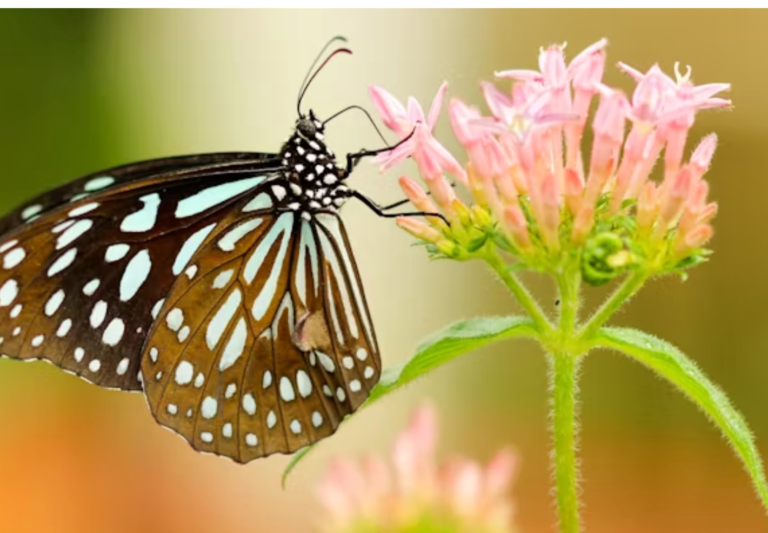
Butterflies and moths collect so much static electricity whilst in flight, that pollen grains from flowers can be pulled by static electricity across air gaps of several millimetres or centimetres. The finding reported in the Journal of the Royal Society Interface, suggests that this likely increases their efficiency and effectiveness as pollinators. Butterflies typically eat nectar, not pollen, for food.
The University of Bristol team also observed that the amount of static electricity carried by butterflies and moths varies between different species, and that these variations correlate with differences in their ecology, such as whether they visit flowers, are from a tropical environment, or fly during the day or night. This is the first evidence to suggest that the amount of static electricity an animal accumulates is a trait that can be adaptive, and thus evolution can act upon it by natural selection.
Lead author Sam England explained: “We already knew that many species of animal accumulate static electricity as they fly, most likely through friction with the air. There had also been suggestions that this static electricity might improve the ability of flower-visiting animals, like bees and hummingbirds, to pollinate, by attracting pollen using electrostatic attraction.
“However, it wasn’t known whether this idea applied to the wider array of equally important pollinators, such as butterflies and moths. So, we set out to test this idea, and see if butterflies and moths also accumulate charge, and if so, whether this charge is enough to attract pollen from flowers onto their bodies.”
Their study involved 269 butterflies and moths across 11 different species, native to five different continents and inhabiting multiple different ecological niches. They were then then able to compare between them and see if these ecological factors correlated with their charge, establishing if static charging is a trait that evolution can act upon.
England added: “A clearer picture is developing of how the influence of static electricity in pollination may be very powerful and widespread.
“By establishing electrostatic charging as a trait upon which evolution can act, it opens up a great deal of questions about how and why natural selection might lead to animals benefiting or suffering from the amount of static electricity that they accumulate.”
In terms of practical applications, this study opens the door to the possibility for technologies to artificially increase the electrostatic charges or pollinators or pollen, in order to improve pollination rates in natural and agricultural settings.
“We’ve discovered that butterflies and moths accumulate so much static electricity when flying, that pollen is literally pulled through the air towards them as they approach a flower.
“This means that they don’t even need to touch flowers in order to pollinate them, making them very good at their jobs as pollinators, and highlighting just how important they might be to the functioning of our flowery ecosystems.
“For me personally, I would love to do a wider survey of as many different species of animal as possible, see how much static electricity they accumulate, and then look for any correlations with their ecology and lifestyle. Then we can really begin to understand how evolution and static electricity interact!” says England.
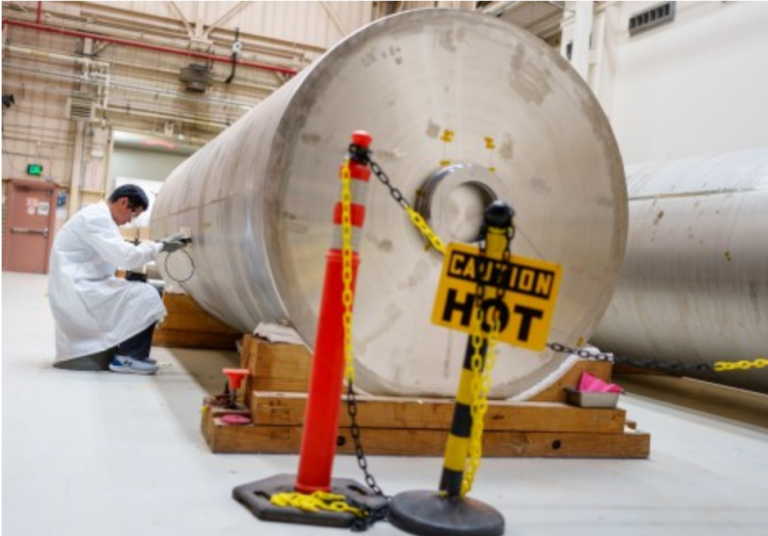
Intern Charles Xu tests the pressure of repair coatings on spent nuclear fuel canisters. Xu is an intern in the Future of Research for Climate, Earth and Energy Institute. Nuclear energy is not considered a viable renewable energy source by environmentalists – due to the risks.
A summer internship for American college students is almost as important as going to school. If you are an aspiring archeologist you head to Israel. If you are an artist, you spend the summer in Florence, but if you are a scientist interested in climate change you might want to intern in the United States.
Climate research and the development of renewable energy systems like wind turbines is part of that.
A summer at Sandia National Laboratories typically means high temperatures, blazing sunlight and campuses filled with 75 interns.
About 75 of these young innovators have come to Sandia labs in New Mexico this summer as part of the Future of Research for Climate, Earth and Energy Intern Institute. Another 75 interns participate remotely. The FORCEE institute provides undergraduate and graduate students with real-world experience in conducting research on topics in earth sciences, climate change, decarbonization and infrastructure modernization.
Sandia grew out of America’s World War II effort to develop the first atomic bombs. Today, keeping the US nuclear stockpile safe, secure, and effective is a major part of Sandia’s work as a multidisciplinary, national security, engineering laboratory. Sandia’s role has evolved to address additional threats facing our country.
The students receive mentorship, attend facility tours and seminars, and can take part in an end-of-summer symposium to present their findings.
“I have a real passion for interns; I think they are the future of this laboratory,” said Kyle Jones, a manager at the institute. “One of the institute’s goals is to attract new talent to the Labs. I look at interns as team members doing real research. I want an intern program to foster a mentality that makes them feel like they are making a difference.”
The program started in 2021 as the brainchild of Jones, the manager of a geophysics department, with a small geoscience intern program. In the summer of 2022, FORCEE became a full intern institute with a broader mandate.
Last summer, 150 interns came to Sandia through the FORCEE Institute. The interns were equally split between undergraduate and graduate students, with one Coast Guard Academy student and three clerical interns. As of May 2024, 29 former FORCEE interns became Sandia employees: 28 were hired as staff members and one as a postdoctoral researcher.
Each FORCEE summer intern works under the guidance of a Sandia researcher on projects in climate change, geosciences and energy research.
“An intern is more than capable of doing meaningful work: researching, producing, data processing, whatever the case may be,” Jones said. “By handing off these tasks to the students, it frees the mentors to tackle more challenging aspects of the work. It’s a real symbiotic relationship.”
One intern, Gordon North Piegan III, began the summer of 2022 with Rachid Darbali-Zamora, a Sandia electrical engineer. Using his background in control systems, Piegan accurately modeled a wind turbine-generator system and validated it against field data as part of the Wind Hybrid Integration Platform project, according to Darbali-Zamora.
Darbali-Zamora was impressed with Piegan’s results and recommended that he submit them as a conference paper — Piegan’s first. Darbali-Zamora guided Piegan through the process of writing the research paper, and when it was accepted, through creating and practicing a presentation.
“In addition to the great technical work and contributions Gordon or any FORCEE intern brings to the table, there’s also the satisfaction of seeing someone grow,” Darbali-Zamora said. “For me, mentoring and helping others grow in their career and personal life is the most gratifying part of this job. I’ve learned something different from every intern that I’ve had.”
Piegan went on to become a year-round FORCEE intern, and his wind turbine modeling project became the focus of his master’s thesis at Montana State University.
Jones added that the FORCEE internship program fosters partnerships with professors and universities. Darbali-Zamora now has a collaboration with Piegan’s Ph.D. adviser at George Mason University as an example.
Melissa Louie, now a Sandia chemical engineer, participated in the FORCEE program while a chemical engineering master’s student at Cornell University in the summer of 2022. During the internship, she worked with Evan Sproul and Brandon Ennis on optimizing carbon fibers for wind turbine blade caps.
“It was super inspiring to see everything everyone was working on, especially in the renewables space,” Louie said. “When we went on tours of the Solar Tower and saw the wind turbine blades in Building 6585, it was really cool to see that everyone was excited about their work.”
Louie now gives back to the FORCEE program by providing on-site support for the summer 2024 interns, just as she did for the summer 2023 interns. Her role includes coordinating weekly informal lunches, facilitating connections among the interns, which she considers one of the program’s most valuable aspects, and serving as a point of contact for things they may hesitate to raise to their mentors.
What is the taste of honey from bees collecting pollen durin a war? Do snakes feel stress? A new study shows that war impacts the least expected creatures
Animals too feel the effects from the stress of war, finds a new study conducted at Tel Aviv University’s School of Zoology. Researchers reveal that the Israel-Hamas war has had a severe impact on animals.
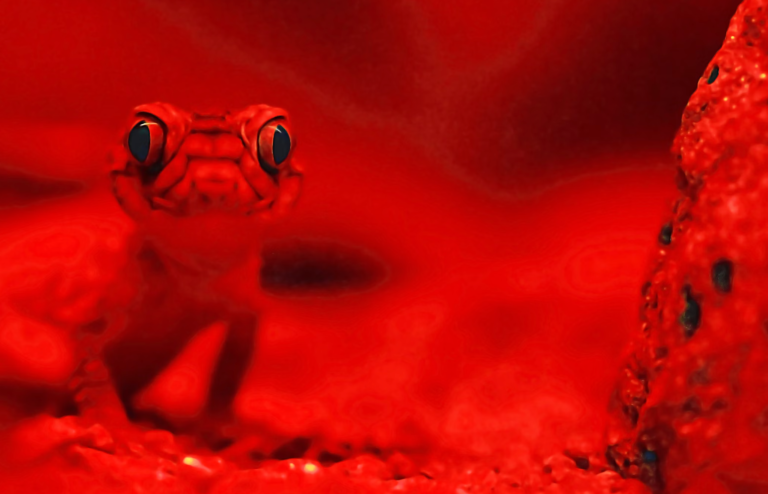
The study, which focused on geckos, found that the sound of explosions from fired rockets induces stress and anxiety in these creatures, leading to a sharp increase in their metabolic rates — an energy cost that, if chronic, may be life-threatening. The researchers hypothesize that these stress responses characterize many other animals, especially those who live in the conflict zones in northern and southern Israel.
Shahar Dubiner, one of the researchers said: “Our research was conducted in a laboratory at Tel Aviv University and pertained to the reverberations of explosions from interceptions in the Tel Aviv area. However, given the unequivocal results showing symptoms of stress, we can infer that animals that are in the immediate conflict zones in the south and north of the country, where the intensity and frequency of fire are much higher, suffer from significantly more severe stress and anxiety symptoms that may endanger their lives.”
Left to right: Prof. Shai Meiri and Prof. Eran Levin.
The study was led by Shahar Dubiner, Prof. Shai Meiri and Prof. Eran Levin — in collaboration with Reut Vardi of the University of Oxford. The study was published in the journal Ecology.
The sounds of war are a sort of sound pollution which probably also affect marine life like whales, coral, dolphins and baby oysters.
“The most tragic aspect of war is the loss of human life, among both soldiers and civilians. However, animals are also severely affected, both directly and indirectly, in ways that may threaten their survival. A few weeks before October 7, we began working on a long-term study to measure the rate of energy consumption of small ground geckos of the species Stenodactylus sthenodactylus.
“We obviously did not foresee the outbreak of the war, but unintentionally, we recorded the energy consumption of five geckos during the rocket barrages launched into Tel Aviv in the first month of the war,” says Prof. Shai Meiri. Recently, Meiri published a study on rain and biodiversity.
A photo of Shai Meiri
The study’s findings showed that at the sound of the bombings, the geckos’ metabolic rate jumped to double what it was when they were at rest. Their breathing became faster, and they clearly exhibited signs of stress.
The experiment lasted up to four hours after the barrages, yet even within this timeframe the geckos did not calm down and return to their resting levels. Moreover, even after a month of continuous fighting, the geckos did not acclimate to the sound of the explosions — their stress response remained unchanged.
Prof. Levin notes that “A state of stress is detrimental to both humans and animals. To compensate for the increase in oxygen consumption and depletion of energy reserves, animals need to eat more. Even if they manage to find food, in the process they expose themselves to predators and lose opportunities to reproduce.
“In a situation of ongoing conflict, such as the current reality in Gaza, the Gaza Envelope, and along the Israeli-Lebanese border, the metabolic cost can be significant and have a real impact on the energy reserves and activity periods of reptiles and other animals. This can exacerbate their conservation status, especially for species that are already endangered.”
The researchers note that the findings of this study are consistent with another experiment conducted during Operation Guardian of the Walls, in which they also observed a stress response in a small snake of the species Xerotyphlops syriacus.
The world is becoming too bright for bats. Baby oysters, too, are finding that sounds from us humans are causing them stress and is preventing them from moving away from “home” to settle into new environments, finds a new study. Noise pollution in seas may also be responsible in part to the proliferation of the oyster parasite multinucleate sphere X, or MSX, rendering oysters weak.
According to scientists at the University of Adelaide, oysters need specific sound cues to migrate and move around. Though they don’t swim, baby oysters do need to find the right habitat and ecosystem for them to live inside:
“The ocean’s natural sound is gradually hushing due to habitat loss, leading to a quieter natural environment increasingly drowned out by the crescendo of man-made noise pollution,” explained lead author Brittany Williams.
“Numerous marine larvae rely on natural sounds to navigate and select their dwellings, so this interference poses a problem for conservationists aiming to attract oysters to restored reefs using natural sounds.”
We know that shipping noises after whales and dolphins but marine noise pollution affects the less known creatures, some which are keystone species: “Noises from shipping, machinery and construction, for example, are pervasive and pose serious environmental change that affects both terrestrial and marine animals,” says Williams.
According to the research, published in Proceedings of the Royal Society B, marine organisms appear particularly vulnerable to the intensification of human-made or anthropogenic noise because they use sound for a range of activities, including to sense their surroundings, navigate, communicate, avoid predators, and find mates and food.
The teams have used a special kind of habitat “speaker” to help the oysters: But, “Our previous work demonstrated that novel acoustic technology can bolster oyster recruitment in habitat restoration projects, but this new research indicates potential limitations of this speaker technology,” said Dominic McAfee, who was part of the research team.
In environments where there is a lot of human noise pollution, the speakers did not increase larval recruitment.
Scientists all over the world have been playing specific seascape sounds using a loudspeaker to attract baby oysters. In the big scheme of things if the oysters are being attracted to harvesting islands where they are culled we can assume that natural selection will eventually wipe out the oysters who come for the call.
Oyster reef restorations are taking place in countries like America. This image shows surviving oyster reefs in Virginia.Aileen Devlin/Flickr, CC BY
“This suggests that noise pollution might cloak the intrinsic sounds of the ocean, potentially exerting profound ramifications on marine ecosystem vitality and resilience,” said co-author Professor Sean Connell, from the University of Adelaide and the Environment Institute.
While acoustic enrichment may be less effective along noisy metropolitan coastlines and urbanised waterways, the researchers are still optimistic about the application of the technique in less trafficked areas.
Another option: stop eating too much shellfish, and let the ocean dwellers take their own course.
Instead of letting areas like sport create a bridge to peace, an Algerian judo contestant at the Paris 2024 Olympics says he would rather withdraw from the Olympics rather than compete against an Israeli.
Messaoud Dris says he will withdraw from his first match, as he was selected to compete against Israeli judoka Tohar Butbul at the 2024 Paris Olympics in Paris, according to the French news outlet Ouest France reports.
While neighboring Morocco has a peace agreement with Israel, the Algerian athlete says he will forfeit the match as his country does not recognize the State of Israel.
Doing so he could be banned from future competitions by the International Olympic Committee and the World Judo Federation, says Ouest France.
Butbu is ranked ninth in the world in the Under 73kg division and part of the Israeli team that won bronze at the Tokyo 2020 Olympics. Dris has not won a world championship but in 2024 was the number 1 for the African Senior Championships Individuals and in 2023 won first place in the Arab Games. It may be that this is the end of his career anyway and without a chance of winning. This political forfeit could boost his career in the Muslim country that praises and honors people who make political statements against the Jewish country.
Three years ago the Algerian judoka Fethi Nourine refused to face an Israeli opponent (there was no war at the time) and was suspended. We are noticing a pattern with Algeria.
In October 2017, when an Israeli Tal Flicker won gold in an international judo championship in the UAE officials refused to fly the Israeli flag and play the Israeli national anthete. The UAE also banned Israeli athletes from wearing their country’s symbols on uniforms. The list goes on – see Wikipedia which offers a special page on this issue. Do you think it’s the right thing to do or the wrong thing to do? Should areas of life like Sport and Art rise above conflict and personal politics?
In Iran, you can get into political hot water – and into jail or worse – for other reasons. Remember when the Iranian speedskater was threatened with violence when she didn’t wear her head covering in competitions? Iran’s sports ministry issued a short statement emphasizing that athletes require “maintaining Islamic values in sports competitions” and added that Mardani, pictured below, had not competed in clothing approved by the state.
Iranian speedskater threatened by government for not wearing approved head covering
Are values in sport a universal idea? Are different countries with different religious values permitted to inject their values on a competition that started in Greece 3000 years ago and called the Olympiad? Consider that British rider Charlotte Dujardin was banned from the Olympics, and her career over, after video of her whipping horse “like an elephant in the circus”. Where does the ethics and morality committee stand on countries who send participants that refuse to player others or who inflict Draconian ethics on women? Should there be a collective country ban on Iran, Algeria and England for a certain period of time or should it just be individuals who get disqualified?
Does an individual reflect the country or the country reflect the individual?
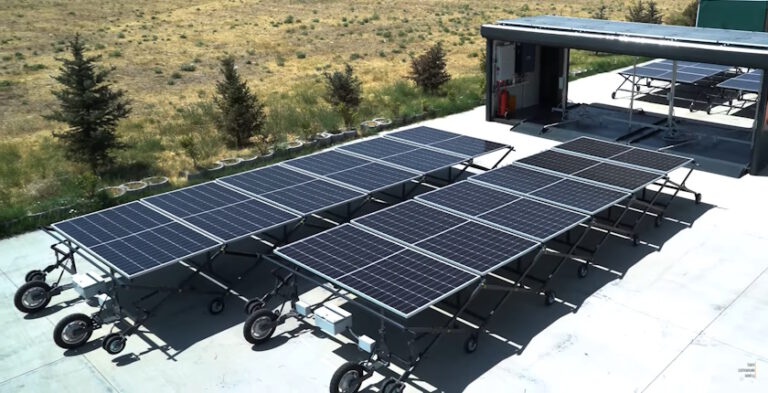
Foldable solar power plant – one unit is good for 60 families
Solar ovens and thermal solar power to heat your water is great if you have a steady place to live. But when a disaster strikes, such as an earthquake, landslide or flood, what are you to do? Engineers from earthquake-prone Turkey have created a portable, foldable solar power pack that can provide basic power services to homes and villages in the event of a natural disaster.
Turkey has also seen an influx of unstable populations of Syrian refugees over the years, along with North African migrants heading to Europe. This new solution could also help Lebanese living under the hands of terror factions and without a stable government creating chaos and power outages in Beirut, and basically all over Lebanon.
One unit can provide the power needs for 60 families.
The Turkish solar photovoltaic system or mini “power plant” puts out of 15 kW. And it can be installed in 15 minutes. A 15kW system can generate about 15,000 watts of power in the brightest days of the year, and this is equivalent to powering 500 laptops simultaneously. Factors like clouds, dust, temperature, and age of equipment will affect the affect actual power output.
The micro solar power plant, inventors say, is handy in case of disasters and for refugees. The same Turkish company is developing a portable hydropower turbine of up to 1 MW aimed for use on canals and small streams with little or no assembly required. Countries like Canada and the US are great for hydropower because of the streams and rivers. Drier countries, the sun is better.
The portable mini solar power plant can be switched on in a second, with no mention of how to maintain the battery system which we know requires a certain kind of skill and finesse.
The market sees no shortage of mini solar power systems. Our friend bought one, twice, in Costco, for about $15,000 USD each time. Both winters when the system wasn’t maintained correctly, the batteries were destroyed – meaning that when a company says the system is “easy” and hassle free, we think it’s important to read the small print.
But Turks know how painful it can be without power: When a devastating earthquake hit Kahramanmaraş last year, Turkey’s Ministry of Energy and Natural Resources reached out to its homegrown company firm Türkiye Electromechanic Industry (Temsan) asking the engineers to develop a local solution to natural disasters.
Shoddy construction, old buildings made from natural materials, along with mismanagement and deceitful building practices mean that there are many casualties and chaos whenever Turkey has an earthquake. We hope this government-supported project can help Turkey develop its infrastructure.
The mini power unit called the Mobitem is a 2.5-meter-high container of 21 square meters in total.
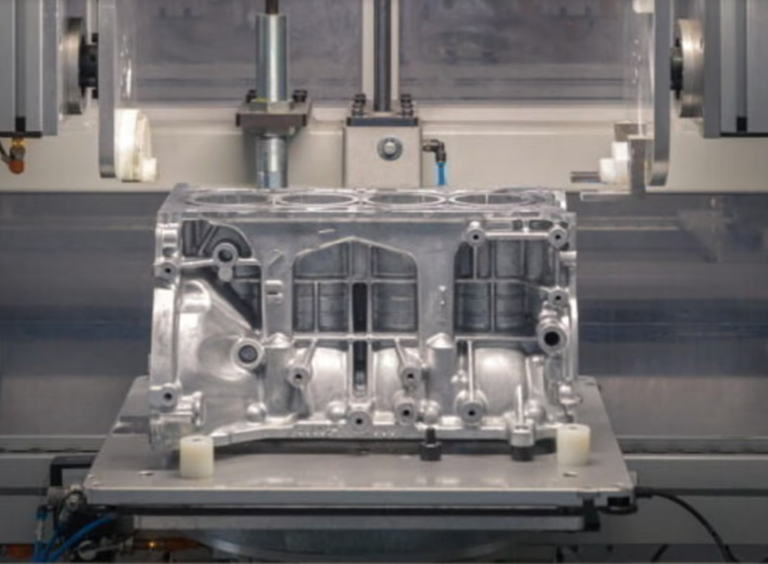
Saudi Arabia has a vested interest in Horse Powertrain
As car manufactures switch to electric, Horse in London, Renault from France, Geely from China and Saudi Aramco which owns the world’s largest stake of oil, go all in for combustion engines.
Saudi Arabia’s oil company Aramco wholly owned by the Saudi Arabian government is one of the world’s wealthiest companies and is by far sitting on the world’s greatest amount of oil reserves. While Aramco does invest in what seems like noble deeds – in hydrogen energy for instance – its actions of actually developing mega real estate projects such as Neom (dock your mega yacht here) and investing in combustion engine tech shows that Saudi Arabia is planning that its oil reserves will be relevant for generations to come.
The world experienced the two hottest days on record this year, on Sunday and then again it broke the record on Monday, due to climate change but for oil companies like Aramco its business as usual. Or rather, bringing business back to the 80s by investing in combustion engines.
Saudi Aramco went public in 2019, leading to the largest IPO in history, raising $29.4 billion USD. Despite the large amount of cash raised, only 1.5% of the company was actually floated, with the rest still owned by the Saudi government.
Among the many directions that Aramco is taking – including investing in AI chips – Saudi Aramco is betting that the internal combustion engine found in cars, trucks, ships and airplanes, will be around for a “very, very long time”. The world’s largest oil company does see opportunity from the rise of the electric car from its $500bn in revenues last year to take a $800 million or 10 per cent stake in Horse Powertrain, a company based in London and dedicated to building fuel-based engines.
Saudi Aramco, Chinese carmaker Geely and the French Renault, are investing in London-based Horse as the as the industry stops designing and developing its own combustion engines, it will need to start buying them from third parties:
“It will be incredibly expensive for the world to completely stamp out, or do without internal combustion engines,” said Yasser Mufti, the executive VP at Saudi Aramco responsible for the deal. “If you look at affordability and a lot of other factors, I do think they will be around for a very, very long time.”
Asked if he thought there would be internal combustion engines forever, Mufti said yes. Saudi Aramco has previously said it believes that even in 2050, more than half of all cars will still run on some sort of fuel. Horse is the “horse” they are better on.
Horse is headquartered in London with operations in Argentina, Brazil, Chile, Portugal, Romania, Spain and Türkiye. The powertrain plant in Bursa, which was part of Oyak Renault until recently, is now Oyak Horse, a new company set up under a partnership between Oyak and Horse Holding.
Horse Powertrain Limited is a joint venture holding aimed at producing powertrains, including internal combustion engines and hybrid systems.
The venture holding was established in May 2024 and is equally owned by Renault and Geely. It is headquartered in London, United Kingdom.
Zhejiang Geely Holding Group Co commonly known as Geely, is a Chinese multinational conglomerate headquartered in Hangzhou, Zhejiang. The company is privately owned by Chinese entrepreneur Li Shufu, and mainly engaged in the automotive industry.
So while car companies such as Ford and GM are pressured by shareholders to shift over to electric engines, the Chinese and Europeans are opening new businesses based on what was supposed to be “past” technology.
Consider that in 2021, GM announced its intention to sell only electric vehicles by 2035.
Electric vehicles are supposed to be the only kind of vehicle on the road in countries like Canada by the year by the year 2035. The new Canadian standard requires all new light-duty vehicle sales in Canada to be electric or plug-in hybrid by 2035. There are also interim targets of at least 20 percent of all sales being EVs by 2026 and 60 percent by 2030.
A growing number of people are buying electric cars, but range anxiety while towing boats or driving hours between cities in northern areas in North America is still a major concern. In rural areas of Canada and the US, locals are concerned about regular access to the grid and blackouts that can be regular during summer and winter storms.
We drove a Tesla this summer and enjoyed the acceleration speed and the cost of $20 a fill up versus $90 for the same sized car. My cousin loved hers so much that she traded in her second vehicle, a Ford truck, for a second Tesla. In her case, rural living means so much more driving for the kids. She estimates saving about $500 or more per car per month, on fuel alone.
Tesla Y, 2024 makes a decent, sustainable EV. Plus it comes with fart whoopee cushions.
Saudi Arabia needs to bet on the combustion engine because the lifestyle of Saudi Arabia depends on it. The moment we stop the oil and gas industry, we will solve the biggest problems with climate change and conflict in the Middle East. I find it interesting that London and the French are in on the game. We expect this from China and Saudi Arabia but opening new businesses for combustion engines? Sounds criminal to the climate movement.
Saudi artist Ahmed Mater talks about his work involving magnetism, mirage and Mecca. Ahmed Mater: Chronicles is taking place at Christie’s headquarters located in the heart of St. James’s, London, from July 17 to August 22.
Curated by Dr. Ridha Moumni, Chairman, Christie’s Middle East and Africa and organised thematically, the exhibition will trace Ahmed Mater’s expansive career, from his first artistic experiments to his latest projects.
As an acclaimed multimedia artist working across mediums including photography, videos, paintings, sculptures and installations, the exhibition will illustrate Mater’s unique visual reflections on the transformations across the social and spiritual landscapes of Saudi Arabia, and the Arab World.
Ahmed Mater: Chronicles will trace his artistic genesis from experimental forays during medical school, his formative years in the Al-Meftaha Arts Village, and his involvement in enriching the Kingdom’s contemporary art scene with Edge of Arabia, to the laboratory of ideas and collaborations that his current studio represents.
The Christie exhibition will highlight Mater’s seminal works, which include early-career abstract paintings, the Illumination series, the celebrated Desert of Pharan photography project (featured below) and will also unveil his most recent work, including Magnetism Book.
Drawing on themes of mutation, modernisation, land, and faith, the artworks included in Ahmed Mater: Chronicles will be on loan from prestigious institutions in the Middle East, from important private collections, and from the artist’s studio.
Ahmed Mater, Desert of Pharan
Some of his themes involve nomadism, desert dwellings and the shifting sands of Saudi Arabia. The exhibit will also feature Mater’s upcoming AlUla exhibition.
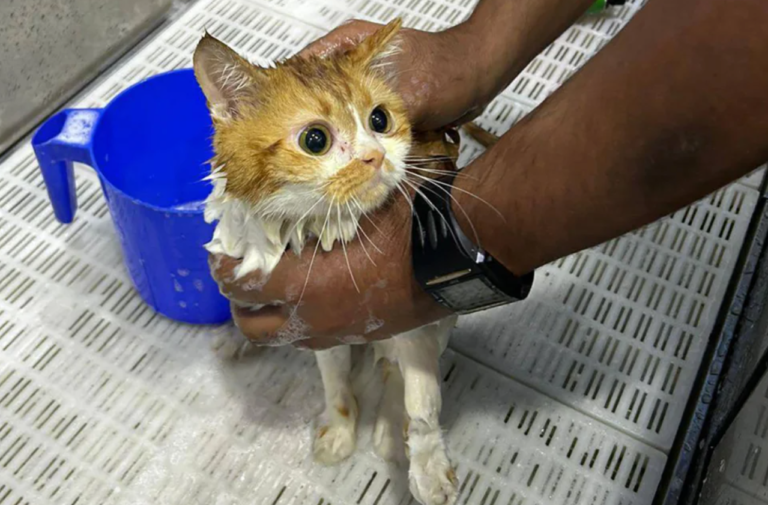
A cat is given a wash after more than 140 others were found dumped in a desert lot in Abu Dhabi, UAE. Courtesy Chiku Singh
Pet shelters in the United Arab Emirates are noticing a worrying trend. As soon as the temperatures soar in the summer months, more pets are being abandoned. According to a local paper, the Kaleej Times, local UAE families escape the heat which can exceed 40C daily by going abroad for long vacations.
Some pet owners give their animals to the care of clinics or shelters before their trips, local pet care experts reveal, while others go as far as abandoning them on the streets. Last winter 140 cats were found dumped in the desert outside of Abu Dhabi.
The animal rights organization People for the Ethical Treatment of Animals (PETA) is offering a $5,000 reward for information on “whoever dumped these cats in the desert,” said. PETA Asia Vice-President Jason Baker: “This act of cruelty must not be swept under the rug … The solution to the homeless-animal crisis is spaying and neutering and adopting from overworked and understaffed shelters, which PETA Asia has been asking the UAE to require for years,” Baker said.
Souheil Abdulla, managing partner at Pure Life Veterinarian Treatment told the Kaleej Times: “When people travel, they unfortunately abandon their pets. They mostly do it to cats because they’re easier to dispose.”
He added that such behavior “showed a lack of responsibility”. The expert said that it’s sad how some people consider pets or cats as accessories to their lives, instead of part of their family.
But who is protecting the animals? If you are in the UAE and want to know more about animal abandonment due to climate change, contact the RAK Animal Welfare Centre. The shelter is supported by the government of Ras Al Khaimah and opened in 2010 rehomes socialised, trained, and healthy dogs.
If you want to help with cats, The Sharjah Cats and Dogs Shelter is a non-profit that rescues abandoned pets and finds them homes. It has a physical location on Airport Road in Muzairah and is open to walk-in visitors from Monday to Thursday, 8am to 3pm and Sunday 2pm to 6pm. It is closed on Fridays and Saturdays. All pets are spayed or neutered, vaccinated and microchipped.
Back in 2015 The National said it’s common every summer in the UAE and that some shelters see pets handed in daily by locals who are traveling abroad for the summer and who do not want to ay expensive boarding fees. Some are leaving the UAE for good and don’t want to relocate with their cats and dogs. The trend starts in April when it starts to heat up.