Monday was the hottest day on record in the world. Climate change is showing how things can heat up.
Sunday this week was the hottest day on record, globally, until Monday rolled around. The world records the hottestday on record… for second day in a row as the global average surface air temperatures on Monday were 17.15C, following 17.09C on Sunday. Both are warmer than previous records of 17.08C from July 2023.
This climate change data is based on preliminary data from Copernicus EU, The Earth Observation component of the EU Space Programme, which can be compared to NASA in the US.
In the United Arab Emirates temperatures regularly climb above 40°C (104°F), and heath problems are being noticed by healthcare professionals dealing with a daily influx of heat-related illnesses – from heat exhaustion and dehydration to exacerbations of chronic conditions according to local news Alarabiya.
Rescue centers in the UAE are warning that soaring temperatures in Dubai are leading to an annual wave of animal abandonment across the country. Don’t worry you won’t find a cheetah on the street. Ownership of wild animals is now banned.
Dr. Mohamed Ahmed Abouelyazed Elshafei, a neurologist at Zulekha Hospital, Dubai, told Al Arabiya English soaring temperatures have led to several heat-related complaints at emergency rooms: “As a neurologist, we have observed worsening of previous medical problems because of exposure to too much heat, such as hypertension dehydration, multiple sclerosis-related symptoms, migraine and headaches,” he said. “Some people can develop seizures, brain injury, and kidney injury because of heat stroke.”
Amidst the picturesque desert landscapes of Rigan in Iran, one community is witnessing a remarkable revival of its culinary tradition while upholding environmental sustainability.
Such a transformation is the fruit of the Rehabilitation of Forest Landscapes and Degraded Lands (RFLDL) project, an initiative led by the United Nations (FAO) and funded by the Global Environment Facility (GEF).
The project has become a catalyst for economic empowerment and environmental conservation in Rigan, with local communities and rural women at its core.
Known for its cultivation of dates, citrus, sesame and henna, Rigan nonetheless faces a significant threat from desertification. Characterized by its expansive plains and towering mountains, Rigan experiences temperatures that can soar above 50 degrees Celsius during the peak of summer. The area is dotted with date palms and citrus orchards that thrive in its more tropical zones. See how Lake Urmia in Iran has dried up due to human mismanagement.
Land degradation and biodiversity loss is common in Iran, primarily due to unsustainable agricultural practices and deforestation. These issues are compounded by overgrazing, excessive harvests of forest products and the relentless movement of sands, all of which exacerbate wind erosion and diminish the efficacy of watershed ecosystems.
Communities have traditionally depended on wood and shrubs for fuel for their mud ovens, a practice that further led to deforestation and environmental degradation.
As one of its responses, the UN project distributed 750 gas ovens and 500 wood-efficient stoves, especially when compared to mud stoves, cutting down deforestation while helping the revival of the traditional Komaj bread making.
Komaj bread, a delicacy infused with the sweetness of dates and aromatic cardamom, complemented by the earthy tones of cumin—a staple spice of the region—is at the heart of this revival.
The switch to gas furnaces has enabled the women of Rigan to increase the production of Komaj bread, transforming it from a household staple to a source of income. This shift not only preserves a treasured culinary tradition but also provides new economic prospects for the community’s women, who can sell their product at the local markets, further contributing to their economic resilience.
Together with implementing activities, such as planting organic windbreakers, constructing watershed management structures and setting up sediment traps, the reduced necessity of clearing trees and bushes for fuel improved the status of dryland forests and range and decreased the severity of wind erosion on almost 75,000 hectares of land in both Rigan and South Khorasan.
In Rigan, in particular, the project supported villages to restore 2,250 hectares of farm and rangeland by growing drought- and saline- resistant plants. 1,650 of these hectares were planted with species that can be safely irrigated by wastewater.
In an effort to diversify income sources away from solely forest products, the project encouraged the cultivation of alfalfa, date trees and medicinal plants, as well as the breeding of turkeys. Additionally, it supported a range of craft and artisan skills such as needlework, sewing, handicrafts and the spinning of palm fibres.
In Israel people like Yossi Oud are starting such projects which help Muslim women start small craft businesses by beekeeping.
Something dark and metallic-like is pumping out large amounts of oxygen from the bottom of the Pacific Ocean, at depths where a lack of sunlight makes photosynthesis impossible, scientists have noticed.
The find has surprised scientists and the source remains a mystery. The oxygen might be generated by metal-rich mineral deposits, some sort of metallic substance or nodules, they claim.
Are these dark potato -like balls on the bottom of the sea the origins of life?
To researchers’ surprise, they measured voltages of up to 0.95 volts across the surface of the nodules. It is possible that the nodules catalyse the splitting of water into oxygen and hydrogen, but more experiments are needed.
The scientists also say this new discovery could change everything about what we know about oxygen itself, and how life as we know it is created.
This challenges what we know about the emergence of life on Earth, researchers say: “When we first got this data, we thought the sensors were faulty, because every study ever done in the deep sea has only seen oxygen being consumed rather than produced,” study lead author Andrew Sweetman, a professor and leader of the seafloor ecology and biogeochemistry research group at the Scottish Association for Marine Science (SAMS)
But when the instruments kept showing the same results, Sweetman and his colleagues knew they “were onto something ground-breaking and unthought-of,” he said.
So what does that mean for deep sea mining? Green Prophet has covered many stories and research to shed light on the problems with deep sea mining and what this could do to delicate, deep sea ecosystems.
A deep sea mining rig
Dr. Paul Johnston, from Greenpeace’s Science Unit, says, “This study shows that processes are going on in the deep sea and which are associated with these mineral nodules that we are only just becoming aware of. The ecological importance of this process as a source of oxygen in deep-sea environments is not really known but may be highly important.
“We should impose a moratorium on exploiting these systems because we still lack a comprehensive understanding not only of their biodiversity, but also of the complex ecological functions they support.”
Scientists are joining in the call to protect the deep seabed from mining as the International Seabed Authority in Jamaica this week to decide the future of the deep sea mining industry.
Antibiotics, after washing hands, is the biggest breakthrough in medical history. Without them people could die of routine infections from a cut toe or after childbirth. With them, doctors can stop sepsis before it goes too far. But every parent’s nightmare, and as doctors in hospitals know too well – bacteria have developed ways to become resistant to some of today’s antibiotics – meaning they won’t work on all people all of the time.
One reason people don’t give antibiotics to their children early is to safeguard the drugs for when the child needs it. But new research may be able to pump up the potency when antibiotics become resistant: A new antibiotic that works by disrupting two different cellular targets would make it 100 million times more difficult for bacteria to evolve resistance, according to new research from the University of Illinois Chicago.
For a new paper in the scientific journal Nature Chemical Biology, researchers looked at how a class of synthetic drugs called macrolones disrupt bacterial cell function to fight infectious diseases. Their experiments demonstrate that macrolones can work two different ways – either by interfering with protein production or corrupting DNA structure.
Because bacteria would need to implement defenses to both attacks simultaneously, the researchers calculated that drug resistance is nearly impossible.
“The beauty of this antibiotic is that it kills through two different targets in bacteria,” said Alexander Mankin, from the university. “If the antibiotic hits both targets at the same concentration, then the bacteria lose their ability to become resistant via acquisition of random mutations in any of the two targets.”
Macrolones are synthetic antibiotics that combine the structures of two widely used antibiotics with different mechanisms. Macrolides, such as erythromycin, block the ribosome, the protein manufacturing factories of the cell. Fluoroquinolones, such as ciprofloxacin, target a bacteria-specific enzyme called DNA gyrase.
Two UIC laboratories led by Yury Polikanov, associate professor of biological sciences, and Mankin and Nora Vázquez-Laslop, research professor of pharmacy, examined the cellular activity of different macrolone drugs.
Polikanov’s group, which specializes in structural biology, studied how these drugs interact with the ribosome, finding that they bind more tightly than traditional macrolides. The macrolones were even capable of binding and blocking ribosomes from macrolide-resistant bacterial strains and failed to trigger the activation of resistance genes.
Other experiments tested whether the macrolone drugs preferentially inhibited the ribosome or the DNA gyrase enzymes at various doses. While many designs were better at blocking one target or another, one that interfered with both at its lowest effective dose stood out as the most promising candidate.
“By basically hitting two targets at the same concentration, the advantage is that you make it almost impossible for the bacteria to easily come up with a simple genetic defense,” Polikanov said.
Cannabis and diabetes – be aware of the cardiovascular risks.
If you travel to Canada this summer you will smell cannabis smoke on almost any city street corner. Don’t be surprised that it’s out in the open as Canada legalized cannabis use for medicine and recreation in 2018.
Now researchers at University of California San Diego School of Medicine have found a significant increase in cannabis use among adults with diabetes in the United States, and they wonder what this might mean for health outcomes.
The new study, which analyzed nationally representative data from the 2021 to 2022 National Survey on Drug Use and Health (NSDUH), estimated that 9.0 percent of adults with diabetes used cannabis in the past month, with a 33.7 percent increase in prevalence—from 7.7 percent to 10.3 percent—between 2021 and 2022.
The findings raise concerns about the health consequences of cannabis use among people with diabetes. Previous studies have found cannabis use to be associated with adverse cardiovascular outcomes, to which people with diabetes are already vulnerable.
The researchers note that the use of cannabis among adults with diabetes may be driven by its perceived therapeutic benefits, including insomnia and pain relief for neuropathy. Additionally, the legalization of cannabis in multiple states has resulted in increased access to cannabis products, leading many people with chronic illnesses to turn to cannabis as an alternative means to manage their symptoms.
The study also found that individuals with diabetes who engaged in other substance use, such as tobacco use, binge drinking and misuse of opioids and stimulants, were more likely to have used cannabis.
Use of these additional substances could further exacerbate the health risks associated with diabetes and also emphasize the importance of addressing polysubstance use among adults with diabetes.
The study’s findings highlight the need for health care providers to screen for cannabis use among their patients with diabetes and to educate them about the potential risks and benefits of its use. Further research is also needed to understand the effects of cannabis on diabetes outcomes and to develop evidence-based guidelines for its use in this population.
The study published on July 22, 2024 in Diabetes Care and was led by Americans Dr. Benjamin Han, Dr. Jeremy Pettus and Dr. Alison Moore.
Running in a bathing suit means you can jump straight into a river, lake or the sea. But protective clothing is more important in direct sun.
The summers seem to be getting hotter every year and if you spend too much time in over 100 degree F heat there will be physiological consequences. Temperatures have soared this year especially in the Middle East. Temperatures in Dubai can exceed 109 degrees in July and August and states like Florida, Hawaii and Arizona are starting to sweat more than ever. But as Olympians land in Paris, we wonder, is it safe to work out in the heat?
Look to countries like Saudi Arabia more than 1300 people in Mecca in the scorching heat this past June during this year’s Hajj pilgrimage in Saudi Arabia.
So what’s in store for this summer? Scientists predict that 2024 may outrank last year as the hottest year on record. As Americans, Europeans and Middle Easterners continue to grapple with the summer heat, many are wondering, “Should I be exercising outside?”
Well the answer is, you can. But a New York Institute of Technology expert explains why safely acclimating to exercising in hotter environments has its benefits.
Alexander Rothstein instructor and coordinator for New York Tech’s exercise science program, discusses the safest times to exercise outside, the importance of staying hydrated, and how the body acclimates to the heat.
He notes that, by safely performing outdoor exercise in hotter months, athletes can increase beneficial proteins found in many tissues, including the heart, lungs, and skeletal muscles.
Alex Rothstein
“Work your way up or spend certain amounts of time maybe increasing the duration over a training period to get used to the hot weather. That’s very important,” says Rothstein, a certified strength and conditioning coach. “Our bodies develop something called ‘heat shock proteins,’ which literally help us handle the shock of the heat.”
He also discusses why athletes training for summer races or other outdoor athletic events can benefit from training in conditions that mimic competition settings, as well as how heat can increase workout intensity.
“When performed in hotter settings the same amount of exercise may require more energy expended, so you can get more bang for your buck.
“The stress is also greater. Therefore, your body is going to spend more time adapting or will need to adapt to a greater extent for training in the heat compared to a temperature-controlled environment.”
There are also smart choices one can make when exercising in the summer and hot climates:
Choose your workouts in the morning or later in the day when the sun is less intense: hours before 10am and after 3PM . Stay hydrated, and where sun-protective clothing and hats. If you can, choose running by the seaside to get a cool, ionizing breeze, and like the expert said, work your way up to it.
A Saudi woman laces her shoes before a run.
Exercising in the heat, like hot yoga, has benefits, but it needs to be done in a safe and smart way — not all at once.
As a kid growing up in Manhattan I remember when the “environment” became the important issue. Every Friday in 1968 I would stand with my mother next to the 59th street bridge at the City’s first recycling facility washing plastic bottles, the term “smog” had been coined and new phrases like pollution of the air and water became household terms.
Jump cut to over 55 years later and “environment” has become the big issue. New terms and new concerns have been introduced, but at the core the same urgency remains to get things done.
What if we could jump cut back through time 2,500 years ago to the city of Pumbedita, near the modern day Fallujah, Iraq. There we would find a large Jewish population famed for its Academy, whose scholarship, together with the city of Sura, gave rise to the Babylonian Talmud.
The Talmud, the central text of Rabbinic Judaism and the primary source of Jewish religious law and Jewish theology, would grow so large that a person who read a folio a day would complete one cycle of the Talmud in seven and half years.
To the surprise of many, buried among these pages are jewels of information about the “environment”.
The late Dutch-Israeli scholar, Dr. Manfred Gerstenfeld, was the first to map out environmental issues found in the Talmud:
To paraphrase Dr. Gerstenfeld, he writes that the prohibition of wanton destruction, called in Hebrew bal tashhit (‘do not destroy’), is the principle in Jewish law that elaborates Judaism’s attitude toward the environment.
War has signaled a period of destruction from time immemorial, from the poisoning of wells in ancient times through policies of ‘scorched earth’, the nuclear destruction of humans and the ecosystem in the bombings of Hiroshima and Nagasaki, to Iraq’s intentional pollution of water with oil in the Gulf War.
Jewish laws of trees and war
Yet the Torah teaches that even in times of war, Divine commandments impose certain constraints concerning the environment: “In your war against a city, you must not destroy its trees. You may eat of them, but you must not cut them down. Only trees that you know do not yield food may be destroyed.”
Maimonides mentions further extensions of this principle, pointing out that bal tashhit refers not only to periods of war, but to all times. However, he also states that it is not considered destruction to cut down a fruit tree which is causing damage to other trees or a field.
One of the oldest collections of rabbinical traditions, the Sifrei, written around 300 CE., extends the legislation of wanton destruction to prohibit interference with water sources. The Talmud extends it to include an uneconomical use of fuel.
A far-reaching interpretation of bal tashhit is found in the Talmud: Rabbi Hisda says: “Whoever can eat bread made from barley and eats bread from wheat, transgresses the prohibition of bal tashhit.” Rabbi Papa says: “Whoever can drink beer and drinks wine, transgresses the prohibition of bal tashhit.”
The Talmud indicates, however, that these opinions are not accepted, as one should not eat inferior food, but rather care more for one’s body than for money.
This is because Jewish law forbids a person to damage his own health. The injunction goes beyond the conventional boundaries of environmental interest, which tends to limit itself to damage to third parties and not to what one does to oneself.
Hunting also deals with destruction. Hunting as a sport was addressed in Jewish society long before modern environmentalism emerged. The 18th century Rabbi Yechezkel Landau, when asked whether it is permitted to hunt game, was surprised that anyone should even ask this question and simply answered: “How can a person go out to kill a living creature only for pleasure?”
In recent years noise has increasingly come to be considered a problem of health protection as well as nuisance. The Mishnah states that neighbors can prevent the opening of a store in a common courtyard by claiming that they cannot sleep due to the noise of customers entering and exiting; however, they cannot object to the noise of a hammer or a grinding mill in a craftsman’s home; nor can they object to the noise children make if one of the courtyard’s residents is a school teacher.
(The Mishnah or the Mishna is the first major written collection of the Jewish oral traditions that are known as the Oral Torah. It is also the first major work of rabbinic literature, with the oldest surviving material dating to the 6th to 7th centuries BCE.)
Visit the Peoples’ Talmud to learn more about ancient Jewish wisdom
What we covered here is the tip of the iceberg on just one subject relating to environmental concerns. If you wish to read Dr. Gerstenfeld’s doctoral theses, please go here. If the wisdom of the Jewish ancients is of further interest, there is now a free, open-to-the-world platform of Talmudic wisdom launched in Dubai, UAE, in the winter of 2022 called The Peoples’ Talmud which makes the Talmud accessible to layman and scholar in user-friendly English.
About Gedaliah Gurfein
Gedaliah has been involved in the high-tech world since 1994 both in Jerusalem, New York and Beijing. He has also been a teacher of the Talmud since 1974 and is currently the spiritual leader of two Igbo communities in Nigeria.
In one sampling on Animals, it is written: “Wild animals are usually called wild because they cannot be domesticated and used in labor. However, as Ben Gurion once said, “If an expert tells you it can’t be done, get another expert.”
The Talmud says that there were people who so understood animal nature that, despite the nature of wild donkeys, they were able to utilize wild donkeys to turn their millstones.
Bella Hadid, Adidas campaign for the 1972 Munich Olympics shoe re-release
Adidas, a popular sport shoes and clothing company has inflamed the hearts and minds of the global Jewish community after featuring supermodel Bella Hadid as the face of their 1972 vintage shoe release to promote the upcoming summer Olympics.
Bella Hadid who identifies as a second generation Palestinian (on her dad’s side) is prominently anti-Israel marking yet again the liability that brands take on when they hire antisemitic or racist celebrities that they cannot control. Kanye West was fired by Adidas and his profitable shoe campaign following a series of antisemitic remarks. It took a few weeks for Adidas to make the ack
According to prominent X commentator Eli David, Adidas has a problematic history and “was founded by Adi Dassler, a member of the Nazi party who used to sign all his letters with “Hei| Hitler” at the end.”
“First unveiled in 1972, the introduction of the SL 72 sneaker was the spark plug that initiated a paradigm shift in the realm of running shoes,” the company said in a press release on July 15.
Adidas has issued an apology for “any upset or distress caused” by featuring Hadid in advertisements for its 1972 Munich Olympic sneaker relaunch. Adidas chose Hadid for its SL72 campaign, commemorating the 52nd anniversary of the Munich Olympics by reviving their classic sneaker from the 70s.
The1972 Munich Olympics continued despite a Palestinian terror attack that killed 11 Israeli athletes and one German police officer. For Jews around the round the choice of Bella Hadid was more than an oversight.
“I’m not afraid to lose modeling jobs and I will continue to speak up on Palestine,” announced Hadid. Her supporters on X show images of her holding a map of Israel saying “this is Palestine.”
Do you think Israelis are being oversensitive or should brands start using AI models to endorse their brands given the polarizing potential of celebrities who use their star status for political gain?
Last winter the land in my forest contained snow that was frozen one day and when the next day was 20 degrees C, some 200 acres of snow melted in a day washing out the rural road adjacent to my property. The township claimed that a beaver dam on my land had broken, when my neighbors say something else was amiss: a winter’s worth of snow melted in a day and the culvert couldn’t handle the volume of in a day.
It’s not just my personal concern: whether it is flooding into your home or flooding caused on your land insurance claims are going up thanks to climate change. Whether termed “climate change” or “extreme weather,” an increasingly unstable environment is damaging homes and other property at an accelerating pace faster than observed in decades.
“The magnitude of these risks grows for homeowners, insurers, lenders and investors across the country while solutions to the impending insurance crisis are lacking,” says Clifford Rossi, a risk management expert who has served in executive roles at the U.S. Treasury, Fannie Mae, Freddie Mac, Citigroup and Washington Mutual.
“Just look at your own homeowner’s insurance renewal bill this year, on average the increase was 33% in DC, and with no viable solutions coming from the industry or government, homeowners are at the mercy of insurers—hoping their next letter from their insurer is neither a nonrenewal or an exorbitant premium increase,” adds Rossi, currently a professor of the practice and executive director of the Smith Enterprise Risk Consortium at the University of Maryland’s Robert H. Smith School of Business.
“Piecemeal approaches are unlikely to provide a long-lasting solution,” he says. “And meanwhile, the rise in the frequency and severity of natural disasters has underscored a form of market failure that suggests a fully private solution will be unable to provide long-term premium stability and availability of homeowners insurance.”
Writing for Mortgage Banker Magazine, Rossi proposes a “nationwide solution” to “essentially a nationwide problem.”
He writes: That solution is the Federal Natural Hazard Insurance Corporation – a private-public approach to providing homeowners insurance across all natural hazards and states that would address myriad failures in today’s insurance market.
As a new, federally chartered government-sponsored enterprise (GSE), the Federal Natural Hazard Insurance Corporation (FNHIC) would carve out natural hazards from existing homeowners’ policies, offering a separate policy based on a property’s exposure to the specific natural hazards in that location.
The Federal Emergency Management Agency’s (FEMA) National Flood Insurance Program (NFIP) would be absorbed into this new GSE and form the basis for a broader set of insurable hazards to be incorporated into these policies.
Private carriers would continue to offer and underwrite a standard homeowners insurance policy for risks unrelated to natural hazards while the FNHIC’s policies would be distributed by a network of insurers as the NFIP’s program is today. To reduce the FNHIC’s loss exposure and allow insurers and reinsurers to participate in this market, Climate Risk Transfer Securities (CLRTs) would be sold to private investors at tiers commensurate with their risk appetites.
Necessarily, such a major overhaul of how homeowners insurance is priced and provided in the U.S. would have significant implications for all market participants and the process of passing a chartering bill that implements such a program would be financially, politically, and operationally challenging, to say the least.
However, examining the merits of this structure – and the challenges such a program would confront—requires an understanding of the issues driving the breakdown in the delivery of homeowners insurance today.
Genesis Prize laureates engage meaningfully with the Jewish community and use their platform and resources for the greater good.
The Genesis Prize stands as a symbol of recognition and celebration for those who have achieved significant professional success, contributed to humanity, and are committed to their Jewish heritage and values. But what does it mean to be a Genesis Prize laureate?
“We are living in a time where assimilation and antisemitism have inhibited open expressions of Jewish identity around the globe. The [Genesis Prize] Foundation saw an opportunity to use a new tool for fostering that pride: spotlighting a Jewish individual who has achieved unparalleled professional success while speaking openly and positively about their Jewish identity,” says Stan Polovets.
The Genesis Prize Foundation’s commitment to these principles is reflected in the prize. Each year, a $1 million award is given to an individual or group who demonstrates excellence in their field and exemplifies the spirit of giving back. After inaugural recipient Mike Bloomberg donated his award, every subsequent recipient has done the same, giving the prize funds to causes meaningful to them.
Honoring Excellence: A Decade of Laureates
Since its inception, the Genesis Prize has recognized honorees who span wide-ranging fields, from politics and business to entertainment and social activism, showcasing the multifaceted contributions of the Jewish community to the world. Each laureate is given the opportunity to direct the prize funds to philanthropic causes, creating a ripple effect that benefits countless individuals and organizations.
The Genesis Prize began in 2014 with Michael Bloomberg, the former mayor of New York City and a noted philanthropist, as its first laureate. Bloomberg chose to direct his $1 million award to the creation of the Genesis Generation Challenge, a global competition to inspire young social entrepreneurs to tackle pressing social issues with innovative solutions.
In 2015, the Genesis Prize was awarded to Academy Award-winning actor Michael Douglas. Douglas utilized the opportunity to advocate for the inclusion of intermarried families into Jewish communities, striving to create a more welcoming and diverse environment that strengthens bonds.
In 2016, world-renowned violinist Itzhak Perlman received the Genesis Prize, saying that he was “humbled and honored” by the recognition. Perlman directed his award to support initiatives that champion the inclusion of people with disabilities, contributing significantly to a more accessible and inclusive society.
Sculptor Anish Kapoor, honored in 2017 for his contributions to the modern art world and tireless advocacy for refugees, allocated his prize funds to help address the worldwide refugee crisis. Kapoor’s humanitarian focus highlighted the urgent need for support and advocacy for displaced populations worldwide.
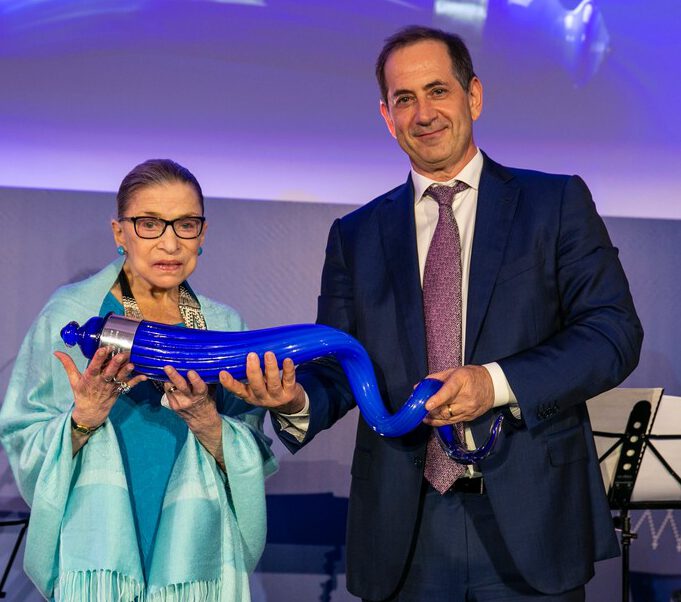
The following year, 2018, saw The Genesis Prize Foundation bestow its inaugural Lifetime Achievement Award upon U.S. Supreme Court Associate Justice Ruth Bader Ginsburg. Celebrated for her trailblazing civil rights and women’s advocacy work, Justice Ginsburg was chosen by all previous Genesis Prize laureates for her profound contributions to justice and equality.
In 2019, Robert Kraft, owner of the New England Patriots football team, received the award and focused his efforts on fighting antisemitism, announcing the creation of a new foundation and his personal contribution of $20 million to help counter the growing threat of antisemitism and all forms of hate around the world.
Human rights activist Natan Sharansky was honored in 2020. With the world struggling with the COVID pandemic, Sharansky directed his prize funds to organizations supporting vulnerable populations affected by the pandemic.
In 2021, filmmaker and philanthropist Steven Spielberg received the Genesis Prize and directed his award to organizations that work toward racial and economic justice in the United States.
Also in 2021, the foundation awarded a posthumous Genesis Lifetime Achievement Award to Rabbi Lord Jonathan Sacks, former chief rabbi of the U.K. Rabbi Sacks was honored for his role in inspiring the next generation of Jews, his lifelong work as a teacher, and as an advocate of interreligious and intercultural dialogue.
The 2022 laureate Albert Bourla, CEO of Pfizer, was recognized for his leadership during the pandemic and pivotal role in quickly developing and distributing the COVID-19 vaccine. Bourla’s Genesis Prize money helped support the establishment of a Holocaust museum in his hometown of Thessaloniki, Greece.
In 2023, Jewish activists and organizations aiding the people of Ukraine were recognized for their vital contributions during the ongoing conflict, emphasizing the Jewish community’s critical role in supporting the innocent citizens of Ukraine.
This year, The Genesis Prize Foundation celebrated its 10th anniversary by awarding the prize to Barbra Streisand, the celebrated actor, singer, author, director, and activist. Streisand allocated her award funds to nonprofit organizations focusing on environmental protection, women’s health, combating media disinformation, and supporting Ukraine.
The 2024 Genesis Prize honored Israeli organizations dedicated to providing care, counseling, and support to former hostages abducted and held by Hamas and the hostages’ families. This recognition was part of a broader initiative to raise global awareness about the hostages’ plight and ensure their concerns remain a priority for international leaders.
Measuring Impact: Beyond the Monetary Value
Over the past decade, Genesis Prize grants — including additional funding from other philanthropists — have totaled more than $50 million for over 200 nongovernmental organizations worldwide, reflecting the Genesis Prize’s broad and lasting influence.
The Genesis Prize selection process has evolved, seeking to engage the voices of Jews worldwide. In recent years, nominations have been solicited from Jews around the world, with a rigorous vetting process to identify individuals who align with the Genesis Prize’s criteria. This shift toward greater public involvement underscores the foundation’s commitment to inclusivity and engagement.
The Genesis Prize aims to inspire future generations to strive for excellence while embracing their Jewish heritage, underscoring the importance of identity and community. It seeks to create role models who instill pride in the next generation of Jews.
The legacy of each laureate is a testament to the enduring impact of the Genesis Prize, highlighting the profound ways in which one can make a difference in the world.
Ancient scarlet cloth found in Bible-era cave in Israel
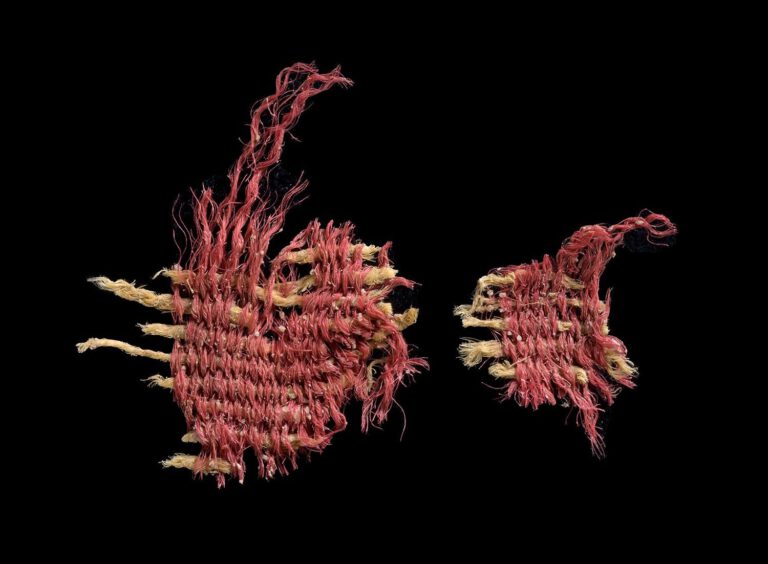
Scarlet red, a pigment made from insects, is used to make frappacinos pink at Starbucks but it was the dye of choice to make the color scarlet in ancient Biblical times. A piece of ancient scarlet-colored cloth was found in a cave in Israel and was recently studied.
The color of the rare 3,800-year-old textile was produced from the oak scale insects, which the researchers identify with the biblical “Tola‛at Hashani” (scarlet worm).
Samples of fabric created from insect that dyes red
It is mentioned in the context of luxurious clothing, in the use of Tabernacle textiles, and in other cultic contexts.
The rare textile, which is less than 2cm in size was discovered in 2016 in the “Cave of Skulls” during excavations conducted by the Israel Antiquities Authority and the Hebrew University as part of a broad Heritage Project to save heritage finds in the Judean Desert caves from antiquities theft.
The excavation, led by Dr. Eitan Klein, Dr. Uri Davidovich, Roi Porat and Amir Ganor, uncovered a tiny red textile, which was sent for further research along with dozens of other textiles found in the cave. Despite its small size, the textile’s color caught the researchers’ attention.
Red cloth found in this archeological excavation site in Israel
Using analytical equipment, they identified the origin of the dye, finding that oak-scale insects produced the red dye used for the woolen weft threads while the warp threads, made of linen, remained uncolored. The textile was dated to the Middle Bronze Age (1767-1954 BCE) using carbon-14 analysis.
The research was led by Naama Sukenik from the Israel Antiquities Authority, Prof. Zohar Amar and Prof. David Iluz from Bar-Ilan University. Like most archaeological research, it takes years to sift through findings and analyze results: The research results were published this week in the Journal of Archaeological Science: Reports.
“In ancient times, the dye was produced from the female scale insect, which lives on the kermes oak tree (Quercus coccifera),” said Sukenik: “Collecting these kermes was done in a very short window of time – one month out of the year, in the summer, after the female laid her eggs but before they hatched— when the amount of dye was greatest.
Eggs before they hatch found on oak trees in Israel
The short period in which the kermes could be collected, the difficulty in finding them due to their small size (between 3–8 mm), and their camouflage colors, that make it difficult to locate them, as well as the small amount of dye that can be produced from them — and on the other hand, the beautiful red hue (scarlet) that can be produced from them for dyeing textiles, made their use highly prestigious.”
The red dye from kermes was mentioned in ancient trade documents, such as in cuneiform tablets from Mesopotamia, dating back to 1425 BCE.
“In the Bible, the dye extracted from oak scale insects is referred to as “scarlet worm,” says Amar of Bar-Ilan University. The term “worm” in ancient times was a general term for various insects and their developmental stages. The biblical association of this color with a living creature demonstrates impressive zoological knowledge, considering that female scale insects lack legs and wings, to the extent that some Greek and Roman naturalists even mistook them for plant granules.
Throughout history, various species of scale insects have been used to produce red dye. To this day, in South America, another species of cochineal scale insect, which lives on certain species of cacti, is used for dyeing textiles.
According to Prof. David Iluz from Bar-Ilan University: “Although it was discovered that Israel has a native species of scale insect living on Palestinian oak (Quercus calliprinos), capable of producing a red-orange color, the analytical results indicate that in the case at hand, the species of scale insects is Kermes vermilio which lives on the kermes oak tree (Quercus coccifera).
“This tree species is common in the central and eastern Mediterranean region, including Spain, France, and other areas, but is not found in the Land of Israel.”
Despite the wealth of written historical evidence about the widespread use of dyeing with scale insects in the ancient world, until today, very few textiles dyed with kermes insects that predate the Roman period have been found worldwide.
The red textile from the “Cave of the Skulls” in the Judean Desert represents, as far as we know, the earliest evidence of woolen textile dyed with kermes.
“Although it is difficult to know how this textile arrived in this desert cave, it is significant evidence of ancient knowledge in dyeing wool fibers using scale insects to achieve the red color as early as the Middle Bronze Age — about 3,800 years ago,” says Uri Davidovich, an excavation director at the Cave of the Skulls on behalf of the Hebrew University in Jerusalem.
Are your tampons toxic? Trace amounts of lead found in women’s menstruation tampons.
Like the microplastics found from plastic teeth aligners, new research on tampons reveals hidden dangers of arsenic and lead. There are no safe exposure limits for lead and the trace metals found in tampons may be originating from the forests and fields in which the raw materials for the tampons are grown.
A new study published this week in the environmental sciences journal Environment International showed small amounts of toxic metals were found in all tampons tested.
In the study researchers from Columbia, Berkeley and Michigan State universities used acid to break down and analyze commonly used tampons to test for the presence of these toxic metals.
“Tampon use is a potential source of metal exposure,” the researchers report. “We detected all 16 metals in at least one sampled tampon, including some toxic metals like lead that has no “safe” exposure level. Future research is needed to replicate our findings and determine whether metals can leach out of tampons and cross the vaginal epithelium into systemic circulation.”
It is well known in medicine that the delicate tissues of the vagina are a very useful and effective way to absorb medications, with several birth control and hormone replacement therapy products utilizing this technique. The most popular is the NuvaRing, where birth control hormones are absorbed vaginally instead of a daily pill.
Although the study points out that there is no “safe” levels of lead or arsenic that humans should be exposed to, the metals were found in very small amounts, which needed to be measured in nanograms. Toxic levels in humans are measured in micrograms which are 1000x higher. For comparison, some tampons were found to contain 2.5ng of arsenic per gram. The toxic level of arsenic in humans is about 2.5mcg per gram, which is 1000x that amount. So should we be worried?
Tampons are made from cotton and sometimes from rayon, which is a product developed from natural wood cellulose. As both cotton and trees grow in soil, and all of the metals found in this study naturally occur in soil, that most likely explains the origin of the metals found in these tampons.
Mooncup is a good alternative to tampons but we can’t give information about plastics and your health.
No more space diapers! Scientists have developed a prototype to recycle urine in space. This tech could be used in hydroponics for growing food and medical cannabis.
If we look at Frank Herbert’s Dune novels is mostly desert, with extreme heat and an almost total absence of water and inhabitants rely on stillsuits, which recycle water from sweat and urine to sustain them in the dry environment. Drinking purified moisture from the body is not just a fantasy invention, however – it could soon be reality for astronauts, thanks to a prototype urine collection and filtration system inspired by stillsuits.
Scientists at Weill Cornell Medicine and Cornell University have developed a new spacesuit, inspired by Frank Herbert’s Dune, that recycles urine via a filtration backpack to extend spacewalks and improve hygiene. Unlike the traditional NASA suits, which have led to issues like UTIs, the new design features a vacuum-based external catheter and forward-reverse osmosis, though NASA has yet to adopt the technology.
Outside the safety of a space station, spacewalkers rely on their suits for oxygen and protection from the environment. Over the five to eight hours of a typical mission, they may also need to relieve themselves, which is often uncomfortable and unhygienic. It is also wasteful, as the water from urine is not recycled in current suits, unlike wastewater on the International Space Station.
No more astronaut diapers?
Astronauts have long complained about a lack of comfort and hygiene when using the maximum absorbency garment (Mag diaper), NASA’s ‘waste management system’ that essentially works like a multi-layered adult nappy made of superabsorbent polymer.
“The Mag has reportedly leaked and caused health issues such as urinary tract infections and gastrointestinal distress. Additionally, astronauts currently have only one litre of water available in their in-suit drink bags. This is insufficient for the planned longer-lasting lunar spacewalks, which can last 10 hours, and even up to 24 hours in an emergency,” said Sofia Etlin, research staff member at Weill Cornell Medicine and Cornell University, part of the study detailing the new suit.
The new design includes a vacuum-based external catheter leading to a combined forward-reverse osmosis unit to provide a continuous supply of potable water, with multiple safety mechanisms to ensure astronaut wellbeing.
The urine collection device includes an undergarment made of multiple layers of flexible fabric. This connects to a collection cup of moulded silicone, with a different shape and size for women and men. The inner face of the collection cup is lined with polyester microfibre or a nylon-spandex blend, drawing urine away from the body.
An RFID tag linked to an absorbent hydrogel activates a vacuum pump when moisture is detected, sucking the urine into the filtration system. There, the urine is recycled with an efficiency of 87% through a two-step, integrated forward and reverse osmosis system. This uses a concentration gradient to remove water from the urine, as well as a pump to separate water from salt.
While the prototype looks bulky we could call on SpaceX designers to make the final look more appealing.
How the urine recycling system could look attached to the back of a spacesuit (Credit: Karen Morales)
The purified water is then enriched in electrolytes and pumped into the in-suit drink bag, available for consumption. Collecting and purifying 500ml of urine should take only five minutes, the researchers claimed.
“Our system can be tested in simulated microgravity conditions, as microgravity is the primary space factor we must account for. These tests will ensure the system’s functionality and safety before it is deployed in actual space missions,” said Dr Christopher E Mason, the study’s lead author.
Sultan Al Neyadi, SpaceX Crew-6 mission specialist, will be the first United Arab Emirates astronaut to fly a normal International Space Station rotation. He will likely spend a half-year in space. (Image credit: SpaceX)
The system, which integrates control pumps, sensors, and a liquid-crystal display screen, is powered by a 20.5V battery with a capacity of 40 amp-hours. Its total size is 38x23x23cm and it weighs 8kg, which its developers said should be “sufficiently compact and light to be carried on the back of a spacesuit”.
NASA has been growing potatoes in Mars-like conditions since the 80s using hydroponics. This new space suit could work in Peeponics, growing food from urine.
A crew will orbit the Moon in 2025, followed a year later by a landing on its south pole.
Lilium is on the verge of selling 100 electric flying taxis to Saudi Arabia’s state-owned airline, Saudia, finalizing a framework deal set up in late 2022. Saudia recently started an interesting coffee campaign to raise cultural awareness about Saudi Arabia.
Electric flying taxi companies, including Lilium and rival Volocopter GmbH, are in a crucial phase, seeking additional funding to achieve certification which is complicated when they are flying in civilian zones and cities.
Lilium’s small aircraft, equipped with small ducted fans and two pairs of wings, aims to start flying their flying taxis by 2026.
The latest news boosted Lilium’s shares by 2.7 percent in New York trading, bringing the company’s market value to $550 million.
A more modest way to get around might be this Swiss-made solar powered taxi which we featured when it rolled into Israel more than 10 years ago.
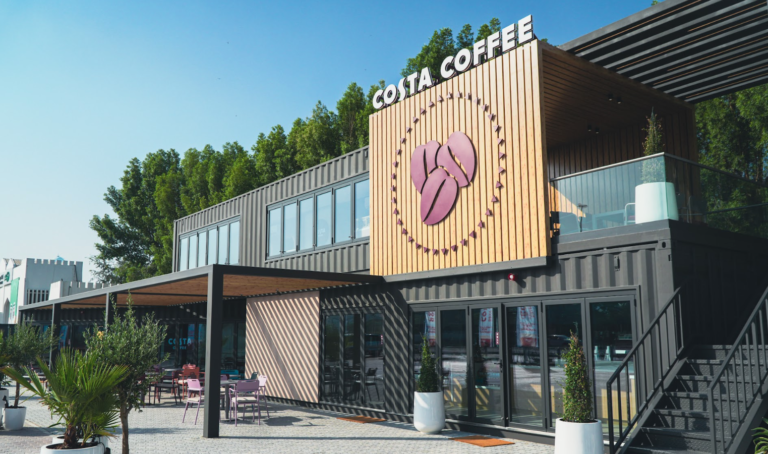
Ahoy Modz, a shipping container architecture firm, partnered with Costa Coffee, a UK coffee brand to introduce an eco-friendly, innovative coffee experience at Dubai’s Ripe Market, located in the Dubai Police Academy Park (see Cybertruck). This collaboration shows Costa Coffee’s unwavering commitment to sustainability through an avant-garde drive-thru café built from repurposed shipping containers. We already know that Middle Easterners can do coffee well – look to Blank Street in the US. Plus coffee traditions in the Arab world are in a class of their own.
The heart of this new Dubai café lies in its construction using repurposed high-cube and standard shipping containers, optimized for space and sustainability. The units were expertly prefabricated at AHOYmodz’s factory, enabling simultaneous groundwork at the Dubai Police Academy Park, thus minimizing disruption and completing the entire structure within just 60 days.
“Our innovative approach to modular construction demonstrates how sustainability and efficiency can go hand in hand,” said Joe Abraham, co-founder of AHOYmodz. “We are thrilled to partner with Costa Coffee to bring this unique coffee house to life.”
A new shipping container coffee house in Dubai
Surrounded by strategically placed pergolas providing additional shade, the café features an integrated cooling system ensuring a comfortable environment even during Dubai’s sweltering summer hours. This thoughtful design exemplifies AHOYmodz’s dedication to creating a pleasant and sustainable customer experience.
Costa Coffee’s goal was to create a drive-thru that delivers their signature brews swiftly and conveniently while minimizing environmental impact. Located in the bustling Ripe Market, this facility embraces repurposed shipping containers for a remarkably eco-friendly construction. “We are proud to collaborate with AHOYmodz on this innovative project,” said Mark Holmans, Head of Property at Emirates Leisure Retail. “This partnership allows us to provide our customers with an exceptional coffee experience that also aligns with our sustainability goals.”
The Ripe Market adds to the Dubai Police Academy Park where families from across the UAE can explore a delightful array of local produce, handcrafted goods, live music, play areas, and invigorating fitness classes.














 Gedaliah has been involved in the high-tech world since 1994 both in Jerusalem, New York and Beijing. He has also been a teacher of the Talmud since 1974 and is currently the spiritual leader of two Igbo communities in Nigeria.












 A new shipping container coffee house in Dubai