Home Blog Page 636

Clash Between Greenpeace Activists and Bluefish Tuna Fishermen in the Med Sea

12

greenpeace tuna fishermen water boats photo aerialThere are no clear solutions to the fight between conservation and capitalism [image via flickr]

Tempers flared out at sea as environmentalists and fishermen sparred over the endangered Bluefish Tuna in the Mediterranean Sea just around World Ocean Day. In the last few days, Greenpeace activists and Maltese fishermen engaged in one violent and one peaceful altercation, resulting in a few freed tuna, an injured activist, several irate fishermen (who lost equipment and fish), and two sunken inflatable boats belonging to Greenpeace.

The fishermen were operating under a legal European Union fishing quota when Greenpeace activists attempting to stay the tide of tuna extinction moved to cut their lines and net cages. The tuna would have been sent to “fat farms” so they could put on weight prior to being sold on the Japanese market. Though harsh, the methods used to protect tuna reflect their dire plight.

Masdar Awards $600 Million Contract for ‘World’s Largest’ Thermal Solar Plant in UAE

Solar field planned for UAEThe United Arab Emirates’s Shams 1 project will incorporate hundreds of parabolic trough collectors. (Image via Solar Thermal Magazine)

Abu Dhabi’s Masdar clean energy company has awarded a $600 million contract to a European consortium – the Spanish solar company Abengoa and the French oil and gas group Total – to build what it is billing as the world’s biggest single-site solar power plant.

The solar plant, named Shams 1, will be located at Madinat Zayed, about 120 kilometers southwest of Abu Dhabi in the United Arab Emirates (UAE). Under the contract, the 100 MW concentrating solar power (CSP) facility is to be ready by the second half of 2012. Masdar will maintain a 60% stake in the project, while each of the European partners will hold a 20% share.

Orgasmic Birth, the Eco-Sexy Way to Deliver?

Debra Pascali-Bonaro, a midwife, birthing educator and doula has over 25 years experience helping to deliver babies.  Her video, ‘Orgasmic Childbirth’ was five years in the making, and followed several couples on their journey towards experiencing ecstatic childbirths, not necessarily free from pain, but augmented by pleasure and sensuality.

About the film – which can be purchased online by interested viewers in the Middle East – Pascali-Bonaro explained that it explores “the sexual nature of birth and its powerful role in the lives of women who are permitted to experience it fully. People who see this film reexamine everything they thought they knew about the act of giving birth and its life-affirming potential for both parents and baby.”

As a follow up to her groundbreaking video on the topic, Pascali-Bonaro has published a new book, Orgasmic Birth: Your Guide to a Safe, Satisfying and Pleasurable Birth Experience (June 2010).

The book, co-authored by Elizabeth Davis, provides information on the basics of childbirth and takes it one step further. It aims to prepare woman to be advocates in their own ecstatic labor and delivery experience, which medical science now admits in a normal, if not frequent, variable experience.

Sourdough Part II: Care and Feeding Of The Starter

0

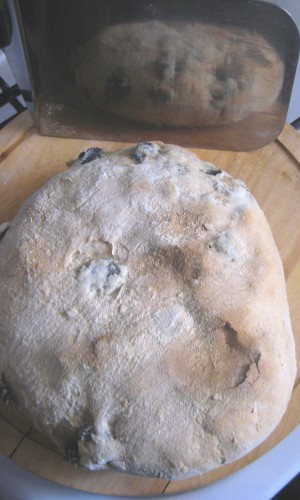
image-sourdough-olive-breadBaking sourdough bread can be a pleasure, but a bit like owning a pet. Miriam continues the series on baking great sourdough bread and how to maintain your starter.

Earlier in the week, we covered how to make the starter for your sourdough recipe. But your starter needs to be fed. Yeasts need to be supplied with fresh nutrition. The way to feed a sourdough starter is by removing part of it and replacing what you removed with fresh water and flour.

Feast Slowly on Michael Pollan’s Food Rules

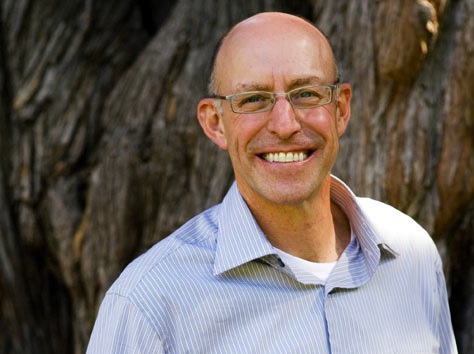
Michael Pollan food rules

Michael Pollan is a hero to many globally who take a strong interest in the link between food and the environment. Green Prophet’s James attends a lecture with Pollan and reports on his words, and Pollan’s newest book.

This American journalist/author has written several prize-winning books, including ‘In Defense Of Food’ reviewed here on Green Prophet, ‘The Omnivore’s Dilemma, and my personal favourite, ‘Second Nature – A Gardener’s Education,’ all of which uncover what really is going on in the world of food and agriculture.

Much of it is terrifying, much of it is actually against nature, and as he told a packed audience in Bristol, UK this week: “Monoculture is really the crux of the problem with food in the Industrialized world.”

Pollan is currently in the UK to promote his new book ‘Food Rules – An Eater’s Manual,’ and he spoke to a Bristol audience as part of the ongoing Festival Of Ideas, which links in all kinds of discussions and lectures upon the environment, climate change, history, culture, philosophy and religious values from a wonderful cornucopia of speakers.

‘Food Rules’ is a pocket-sized book, small and yet a robust dissection of trying to understand what food actually is, and very explicitly, what it really isn’t.

Pollan goes further – exploring how it contributes to both our health (like how to eat what we want to conserve), and our sense of well-being, as well as our disease.

Where is the nutritional priesthood?

He started his lecture by contrasting the current food fadism of “satanic nutrients versus blessed nutrients (like we ask in our post about fish) and that “we now need a nutritional priesthood to tell us what to eat!”

He has a great passion for telling his journey of discovery within the wonders of food, both on the page and to an audience, and I for one amongst many (many members of the audience worked for, or are members of the Bristol-based Soil Association, the UK’s leading organic certification body) am glad that his clear and questioning journalists eye fell into the vast soup that is the human relationship with what we eat:

Michael Pollan told us:”Food is an incredible mystery. We have other tools than science to navigate culture and our relationship with the natural world, and I collect wisdom from traditional cultures about food.”

He peppered his talk with facts gleaned from the diets of indigenous peoples worldwide: the Inuit of Northern Canada eat a diet which is roughly 75% fatty meat and blubber, yet are incredibly healthy.

I have met Tibetans in exile in the west who once ate a meat-rich diet in their homeland, and after discovering a sugar-rich western  diet, quickly develop diabetes and rapid weight gain.

Pollan makes it abundantly clear that processed foods in the industrialized nations contribute to cancers, heart disease and diabetes. I was shocked to hear him talk about American experiments that have led to pigs and chickens being bred together to create a lean super meat. Or how about the fish fed pork and sold as halal or kosher? Or meat glue?

Ugh! This is surely a genetic abomination, regardless of whether you eat pork, or meat at all, and should really be a clarion call to come back to the natural world with more respect for its resources.

About the Book Food Rules

Pollan’s ‘Food Rules’ is made up of three short sections, an exploration of the three questions: what should I eat? What kind of food should I eat? and finally How should I eat it?

He goes into some detail and analysis of his findings and reflections upon these questions, and focuses the reader upon always trying to recognise exactly what food really is.

The crucial test, apparently, and one which we should remember and apply, is “would our grandma or great-grandma recognise this alleged food item as food?”

To illustrate this point, Pollan had been to a local supermarket and selected some items: some low-fat yet high-sugar yogurt; some processed stringy squeezy cheese (packaged and aimed at kids….) and an apple.

Which would you choose?

Ultimately Pollan unpacks his ‘Food Rules’ into the simple 7 word mantra which answers the questions posed by the 3 parts:

Eat food.

Mostly plants.

Not too much.

And there’s the magic formula. If we get that right, we could, possibly, eat our way back to health.

But the Bristol audience peppered him with questions about food addiction, GM crops (a hot topic here in the UK as the new environment minister in our new Government is allegedly pro GM crops), pesticides and scientific attempts to discredit organic foods.

There is so much to contend with in the food arena, whether you are tucking into amazing hummus or shakshuka in Jerusalem, fuul in Amman or mezze in Cairo. Or even falafel or burekas in Bristol.

Food Rules’ is a really important book for all to read, keep with us as a reference and to dip in and out of, and to help each and every one of us, despite our ethnicity, our class or our income, to consider what we put into our bodies and what fuels us.

‘Food Rules – an eater’s manual’ by Michael Pollan, Published by Penguin, UK.

Ormat Set to Release Alaska's Geothermal Energy Potential

ormat-nevada-geothermal-energyWith dwindling natural gas reserves, will South Alaska be powered with geothermal energy? Ormat may be the first to open Alaskan territories, still virgin to this clean technology.

Yavne, in Israel’s Central District, was briefly home to ancient Israel’s Sanhedrin (its highest rabbinical assembly). The town of 32,000 can also claim to be the original home of Ormat Technologies, Inc, now a multinational listed on the New York Stock Exchange (NYSE: ORA) and headquartered in Reno, Nevada. Ormat has been around for the last 40 years, and has a market capitalisation of $2 billion and annual revenues of $250 million.

Ormat specialises in building power stations fuelled by renewable geothermal energy. This energy emanates ultimately from the Earth’s molten core, and it’s the “renewable” part of the equation that has driven Ormat’s recent growth. Ormat owns and operates a dozen geothermal energy power plants worldwide, with another eight or so under development. By their nature, the plants tend to be located in geyser and volcano-rich areas.

What does this have to do with Alaska?  Ormat leased some 36,000 acres of Federal land in Alaska back in 2008, but has carried out only exploratory work until now. With Alaska just having reformed its geothermal energy royalties system, it has now become financially viable to begin core drilling, leading up to actual development and construction at the site.

Unregulated Diet Pills Raise Health Concerns in the Middle East

Not yet into the organic food craze of America, the thin craze is taking over the Middle East as sedentary women pop pills to make them thin. Image via hamed

Obesity is on the rise in the Middle East. Many Arabs in the Gulf are now overweight after oil wealth has fueled a sedentary lifestyle and a rise in consumption of unhealthy foods. In Saudi Arabia, even the armed forces are sagging, leading to Deputy Defense Minister Khalid Bin Sultan recently complaining that almost 70 percent of the soldiers are overweight. As a result, people are seeking out dangerous and unhealthy solutions in the form of weight-loss drugs.

Volcano and Hurricane Damages Ormat's Guatemala Geothermal Plant, Minimal Damage and No Lives Lost

geothermal energy wells diagramHow geothermal energy wells look, and work. Image via Academic.evergreen
With contacts and plants in place around the world, Ormat founded in Israel and headquartered in the US, reports that its geothermal plant in Guatemala has sustained volcano and then tropical storm damage. Ormat which is traded on the Tel Aviv Stock Exchange (TASE: ORMT) and on the New York Stock Exchange (NYSE: ORA) told the Israeli paper Globes that the Tropical Storm Agatha damaged the plant’s heat gathering system.

Geothermal energy collection works by taking the energy given off by the earth’s crust and converting into mechanical energy (see above). According to the media report, Ormat said that most of its wells can be re-connected to the 20 megawatt plant and that operation, at least partial operation, will resume quickly. The company is now talking to its insurance company over payments for losses incurred. Thankfully, no personnel were injured at the plant, the Penn Energy news site reports.

Meanwhile shares should be up as Ormat makes a bid to be the first geothermal energy generator in the State of Alaska, BrighterEnergy.org reports. EnergyBoom too.

::Globes

More on Ormat:
Ormat in Indonesia
Sunday and Ormat Build Largest Solar Roof in the Middle East
Google With Ormat?

World Ocean Day – 6 Tips to Clean the Seas

world ocean day oyster sign florida photoDon’t dump to the sea! The Middle East can learn from America’s mistakes. This sign to protect oysters and fish, Apalachicola, Florida.
Two thirds of the world is water – home to mysterious and life-sustaining organisms. The world’s oceans also serve as a carbon sink, helping maintain a balance as humans upset the balance with all our greenhouse gas emissions. Species like coral reefs are at threat as the world’s oceans warm up, plastic bottles and debris are choking our sea-life, and over-fishing of seafood and fish are putting species at risk.

The good news is there is a World Ocean Day. Today. Of course, most Green Prophet readers know that every day is important for the Seven Seas, or more accurately our one great salty body of water, but UNESCO liked the idea and last year declared June 8, the day. Proposed on 8 June 1992 by Canada at the Earth Summit in Rio de Janeiro, Brazil, it had been unofficially celebrated every year since then as World Ocean Day.

World Water Day is an opportunity every year to honor the world’s ocean, to get the kids off their Wii’s and computers and celebrate what the oceans give us. It’s also a time to teach kids and even adults how to give back. Today, Green Prophet’s friend Andreas Weil (who swims with whales!), the founder of the ocean research and education center EcoOcean, gives us his 6 tips on how to do your part.

Gas Line Excavation Unearths 3,500 Year Old Cultic Vessels

1

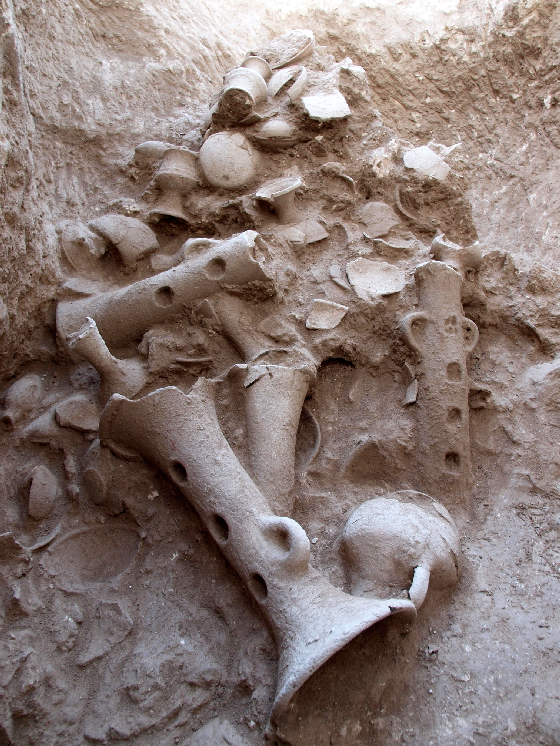
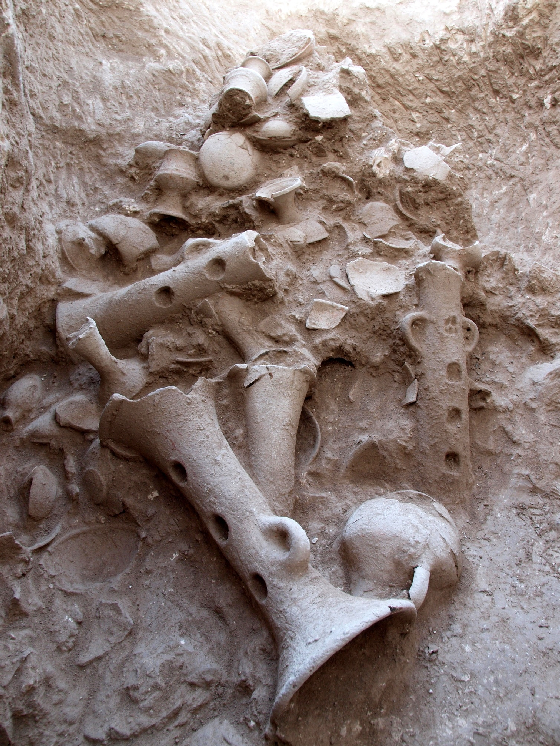
tishbi-archaeology-1 natural gas line excavation israelArcheology is green: The Israel Antiquities Authority and archaeologists celebrate rare find of more than 100 intact vessels

While conducting a standard excavation to prepare for Israel National Gas Lines Company’s northern gas line installation, the Israel Antiquities Authority discovered a “bottomless pit” of intact cultic vessels.  Layers of vessels that have been preserved for 35 centuries in a natural, underground hollow at the base of Tel Qashish next to Tishbi Junction were excavated with methodical care.

Uzi Ad and Dr. Edwin van den Brink – the archaeologists leading the excavation team – told the Israel Antiquities Authority that the find is especially rare since most excavations reveal mere fragments.  As such, finding 100 or more intact vessels is tantamount to discovering the shimmering city of gold, El Dorado.

Climate Change Poses Threat to Egypt’s Farming, Tourism, Water Supply (Video)

1

[youtube]http://www.youtube.com/watch?v=ffl4MMGLLPk&feature=related[/youtube]

This light-hearted clip bears a serious warning of what Egypt might look like in 2150.

Climate change threatens to drastically reduce Egypt’s agricultural production and water supplies, the head of the Egyptian Environmental Affairs Agency’s climate change unit warned in an interview with Reuters. El Sayed Sabry also noted that key tourist destinations are at risk.

TaKaDu and SolarEdge Among Red Herring 100 Winners

Israel-Cleantech-Solar-Water-IT

Israel’s TaKaDu and SolarEdge have developed solutions in the water and solar fields that make current technologies more efficient.

Israel’s TaKaDu and SolarEdge have been named Red Herring Europe 100 winners for 2010. The two cleantech companies are among eight Israeli startups to have made the list which considered financial performance, technology innovation and execution of strategy and other criteria.

Here’s a closer look at both companies:

Sourdough Bread Recipe: Part I – Make the Starter

0
Sourdough bread. This one was made with 5000 year old yeast. You could aim for week old yeast. 😉

You can bake a sourdough corn bread like this, too. our 4-part series on baking with sourdough starts here.

People have relied on wild yeasts to ferment their bread doughs, beer, and wine for thousands of years. By contrast, commercial yeast has only been around for about 100 years. It only became possible to culture specific strains of yeast after Louis Pasteur discovered how yeast works. While commercial yeast yields safe, predictable beer and wine, sour dough breads, with their delicious tang, still work beautifully in a modern kitchen.

What you need is a starter, a batter-like mix of fermented flour and water. It takes minutes to start your starter, and once you’re sure it’s viable, you’ll master the simple breadmaking techniques by which people have lived since the very earliest times. How locavore can you get?

THE STARTER

Start by thoroughly washing a 2-cup capacity glass or ceramic jar with hot water. A mayonnaise jar is fine. While it’s still hot, put a wooden or stainless steel spoon in it and pour some boiling water into it to fill it up. Allow to cool to warm, then empty it and it’s ready for use as the starter crock.

Metal containers react with the acidity of the starter and can spoil it; wooden ones may harbor bacteria that will spoil the starter. Glass is best, but I’ve used ceramic too, and food-grade plastic in a pinch.

Mix 1 cup of lukewarm water with 1 cup flour (unbleached white or whole wheat)  in your starter jar. Mix with your scalded spoon (it doesn’t matter what the spoon is made of as its contact with the starter is brief). You’ll get an even mix if you put the water in the jar first and add the flour to it.

Cover the jar with a paper napkin or paper towel, or a thin, freshly-laundered cloth. Use a rubber band to secure it, if necessary. You don’t want insects getting in and spoiling the the starter. Place the jar someplace warm.

Stir the starter once or twice a day for 2 days. You don’t have to scald your spoon each time, just use a very clean one.

On the third day, dump out half the starter. That’s 1 cup. Replace what you threw out with 1/2 cup fresh flour mixed with 1/2 cup water. This is “feeding” the starter. Yeasts feed on the sugars in the flour, reproduce, then die out. To keep a good, strong yeast colony going, you must get rid of excess dead yeast and “feed” the starter with fresh material every so often.

Dump and replace as above every 24 hours for the next 2-3 days.Yeast activity will be evident by bubbles rising to the surface. The starter will start to smell sour, but pleasantly so, or somewhat alcoholic. The color might change to darker, or a thin layer of dark water form on top – that’s OK. Just stir everything up well. Once it’s nice and active, with a frothy top, you can start baking.

A word about purchased sourdough starters. You may purchase a yeast starter which originated in San Francisco, Russia, or France, but over time your exotic starter will attract the local yeasts floating around in the air of your kitchen and mutate into a starter unique unto its locale.

Learn the care and feeding of the starter, on Part II of the Green Prophet sourdough series, here.

More natural eating on Green Prophet:

Cooped Up With Vertigo

Members of Vertigo dance troupe in Israel have set up a dance studio in old chicken coops on Kibbutz Netiv HaLamed Hey.

In most places it’s a 1958 Hitchcock movie, or a word to describe a dizzy sort of feeling, but in Israel, Vertigo is a world-renowned dance troupe that was founded in Jerusalem about 18 years ago and now tours the planet.

Not to be over-shadowed or outdone by the Batsheva Dance Company in Tel Aviv run by Ohad Naharin, Vertigo has decided to give itself a new dimension.

The modern dance company has taken a few steps back and in addition to its base in Jerusalem has also made a home in among abandoned chicken coops.

It has gone ‘eco’ (possibly ‘loco’ some might argue) on a 60-year-old kibbutz, Netiv HaLamed Hey in the Ellah Valley (where you can go on wine-cycling tours), smack dab between Jerusalem and Tel Aviv.

New Hadera Desalination Plant May Help Restore Water to Lower Jordan River

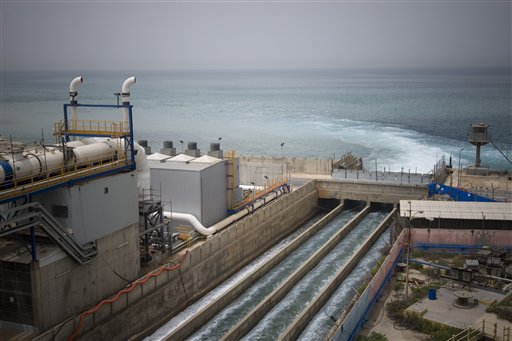
hadera desalination plant photo israelAs seawater flows into the Hadera Desalination Plant, will fresh water flow into the dying Jordan River?

The world’s largest desalination plant using the reverse osmosis method for extracting salt from the sea is now up and running outside the Israel coastal city of Hadera, according to the Associated Press. The new plant is the third in a series of desalination plants for Israel – that when all are finally in operation – are expected to supply up to two thirds of Israel’s drinking water needs, and put less strain on the country’s main source of fresh water, the Sea of Galilee.