Home Blog Page 637

Robert Upton’s Philosophy of Planning and the Middle East

1

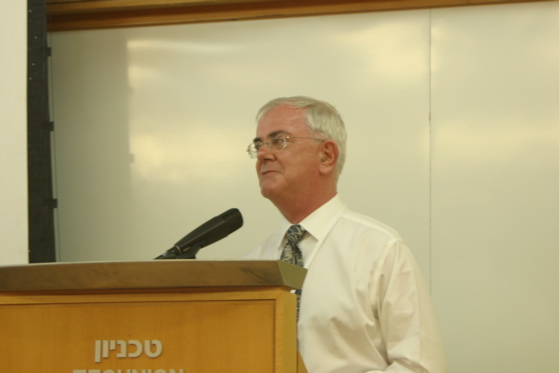
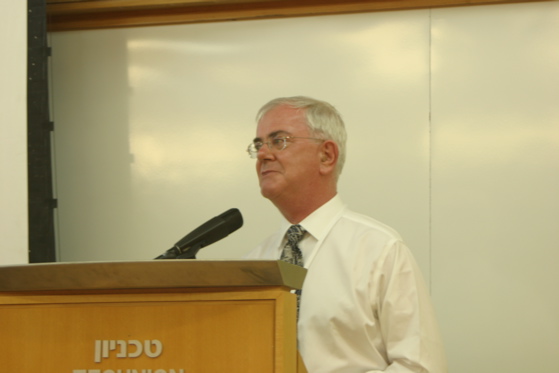
robert-upton-haifa“How Do We Want to Live?” asks England’s Former Secretary-General of the Royal Town Planning Institute Robert Upton at an urban planning conference in Israel.

Whereas Colombian planner Oscar Diaz (who we interviewed here) was practical and sited specific planning examples at the anniversary conference at the Technion-Israel’s Institute of Technology,  England’s planner Mr. Robert Upton’s speech was more philosophical.  This seasoned response from the fourth Royal Town Planning Institute Secretary-General (and the only one to make it out alive, Upton jokes), asked of Israel’s planning audience to think reflectively about the challenges of their profession.

He began by recalling the history of England’s Royal Town Planning Institute,  a relatively brief history that began in 1914.  But he said that early on the profession became “cluttered” with “no shortage of bodies who claim to be specialists.”  And the public was skeptical.

In a personal interview with Green Prophet he was careful to clarify that in the context of WWII, there was a tremendous need for England to rebuild itself and planners such as Thomas Sharp took on the challenge.  Sharp later became “disillusioned” according to Upton, as the public became increasingly dissatisfied.

robert-upton-introduction

The profession also suffers from a sort of existential dilemma.  It is never clear whether planners are designers or technical, whether the field falls under the parlay of social science, or if it is a hybrid.

Israelis such as architect Amos Brandeis and government planner Shamay Asif, who provided commentary after Upton’s presentation, also identified with this dilemma.

Another shared conflict in England and Israel is that between architects and planners.  What role should design play in the planning process?

Architects believe that they should play an important role in the planning process, but planners think they are redundant. Upton says that it is important that planners “dont’ take the design out of the plan – design creates understanding.”

However, he also quoted English author Samuel Johnson, who said approximately that it isn’t necessary to know how to make a good chair in order to be able to recognize one.  The fire rages on.

Upton summarized his discussion with the question “how do we want to live?”  This is the question that all planning institutes should answer, for which Upton agreed with me that there is no blanket answer.  The answer depends on the following variables: “what are our options? Our values?  What are the facts?  What are the rules? The power of relations?  Who benefits, and who is not represented?”  The answers will be different in every community.
daniel-orenstein-haifa

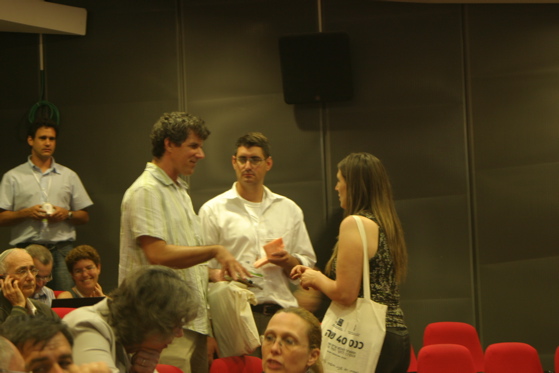
Alexandra Frackelton from The Arava Institute raised the question of public participation.  It was agreed that public participation in Israel is neglected, and that the process of encouraging it needs to be streamlined.

As a legal problem, it is currently being addressed.  Meanwhile, going forward, Upton believes it is important to find a “shared ethic.”

While Mr. Upton’s presentation raised more questions than provided answers, John Simone believed that framing the right questions is the key to wisdom.  Israeli planners are faced with a rapidly growing population, diminishing natural resources, and imminent climate change:  their greatest challenge will be to find questions that will produce the best solutions for the greatest number of people.

More on Planning from The Middle East:

Jordanian Sustainable Building Conference
Ecoweek
Rawabi, the First Planned Palestinian City
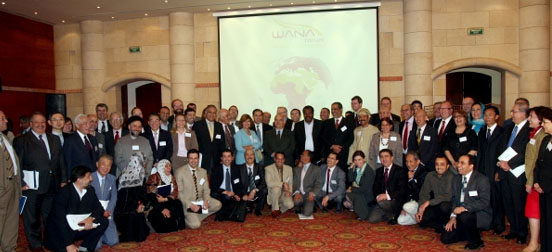
Do You WANA Green The Middle East? A Forum Report from Jordan

0

wana forum participants Jordan photoWANA, a North Africa and West Asia forum recently convened in Jordan to discuss the environment, a green economy, sustainable development and the revival of Hima, an Islamic environmental conservation practice.
The West Asia – North Africa WANA Forum is a long-term initiative that brings together decision-makers, civil society orgs, religious leaders, researchers, business owners, media reps and other relevant regional stakeholders from the region. It works through an annual forum and interim consultations, and looks to engage the public in its processes. The facilitator and guardian of the forum is Prince of Jordan El Hassan bin Talal, with the support of Japan’s Nippon Foundation and the International Senior Advisory Board.

The WANA Forum recently met in Amman, Jordan and sent Green Prophet some updates and policy and green themes the group is working toward: Over 130 participants, representing over 50 nationalities, diverse backgrounds, and extensive expertise agreed that developing supranational and regional cooperation is essential if the area wants to find solutions to its challenges.

Investigating the Business and Cultural Ties that Bind Israel to China

3

israel asia center interview logoThe Israel-Asia Center gives Green Prophet a podcast transcript of their interview with the Chinese Ambassador to Israel. Lots can be gleaned about China’s sustainability vision from the interview.

The Israel-based Israel-Asia Center recently conducted an interview with the Chinese Ambassador to Israel, Zhao Jun, on what the World Expo means for China, the challenges of urbanization and sustainability facing China’s growing cities, Israel-China relations and Israeli innovation relating to water and clean technology.

Green Prophet presents a transcript of the interview, featuring both David Harris and Rebecca Zeffert from the Israel-Asia Center, and their interview with Zhao Jun. It’s a good read for policy makers, and Middle East entrepreneurs looking to do business (especially green business) with the Far East giant.

It's My Business To Make the Desert Bloom

A Green Prophet reader shares her personal story on starting up a green business in the Middle East – Diamond Solar Services. Image via pinksherbert

My name is Chava and I’m a green nerd. I love saying that. It sounds kind of corny and probably not the impression you would get if you met me, but it’s true.

Some people like comic books, some fashion, I love the green world and all the people attached to it. I’m fascinated by new and brilliant technology, things that move the world on the high speed train of life or in some cases …the wings of a hovercraft. It fits with my passion of loving to be involved with making the world a better place.

My story is this: I am a Canadian-Israeli business developer and I took a hiatus from work here in Israel and moved back to my hometown in Canada for about a year and a half, where I continued education in my former field of insurance, specifically industrial commercial business, and worked till returning to Israel.

In Canada, I was focused on a future of environmental liability and what I could contribute to getting companies to go green by better insurance incentives. Canada is a beautiful country with beautiful people: I loved the baseball, beer, geese, deer and raccoons that came up to my doorstep, but I missed Israel and felt it was time to come home.

"Eat What You Want to Conserve" Says Arab-American Writer Gary Nabhan

boy mushroom forestPut your mouth where your morals are and eat the plants and vegetables you want to conserve. Image via ivanwalsh
Since the beginning of the green movement, there has been a rise in the number of organizations and businesses that are doing their part in the promotion of sustainability through conservation. This past Earth Day brought about the Earth Day Network, which has been playing its part to bring conservationist and green enthusiasts together, sharing ideas and discussing new ways to support the planet.

Other large organizations NGOS like Doug Band and the CGI (Clinton Global Initiative) have been working on successful emission reduction projects in the San Francisco Bay area. All the while, the climate is continuing to worsen, and individual, as well as collaborative acts, are important for any successful green campaign. As human beings, we’re constantly told to reduce our carbon footprint, consume less unhealthy foods, and spend less time in the shower!

But let’s take a minute to step back and look at this from a different perspective; one that the Arab-American writer and conservationist Gary Nabhan strongly suggests.

Oscar Diaz and Colombia’s sustainable cities

1

oscar-diaz-bogota

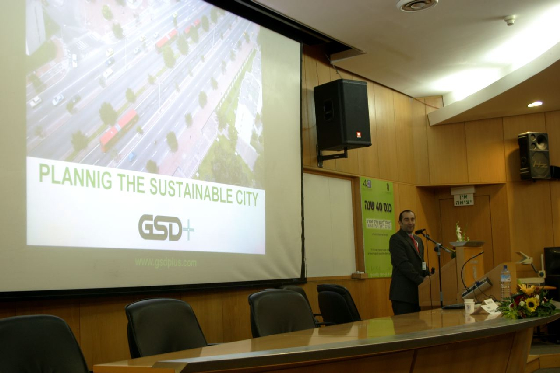
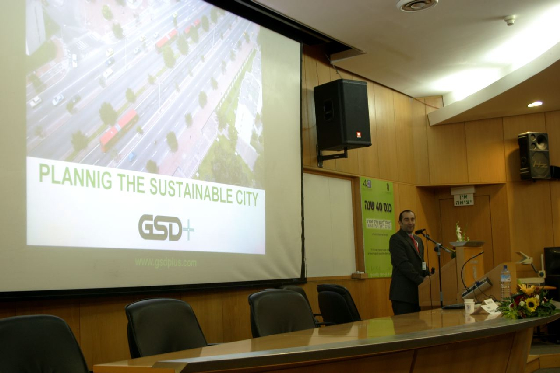
Mr. Oscar Diaz Inspires Israeli Planners to Build For People, Not Cars.

We promised to bring more news from the Technion-Israel’s Institute of Technology, where the Center for Urban and Regional Studies’ 40th anniversary conference was held yesterday, 3rd June 2010.  After brief greetings from representatives of The Center for Urban & Regional Studies, the Urban and Regional Planning Program, and the Municipality of Haifa.  And after the Technion’s President and the Dean of the Faculty of Architecture also gave brief introductions, the keynote lecturer Professor Dani Shefer introduced Oscar Edmundo Diaz.

Partner of the consulting firm GSD+ and formerly Senior Program Director at the Institute for Transportation and Development Policy and Senior Advisor to the City Mayor of Bogota, Diaz addressed the Israeli Planning audience about successful methods for planning a sustainable city.

SolarEdge Disrupts Solar Tech

SolarEdge-PV-Optimization

Disruptor: In the past week SolarEdge has announced partnerships to distribute its technology across Australia and Europe and has been named a Red Herring 100 Winner.

Known for its high costs and lagging efficiency, the solar energy field has been one to watch for many but one to take advantage of for very few. New innovations and incentives in the field however, reported on CNET, offer promise for many solar companies looking to establish themselves. One company that seems to have had little difficulty establishing itself is SolarEdge, a solar power harvesting solution provider based in Israel.

Going Against the Grain of Synthetic Fabrics

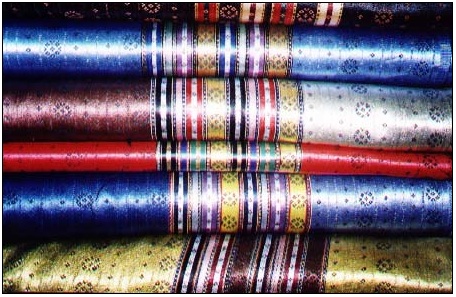
jerusalem silk fabric  Bilal Abu-Khalaf jerusalem silk fabric  Bilal Abu-KhalafIn a world of synthetics and polyesters, fabric merchant Bilal Abu-Khalaf sells hand-woven silks, cotton and gold-threaded cloths from his Jerusalem shop. Some cloths can wait 45 years before being sold.

In the hustle and bustle of Jerusalem’s famous Old City bazaar, shopkeepers are busy selling trinkets to tourists, synthetic t-shirts and plastic souvenirs made in far-off China. But there is one place where the appreciation for old-fashioned ways still exists. At Bilal Abu-Khalaf’s shop, he imports his hand-woven silk, cotton and gold-threaded cloths from Africa. His fabrics are used to make robes for Christian priests, Muslim imams and ultra-orthodox Jews.

Yael Uriely Shows Us That Good Things Come in Upcycled Shapes, Colors and Sizes

2

Yael Uriely’s Dvarim Tovim (or “Good Things”) fabric jewelry line is made of vintage and upcycled materials.

Good things don’t always come in shiny, new, plastic packages.  Sometimes, according to Yael Uriely, they come in upcycled, vintage packages that bring us back to previous eras revisited.  Yael’s line of fabric jewelry, Dvarim Tovim (Good Things) is assembled almost completely from upycled, recycled, reclaimed and vintage materials, teaching us to rethink our concept of the new good thing.  Good things can sometimes just be new to us.

The Center For Urban & Regional Studies 40th Anniversary Conference

1

technion-haifa-technology

Oscar Edmundo Diaz and Robert Upton Are Expected to Share Urban Planning Pearls With Israel [image via Technion-Israel Institute of Technology]

Before globalization,  ideas and technology ambled across the oceans and progress piddled along.  Now cooperation happens in seconds.  Microseconds even.  And though not all ideas are equally useful,  there’s no question that when great minds meet there ensues the following net result: opportunity.  Whether sharing technology with other nations or floating to draw awareness to environmental issues, sharing ideas allows us to circumvent mistakes made before us.  Tomorrow, when Oscar Edmundo Diaz and Robert Upton join some of Israel’s best Urban Planners at the Center for Urban and Regional Studies’ 40th anniversary conference, Israel will have the opportunity to incorporate lessons learned in Colombia and the United Kingdom.

Israel Camel Racing May Suffer for Lack of Humps

7

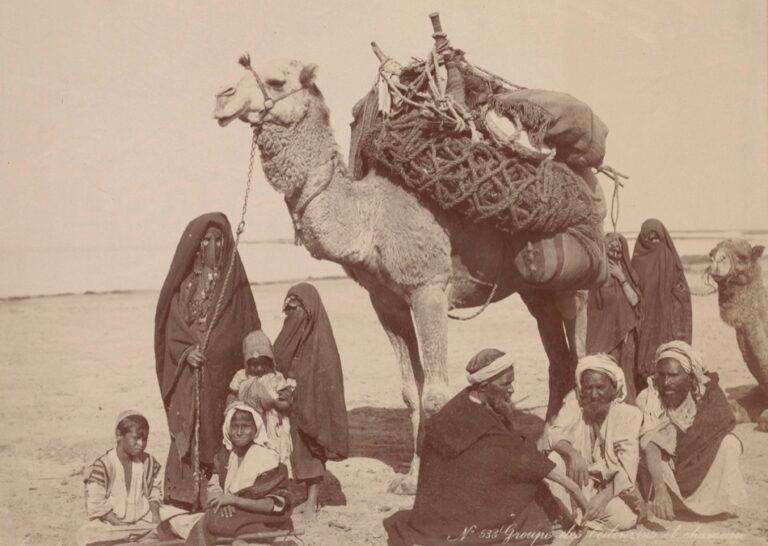
In Israel Bedouin still joke about the value of a woman “in the price of camels.” Now two Jewish Israelis have joined the tribe, and are looking to save the last of these Mohicans.

Camel racing is still a very popular sport in many parts of the Middle East, despite its reputation involved in child abuse and other non-green activities. Green Prophet covered this subject in February, noting that rich people in countries like Abu Dhabi, often pay thousands of dollars for racing camels and that small children are taught to race them at an early age.

Now this sport may soon be reality in Israel as well; according to an Los Angeles Times article about a couple of Israeli filmmakers, Ezry Keydar and Nadav Ben Israel who are making a documentary  movie about Bedouins who own Israel’s remaining camel herds. These two are entertaining the idea of racing these “ships of the desert” at an uncompleted airstrip outside the Negev city of Mitzpeh Ramon.

Most of the article deals with the plight of Israel’s camel population, now down to about 3,500 animals; as well as the Bedouins who still keep these animals and are now finding it harder to do so due to lack of natural grasslands in Israel arid regions and the high price of purchasing fodder.

The Bedouins themselves are a neglected element of Israeli society with the a severe lack of running water, sewage systems and other things that other segments of Israel’s population take for granted.

Since the Bedouin are the keepers of a camel herd population that once numbered into the tens of thousands, Keydar and Ben Israel will most likely enlist Bedouins to provide not only the racing stock but the riders or jockeys as well; which probably has resulted in the significance of the term “camel jockey” in reference to the romance place around the indigenous desert populations who in the past relied on these animals as beasts of burden, meat and dairy products, and even for the clothing they wear and tents they used (and sometimes still do) live in.

Referring back to our earlier article, in which wealthy people in UAE states pay large sums of money for pedigree breeding and racing camels, it’s not likely that the ones found in Israel’s Negev desert regions are of the same quality as those that wealthy camel fanciers in Abu Dhabi pay a small fortune for. The one comparison that might be made would be regarding who will ride these “splendid  beasts” as Lawrence of Arabia once noted them to be.

Nowadays oil trading rich people in the Middle East pay much for luxury cars, like gold plated Mercedes Benzes than they do for camels. And even in places like Abu Dhabi, the noble Dromedary racing camel may one day be only a nostalgic memory.

Over in Israel it’s debatable if Israel’s Bedouin population will do that much to restore their national pride as their nomadic way of life is quickly drifting into the sands of history, being replaced with more town life in large settlements like Rahat in the Northern Negev

who have also adopted many of the bad traits of living in towns such as piling up trash or disposing it in wadis (dry creek beds), as well as leaving their former occupations as herdsmen and farmers for  more lucrative ones like smuggling drugs and other illegal commodities into Israel.

As for camel racing, it may already be too late for this sport to catch on in modern Israel, but here’s what the Israeli filmmakers say:

Our choice of topic is not accidental. We see these people as the last of the Mohicans — they represent a vanishing culture.

Sadly, Israel is working systematically to push this culture and its symbols into extinction. It won’t recognize camels as an agricultural sector and won’t allocate grazing lands. Commercial feed is expensive, and many Bedouins are forced to give up camels. Israel is successfully eliminating a symbol of culture. And when you kill a symbol, the culture dies with it.

We see great value in preserving this culture — not in a museum, but as a way of life. We want to see Bedouins continuing to live as people of the desert, and this is increasingly less possible. We do not want them to vanish from our landscape.

::LA Times article

Read more about Bedouins and Camels:

Abu Dhabi Millionaires Pay Big Bucks for Camels

Meet Ahmed Amrani: the Green Bedouin

Ben Gurion University Makes Green Plan for Bedouin City of Rahat

Abu Dhabi Eco-Chicks Organize Green Drinks Event

abu dhabi eco chicks green drinksGet your green drinks on in Abu Dhabi tonight with the Eco-Chicks and other eco folks.

If you happen to be passing through the One to One Hotel in Abu Dhabi tomorrow night around 6:30pm, you may stumble across an Abu Dhabi Eco-Chick organized Green Drinks event.  Green Drinks is a loosely organized (yet widely successful) informal meeting group for greenies of all orientations, and has already become popular in Tel Aviv.  It is very exciting to see this movement spreading across the Middle East, and exciting to learn about the active, spunky Abu Dhabi Eco-Chicks.

Wind And 9 Israel-Related Cleantech Headlines, Week of May 23, 2010

Highway-In-Israel

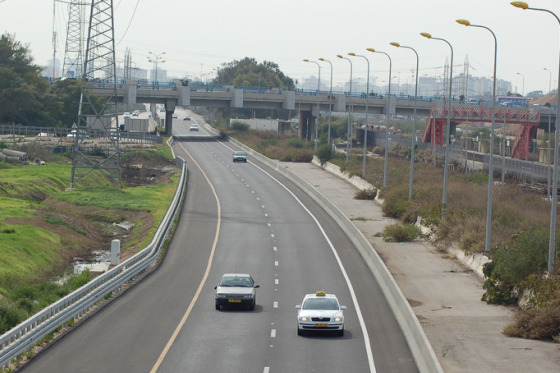
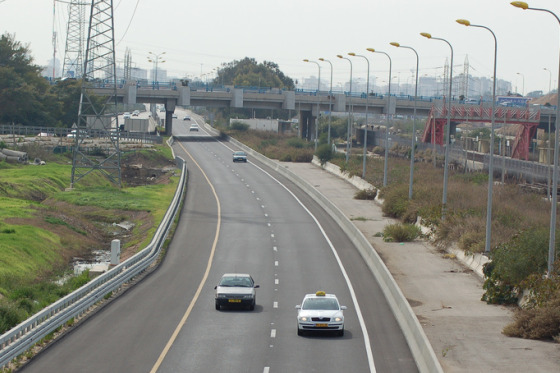
Israel’s plan to use renewable energy to power highway lighting, Italy’s plan to use Israeli technology for highway signs, the OECD and more headlines related to Israeli cleantech this past week. Image via david55king.

During the week of May 23, 2010, Israel announced that it will be converting the energy sources for its infrastructure, specifically highway lighting, to renewable ones, including wind. Israeli and Taiwanese water experts met in Taiwan to discuss water technology and cooperation and Solaredge was named a Red Herring 100 Europe Award winner for 2010. For these stories and more, see below.

Green Zionist Alliance (GZA) – Bold Resolutions for 36th World Zionist Congress

4

green-zionist-alliance-banner Can Zionism claim Green credentials? The jury is still out on this one.
On the one hand, Zionism was initially very much a “back to the land” movement, in the European Romantic tradition. Trees were being planted in Palestine as early as 1901, there was a strong emphasis on agriculture and “redemption of the land”, and communal settlements blossomed.

There is no doubt, however, that the growth of the Yishuv –– Jewish community in Palestine –– also put a huge strain on the country’s environment and natural resources, especially post-1948. The emphasis was on the huge challenges of defence and security, development, absorption of immigrants and building the state. Given this mixed record, it would probably be fair to say that the founding fathers mostly followed the best practices of their day, but those practices would not pass our Green scrutiny today.

Take Your Team To Lebanon's Ecovillage

1

lebanon-ecovillageGet Your Green On in The Dmit Valley

Ecovillages are slowly sprouting in the Middle East.  There’s Kramim in Israel’s Negev Desert, as well as the well-known Kibbutz Lotan, and now the first of its kind in Lebanon.  Called simply EcoVillage, this project was grown from the ground by Karim al Khatib and a group of green-minded fellows.