Home Blog Page 623

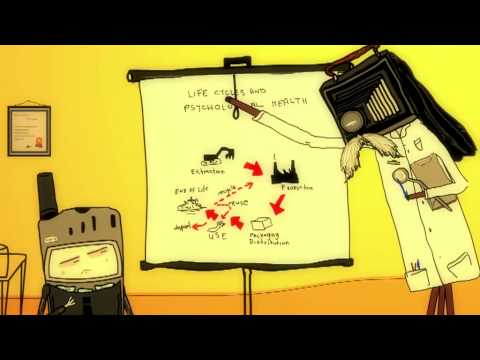
Animation: Past Life Regression For Eric-Sun, The Abandoned Cell Phone

0

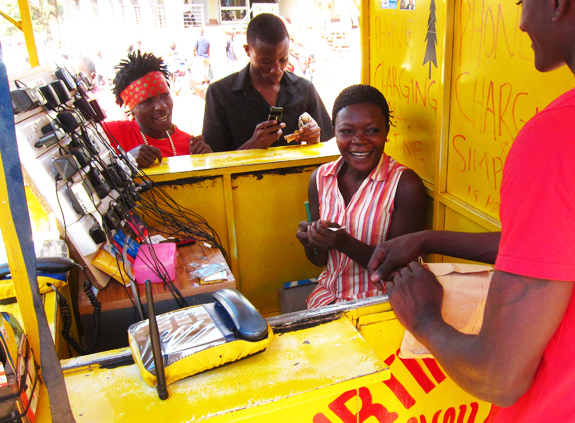
cell phone charging in Africa

The next time you think of replacing your cell phone, remember it’s made of nickel, silver, gold, platinum, as well as plastics and other finite materials; will you reconsider?

We love to share clever designs with our readers, to write about the technologies we hope will save the world one micro chip at a time. There are motorized bikes, energy reduction innovations, smart grids, and numerous other designs worth sharing. But rarely do we consider the ethics of design; nor do we ponder the origin of components that make up the technologies that render life more convenient. For Australian designer Leyla Acaroglu, these questions are central.

American Vertical Farm Concepts Good for the Middle East

0

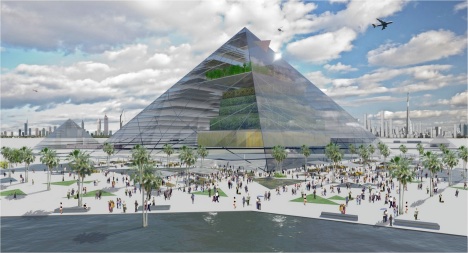
Inspired by Babylon’s Hanging Gardens? Weber Thompson’s Vertical Farm pyramid concept can be used in  Abu Dhabi or Dubai as well.

American cities like Newark New Jersey are a long way from Abu Dhabi or Cairo; but vertical farming concepts now being planned for American cities, are also being considered for locations in the Middle East as well. In a recent published article in Treehugger, giant pyramid shaped structures, as well as specially designed skyscrapers will produce large amounts of vegetables and other agricultural produce by means of soil-less hydroponics.

Summer Heat Jams Power Production in Oil-rich Saudi Arabia

0

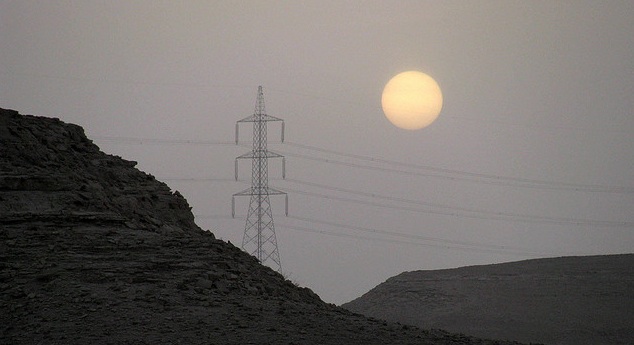
saudi arabia summer hydro electric linesSaudis, Kuwaitis and Emiritis experience summer blackouts, despite being oil- and gas-rich. Lack of infrastructure and change in lifestyle to blame.

With temperatures reaching up to 50 degrees Celsius or 112 Fahrenheit more the a few countries in the region are struggling to keep up with people’s needs to keep cool in the scorching summer heat. In Israel, which sadly gets most of its energy from coal and natural gas, the public power company the Israel Electric Company issued a statement on Sunday calling for Israelis to minimize their electricity use between noon and 5 pm for the rest of the week as the company’s production was reaching its limits, the Jerusalem Post is reporting.

The paper also pointed out the Israel only keeps a single digit power reserves compared to the 17-25 percent which is considered necessary. While it’s quite plausible the electricity might be in shortage in Israel as the country lacks any significant natural resources, the fact that blackouts are occurring in the United Arab Emirates home to the world’s seventh largest proven oil reserve is maybe more surprising.

Only 1 in 25 Emiratis Use Their Legs to Walk

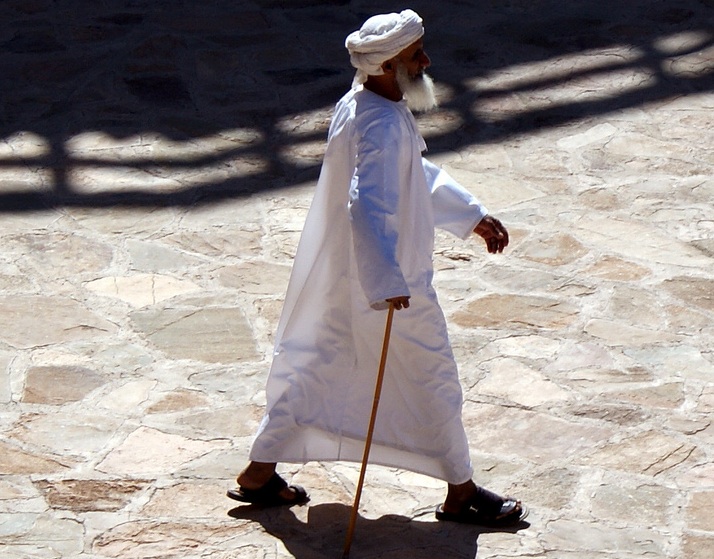
arabian man walking with stick photoLegs? Who needs them when you can drive. Maybe this is why diabetes rates in the Gulf region are among the highest in the world.

We already know about the terrible rates of road accidents in Saudi Arabia, the dangerous practice of car drifting, and the admiration for gold-plated cars. Now, a new study finds residents of the United Arab Emirates to be highly sedentary, Adam Gonn from the Media Line reports.

A mere 4% of people living in the United Arab Emirates walk on a weekly basis, a new study by an international shoe maker has found. Commissioned by South Korean shoe manufacturer RYN ahead of their forthcoming entrance into the Gulf shoe market, the study into Emiratis’ walking habits found that both UAE citizens and expatriates alike are not walking regularly enough. In spite the fact that the walking infrastructure in the United Arab Emirates is well advanced compared to most countries in the world, just 4% of residents walk on a weekly basis,” read the report.

RECIPE: Herb-Crust Chicken Shnitzels

0

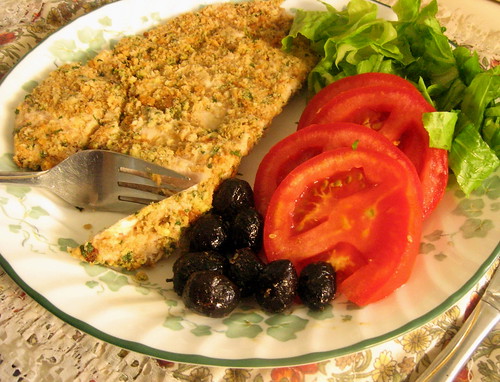
chicken-shnitzels-with-herb-crustChicken fillets pounded thin and fried are shnitzel in Israel. Miriam serves a healthier, herby, baked version.

Sizzling summer weather takes away our appetite for anything but light, nutritious food. Coming in from the street feeling broiled ourselves, a quick, home-cooked meal is the answer. Like these organic chicken fillets. They’re  more interesting than the usual fried shnitzel because herbs like the ones featured in our Middle Eastern spice series, breadcrumbs and nuts protect the meat and keep it juicy – and make a lively, flavorful crust.

Most shnitzels are fried, but these you bake in less than 15 minutes. Less time over a hot stove, and healthier for you.

Killing Marine Life With Your Sunscreen

3

coral reef death by suncreen
Normal coral (left) exposed to ultraviolet filters found in sunscreen “bleaches” white (right) when the algae living inside it die.

Go to the beach. Swim. Kill some ecosystems and go home. All in a full day trip to any of the world’s sandy getaways. Until recently, this was a trip to get away from the world’s problems, but now, with the reporting on what our sunscreen is doing to marine life, the ocean jaunting is becoming increasing dangerous to our planet’s wonders of the sea. National Geographic (in 2008) has done extensive research on the topic in recent years and their reporting has been staggering, almost shocking.

Putting The “Green” In Egypt’s High School Business Education

vintage-revolution-recycled-egyptStudents enrolled in The British International School in Egypt produce a successful line of eco-products made from billboards

In September, 2003, Nelson Mandela stood in front of the World Parks Congress audience, and he said, “…the future belongs to our youth, and if we do not involve our youth in conservation management, we will not succeed in our efforts to save nature or humanity. That’s the bottom line.” Fast forward and head north, where Egypt’s green movement is growing; from Ana Seco’s eco-fashion workshops to a Nile awareness mission initiated by college students, Egyptian citizens are emerging from the dark ages of denial. This is especially true for some of the country’s youth.

Breezy or Stifling – What is Your Clothing Doing to You?

2

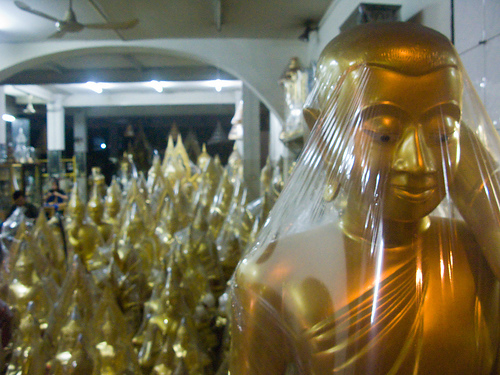
covered statue clothing plastic wrapIs your skin all covered up with material that stops it from being able to breathe? Maybe you should rethink your choice of fabric.

Sitting here in the sticky summer heat, it is difficult to choose what to wear when really any extra layer on our skin is something we wish we could avoid. The choice can be made easier for you when you consider not just the article of clothing, but the material from which it is made. But with all those fabrics out there; cotton, polyester, acrylic and silk, who really knows what is best?

This Oil Munching Bacteria Could Clean What BP’s Left Behind

2

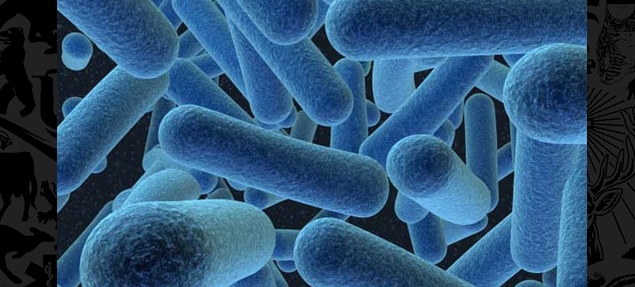
oil eating bacteria bp photoProven bacterial technology can clean up the oil that BP’s cleaning crew leaves behind

Prof. Eugene Rosenberg and Prof. Eliora Ron of Tel Aviv University are using naturally occurring oil-munching bacteria, grown in the lab, to clean the hard-to-reach oil pockets that occur when oil mixes with sand and organic matter on beaches and forms a thin layer on the Gulf’s precious waterways.

It’s taken millions of dollars to cap it, and it could take billions more to clean it up. BP’s oil spill in the Gulf of Mexico is acknowledged the environmental catastrophe of the century. But this new solution may help “bioremediate” the remaining problems. “It’s worked to clean up an oil spill on the coast of Haifa, Israel, so we’ve already got good evidence it could work in Florida too,” says Prof. Ron.

Abu Dhabi Chef Removes Threatened Fish From Menu

0

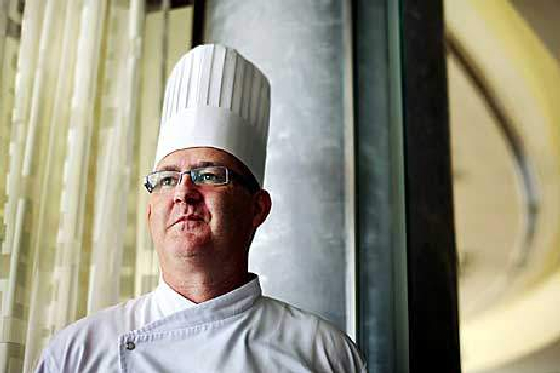
Chef-Olivier-LoreauxExecutive Chef Olivier Loreaux takes fishy matters into his own hands by replacing the threatened hammour with more sustainable varieties

The struggle to preserve our threatened fish populations, such as the bluefin tuna, is complicated. On the one hand, they are an important source of protein for humans, as well as a source of income for the men and women who fish and distribute them. On the other hand, the ocean’s ecological health depends on sustainable populations. Finding the balance is key, but government regulation is often suspect, and consumers are not always well-informed. Executive Chef Olivier Loreaux has taken these slippery matters into his own hands.

Israeli Arabs and Jews Throw Out The Garbage Together

0

trash israel Forum for Environmental Justice photoA member of the Forum for Environmental Justice looks at environmental hazards in the Galilee region.

They meet once a month to venture into the field together, discuss environmental problems and devise ways to cooperate to solve them. Most recently, earlier this month, Israeli Jewish and Arab politicians, community leaders, the public and media toured the Sha’our Stream in the Beit Hakerem Valley, in Israel’s Galilee region. Considered a hazardous zone, “it stank like crazy from overflowing drainage,” says Shelly Sharron, English media coordinator for the Abraham Fund Initiatives.

A Jerusalem-based NGO that works to promote equality and social inclusion for all of Israel’s citizens, the Abraham Fund is hosting the Forum for Environmental Justice in an effort to improve the smell of that stream and combat other environmental hazards. A relatively new project that sprouted from seeds planted five years ago, each month the forum brings together municipal leaders from the Jewish and Arab communities in the mixed Galilee region of northern Israel and beyond, encouraging them to find solutions to their shared problems of environmental waste and hazards.

Review of Leo Hickman’s ‘A Life Stripped Bare’

leo hickman stripped bare babyInterested in finding out about one man and his family taking on the challenge of living ethically for a year?
Want to know more about the dilemmas of consuming without harming animals, people or the environment? This is the book for you.

Like another of Leo Hickman’s books we’ve reviewed – ‘The Final Call’ – this book still has much to teach us today.  What I liked best was the honesty of Leo Hickman as he sets out on a journey and works hard at trying to live ethically.  The book highlights, in real terms, the difficulties of doing this in an era of globalisation and mass consumerism, where, at times, the actions of the individual can seem like a drop in the ocean.

Go Green this Ramadan! (6 Steps)

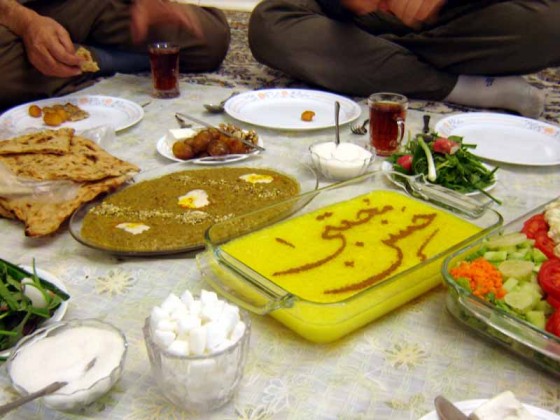
ramadan go green guide picture ramadan gardenArwa offers a 6 step guide to greening your Ramadan holiday. 

With the month of Ramadan quickly approaching, Muslims across the world are beginning to prepare for the month of fasting from sunrise to sunset. Food supplies are stocked up (ironic, I know), appointments are rescheduled and preparations are made for the month of spiritual rediscovery.

At its simplest Ramadan is a welcome reminder of the basic but invaluable blessing of food and water, but it is also a chance for Muslims to reaffirm their faith and reconnect with god and all his creations.

And what better way to do this then by ‘greening’ your Ramadan. How do you do it?

Islam states that humans are the stewards of the earth, with a duty to protect it from harm but are we doing enough?

Well, I have put together a basic list of things all Muslims from the US to the Middle East can all do this Ramadan (and hopefully the rest of the year) to protect the environment and any ideas you want to add are welcome!

6 Steps to Making Ramadan Sustainable

1. Eat better and also locally.

After breaking fast (known in Arabic as iftar), there is tendency for Muslims to go crazy food-wise (or anyone crazy who has been on a fast) but do try to keep things to a minimum as you never eat as much as you think you will.

Fast and easy food tips:

  • Eat less red meat and chicken, more fresh and locally produced fruit and vegetables as apposed to processed or imported goods.
  • Organisations such as Islamic Relief are encouraging Muslims to buy fair trade as well as free-range and organic goods.
  • Eat organic: this Ramadan could also be the perfect opportunity to switch to organic halal meat.
  • Finally, if you are organising a public iftar, don’t use tons of plastic cutlery which gets thrown away….it’s as simple as asking people to bring their own plates.

2. Use your car less.

Just ask yourself do you really need to take your car to taraweeh or special prayers after iftar (breaking your fast) when the mosque is a 5 minutes walk away and you are going in a crowd of 10?

Carpool if absolutely necessary but remember that you are blessed for every step you walk to the mosque not every mile you travel in a car.

Also try to break entrenched car-driving bad habits. From experience, those with a car seem to think that a 20 minute walk is too far but walking is a great way to exercise and de-stress, so take your time and free yourself from road-rage-inducing traffic jams and parking nightmares.

3. Use less water.

Although it is really important to keep hydrated during Ramadan, don’t waste your money on bottled water and use tap water instead. Tap water doesn’t waste energy being produced and also doesn’t require plastic bottles which end up in landfills. Also be frugal when making wudhoo. The Muslim prophet (SAW) made wudhoo with only half a liter of water and teaches us to conserve water even at a running spring.
4. Waste less.

This is basically encouraging people to buy less, use less and then recycle what’s left behind. As it says in the Qur’an:

“Eat and drink but waste not by excess, for Allah loves not the wasters.” – 7:31.

This applies to everything: food, water, clothes, books and even your rubbish. Just be creative! I know that we are supposed to look our best at Eid but this doesn’t mean buying lots of new clothes that we will never use again.

There are loads of organisations running swap shops locally and you could even organise your own- invite friends and family along with items to swap to brighten up your outfit on Eid day. Finally, bring on the hand-made, recycled Eid cards!

Our eco-Muslim has a great tutorial for you. (Or if your not artistically inclined than Soulful Moon offer some great hand-made, FSC-certifed options and for every custom order they will plant a tree.)

5. Spread the message!

Ask your imam to do a khutba on the issue of caring for the environment.

It doesn’t have to be about the complex nature of carbon counting just the basic stewardship concept and encouraging Muslims to become more aware of their environment and the impact their behaviors have on the world. Put up posters on the issues and just talk to people about it and what practical things they can do.

Here is a blog which has some links to (pdf) poster print-outs.

6. See proof it can be done:

In Chicago, a ‘Green Ramadan’ initiative was launched by the Council of Islamic Organization of Greater Chicago in 2009 which encouraged Muslims to eat locally, drink tap water, recycle and to educate themselves about climate change and what they can do so save the planet.

On the website, they remind us that: “Ramadan is a once a year opportunity to tackle global issues like over-consumption, materialism, poverty, hunger, wars and yes, global warming.”

Read up on more sustainable and green Muslim resources:

Prince Charles on Islam and the Environment
Water Conservation Values in Islam
The Muslim World Wants to Green Hajj
Breast Feed Baby in Hijab

Image of Green Mosque via Wolfgang Staudt and photo of Ramadan food image via Hamed Saber

Syrian celebrities spread green with balloons

1

Syrian celebrities took to the streets of Damascus to promote green living. Releasing balloons, were they drawing attention to the environment or to themselves?

A group of Syrian celebrities gathered in Damascus to try to promote environmentally friendly lifestyles recently, personally urging individuals to change their habits. Unfortunately, however, it looks like this was a case of green washing rather than genuine green living.

The celebrities encouraged people to use paper bags (arguably not much less offensive than plastic and definitely not as good as cloth) and released a large number of balloons into the sky (which could be harmful to birds and other forms of wildlife).  So what was the real message?

Sometimes, the only message is the messenger.  Which in this case consisted of the glamorous celebrities.  The group of Syrian celebrities patrolling the center of Damascus included Doreid Laham, Salim and Yara Sabri, Bassem Yakhor, Shokran Mortaja, and many more.

But maybe a good dose of famous positive role models is exactly what is needed sometimes in a city like Damascus where supposedly 15 million plastic bags are used every day.

In addition to taking to the streets, promoting paper bag usage, and releasing balloons, the celebrities released a new song for the occassion, “Hat Edak wel Iha’ni”.  The song was performed in the center of Damascus at Masrah Teshreen.

Green washing or not, we hope the message was heard and received.

Read more about Syrian environmentalism:
Syria Campaigns to Curb Country’s Voracious Plastic Bag Appetite
Syria’s Master Plan for Renewable Energy
Syria Brainstorms on Renewable Energy at International Event

Image via: worldwidewandering


Plagued By Mosquitoes? Greenopolis Blog Offers Help

1

natural mosquito repellent marigoldsNatural and effective mosquito repellents like marigolds might be growing in your own garden.

I’m a mosquito’s favorite nosh. Even just attending my window sill plants on a summer day, I’ll be slapping at my ankles and cussing at the little stingers. Being wary of toxic pesticides that pollute the environment, I’m glad to read new information on natural mosquito-repellent herbs. For mosquito-plagued gardeners like me, Blogger Lynn Hasselberger at the Greenopolis eco-blog tells us how to use fresh herbs, many growing freely in the Middle East, instead of commercial mosquito sprays.