Home Blog Page 622

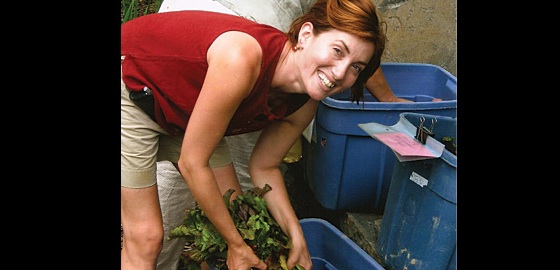
Interview With Locavore Expert Leda Meredith

0

Green Prophet’s interview with “locavore” author Leda Meredith reveals a wealth of ways that eating locally-grown foods helps to green the planet.

We do what we can to reduce overall energy consumption, dutifully turning the faucet off while we scrub the dishes, turning lights off in empty rooms, hauling bottles and old newspapers to the recycling bin.

Yet we sometimes feel that our efforts are of little avail in the big environmental mess out there. What else can a person do – something we can really feel is helping?  Every little bit helps, of course. But by eating less meat, and that locally-raised, and consciously choosing more locally-grown produce, you’ll become vitally aware of helping the planet on many different levels.

Influenced by writers like Michael Pollan, author, foraging teacher, and professional gardener Leda Meredith decided to reduce her impact on the environment by means within the reach of every person: eating foods grown or raised close to home – something green people call a “locavore”. From August 2007 to August 2008, Leda ate with a few defined exceptions, foods grown or raised exclusively inside a 250-mile radius of her Brooklyn apartment.

Here’s our exclusive interview with Leda about the experience:

Fresh Tomato-Coriander Salad to Spice up Your Summer

0

fresh-coriander-sprig A fresh sprig of coriander is so versatile and delicious!
I have always found it difficult to differentiate between the various types of green leafy herbs available in the market.

For whatever reason, I can’t seem to see the physical differences between basil, thyme, coriander or mint. The taste, on the other hand, is something I definitely do appreciate. Coriander stands out not just for its taste, but also for its various health benefits.

We Are All Connected: Heat Wave In Russia Affects Egypt’s Wheat Supply

0

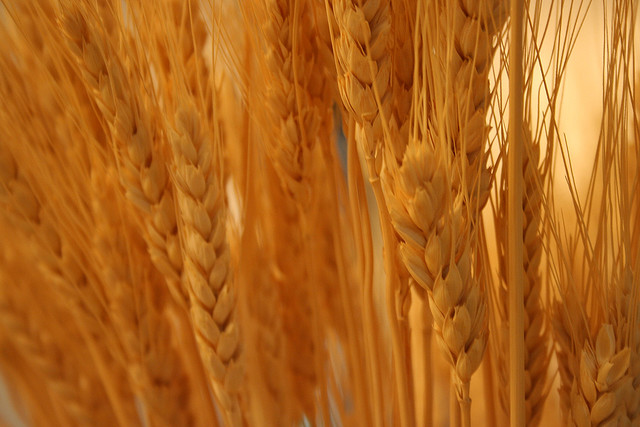
creative-wheat-image Egypt is the world’s largest importer of wheat; could Russia’s heat wave (and subsequent ban on grain exports) become Egypt’s hunger?

Bill McKibben shows how one country’s excess emissions impacts the entire earth’s atmosphere, which causes a whole slew of its own unforeseen chain reactions. Industry and tourism cause noise pollution that disrupts hapless reef fish, who then struggle to locate the underwater habitat that best supports them. These are typically slow-moving processes, but our commercial interconnectedness has brought Russia’s recent environmental woes close to home. After crippling heat waves, the Russian government halted its grain exports. Meanwhile, Egypt will need to consider the source of its wheat just a few days in advance of Ramadan.

World Breastfeeding Week Focuses on “Baby-Friendly” Policies

0

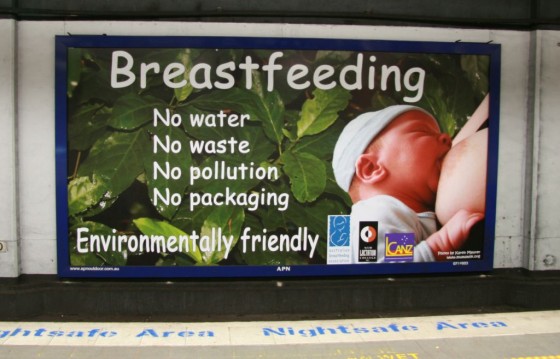
world breastfeeding billboard environment in Australia
Billboard in Honor of World Breastfeeding Week, Sydney, Australia.

The World Alliance for Breastfeeding Action (WABA) sponsored the 2010 celebration of World Breastfeeding Week on August 1-7. The theme, “Toward a Baby-Friendly World,” highlights ten steps to ensure success in breastfeeding.

Breastfeeding reduces the rate of infant illness and mortality and protects mothers from post-partum hemorrhage, breast cancer and more. Much infant mortality in third-world countries is connected to tainted water supplies and lack of resources to buy formula. Breastfeeding is free, and doesn’t use precious water supplies.

The ten steps cost little and can be implemented even in remote areas.

Protective Fences Starving Saudi Wildlife

0

Saudi-Oryx-Starve Despite best intentions, Saudi’s Mahazat as-Sayd reserve fence led to the deaths of hundreds of animals between 1991 and 2008

After realizing the damage that plundering humans have had on wildlife habitat, conservationists have developed schemes aimed at reversing some of that damage. Recent programs include tagging turtles in Qatar to better understand their habitat, or in Saudi, researchers are cordoning off new territory to allow new insect species to proliferate.

In Iraq, conservationists expose themselves to combat zones to care for their wild. Unfortunately, even the best intentions result in disaster. Designed to protect them, a fence surrounding the Mahazat as-Sayd reserve in Saudi Arabia has instead resulted in the widespread deaths of rare Arabian Oryx and Sand gazelles.

Bleached bones and disembodied horns

Unprecedented ungulate deaths took place in Saudi Arabia’s Mahazat as-Sayd reserve between 1991 and 2008, leaving behind a devastating trail of bleached bones and disembodied horns.

“Researchers found that most deaths occurred during the summer, when rainfall was negligible. The animals starved to death because of the reduced availability, accessibility and quality of food plants in the area,” according to Wildlife Extra.

Protective measures failed

Saudi Arabia’s National Commission for Wildlife Conservation and Development claimed that the 220k fence surrounding the 2,650km2 “was established for the initial reintroduction of captive bred Arabian Oryx into their natural habitat.”

The Oryx went instinct in 1972 after the last one was shot by hunters, says Animal Info, but by 2003, 886 Oryx were counted in Saudi. That success is trounced by the subsequent starvation of hundreds of oryx and other wildlife.

Freedom to roam

“Grazing of Arabian oryx habitat depends on rainfall and animals move over great distance in response to rain. However, the fence around the protected area at Mahazat as-Sayd prevents the natural movement of animals and artificially concentrates animals into what may be an unfavourable habitat,” writes Wildlife Extra.

The sand gazelle in Asia is reported to travel hundreds of kilometers to pursue its food.

“Researchers believe that it is, therefore, likely that fences such as the one around Mahazat as-Sayd protected area are exacerbating the effects of drought,” according to Wildlife Extra.

Following the realization that the fence is causing such havoc, reserve officials are initiating an urgent plan to establish camps with food and water for animals at risk.

Driving fauna to drought

In 1952, Foster-Vesey-Fitzgerald wrote that the Arabian desert species were remarkably resilient, even against rifles. But they predicted that hunting would “sweep Arabia’s fauna into uttermost corners, where a subsequent drought will whiten its bones.”

They could not have predicted that the very efforts to protect the fauna from human sport would actually result in their demise.

And The Green Globe Goes To…. Park Inn Muscat, Oman

0

Park-Inn-Muscat-OmanPark Inn Muscat receives the Middle East’s first internationally recognized Green Globe standard certification

Creating quality tourism options in the environmental context has only been popular since the early 1990s. Now there are all kinds of opportunities to enjoy a relaxing holiday without causing harm to the surrounding environment: from bio tours in Israel, to Jordan’s green oasis, eco-tourism is booming in the Middle East. We don’t receive much eco-tourism news from Oman, that obscure nexus saddling the UAE, Saudi Arabia, and Yemen, flanked also by the Gulf of Oman and the Arabian Sea. So it comes as a pleasant surprise that the Green Globe certification was awarded to a hotel there.

Get Mad With Bill McKibben: 10-10-10

1

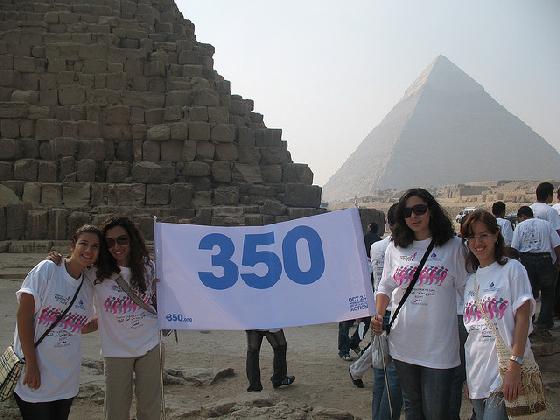
350-org-mckibbenGet mad about poor energy policies that are heating up our planet, and then get organized on 10-10-10

I was taught the value of balanced writing free of slanted language.  “Let the facts speak for themselves,” my noble university professors proclaimed. “Don’t appeal to emotion.” But as a working environmental journalist emotionally and intellectually saturated with dismal reports like BPs never-ending pursuit of carbon-emitting fossil fuels, and temperatures escalating as a result, I frequently want to dump the nicey nicey and say Hey! Wake up. I like my job so I don’t dare. But Bill McKibben, the acclaimed author of Deep Economy who has plenty of job security, does dare. In a recent diatribe published all over the world, he finally dropped the F-bomb on the energy policies (or lack thereof) that have set our planet on fire.

How Does Noise Pollution Impact the Red Sea?

1

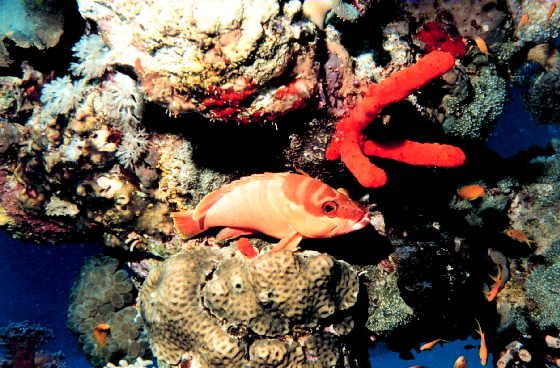
red-sea-reef-fishNoise pollution threatens Great Barrier Reef Fish. Are Red Sea fish in danger too?

Several human interferences impact the Red Sea: poaching by Yemenese fishermen, frequent oil spills, and even sunscreen is harmful to corals. These examples barely bob on the surface of the greater problem though. Worldwide, phytoplankton is diminishing, a sign of serious ecological malfunction, and more and more fish are being added to the list of threatened species. A recent study on the Great Barrier Reef, the granddaddy of reefs, adds another threat to the creatures that call the reef home: noise.

Detox – Not a Diet, A Way of Life (4 Tips)

0

joggersAre you as healthy on the inside as the outside? Detox is the answer to internal health

Summer, vacation, relaxing, it is not just for you, it is also great to give your body the chance to unwind. We tend to push ourselves too hard throughout the year and then try for the quick fix. Whether it is a crash weight loss diet or a detox diet, the fastest is not the best. There are many popular detox diets out there, but don’t be tempted, instead try the healthier options. The body has its own built in way of detoxifying, so why put yourself through days of sipping some strange soup, or munching on cabbage leaves for the sake of detox, try trusting your body.

Meet Greentech Media’s Michael Kanellos

1

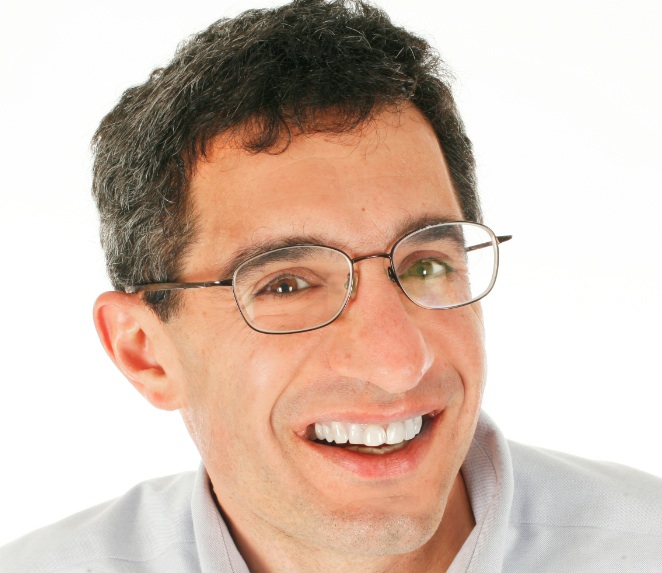
michael mike kanellos greentech mediaWant an investment scoop on the Middle East? Read our interview with clean tech reporter, Michael Kanellos.

Michael Kanellos, editor-in-chief at the popular clean tech news blog Greentech Media operates on a level that surpasses even the most active of us bloggers. I met Mike in Finland a couple of months ago on a clean tech media tour joined by other bloggers like TreeHugger’s Ask Pablo, and Lisa Hymas, a senior editor and founder at Grist.

Before most of us had the chance to shower and stumble our way down to the lobby for breakfast, Michael had already scoured the city around us, whipped up a few blog posts, had eaten, sauna-ed, and later –– by the time we got around to meeting the Finnish cleantech companies on our tour ––  had in fact already met several of them earlier at various conferences on his travels.

Michael lives, breathes and sleeps clean tech news: Travelling the world far and wide for stories, we interviewed him to get a western point of view on clean technology trends and developments in the Middle East. Since he’s always forgetting his Twitter account, he says (but here it is)  – it’s best to follow his work through the site www.greentechmedia.com.

Our interview:

Egyptian Gas Exporter Given Israeli Tax Exemption in $6 Billion Deal

1

suez canal egyptEgypt’s oil and gas refineries on the Suez Canal.
The Egypt based East Mediterranean Gas Company (EMG) which exports natural gas from Egypt to Israel has been granted a 20 year tax exemption by the Israeli government, according the to Israeli business daily Globes. Apparently EMG was give the highly unusual exemption as part of its deal to supply natural gas to the Israeli Electric Company, Israel’s public power company, for 15 years, with an option for an extra five years. The deal is reported to be worth $6 billion.

Interview With Entity Green, Jordan’s Sustainable Development Organization

0

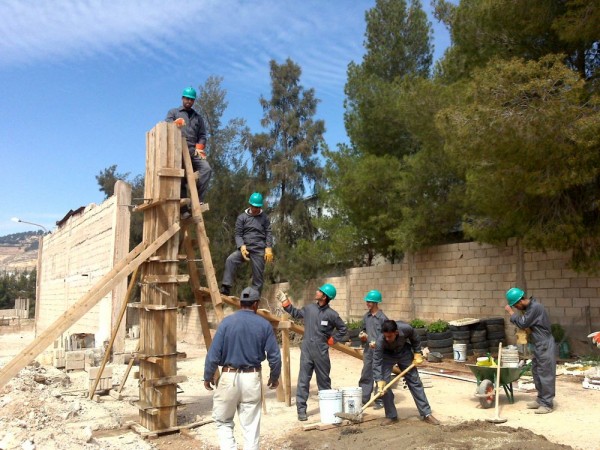
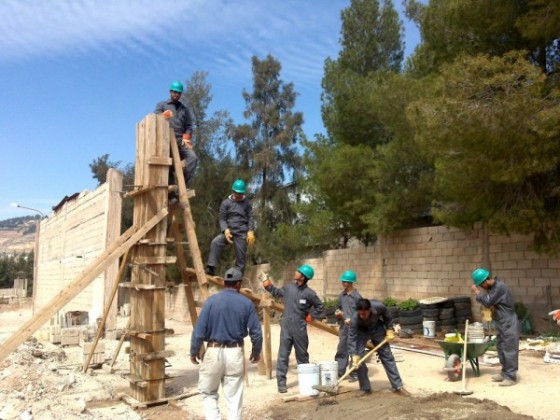
Entity Green brings greener development, recycling, and eco-friendly lifestyles to Amman, Jordan. Above, an EG team constructing a new building.

After learning about the farmer’s market, Souq al Balad, that Entity Green helped organized in Amman a few months ago, we decided we wanted to know what else this organization was up to. And so we spoke to Anselm Ibing, manager of the organization’s recycling program, to learn more. Here’s what he had to say.

Foster + Partners in Jordan: What’s Sustainable About a Green Airport?

3

Queen Alia Airport green airport masdar jordan
Inspired by palm trees, Masdar City architects will expand Queen Alia Airport, to become a “green” airport in Jordan.

A couple of months ago, fellow Green Prophet writer Tafline Layline wrote a blog about the dubious green credentials of Fosters + Partners projects across the Middle East. The architect firm behind ambitious green projects such as Masdar City may be claiming to “design energy efficient, socially responsible buildings” she explained, but they are feeding the ‘bigger, better, more’ mentality which is damaging our planet. Tafline explained that they weren’t challenging our constant urge to grow and consume, and with price tags in the billions were they really sustainable?

Everyone knows that a green building is only as green as those living inside- so unless you change the behaviour of people and they way they treat resources in every aspect of their lives, than what it is the point? And that’s exactly what I was thinking when I heard about Foster + Partners plans for to green (and expand) Jordan’s Queen Alia Airport, which is expected to be completed sometime in 2011.

Israel Cleantech Intelligence: Tidal Power and 7 More Headlines

0

Tel Dan StreamIsrael-China, foreign investment in Israel, oil munching bacteria and more headlines related to Israeli cleantech and the environment. Image by Or Hiltch.

During the week of July 25, 2010, Israel’s first tidal power plant was completed in Jaffa. An Israeli-Palestinian team has received a grant to address clean water issues in Israel and the Middle East and a new campaign by Israel’s Water Authority to distribute 2 million water aerators was launched. For these stories and more, see this week’s headlines below.

Ban Saudi’s Bottled Water?

4

bottled-water-creativeNot only does Jibal Faifa Water Company’s bottled water contain excess levels of cancer-causing chemical, but plastic bottles are the bane of the environment

It comes as no surprise that water, that miracle of life without which we would quickly shrivel up and die, dominates the headlines. We are either witch-hunting BP for its role in polluting numerous water sources, marveling at Libya’s man-made river, or watching cautiously as Egypt struggles to provide water to its citizens. Then there is the water that comes in bottles. We assume its safe, but is it really?