Home Blog Page 624

Architectural Design To Memorialize Assault On Free Speech In Turkey

0

turkey-sivas-memorial-parkAlthough they only received 2nd place in Turkey’s national design competition, 1/1 Architecture combines “green” with culture in this stunning design

True green architecture is rarely an end in itself. Many architects creating ecologically sensitive designs with a view toward sustainability have either a political underpinning, like Omar Yousef’s work, or a social motive, like Geotectura’s high-flying pieces.  Israel’s Azouri brothers openly admit that their eco-tower design reflects their personal values. But design also caters to a city or country’s cultural identity, or in the case of Turkey, protest against the attempted suppression thereof.

How To Handle Record High Summer Temperatures

How to cool your home in the heat of summer

Reducing overall energy consumption allows more leeway during crippling heat waves. A fan can help.

We are all feeling the heat (not just Iran). And though we are cautious about assumptions that global warming is contributing to these higher temperatures, we can’t deny that we are spending a little more time under our fans and air-conditioning units.

Unfortunately, the very reactions we have to rising temperatures – driving instead of walking and using air-conditioning instead of fans – are among the factors that contribute to climate change in the first place. Also, using electricity at peak periods puts pressure on the grid, increasing risk of power cuts. So how do we stay cool without pumping carbons and taxing the grid?

Record swelter

Meteorologist Jeff Masters reports in weather underground that temperatures around the globe after 2007, during which year 15 temperature records were broken, are higher than ever. And the summer isn’t even over yet. People are dying in Russia, and Finland and the American Northeast are experiencing extreme heat waves.

“The most intense heat of the summer has occurred in the typically hot Middle East,” Paul Yeager quotes Masters. Saudi Arabia and Iraq have experienced 125.5 degree temperatures, while Pakistan’s citizens melt from whopping 128.3 degrees. These higher temperatures are “produced by persistent and strong high pressure systems in the upper levels of the atmosphere.

Power outs

Meanwhile, in Egypt, which country had hoped to reduce its energy consumption by half, has been hit instead with involuntary power cuts.

“High temperatures and an overload on the national grid system caused a blackout in seven Governates in Upper Egypt. Dr. Aktham Abu al Ola, First Undersecretary of the Ministry of Electricity, blamed the outage on recent temperatures of almost 50 degrees Celsius (122 degrees Fahrenheit) and an excess load on the electricity network of more than 23,000 megawatts,” according to Christina Baghdady.

How to stay cool in your home in the summer

We understand the impulse to stay cool and protect blood and brains from cooking, but it is wise to exercise caution in order to ensure a lasting electricity supply for everyone while simultaneously reducing carbon emissions.

Here are a few general electricity saving tips from Green Prophet:

  • Insulate walls and ceilings and save 20-30% of home heating bills. The same applies to cooling;
  • Plant shade trees and paint your house a lighter color to deflect heat;
  • Weatherize your home to prevent leaks;
  • Turn down your refrigerator, which is a huge energy guzzler;
  • Wash with cool or warm water instead of hot;
  • Reduce the temperature of your water heater by 20 degrees;
  • Where possible, use energy efficient appliances, though in the Middle East, this is rarely applicable.
  • Only cool as much as necessary; in some cases, it might be useful to cool down only one or two rooms with air-conditioning, while using fans for the rest of the house.

Power cuts are dangerous to everyone and should be avoided at all costs. A little cut back in the short term can lead to sustained comfort in the long term.

:: image courtesy of kevndooley 

More Hot News from the Middle East:
Record Hot Summer Ignites Forest Fires in Iran
3 Good and 3 Bad Sunscreen Tips for a Healthy Summer
Israel’s Bedouin Want Their Rightful Share of the Sun

Record Hot Summer Ignites Forest Fires in Iran

1

burned tree iranAt the end of July, the hot Middle East summer caused  forests around the city of Doroud in Western Iran to ignite in a blazing fire.

After about one day, some news agencies published news about burn of 500 hectares (5,000 square kilometers) of the forest.

Later governmental authorities announced that the correct information is 100 hectares. The main cause of the fire is not known, but the hot dry weather – some of the worst the region has felt in decades – has caused a vast area catch fire rapidly.

This is the last one of the series of forest fires that has started since the first days of this hot summer –– one of the hottest on record. Can we say: Global Warming hits Iran?

Abu Dhabi Sees Renewable Energy As Profitable Energy

2

abu dhabi shopping mallAbu Dhabi newspaper points out renewable energy costs and trends.

That renewable energy is good for the environment we have known for a long time, and it’s becoming cheaper as well. An article The National, a newspaper based in Abu Dhabi the United Arab Emirates, outlines some of the dramatic changes in cost of production of renewable energy have undergone lately. Abu Dhabi is the capital of the United Arab Emirates and controls the seventh largest proven oil reserves in the world the country, but it is no stranger to renewable energy.

Is Margarine Your Best Choice?

4

margarine on toastIs toast with Margarine and honey part of your routine? Well maybe you should consider taking away just one small ingredient.

In today’s day and age we have many choices available to us as we make out way through supermarket aisles; which brand to choose, which size, which flavour and which one is the healthiest. Then of course there is the question of products manufactured here in the Middle East, or imported products. These are the choices you are faced with when it comes to margarine and butters. So how do you decide which is best?

Wear Your Baby in a Sling for Eco-Benefits

1

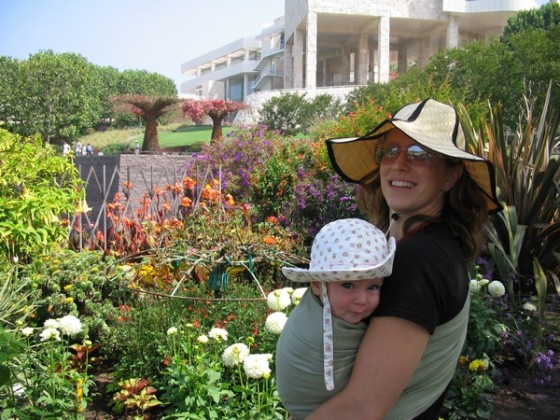
Mother carrying baby in sling.Do errands with no fuss, wearing baby in a sling.

Ever watch a mom push a stroller with one hand and hold a fussy baby with the other? Or struggle up the steps of a bus, then try to fold the stroller while holding a squirmy baby? A sling is a simple solution for these problems, and many others: A cloth fabric sling or baby carrier, the ancient way of carrying babies, wraps around your body and keeps baby secure while giving you two free hands to do other tasks.

Why you’ll be glad you brought your sling and not the stroller?

Ana Seco Teaches Her Grandmother’s Eco-Fashion Techniques Throughout The World

8

ana-seco-cairo
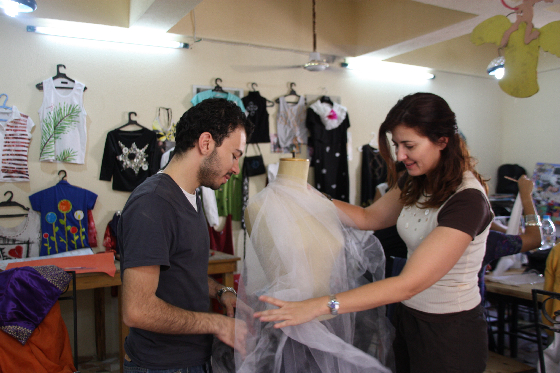
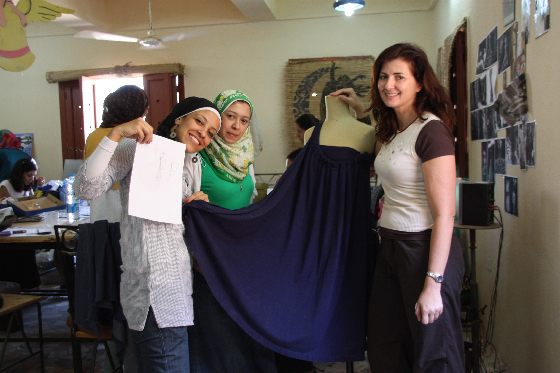
At a workshop in Cairo, Spanish fashion artist Ana Seco teaches students how to incorporate “garbage” into their designs. Reluctant at first, they soon eclipsed their teacher by introducing materials she had never even thought of.

Ana Seco’s resume reaches far and wide. Her Bachelor of Fine Arts is buttressed with numerous diplomas and courses related to art and fashion. Originally from Spain, she lived and worked in New York for five years and now spreads her knowledge as far afield as Viet Nam, Turkey, Ethiopia, and Egypt.

She issued the very first fashion diplomas to Ethiopian designers and recently finished a workshop in Cairo, where she introduced eco-fashion methods and materials (“garbage”) to a surprised group of now-converted Egyptian designers. In this interview, she describes why she travels so much, as well as challenges and successes she has confronted throughout.

Ana, you are originally from Spain.  How did you become interested in the Middle East?

“I started traveling after graduating from university, and I think that since then, the longest period I have been steady in a place is eight years which seemed to me really long. The reason for my traveling now, is actually my husband; I started travelling with him four years ago, and his work has taken us to places such as Vietnam, Turkey and Cairo.”

You have a background in graphic design as well as fashion; how and why did you make the switch?

“Actually my education is in fine arts, on the specialty of painting, and I have never switched since I have been developing the two careers in parallel. You know, in the 18th century, fashion and art were both considered as art, and as artists and designer, both fields complement each other, in my case perfectly.

Inspiration and imagination can be used in so many ways and artists can pour them in so many fields. The only thing that must be really worked at, and that I think is a quality that many artists don’t have, and that I learned during my years in New York, is organization, and reliability. Without those two, it is quite difficult to succeed I think in any field.  ”

You studied at the Fashion Institute of Technology in New York. Is that where you became interested in eco-fashion, or is this something you’ve always been interested in?

“When I studied in NY, the eco awareness did not exist yet.

But since my beginnings in fashion, before moving  to NY, back in 1990 I was already creating some sort of eco-fashion. You know, I lived for many years with my grandmother, and she has been through two world wars and the Spanish civil war. She was a real master on saving and reusing things.

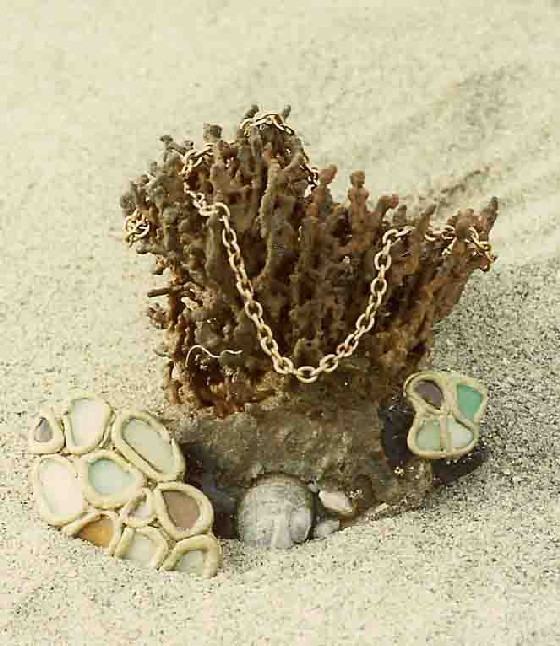
I think I got it from her, because my first accessories collection was done with pieces of glass found on the beach. In those days I had just finished at the university and did not have much money to buy materials. So there you go, my beginnings.”

You recently led a workshop at the Darb 1718 art gallery in Cairo. How did that opportunity arise and did you experience any unique challenges?

“The opportunity came through Mayada Said, one of Darb’s project managers and the Spanish Embassy in Cairo.

Together with Mayada we created a project and presented it to the Embassy where Ana Alonso, who is responsible for Spanish culture, was enthusiastic and fully supportive.

The biggest challenges came afterwards during the workshop itself, and putting together the big fashion show that took place at the gardens of Darb 1718 – mainly because of the lack of experience of the people involved.”

Where do you usually source your materials? Do you involve your students in that process?

“Well, the materials that we use are in everybody’s homes: empty plastic bottles of all kinds, cords, cables, food cans, plastic bags, metal findings. Everything can be used. There are really so many materials to use, that sometimes you have to limit yourself not to “mess” it up too much.

The students at the beginning were a bit reluctant, but towards the end, they understood the real meaning of what we were doing and brought  many materials that I have not even thought of.”

And what kind of response do you get from your students and participants when you first suggest that you’ll be decorating shirts or making  jewelry with, say, plastic?

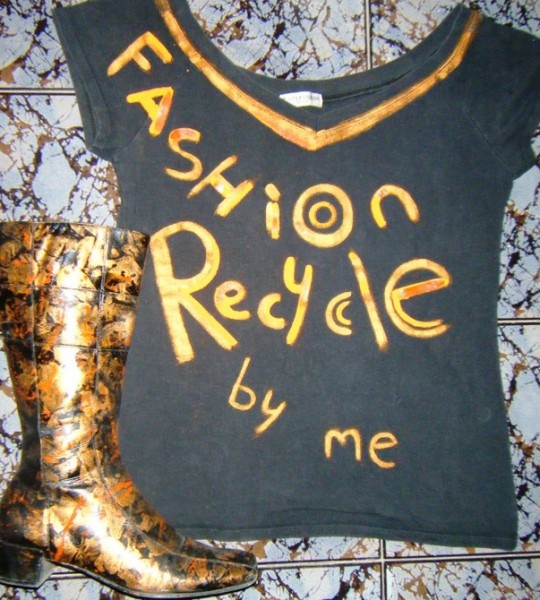
“As I told you, they were  bit shocked, since they thought we were just going to recycle garments, meaning renewing old clothing, which we also did, but through applying manipulations and other materials such as plastic, paper, metals, cables and so on.

For a couple of weeks they were somehow resisting, but I always brought  them some examples of garments created on this way, and so many of them really jumped into it and spent lots of time researching and working at home with this concept.

Today, I am proud to say that they have created a fashion recycled line of accessories and clothing which will be on the market after Ramadan that is called “Jorda chick.” I think they will write it in Arabic  and I am not even sure of the spelling in English.But they are working hard on the pieces and I wish them the best of luck. Even from here I am trying to coach them since it will be really great if they succeed.”

I understand that you are beginning a new project in Turkey. Can you tell us about that?

“I am afraid I cannot tell you anything right now, since for my husband’s work I am not sure how long will I be staying here at the moment. Things will clear out after September and then I can start …

But I can tell you to be on the lookout for a new fashion show in Cairo: it’s the outcome of a workshop imparted at Townhouse gallery and the students are preparing their collections right now. It is not recycled fashion, although I can’t help pushing them in this direction, if only a bit.”
Ana-Seco-Cairo2

Since you began working disadvantaged communities and spreading your eco-fashion goodness, have you noticed any changes or trends?

“Well, its hard to see a movement in society just yet, but I can tell you that many of the people attending the fashion show have grown a much bigger awareness of what can be done with “garbage;” many of the reporters who interviewed me were really impressed with the outcome and the designs.

And one of my students was just selected as a finalist out of 200 applicants for a Spanish fashion competition, with a collection done with recycled materials. She will be granted the money to create her collection, and she will travel to Spain for the final fashion show and award ceremony. I guess at least for this it was worth all the effort.”
ana seco recycled shirt boots

Finally, can you describe your goals and vision for Green Prophet readers?

“My main goal when creating and directing this project was really to awaken the Egyptian society to the concept of recycling and environment.

As I travel through the world, I go around getting involved on several different projects related to art and fashion. Environment and recycling are always a priority in my life, not only my work, and so I try to include this on my teachings and projects.

My idea is that if I can change the attitude of just a handful of people, I am already successful.”

::Ana Seco

More Eco-Fashion Stories:
“Thirsty for Change” Fashion Show Raises Awareness About Israeli Water Conservation
Zolaykha Sherzad Resurrects Traditional Afghan Crafts Via Modern Fashion Design
Yael Uriely Shows Us That Good Things Come in Upcycled Shapes, Colors and Sizes


Masdar City: Small Hiccups, Or Total System Failure?

17
masdar-city-abengoa-solar
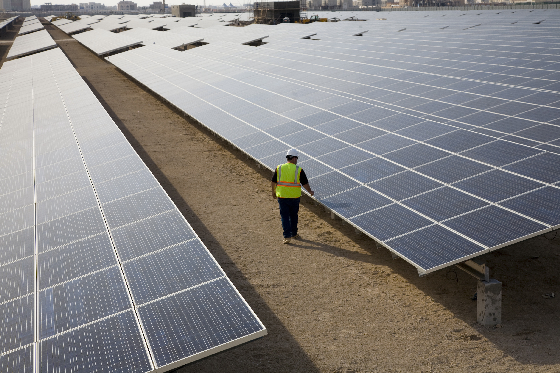
Masdar City solar panels

Masdar City has experienced knee-buckling setbacks, but we haven’t heard the last of them just yet

Masdar City is hanging on tenterhooks. After questioning the dicey science of carbon credits for big energy companies, we then published assurances by Masdar’s CEO Sultan Al-Jaber that although the project will be delayed because of certain hiccups – not least of which being that no one in the post-industrial world has aspired to a city free of carbon, or cars – it will still proceed. Yet critics like Brett Prior say the Masdar ship is sinking fast.

Shining Promises

Prior dealt a scathing blow to the company’s rhetoric in a recent post for greentechmedia.com. The svelte five act unfolding begins with a little background about Masdar’s much-touted ambitions:

They aimed for a $22 billion dollar, 6 square-km walled city for 45,000 residents and 1,500 businesses to be built by 2016. That city would be run completely on renewable energy sources, generating zero carbon emissions and zero waste. Additionally, 80% of the city’s water would have been recylced.

They boasted a top-notch research facility, the Masdar Institute of Science & Technology (MIST), that would be assisted by Massachusetts’s internationally-acclaimed MIT. Even construction would have been powered by a 40-60MW solar plant and PV panels manufactured on-site.

Uncontrollable dust

But then in Prior’s second act, he describes what become “cracks in the armor.”

In this phase of development, whirling dust storms in August 2009, with “suspended dust in the air between 1,500 to 2,000 parts per million,” decreased solar productivity by 40%. The panels were washed – at great expense – and productivity restored.

Khaled Awad, the director of Masdar City, claimed that “Dust storms have the same impact on a PV panel’s performance as cloud cover. In Abu Dhabi, we have a number of dust storms during the year, but compared with the level of cloud cover that European countries such as Germany receive, the performance in Abu Dhabi is far superior. In fact, on average, a solar module installed in Abu Dhabi will generate twice as much as [one installed in] a cloudy region in Europe.”

Key personnel resign

By the third act, the armor is not cracked, it is shattered.

The deadline is pushed back to 2020 and electricity, it turns out, will have to be imported. The electric transport pods that were supposed to replace cars are only going to be used in certain parts of the city, and Masdar PV fired both their CEO and COO. Then, to top off the floundering debacle, the head of MIST, Tariq Ali, resigned after only 1 year.

Prior considers Sultan al-Jaber’s recent press – in which he is adamant that these are not insurmountable setbacks – as desperate efforts to hold on, to instruct the band to keep playing while the ship sinks.

Given that John Perkins, the provost of the Masdar Institute, also resigned, and that the company that would have provided silicon equipment, Sun Fab, folded its operations, it seems that Prior may be right.

Solar gives hope?

On the other hand, his fourth and fifth acts offer a glimmer of hope.

Abengoa Solar – one of the most established solar power producers in the world – is going to build a $600 million Concentrated Solar Plant, which they plan to expand from an initial generating capacity of 100MW to 2000MW. And funding the $22 billion zero carbon city should be a breeze for Abu Dhabi’s sovereign wealth fund that amounts to a cool $650 billion.

Libya developed a $20 billion man-made river, so there’s no telling what Masdar might still pull off backed as it is by Abengoa and silly money. Though they may not deliver their original, dazzling ambitions, the ship is still afloat. Let’s hope it docks in more sustainable harbors.

Haitians Test the Pee-Poo Bag: A Sanitary Solution for Crises in Middle East?

2

peepoo bag how to photoWhen sanitation pipes break, or they don’t exist at all, the Pee-Poo solution could alleviate risks from faecal pollution in the Middle East.

“Flying toilets” are common in slums worldwide: Residents unable to reach a latrine due to crowding, distance or insecurity, defecate in a plastic bag and then sling it over the rooftops. But in Haiti, aid teams are testing a specially treated bag designed to turn human faeces into compost within weeks. This solution could work in Gaza, and other Middle East regions where sanitation is poor, and infrastructure limited. Covered extensively on Green Prophet, this is the first time the new Pee-Poo bags are being tested in a post-disaster humanitarian response, according to Andy Bastable, public health engineering coordinator with Oxfam, which is evaluating the product at settlements of displaced people in the Delmas area of the capital, Port-au-Prince.

UAE VIPs Attend Lecture on Environmental Sustainability at Yale University

0

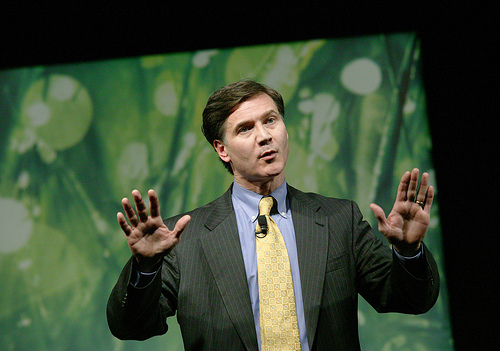
etsy daniel yale lectureProfessor Daniel Esty lectured United Arab Emirates officials (and others) about environmental sustainability at Yale University last week.

Members attending Professor Daniel Esty’s lecture: “Green to Gold: Environmental Sustainability in a Changing World” at Yale University last week included a who’s who of United Arab Emirates officials.  The event was attended by H.H. General Sheikh Mohammed bin Zayed Al Nahyan (Crown Prince of Abu Dhabi and Deputy Supreme Commander of the UAE Armed Forces), Sheikh Nahyan Bin Mubarak Al-Nahyan (Minister of Higher Education & Scientific Research), Sheikh Sultan Bin Tahnoun Al-Nahyan (Chairman of Abu Dhabi Tourism Authority (ADTA)), senior officials, dignitaries and ambassadors from the United Arab Emirates.

In the Face of “Nile-lessness” Egyptians Protest Water Shortages

18

Hotter summers, intense irrigation and threats of losing their Nile, Egyptians are under quota for water compared to other Arab nations. They take to the streets.
Looking at Google Earth (above) truly shows how Egypt is a fertile crescent of the region. But in the face of losing water from the Nile, tens of thousands of people in Egypt – Africa’s second most populous country – have taken to the streets in recent months to protest against water shortages. This goes some way to explaining the government’s reluctance to relinquish its current share of River Nile water.

On 26 July, 600 people from the southern governorate of Minya staged a sit-down protest outside the Irrigation Ministry in Cairo to protest about the lack of water for their land. While there have been water shortage protests in previous years, the size and frequency of protests in 2010 has been unprecedented, local observers say. “Water scarcity will be even worse in the future,” Riad Aldamk, head of a water studies project at Cairo College of Engineering, told IRIN, the United Nation’s environment news source.

A Flash Flood DIY Survival Guide for the Middle East

2

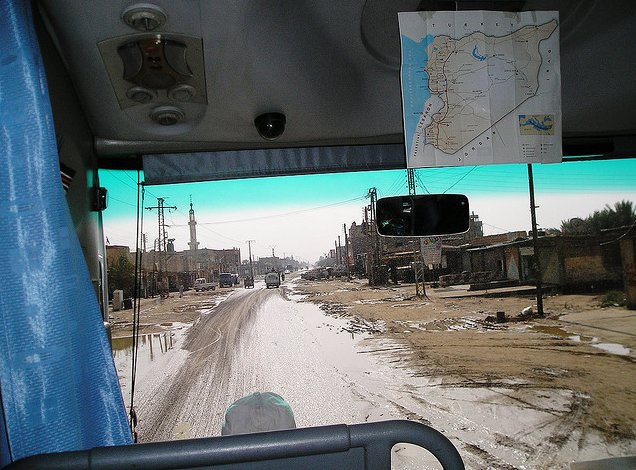
floods mud syriaNatural disasters are expected to rise in the coming years in the Middle East. The UN supplies a quick DIY list of tips to keeping developing communities risk-free from floods.

While it’s not exactly flash flood season in the Middle East, now is the time to prepare: Floods have got bigger, droughts in countries like Syria more intense and threats posed by waterborne diseases a bit too much to handle for poor countries trying to use their limited resources to adapt to a moodier climate. “Money isn’t everything,” Alastair Morrison, of the Stockholm International Water Institute (SIWI), wrote in the latest edition of the think-tank’s quarterly journal. “Many of the most effective water-related adaptation measures are free,” she says. Here is a list, based on some of Morrison’s suggestions and community-based adaptation measures on preventing flood damage.

And the best news, most of the tips can be implemented for free. This is a handy resource for development aids and agencies in poorer Middle Eastern regions.

Spain to Provide $10 million for Solar Power Hospitals in Lebanon

9

solar bandaid band aid lebanon spainA solar band-aid: Spain and the UN looks to create solar power heating, mainly water, for hospitals in Lebanon.

Thanks to a contribution from Spain, Lebanon’s first solar power heating project for hospitals have been made possible, the Lebanese newspaper The Daily Star is reporting. The project is part of the Lebanese government’s plan called Country Energy Efficiency and Renewable Energy Demonstration Project for the Recovery of Lebanon (CEDRO); it aims to reform the country’s energy sector by promoting the use of renewable energy in public institutions. CEDRO is managed by the Lebanese government together with the United Nations Development Program.

Protect The Middle East’s Natural Wonders – Vote Today!

21

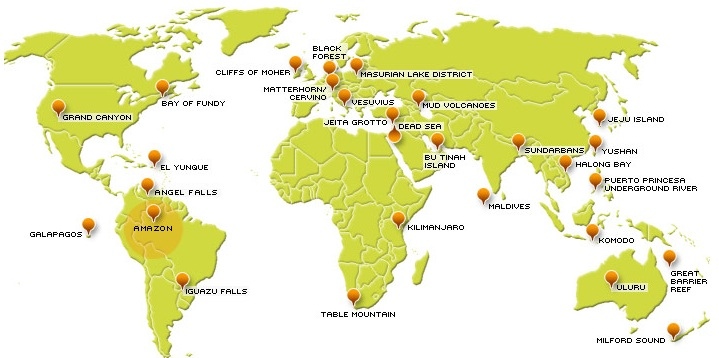
7 natural wonders vote middle eastThe Dead Sea in Israel, PA, and Jordan; the Jeita Cave Grotto in Lebanon, and the Bu Tinah Island Archepelago in Abu Dhabi – are vying for the 7 Natural Wonders list of 28 from around the world. Cast your votes today.

It seems like this contest has been going on for years already, but okay, we’ll go with it: Although the Pyramids of Giza, the Lighthouse of Alexandria, and the Hanging Gardens of Babylon are relegated to the wonders of the Ancient World, the Middle East may still be able lay claim to at least one of the 7 Wonders of the Modern World. The 28 world locations that now reached the finals in this competition on the New 7 Wonders website, include three Middle East natural wonders. If you care about the Middle East, we implore you to vote!

Israel’s First Tidal Power Plant Completed In Jaffa

12

sde s.d.e. energy jaffaIt’s where the ancient biblical story Jonah and the Whale took place. Now SDE Energy builds tidal energy plant in Jaffa, which should expand to 50 MW.

The ancient port city of Jaffa, today a part of Tel Aviv, has added one more attraction to its historical harbor as a new sea wave power plant is completed.

The Israeli tidal wave energy firm S.D.E. have completed the construction of its first large scale sea wave power plant capable of producing 60 KWh.