A rooftop solar system looks simple: panels, an inverter, a battery and a few cables. But beneath that simplicity lies a bill of materials thousands of lines long, where tiny current sensors, magnetic cores, gate drivers, capacitors and connectors quietly determine efficiency, safety and lifespan. These overlooked components—not the solar panels themselves—are why today's residential solar systems are smaller, smarter and far more reliable than those of a decade ago.
It is a wake-up call to teen girls on TikTok planning their next Coachella outfit or trip to Sephora: During the Second World War, thousands of young men left family farms to enlist, but the crops still needed planting and harvesting. Ontario's government answered by recruiting high school girls, from ages 16 to 18, to spend parts of spring, summer and fall to fill in for the labor shortage.
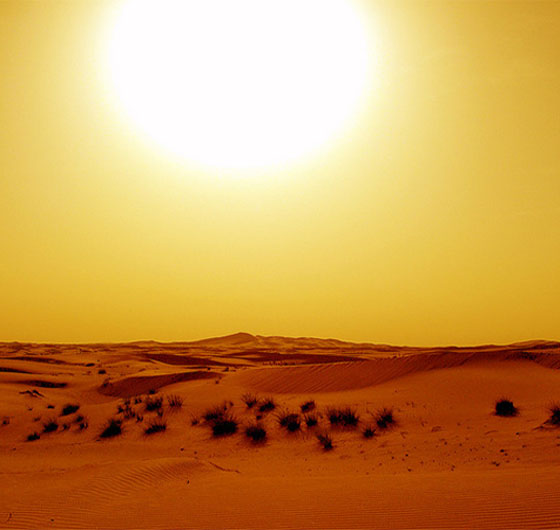
Masdar began as an ambitious eco city in the Abu Dhabi desert. Two decades later, it has become one of the world's largest renewable energy developers, financing billions of dollars in solar, wind and battery storage projects across the globe.
The Pentagon's decision to introduce annual testosterone testing for U.S. military personnel over 30 has sparked debate among doctors and public health experts. Researchers warn that social media influencers are turning normal signs of ageing into a "Low T" crisis, encouraging unnecessary hormone testing and supplementation while blurring the line between evidence-based medicine and marketing.
A rooftop solar system looks simple: panels, an inverter, a battery and a few cables. But beneath that simplicity lies a bill of materials thousands of lines long, where tiny current sensors, magnetic cores, gate drivers, capacitors and connectors quietly determine efficiency, safety and lifespan. These overlooked components—not the solar panels themselves—are why today's residential solar systems are smaller, smarter and far more reliable than those of a decade ago.
It is a wake-up call to teen girls on TikTok planning their next Coachella outfit or trip to Sephora: During the Second World War, thousands of young men left family farms to enlist, but the crops still needed planting and harvesting. Ontario's government answered by recruiting high school girls, from ages 16 to 18, to spend parts of spring, summer and fall to fill in for the labor shortage.
Masdar began as an ambitious eco city in the Abu Dhabi desert. Two decades later, it has become one of the world's largest renewable energy developers, financing billions of dollars in solar, wind and battery storage projects across the globe.
The Pentagon's decision to introduce annual testosterone testing for U.S. military personnel over 30 has sparked debate among doctors and public health experts. Researchers warn that social media influencers are turning normal signs of ageing into a "Low T" crisis, encouraging unnecessary hormone testing and supplementation while blurring the line between evidence-based medicine and marketing.
A rooftop solar system looks simple: panels, an inverter, a battery and a few cables. But beneath that simplicity lies a bill of materials thousands of lines long, where tiny current sensors, magnetic cores, gate drivers, capacitors and connectors quietly determine efficiency, safety and lifespan. These overlooked components—not the solar panels themselves—are why today's residential solar systems are smaller, smarter and far more reliable than those of a decade ago.
It is a wake-up call to teen girls on TikTok planning their next Coachella outfit or trip to Sephora: During the Second World War, thousands of young men left family farms to enlist, but the crops still needed planting and harvesting. Ontario's government answered by recruiting high school girls, from ages 16 to 18, to spend parts of spring, summer and fall to fill in for the labor shortage.
Masdar began as an ambitious eco city in the Abu Dhabi desert. Two decades later, it has become one of the world's largest renewable energy developers, financing billions of dollars in solar, wind and battery storage projects across the globe.
The Pentagon's decision to introduce annual testosterone testing for U.S. military personnel over 30 has sparked debate among doctors and public health experts. Researchers warn that social media influencers are turning normal signs of ageing into a "Low T" crisis, encouraging unnecessary hormone testing and supplementation while blurring the line between evidence-based medicine and marketing.
A rooftop solar system looks simple: panels, an inverter, a battery and a few cables. But beneath that simplicity lies a bill of materials thousands of lines long, where tiny current sensors, magnetic cores, gate drivers, capacitors and connectors quietly determine efficiency, safety and lifespan. These overlooked components—not the solar panels themselves—are why today's residential solar systems are smaller, smarter and far more reliable than those of a decade ago.
It is a wake-up call to teen girls on TikTok planning their next Coachella outfit or trip to Sephora: During the Second World War, thousands of young men left family farms to enlist, but the crops still needed planting and harvesting. Ontario's government answered by recruiting high school girls, from ages 16 to 18, to spend parts of spring, summer and fall to fill in for the labor shortage.
Masdar began as an ambitious eco city in the Abu Dhabi desert. Two decades later, it has become one of the world's largest renewable energy developers, financing billions of dollars in solar, wind and battery storage projects across the globe.
The Pentagon's decision to introduce annual testosterone testing for U.S. military personnel over 30 has sparked debate among doctors and public health experts. Researchers warn that social media influencers are turning normal signs of ageing into a "Low T" crisis, encouraging unnecessary hormone testing and supplementation while blurring the line between evidence-based medicine and marketing.
A rooftop solar system looks simple: panels, an inverter, a battery and a few cables. But beneath that simplicity lies a bill of materials thousands of lines long, where tiny current sensors, magnetic cores, gate drivers, capacitors and connectors quietly determine efficiency, safety and lifespan. These overlooked components—not the solar panels themselves—are why today's residential solar systems are smaller, smarter and far more reliable than those of a decade ago.
It is a wake-up call to teen girls on TikTok planning their next Coachella outfit or trip to Sephora: During the Second World War, thousands of young men left family farms to enlist, but the crops still needed planting and harvesting. Ontario's government answered by recruiting high school girls, from ages 16 to 18, to spend parts of spring, summer and fall to fill in for the labor shortage.
Masdar began as an ambitious eco city in the Abu Dhabi desert. Two decades later, it has become one of the world's largest renewable energy developers, financing billions of dollars in solar, wind and battery storage projects across the globe.
The Pentagon's decision to introduce annual testosterone testing for U.S. military personnel over 30 has sparked debate among doctors and public health experts. Researchers warn that social media influencers are turning normal signs of ageing into a "Low T" crisis, encouraging unnecessary hormone testing and supplementation while blurring the line between evidence-based medicine and marketing.
A rooftop solar system looks simple: panels, an inverter, a battery and a few cables. But beneath that simplicity lies a bill of materials thousands of lines long, where tiny current sensors, magnetic cores, gate drivers, capacitors and connectors quietly determine efficiency, safety and lifespan. These overlooked components—not the solar panels themselves—are why today's residential solar systems are smaller, smarter and far more reliable than those of a decade ago.
It is a wake-up call to teen girls on TikTok planning their next Coachella outfit or trip to Sephora: During the Second World War, thousands of young men left family farms to enlist, but the crops still needed planting and harvesting. Ontario's government answered by recruiting high school girls, from ages 16 to 18, to spend parts of spring, summer and fall to fill in for the labor shortage.
Masdar began as an ambitious eco city in the Abu Dhabi desert. Two decades later, it has become one of the world's largest renewable energy developers, financing billions of dollars in solar, wind and battery storage projects across the globe.
The Pentagon's decision to introduce annual testosterone testing for U.S. military personnel over 30 has sparked debate among doctors and public health experts. Researchers warn that social media influencers are turning normal signs of ageing into a "Low T" crisis, encouraging unnecessary hormone testing and supplementation while blurring the line between evidence-based medicine and marketing.
A rooftop solar system looks simple: panels, an inverter, a battery and a few cables. But beneath that simplicity lies a bill of materials thousands of lines long, where tiny current sensors, magnetic cores, gate drivers, capacitors and connectors quietly determine efficiency, safety and lifespan. These overlooked components—not the solar panels themselves—are why today's residential solar systems are smaller, smarter and far more reliable than those of a decade ago.
It is a wake-up call to teen girls on TikTok planning their next Coachella outfit or trip to Sephora: During the Second World War, thousands of young men left family farms to enlist, but the crops still needed planting and harvesting. Ontario's government answered by recruiting high school girls, from ages 16 to 18, to spend parts of spring, summer and fall to fill in for the labor shortage.
Masdar began as an ambitious eco city in the Abu Dhabi desert. Two decades later, it has become one of the world's largest renewable energy developers, financing billions of dollars in solar, wind and battery storage projects across the globe.
The Pentagon's decision to introduce annual testosterone testing for U.S. military personnel over 30 has sparked debate among doctors and public health experts. Researchers warn that social media influencers are turning normal signs of ageing into a "Low T" crisis, encouraging unnecessary hormone testing and supplementation while blurring the line between evidence-based medicine and marketing.
A rooftop solar system looks simple: panels, an inverter, a battery and a few cables. But beneath that simplicity lies a bill of materials thousands of lines long, where tiny current sensors, magnetic cores, gate drivers, capacitors and connectors quietly determine efficiency, safety and lifespan. These overlooked components—not the solar panels themselves—are why today's residential solar systems are smaller, smarter and far more reliable than those of a decade ago.
It is a wake-up call to teen girls on TikTok planning their next Coachella outfit or trip to Sephora: During the Second World War, thousands of young men left family farms to enlist, but the crops still needed planting and harvesting. Ontario's government answered by recruiting high school girls, from ages 16 to 18, to spend parts of spring, summer and fall to fill in for the labor shortage.
Masdar began as an ambitious eco city in the Abu Dhabi desert. Two decades later, it has become one of the world's largest renewable energy developers, financing billions of dollars in solar, wind and battery storage projects across the globe.
The Pentagon's decision to introduce annual testosterone testing for U.S. military personnel over 30 has sparked debate among doctors and public health experts. Researchers warn that social media influencers are turning normal signs of ageing into a "Low T" crisis, encouraging unnecessary hormone testing and supplementation while blurring the line between evidence-based medicine and marketing.
Numerous other campaigns have also emerged, providing untold opportunities for ordinary citizens to voice their insistence on a cleaner, safer, and saner future.
And while these campaigns appear to “just happen,” it is important to acknowledge the extraordinary people shepherding the flock.
We interviewed Kathleen Rogers, President of Earth Day Network, who has worked as an environmental attorney for 20 years. She has been the Chief Wildlife Counsel for the National Audubon Society, the Environmental Representative on the United States Delegation-Free Trade Area of the Americas (FTAA), and brought the first citizen complaint before the Commission for Environmental Cooperation. Though her accolades are endless, she talks with us about the Earth Day Network, where she is helping to define the “new Environmentalist.”
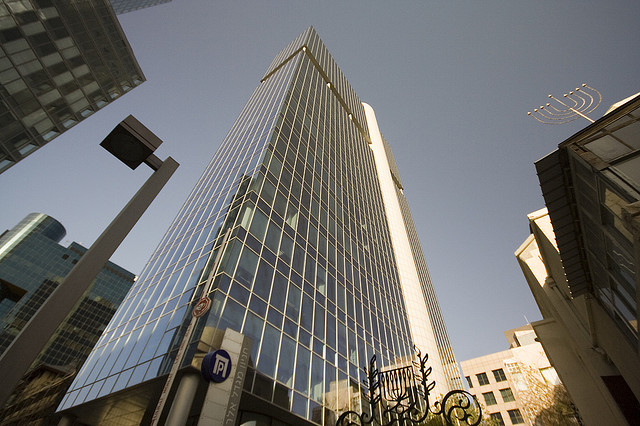
GreenRoad’s founder and Chief of Safety Hod Fleishman is leaving the company. Is Google his next destination?
Fresh off making the “Global Cleantech 100″ Guardian List, Israel’s GreenRoadannounced this week that First Transit, the operator of San Diego’s North County Transit District (NCTD), has implemented GreenRoad’s GreenRoad 360™ solution in its fleet of buses.
GreenRoad 360™, a software solution, combines real-time automated driver coaching with Web-based applications that continuously rate driving skills and behavior with the goal of creating more fuel-efficient and safer drivers.
What good is a farmer’s market if it only appeals to a small group of people? Beirut’s Souk el Tayeb reaches out to the community.
Whereas some farmer’s markets can set an elitist tone – appealing mostly to a yuppy or wealthy clientele instead of delighting in bringing good food and good values to the masses – this does not seem to be the case for Beirut’s first farmer’s market, Souk el Tayeb. Started in 2004 by Lebanese celebrity chef Kamal Mouzawak, the market encourages organic farming practices but does not limit its offerings to strictly organic food. As part of its approach to reach out to a greater number of people regarding healthy and eco-friendly eating practices, the market also focuses on small-scale local farmers and local community development initiatives.
A “beautiful nuisance” infiltrates Jerusalem’s German colony.
On a recent walk through the German Colony, I was treated to a stunning sight. Filling a tree with their flapping green wings was a flock of eight parakeets, calling raucously to each other and pecking at fat red berries with gusto.
Residents of the German Colony (in Jerusalem) are apparently inured to this experience, as sightings of the gorgeous birds – officially named ring-necked parakeets – have become increasingly common in recent years. People like to theorize about the birds’ origins, speculating that they are all the progeny of an intrepid pair of escaped pets, years ago. Or that they were imported to Israel to be sold and were accidentally released into the wild. The outcome is, of course, the same: A species of bird that was once alien to the region is now right at home in the holy city, squawking and snacking on local plants like it owns the place.
Israeli innovated BrightSource gets US Presidential nod to electrify the California desert.
More than 94% of all Americans, or more than 9 out of 10 want solar energy over conventional power sources, according to a recent survey conducted by the 2010 Schott Solar Barometer Survey. This represents a 2% increase over the 2009 survey in which 92% of those American’s surveyed expressed their wish for more emphasis on solar energy. The survey also noted that 49% of those questioned said that they would be willing to pay more for solar energy, and 51% said they would be interested in obtaining jobs in the solar energy industry.
Eco-friendly products AND vegan shwarma can be found at Beirut’s A New Earth.
Sometimes, despite all our good intentions towards living a greener, healthier lifestyle, it’s just not convenient. Sadly, most mainstream supermarkets don’t carry a variety of organic produce (if they carry it at all), and natural products may be few and far between. The search for them alone can cause you to give up. But when a store conveniently gathers all the eco-friendly foods and products for you in one location? Well, that’s good news.
Giant lightbulb installation in Abu Dhabi International Airport forms part of a campaign to reduce energy and water waste.
How do we best effect change is a question that environmentalists, marketers, and social activists are constantly addressing. In the UAE, one man hopes to stop reckless driving through a campaign that combines emotion and logic, the “Green Sheikh” believes that it is necessary to reach Middle Eastern men, whose responsibility it is to lead by example, while Lebanese bloggers are creating change by circumventing mainstream media.
In Abu Dhabi, the government has chosen the airport as the perfect location to reach the greatest number of people. And their props demonstrate just how desperate they are to change the attitude of this carbon and water guzzling Emirate.
Little is known about them in the west, but the world’s only vegetarian mammal in marine waters is under serious threat in the Middle East.
Dugongs, or sea cows, believed to be the source of mermaid legends, are threatened with extinction within 40 years, and an arsenal of measures, from replacing fishing nets that trap them to setting up marine reserves, are vital for their survival, a United Nations-backed forum has warned. “Man-made threats pose the greatest risk to the gentle sea cow,” the UN Environment Programme (UNEP) said, summing up a meeting this week in Abu Dhabi, United Arab Emirates. The dugong is the world’s only herbivorous mammal living in marine waters.
Lacking sufficient water to grow enough wheat for its burgeoning population, Egypt (above pic of Suez Canal farm)looks to other Nile Basin countries for land and water.
During the heat of this year’s scorching summer, Russia’s wheat supply took a serious hit and the country scaled back its exports. One of their main wheat importers, Egypt lacks the water to provide what is a staple for its 80 million strong population. As the population inflates and water becomes even more scarce, Egypt hopes to make its wheat supply more self-sufficient.
After recently signing an agreement with Sudan to allow private Egyptian companies to grow various cereals there, the Egyptian authorities began eyeballing other Nile basin countries as potential sources of land and water for their agricultural pursuits. Meanwhile, fifty percent of the population living within the Nile basin live below the poverty line of $1 per day. Private Egyptian companies will grow food in the Al-Gezira Region south of Khartoum, while the Egyptian government’s role is limited to technical support, according to IRIN news.
The deal signed between Egypt and Sudan in September is part of what IRIN (the United Nations news source) calls “the land-grab phenomenon” that began to take shape in 2008 (and Green Prophet’s editor Karin wrote about it here – Africa Up For Sale?). This refers to various foreign countries that are cultivating crops in African countries to support their own populations.
Green Prophet has closely followed the undersea disasters unfolding in the region such as the Red Sea oil spill, the impact of noise pollution as well as the absence of life forms in Lebanon’s seas.
Now, lab tests have confirmed that dead fish discovered in Jordan’s Gulf of Aqaba this September were in fact poisoned by chemical substances. In early September, teams from the Royal Marine Conservation Society of Jordan (JREDS) discovered several dead fish floating in the Gulf of Aqaba. Samples were collected to identify cause of death and these indicated that chemical substances dumped in the gulf had proved fatal to the fish.
If it works as claimed, the Earthmister will go a long way toward greening the deserts.
In the water scarce Middle East, a new type of crop irrigation device may prove to be a boon to growing crops. Called the “Earthmister” this system is said to use up to 80% less water than conventional irrigation methods while increasing the yields of plantings by as much as 150%. Based on patented technology, this subsurface system delivers the water directly to the root zone of the plant; completely eliminating evaporation, runoff, and the associated plant diseases associated with surface irrigation. Additionally the system provides essential aeration to the roots at each cycle.
It’s no secret that Israeli cleantech companies and their products are hot commodities. Now in: the Cleantech Group just announced their global list, the Global Cleantech 100 for the second year running, and it’s no surprise that Israeli companies earned 8 of the 100 spots (I correct myself for the 7 I had originally posted). Six are based in Israel; two of them, though founded by Israelis are based in the United States. I have interviewed and written feature stories on all of them, except CellEra. The list is: drumroll please…
In an interview with Green Prophet, Yael (Gail) Mejia describes the benefits of buying fresh food locally. (This interview was done years before the success of Gails in London)
It was largely because of Gail Yael Mejia’s efforts to provide the good people of Dubai a fresh, no-frill food experience that the region’s first Farmers Market took place.
Their Brand Consultant, Yael, has been wooing local farms in the United Arab Emirates since the Dubai branch of Baker & Spice opened last January. B&S can then source as many of their ingredients locally as possible, and encourage others to do the same. Not only does fresh food taste better, according to Ms. Mejia, but food that doesn’t travel from the other side of the planet does not carry such a massive carbon load.
Yael, you opened the first Baker & Spice store in London in 1995. Can you share a brief glimpse of your background and how it influenced your initial vision?
In 1990 I started a bread distribution business in London, essentially Bread broking. I was buying from the best available at the time and selling the mix and variety to customers who could pick and choose from a vast list which did not restrict them to one bakery.
In 1993 I began baking for my business in a bakery I called the Bread Factory. It was all artisan baking. Being a wholesale business I wanted visibility on the high street and opened B&S. The vision was dictated by the premises. We had Victorian sole ovens in the basement and a huge kitchen behind the shop and this enabled us to cook and bake what we wanted. A playground which became an iconic shop in London. Now sadly defunct.
B&S began as an artisan food shop and evolved into a “no-frills” dining experience. In what way do you think that food has become “frilly?”
In every way. Once upon a time people cooked at home and went out for “frilly” special occasions. Now no one cooks at home and relies more and more on other businesses to supply nourishment. There is a prevailing school of thought that says the more frills the more we will pay for our food regardless of what it is we are actually eating.
After experiencing such enormous success in London, you helped to open a Baker & Spice branch in Dubai at the Souk Al Bahar in January, 2009. How did that choice come about, and what gave you the confidence that you would be able to source the same quality ingredients that you were able to purchase in the United Kingdom?
The choice came about from the Kuwaiti owners of B&S in Dubai. They felt the Dubai market was ready for this type of food philosophy. I had no confidence what so ever and learnt my way around the markets looking tasting and listening and sometimes screaming. It took a long while to understand what was going on and where it all came from.
We must have shouted loud enough because somehow the right people heard us and we got to know some farmers and it all started rolling in the right direction.
Can you give us your definition of organic agriculture?
The National reported earlier this year that only 16 out of 40,000 farms in the UAE are organic. What does this statistic represent to you? What prohibits other farmers from picking up the organic baton?
If there are 16 I would like to know who they are. I know of one. This represents a huge opportunity.
You source much of your produce from local farms, among them Salata, Mazaraa, and Nazwa. Are there any other organic farms in the United Arab Emirates that you would like our readers to know about?
Nazwa closed down, Salata is not organic. The most important definition to me is Local not Organic. Another good name is Dar al Fatah, then there is Meerak, and we are looking at others. When we find them we will update information on our website.
Local organic produce is less expensive than imported produce, but more expensive than local produce grown with pesticides. Why do you think your customers are prepared to pay the higher price for your food?
Because everyone is scared about the unknown and inexplicable. We are being treated like mushrooms: kept in the dark and being fed horseshit. People are getting sick, fat, and the common denominator is the food we eat which is supposed to be safe, it isn’t.
Gail Yael Mejia in Dubai
One thing that is very important to you is changing your menu according to the seasons, the same way we might decorate our homes depending on the holidays. However, some people will still want winter squash in the summer. In your view, what has been the consequence of our estrangement from the food-growing process?
You put your finger right on the button. The consequence is that food is flying around the globe to feed a need which isn’t there. It is not fresh, and has suffered from early picking so no taste. Or it was picked 6 months ago and pretends to be fresh. If you knew that the American apples you are buying in June have been in cold rooms for 10 months would you buy them? I don’t think so.
But do you know? Have you ever bothered to ask? Would you spend hard earned cash on food which is such a disappointment when you eat it?
And then, what is the value of re-uniting with that process?
Knowledge is power. Power to make the right choices. Power to force change.
In another interview, you explained that Food and Beverage managers should be more “geographically aware.” Can you say what you mean by this?
We are not close to Australia the USA or Holland. If you absolutely have to buy something which does not grow in the UAE choose source countries like the Middle East, KSA, Iran, India. They are on our doorstep geographically, so flying fresh produce from these places will not incur such a HUGE carbon footprint.
What steps can be taken to help not only F&B managers but also the general public to better understand the origin of our food? What are some important incentives that will motivate them to reduce the attendant carbon footprint?
Make it a legal requirement to declare the truth about where it came from how and when it was harvested. For starters. Not in order to punish anyone, just to let people make decisions.
In the meantime, not all of your food is sourced locally. You mentioned that you import Canadian beef that has been reared compassionately and that it arrives by sea. Will you tell our readers why it is important that food comes by sea?
Its all to do with carbon footprint. How much carbon gas is emitted per KG by the vessel of choice. It also means that my beef ages during the journey and is tender when we get it.
Apart from the news that you will be opening yet another Baker & Spice bakery and kitchen in Souk Al Manzil this October, do you have any other plans to share, or other organic advice?
Far be it from me to tell people how to live their lives. But keep one thing in mind. We have consumer power and we need to exercise it to make business behave responsibly. We have the power to withdraw our patronage. Al our news is put on the website and we announce everything new and exciting as it happens. www.bakerandspiceme.com
Thank you so much for taking the time to answer our questions Yael. It is deeply encouraging that a healthier food trend is sweeping through Dubai, enriching the earth, and nourishing the residents. We sincerely hope that by your example, other businesses will feel emboldened to incorporate similar goodness into their menu. We wish you the best luck with your endeavors.
Read these interviews with other green shakers and movers:
According to Sheikh Abudulaziz, technology can help stave off environmental crisis, but the real power lies in the people and their willingness to adjust their lifestyles.
In the Middle East, “The Green Sheikh” has become somewhat of a celebrity role model for Emirati youth. Though he could easily have followed the money-lined petroleum path, Sheikh Abdulaziz al Nuaimi chose environmental sciences instead; he has since devoted his life to developing sounder environmental practices.
In addition to his position as environmental adviser to the Ajman Government, he is the chairman of Green Base Environmental Services and the founder of the Majlis for Holistic Knowledge and Holistic Health, Maurice explained earlier. Lately he has focused much of his energy on influencing young men, who he believes have the capacity and responsibility to be an example in the UAE.
A possible solution to Israel’s water crisis, Israel’s slow adoption of renewable energy, self-sustaining nuclear energy and more headlines related to Israeli cleantech and the environment.
Oregon’s governor will be heading a delegation to Israel later this month to check out Israeli cleantech opportunities. Israel and Canada are set to collaborate on birding and the environment and a coral reef has been found deep under sea off the coast of Tel Aviv. For these stories and more, see this week’s headlines below.