Home Blog Page 606

Clare Wanders The Woods With Ben Law In ‘The Woodland Year’

ben-law-woodsmanben-law-wood-houseMore green wisdom from the United Kingdom: this week Clare unravels the many reasons to celebrate and cherish woodlands.

Anne Frank found solace in the giant Chestnut tree that stood outside her home, while a Moroccan activist risked arrest to protect a precious stand of Cedar trees. And in Israel, to the outrage of Omer’s Mayor, the Bedouins are accused of cutting down thousands of trees on disputed lands.

Though they have spiritual significance to some and spell money to others, trees are critical to breathing our carbon emissions, and according to essayist Chip Ward, “sweat” the moisture that is necessary for agriculture. They prevent soil erosion and provide fuel and building materials. The numerous reasons we should protect remaining trees are hard to illustrate, unless you’re Ben Law. Clare Reddaway reveals what he knows.

Celebrity woodsman

The author of ‘The Woodland Year,’ Ben Law is something of a celebrity woodsman in Britain. He is particularly famous for his sustainable wooden house in the forest, the building of which was filmed for Channel Four’s ‘Grand Designs.’ I have never seen the programme, but I instantly warmed to Ben’s apple-cheeked wide smile, and his open, passionate and knowledgeable writing about his wood.

The book is divided into the months of the year. In each chapter Ben describes the work that takes place during that month. This could be coppicing the hazel, steam bending sweet chestnut for the crown of a yurt, felling larch for floor joists, or harvesting nuts and blackberries. He describes how the wood is managed productively as a sustainable woodland and how it provides an ecologically viable way of life. He also relishes the glory of nature as the year passes, and shares some mouthwatering recipes created out of foraged food.

Each chapter has a piece written by other woodsmen and women from all over the country. Rebecca Oaks contributes from the Lake District, Stewart Whitehead from Ceiriog Valley in Wales, and Anthony Waters from Cornwall. They each focus on their own areas of interest. Frankie Woodgate describes working her wood with heavy horses. Hugh Ross writes about making charcoal. Paul Morton tells how three years ago he was working in a jam factory; now he is earning his living from 38 acres of woodland, which he owns and manages.
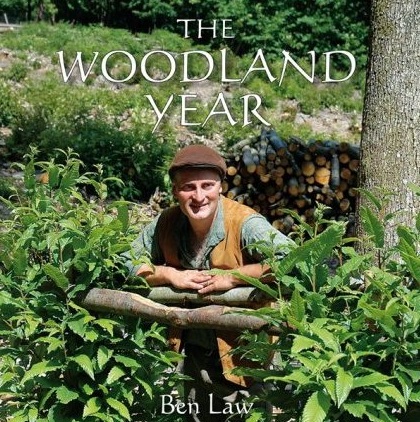
ben law woodland year book cover

Cramp balls

It is not only the beauty of the photographs that brings this book to life. It is the intimacy of the writing and Ben Law’s extraordinary, wide-ranging knowledge about woods. The reader learns that King Alfred’s Cakes or cramp balls, black fungi that grow mainly on ash trees, are nature’s firelighters. Law describes coming across a badger’s set with debris piled outside after a spring clean, noting that badgers are clean animals. He lists the uses for each type of wood. Who would have guessed that alder makes the best clog soles, or that wood from the wild service tree is much in demand in France by musical instrument makers?

Snedding  is the removal of side branches and the top of a felled tree, and those side branches are known as ‘brash.’ When berries are softened by frost they are ‘bletted.’ I reveled in the names of English wild flowers:  Dog’s Mercury, Spurge, Enchanter’s Nightshade, Stitchwort. I might even be able to indentify them from the photographs.  All of this speaks of a man who is steeped in his craft and that craft has its roots in ancient woodland lore that has been all but forgotten in modern Britain.

Shiitake spawn

There was one activity that I particularly enjoyed. In March, Law inoculated logs with mushroom spawn.  After ten years of trials, he has discovered that his most reliable inoculation has been the Japanese shiitake mushroom into sweet chestnut logs. He drilled holes in the logs with a specialist Japanese drill bit and then filled them with spawn-impregnated sawdust. The holes were sealed with wax and the logs stacked in the shade of the woods for the mushrooms to colonise. Sometimes the logs were ‘shocked’, by plunging them into water to stimulate growth. A few days later he would have a log full of shiitake to sell to the local gastropub. So that pile of rotting logs in the woods is in fact a woodsman’s log larder.

This is not a ‘how to’ book for a trainee woodsman. It is more of a lyrical call for readers to work more in harmony with nature, and to appreciate the resources that lie around them. As such it works. I, for one, will be walking in my local woods with my eyes newly attuned to my surroundings. I shall search out local charcoal made in local charcoal kilns. Although I think it’s unlikely that I will try Ben Law’s recipe for squirrel stew, I am waiting for the first frost to ‘blett’ the sloes so that I can pick them for sloe gin, and I’ve got my eye on my beech hedge for beech leaf noyeau (more gin).

Not all of us can live the life that Ben Law lives, but through this book we can get an idea of the importance of his work. He is leading a woodland renaissance in Britain, and reading about it is a tranquil pleasure.

THE WOODLAND YEAR By Ben Law
Published by Permanent Publications, The Sustainability Centre, East Meon, Hampshire, UK http://www.permanent-publications.co.uk/index.htm

Reviewed by Clare Reddaway

More books to check out on Green Prophet:
Sustainable Love and the Five Percent Rule: Who Comes First?
Living A Simpler, Deeper Life With ‘The Moneyless Man’
Green Student Life Using “10 Ways to Change the World in Your Twenties”
Organic Waste Collection And Composting In The Works For Israeli Municipalities

0

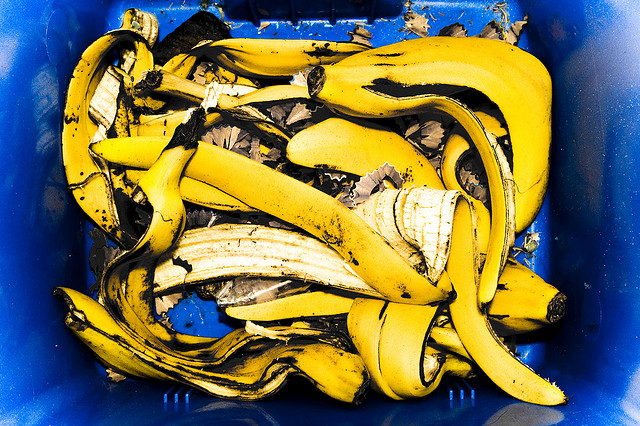
banana-peels-compostHey, are you gonna use that? Israeli residents may soon be able to put their banana peels to good use.

Organic waste – such as vegetable and fruit peels, egg shells, pits, etc. – constitutes a significant part of any household garbage bin, but it doesn’t have to. These materials are valuable stuff, which could easily be composted and transformed into fertilizer that helps plants and trees grow (instead of filling up a landfill).  But composting requires space and knowledge, and in an urban environment many people may not be inclined towards taking the time and effort to do it.

But what if it were all set up for you? What if all you had to do was separate your organic waste from the rest of your trash and your municipality would take care of the rest?

5 Fast and Delicious Sandwich Ideas

0

Delicioso Sandwich de Atún

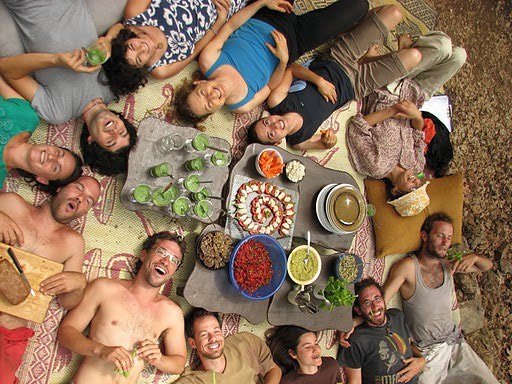
In the time it takes to go out and buy fast food or wait for the home delivery, you can whip up delicious home-made – and healthy – sandwiches.

It takes five minutes to put together a sandwich based on foods from the pantry and fridge. And you save money using up some of the pre-cooked ingredients waiting to be eaten. You do have to spend a little thought and effort on planning and shopping ahead. But we all shop anyway. Next time you’re in the supermarket, walk past the frozen foods section with all the fat-laden goodies and reach for some fresh food. Then spend some creative time in the kitchen to prepare tidbits like pesto for home-made meals on the run. Or call it “slow fast-food.”

We recommend sourdough (recipe here) or whole-wheat bread for all the recipes below.

NY Times: Masdar City’s Just A Futuristic Playground For The Rich

1

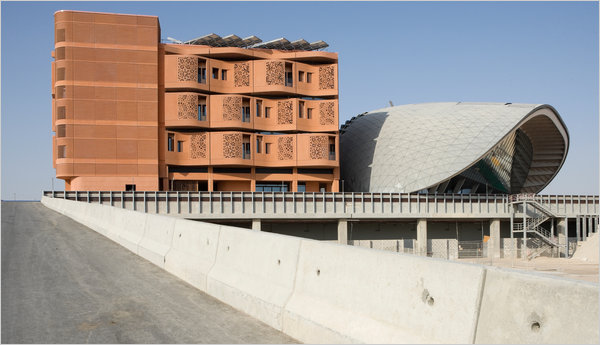
masdar-city-buildings“Cancer City”: Even if Masdar City does materialize against all odds, Nicolai Ouroussoff doubts its relevance to the rest of the sustainable world.

The New York Times critic Nicolai Ouroussoff has diverted the Masdar City argument from a project that might not lift off – the laughing stock of the Middle East – to something that could actually, but perhaps shouldn’t work. Though he compliments their costly vision, Foster & Partners’ design – part tradition with some high-tech padding to cushion a hot and carbon-parched future – will be one of a long string of cancerous enclaves that separate the rich from the poor.

His telling of the car-free city powered mostly by the sun resembles Margaret Atwood’s elite compounds from ‘Oryx and Crake,’ wherein dubious scientific experiments take place in sterile laboratories while the seedy pleebs on the outskirts succumb to strange, manufactured diseases.

From Capitalistic Pig To Living In A City Tree

0


Once a conspicuous consumer, Tami Zori – the founder of CityTree – is now trying to become the embodiment of green living.

tami zori city tree tel avivTami Zori (left) is scrubbing jars in her kitchen sink with a clay-colored goop made from used lemon halves left to ferment. “Then I mix them with vinegar and I get this not-very-nice paste – but it works, especially in a kitchen that has no meat and very little oil.”

Zori, 43, is a living embodiment of the “reduce, reuse, recycle” slogan. Inside and outside a ground-floor flat in downtown Tel Aviv she has created CityTree, an urban ecology project designed to demonstrate what it teaches: Permaculture (sustainable living), vegan nutrition, composting, and other ways of living harmoniously with nature. With the landlord’s permission, Zori, a crew of volunteers and CityTree’s staff – Alon Eliran, Eyal Engelmair and Roni Haliva – are transforming the patch of dirt surrounding the building into an attractive, edible garden.

New Eilat-Eilot Clean Tech Center May Boost Solar And Wind Energy Projects

0

eilat-eilot-clean-tech-center

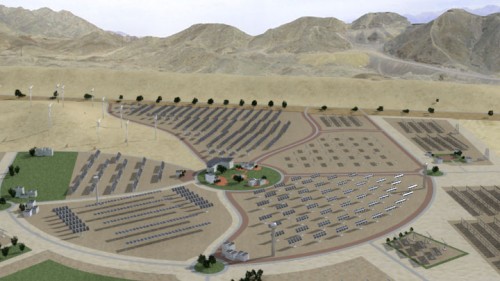
Artist rendition of what the new Eilat-Eilot Clean Technology Center may look like

Israel’s southernmost city of Eilat, which hosts the annual Eilat Eilot Renewable Energy Conference, will now get a further renewable energy boost by receiving a concession to build a new renewable energy center. The Eilat-Eilot Group which has put on the renewable energy show for the past four years, has been given the concession  from the Office of the Chief Scientist at the Ministry of Industry, Trade and Labor as reported in Globes.

Nightshades: Vegetables To Be Careful With

14

vegetable-platterHave you ever thought of a potato as possibly harmful? Along with tomato and eggplant it has that potential

What do tomatoes, potatoes, peppers and eggplant have in common with tobacco? They are all part of the Nightshade family. Many salads call for their use, including the Middle Eastern eggplant dish Baba Ghanoush, however, despite their various healthy attributes, these vegetables need to be consumed carefully since they can have a negative impact.

Baker & Spice Hosts The UAE’s First Farmer’s Market

0

uae-first-farmer-marketBusinesses in Dubai interested in reducing their carbon footprint should become consult their food map and source food locally.

Not far from Dubai, the Abu Dhabi eco-chicks arrange nights out and other eco-centric activities that coalesce the emirate’s green minds. They have also created a user-friendly map to make organic and sustainable businesses easier to find. While Dubai might not have the eco-chicks to put them on the map, organic farms are beginning to blossom. As such, local businesses now have the option to source their organic food locally and lower their carbon footprint. One business with an outlet in Dubai, Baker & Spice, which hosted the UAE’s first farmer’s market, has taken the lead.

Egyptian Children Track Environment With Disposable Cameras

0

children-photograph-mdgsIn an effort to improve awareness of MDGs, a joint UN program arms Egyptian children with cameras.

Last week’s UN Development Summit in New York kicked up significant MDG dust. What the Millennium Development Goals – adopted by 188 countries in September 2010 – represent, and whether or not we have any hope of achieving them has become all the more pressing as 2015 rolls closer. Designed to improve the quality of life by addressing issues related to education, the environment, health, and poverty, the MDGs are being adopted with varying degrees of efficacy throughout the developing world.

With over 80 million people relying on the Nile’s historic generosity, Egypt in particular has a poor environmental record that must be improved in order to meet the 2015 goals. In other respects, Egypt has shown encouraging signs of progress. “Sailing the Nile for the Millennium Development Goals” is just one project that is helping to implant MDGs in the consciousness of the Egyptian children, and they are starting with the children. 

Israeli Air Force Fighter Pilots Dodge Migrating Storks

storks-migrate-israel-air-forceIsraeli Air Force Fighter pilots fear collisions with birds more than any other enemy. Birders keep them safe.
Droves of migrating birds strike a remarkable sight as they swirl above head in flocks of some 5,000 birds at a time over the Judean Desert. There are about seven hundred million birds flying over Israel twice every year during migration season, 600,000 of them white storks, explains Noam Attias.

Attias, a birdwatcher for the Society for the Protection of Nature in Israel, is perched atop a rocky hilltop overlooking the Jordan River Valley. She is also a former air force air traffic controller.

Israeli Environmental Protection Ministry to Rank Israel’s Beaches on Green-ness

0

israel-green-beachHow green is your local beach?  Soon you’ll be able to check its ranking.

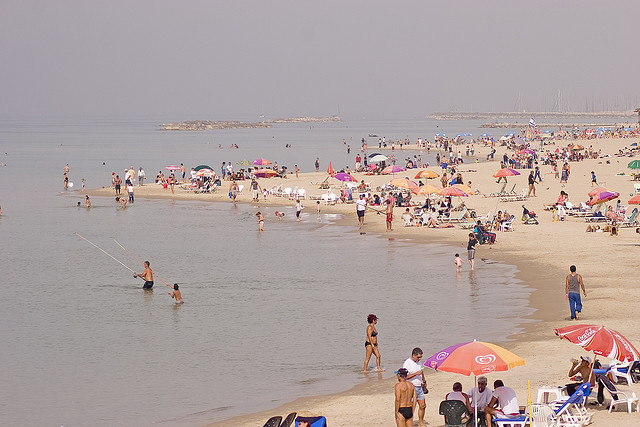
Israel’s Mediterranean beaches are an attraction for tourists and locals alike. The sand is soft, the water is usually pretty clear, the weather is great… but some beaches can be cleaner (and greener) than others.  And the Environmental Protection Ministry plans on telling you which beaches are which. Starting this month, the Ministry has begun a new program, called the Blue-Green Glag, to rate beaches on a scale of zero to four.

Segway Owner Dies in Freak Accident – by Segway

1

Jimi HeseldenDeath by Segway: Jimi Heselden, owner of Segway, dies in a freak accident.

They are used in Tel Aviv as a novel way to tour the boardwalk, and as novelty items in other Middle East countries – like by security guards at Saudi Arabia’s KAUST University. The Segway, a 2-wheeled electric vehicle never really took off, but it’s been an interesting idea to challenge the way we travel in cities and parks.

Now, the company’s owner has met a strange fate, Israel’s Channel 10 reports. Jimi was inspecting his property on his Segway, and fell 10 meters off a cliff into a river where he met his death.

Jimi, reports Salon, led quite an accomplished life: “He dropped out of high school at the age of 15, and rose from poverty and a life in the mines to found HESCO Bastian. He made millions in defense contracts, becoming richer than Simon Cowell.”

Abu Dhabi Building To Achieve All Five Green Building “Pearls”

3

abu-dhabi-pearl-buildingThe Abu Dhabi Tourism Authority paves the way for sustainable building in the increasingly “green” emirate.

Although green building codes have existed in the United States, Australia and elsewhere for a while, the same phenomenon has only recently been adopted in the Middle East. Israel’s first eco-tower aspires to incorporate, and Intel has already achieved Leadership in Energy and Environmental Design (LEED) principles. The western codes are voluntary, but Abu Dhabi’s municipality established its own green building code in May this year called the Pearl Building Rating System (PBRS) for Estidama. As of this month, by executive order, all new public buildings must achieve at least one pearl while government buildings must achieve two of five possible pearls.

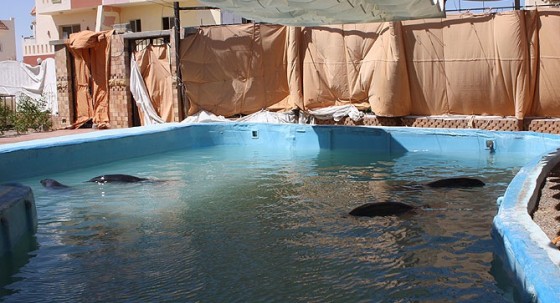
4 dolphins imprisoned in Egyptian backyard pool

5

dolphin egyptA Brit discovers captive dolphins in foul conditions in Egypt.
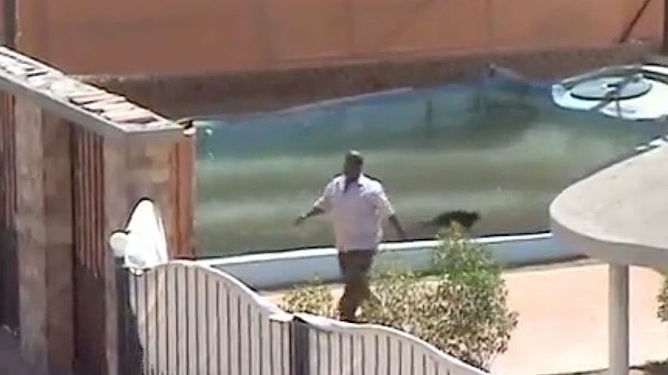
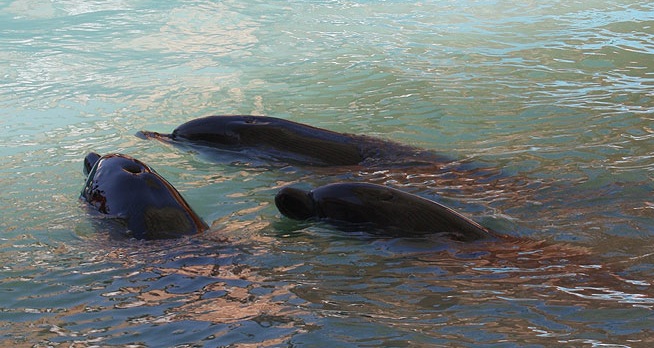
On the Red Sea, Hurghada is a popular Egyptian tourist destination. It is here that Chilean businessmen Fernando Fischmann intends to build an artificial lagoon, and also where an oil spill earlier this year sent people with a vested interest in attracting tourists scrambling to clean up the beaches.

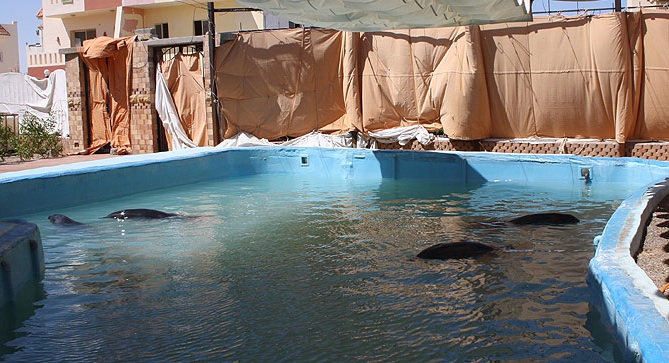
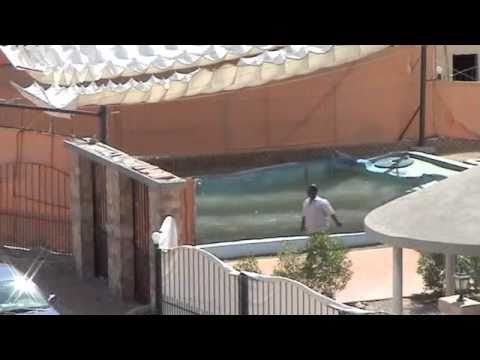
Although the beaches were cleaned, the Hurghada Enviornmental Protection and Conservation Association (HEPCA) raised concerns that elsewhere, out of sight, remnants of the spill were left unattended. That same organization has now released reports that four Japanese dolphins are being held in a tiny swimming pool, until a new dolphinarium is built in Hurghada. 

After receiving a tip from members of the public, the organization visited a villa where the common bottlenose dolphins were observed in a pool 1/10 the size that is considered acceptable.

The two males and two females are roughly three to four meters long and were brought to Egypt from Japan. However, Egyptian law mandates at least 105 days in quarantine to ensure that the animals are free of disease.

The pool, according to Wildlife Extra (a now defunct site), was filthy, most likely because it does not have an adequate filtration system to cope with the waste produced by the four dolphins. Visibility was apparently no more than 20 cm.

Wildlife Extra reported:

According to the Brazilian Institute for the Environmental and Natural Renewable Resources a minimum of 14 metres horizontal distance, a minimum depth of six metres and a minimum volume of 1600 m³ is specifies for two animals. The volume for four animals should be at least 2400m³. The HEPCA team found the four dolphins in a pool measuring nine metre by nine metre pool that was just four metres deep – a volume of just 324m³, only slightly above one tenth of the minimum required size.

It is unknown whether the dolphins were born in captivity or if they are wild. And releasing them into the Red Sea is out of the question since it is not their natural habitat. Not only would they put the local bottlenose dolphin population at risk of genetic and disease contamination, but if the dolphins are not wild their survival is far from guaranteed.

According to WE, the best that can be achieved is to improve the dolphins’ present conditions: provide more space and cleaner water. Either the pool will be extended or a new facility must be built for them.

“After the Red Sea Governorate learned about the four dolphins, they officially defined their position against holding dolphins in captivity within the borders of the Red Sea governorate. We hope that this will include the cancellation of the planned dolphinarium in Hurghada, before it opens its gates.” wrote WE.

Presently, however, Egypt has no laws governing dolphin capture.

A spokesman for HEPCA told HE: Egyptian waters offer incredible opportunities to see wild marine animals in their natural environment, including one of the most famous marine protected area in the region, the so-called Dolphin House, Samadai Reef. Egypt is actively working towards the conservation of its national environmental treasures; we don’t want the Egyptian Red Sea to send out a contradictory message allowing the captivity of intelligent, social marine mammals, such as dolphins. We will lobby vigorously, for the passing of new laws to make the Red Sea Governorate free from this heartbreaking, inhumane business.

BrightSource Prepares for NASDAQ IPO

0

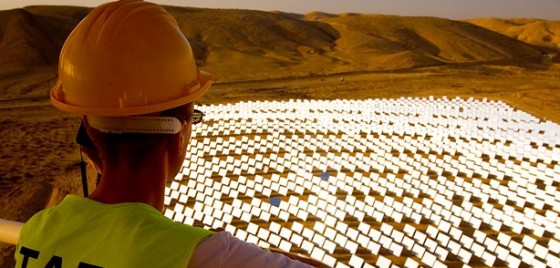
brightsource solar energySet to power 1.4 million US homes, the Israeli solar energy company is headed for a public offering, business papers speculate.

The American economy may be in the gutter, but it could be that big crash has set the world up for a new paradigm: investing in and building responsibly managed companies that have the earth in mind – not their CEO’s and VP’s big bonuses. Maybe it’s time to take your cash out from under the mattress: preparing for a US public offering is the Israeli-founded solar energy company BrightSource. The company is to build the largest ever solar-powered steam turbine generator in the world, in California. It hasn’t been without its struggles: environmentalists showed how the original build site for the solar panels interfered with coyote land; recently the company also made plans to relocate a native tortoise.

Now it looks like it’s full steam ahead for BrightSource. The Israeli business newspaper Globes reports that BrightSource has just raised an additional $30 million, bringing its investment total to $300 million.