
 Listed as one of the oldest trees in the world, the Iranian cedar of Yazd, is dying.
The oldest living Iranian creature, a cedar tree in Abarghu (or Abarkuh) near Yazd in center of Iran, is about to die.
There are different opinions about the real age of this famous tree considered a symbol of pre-Islam Iran (because of the respect that the pre-Islamic Iranians had for cedars as the symbol of happiness and beauty).
Some say that the cedar is 4000 years old, possibly even 8000. But as Mostafa Khoshnevis, an environmental expert says, by counting the circles in side the bark of the tree, the age of the tree is not more than 1200 years.
In any case, the cedar is one of the oldest trees in the world. It is famous that Marco Polo along with several Iranian historians had written about it.
The Yazd Cedar is also known as the Cypress of Abarkuh or Sarv-e Abarqu if you got here on a search engine).
Recent news reports from Iran suggest that the end of the life of this 25-meter tree is near. Like the Anne Frank chestnut tree in Amsterdam, all historical trees must one day die. But according to Khoshnevis, the main reason for the cedar dying in Iran, is tourism and the neglect of the responsible bodies in taking care of the soil of the area around the tree. Between 50 and 100 people visit the cedar daily and this makes the soil around the tree more compact.
So the activity of the microorganisms in the soil and also the permeability of the soil become limited.

According to this environmental activist, plowing in a low depth of 5 centimeter can be a good method for solving the problem. During the past years, plowing the soil in order to save the tree has been done at a depth of about twenty centimeters and at this depth maybe some of the surface roots of the cedar are injured.
Previously a street had been built in constructed near the tree that made the living environment of the tree polluted.
Good conditions of the location that the cedar is in, was the main reason for the tree’s longevity. However it is now located in an urban park and is accessible for many people just to take a look. Of course they do not have any bad intentions, but tourism to the tree is causing some adverse affects.
Some descriptions and photos of Abarkuh Cedar (in Persian)
Update June, 2026, he’s not dead!
Read more green articles about Iran:
NGOs Tell It On the Mountains in Iran (Clean Up!)
How Iran’s Ancient Zoroastrianism Funerals and Burials are Green
Iran Plans for Solar Energy in Tehran, But Cost’s a Limiting Factor



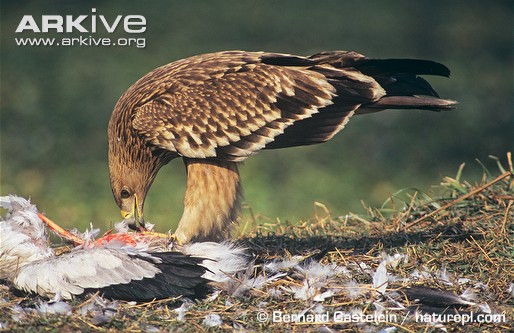
 This Imperial Eagle is one of several species in Turkey that face extinction.










 Clinton’s visit came one week before Abu Dhabi hosts its annual