
Home Blog Page 59

Organic mattress topper and eco dorm essentials

0
 
organic lifetstyle college
Make a bed with shipping crates

Just because you’re moving into a dorm doesn’t mean you have to sacrifice your eco-friendly values for the sake of convenience. Instead, you can get all of your dorm essentials as sustainable options. Eco-friendly solutions for utensils, notebooks, cleaning supplies, and furniture are widely available online so that you can live a green-friendly four years at your university. 

Before you move in for orientation, here are eight planet-friendly dorm essentials to help you become a lean, green college machine.  

An organic mattress topper

hevea milk, organic mattress raw materials
Tell your dorm mates you are “upcycling” an old mattress into a luxury organic mattress, one made with sustainably harvested hevea milk.

An organic memory foam mattress topper can help with sleep because the organic materials in the design keep your body cool at night. Organic mattress toppers also don’t harbor bacteria or other allergens, making them easier to clean and less harsh on your lungs.

Because they’re organic, these mattress toppers are also less stressful on the environment. Organic mattresses and toppers are a no-brainer for a sleep solution that heals the planet in a way that you don’t need to buy a completely new mattress, and thereby it melts away that finals week stress.

Plants

indoor houseplants, thumbs up
Plants spruce up your dorm and clean the air

Plants are a great way to add personality and color to your dorm room. Plus, they can act as natural air purifiers. Just make sure that you choose plants meant for indoors and that you can take care of within your schedule. A few excellent low-light options include pothos, peace lilies, and monsteras. 

Bamboo utensils

Eco serving tray
A bamboo and basket serving tray looks nice, feels nice, and goes easy on our planet. Glow up your coffee in the dorm.

Bamboo utensils are a great way to reduce your day-to-day waste because they are reusable. These utensils are also made from eco-friendly bamboo rather than silver or metal, making them better for the environment. So, you can feel good about what you eat and how you eat. 

Reusable coffee mugs
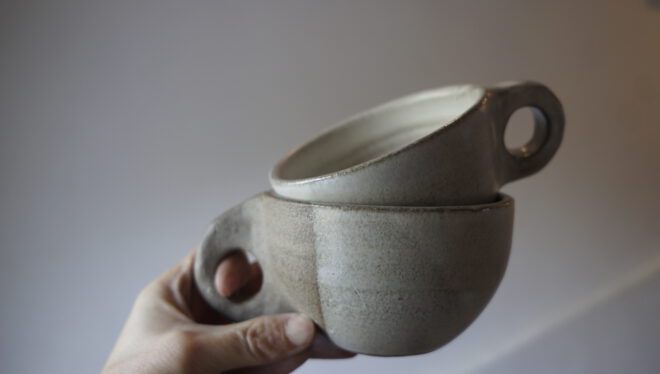
handmade pottery, ceramic, coffee tea cups, natural brown, karin kloosterman

For students who can’t go without their daily coffee but want to stay on top of environmental duties, you can’t forget about reusable coffee mugs when picking out your dorm essentials. Reusable coffee mugs, especially those made by a local potter are cute, support your local, and can help cut down on your daily waste. You can take your environmental efforts further and choose a reusable thermos for those last-minute mornings. We love these ones by Kedma.

Biodegradable notebooks

Notebooks might not cross your mind as the place to reduce your carbon footprint, but biodegradable notebooks can be an excellent way to cut back on emissions. These notebooks come in different fun patterns and designs and offer a more sustainable option to the alternative, which often ends up in landfills. 

All-natural cleaning supplies

eco gifts
Sustainable soaps. You can teach your dorm mates how to make your own.

Your dorm room is bound to accumulate dirt and what better way to clean it than with all-natural cleaning products. These products can whip your room into tip-top shape without the harmful chemicals that ordinary cleaning supplies use. Plus, all-natural cleaners often don’t have the same overpowering chemical smell, making for a relaxing afternoon in your freshly cleaned room. 

Reusable paper towels 

Reusable paper towels have begun gaining traction in more recent years. These towels act like a sponge but are made from thinner material to resemble a cloth napkin. Reusable towels can clean up spills and messes just as easily as a standard paper towel, minus the waste. If you are taking food from the cafeteria on the run, consider wrapping food in beeswax cloth that you can reuse time and time again.

Deodorant

Humble eco deodorant, bergamot and ginger
Humble deodorant

Don’t wear this with your favorite eco-silk blouse because it stains from the coconut oil and it leaves a white residue, but for every day use, this Humble deodorant is a fine way to make it through the stress of exams and late night assignments. If you buy the product, all the ingredients inside it are listed. If you are entrepreneurial you can deconstruct it and make your own. 

Saudi Arabia starts protecting nature for conservation

0

Ibex Protected Area, located 180 km south of Riyadh, joins IUCN Green List, which sets the global standard for protected and conserved areas management Out of more than 300,000 protected areas worldwide, Ibex Protected Area becomes the 78th to have achieved the standards of the IUCN Green List. The listing of Saudi Arabia’s first Protected Area represents a major milestone in the Kingdom’s commitment to ensure its protected areas are managed to the highest possible international standards. Achievement also represents continued progress of Saudi Arabia’s journey to reach the 30x30 Global Biodiversity Goal, which aims to protect 30% of Earth’s lands and oceans by 2030. Since 2017, Saudi Arabia has increased its marine protected areas from 3.6% to 6.5% and its terrestrial protected areas from 4.5% to 18.1%, and is on pace to reach 30% of both by 2030.
Photo sent by the Saudi Arabia government. Where are the ibex they are protecting?

The Saudi National Center for Wildlife (NCW) proudly announces that the International Union for Conservation of Nature (IUCN) has added the Ibex Protected Area to its exclusive Green List. The IUCN Green List recognizes protected and conserved areas globally that excel across governance, planning and design, effective management, and achieving positive conservations outcomes.

Ibex Protected Area, located 180 km south of Riyadh, joins IUCN Green List, which sets the global standard for protected and conserved areas management

Out of more than 300,000 protected areas worldwide, Ibex Protected Area becomes the 78th to have achieved the standards of the IUCN Green List.

The listing of Saudi Arabia’s first Protected Area represents a major milestone in the Kingdom’s commitment to ensure its protected areas are managed to the highest possible international standards.

The Ibex Protected Area, managed by NCW, is the first in Saudi Arabia to meet all the required criteria and achieve the highest standard, joining an exclusive list of less than 80 Protected Areas out of over 300,000 protected areas worldwide. 

Situated in the Tuwaiq mountain range in central Saudi Arabia and covering 1,840.9 km², the Ibex Protected Area is a rugged plateau that supports a variety of flora and fauna. Established as a protected area in 1988 at the request of local communities to safeguard a small herd of ibex, a threatened species of Ibex. As a result of NCW’s dedicated efforts, the ibex population, which has existed in the area for milennia, has significantly rebounded. 

The Ibex Protected Area also provides a habitat for other vulnerable species including mountain, rock hyraxes, foxes, birds, and reptiles. The area is home to diverse vegetation such as acacia trees, shrubs, herbs, and grasses. 

The inclusion of the Ibex Protected Area in the Green List is a global endorsement of the effectiveness of its management and conservation efforts. It highlights the success in protecting its rich natural resources, enhancing habitats, and promoting biodiversity. 

Ibex protected area, Saudi Arabia

“The Ibex Protected Area’s Green List status not only elevates its international standing but also advances our broader conservation and sustainable development initiatives. We are actively working with our partners in the wildlife sector to bring all our national protected areas up to this l standard,” said Dr. Mohammed Qurban, CEO of the National Center for Wildlife. 

The National Center for Wildlife currently manages 11 protected areas across Saudi Arabia. Since 2017, NCW has supported the expansion of Saudi Arabia’s marine protected areas from 3.6 percent to 6.5 percent and its terrestrial protected areas from 4.5 percent to 18.1 percent.

The listing of Saudi Arabia’s first Protected Area represents a major milestone in Saudi Arabia’s commitment to ensure its protected areas are managed to the highest possible international standards. 

NCW collaborates closely with local communities, promoting sustainable development, ecotourism, scientific research opportunities, and preserving natural heritage, contributing to the prosperity of the surrounding region and the Kingdom as a whole. 

This achievement also represents continued progress of Saudi Arabia’s journey to reach the 30×30 Global Biodiversity Goal, which aims to protect 30% of Earth’s lands and oceans by 2030. Since 2017, Saudi Arabia has increased its marine protected areas from 3.6% to 6.5% and its terrestrial protected areas from 4.5% to 18.1%, and is on pace to reach 30% of both by 2030.

Ancient potters in Syria were child laborers

Pottery children Syria, Ebla

Children as young as 8 years have fingerprints on 4,500 year-old pottery vessels found in an archeology site in Syria 

Archaeologists analyzed 450 pottery vessels made in Tel Hama, a town at the edge of the Ebla Kingdom, one of the most important Syrian kingdoms in the Early Bronze Age (about 4,500 years ago), and found that two thirds of the pottery vessels were made by children – starting at the ages of seven and eight.

Along with the use of children for the needs of the kingdom, they also found evidence of the children’s’ independent creations outside the industrial framework, which illustrate the spark of childhood even in early urban societies. The research was led by Akiva Sanders from Tel Aviv University in cooperation with researchers from Copenhagen.
The findings were published in the journal Childhood in the Past.

“Our research allows us a rare glimpse into the lives of children who lived in the area of ​​the Ebla Kingdom, one of the oldest kingdoms in the world,” says Sanders. “We discovered that at its peak, roughly from 2400 to 2000 BCE, the cities associated with the kingdom began to rely on child labor for the industrial production of pottery. The children worked in workshops starting at the age of seven, and were specially trained to create cups as uniformly as possible – which were used in the kingdom in everyday life and at royal banquets.” 

Related: This pottery glaze could work on Mars

As is well known, a person’s fingerprints do not change throughout their life. For this reason, the size of the palm can be roughly deduced from measuring the density of the margins of the fingerprint – and from the size of the palm, the age and sex of the person can estimated.

The pottery from Tel Hama, on the southern border of the Kingdom of Ebla, was excavated in the 1930s, and since then has been kept in the National Museum in Denmark. From the analysis of the fingerprints of the pottery it appears that most of them were made by children. In the city of Hama city two thirds of the pottery was made by children – the other third was created by older men.

Akiva Sanders from Tel Aviv University

“At the beginning of the Early Bronze Age, some of the world’s first city-kingdoms arose in the Levant and Mesopotamia,” says Sanders. “We wanted to use the fingerprints on the pottery to understand how processes such as urbanization and the centralization government functions affected the demographics of the ceramic industry. In the town of Hama, an ancient center for the production of ceramics, we initially see potters around the age of 12 and 13, with half the potters being under 18, and with boys and girls in equal proportions.

“This statistic changes with the formation of the Kingdom of Ebla, when we see that potters were starting to produce more goblets for banquets. And since more and more alcohol-fueled feasts were held, the cups were frequently broken – and therefore more cups needed to be made.

Palace in Ebla
A palace in the ancient Syrian kingdom of Ebla

“Not only did the Kingdom begin to rely more and more on child labor, but the children were trained to make the cups as similar to each other as possible. This is a phenomenon we also see in the industrial revolution in Europe and America: it is very easy to control children and teach them specific movements to create standardization in handicrafts.”

Modern, handmade pottery vessels bahaus and brut style by Kloosterman Clay
Modern, handmade pottery vessels Bauhaus and brutal style by Kloosterman Clay. Today child labor is considered a crime.

However, there was one bright spot in the children’s lives: making tiny figurines and and miniature vessels for themselves. “These children taught each other to make miniature figurines and vessels, without the involvement of the adults,” says Dr. Sanders. “It is safe to say that they were created by children – and probably including those skilled children from the cup-making workshops. It seems that in these figurines the children expressed their creativity and their imagination.”

Ancient artifacts are easy to find and loot from Syria. Most of the archeology sites are without strict security. And terror groups like ISIS have blown up major archeology sites in Syria and the Middle East over the years.

Breast cancer survivors age faster, new research finds

0

breast cancer risk

Some of the tools to help treat breast cancer and breast cancer re-occurance risk may be harming women as well. It’s known that radiation and chemotherapy take a toll on the body in the short term but in a new study, treatments against breast cancer can also cause significant long term affects that speed up the aging process in survivors.

In a new study led by investigators at the UCLA Health Jonsson Comprehensive Cancer Center doctors found that common breast cancer treatments, including chemotherapy, radiation, and surgery, may accelerate the biological aging process in breast cancer survivors.

The findings, published in the Journal of the National Cancer Institute, show that markers of cellular aging—such as DNA damage response, cellular senescence, and inflammatory pathways—significantly increased in all breast cancer survivors, regardless of the type of treatment received.

This suggests that the impact of breast cancer treatments on the body is more extensive than previously thought.

“For the first time, we’re showing that the signals we once thought were driven by chemotherapy are also present in women undergoing radiation and surgery,” said study lead author Judith Carroll, an associate professor of psychiatry and biobehavioral sciences at UCLA:  “While we expected to see increased gene expression linked to biological aging in women who received chemotherapy, we were surprised to find similar changes in those who only underwent radiation or surgery.”

Advances in cancer therapies have greatly improved survival rates, with an estimated 4 million breast cancer survivors in the US today and over 6 million expected by 2040. However, breast cancer is linked to accelerated aging, impacting physical abilities, independence, and lifespan. Biological aging processes, which drive conditions like fatigue, cognitive decline, frailty, and cardiovascular disease, appear to be a major factor.

Evidence suggests that cancer treatments, like chemotherapy, can increase the risk of earlier onset of these aging-related conditions, making it crucial to understand the specific pathways involved to better target and manage them.

To examine how gene expression related to aging changes over time in women diagnosed with breast cancer, the team conducted a two-year longitudinal study that tracked women undergoing breast cancer treatment prior to receiving treatment and again following treatment to see how their biological aging markers evolved.

The team tracked the gene expression in their blood cells using RNA sequencing, focusing on markers that signal biological aging — including a process known as cellular senescence, which is when cells stop dividing but don’t die. These so-called “zombie cells” accumulate over time and can release harmful substances that damage nearby healthy cells, contributing to aging and inflammation.

The data was then analyzed using statistical models to help identify aging-related changes.

The team found that regardless of treatment type there was an increase in expression of genes that track cellular processes involved in biological aging. Specifically, genes that capture cellular senescence and the inflammatory signal from these cells, indicating that their immune cells were aging faster than normal.

They also saw increases in DNA damage response genes, which are genes that are expressed when there is DNA damage. Although chemotherapy did have a slightly different pattern, similar to what others have shown, they also noted changes in women who did not receive chemotherapy.

“The results suggest women who receive treatment for breast cancer have a pattern of gene expression that indicates increased DNA damage and inflammation, which could be important targets for recovering from cancer and having a better quality of life in survivorship,” said senior author of the study Julienne Bower, professor of psychology in the UCLA College and psychiatry and biobehavioral sciences and member of the UCLA Health Jonsson Comprehensive Cancer Center.

“We’ve only just begun to understand the long-term consequences of cancer therapy and these findings are a critical step toward understanding the biological pathways that drive many post-treatment symptoms in breast cancer survivors,” added Carroll. “Our goal is to find ways to improve survivorship, not just in terms of years lived, but also in quality of life and overall health.”

The team is now exploring a new biomarker that measures a woman’s biological age and the pace at which she is aging. This could help determine whether the aging signals detected during cancer treatment have a long-term effect on biological age. The team plans to investigate factors that may influence this, with a focus on protective behaviors such as exercise, stress management and healthy sleep patterns. Green Prophet previously covered the hunt for a breast cancer biomarker. You can read it here.

Finalists for the Zayed Sustainability Prize vie for millions in prize money for impact

0

Abu Dhabi Sustainability Week
Light will be planted in Bolivia during Abu Dhabi Sustainability Week

The United Arab Emirates is serious about supporting renewable energy, clean water and smart agriculture. Part of the way they support impact companies is through the Zayed Sustainability Prize. Named after Sheikh Zayed bin Sultan Al Nahyan, the founder of the United Arab Emirates, the Zayed Prize this year was selected for companies and research that harness AI and other technologies to reduce carbon emissions and ensure access to clean energy, water, food and health care.

The jury selected the 33 finalists from 5,980 entries, representing a 15 per cent increase in submissions over last year.

Each winner of the six categories, health, food, energy, water and climate action categories will receive $1 million in prize money, while the six winning Global High Schools will all take home $150,000. The winners will be announced at an awards ceremony on January 14 as part of Abu Dhabi Sustainability Week. Green Prophet has been invited to the Abu Dhabi Sustainability Week in the past and it offers a taste of future-thinking sustainability issues. At least in the dream world.

“The Zayed Sustainability Prize continues to honour the enduring legacy of Sheikh Zayed, whose visionary leadership in sustainability and humanitarianism guides the UAE’s mission to uplift livelihoods worldwide by fostering development in some of the most vulnerable regions,” said Dr Sultan Al Jaber, Minister of Industry and Advanced Technology, Cop28 President and director general of the Zayed Sustainability Prize.

Sheikh Zayed
Sheikh Zayed bin Sultan Al Nahyan

“By leveraging emerging technologies, such as AI, carbon capture and removal, tidal energy, precision agriculture, biomimicry and climate analytics, they are addressing the needs of the moment while inspiring the next generation to innovate and drive sustainability in impactful ways,” said Dr Al Jaber.

“This year’s prize finalists showcase the remarkable steps being taken around the world to address urgent needs with creativity and determination – offering a vision of a more sustainable future,” said Ólafur Ragnar Grímsson, chairman of the prize jury.

“From enhancing biodiversity and food security through innovative technology, to providing critical energy and healthcare solutions for underserved populations, these pioneers are reshaping our world.”

The jury for the Zayed Sustainability Prize with Dr Sultan Al Jaber, Minister of Industry and Advanced Technology, Cop28 President and director general of the Zayed Sustainability Prize (centre right). Photo: Zayed Sustainability Prize

Offering a better tomorrow

This year’s health category finalists focus on delivering quality healthcare services to underserved and remote communities. Those shortlisted include Periwinkle Technologies, an SME from India that deploys Smart Scope, an AI-enabled cervical cancer screening device that provides results in 30 seconds. The Israeli Femtech company MobileODT already offers such a solution and is already on the market.

In the area of Food and Agtech prizes were given for empowering small-scale producers, promoting sustainable food preservation, and transforming arid land into productive farms. One featured company is Nafarm Foods from Nigeria that has developed hybrid solar dryers that make tomato paste.

Energy category finalists include Palki Motors Limited, an electric car company from Bangladesh that manufactures local, low-cost electric cars with solar-powered battery swap stations.

The water finalists include the High Atlas Foundation, from Morocco, which provides a solar-powered pumping system to increase groundwater extraction.

High Atlas Foundation

Climate action finalists were chosen for focusing on advancing carbon capture, ecosystem restoration, and building climate resilience and include Distant Imagery from the UAE: which specialises in the development of AI-powered drones for environmental monitoring, seed planting and habitat restoration.

The high school finalists are divided into six regions, with candidates selected for offering project-based, student-led sustainability solutions.

Sustainability finalists

Health

  • Periwinkle Technologies – India
  • Rology – Egypt
  • Telemedan – Chile

Food

  • ABALOBI – South Africa
  • Nafarm Foods – Nigeria
  • Xinjiang Shawan Oasis Sustainable Development Institute – China

Energy

  • D-Olivette Global Enterprise – Nigeria
  • Palki Motors Limited – Bangladesh
  • Turbulent – Belgium

Water

  • Elman Teknoloji Ltd – Turkey
  • High Atlas Foundation – Morocco
  • SkyJuice Foundation Inc – Australia

Climate action

  • Distant Imagery – UAE
  • Hyera Inc – US
  • OpenMap Development Tanzania
President Sheikh Mohamed presents the 2023 Zayed Sustainability Prize for South Asia Global High Schools to a representative of Dhaka Residential Model College. Photo: UAE Presidential Court

Global High Schools

The Americas

  • Centro de Estudios Tecnológicos del Mar 07, Mexico;
  • Institución Educativa San Nicolás de Tolentino, Colombia
  • Mulgrave School, Canada

Sub-Saharan Africa

  • Mpesa Foundation Academy, Kenya
  • Sakafia Islamic Senior High School, Ghana
  • St Kizito High School Namugongo, Uganda

Middle East & North Africa

  • Benlahrech Said High School, Algeria
  • Merryland International School Abu Dhabi
  • Obour STEM School, Egypt

Europe & Central Asia

  • Baku Modern Educational Complex, Azerbaijan
  • Gebze Bahçeehr Science & Technology High School, Turkey
  • Presidential School in Tashkent, Uzbekistan

South Asia

  • Faafu Atoll Education Centre, Maldives
  • Girls Higher Secondary School Khaplu, Pakistan
  • Janamaitri Multiple Campus, Nepal

East Asia & the Pacific

  • Beijing World Youth Academy, China
  • Te Pā o Rākaihautū, New Zealand
  • Votualevu College, Fiji

Zero-Waste Living: Effective Tips for Reducing Household Waste

0

upcycling jars
Upcycling jars for zero waste

According to the study conducted over a period of 35 years, it is estimated that, on average, an American generates approximately 4.9 pounds of waste each day. Reducing waste contributes to a healthy environment, ultimately helping us to be more healthy and fit and more capable of completing our daily tasks effectively. 

Along with the environmental efforts to stay healthy and fit, many people seek supplements to meet their nutritional needs and maintain optimum energy levels. If you are looking for reliable options, Biaxol offers a range of high-quality supplements specifically designed to support overall health and fitness. In this article, we will walk you through some practical and useful tips to adopt zero-waste living and stay healthy.

Say NO to Plastic Bottles

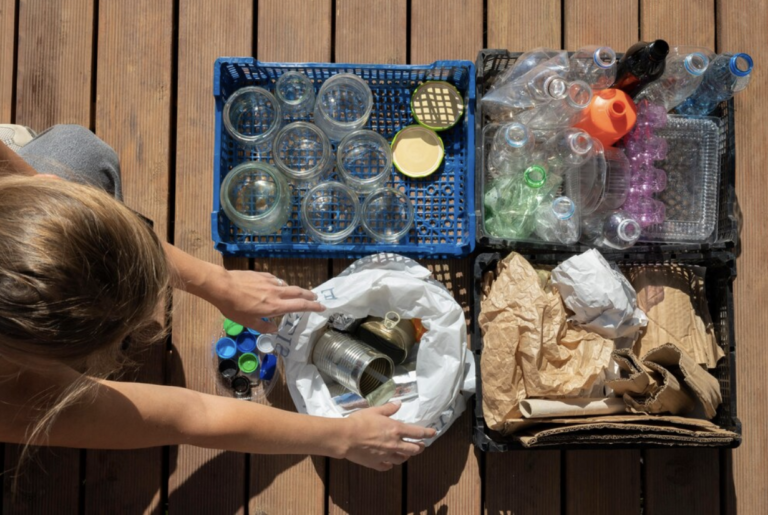
Do you know that 40% of the bottled water sold is actually tap water? Thus, instead of getting trapped with intelligent yet clever marketing, invest in quality water filters and a reusable water bottle. We all like to spend on glass bottles, but there are certain other sustainable options as well. And while you are at it, get a thermos for your cup of tea or coffee on the go. This is also an effective way to save more and make your water the way you like it.

Buy Staples in Bulk

sustainable kitchen, dried legumes in jars,
Buy local and without plastic bags. Refill dried goods at co-ops or bulk shops.

It is a good idea to buy staples in bulk and store them in reusable containers such as cloth bags or mason jars. This way, you can control the amount and get the exact amount that you need. The best part is that you will start to notice a difference in your grocery checkout since pre-packaged products come in at high prices. 

Avoid Using Tea-bags

The majority of the tea bags are manufactured with microplastics that are very bad for our environment and ourselves. But don’t you worry: start using loose-leaf tea! You can use an in-mug strainer or reusable cloth tea bags and get your same taste, delicious, sustainable tea in no time. This is also an excellent way to be creative with your taste buds and try new tea combinations.

Purchase Cloth Bags

"eco-friendly cloth bags"

We all know about the flimsy plastic bags they give in the stores, right? They are super wasteful for our environment. Purchasing reusable cloth bags will eventually help you keep your goods safe and prevent excessive plastic bag usage that ends up dirtying our ocean. These bags are a great way to transport bulk goods as there is a minimal chance of them being torn. And obviously, your produce will be even cuter.

Make Your Closet Green

Prefer buying exclusively from sustainable clothing brands or visiting local thrift or consignment stores. In this way, you will find unique and almost new garments at a fraction of their original prices. The best part is that you will get used to people asking, “Where did you get it from?” 

And while you are visiting such stores, donate your pair of jeans or a shirt that you haven’t worn in the last ten years, as you must discard the things that have outlived first if you truly want to enjoy the new ones.

Eat Veggies More!

When you are contributing to the zero-waste world, you must give a try to the farming industry. Or if you are not ready to give up on your carnivore ways, prefer buying from local and humanely raised meat. You can start eating veggies one day a week or begin to celebrate Meatless Mondays, where you will try new plant-based recipes.

Concluding Thoughts

And there you have it! You can be the one contributing to the healthy environment and make your air fresh and healthy. However, Rome was not built in one day; you have to take tiny steps and give yourself some time and patience, and you will start noticing a difference.


Disclaimer: Green Prophet is not responsible for decisions you made regarding foods and supplements you take. Please consult a physician before you take anything new to your diet.

The ghost town Kayakoy in Turkey rooted in Christian history and tragedy

Kayakoy is a ghost town in Turkey

Kayaköy, a ghost town in southwestern Turkey stands as a haunting reminder of the religious turmoil that once shaped Turkey. This village was once part of a thriving community with its stone houses, churches: its history is inextricably linked to the larger political shifts of the early 20th century and the dislocation of entire communities due to the collapse of empires and the drawing of new national borders.

Kayaköy was known as Levissi until the early 20th century and was home to a population of predominantly Greek Orthodox Christians, coexisting peacefully with their Turkish Muslim neighbors. The town’s hillside location offered stunning views of the surrounding valleys and hills, and it boasted a bustling, self-sufficient community.

Its residents were known for their craftsmanship, especially in stonework, and they built homes that sprawled over the hills in orderly rows, each meticulously designed to preserve sunlight and ventilation without blocking one another’s views.

Kayakoy
Kayakoy is a protected site you can visit

At the town’s peak, Kayaköy was vibrant with schools, churches, businesses, and homes—an ideal symbol of harmony between different ethnic and religious communities. But during the fall of the Ottoman Empire, the rise of nationalism, and the aftermath of World War I a new reality would unravel this peaceful coexistence.

Kayaköy became a ghost town in the 1923 population exchange between Greece and Turkey. In the aftermath of the Greco-Turkish War (1919 to 1922), the Treaty of Lausanne was signed, mandating a compulsory population exchange. This treaty forcibly relocated around 1.5 million Greek Orthodox Christians from Turkey to Greece and 500,000 Muslims from Greece to Turkey.

Related: this village in Turkey speaks a bird language

Kayaköy’s Greek residents were among those impacted by this forced exchange, and they were uprooted from the land they had called home for generations.

The town’s Greek Orthodox churches, such as the Panagia Pyrgiotissa, were left abandoned. Though Muslim families moved to Kayaköy to replace the Christian Greeks, many of them found the area inhospitable, preferring to settle elsewhere.

Over time, Kayaköy was completely abandoned.

Kayakoy
Kayakoy

Today, Kayaköy stands as an open-air museum and a memorial to the forced migrations. Tourists can wander among the stone houses and visit the two large churches, which have been partially restored, but the eerie quiet remains. If you love ghost towns – this one is worth a visit.

Why the area remains closed off, you can continue your ghost town in Turkey to Burj al-Babas where hundreds of Disney-style homes were built for the rich. The company went bankrupt and almost 10 years later, the houses are still standing.

Massive $60 billion USD MENA beauty market ripe for natural beauty products

0

Le Labo natural perfume

The Middle East North American beauty market is estimated at $60 billion by 2025 and it currently sits at $46 billion USD according to The Middle East Market Report. MENA countries include Saudi Arabia, the United Arab Emirates, Kuwait, Oman, Jordan Lebanon, Syria, Israel, Tunisia, Afghanistan, Libya, Morocco, Greece and sometimes Turkey.

Currently valued at $46 billion, the MENA beauty industry is projected to grow to $60 billion by 2025, driven by a young, addicted population and rising incomes.

Mena face for Le Labo
A MENA woman. She could be from Morocco, Lebanon, Israel or Yemen.

There is a growing demand for “A-beauty” (Arab beauty) products that cater specifically to regional preferences and color palettes, and skin tone, and a surge in local brands like Saudi-based Asteri and Omani luxury fragrance house Amouage. Israeli-conceived Moroccan Oil and Yes To products are some better known ones in the mainstream.

One standout trend is the region’s focus on heritage and local ingredients, with many consumers in places like Saudi Arabia prioritizing brands that preserve cultural traditions. See the folk Bedouin beauty products of Miriam Aborkeek.

We prefer natural perfumes like Le Labo as they don’t engage with and mess with your endocrine system.

Arab beauty standards
Arab beauty standards can be high.

E-commerce is expected to hit $50 billion by 2025, driven by high online engagement, particularly in Saudi Arabia, where 82% of the population consumes digital content regularly.

Beauty categories such as skincare, make-up, and fragrance will see double-digit growth, with the global fragrance market expected to reach $7.21 billion by 2032, largely influenced by the UAE and Saudi Arabia.

This fish can taste with its legs

0

A sea robin Prionotus carolinus tasting with its legs.

We met a Russian scientist who is convinced that people can see with their skin. He’d like this research: leggy fish called sea robins that can taste with its legs.

The northern sea robin (Prionotus carolinus) uses its six legs to stroll the ocean bottom and to taste the sea floor for buried prey.

Sea robins are unusual animals with the body of a fish, wings of a bird, and walking legs of a crab. Now, researchers show that the legs of the sea robin aren’t just used for walking. In fact, they are bona fide sensory organs used to find buried prey while digging. This work appears in two studies published in the Cell Press journal Current Biology.

sea robin tastes with its legs

“This is a fish that grew legs using the same genes that contribute to the development of our limbs and then repurposed these legs to find prey using the same genes our tongues use to taste food—pretty wild,” says Nicholas Bellono of Harvard University in Cambridge, MA.

It’s “the weirdest, coolest fish I’d ever seen”, says developmental biologist David Kingsley.

Bellono, along with Kingsley of Stanford University and their colleagues, didn’t set out to study sea robins at all. They came across these creatures on a trip to the Marine Biological Laboratory in Woods Hole, MA. After learning that other fish follow the sea robins around, apparently due to their skills in uncovering buried prey, the researchers became intrigued and took some sea robins back to the lab to find out more. They confirmed that the sea robins could indeed detect and uncover ground-up and filtered mussel extract and even single amino acids.

As reported in one of the two new studies, they found that sea robins’ legs are covered in sensory papillae, each receiving dense innervation from touch-sensitive neurons. The papillae also have taste receptors and show chemical sensitivity that drives the sea robins to dig.

“We were originally struck by the legs that are shared by all sea robins and make them different from most other fish,” Kingsley says. “We were surprised to see how much sea robins differ from each other in sensory structures found on the legs. The system thus displays multiple levels of evolutionary innovation from differences between sea robins and most other fish, differences between sea robin species, and differences in everything from structure and sensory organs to behavior.”

Through further developmental studies, the researchers confirmed that the papillae represent a key evolutionary innovation that has allowed the sea robins to succeed on the seafloor in ways other animals can’t. In the second study, they looked deeper into the genetic basis of the fish’s unique legs. They used genome sequencing, transcriptional profiling, and study of hybrid species to understand the molecular and developmental basis for leg formation.

Their analyses identified an ancient and conserved transcription factor, called tbx3a, as a major determinant of the sea robins’ sensory leg development. Genome editing confirmed that they depend on this regulatory gene to develop their legs normally. The same gene also plays a critical role in the formation of sea robins’ sensory papillae and their digging behavior.

“Although many traits look new, they are usually built from genes and modules that have existed for a long time,” Kingsley said. “That’s how evolution works: by tinkering with old pieces to build new things.”

The findings show that it’s now possible to expand our detailed understanding of complex traits and their evolution in wild organisms, not just in well-established model organisms, according to the researchers. They are now curious to learn more about the specific genetic and genomic changes that led to sea robins’ evolution.

Groundbreaking drug for schizophrenia has roots in ancient Egyptian medicine

0

Meet the face of Pharaoh Thutmoses IV
Smoking in Egypt

Last week, the first schizophrenia medication in decades with a new mechanism of action won US regulatory approval. The drug, KarXT (sold as Cobenfy), targets proteins in the brain known as muscarinic receptors, which relay neurotransmitter signals between neurons and other cells.

Activating these receptors dampens the release of the chemical dopamine, a nervous-system messenger that is central to the symptoms of schizophrenia.

Related: Meet the face of Pharaoh Thutmoses IV

The approval is an example of what molecular pharmacologist Andrew Tobin calls “an emerging golden age of muscarinic drug development”.

The area has its roots in antiquity, he notes: ancient Egyptians treated airway disease by breathing the smoke from a herb containing a muscarinic receptor antagonist.

Now, with a better understanding of the receptor’s biology and advances in drug design, these medications offer promise for other hard-to-treat neurological diseases, including Alzheimer’s disease which can be treated with a Middle East secret you can buy at the supermarket.

Pathogens are thriving in the plastisphere

testicles and microplastcis
Microplastics and your testicles: a poster from the NY subway train

Plastic pollution is creating a ‘plastisphere’: a widespread habitat that includes pathogenic viruses and antimicrobial-resistant bacteria, a group of environmental researchers highlights. The problem has no easy fix, but the ecosystems of the plastisphere must be thoroughly studied, with consistent sources of funding and backing from policymakers, if we’re to mitigate the risks posed by the pathogens lurking within.

We wrote about microplastics in desert air, in water, in babies, in breast milk. They are shed from toothbrushes. Microplastics go into your body through plastic aligners like used in orthodontics.

This Nature article gives a complete overview on what we know about the plastisphere. And there is a new worry: nanoplastics.

Emirates and Etihad solar power engineering center

0

L to R: Sheikh Ahmed bin Saeed Al Maktoum, Saeed Mohammed Al Tayer, Waleed bin Salman, Yousuf Mohammad Ali, Abdul Nasser Akil Abbas, Waleed Alnuaimi, Devarajan Srinivasan. 

In a significant move towards enhancing energy efficiency and sustainability, Emirates the official airline of the UAE has partnered with Etihad Clean Energy Development to launch a large-scale solar energy project at the Emirates Engineering Centre in Dubai.

The signing ceremony took place at the World Green Economy Summit 2024 in the presence of Sheikh Ahmed bin Saeed Al Maktoum, Chairman of the Dubai Supreme Council of Energy, and Chairman and Chief Executive, Emirates Airline and Group; and Saeed Mohammed Al Tayer, Vice Chairman of the Dubai Supreme Council of Energy, and Managing Director and CEO of Dubai Electricity and Water Authority (DEWA).

The project includes the development, engineering, procurement, construction, testing, and commissioning of solar photovoltaic (PV) systems at Emirates Engineering Centre, along with 20 years of operation and maintenance services.

A total of 39,960 solar panels will be installed, providing 37% of the facility’s annual energy consumption and reducing CO2 equivalent emissions by over 13,000 tonnes each year when fully operational.  The total capacity is 23,177 kWp, with an estimated annual generation of 34,301,960 kWh.

3d strategy villa
Sheikh Mohammed bin Rashid Al Maktoum, Vice-President and Prime Minister of the UAE and Ruler of Dubai, stands in front of the the first world functional 3D printed offices during the official opening in Dubai May 23, 2016. 

Sheikh Ahmed bin Saeed Al Maktoum said: “This initiative highlights Emirates’ commitment and continued investment in renewable energy solutions as part of our sustainability strategy. By integrating solar energy into the Emirates Engineering Centre, we are significantly reducing our carbon footprint while supporting the UAE’s clean energy goals. We are pleased to partner with Etihad Clean Energy Development in this solar PV project, which adds another milestone in our sustainability journey and greatly expands the number of solar installations at our facilities.”

Saeed Al Mohammed Tayer said: “Etihad Clean Energy Development, a leading provider of energy efficiency solutions in the region, will spearhead the project, showcasing its expertise in delivering high-performance energy systems. Through this partnership, Etihad Clean Energy Development and Emirates Airline will ensure the long-term operational efficiency of the solar PV systems while achieving substantial reductions in carbon emissions and energy costs. We are proud to collaborate with Emirates Airline on this landmark project. Our partnership not only supports the UAE’s vision for a sustainable future but also sets a precedent for renewable energy adoption in the aviation sector.”

With a 20-year agreement for operation and maintenance, the solar PV systems will contribute to long-term environmental benefits, ensuring that the Emirates Engineering Centre continues to operate efficiently using clean energy. This project is part of both companies’ broader efforts to support the UAE’s sustainability agenda, which focuses on reducing reliance on non-renewable energy sources and driving progress towards a low-carbon future.

Other Emirates-owned and managed facilities in Dubai with solar panel installations include: the Emirates Flight Catering facility, and The Sevens Stadium which boasts the region’s first and largest solar carport at a sporting facility.

Shipping industry puts whale sharks at risk

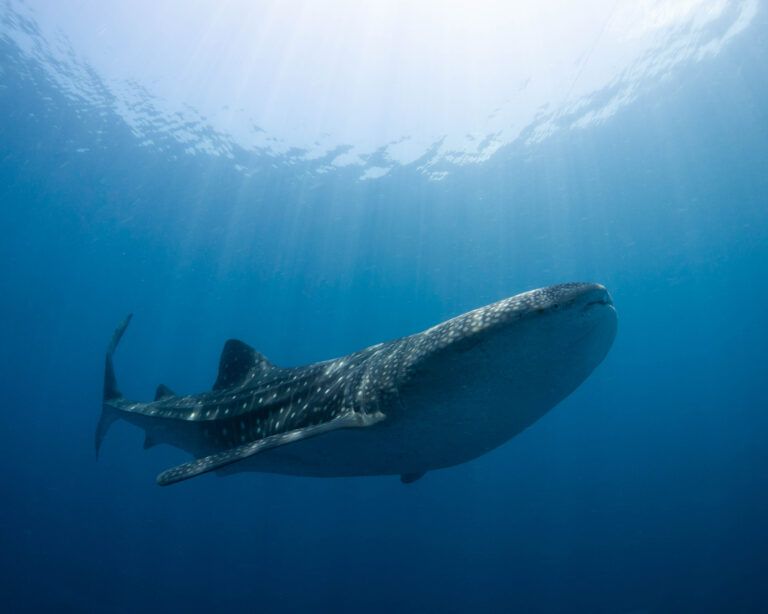
whale shark meets people

Global warming could increase the threat posed to whale sharks from large ships, according to a new study published in Nature Climate Change.

Researchers from the Marine Biological Association (MBA) and University of Southampton predict that increased ocean temperatures will see this already endangered species driven into new habitats crossed by busy shipping lanes.

The study predicts that the co-occurrence of whale sharks and large ships could be 15,000 times higher by the end of the century compared to the present day.

Lead author Dr Freya Womersley, Postdoctoral Research Scientist at the MBA and University of Southampton said: “These shifts in the whale sharks’ habitat were most extreme under high emission scenarios. A global reshuffling could lead to core habitat losses in some areas as well as increased co-occurrence with shipping traffic as oceans warm and other variables change.”

Whale shark injuries up close

Whale sharks, the world’s largest fish, are highly mobile and responsive to changes in temperature. Recent evidence suggests they are also particularly vulnerable to ship strikes – where large marine animals are struck and injured, often fatally, by large vessels in the global fleet.

Researchers used whale shark satellite-tracking data coupled with global climate models to project the distribution of whale sharks under three different future climate scenarios.

The models project core habitat losses of over 50% in some national waters by 2100 under high emissions (where we continue to rely heavily on fossil fuels), with the greatest potential losses in Asia. Under a sustainable development scenario (in line with the target of no more than 2°C of global warming), some areas showed a gain in core habitat, notably in Europe.

Related: this mysterious whale shark eludes biologists

“The shifts we predict are likely to be less extreme if we are able to slow warming and mitigate climate change, suggesting that even complex, multi-factor impacts of climate change can be somewhat alleviated by our actions,” says Professor David Sims, co-author and Senior Research Fellow at the University of Southampton and MBA.

The team paired the distribution maps with information on shipping traffic density to determine if these habitat shifts would see whale sharks move into more heavily trafficked areas in the future, potentially increasing the likelihood of ship strikes.

They found that some newly suitable habitats overlapped with busy shipping routes. This was the case in the US part of the north Pacific Ocean, the Japanese part of the eastern China Seas, and the Sierra Leonian part of the north Atlantic Ocean, among many other sites globally.

Some areas, such as the Mexican part of the Gulf of Mexico, saw reductions in co-occurrence, where core habitats shifted into more coastal waters, away from the busy shipping routes in the centre of the Gulf.

Professor Sims says: “Overall ship co-occurrence increased under all future climate scenarios, even if shipping remained at current levels, rather than its anticipated expansion of up to 1,200 per cent by 2050.”

Womersley added: “We show that climate change has the potential to indirectly impact highly-mobile marine species through interacting pressures of humans and the environment. This highlights the importance of factoring climate change into discussions around endangered species management.”

Perhaps a software engineer can help solve this by timing migrating patterns with shipping routes.


Zooplankton go eww to poo

Sewage treatment plant

Scientists at The University of Texas at El Paso and Stanford University were recently surprised to find that the natural community of zooplankton — tiny, aquatic animals known to graze on bacteria— present in freshwater and saltwater do not clean water that is contaminated with fecal microorganisms. That means poo.

The research, published today in the biology journal mSphere, reveals important insights about the limitations of zooplankton in treating bodies of water that have been contaminated with fecal organisms, the team said. A 2017 US water quality inventory revealed that over 50% of rivers, bays and estuaries were unsafe for at least one use, in many cases because of fecal contamination.

Related: this US company BioprocessH2O makes wastewater clean for the food industry

“When sewage is released into clean bodies of water and humans are exposed to it, it can lead to illness in humans,” said Lauren Kennedy, Ph.D., assistant professor of civil engineering at UTEP, who is the corresponding author on the study. “Our research seeks to understand what factors can render pathogens unable to infect people. In other words, how long does it take for the water to become safe for recreation again without any forms of outside intervention?”

Kennedy explained that water from sewage and septic tanks can accidentally enter bodies of freshwater as a result of accidents, inadequate water treatment or corroded infrastructure.


The authors hypothesized that zooplankton naturally present in water might graze on microorganisms from fecal contamination, inactivating the organisms and effectively “cleaning” the water.

To test this idea, the team added a virus called MS2 and the bacteria E.coli to samples of freshwater and saltwater taken from the San Francisco Bay area of California. MS2 and E.coli are considered useful proxies for scientific research, Kennedy said, because they are present at high concentrations in sewage and their presence often indicates fecal contamination in the environment. The water samples naturally contained both “large” particles like zooplankton, sand and dirt, and “small” or dissolved particles like salt.

They found that the large particles, including zooplankton, did not have a significant effect on the inactivation of the pathogen proxies. The small particles, however, seemed to have a greater impact. The pathogen proxies were inactivated at higher rates in high-salinity water, for example, ocean water taken from San Pedro Beach.

“I am proud that we were able to provide another perspective to consider for surface water remediation efforts,” Kennedy said.

The research, she added, is an important step forward in understanding the limits of zooplankton as natural “cleaners” of contaminated water. The next phases of the research will focus on the impact of salinity on pathogen survival in contaminated waters.

Give a gift, win a friend: new research

0

Gift giving better than a late night support chat
Gift giving might be better friendship glue than a late night support chat

There is an expression from Jewish sages: choose a rabbi, buy a friend. Research now shows that at least the second part of the expression rings true when put to the test.

Researchers found that the next time you’re looking to cheer up a friend or loved one, giving them a small gift — flowers, candy, a homemade treat — may lift their spirits faster and better than a supportive talk or text chat.

A new research paper co-authored by Hillary Wiener, assistant professor of marketing at UAlbany’s Massry School of Business, finds that receivers of support “perceive a gift to be a larger sacrifice” by the support giver rather than a conversation. This perceived difference in sacrifice results in gifts being more effective at “promoting emotional recovery” or, in other words, making recipients feel better.

The paper, “Money can buy me love: Gifts are a more effective form of acute social support than conversations,” was published in the Journal of Consumer Psychology. Co-authors are Holly Howe from HEC Montreal and Tanya Chartrand from Duke University.

“A gift that’s given — outside of a birthday or holidays — feels more like they were really thinking about you. They went out of their way to do something special for you,” Wiener says of the findings. “And it’s that feeling of being cared about that makes people feel better.”

eco gifts
Sustainable gifts are simple and natural

The research deployed seven studies, including a behavioral analysis of live interactions between 81 pairs of genuine friends with actual sacrifices of time and money. In that study, the friends were assigned roles of “support givers” and “support receivers.”

Related: why experience gifts are the perfect choice

The latter group wrote private notes, unseen by researchers, about situations for which they wanted support. The former group, the givers, were further divided to either give a small gift or to have a talk with their friend. Researchers checked to ensure the gifts and time were of comparable value. As expected, the support recipients reported feeling better after receiving the gifts versus having the talks. The six other studies examined aspects such as why recipients perceive gifts as a larger sacrifice, the intentionality of the gift and how direct enjoyment plays a role.

Wiener knows that the finding may seem counterintuitive, perhaps even controversial to some.

“I think there’s this idea in society that … talking to others can be difficult and that you shouldn’t just buy your way out of doing it,” says Wiener. “What I really like about this finding is that it’s kind of a win-win where the thing that feels easier for the giver is actually more beneficial for the recipient.”

Wiener and her research partners acknowledge more studies need to be done and caution that constant gifts and higher perceived levels of sacrifice could actually cause feelings of indebtedness or even guilt in the recipient. If you’re thinking that springing for a shared gift experience, like a spa treatment or kayaking trip is the perfect answer, the researchers say to consider that the gesture could be perceived by the recipient as partially self-motivated.