Research from the Wildlife Conservation Society (WCS) and the University of Queensland, published in Ocean & Coastal Management, found that nearly three out of four marine protected areas (MPAs) worldwide are exposed to sewage pollution.
At a time when climate anxiety can feel abstract and overwhelming, and being Jewish something people may need to hide in big cities, Adamah Los Angeles is trying something different: turning Jewish values into local climate action with dirt-under-the-fingernails practicality.
For families with kids, pets, or anyone trying to build a cleaner outdoor space, removing old astroturf is one of the simplest ways to reduce unnecessary exposure to plastics and heat. Some past studies suggest that if kids have played on these surfaces you need to wash their hands.
Artificial turf, the green plastic stuff that is supposed to look like grass, was sold to many home-owners as a clever compromise: a green-looking surface that makes you feel homey, but which needs no mowing. It survives heavy use, and in dry places like Middle East deserts, and in California or Texas, it can replace thirsty lawns. But it is toxic.
“In the midst of uncertain time, renewable energy remains consistent and steadfast in its expansion,” said Francesco La Camera, IRENA’s Director-General. “A more decentralised energy system, with a growing share of renewables and more market players, is structurally more resilient.”
Research from the Wildlife Conservation Society (WCS) and the University of Queensland, published in Ocean & Coastal Management, found that nearly three out of four marine protected areas (MPAs) worldwide are exposed to sewage pollution.
At a time when climate anxiety can feel abstract and overwhelming, and being Jewish something people may need to hide in big cities, Adamah Los Angeles is trying something different: turning Jewish values into local climate action with dirt-under-the-fingernails practicality.
For families with kids, pets, or anyone trying to build a cleaner outdoor space, removing old astroturf is one of the simplest ways to reduce unnecessary exposure to plastics and heat. Some past studies suggest that if kids have played on these surfaces you need to wash their hands.
Artificial turf, the green plastic stuff that is supposed to look like grass, was sold to many home-owners as a clever compromise: a green-looking surface that makes you feel homey, but which needs no mowing. It survives heavy use, and in dry places like Middle East deserts, and in California or Texas, it can replace thirsty lawns. But it is toxic.
“In the midst of uncertain time, renewable energy remains consistent and steadfast in its expansion,” said Francesco La Camera, IRENA’s Director-General. “A more decentralised energy system, with a growing share of renewables and more market players, is structurally more resilient.”
Research from the Wildlife Conservation Society (WCS) and the University of Queensland, published in Ocean & Coastal Management, found that nearly three out of four marine protected areas (MPAs) worldwide are exposed to sewage pollution.
At a time when climate anxiety can feel abstract and overwhelming, and being Jewish something people may need to hide in big cities, Adamah Los Angeles is trying something different: turning Jewish values into local climate action with dirt-under-the-fingernails practicality.
For families with kids, pets, or anyone trying to build a cleaner outdoor space, removing old astroturf is one of the simplest ways to reduce unnecessary exposure to plastics and heat. Some past studies suggest that if kids have played on these surfaces you need to wash their hands.
Artificial turf, the green plastic stuff that is supposed to look like grass, was sold to many home-owners as a clever compromise: a green-looking surface that makes you feel homey, but which needs no mowing. It survives heavy use, and in dry places like Middle East deserts, and in California or Texas, it can replace thirsty lawns. But it is toxic.
“In the midst of uncertain time, renewable energy remains consistent and steadfast in its expansion,” said Francesco La Camera, IRENA’s Director-General. “A more decentralised energy system, with a growing share of renewables and more market players, is structurally more resilient.”
Research from the Wildlife Conservation Society (WCS) and the University of Queensland, published in Ocean & Coastal Management, found that nearly three out of four marine protected areas (MPAs) worldwide are exposed to sewage pollution.
At a time when climate anxiety can feel abstract and overwhelming, and being Jewish something people may need to hide in big cities, Adamah Los Angeles is trying something different: turning Jewish values into local climate action with dirt-under-the-fingernails practicality.
For families with kids, pets, or anyone trying to build a cleaner outdoor space, removing old astroturf is one of the simplest ways to reduce unnecessary exposure to plastics and heat. Some past studies suggest that if kids have played on these surfaces you need to wash their hands.
Artificial turf, the green plastic stuff that is supposed to look like grass, was sold to many home-owners as a clever compromise: a green-looking surface that makes you feel homey, but which needs no mowing. It survives heavy use, and in dry places like Middle East deserts, and in California or Texas, it can replace thirsty lawns. But it is toxic.
“In the midst of uncertain time, renewable energy remains consistent and steadfast in its expansion,” said Francesco La Camera, IRENA’s Director-General. “A more decentralised energy system, with a growing share of renewables and more market players, is structurally more resilient.”
Research from the Wildlife Conservation Society (WCS) and the University of Queensland, published in Ocean & Coastal Management, found that nearly three out of four marine protected areas (MPAs) worldwide are exposed to sewage pollution.
At a time when climate anxiety can feel abstract and overwhelming, and being Jewish something people may need to hide in big cities, Adamah Los Angeles is trying something different: turning Jewish values into local climate action with dirt-under-the-fingernails practicality.
For families with kids, pets, or anyone trying to build a cleaner outdoor space, removing old astroturf is one of the simplest ways to reduce unnecessary exposure to plastics and heat. Some past studies suggest that if kids have played on these surfaces you need to wash their hands.
Artificial turf, the green plastic stuff that is supposed to look like grass, was sold to many home-owners as a clever compromise: a green-looking surface that makes you feel homey, but which needs no mowing. It survives heavy use, and in dry places like Middle East deserts, and in California or Texas, it can replace thirsty lawns. But it is toxic.
“In the midst of uncertain time, renewable energy remains consistent and steadfast in its expansion,” said Francesco La Camera, IRENA’s Director-General. “A more decentralised energy system, with a growing share of renewables and more market players, is structurally more resilient.”
Research from the Wildlife Conservation Society (WCS) and the University of Queensland, published in Ocean & Coastal Management, found that nearly three out of four marine protected areas (MPAs) worldwide are exposed to sewage pollution.
At a time when climate anxiety can feel abstract and overwhelming, and being Jewish something people may need to hide in big cities, Adamah Los Angeles is trying something different: turning Jewish values into local climate action with dirt-under-the-fingernails practicality.
For families with kids, pets, or anyone trying to build a cleaner outdoor space, removing old astroturf is one of the simplest ways to reduce unnecessary exposure to plastics and heat. Some past studies suggest that if kids have played on these surfaces you need to wash their hands.
Artificial turf, the green plastic stuff that is supposed to look like grass, was sold to many home-owners as a clever compromise: a green-looking surface that makes you feel homey, but which needs no mowing. It survives heavy use, and in dry places like Middle East deserts, and in California or Texas, it can replace thirsty lawns. But it is toxic.
“In the midst of uncertain time, renewable energy remains consistent and steadfast in its expansion,” said Francesco La Camera, IRENA’s Director-General. “A more decentralised energy system, with a growing share of renewables and more market players, is structurally more resilient.”
Research from the Wildlife Conservation Society (WCS) and the University of Queensland, published in Ocean & Coastal Management, found that nearly three out of four marine protected areas (MPAs) worldwide are exposed to sewage pollution.
At a time when climate anxiety can feel abstract and overwhelming, and being Jewish something people may need to hide in big cities, Adamah Los Angeles is trying something different: turning Jewish values into local climate action with dirt-under-the-fingernails practicality.
For families with kids, pets, or anyone trying to build a cleaner outdoor space, removing old astroturf is one of the simplest ways to reduce unnecessary exposure to plastics and heat. Some past studies suggest that if kids have played on these surfaces you need to wash their hands.
Artificial turf, the green plastic stuff that is supposed to look like grass, was sold to many home-owners as a clever compromise: a green-looking surface that makes you feel homey, but which needs no mowing. It survives heavy use, and in dry places like Middle East deserts, and in California or Texas, it can replace thirsty lawns. But it is toxic.
“In the midst of uncertain time, renewable energy remains consistent and steadfast in its expansion,” said Francesco La Camera, IRENA’s Director-General. “A more decentralised energy system, with a growing share of renewables and more market players, is structurally more resilient.”
Research from the Wildlife Conservation Society (WCS) and the University of Queensland, published in Ocean & Coastal Management, found that nearly three out of four marine protected areas (MPAs) worldwide are exposed to sewage pollution.
At a time when climate anxiety can feel abstract and overwhelming, and being Jewish something people may need to hide in big cities, Adamah Los Angeles is trying something different: turning Jewish values into local climate action with dirt-under-the-fingernails practicality.
For families with kids, pets, or anyone trying to build a cleaner outdoor space, removing old astroturf is one of the simplest ways to reduce unnecessary exposure to plastics and heat. Some past studies suggest that if kids have played on these surfaces you need to wash their hands.
Artificial turf, the green plastic stuff that is supposed to look like grass, was sold to many home-owners as a clever compromise: a green-looking surface that makes you feel homey, but which needs no mowing. It survives heavy use, and in dry places like Middle East deserts, and in California or Texas, it can replace thirsty lawns. But it is toxic.
“In the midst of uncertain time, renewable energy remains consistent and steadfast in its expansion,” said Francesco La Camera, IRENA’s Director-General. “A more decentralised energy system, with a growing share of renewables and more market players, is structurally more resilient.”
Thanks to a recent decision by Israel’s National Infrastructure Minister, Tourists heading for Ramon Crater won’t have to compete with unsightlytransmission lines.
As we push to exploit the Negev desert’s ubiquitous solar energy, we inevitably have to deal with evacuating said energy. Typically that involves unsightly transmission infrastructure: towers, lines, transformers, and more. Israel Electric Corporation had intended to build transmission lines over the top of the iconic Ramon Crater (which is a Makhtesh, not the site of a meteor crash) but The National Parks Authority protested that idea. The Jerusalem Post reports that after a long campaign, IEC and NPA, with leadership from the Ministry of National Infrastructure, have found an alternative solution.
It’s still just where the oil fix is dispensed. But greener.
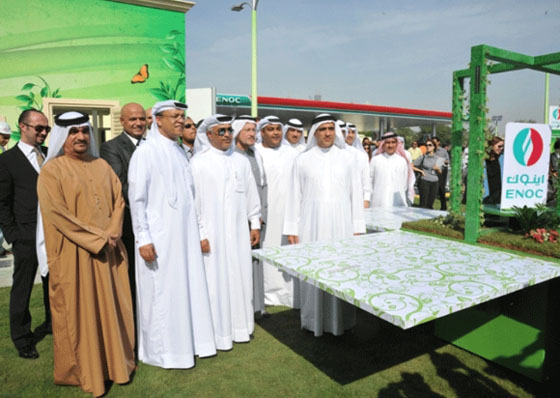
Dubai’s first green gas station, that we covered here in January is not a glamorous architectural extravaganza, but it is one of the first new buildings in Dubai to meet its new zero energy building codes.
The many sustainable features of the new Enoc/EPPCO gas station in the Emirates Hill neighborhood in Dubai make filling up, if not green, then as green as filling up on the filthy stuff can be.
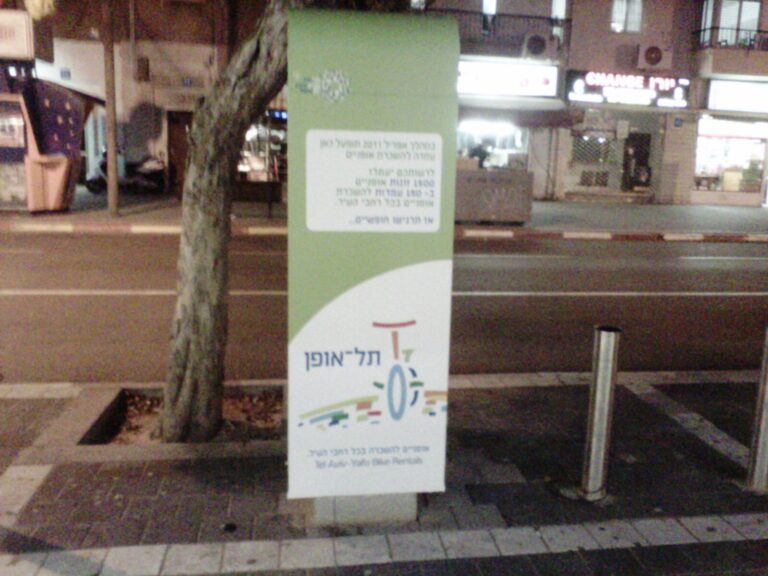
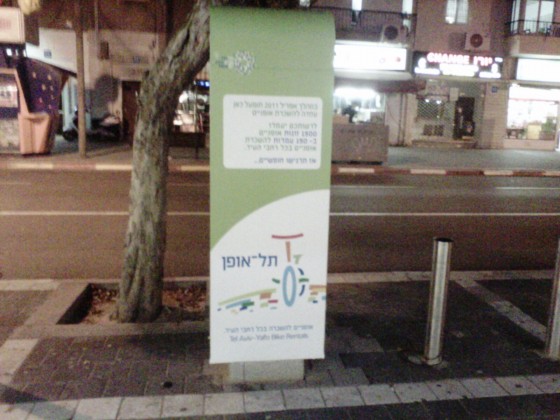
Tel Aviv is preparing to launch a bike-sharing program, joining over 200 cities in the world that already operate such systems.
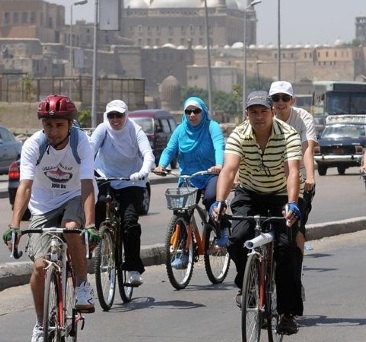
The pessimists and optimists will continue to disagree about the ultimate outcome of the amazing wave of protests sweeping through the Middle East (including bicycle-riding protestors in Cairo), but here’s one revolution everyone can applaud: New bike-sharing schemes are being inaugurated in Doha and Tel Aviv to ease urban congestion and reduce pollution.
Israel powers up a new round of EUREKA grants – two make electricity from municipal water supplies
A €33 million fund to help fuel the development of 25 projects in renewable energy, biotechnology and clean-tech industrial manufacturing across Europe was announced by the EUREKA network at a meeting in Israel Sunday. Since Israel’s chairmanship that began last fall, two of Israel’s most remarkable innovators have been paired with EU firms to facilitate prototype development.
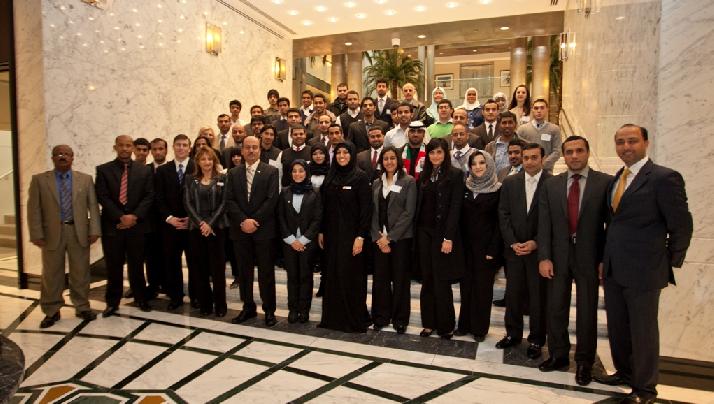
Masdar’s big recruitment drive started at the UAE embassy in Washington D.C.
The success of Masdar City and future cities like Masdar depends in part on steering our budding youth away from aspirations to become the next bajillionaire Wall Street banker. Instead, we need to get them interested in the other green-lined path, in good clean energy. Masdar wants to incubate the world’s finest minds at its Institute of Science and Technology, which is steadily growing. In order to achieve that goal, it has launched a recruitment drive in the United States.
According to our calculations, a pilgrimage to Mecca from the UK releases more tonnes of carbon than the average French person does in a year
In part 1 of our feature on Green Hajj, we worked out that the carbon footprint of the average UK Hajj pilgrim is pretty high. Our guinea pigs, the Hussain family released around 32.77 tonnes of carbon during their trip which means that each individual member released more C02 in their single trip than the average person in France releases per year (6 tonnes of Carbon). So how do we make Hajj more green? Well we use their experience and knowledge to suggest new ways to make the impact of Hajj easier on this old planet.
Speaking to the Hussain family about the Hajj experience, what is clear is that overall there were some good and bad aspects, in terms of environmental protection, but also a lot more which could be done.
A cyclist with a sense of adventure, last year Yasser took his bike for a swim, I mean spin in the Red Sea.
Earlier today, our newest superstar blogger called for a cycling revolution. Inji discusses critical mass biking events, a monthly activity that occurs throughout the world and is sometimes referred to as political-protest rides, and how activist cyclists can contribute to a better future.
The turmoil in the Middle East is so relentless, it is hard to remember a time before, a time when life – albeit less democratic – didn’t seem quite so heavy. A time when biking was just biking, a way to ditch the car and catch a quick thrill.
One Egyptian cycling enthusiast takes us back to that time, offering a lighthearted reminder that there is more than one way to go for a spin.
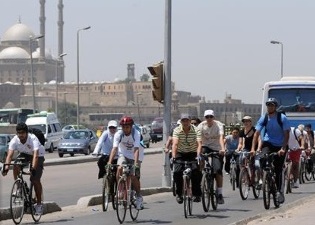
Before the 25th of January no more than 150 cyclists could pedal together without attracting police authorities’ attention. In Cairo, Inji El Abd from Cycling for Change, talks about a revolution for bikes.
Che Guevara had his motorcycle and they had their bicycles: Revolutionaries on wheels went from all corners of Cairo to Tahrir Square to demand a better future for their country. They got there faster than most, as traffic was a killer and the metro station on Tahrir square was no longer operative. Once there, they voiced their demands for freedom and dignity. The people demanded the removal of the regime and the regime obliged.
Cleantech funding, California’s interest in Israeli technology, IDE’s latest desal plant deal in China, and more headlines related to Israeli cleantech and the environment.
During the past week, the Eilat Eilot Renewable Energy Conference took place in Israel and several companies struck deals and agreements were signed. Chicago and Jerusalem formed an environmental partnership, while Poland and the US city of Akron signed water deals. Check below for these stories and the rest of this week’s headlines.
Cooking and baking are one way that Jews celebrate the Purim holiday of salvation.
Jews celebrate the holiday of Purim on the 14th day of Adar II, which falls this year on the evening of Saturday, March 19 until sunset on March 20. In Jerusalem and other ancient walled cities, the one-day celebration begins Sunday evening and is known as Shushan Purim (see Esther 9:18-19). Purim commemorates the events of the biblical book of Esther, which describes how the beautiful and noble Queen Esther and her uncle Mordechai foil the evil Haman’s plan to destroy the Jewish people of the 127 nations in the ancient Persian Empire.
Sustainable air conditioning made locally from the heat of the sun is perfect for Dubai.
Three European sustainable energy innovators show how an innovative combination of three technologies can make a sustainable low carbon way to cool buildings in Dubai. The three technologies – solar heated water – supplying a chiller based air conditioner – running cooled water through radiant concrete flooring – add up to climate-friendly cooling.
The Swedish-led HVAC company DEW-Kylsystem based in Dubai is installing the combination of technologies on a building for a 50% reduction in energy use.
The solar hot water heater units on the roof are made by Kingspan – the pioneering Irish firm that invented the first evacuated tube system: the Thermomax.
The chiller-style air conditioning is from ClimateWell – the Spanish innovator that has won awards for its integration of thermal energy storage. This makes their solar-powered air conditioning 24/7 – needed in Dubai! It’s patented a unique proprietary Triple-State absorption technology that integrates energy storage.
Its chillers are designed to be charged with thermal energy when its created on hot sunny days, but can be tapped when needed, day or night.The capacity to store thermal energy is key to deliver a consistently comfortable indoor climate using both heating and cooling as needed, despite a fluctuating energy input, such as solar heat.
Put these two technologies together and pack it into a hollow core concrete slab construction method – the ClimateDeck, as DEW-Kylsystem has done, and you have solar air cooling that uses half the energy of regular A/C. DEW provides the expertise in integrating different products to deliver the installation and commissioning of the complete system as a well-designed whole.
The low energy use would be of interest to Dubai building owners looking to be environmentally responsible, but also to simply those wishing to save their businesses from the now alarming rates that have skyrocketed. (Dubai Utility Doubles Business Electricity Rates in Three Years.)
Green Prophet’s Arwa on her decision not to drive a car and the social stigma that comes with it…
Maybe it has something to do with my love of trains and car-induced travel sickness as a child, but I can honestly say I’ve never aspired to driving a car.
Hitting the open road or whizzing around the city in my very own car doesn’t really fill me with anything but dread. Although I think that choosing to drive is a personal decision, it does however seem to annoy lots of people. People who seem to think that you are a complete failure unless you can drive and own a car.
I am 24 years old now and I have come to terms with the fact that I will never drive my own car but my little sister (nothing like a little public humiliation here!) thinks ‘it’s a little embarrassing’ that I don’t drive. It’s an important skill, she reasons, one which would give me a lot more independence. She’s right about the personal independence it would give me as a young Muslim women but than I tell her what I always tell anyone who asks why I don’t drive- ‘Driving is not the future’.
While attempting to move away from its scarred past, Lebanon has created a not-so-sustainable tourism industry with its focus on Beirut’s bars and beaches. The formerly lethargic tourism ministry is now trying to re-focus the market’s interest elsewhere in the country. With its Mediterranean apocalypse, diving is not great, but The Daily Star reports that the country could benefit enormously from growing its yet untapped eco-tourism industry.
Lebanon currently attracts more visitors to its urban centers than its beautiful countryside, leaving fallow an enormous opportunity. The country’s year-round outdoor activities include whitewater rafting, snowshoeing and snow survival, hiking, climbing, and even overnight stays with local communities.
33 North is an eco-tourism outfit that opened its doors last June. The Managing Director Gilbert Moukheiber told the paper that before established eco-tourism operators started offering their services, undirected visitors often caused a lot of harm to local communities. His firm, he says, practices “responsible” tourism, and they have trained over 70 local guides to date.
Michel Moufarege works for Liban Trek, the very first company founded in 1997 to offer alternative hiking tours in Lebanon. He claims that nature has been “attacked” from all sides, and that people would benefit from learning about what is beautiful and complex in nature. His kind of tourism also benefits local communities in Lebanon, who he says should be consulted.
Safa al-Hek, a medical practitioner, founded an organization called Oak, a cooperative that produces and sells organic food such as olives, nuts, jam, and fruit. In time, with international funding, al-Hek hopes the facility currently based in Koueikh, Hermel will grow to include an organic and traditional restaurant.
In the meantime, she believes that her facility, which draws scores more tourists to the region than before, has helped to improve the economic standing and emotional well-being of the women who work there.
While the tourism industry depends richly on political stability, eco-tourism has helped to strengthen national unity, the paper reports. One significant achievement is the 440 kilometer Lebanon Mountain Trail, which passes through 70 different towns and villages from north to south Lebanon.
Moufarege says that development encompasses improved mountain trails as well as tar roads, and that doing so can help to amalgamate the local community.
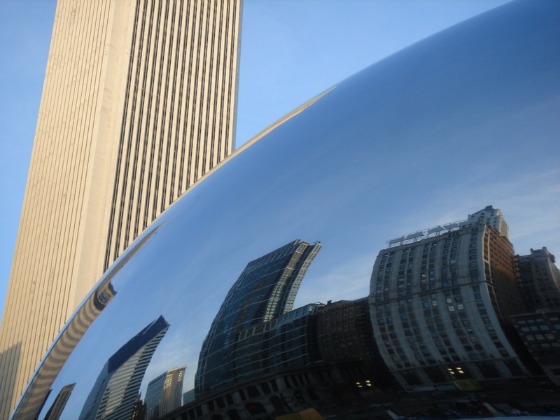
Representatives from Jerusalem and Chicago will sign a “green” MOU next month in the windy city.
We need mammoth human collaboration in order to surmount our global environmental problems. And let’s face it, we have a few of those: coral reefs potentially a thing of the past by 2050, oil set to peak just as the demand for it increases, and water- the source of all life – already a luxury commodity in places like Yemen. But it isn’t over till it’s over. In recognition of their numerous challenges, but determined to overcome them, two cities are planning to create mutual solutions. Chicago and Jerusalem will soon announce their new “green” friendship.

 Thanks to a recent decision by Israel’s National Infrastructure Minister, Tourists heading for Ramon Crater won’t have to compete with unsightly transmission lines.