Home Blog Page 538

Picket at the Egyptian Zoo For All Animal Rights

0

animal rights egypt photoAs Egyptian struggles for human rights, animal rights activists speak for those who can’t.

Egyptian animal welfare societies and activists are calling for a protest this Saturday outside the Cairo Zoo in Giza. According to animal rights activists Egypt has become a hub for international illegal trade in wildlife. We’ve reported earlier about the horses in Egypt (horses are the silent victims of Egypt’s revolution), and the dolphins being kept as “pets” in a Sinai swimming pool, and now the Egyptian Society for Mercy to Animals (ESMA) and other groups and individuals are organizing to give a voice to those who can’t speak.

Ancient Egyptian Mummies Suffered From Clogged Arteries Too

1

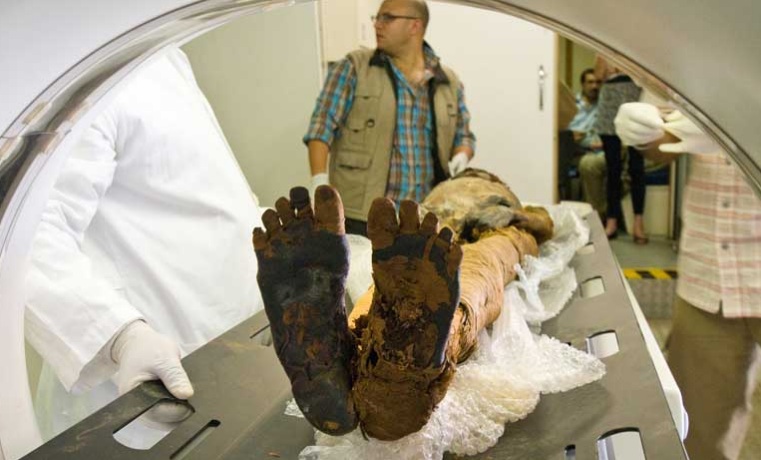
mummie egypt clogged arteryFeeling bad about your junk food diet? New research on Egyptian mummies finds death by clogged arteries.

There was no Golden Arches or Krispy Kreme doughnuts for ancient Egyptian royalty. And they weren’t smokers, addicted to the Internet, or couch potatoes. But they do share similar health consequences with the people who do these things today: Their coronary arteries were clogged all the same. A new US-Egyptian research team studying CT scans of mummies — done on a sampling of the elite in ancient Egypt — found that almost half showed evidence of coronary atherosclerosis in one or more of the arteries supplying blood to the heart and brain. The research turns the tables on the understanding of underlying factors of heart disease and stroke.

EcoMum’s Baby Almost Poisoned From Passover Cleaning Products

1

poison baby water bleachIt’s every parent’s nightmare: an advocate of simple, green cleaning products, Green Prophet’s Sophie reports how her child was almost poisoned by Passover cleaning products.

The Jewish Passover holiday is associated with springtime, freedom and joy. The pleasure of cleaning out the old for the new and a good spring clean. Well the joy of the Passover spring clean took a very nasty turn for me and my family yesterday, and it was an an even sadder one for another family.

Do Palestinians Blame Israel For Their Environmental Woes?

1

According to a report by an organization which reviews school textbooks, Palestinian students are taught to blame Israel for their environmental problems but how accurate is the assessment?

The Institute for Monitoring Peace and Cultural Tolerance in School Education (IMPACT-SE), which reviews school textbooks in the Middle East North Africa region, recently released a damning report on way that Palestinian school books represent Israel. As well the negative portrayal of Israel, the report revealed that Palestinian textbooks blame Israel for their environmental problems. But does this mean that all Palestinians actually blame Israel for their environmental woes? And more importantly, what role (if any) does Israel really play in environmental degradation in Palestine?

Serene Japanese-Styled Heiku Resort Lies At The Foot Of Mt. Gilboa

0

green building, israel, heiku resort, sustainable design, eco-design
This Japanese-style resort and spa attempts to add value to, rather than subdue, its natural surroundings.

My stepmother always says about life that there is no such thing as perfect, that there are only degrees of imperfection. So it is with green building. Foster & Partners are among the world’s most evolved architectural firms, but they are working with massive budgets that are only sustainable for a certain elite. On the other extreme, ecological kibbutzes and individual families are building rammed-earth homes in the spirit of Hassan Fathy, homes that have a wider application.

TEAM architects led by Zvika Taman fall somewhere in between. Their Heiku Resort & Spa, like the Red Sea film school, while using new materials nonetheless strives to add value to its natural surroundings. Built with Japanese principals in mind, we think it succeeds.

Passover Recipe: Traditional Matzah Balls

0

image-matzah-balls-kneidlach

“Kneidlach” may be the only Yiddish word that an Israeli knows, but everyone knows that it means matzah balls.

People tend to think of Israeli food as typically Middle Eastern, (like our labneh and potato salad with fava beans recipes) and so it most often is. Yet the culinary  influence of Eastern European immigrants is alive and well.

Nostalgia for traditional foods overcomes everyone at holiday times, and for families of Ashkenazi origin, the big one is chicken soup with kneidlach. Helpless as everyone else with childhood memories, I like to ladle an unfair number of these light matzah-based dumplings into everyone’s soup.

Traditional Matzah Balls

Ingredients:

2 eggs, beaten

4 tablespoons oil

1 scant cup matzah meal

1/4 – 1/2 cup water

1 teaspoon salt

1/2 teaspoon freshly grated ginger

Combine the beaten eggs, oil, and matzah meal.

Add 1/4 cup water, salt, and ginger.If the mix seems stiff enough to roll into a hard ball, add more water by tablespoons till it’s a stiff batter, not a firm dough.

Cover the batter and put it in the fridge for 2 hours. This step is important if you want light matzah balls. The batter can rest in the fridge even longer – even overnight. It will become a dough firm enough to shape, but still a little loose in the hand.

Have a medium pot with plenty of boiling, lightly salted water ready. With wet hands, form walnut-sized balls of dough, and drop them in.

Cover and cook the matzah balls over a medium flame for 30 minutes. Lower the heat so that the water simmers after the initial boil.

Remove the matzah balls from the water and either set them aside for later or put them in your soup right away.

You may cook them directly in the soup, but they won’t be as light.

Enjoy!

More delicious recipes from Green Prophet:


Bahrain’s Radiation Contingency Plan for Travellers from Japan

0

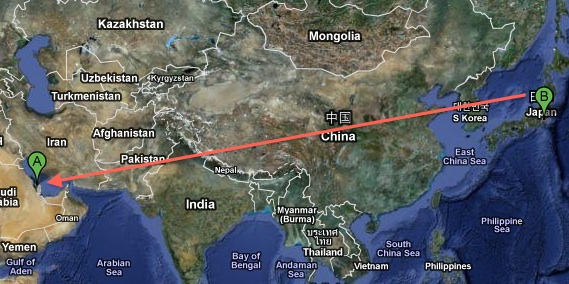
map japan bahrain nuclear radiationBahrain (A) will screen Japanese travelers (B) at airport if radiation levels rise.

It goes without saying that radiation, like air and water pollution knows no borders. Countries close to Japan, and even those farther away like Israel and the United States have already measured radiation from Japan’s troubled nuclear reactors. Now Bahrain authorities, a collection of 33 islands in the western Persian Gulf is bracing for radiation threats from Japan, according to Gulf News Daily. Part of Bahrain’s plan is to screen passengers arriving to the airport, and food, for traces of radiation. China has already found high levels of radiation on Japanese travelers that are cause for concern.

Limited Power Shackles Armenia to Precarious Nuclear Plant

0

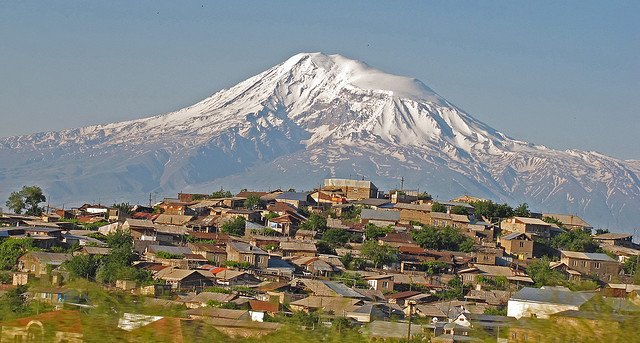
In bucolic but earthquake-prone Armenia, people both fear and rely on a nuclear power plant that has operated for three decades with no primary containment structure.

In the 1970s, a series of first-generation nuclear reactors were built in the former Soviet Union, all lacking the infrastructure to contain major ruptures in the reactor’s primary circuit. Should a large rupture occur and the facility begin to overheat, the reactor would open to the outside air to cool down, exposing the surrounding environment to its contents and whatever accidents subsequently befell them.

One such nuclear power plant was built in present-day Armenia, in one of the most seismically active areas on the planet, a recent National Geographic article reports. Concerned citizens, scientists and international agencies have called on the Armenian government to shut down the plant, but there’s a snag: The plant supplies more than 40 percent of the power in a country that is exceptionally hard-pressed for energy.

The 31-year-old Metsamor power station is one of just five first-generation VVER 440 nuclear plants that lacks a primary containment structure. The rest are in Russia. The Armenian government has started planning to replace Metsamor’s 750 MW of capacity by 2016, but many are worried about what may happen in the intervening five years.

One-third of Armenia’s population live just 20 miles away, in the capital city of Yerevan. At a time when many countries in the Middle East are charging ahead with plans to develop nuclear power, including Armenia’s neighbor to the west, Turkey, Armenians dread becoming a tragic illustration of the dangers of nuclear technology.

At the same time, however, Armenians, are loath to turn off the plant until an equally large power generator has replaced it. Armenia was cut off by both of its nearest neighbors, Azerbaijan and Turkey, after the dissolution of the Soviet Union, so it relies on fuel imports from more distant countries, mainly Russia. After a 6.8-magnitude earthquake hit Armenia in 1988, the plant was shut down for six years even though it had escaped any damage. Ara Tadevosyan, director of a major Armenian news agency, recalled these years as a time of extreme deprivation in National Geographic:

“There were severe power shortages during the winter months. We had a situation where you had one hour of power a day, and sometimes no power at all for a week. You can imagine—it was as cold in the apartment as it was in the street.”

More than a thousand safety improvements have been made to the plant since it restarted in 1995, but that didn’t stop a United Nations envoy from calling the plant a “danger to the entire region” in 2004, or the United States from underwriting a study that similarly urged the country to replace it.

The European Union required Bulgaria and Slovakia to shut down VVER 440 units in those countries before they could join the EU. Since the EU hasn’t been able to convince Armenia to do the same, it has instead spent more than 59 million euros trying to improve the safety and sustainability of Armenia’s power supply.

Next year, Armenia plans to begin work on a new, $5 billion VVER 1000 nuclear reactor project: first steps toward its emancipation from the aging VVER 440. But that project won’t help relieve Armenia’s dependence on volatile, foreign sources of energy. As Green Prophet recently reported, a huge amount of oil is necessary to extract uranium, the fuel needed to run nuclear power plants.

For true peace of mind, Armenia should seek cleaner, more sustainable sources of energy within its own borders.

:: National Geographic

Read more about nuclear power in the Middle East:

Despite Japan, Turkey Goes Ahead With Nuclear Reactors

Time to Pause: Risks of Nuclear in the Volatile Middle East and North Africa Region

Nuclear Power Continues World Dependence on Middle East Oil

Image via Chuckdad

Google’s Largest Investment Goes To BrightSource Energy

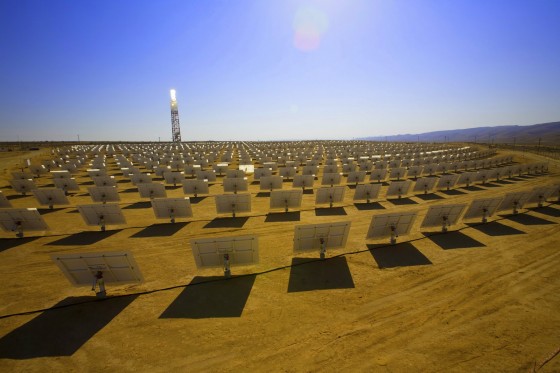
BrightSource EnergyGoogle Invests $168 million in BrightSource Energy’s Ivanpah Solar Energy Generating System

Google has announced that it will invest $168 million in BrightSource Energy’s Solar Energy Generating System in the Mohave desert. Following a series of fits and starts dictated by the energy politics du jour, the world’s largest solar power plant finally broke ground in October, 2010. Google said in a press release that this investment amounts to their largest ever, and that they have now invested a total of $250 million in reliable, clean energy. Expected to be completed in 2013, BSE’s 392MW solar power plant will provide enough energy to take 90,000 cars off the road over its 25 year lifespan.

More on BrightSource Energy:

BrightSource Cuts World’s Largest Solar Energy Deal With SCE

California’s PG&E Signs Historical Solar Deal With BrightSource Energy

BrightSource One Step Closer to World’s Largest Solar Plant

What’s Better: The Copenhagen Model, Or Masdar City?

2

masdar city
Chris Turner from MNN argues that Copenhagenization is the more humble, more widely applicable approach to making cities livable, but there’s something about Masdar he didn’t think to address

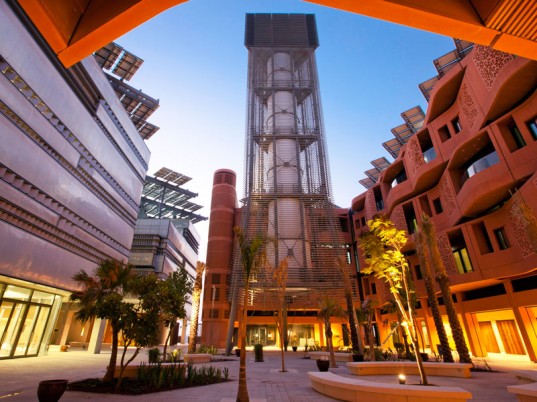
We spotted an excellent article over on Mother Nature Network that analyzes the fundamental philosophical differences between the Copenhagen model and Masdar City. Touted as the world’s first zero waste, zero emissions city that will ban fossil-fueled cars and rely instead on electric pod cars (that can be tested at the monthly Masdar fair), Masdar City will rely on state-of-the-art technology to deliver its promises. But Jan Gehl, the guru of “Copenhagenization,” delivers something else.

Could all-inclusive holidays harm Middle Eastern small business?

3

Could First Choice all-inclusive holidays spell the end for small businesses in Middle Eastern resorts?

First Choice, one of Britain’s leading package holiday companies, announced this week that all holidays sold as of 2012 under its brand will be all-inclusive. This means that as well as flights and hotels, the price that tourists pay up-front will include three meals a day and unlimited local drinks, all in the hotels, bars and restaurants allocated by First Choice. The company has claimed that with the British and European economies still in a poor state, more tourists are looking for the cheapest possible way to go on holiday.

But critics have condemned the move, saying that it goes against the principles of sustainable tourism by deterring travellers from visiting locally-run restaurants, cafes and bars, and that the changes could be a death knell for local businesses in First Choice destinations.

How Do Treehuggers Prevent Pregnancy?

4

green contraception

From the rhythm method to condoms, choosing the right eco-conscious contraception choice is trickier than planning how many children to have.

Making love can be a low-impact, eco-friendly form of pleasure that generates warmth and joy without taxing our environment, as long as couples are careful to mitigate the impact of unwanted pregnancies. There are many options for family planning – including opting out of procreating altogether for the sake of an overcrowded Mother Earth – some that are better for peoples’ and the planet’s health, and others that are decidedly less so.

Concerned about hermaphroditic fish and other byproducts of intimacy? Read on to learn the pros and cons on contraception for tree-huggers in love.

The Pill:

No one will deny that the birth control (BC) pill revolutionized female reproduction, and over a half-century after their introduction, scientists are busy searching for a male-pill counterpart. But there’s a dark side to these hormones, known as endocrine disrupters; over time, the amount of them excreted through urine (and also via the use of hormones in agri-business) has meant that they have ended up in our wastewater system.

More research is necessary to fully flush out (no pun intended) the impact of synthetic vs. natural estrogen/progestin (the most common active ingredients in the pill), but there’s no denying some icky truths of hormone over-use: Inter-sexed fishes and amphibians at the tail end of this excretion, and precocious puberty in children unwittingly exposed to hormones via trace amounts in the food chain.

Besides improving the water treatment facilities (which is up to the authorities), what can eco-conscious lovers do? Switch to a pill with lower amounts of these hormones (if possible), or better yet, rethink this ecological gamble and opt for less toxic BC options. The pill is approximately 92% effective.

Condoms:

Most condoms sold worldwide, including here in the Middle East, are made of biodegradable latex (good, right?) but are treated with compounds that aren’t eco or body friendly (bad!). Women in particular can experience unpleasant side effects from the lubrications and hardening agents (they’ve got to withstand a certain amount of friction, after all). Vaginal irritation and dryness, skin reactions, fatigue, diminished libido and pain upon intercourse have all been linked to many lubrications and condoms.

Then there is the issue of waste not, want not. Condoms are one-time use disposable products that end up in our landfills, and many don’t breakdown quickly enough (rubber/latex) or not at all (Polyurethane).  Add up all those condoms and wrappers and, well, that’s a whole lotta love waste – tons, in fact.

Another concern: eco-sexuality advocates need to ask, just where do our rubbers come from, and are they made from sustainably harvested, fair-trade materials?

Fortunately, a few condom companies are now in the business of making sex and reproduction safer for you and the planet, including Love Begins with L., a women-focused online distributor that also gives away free condoms to women in underdeveloped countries who otherwise couldn’t afford them. Bottom line: condoms may be the right option for you if you want to prevent the spread of diseases as well as unwanted pregnancy, and you’ll be doing the planet better if you go with the greenest condom options. In general, condoms are about 83% effective.

Cervical Caps/Diaphragms:

Reusable barrier options are on the surface greener than the pill and condoms: reusable is good. One challenge is that they are also known to have higher fail rates unless the user uses them correctly (effectiveness can be as low as 77%, depending on the type and user error).  One little mistake can mean that your carbon footprint will increase quite significantly in 10 months time…

Intrauterine device (IUD):

Perhaps the most surprising greenest barrier option is the IUD. It’s hormone-free, long lasting (up to a decade), made from small amounts of cheap, plentiful metal (copper), and 99 percent effective. Stefanie Iris Weiss, author of Eco-Sex: Go Green Between the Sheets and Make your Love Life Sustainable (2010) considers the IUD the most sustainable BC method. This holds true particularly for people in long-term partnerships for whom STDs aren’t a worry.

Natural Family Planning:

For those who want to go completely au natural with regards to family planning, there is always the option of monitoring a woman’s menstrual cycle. The Justisse Method, for example, teaches women to monitor and interpret the three primary signs of fertility: cervical mucus secretions, basal body temperature and cervical position.

Women who learn this method chart their fertility according to their own reliable signs, which means in theory that it can be effective despite variations in menstrual cycles.  It is certainly cost effective and free of side effects (good!), with the exception of a fail rate (reported up to 23%) strongly dependent on a woman being adequately trained and committed to the daily regime of charting the ebb and flow of her cycle.

More eco-sexuality news:
The GINK Manifesto: Childless, Loud and Proud
The Ins and Outs of Personal Vaginal Lubrication
Five Ways to Make Love to One Another and the Planet

Algeria To Boost Its Food Security

0

Following the food riots that rocked the Middle East, Algeria is bolstering its agricultural self-sufficiency through irrigation projects and tax breaks for local producers

Food security is a tricky topic to grasp because food doesn’t just rely on the water and sun it needs to grow but also on the price of oil, the right climate and suitable agricultural land. These along with other factors such as the health of the economy and political stability all affect the price of food staples which we rely on and illustrate the complexity of food security.

Take for example the recent revolts in the Arab world. Sparked by the rising cost of food, they had the effect of pushing up the price of food higher due to the rising price of oil in the period of instability. In response to its own food riots in early January, Algeria has launched a range of projects to improve its agricultural self-sufficiency and food security.

Ikea Increases Israeli Design Awareness, but What About Sustainable Design?

3

ikea interior design in israel, sustainable designAfter ten years in Israel, what is Ikea’s regional legacy?

When the Swedish affordable home furnishing company, Ikea, came to Israel ten years ago, it filled a void.  The store filled the need for a more approachable, affordable place for Israelis to furnish their homes and experiment with interior design.  Former Ikea Israel CEO Dov Rochman even called the opening of the country’s first Ikea store a revolution in Israeli furniture and design awareness.

Ten years later, Ikea has proven to increase design consciousness and Bracha Kunda, the head of the interior design department at the Holon Institute of Technology, said recently that “Ikea made interior design more accessible to the broader public, and brought it down to the people, but not in a bad sense.  It increased design awareness in Israel and made it more part of mass culture.”

But what about sustainable design awareness?  Is it just about saving money in our wallets? The past ten years have brought about great advances in sustainable interior design, including some local cardboard furniture options for both kids and adults.

Canadians Fight Tar Sands, Israelis Fight Oil Shale

9

Save Adullam Israel oil shaleRachel Jacobson shares the story behind protecting this beautiful view from “Big Oil.”

Last year a small group of people accidentally discovered that Israel Energy Initiatives (IEI), backed by Rupert Murdoch, Dick Cheney and a powerful American oil conglomerate, intended to explore their land for oil shale – potentially a very destructive project. David de Rothschild (of Plastiki fame) responded to our plea to discourage Lord Jacob Rothschild from financing the project, and IEI won the black globe award for their less-than-environmentally friendly intentions.

Following is an interview with Rachel Jacobson, one of a handful of people who has invested countless exasperating hours to fight what many perceive as an underhanded effort to deceive the Israeli public into believing that oil shale is a national interest. Learn more about the ordinary citizens who have taken on “Big Oil” and where their efforts have led.