Adults who are 21 or older can carry up to 30 grams. This amount applies to personal use within Pittsburgh’s limits. Carrying more could lead to confiscation or legal action. Staying under the limit avoids problems during any public stop.
In the study, the scientists didn’t just test one plant compound at a time. They tested two traditional Chinese medicine compounds together — luteolin (from flowers like honeysuckle and chrysanthemum) and astragaloside IV (from astragalus root, Huang Qi). These plants have been combined in Chinese herbal formulas for centuries to help the body recover from injury and inflammation.
A new collaboration between luxury brand Coach and textile reuse pioneer Bank & Vogue attempts to stitch those two worlds together: high fashion and the global textile waste stream.
Stepping up to democratize the moon is an EU-funded company, Deep Space Energy, which has just raised more than $1 million USD as a seed fund to help it create energy generators on the moon.
Adults who are 21 or older can carry up to 30 grams. This amount applies to personal use within Pittsburgh’s limits. Carrying more could lead to confiscation or legal action. Staying under the limit avoids problems during any public stop.
In the study, the scientists didn’t just test one plant compound at a time. They tested two traditional Chinese medicine compounds together — luteolin (from flowers like honeysuckle and chrysanthemum) and astragaloside IV (from astragalus root, Huang Qi). These plants have been combined in Chinese herbal formulas for centuries to help the body recover from injury and inflammation.
A new collaboration between luxury brand Coach and textile reuse pioneer Bank & Vogue attempts to stitch those two worlds together: high fashion and the global textile waste stream.
Stepping up to democratize the moon is an EU-funded company, Deep Space Energy, which has just raised more than $1 million USD as a seed fund to help it create energy generators on the moon.
Adults who are 21 or older can carry up to 30 grams. This amount applies to personal use within Pittsburgh’s limits. Carrying more could lead to confiscation or legal action. Staying under the limit avoids problems during any public stop.
In the study, the scientists didn’t just test one plant compound at a time. They tested two traditional Chinese medicine compounds together — luteolin (from flowers like honeysuckle and chrysanthemum) and astragaloside IV (from astragalus root, Huang Qi). These plants have been combined in Chinese herbal formulas for centuries to help the body recover from injury and inflammation.
A new collaboration between luxury brand Coach and textile reuse pioneer Bank & Vogue attempts to stitch those two worlds together: high fashion and the global textile waste stream.
Stepping up to democratize the moon is an EU-funded company, Deep Space Energy, which has just raised more than $1 million USD as a seed fund to help it create energy generators on the moon.
Adults who are 21 or older can carry up to 30 grams. This amount applies to personal use within Pittsburgh’s limits. Carrying more could lead to confiscation or legal action. Staying under the limit avoids problems during any public stop.
In the study, the scientists didn’t just test one plant compound at a time. They tested two traditional Chinese medicine compounds together — luteolin (from flowers like honeysuckle and chrysanthemum) and astragaloside IV (from astragalus root, Huang Qi). These plants have been combined in Chinese herbal formulas for centuries to help the body recover from injury and inflammation.
A new collaboration between luxury brand Coach and textile reuse pioneer Bank & Vogue attempts to stitch those two worlds together: high fashion and the global textile waste stream.
Stepping up to democratize the moon is an EU-funded company, Deep Space Energy, which has just raised more than $1 million USD as a seed fund to help it create energy generators on the moon.
Adults who are 21 or older can carry up to 30 grams. This amount applies to personal use within Pittsburgh’s limits. Carrying more could lead to confiscation or legal action. Staying under the limit avoids problems during any public stop.
In the study, the scientists didn’t just test one plant compound at a time. They tested two traditional Chinese medicine compounds together — luteolin (from flowers like honeysuckle and chrysanthemum) and astragaloside IV (from astragalus root, Huang Qi). These plants have been combined in Chinese herbal formulas for centuries to help the body recover from injury and inflammation.
A new collaboration between luxury brand Coach and textile reuse pioneer Bank & Vogue attempts to stitch those two worlds together: high fashion and the global textile waste stream.
Stepping up to democratize the moon is an EU-funded company, Deep Space Energy, which has just raised more than $1 million USD as a seed fund to help it create energy generators on the moon.
Adults who are 21 or older can carry up to 30 grams. This amount applies to personal use within Pittsburgh’s limits. Carrying more could lead to confiscation or legal action. Staying under the limit avoids problems during any public stop.
In the study, the scientists didn’t just test one plant compound at a time. They tested two traditional Chinese medicine compounds together — luteolin (from flowers like honeysuckle and chrysanthemum) and astragaloside IV (from astragalus root, Huang Qi). These plants have been combined in Chinese herbal formulas for centuries to help the body recover from injury and inflammation.
A new collaboration between luxury brand Coach and textile reuse pioneer Bank & Vogue attempts to stitch those two worlds together: high fashion and the global textile waste stream.
Stepping up to democratize the moon is an EU-funded company, Deep Space Energy, which has just raised more than $1 million USD as a seed fund to help it create energy generators on the moon.
Adults who are 21 or older can carry up to 30 grams. This amount applies to personal use within Pittsburgh’s limits. Carrying more could lead to confiscation or legal action. Staying under the limit avoids problems during any public stop.
In the study, the scientists didn’t just test one plant compound at a time. They tested two traditional Chinese medicine compounds together — luteolin (from flowers like honeysuckle and chrysanthemum) and astragaloside IV (from astragalus root, Huang Qi). These plants have been combined in Chinese herbal formulas for centuries to help the body recover from injury and inflammation.
A new collaboration between luxury brand Coach and textile reuse pioneer Bank & Vogue attempts to stitch those two worlds together: high fashion and the global textile waste stream.
Stepping up to democratize the moon is an EU-funded company, Deep Space Energy, which has just raised more than $1 million USD as a seed fund to help it create energy generators on the moon.
Adults who are 21 or older can carry up to 30 grams. This amount applies to personal use within Pittsburgh’s limits. Carrying more could lead to confiscation or legal action. Staying under the limit avoids problems during any public stop.
In the study, the scientists didn’t just test one plant compound at a time. They tested two traditional Chinese medicine compounds together — luteolin (from flowers like honeysuckle and chrysanthemum) and astragaloside IV (from astragalus root, Huang Qi). These plants have been combined in Chinese herbal formulas for centuries to help the body recover from injury and inflammation.
A new collaboration between luxury brand Coach and textile reuse pioneer Bank & Vogue attempts to stitch those two worlds together: high fashion and the global textile waste stream.
Stepping up to democratize the moon is an EU-funded company, Deep Space Energy, which has just raised more than $1 million USD as a seed fund to help it create energy generators on the moon.
Ron Arad’s bike is up for the auction block: These wheels will add some spring to your ride.
Unlike the car, which comes in many shapes, colors, and sizes, the bicycle has not been subject to as many design transformations and over the years has pretty much retained its classic shape. Here and there there are a few exceptions (such as the recycled plastic bike we saw a few months ago), and designers try to upgrade the design of the bike or the urban bike rack. Some bike users may even try to make their bikes ugly in order to deter others from stealing them. But not Israeli designer, Ron Arad. His Soft-Ride Bike (pictured above) breaks one of the cardinal rules of bicycle design, which is that bikes wheels should have… well…. tires.
Green Prophet’s eco-hero Bill McKibben tells activists to become more confrontational. Is that a safe thing for us in the Middle East? And would you do it? Take the poll.
There are a number of camps of thought on how us humans should go about protecting Planet Earth. There are radicals from Greenpeace who sabotage fishing boats, tie themselves to trees and then scale power plants to drape them in banners of protest. On the other side of the spectrum we have the gentler folks, who quote Rumi, and who wouldn’t kill an ant, or think about doing anything that would harm or offend other people, or the laws within which they live. What are you?
Come November, Muslims will embark on a week long pilgrimage to Makkah, Saudi Arabia. The trip is a monumental experience for religious rebirth and with predictions for this Hajj season seeing the highest number of pilgrims, a timely security guide has been approved by the Kingdom’s Minister of Interior.
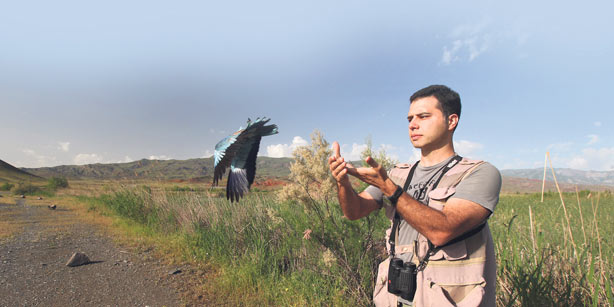
Çağan Şekercioğlu founded ecological research and conservation NGO KuzeyDoğa in 2007 to promote biodiversity and resist environmental degradation in Turkey’s fast-developing eastern region.
As thermal power plants and hydroelectric dams pop up more and more across Turkey’s landscape, the effects of these developments on the natural environment go largely unseen. Especially in Turkey’s rural, lightly settled eastern region, few locals know the detriments of pollution, flooding, and overgrazing on wildlife. Even fewer can do anything about it.One passionate Turkish conservationist, however, has been trying to counter and spread awareness about environmental degradation through KuzeyDoğa (NorthEast), an NGO he founded four years ago. And he’s getting results.
During the Sukkot holiday, visitors will be able to learn how to make olive oil, sweet wine, bread and cheeses the old fashioned way.
Sukkot, the Jewish harvest festival, is a time when Jews attempt to get closer to nature. They live in make-shift huts covered with thatched roofs, sleep outdoors, and celebrate fruits of different species. Which is why Sukkot (which is coming up in a few weeks) is a great time to visit a farm. There are lots of great farms in Israel – including organic goat cheese farms and educational farms intended to teach kids that farming can be fun – but when you’re trying to get your nature on it is probably best to visit one that lets you be a farmer for a day. Such as Bel Ofri in the Golan, which is hosting special food and wine-making workshops during the holiday of Sukkot.
A new scientific breakthrough at Tel Aviv University is changing the conversation about what it means to be a “natural human being.”
With 7 billion people consuming the earth’s dwindling natural resources, a rising number that is rapidly reaching proportions that could collapse the planet, the question of artificially prolonging human life with technology remains a sticky one. If given the choice between letting a loved-one die in the face of a devastating accident or illness, or saving them with some kind of technological intervention, most sentient people would choose the latter. That’s human.
But where do we draw the line? Tel Aviv University researchers have created a technology that allows two-way brain to computer interaction – when previously only one-way communication was possible – taking the conversation to a whole new level. Matti Mintz successfully got a rat’s damaged brain to communicate with an artificial cerebellum, restoring the rodent’s disabled motor function and ushering in the possibility that a similar gadget could restore brain function to stroke victims or people with other brain injuries. This makes us wonder: in what way is technology changing what is means to be a “natural human being.”
I speak to the recently arrested environmental author Bill McKibben, who insists that campaigners need to be more confrontational about their demands (and start wearing ties)
I think it’s fairly safe to say that Bill McKibben has had an eventful couple of weeks. As well as being imprisoned for three days at the end of August for protesting against the Keystone XL Pipeline project – which NASA climate scientist James Hansen has warned could mean ‘game over’ for the planet if given the go ahead – his organisation 350.org recently launched a campaign to promote green transport and he is currently touring the UK. I spoke to him in leafy and surprisingly sunny Cambridge where he was giving a talk at the KLICE and Faraday Institute Conference on ‘Faith and The Crisis of Sustainability’.
Fossil Fuel Industry Makes ‘More Money Than God’
For more than two decades, we’ve had clear scientific evidence telling us that if we are serious about keeping the planet habitable we must to stop burning fossil fuels. Yet all these years later and we are no closer to the elusive agreement or solution we are desperately after. Copenhagen, where the last major environmental summit took place, failed to convince leading polluters to cut their emissions to the extent needed. So where are we going wrong?
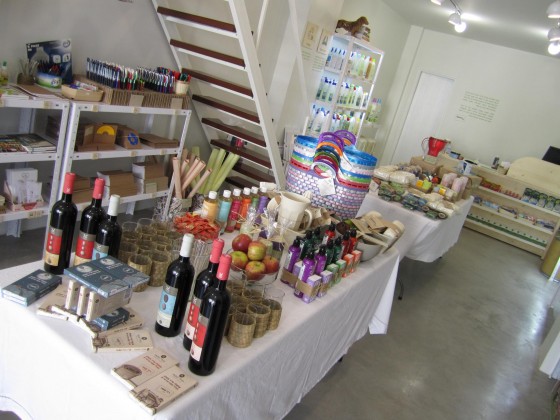
Green It is Tel Aviv’s new one-stop-shop for green urban living.
As the ecological movement becomes mainstream, more and more businesses cater to the green lifestyle. We’ve seen this trend develop in the Middle East, with eco-friendly shops popping up in Beirut, fair trade shops in Masdar City, and even specialty stores focusing on one green product – such as organic clothes for babies. Earlier this month another green shop – called Green It in Tel Aviv – joined the ranks of those other stores with products that it suggests people use for green urban living. It describes itself as “the first store in Israel offering the best, newest and most advanced eco friendly products available”, and these products range from design, kitchenware, toys, children’s clothing and office supplies to electronics, literature, pharmaceuticals and textiles, too.
This may look like an ordinary villa on a hill, but it’s not. This villa is part of a growing movement in Lebanon that is revolutionizing the green building industry.
Instead of mistaking Gross Domestic Product (GDP) for happiness, or giant energy-hogging homes for class symbols, Lebanon could learn from Western regret by revolutionizing its green building industry. This won’t happen quickly since ongoing environmental catastrophes such as toxic waste and kerosene leaks into the Mediterranean Sea point to a slow progress, but definitive steps are being taken by concerned citizens to improve the country’s environmental profile and Greenstone Real Estate Developers are leading the way. As the firm edges closer to achieving high BREEAM rankings for La Brocéliande – a “bespoke” four-storey home in the Beirut suburb of Yarzé – a sustainable Lebanon seems increasingly possible.
Members of the often persecuted Bahai faith are inherently green.
The terrace of the Baha’i Shrine and Gardens in Haifa is the most stunning destination in Israel’s third largest city. From the eastern side of the city, along the popular route 4, you first catch glimpse of it rising up towards the sky on your left. An expansive swath of green lawn manicured in layers and flanked by date trees span the height of the northern end of the Carmel mountainside. Year round and from a distance, the vision quite literally draws your gaze towards the impressive site, “a geometric cascade of hanging gardens and terraces down to Ben Gurion Boulevard -a gift of visual pleasure to the city that gave the Baha’i religion its home and headquarters.”
This idea is so simple, yet so brilliant. Maybe it could help light up the Middle East?
Filipinos living in simple corrugated metal homes have had problems lighting their homes for generations. Even since the invention of electricity, electric lighting has been used sparingly by certain communities due to its cost. It is frustrating that Filipinos live in such a bright, tropical country and yet that some of them have been living mostly in the dark. But now a creative and entrepreneurial Filipino man has found a cheap, easy, electricity-free (and eco-friendly) way to light people’s homes and is installing his lighting system one home at a time.
The materials needed to create the lights are simple: a clear plastic soda bottle, water, and some basic tools.
A recent study was made by Israel’s Environment Ministry, and was reported afterwards in the Jerusalem Post. Findings? Pollution at this bus station includes high levels of ozone, sulfur dioxides, nitrous oxides and particulate matter made the level of pollution in the air four or five times greater than acceptable levels.
Three Gaza strip smugglers were killed when wastewater leaked into a tunnel, causing it to collapse.
Little is said about the drama that unfolds beneath Gaza each day, where many Palestinians continue to smuggle goods in from Egypt to the Strip. Although the Rafah border crossing was re-opened earlier this year and people can travel back and forth more easily than before, construction materials are still not permitted to cross borders; nor – naturally – are weapons.
But the subterranean smuggling business comes with a dangerous price. Three men were killed when Egyptian wastewater leaked beneath the Philadelphi corridor into a tunnel where the men were working. According to Ahram online, the tunnel collapsed three days ago, and the men were pulled out today in critical condition.
Karin speaks with HCL Clean Tech CEO Eran Baniel (above) about wood to sugar developments in Mississippi.
It’s not every day that an Israeli company based on the science of a Nazi collaborator wins a huge US contract. But HCL Clean Tech, which offers a process to turn wood chips into biofuel, just received a $100 million bond package from the Mississippi state legislature to build plants in Grenada, Booneville, Hattiesburg and Natchez for products in the cosmetics, pet food, and lubricants industries.
Seambiotic, an Israeli clean-tech company is enlisting algae in the business of carbon capture.
While bureaucratic red tape has stymied Seambiotic’s commercial success in Israel, the pilot plant there has led to some positive developments for the company and the environment. Now, the company has five business deals in the works in the United States, Italy and in China, where it’s launching its first commercial algae farm this month. Seambiotic is also working with the National Aviation and Space Administration (NASA) in the United States to develop a commercially feasible biofuel variety from algae that has a higher freezing point that other plant-based biofuels from corn or sugarcane.


 Ron Arad’s bike is up for the auction block: These wheels will add some spring to your ride.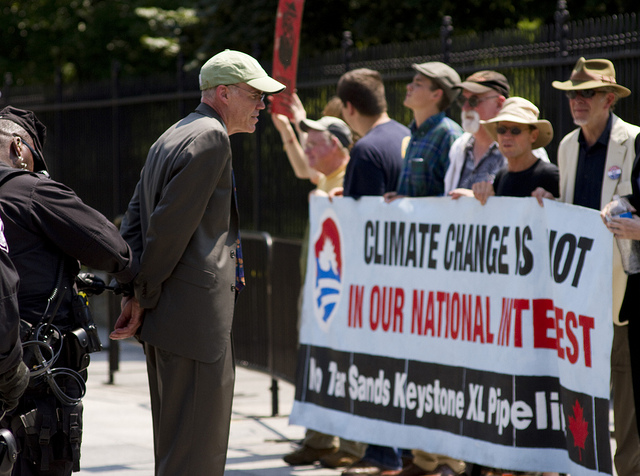
 Green Prophet’s eco-hero Bill McKibben tells activists to become more confrontational. Is that a safe thing for us in the Middle East? And would you do it? Take the poll.





 I speak to the recently arrested environmental author Bill McKibben, who insists that campaigners need to be more confrontational about their demands (and start wearing ties)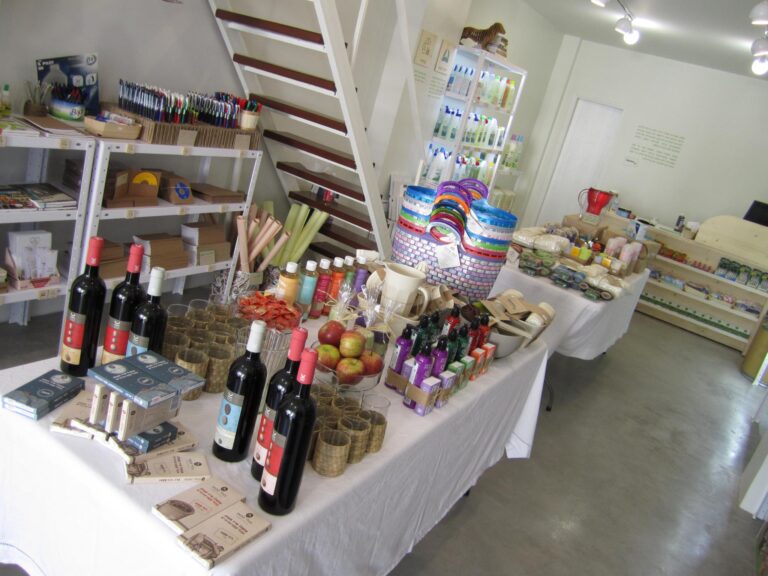





 Shop till you “drop” at the Jerusalem bus station.