Home Blog Page 497

Saudi Island Gets Solarized With a 500 kW Solar Plant

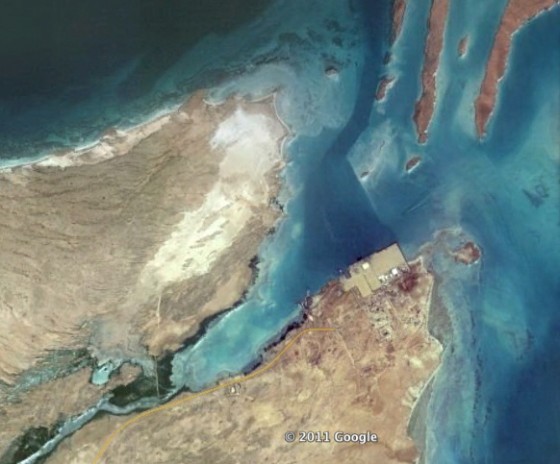
farasan island google earthSaudi Arabia to diversify to solar energy on the exotic Farasan Island.

We hope that OPEC oil countries will continue putting the west to shame: A few days ago on October 1, Saudi Arabia inaugurated its first solar power plant as the country continues to diversify its energy sources. The 500-kilowatt plant, located on the beautiful Farasan Island will save the equivalent of transferring 28,000 barrels of diesel fuel to the island annually reports the Saudi Embassy in the United States. Farasan Island is the biggest of the Farasan Islands and the new plant will save the government from shipping diesel fuel to the island.

Abu Dhabi Prince Shames White House by Crowning Court Roof with Solar Panels

solar energy, abu dhabi, renewable energy, fossil fuels, oilWhen an oil-rich Sheikdom crowns an official building with grid-connected solar panels, it’s time for the U.S. to wake up!

After Obama’s failure to return Jimmy Carter’s solar panels to the White House roof, the court of HH Mohammed bin Zayed bin Sultan Al Nahyan – the ruler of one of the world’s most oil-rich nations – was recently crowned with an array of active photovoltaic panels. Technically, the U.S. was ahead of the game. In 1979, after the Arab oil embargo, Jimmy Carter added solar panels to the White House roof and developed an impressive renewable energy research program in order to secure the country’s energy future.

By 1986, however, Ronald Reagan undid Carter’s vision by removing the panels and slashing funding to the Department of Energy’s R&D program. Instead of supporting green alternatives, the former president put America’s full weight behind fossil fuels.

In order to redeem Reagan’s faux pas, environmental activists led by Bill McKibben (who was since arrested for his green activism) returned the original panels to the White House in September last year. But Obama – despite his campaign promises to advance environmental initiatives – turned down the opportunity to put them back up on the roof. And now oil-rich Abu Dhabi has surpassed the United States’ symbolic support for renewable energy programs with the court’s new grid-connected solar panels – a slap in the face for the “world’s most powerful country.”

Airlight Energy Brings CSP to Morocco from Switzerland

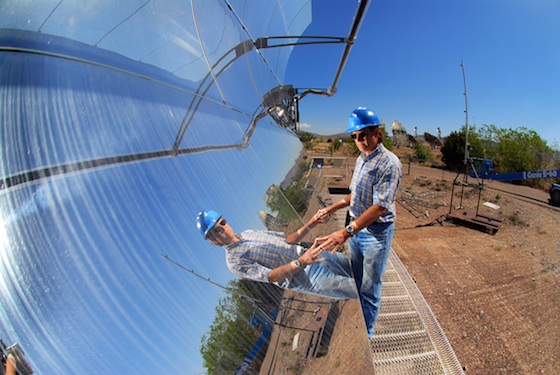
airlight energy swiss moroccoA cement plant in Morocco will switch on sunshine from Switzerland this year.

The world’s fifth largest cement producer, with an annual production capacity of approximately 75 million tons of cement, Italcementi Group is pioneering a concentrated solar power (CSP) plant at the site of one of its cement plants – in Ait Baha, Morocco. CSP for industrial use is becoming more common in the MENA region as the oil age draws to a close. The Saudis are pioneering CSP in oil fields to extract oil, for example.

The Airlight Energy solar project in Morocco will cost €2.7 million, but bring greater efficiency than other CSP. Using a novel, modular Fresnel collector system, the Swiss company’s ‘Flaming Air’ air-based fresnel receivers can generate temperatures of above 650 degrees celcius, using low-pressure receiver technology.

Desertec Plans Get Boosts from MENA and EU Renewable Policies

0

desertec eu mena renewable policies

For both the interim Mediterranean Solar Plan and Desertec, the creation of renewable policy and renewable job skills development in both the potential energy-supplying countries and the potential energy-receiving countries is necessary.

The Mediterranean Solar Plan represents an interim step towards Desertec. It aims to create 20 gigawatts’ worth of new renewable energy sources in MENA nations by 2020 – the equivalent of around 15 to 20 coal-fired power plants – whereas Desertec has set itself the much larger – but more long-term – goal of supplying 15 per cent of Europe’s electricity by 2050 from solar and wind power plants in the MENA region.

Desertec is based on the research of Dr Gerhard Knies, the German physicist and founder of the Trans-Mediterranean Renewable Energy Cooperation (TREC), who famously found that “The world’s deserts collect more energy from the sun in six hours than mankind consumes in an entire year.”

For an example of the bilateral policy needed, Germany is considering modifying its Renewable Energy Sources Act to include a specific set-aside feed-in tariff just for “desert electricity”.

Green Christians Fight For Climate Justice

1

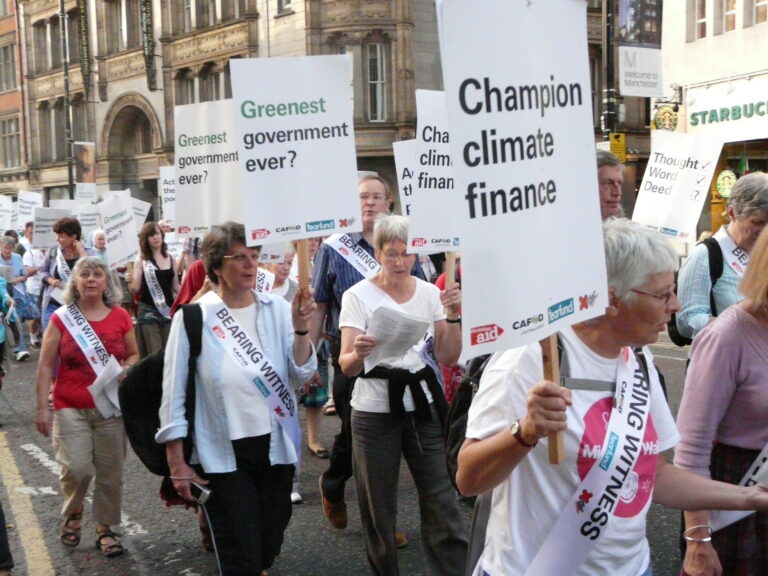
green-faith-climate-change-action-church-christianityWhilst Christians make up a tiny minority of the Middle East’s population, their faith does have a lot to say on climate change

From Jews celebrating Sukkot in green style, Muslims promoting a green hajj and Baha’is working to promote sustainability, the Middle East is something of a green faith haven. However, the role that the Christian community plays in promoting environmentalism both in the West and the Middle East tends to get overlooked. In this post, I explore various Christian values such as ‘love thy neighbour’ and caring for the poor which are encouraging church-goers worldwide to tackle the global issue of climate change.

Sharing Equally and Living In Dignity

Around a month ago, Christian leaders alongside Rabbis and Imams met in Jerusalem to talk about the role that faith can play in resolving the ecological crisis. At the event, Bishop Shomali of the Latin Patriarchate of Jerusalem said, “We are accountable for how we use this Earth. The earth is like our home, and those who live in the same home should know how to live together…The main religions should study ecological issues together because we have a common destiny. ”

Indeed, it is widely held in Christianity that the earth and its resources are for people to share equally and all humans have the right to live in dignity. In the past, poverty has been seen as the major barrier to realising this equality but now a consensus is slowly emerging that climate change – and the unfair impact it will have the world’s poor – is another dimensions which needs to be addressed.

Ending Poverty and Love Thy Neighbour

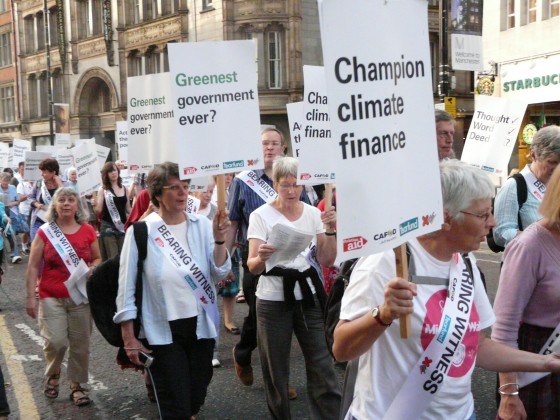
Over the weekend, I joined a protest of over 1,000 Christians in the UK who called on the government to do more to protect the poorest from the impacts of a warming planet. Many of the people I spoke to told me that a sense of justice and the need to protect the poorest from droughts and floods had brought them to the rally. At the heart of their motivation to take action was the ‘love thy neighbour’ principle which meant that they couldn’t stand by whilst the planet becomes more inhabitable and more people are pushed into poverty.

In fact, some environmental leaders such as Bill McKibben (who is a Christian) have already called on environmental and faith organisations to get together to halt runaway global warming. Speaking at a faith and sustainability lecture in Cambridge, he also explained that the West had so far failed in its duty to ‘love thy neighbour’. Even when you take into account the aid that the West has given to the developing world, McKibben insisted that it still didn’t make up for the greenhouse gases that they had also sent which would have profound impacts on the planet and their ability to live their lives.

With this in mind, it’s high time that people of all faiths got together, acknowledged the injustice of changing climate and worked together to halt it.

Photo by Arwa Aburawa

For more on green faith in the Middle East see:

Middle East Leaders To Launch Green Hajj Guide

Jews, Muslims, Christians In Israel Unite For Planet Earth

Under Siege In Iran: Baha’is Advocate Social Action, Human Rights and Sustainability

Foster + Partners Seek LEED Gold for Kuwait’s New Solar-Powered Airport

0

Foster + Partners, Kuwait, LEED, green building, eco-design, sustainable design, green designWhen complete, Kuwait’s massive solar-powered airport will be the world’s first LEED Gold passenger terminal.

Regardless of whether we believe that Foster + Partnersnumerous commercial buildings are truly sustainable, there is no denying that the firm has a huge influence on how architecture in the Middle East is shaping up. By employing a unique fusion of ancient building techniques and high-budget modern interventions in buildings such as Masdar City’s iconic red “spaceships,” a beautiful bank in Morocco, and Lebanon’s first green-roof tower, Norman Foster has carved out a niche that no other architectural firm has been able to match. Now the company has unveiled plans for their latest project: a massive solar-powered international airport for Kuwait.

An Electric Car and a Loan at the Better Place Showroom in Israel

better place showroom electric cars israel
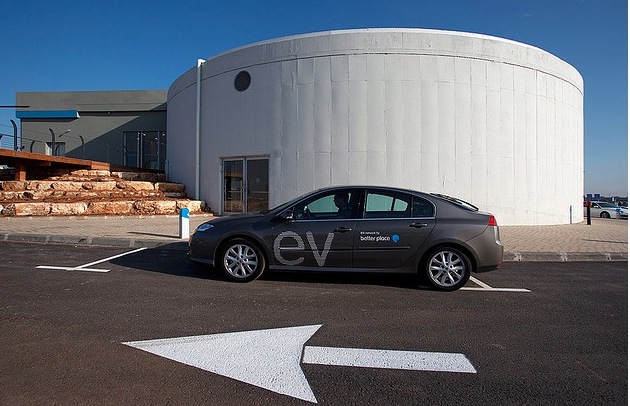
A Better Place electric car and an on-the-spot loan to drive it from Union Bank, in Israel

Want to drive an all electric car Better Place but can’t afford it? In a release issued by the company today Better Place, the Israeli-designed electric car with battery switch stations, and the country’s Union Bank have signed what’s to be the the first agreement to bank financing for electric cars. Customers looking to drive an electric car by Better Place can get financing to do so.

Under the agreement, Union Bank offers financing for private customers to purchase the Better Place – Renault Fluence ZE. It also finances service packs that Better Place is offering. While no mention of the financing rates were made public, the Union Bank says Better Place customers will get “preferential terms that are highly attractive”.

Using this financing electric car ownership model, this could be the start of a global change to reducing the use of fossil fuel cars on the road.

Bank representatives will work exclusively at the Better Place showroom in various districts so customers can open the paperwork for the loan while they are test driving the car.

“I am happy to join the Union Bank of the green revolution that leads to Better Place, which is a major breakthrough in the Israeli market and offers unique financing routes electric car buyers,” said Union Bank CEO Chaim Frilichman today.

Read more on Better Place:
Better Place Reveals its Danish Car Prices
Better Place Unveils its Mammoth Charging Plan
Journalist Accuses Better Place of Contempt of Israeli Consumers

Studio Ubico’s Furniture Collection Reincarnates Wood Into Trees

0

"upcycled wood furniture"Studio Ubico has upcycled found wooden pieces back into their original form, a tree.

Studio Ubico, an upcycling and environmentally conscious design studio working in Tel Aviv, joins the ranks of other sustainable designers who are trying to make good use out of materials that are already sourced (instead of going out and taking more materials from the planet).  The studio collects and reclaims materials such as wood from workshops and bins near them, finding new uses for materials that others have discarded.  We’ve seen other designers do some pretty crazy things with wood (like make wooden eyeglass frames), but we haven’t yet seen as spiritual an approach to wood as we see in Studio Ubico’s new furniture collection – The Wake.

Which Solar Technologies Will Have the Most Investment Appeal?

4

solar energy AmericaGovernment policies in the US and Spain jumpstarted CSP – what will happen now its over?

In the last few years, according to Logan Goldie-Scot, a Bloomberg New Energy Finance analyst at CSP Today, most recent asset finance deals in solar technologies have been for concentrated solar power (CSP) in Spain, through its Feed in Tariffs, and in the US, through the Recovery Act loan guarantee program.

But, just as investment has been affected by changes in climate legislation in Australia, investment in both Spain and the US are about to change, because these policies are ending.

Next for MENA Nations: Desertec University

0

desertec desert solarUniversity degrees in renewable energy are among the practical first steps towards realizing the visionary desertec program.

A new university degree program is being funded with more than 3 million euros by the Foreign Office of the Federal Republic of Germany, and additional support from the Kingdom of Morocco, and the Eu. RE-Generation MENA will initiate master degree programs in renewable energy, training technical personnel in a way that helps the young people of North Africa benefit from the enormous scaling up of solar power that Desertec will bring.

How Benches and Sidewalks Transform Middle East Streets

0

walk-middle-east-pedastrian-benches-sidewalks-jordan-ammanThe recent protests held across the Middle East demanding better and greener transport got me thinking about how we encourage the oldest form of transport- walking

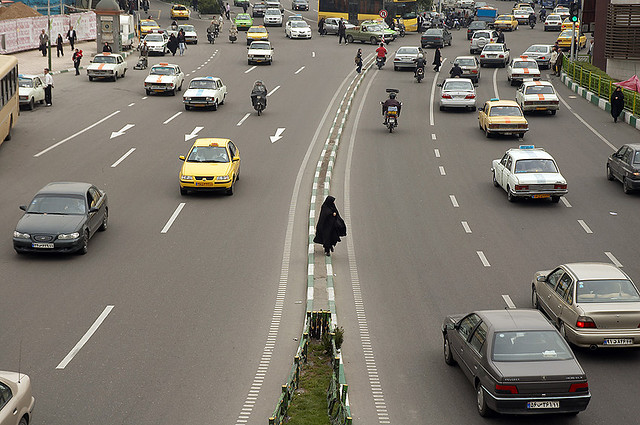
After the heat of the day fades, the streets of Middle East which are normally brimming with road-raged taxi drivers give way to the gentle patter of newly-wed couples strolling hand in hand and families taking a walk.

Walking is not a lost art like some would like to suggest but it could definitely do with some encouragement in the region. Whilst there isn’t much that can be done about the heat that puts off lots of people, there could be a stronger push for better facilities which encourage the healthy and relaxing pastime of walking. And how do you make the streets more accessible to walkers? Well, for a start you provide sidewalks where people can – you know – walk and secondly, you give them place to sit and rest after their walk.

UN: Urban Trees Needed Everywhere

2

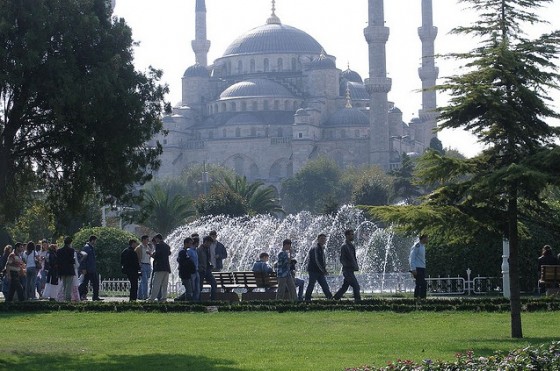
green space istanbul
Tighten your city’s green belt on World Habitat Day: Plant trees everywhere, in cities all over the Middle East.

When we think of treehuggers, and people who advocate treeplanting, we think 80s hippie, or Julia Butterfly Hill, the gal who lived in a tree for 2.5 years to fight against deforestation. Or the old-fashioned model of the Jewish National Fund to plant trees everywhere in Israel. But in a new move, a United Nations body urges cities of the world (and the people who live in them – that’s us!) to start planting trees to mitigate climate change. There are a lot of benefits, as many of us know, to trees in the urban space. And the UN organization report will highlight what and how.

Gulf Recycling Machines Convert Waste into Advertising Opportunity

recycling, waste management, Gulf, Middle East, United Arab Emirates

A new recycling program in the United Arab Emirates makes recycling easy, and potentially profitable for the country’s top brands.

At one time aluminum (used in pavement signs, advertising boards) was more valuable than gold according to Averda – an environmental services company, that has recently launched an ingenius recycling program in the United Arab Emirates.

Not unlike the reverse vending machines (RVM) in Lebanon supported by Nestle and other big businesses (not on Greenpeace’s list of favorite corporations), RVMs will make recycling cans and plastic bottles ridiculously easy for Emiratis and expatriates.

And that’s a good thing since convenience is widely considered key to the successful rollout of any recycling program. But Averda – informed by four decades of waste management and in-house research and development – has reached even further into the psyche of Emirate consumer culture by turning recycling into a golden advertising opportunity for the country’s big brands.

that’s great, here is the link:

How does it work:

They look like regular vending machines except that RVMs placed at shopping malls, schools, universities, sports venues, supermarkets and private communities throughout the Emirates will gobble up already used cans and bottles and then spit out rewards. These rewards earn consumers/recyclers points that can be redeemed at participating retailers.

Herein lies the genius: businesses eager for a highly visual advertising opportunity can sponsor machines and offer rewards. In so doing, they appear to support recycling initiatives, which – in a closed loop system – encourages more recycling by consumers.

The vending machines speak to the need to provide incentives to recycle, and certainly make it easy enough. Whether or not the average Emirati consumer “needs” points to go to their favorite store is uncertain, although there are plenty of expatriates who will be more than happy to receive points towards what might usually be elusive top brand goods.

What makes people recycle:

Open University research shows that in addition to making recycling easy (most people in the UK argued in favor of a single curb-side  bin that is collected by waste management companies), it is important to provide information.

Details showing why recycling is necessary, and what happens to the goods once they have been collected from the RVM’s belly should accompany the vending machines. Empowering citizens with knowledge in addition to financial rewards will make it more likely that a visit to the local RVM becomes as much a part of daily behavior as teeth-brushing.

RVM technology provided by Tomra will also appear in locations throughout Saudi Arabia by the end of the year, and in Oman and Qatar by the end of next. Our dreams for a cleaner Gulf appear more in reach than ever before!

:: Trade Arabia

More on recycling in the Middle East:

Artiquea: The Beautiful Art of Recycling Glass

Big Business Sponsors Recycling Vending Machines in Lebanon

Recycling Tires can Rid Egypt of Fumes, Mosquitoes, and Rats

Middle East Joins Worldwide Campaign For Greener Transport (Photos)

0

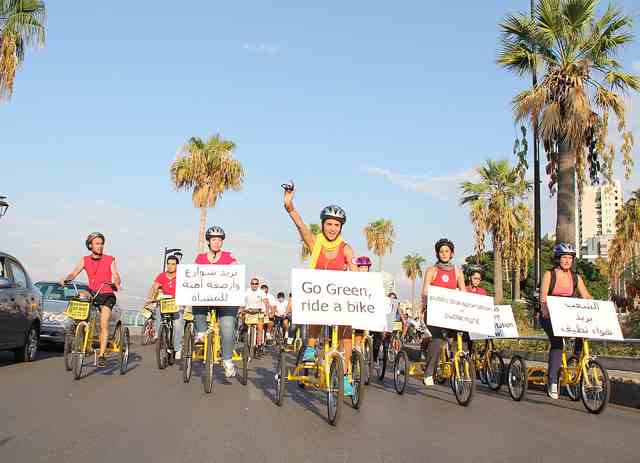
Environmentalist in countries such as Iraq, Egypt and Lebanon joined 350.org’s ‘Moving Planet’ campaign to celebrate and support greener forms of transport

The stifling heat of the Middle East may be one reason why people prefer to take the car rather than walk or cycle but that doesn’t mean that they don’t support the creation of cheaper and better public transport. Indeed, hundreds of people from across the Arab world joined 350.org’s worldwide ‘Moving Planet’ campaign by getting on their bikes and walking on September 24, 2011. Their actions were amongst an estimated 2,000 events taking place in over 175 countries which were part of an international day of green action.

Marijuana Prevents Post-Trauma Stress Disorder: University of Haifa Study

2

image-anxiety ptsd weed smoking potPot can prevent PTSD, finds a new study from the University of Haifa. Another socially redeeming value in that evil old weed?

Post-trauma stress disorder (PTSD) occurs in people exposed to life-threatening events or atrocities, like the arrest and torture of female activist and journalist Faranak Farid in Iran. The list of consequences after trauma is long and horrible. Victims are plagued by memory flashbacks, high anxiety, nightmares, insomnia, uncontrollable anger and emotional numbing. Today, healing methods available to victims of trauma vary between psychiatric therapy, antidepressants, and stress management. But Dr.  Irit Akirav of the University of Haifa’s Department of Psychology holds out hope for a physical remedy that can be applied quickly and may prevent the development of PTSD in the first place. Marijuana.