Oman is returning to the Venice Biennale with Zīnah, an immersive installation by artist and curator Haitham Al Busafi that transforms a traditional form of horse adornment into a large-scale sensory experience.
Professor Ji-Soo Jang, in collaboration with Professor Taekwang Yoon of Ajou University and Professor Hansel Kim of Chungbuk National University, has developed a novel energy device that generates electricity during the process of capturing greenhouse gases.
The impact is already being felt. California has broken its wind generation record multiple times in recent weeks as SunZia begins feeding electricity into the grid. It’s a glimpse of what a renewable-powered future could look like when large-scale infrastructure finally comes online. Can we start saying goodbye to Saudi Aramco and Arabian Gulf oil?
The Convention on the Conservation of Migratory Species of Wild Animals (CMS), governments agreed to extend protection to 40 more migratory species, from cheetahs and striped hyenas to snowy owls, giant otters, and great hammerhead sharks. Too many of them are slipping toward extinction .
Oman is returning to the Venice Biennale with Zīnah, an immersive installation by artist and curator Haitham Al Busafi that transforms a traditional form of horse adornment into a large-scale sensory experience.
Professor Ji-Soo Jang, in collaboration with Professor Taekwang Yoon of Ajou University and Professor Hansel Kim of Chungbuk National University, has developed a novel energy device that generates electricity during the process of capturing greenhouse gases.
The impact is already being felt. California has broken its wind generation record multiple times in recent weeks as SunZia begins feeding electricity into the grid. It’s a glimpse of what a renewable-powered future could look like when large-scale infrastructure finally comes online. Can we start saying goodbye to Saudi Aramco and Arabian Gulf oil?
The Convention on the Conservation of Migratory Species of Wild Animals (CMS), governments agreed to extend protection to 40 more migratory species, from cheetahs and striped hyenas to snowy owls, giant otters, and great hammerhead sharks. Too many of them are slipping toward extinction .
Oman is returning to the Venice Biennale with Zīnah, an immersive installation by artist and curator Haitham Al Busafi that transforms a traditional form of horse adornment into a large-scale sensory experience.
Professor Ji-Soo Jang, in collaboration with Professor Taekwang Yoon of Ajou University and Professor Hansel Kim of Chungbuk National University, has developed a novel energy device that generates electricity during the process of capturing greenhouse gases.
The impact is already being felt. California has broken its wind generation record multiple times in recent weeks as SunZia begins feeding electricity into the grid. It’s a glimpse of what a renewable-powered future could look like when large-scale infrastructure finally comes online. Can we start saying goodbye to Saudi Aramco and Arabian Gulf oil?
The Convention on the Conservation of Migratory Species of Wild Animals (CMS), governments agreed to extend protection to 40 more migratory species, from cheetahs and striped hyenas to snowy owls, giant otters, and great hammerhead sharks. Too many of them are slipping toward extinction .
Oman is returning to the Venice Biennale with Zīnah, an immersive installation by artist and curator Haitham Al Busafi that transforms a traditional form of horse adornment into a large-scale sensory experience.
Professor Ji-Soo Jang, in collaboration with Professor Taekwang Yoon of Ajou University and Professor Hansel Kim of Chungbuk National University, has developed a novel energy device that generates electricity during the process of capturing greenhouse gases.
The impact is already being felt. California has broken its wind generation record multiple times in recent weeks as SunZia begins feeding electricity into the grid. It’s a glimpse of what a renewable-powered future could look like when large-scale infrastructure finally comes online. Can we start saying goodbye to Saudi Aramco and Arabian Gulf oil?
The Convention on the Conservation of Migratory Species of Wild Animals (CMS), governments agreed to extend protection to 40 more migratory species, from cheetahs and striped hyenas to snowy owls, giant otters, and great hammerhead sharks. Too many of them are slipping toward extinction .
Oman is returning to the Venice Biennale with Zīnah, an immersive installation by artist and curator Haitham Al Busafi that transforms a traditional form of horse adornment into a large-scale sensory experience.
Professor Ji-Soo Jang, in collaboration with Professor Taekwang Yoon of Ajou University and Professor Hansel Kim of Chungbuk National University, has developed a novel energy device that generates electricity during the process of capturing greenhouse gases.
The impact is already being felt. California has broken its wind generation record multiple times in recent weeks as SunZia begins feeding electricity into the grid. It’s a glimpse of what a renewable-powered future could look like when large-scale infrastructure finally comes online. Can we start saying goodbye to Saudi Aramco and Arabian Gulf oil?
The Convention on the Conservation of Migratory Species of Wild Animals (CMS), governments agreed to extend protection to 40 more migratory species, from cheetahs and striped hyenas to snowy owls, giant otters, and great hammerhead sharks. Too many of them are slipping toward extinction .
Oman is returning to the Venice Biennale with Zīnah, an immersive installation by artist and curator Haitham Al Busafi that transforms a traditional form of horse adornment into a large-scale sensory experience.
Professor Ji-Soo Jang, in collaboration with Professor Taekwang Yoon of Ajou University and Professor Hansel Kim of Chungbuk National University, has developed a novel energy device that generates electricity during the process of capturing greenhouse gases.
The impact is already being felt. California has broken its wind generation record multiple times in recent weeks as SunZia begins feeding electricity into the grid. It’s a glimpse of what a renewable-powered future could look like when large-scale infrastructure finally comes online. Can we start saying goodbye to Saudi Aramco and Arabian Gulf oil?
The Convention on the Conservation of Migratory Species of Wild Animals (CMS), governments agreed to extend protection to 40 more migratory species, from cheetahs and striped hyenas to snowy owls, giant otters, and great hammerhead sharks. Too many of them are slipping toward extinction .
Oman is returning to the Venice Biennale with Zīnah, an immersive installation by artist and curator Haitham Al Busafi that transforms a traditional form of horse adornment into a large-scale sensory experience.
Professor Ji-Soo Jang, in collaboration with Professor Taekwang Yoon of Ajou University and Professor Hansel Kim of Chungbuk National University, has developed a novel energy device that generates electricity during the process of capturing greenhouse gases.
The impact is already being felt. California has broken its wind generation record multiple times in recent weeks as SunZia begins feeding electricity into the grid. It’s a glimpse of what a renewable-powered future could look like when large-scale infrastructure finally comes online. Can we start saying goodbye to Saudi Aramco and Arabian Gulf oil?
The Convention on the Conservation of Migratory Species of Wild Animals (CMS), governments agreed to extend protection to 40 more migratory species, from cheetahs and striped hyenas to snowy owls, giant otters, and great hammerhead sharks. Too many of them are slipping toward extinction .
Oman is returning to the Venice Biennale with Zīnah, an immersive installation by artist and curator Haitham Al Busafi that transforms a traditional form of horse adornment into a large-scale sensory experience.
Professor Ji-Soo Jang, in collaboration with Professor Taekwang Yoon of Ajou University and Professor Hansel Kim of Chungbuk National University, has developed a novel energy device that generates electricity during the process of capturing greenhouse gases.
The impact is already being felt. California has broken its wind generation record multiple times in recent weeks as SunZia begins feeding electricity into the grid. It’s a glimpse of what a renewable-powered future could look like when large-scale infrastructure finally comes online. Can we start saying goodbye to Saudi Aramco and Arabian Gulf oil?
The Convention on the Conservation of Migratory Species of Wild Animals (CMS), governments agreed to extend protection to 40 more migratory species, from cheetahs and striped hyenas to snowy owls, giant otters, and great hammerhead sharks. Too many of them are slipping toward extinction .
A Dubai Big Bus passing ultra luxurious Atlantis on the Palm hotel. Green is where the money is.
The futuristic city of Dubai is often hailed as the showcase of the Arabian Gulf. Dubai has many attractions including the Burj Khalifa, the world’s tallest building and so big that it needs a huge waste disposal vehicle to periodically remove accumulated human waste, 13 tons daily, from its more than 160 floors. Dubai has other architectural and geological wonders, including its seven star ultra luxurious icon, the Burj al Arab Hotel, where each suite comes with a personal butler to cater to the guest’s every whim and desire. Now poor folks and eco-minded ones too, can visit these extravagant wonders by bus.
Eco-lovers beware: Artificial light at night may be associated with an increased risk for breast and prostate cancers.
Next time your partner suggests you keep the lights on in your bedroom, tell him his prostate and your breasts are better off under the illumination of the moon, and your want to make sure your personal life is as sustainably safe and pleasurable as possible. The link between artificial light and prostate and breast cancer has been attributed to exposure to artificial light, with the recent study from Haifa University confirming that it’s not just exposure to outdoor or workplace lights, but light at home that elevates one’s risk for developing both diseases.
Another world’s first for the Israeli-born solar power giant that pioneered solar thermal.
BrightSource Energy announced this week that they could chop down the size of their giant 750 MW project in California by 200 MW and yet still make the same 4,000 gigawatt-hours a year of power they are contractually required to produce for California, by adding their proprietary SolarPlus night time storage.
The seven-plant power tower project is under a power purchase contract with Southern California Edison which supplies electricity to customers in Southern California. But BrightSource spokesman Keely Wachs told Todd Woody on Monday that by adding storage for use for several hours at a time that only six of the seven planned solar “power tower” stations will need to be built, saving some 1,280 acres of desert land.
Kosher-keepers can thank the organic market for a new taste sensation: flesh that tastes exactly like pork, only kosher. Pork-flavored goose, from Spain, that is. The phenomenon is attributed to a particular organic feed that the geese eat.
It would be interesting to know if Halal authorities would approve this meat. If the thinking on Arwa’s post regarding the Halal status of GM food corresponds to this, it may well be so. High-end organic products are appearing everywhere in the Middle East these days. There’s almost certainly a market among observant Moslems and Jews for a permitted taste of illicit foods.
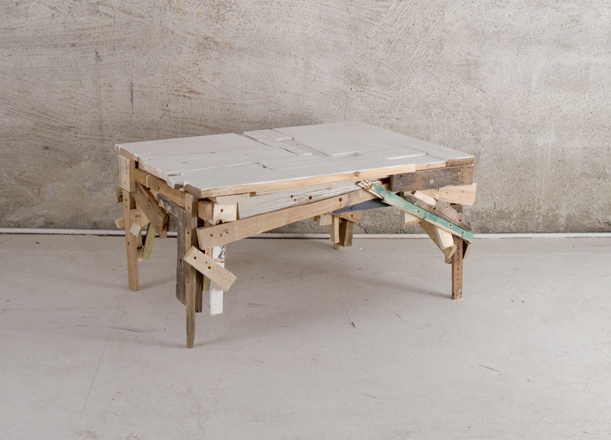
A team of two designers, Godspeed, will be creating furniture from raw and trashed materials in Jaffa within the framework of a single hour.
Pop-up stores may not sound like the most sustainable ventures, but the pop-up shop that will open in Jaffa on December 1st and feature the work of the Godspeed design team will be a little bit different. Firstly, it will be situated at an existing location, Hasadna (a local design workshop). And secondly, the items for sale in the shop will not be shipped from far away – rather, they will be created on the spot, with no item taking longer than an hour to produce. Oh, and most of the materials used to create Godspeed’s design items will be trash.
The Festival of Lights gives spiritual and historical messages. This year, add a green message to the lights.
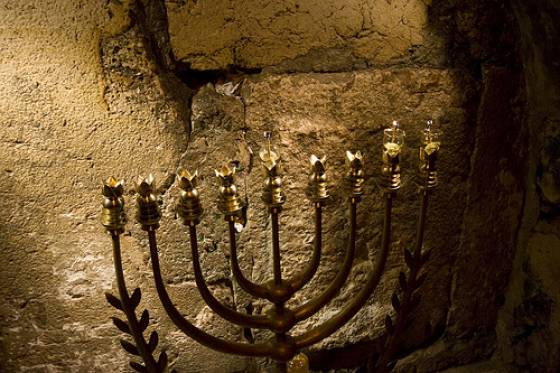
Hannukah falls on December 20th this year. Among the laws of lighting the menorah – one of the Hannukah traditions that Jews follow for eight days – is one that requires placing it where the lights can be viewed from the street. This is to proclaim the miracles of the days when the Jewish minority in Israel revolted against a tyrannical ruler and won liberty.
A visible miracle was that one day’s oil dedicated to the menorah in the Temple burned for eight days. Wouldn’t a similar, energy-saving miracle be amazing? We’ll have to discount supernatural intervention, but can seek green lighting alternatives like the Nokero solar light bulbs.
Despite the mainstream news depicting nothing but political drama and violence, there are all kinds of great green projects ongoing in the Middle East. Take a look at 7 that might surprise you.
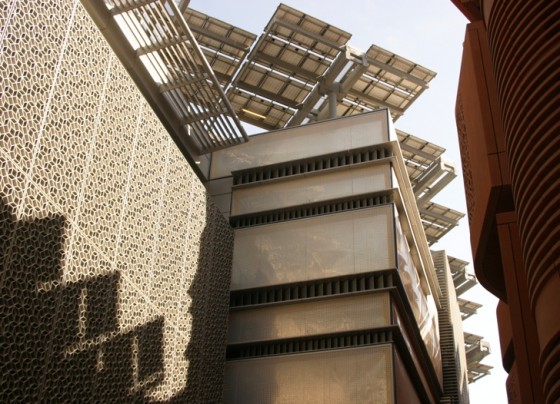
Most people who think about clean tech developments in the Arab World immediately think of Masdar City, since it is probably one of the most publicized projects in this region. But we have compiled a short list of 7 other noteworthy initiatives that are either being developed in or benefit the Arab World.
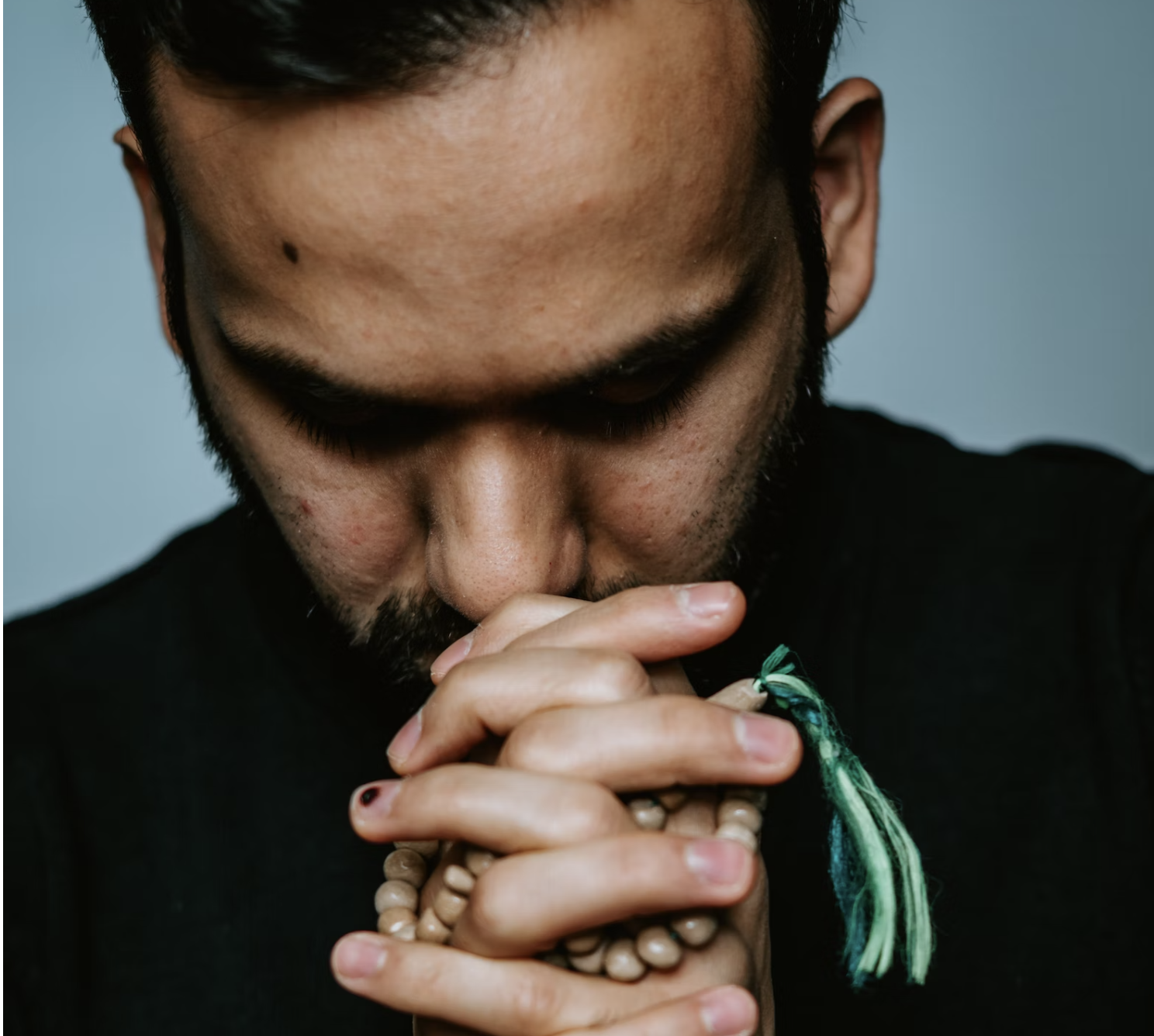
It is a well known fact that Muslims don’t drink alcohol. It is haram or not halal, which means forbidden. Muslims don’t eat foods or consume drinks with any kind of alcohol or ethanol, they don’t wear perfumes containing alcoholic ingredients and they stay away from all forms of intoxicating substances. Muslims in Dubai also don’t tolerate medical cannabis of any form, even harmless CBD oil.
This abstinence from drugs and alcohol is a command from God, the law maker for Muslims’ health and environment. But why else is alcohol, and drugs in general, haram in Islam? Is biofuel haram? According to one leader in Saudi Arabia it is. Let’s take a look.
Alcohol in Islam
Linguistically, khamr (خمر) the Arabic word for “wine”, is alcohol derived from grapes. This is what is prohibited by specific texts of the Quran (see 5:90). Therefore alcohol is categorically unlawful (haraam) and considered impure (najis). Consuming any amount is unlawful, even if it doesn’t create any drunken effects. This is opposite to Judaism which consecrates its Sabbath every Friday night using alcohol specifically made from grapes.
But when we go back to Islam, the Prophet Muhammad of Islam said, “Intoxicants are from these two trees,” while pointing to grapevines and date-palms. Alcohol derived from dates or raisins is also prohibited, again regardless of the amount consumed.
At first, a general warning in the Quran was given to forbid Muslims from attending prayers while in a drunken state (Quran, 4:43). Then a later verse was revealed to Prophet Muhammad which said that while specifically alcohol had some medicinal benefits, the negative effects of it outweighed the good (Quran, 2:219).
Finally, “intoxicants and gambling” were called “abominations of Satan’s handiwork,” which warned people with self-consciousness to not turn away from God and forget about prayer, and Muslims were ordered to abstain (Quran, 5:90-91).
The Prophet Muhammad also instructed his companions to avoid any intoxicating substances (paraphrased), “if it intoxicates in a large amount, it is forbidden even in a small amount.” For this reason, most observant Muslims avoid alcohol in any form, even small amounts that are sometimes used in cooking.
6 reasons why Muslims don’t drink alcohol
1. Alcohol and prayer do not mix
Prayer (salat) is a fundamental part of the Muslim lifestyle, an obligatory call to God five times a day. A ritual eco “wudhu” (woo-dhoo) is necessary before the prayer which involves a water saving ablution to spiritually connect to environment, health and creation. The presence of alcohol in the same room does not affect the prayer, according to Islamic scholars, but anyone who drinks alcohol cannot pray for a month, unless he or she repents. Another obligation to Muslims is the annual Hajj or Haj pilgrimage, at least once in their lifetime.
2. It’s addictive
Even when the early Muslims recognised alcohol for its medicinal uses, Prophet Muhammad likened the drink to a “disease”, saying there is no cure in things that God has forbidden. Like the first puff of a cigarette, it is up to individual will-power to continue or stop drinking. Nonetheless, some Muslims seek alcohol treatment.
Khamr also describes how alcohol consumption makes it difficult to differentiate between right and wrong. Muslim faith is founded on the intellect, rational thought and good judgement. Anything that could jeopardise this behaviour is forbidden, and another reason why Muslims don’t drink.
4. It gives the wrong message to children
Sitting in a restaurant where alcohol is served is not the same as drinking it. This is why Islamic law has the flexibility to say if someone needs to sit in such a restaurant for a work meeting or because no other diners are available, he/she can, but should not sit at a table where alcohol is served.
Bars and environments where alcohol is served could lead to drinking and in the presence of children, it could teach them to explore drinking. Mature Muslim adults are role models and carry a message that you don’t have to drink to have a good time, to work or to socialise.
Classical and contemporary Islamic scholars have helped explain why an alcohol zone can be as bad as drinking itself,
“The difference between [prohibitions in environment] and [prohibitions related to the end goals] is that while both are forbidden, the former is considered lesser in weight because it is related to causes, whereas the latter is related to an actual forbidden act. Thus, sitting at the table, although not the same as drinking, could lead to it whereas drinking in itself is absolutely forbidden,” says Dr. Abdullah bin Bayyah from Suhaibwebb.
5. Alcohol makes one forget
Any intoxicating substance, whether it’s wine, beer, gin, whiskey or drugs, affects a person’s faculties and behaviour. The result is the same, and the Quran outlines that it is the intoxication-which makes one forgetful of God and prayer-that is harmful.
6. Alcohol can lead to crime
Think about the ridiculous things you might have done when drunk. Although a controversial statement, in Islam alcohol is viewed as the “key to every evil” (hadith), because of its close relation to creating or making criminal behaviour easier to commit. That isn’t an omission of the medicinal uses of alcohol, but to say that a prevention is better than a cure. Thus, the Quran explains, “in alcohol there is a great sin, and some benefits, but the sin outweighs its benefit.” (2:219).
Why Muslims don’t do drugs
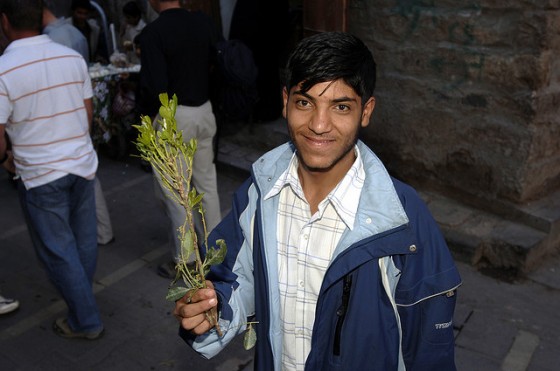
All intoxicants were made haraam in Islam’s religious scripture at different times over a period of years. Over the years, the list of intoxicating substances has come to include more modern street drugs and the like. But some plants with intoxicating effects such as chewing khat in Yemen and cannabis have slipped into Islam. According to this site, the Muslim scholars are divided over khat, sometimes spelled ghat or gat:
“The three main positions on khat are that it is halal (permissible), makruh (detested or discouraged) or haraam (forbidden). It may be shown that each view has some support in the scholarly literature of Islam.
“Each was accepted by some members of the focus groups. Most of those who participated in the focus groups had a strong view on the correct position pursuant to Islam and this view influenced their decision to support or reject prohibition and to chew or not to chew khat.”
Young man selling khat, gat or qat leaves in Yemen
Islam prohibits the use of narcotics noting that “every intoxicant is haram (unlawful)”. Recreational drugs have become the social culture and despite religious prohibitions, Muslims are just as susceptible to cannabis (marijuana), hashish, and the supposedly herbal ‘hukkah‘ (a tobacco smoking pipe).
We suggest you speak to your local clerics about individual use because the use of these substances is not cut and dry. Nonetheless, this drug abuse is also haram, not to mention encouraging illegal drug trade and addiction.
Wine that’s halal?
Without side-sweeping the nutritional value to alcoholic beverages, we must accept that wine in particular is not completely “evil”. Wine contains coronary benefits and according to studies, decreases the risk of peptic ulcers.
Hippocrates recommended specific wines to disinfect wounds, and even the great Islamic scholar Ibn Kathir noted wine’s force for better digestion.
In the Quran is the promise of Paradise for people who conserve God’s laws on Earth and leave it as they found it, or better. This Paradise contains rivers of honey, milk and wine which does not intoxicate (see 47:15):
The description of the Paradise promised to the righteous is that in it are rivers of fresh water, rivers of milk that never changes in taste, rivers of wine delicious to drink, and rivers of pure honey. There they will ˹also˺ have all kinds of fruit, and forgiveness from their Lord. ˹Can they be˺ like those who will stay in the Fire forever, left to drink boiling water that will tear apart their insides?
Some great entrepreneurs took this verse from the Quran as inspiration, leading to the production of halal approved wines such as Halal Champ Wine, and Australia’s Patritti Wines of Dover Gardens, which was accredited by the Islamic Council in 2003.
A contemporary fatwa (Islamic ruling) classified non-wine alcohol as permitted in external uses such as perfumes and soaps so long as it’s not used in vain or for intoxicating purposes. However, the main consensus is to religiously avoid it.
Buying and selling wine in Islam
For Muslims, when something is made haraam, this means that thing is harmful to one’s health and contribution to the community. That also means Muslims aren’t supposed to encourage others to consume in any haraam, irrespective of who they are.
Dealing with the alcohol trade comes under the haraam category. The Prophet Muhammad forbade people from all actions related to the wine industry, including pressing wine, drinking it, serving it, selling it or buying it. This severity is to stop the expansion of harm caused by alcohol.
And above all, drinking is a lifestyle choice for socialising and enjoying food, a lifestyle that Muslims simply do not indulge in. That said, if you want to try a alcoholic summer drink, here are 10 mocktails for Muslims.
Wudu ritual washing in Islam Zaufishan gives some tips for making wudu greener
It was over five years ago when I first learned about a wuduthat was environmentally friendly. Despite being a keen Eco-Muslim, I didn’t see how clean water for ritual ablutions could get, well, any cleaner. After one Hajj pilgrimage in 2005 and many cold water washes however, here is proof that wudu really can be part of the active green faith.
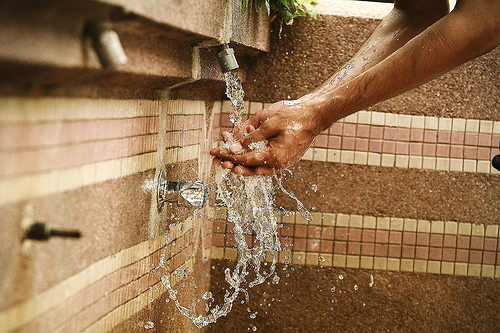
Wudu (woo-dhoo) is a physical ritual where Muslims immerse themselves in a symbolic purification before prayer and every act of worship. The word itself comes from the Arabic root “wa-da`a” which means to make brighter. Wudu is essential to connecting with God and seeing His signs – water from rain, a lake, small streams becoming oceans, or a running tap.
How to make wudu ablution
The ablution consists of an important routine: rinsing the mouth 3 times, the nose, washing the whole face 3 times, each forearm, the top of your head, behind the ears, neck, feet and between each toe.
Wudu is ritual washing in Islam. Face, feet, clean.
Each movement with water physically washes away dirt and in essence the negative actions of that limb. Wudu is a reminder of blessings; it’s a control switch, a health check.
The Prophet Muhammad of Islam said, “cleanliness is part of faith” (tahoor shatril imaan). He also warned against “squandering water” even if next to a river; the Prophet always advocated an eco-wudu.
An eco-Wudu
Muslims make wudu up to five times a day, and the amount of water spilled can add up. Growing an ‘eco-beard‘ can saves masses of water whereas shaving can use up to 11 gallons of water on average per household. Most of this is wasted from keeping the tap running and more energy is eaten up by using hot water instead of cold.
As believers, wudu can be a part of our eco lifestyle and a more conscious effort of resourcefully using one of our most precious blessings from God.
I haven’t perfected my wudu and in those panic-last-minute-prayermoments, I confess that I have left the tap running in the past. No more! Here are several winning ideas that could just make our wudu more wonderful:
Tips for making your wudu green:
Turn tap off: It sounds obvious but closing your taps when making wudu will significantly change how you use water. Fill a pot or bucket for your ablutions. Use a glass to rinse your mouth. Take a jug of water with you outside and perform a spiritual wudu in nature.
Check your wudu count: For experimental purposes time how long it takes for you to complete wudu while leaving the tap running on normal pressure.
Next time place a bucket under the tap and leave the tap running for the same amount of time it took for you to do wudu. Measure this water. This is your wudu count. I measured my wudu count which came to nearly 2.5 litres of water. The Prophet Muhammad performed his wudu with 16 handfuls of water! It isn’t a scientific test but it’s useful for directly seeing your water impact, and as the idea creator Ibrahim Abdal-Matin said, “Having a number can help you determine a goal for reducing that number.”
Water saving toilets: Install a toilet with an inlet valve that reduces the water volume used to flush clean, saving up to 25%.
Personal hygiene is fundamental to the wudu but does not come with practical solutions, especially in public restrooms. That awkward moment when someone walks in on you with your foot in the sink… You can buy water carrying pouches created specifically for such scenarios. One can hold 1 litre of water, is ergonomically designed with spout and folds away for discretion. The product can save water and save a lot of public bother
Wudu with dust
These suggestions can be implemented in our homes and mosques. With enough awareness I hope to see a change in our value system so that while others have to perform their wudu in dust – known as tayammum, we’re not pouring away our blessings with water.
“Nature has provided ecosystems and their benefits to us for free… perhaps because this capital has been provided freely to us, we humans have tended to view it as limitless, abundant, and thus perhaps always available for our use, exploitation, and conversion.” (p.3)
The modern economy’s obsession with competitive consumption and endless exploitation of natural resources is at the root of the environmental mess we find ourselves in. It has forced us to digger deeper for oil, experiment with all sorts of ecologically dubious methods to secure cheap energy, cut down trees to make way for industrial-scale food production, ruin mangroves for shrimp farms and spew out pollution which has now been shown to cause extreme weather.
However, in his latest book, ‘Capitalizing on Nature- Ecosystems as Natural Assets’, Edward Barbier argues that the economy can also be part of the solution. If we are able to conceive of natural ecosystems and the various services and benefits they provide us with as a form of wealth, they could be protected. The benefit of exploiting natural assets would then be weighed up against the benefits of converting them into other forms of wealth, and hopefully, this would lead to better ecological decisions.
Saudi is pulling out the pom poms to protect OPEC oil-producing nations from losing money as climate change negotiations start at the COP 17 circus in Durban.
At present there are 388.92 parts per million of CO2 in our atmosphere. The safe level is 350 ppm. The object of these expensive, carbon intensive meetings is to reach some kind of international agreement that requires everyone to reduce their carbon emissions, but they almost always fail because of self interest. For a perfect example of this, look at Saudi Arabia: despite showing the highest GDP growth in 8 years, one of the world’s most extravagant nations is protecting itself against new policies that might put their oil-wealth at risk.
Israel’s desert climate makes water a rare treasure, but even as the country takes extreme measures to keep fresh water flowing to its citizens, the simple process of evaporation is making the battle even harder. Some estimate that 20% of Israel’s fresh water is lost to evaporation.
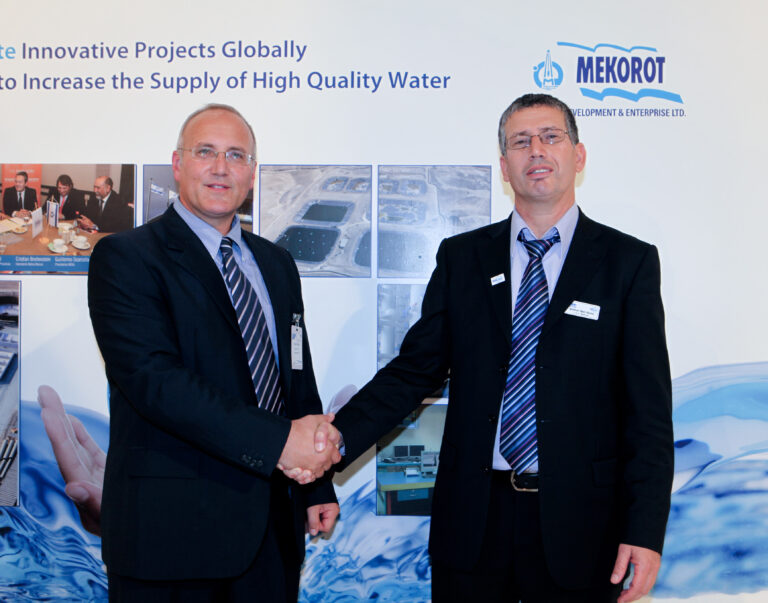
But two Israeli companies may be on the road to changing that all around. At Watec Israel, an international conference and exhibition on water technologies, renewable energy and environmental control, hosted from November 15-17 this year in Tel Aviv, Israeli national water company Mekorot agreed to a 20-year lease of a 100,000 square meter reservoir to Israel-based Aquate Group. Aquate specializes in floating reservoir covers that prevent a significant amount of the water from evaporating while providing a platform for renewable energy generation.
CDM funding for renewable energy in emerging nations is endangered in Durban, South Africa
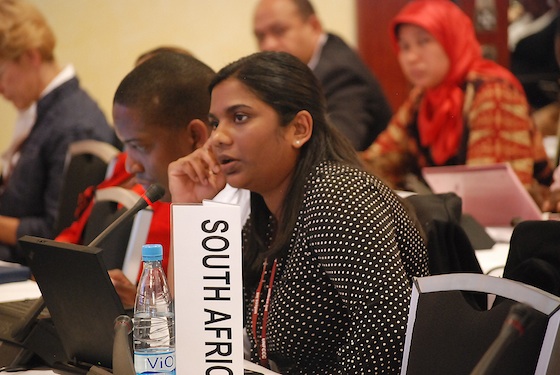
With the increasingly likely non-renewal of the Kyoto Accord after 2012 at this week’s international climate talks at the seventeenth Conference of the Parties (COP17) to the UN Convention on Climate Change in Durban, South Africa, renewable energy project funding throughout the developing world is threatened, impacting renewables in the emerging economies in the MENA region.
“It is possible that the CDM could be held to ransom,” Henry Derwent, the head of the International Emissions Trading Association told Climate Spectator in Australia.
Before now, the environment has been glaringly absent from Egypt’s political agenda, but our friends over at Almasry Alyoum have compiled a fantastic list of would-be parliamentarians who seek to change that.
Kulla Industrial Design – a team of two designers based in Israel – has found new and more environmentally friendly ways to use this waste material. Combining sawdust with plastic bags and baking them together in molds, Kulla creates table lamps, pendant lamps and stools in their 50% Sawdust line.


 A Dubai Big Bus passing ultra luxurious Atlantis on the Palm hotel. Green is where the money is.