Health insurance is a regulated financial product. Insurers operate under binding contracts, overseen by state insurance commissioners, that legally obligate them to pay claims meeting policy terms. Policyholders who believe a covered claim was wrongfully denied have legal recourse through state regulatory channels.
The New Zealand Merino Company, now rebranded as Zentera, has quietly removed the phrase “world’s leading ethical wool brand” from its website, a notable change that comes after a disturbing investigation by PETA Asia-Pacific into the company’s ZQ-certified wool supply chain, PETA reports to Green Prophet.
Somehow vegetables with short seasons excite the imagination and appetite more sharply than produce that’s available all year around. Good Middle Eastern cooks have many recipes for delicate fava beans, and this turmeric-fragrant soup is one.
Health insurance is a regulated financial product. Insurers operate under binding contracts, overseen by state insurance commissioners, that legally obligate them to pay claims meeting policy terms. Policyholders who believe a covered claim was wrongfully denied have legal recourse through state regulatory channels.
The New Zealand Merino Company, now rebranded as Zentera, has quietly removed the phrase “world’s leading ethical wool brand” from its website, a notable change that comes after a disturbing investigation by PETA Asia-Pacific into the company’s ZQ-certified wool supply chain, PETA reports to Green Prophet.
Somehow vegetables with short seasons excite the imagination and appetite more sharply than produce that’s available all year around. Good Middle Eastern cooks have many recipes for delicate fava beans, and this turmeric-fragrant soup is one.
Health insurance is a regulated financial product. Insurers operate under binding contracts, overseen by state insurance commissioners, that legally obligate them to pay claims meeting policy terms. Policyholders who believe a covered claim was wrongfully denied have legal recourse through state regulatory channels.
The New Zealand Merino Company, now rebranded as Zentera, has quietly removed the phrase “world’s leading ethical wool brand” from its website, a notable change that comes after a disturbing investigation by PETA Asia-Pacific into the company’s ZQ-certified wool supply chain, PETA reports to Green Prophet.
Somehow vegetables with short seasons excite the imagination and appetite more sharply than produce that’s available all year around. Good Middle Eastern cooks have many recipes for delicate fava beans, and this turmeric-fragrant soup is one.
Health insurance is a regulated financial product. Insurers operate under binding contracts, overseen by state insurance commissioners, that legally obligate them to pay claims meeting policy terms. Policyholders who believe a covered claim was wrongfully denied have legal recourse through state regulatory channels.
The New Zealand Merino Company, now rebranded as Zentera, has quietly removed the phrase “world’s leading ethical wool brand” from its website, a notable change that comes after a disturbing investigation by PETA Asia-Pacific into the company’s ZQ-certified wool supply chain, PETA reports to Green Prophet.
Somehow vegetables with short seasons excite the imagination and appetite more sharply than produce that’s available all year around. Good Middle Eastern cooks have many recipes for delicate fava beans, and this turmeric-fragrant soup is one.
Health insurance is a regulated financial product. Insurers operate under binding contracts, overseen by state insurance commissioners, that legally obligate them to pay claims meeting policy terms. Policyholders who believe a covered claim was wrongfully denied have legal recourse through state regulatory channels.
The New Zealand Merino Company, now rebranded as Zentera, has quietly removed the phrase “world’s leading ethical wool brand” from its website, a notable change that comes after a disturbing investigation by PETA Asia-Pacific into the company’s ZQ-certified wool supply chain, PETA reports to Green Prophet.
Somehow vegetables with short seasons excite the imagination and appetite more sharply than produce that’s available all year around. Good Middle Eastern cooks have many recipes for delicate fava beans, and this turmeric-fragrant soup is one.
Health insurance is a regulated financial product. Insurers operate under binding contracts, overseen by state insurance commissioners, that legally obligate them to pay claims meeting policy terms. Policyholders who believe a covered claim was wrongfully denied have legal recourse through state regulatory channels.
The New Zealand Merino Company, now rebranded as Zentera, has quietly removed the phrase “world’s leading ethical wool brand” from its website, a notable change that comes after a disturbing investigation by PETA Asia-Pacific into the company’s ZQ-certified wool supply chain, PETA reports to Green Prophet.
Somehow vegetables with short seasons excite the imagination and appetite more sharply than produce that’s available all year around. Good Middle Eastern cooks have many recipes for delicate fava beans, and this turmeric-fragrant soup is one.
Health insurance is a regulated financial product. Insurers operate under binding contracts, overseen by state insurance commissioners, that legally obligate them to pay claims meeting policy terms. Policyholders who believe a covered claim was wrongfully denied have legal recourse through state regulatory channels.
The New Zealand Merino Company, now rebranded as Zentera, has quietly removed the phrase “world’s leading ethical wool brand” from its website, a notable change that comes after a disturbing investigation by PETA Asia-Pacific into the company’s ZQ-certified wool supply chain, PETA reports to Green Prophet.
Somehow vegetables with short seasons excite the imagination and appetite more sharply than produce that’s available all year around. Good Middle Eastern cooks have many recipes for delicate fava beans, and this turmeric-fragrant soup is one.
Health insurance is a regulated financial product. Insurers operate under binding contracts, overseen by state insurance commissioners, that legally obligate them to pay claims meeting policy terms. Policyholders who believe a covered claim was wrongfully denied have legal recourse through state regulatory channels.
The New Zealand Merino Company, now rebranded as Zentera, has quietly removed the phrase “world’s leading ethical wool brand” from its website, a notable change that comes after a disturbing investigation by PETA Asia-Pacific into the company’s ZQ-certified wool supply chain, PETA reports to Green Prophet.
Somehow vegetables with short seasons excite the imagination and appetite more sharply than produce that’s available all year around. Good Middle Eastern cooks have many recipes for delicate fava beans, and this turmeric-fragrant soup is one.
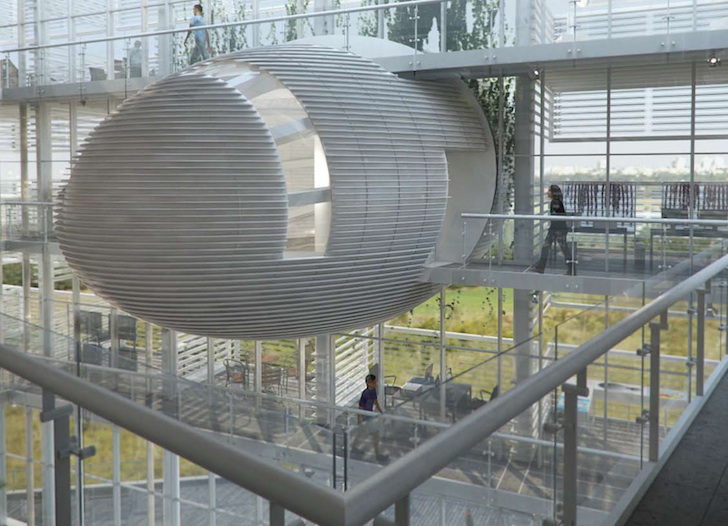
We’re so thrilled to announce that Geotectura has finally broken ground on Israel’s very first LEED Platinum Building.
We’ve been waiting for this happy moment since November 2008 when Geotectura together with Axelrod-Grobman Architects and Chen Architects first won a prestigious international competition to design TAU’s Porter School of Environmental Studies. After years of information gathering and preparation, the firm is finally breaking ground on what they hope will be Israel’s very first LEED Platinum certified building.
Although there are few precedents in Israel’s architectural history, the designers and PSES have approached this project with an uncompromising commitment to reducing its environmental impact. From brownfield rehabilitation to the most advanced energy and water saving techniques, the PSES EcoBuilding’s groundbreaking design is bound to inspire a whole new era of sustainable development.
GE Energy demonstrates its Jenbacher gas engine at the Gas Arabia Summit 2011 in Oman today.
The extent of the global problem of gas flaring can be seen in this satellite photo of North America, that is quite bewildering at first sight. On the right we see the twin cities of Minneapolis and St Paul Minnesota, but the much larger spread-out bright light on the left is out in the middle of nowhere, in the almost unpopulated states northwest of Minnesota. What on earth is that light there? Has some new city sprung up in those deserted lands, unknown to the rest of us?
Often thought of as too expensive or sophisticated for the average driver, plug-in electric vehicles will soon be available even to the occasional driver. Israel’s largest car rental company, Eldan, signed an agreement with Better Place electric vehicle company on December 5, making hundreds of Renault Fluence Z.E. electric cars available to the general public by 2012 through Eldan’s standard rental program. The decision, which makes Eldan the first car rental company to offer EVs as an option, may push the electric vehicle (EV) farther into the Israeli mainstream.
The wonderful thing about living in the Middle East is that we have so many holidays each year. But we like to celebrate the earth-friendly way, so check out our suggestions for good places to buy sustainable gifts.
We know most of our readers are unlikely to buy into the mad consumer rush that Christmas has become and our Christmas wish list is also quite simple, but giving away thoughtful, socially-conscious gifts that tell the people in your life how special they are definitely makes the season warmer. We have compiled a list of 6 stores throughout the Middle East that offer everything from natural beauty products and local crafts to the most beautiful recycled glass art – all of which are reasonably-priced and both earth and people friendly. If you’re looking for gifts that you can be proud of, come on in to see what our region’s talented artisans have to offer.
No sewing experience or fancy equipment necessary! For this easy 4-step project you will need: an old t-shirt or tank top, scissors, needle and thread, and old socks.
California-based startup company Blueseed has plans to either build or retrofit a ship that will provide accommodation and office space for talented foreign innovators who don’t meet America’s stringent working visa regulations. Since the September 11 attacks on the World Trade Center in New York City, even the brightest would-be entrepreneurs have met serious legislative barriers to getting their companies off the ground in Silicon Valley.
Blueseed’s CEO Max Marty and his team aims to change all that by giving 1,000 of the best entrepreneurs a chance to develop their ideas “in an ecosystem designed for their success” in the contiguous zone just 12 nautical miles from San Francisco. Although still in the planning stage, Paypal’s founder Peter Thiel has already entered the 500K USD “seed funding” round of the project, which will also showcase cutting edge waste management and energy generating technologies.
Doomsday and after-apocalypse movies have been around for some time. A post-nuclear holocaust Television movie entitled The Day After came out in 1983 and was later followed by a film on global warming and then on ozone depletion. How to survive events such as these was depicted in the 1993 movie The Fire Next Time.
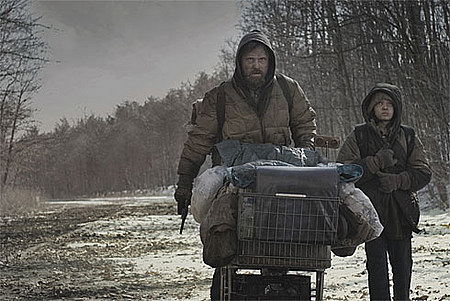
I don’t want to frighten all of you, but the idea of how to survive catastrophe, as graphically portrayed in yet another post apocalyptic movie, The Road brings home the reality of what people might do (to themselves and to others) in order to survive.
Survival is only for the fittest
Many of us now live in modern urban environments and are totally dependent on supermarkets for food, cars and other motorized vehicles for transportation, and electricity and gas to cook and preserve our food, light our homes, and keep warm in winter or cool in summer.
Computers, cell phones, and other electronic devices are needed just to communicate with one another. Even going to a doctor is dependent on modern clinics and medicines manufactured by large pharmaceutical companies.
In a post-apocalyptic world, none of these modern conveniences would be available; and only people who know the basic skills needed for survival would be able to carry on.
Lighting a fire using flint and steel sets, the sun’s rays via a magnifying glass, or by the ancient method of a bow-like device making friction on a piece of wood would be very handy in a situation where no matches or other fire starters are available.
As for finding food for self preservation, possessing some kind of firearm or even a bow and arrow set could mean the difference between life and death.
Unfortunately, outside of countries like the USA, Australia, and a few others, few families possess any kind of firearm due to strict anti-gun laws in the countries they live in. This is especially true in the Middle East – including Israel.
Gardening is good for surviving anything, even Covid.
Some basic preparations, aside from those mentioned above, include having a small garden at home, even if only on a balcony.
It’s a good idea to store enough basic food and water to last for at least a couple of months.
Bottled water, canned and dried food, and herbs are good things to keep in your pantry, and enough first aid and other basic medical supplies and medicines are also necessary.
And for those who need certain prescription medicines, try to get extra amounts over normal prescriptions.
This is not an easy subject to write about; but then again, we do not live in an easy world. In fact it’s getting more difficult all the time and it behooves us to face this unpleasant reality.
At the ongoing Eye on Earth summit in Abu Dhabi, there has been a lot of talk about sharing environmental data. But we question whether knowledge is enough.
As early as 1930, a British engineer named Guy Calendar warned that increased carbon emissions as a result of industrialization was beginning to raise the global surface temperature of the earth. The following year, a man named E.O. Hulbert wrote in the Physical Review that if atmosphere CO2 concentrations doubled or tripled, then the earth’s surface temperature would increase by 4 and 7 degrees Celsius.
Now — nearly a century later — climate change is well underway. This is what a handful of high profile luminaries are currently addressing at the Eye on Earth Summit in Abu Dhabi, and The National reports a focus on knowledge. Sharing environmental data, experts say, will bring us closer to mitigating climate change. Will it?
We speak to Muslim green campaigner Sofiah Jamil about the environmental threats facing Southeast Asia and why climate justice alone isn’t enough
Sofiah Jamil is a Singapore-based campaigner who has been working hard to help Muslims living in Southeast Asia connect their faith with environmental issues. As well as setting up ‘Project ME: Muslims + Environment‘ and running The Green Bush blog, her research at Nanyang Technological University focuses on environmental security. Spurred on by her undergraduate studies in Australia where she experienced a higher level of environmental awareness (compared to her concrete and urban home of Singapore), she has studied the implications of forest fires on Indonesia and Malaysia.
In 2009, Sofiah took part in a 6-week programme by the Study of the United States Institute for the Environment to help increase her knowledge and hopes to start her PhD next year at the Australian National University focusing on the topic of Muslim environmental initiatives. Green Prophet spoke to her about the unique environmental risks that the Southeast region faces and the role women can play in dealing with these.
Although the massive 3,300,000 sq m King Abdullah Financial District in Riyadh will feature a variety of “green” initiatives, this is definitely sustainable architecture Saudi style.
We applaud any individual or organization that seeks to green up their portfolio, and Saudi Arabia is no exception. Really, it’s difficult to blame the Kingdom’s residents for striking it rich with oil, expanding their quality of life, and not wanting to let it go even as the world gets hotter and ecosystems collapse. But sustainable Saudi architecture exists in a class of its own.
We have on one end simple earth architecture such as Hassan Fathy’s famous works in Egypt, which requires very little imported materials and have virtually no environmental impact, and then we have the King Abdullah Financial District (KAFD) designed by Henning Larsen Architects (HLA). Even though all kinds of alternative energy and passive design techniques have been incorporated into its design, this 3,300,000 sq m mixed use center is audacious, expensive, and about as glitzy as it gets.
A new twist on Hannuka’s potato latkehs: The kids look forward to the same latkehs year after year, but adults sometimes want something a little different. Surfing the Net for an alternative recipe, this recipe from The New York Times caught my eye. It’s as easy to make as the traditional recipe, but it’s just different enough to make those traditional potato fritters interesting again.
In a small bowl, whisk together the sour cream or yogurt, cinnamon and syrup. Cover and chill until ready to use.
Coarsely grate the apples, potato and onion. Put the mixture in a clean dish towel and squeeze to wring out as much liquid as possible. For the crispiest pancakes, you want the least moisture.
Working quickly, put the mixture in a large bowl, add the flour, eggs, salt, baking powder and pepper, and mix until the flour is absorbed.
In a heavy-bottomed pan over medium-high heat, pour in about 1/4 inch of oil. Once the oil is hot (a drop of batter placed in the pan should sizzle), drop heaping tablespoons of batter into the pan, cooking 3 to 4 latkes at a time. Use a spatula to flatten the scoops into disks.
When the edges of the latkes are brown and crispy, 2 to 3 minutes, flip them. Cook until the second side is deeply browned, another 2 to 3 minutes.
Transfer the latkes to a plate lined with recycled, crumpled newspaper sheets to drain. Repeat with the remaining batter. Serve with dollops of the cinnamon sour cream on top.
Yield: about 1 1/2 dozen latkes. Enjoy!
More recipes for the Festival of Lights from Green Prophet:
Looking for a cool eco-activity with the kids this Hanukkah vacation? This one is for the birds!
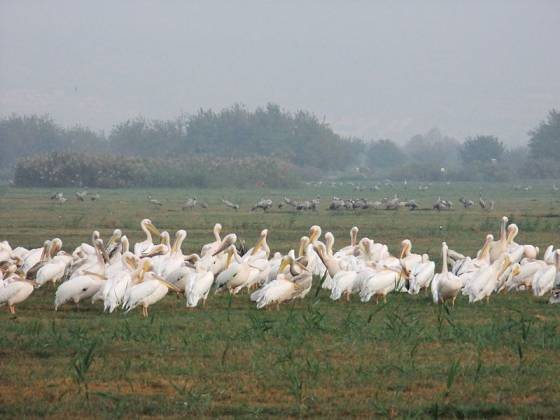
Until December 28th, you can visit nature reserves and parks in the Galilee and Golan for a special bird-watching festival. The events will be held in six main sites: the Agamon Hula, the Gamla nature reserve, at the Sea of Galilee, Kfar Rupin, En Afek nature reserve and their area. Having reported on the Kuwait’s Ornithological Society events last July, we wholeheartedly recommend the many interesting birdwatching activities offered in Israel this month.
Dr. Jane Goodall, Bill Clinton and Philippe Cousteau are all speaking in Abu Dhabi this week as part of the “Eye on Earth” Summit.
Environmental issues effect us all, but this week’s “Eye on Earth” Summit in Abu Dhabi is attempting to ensure that environmental data is also available to us all. The summit hopes to “enable global leaders, innovators and decision-makers to focus on an issue critical to the wise decision-making upon which our planet’s future depends: how to ensure effective access to the world’s expanding pool of environmental and social data by all of those who need it.”
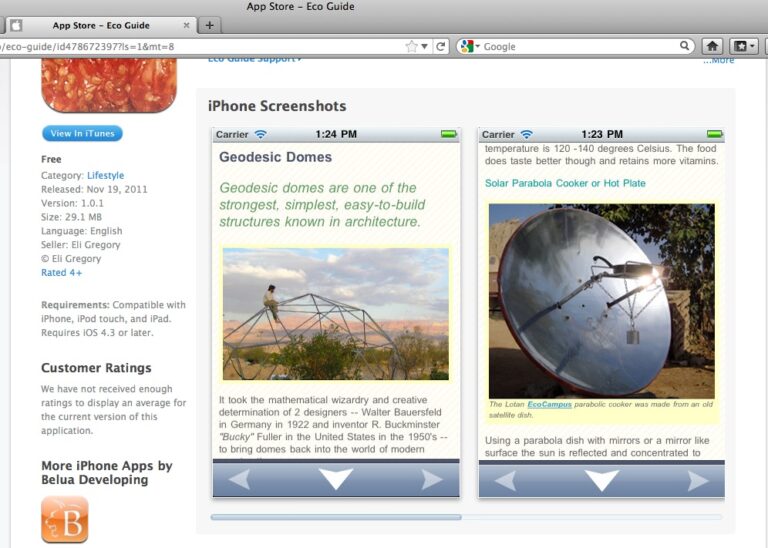
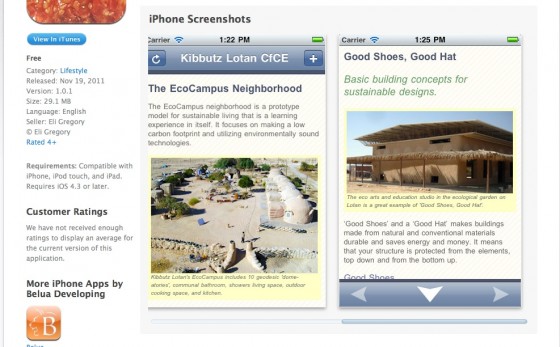
Anyone who is interested to transition to a more sustainable way of life will benefit from Kibbutz Lotan’s comprehensive eco-guide app.
Many socially and environmentally conscious citizens dream about leaving the grid for good and getting back in touch with nature, but the general lack of sustainable infrastructure and available information in the Middle East – especially compared to the United States and Europe – makes that task seem completely insurmountable.
In response to this problem, Kibbutz Lotan’s Center for Creative Ecology in Israel, which is recognized as one of the world’s most advanced pioneers in all aspects of sustainable living, recently launched a fantastic eco-guide that covers everything from composting to earth architecture and how to get along in an ecologically-minded community.
Best of all, the techniques described in the application have all been put into practice in the Middle East, so instead of being an imported solution that has no relevance to our climate or circumstances, this is an exceptional homegrown resource created by and for ecologically-minded people in the Middle East – like our very own Green Sheikh. And did we mention that it’s free?
Some of the topics covered in this guide include:
Permaculture
Organic Gardening
Earth Building
Minimum to Zero Impact Cooking
Water Conservation
Compost Toilets
Passive Design Techniques
Community and Ecology
The app – which is compatible with iPhone, iPod touch, and iPad and requires an iOS of 4.3 or later – was designed by a Kibbutz Lotan intern named Eli Gregory, who according to the Director of Research and Development Alex Cicelsky is “minded and talented” and “combined [Lotan’s] work and Permaculture/ Sustainable Communities curriculum into this free resource.”
(As of 2025 the app was discontinued but we are keeping this article up for the archives).
Within each chapter are subchapters devoted to all of the small details of sustainable living. For example, under the organic gardening section, readers can learn about composting, vermicomposting (with worms), natural liquid fertilizer, seed balls, mulching and more. It’s possible to find recipes for earth plasters, straw bale construction, and other natural materials.
This is an extremely accessible and practical resource which demonstrates that living the good life – what’s good for both humans and the earth – is less out of reach than most people would believe. There’s only one snag… even though the app is free, you have to have iTunes in order to make it yours.
Small amounts of cocaine found in treated water supplies in Cyprus
Upon learning that scientists have discovered narcotics in already treated Cypriot waste water, one Cyprus Mail reader asked if the drugs can be recycled. While we think a sense of humor is good medicine, this story also has serious implications.
The paper reports that a recent survey of sewage treatment plants in two cities in Cyprus showed the presence of a motley of drugs including cocaine, benzoylecgonine (a major metabolite of cocaine), norbenzoylecgonine, codeine, norcodeine, heroin, ketamine, MDMA or ecstasy, methadone, morphine and normophine. This cocktail was then processed by conventional treatment systems which failed to clean the water completely.
Drugs in the water
Scientists have long worried about the rate at which pharmaceuticals are entering and altering the chemical composition of our water streams. This phenomenon has been linked with increasing amounts of estrogen and in the Potomac River in Washington D.C., some fish were showing up with both male and female sexual organs.
Treatment plants in California use reverse osmosis technology to clean wastewater, and then zap it with an ultraviolet light. This is said to be more effective at removing contaminants than archaic wastewater treatment plants, but this technology doesn’t come cheap. In the United States, it can cost up to roughly $15 a month to treat one gallon, and most facilities handle thousands of gallons a day.
A better way to treat wastewater
Constructed wetlands that use naturally occurring wetland plants to filter out contaminants have also proven to be very successful and rely entirely on nature to obtain clean drinking water.
Last year Egypt held a wastewater treatment conference in Cairo in order to hash out new ideas for wastewater treatment given the overwhelming agricultural runoff and other contaminants that have entered the Nile River.
Getting high on cocaine, accidentally?
In the meantime, according to Assistant Professor Despo Fatta-Casinou who talked to Cyprus Mail and led the sewage plant survey, traces of cocaine, codeine, methadone and nor codeine were found in Cyprus’ treated water. The concentrations are fairly low, but Fatta-Casinou warns that longterm exposure could have serious consequences.

 We’re so thrilled to announce that Geotectura has finally broken ground on Israel’s very first LEED Platinum Building.
 Rent an electric car when you travel to Israel.













 Dr. Jane Goodall, Bill Clinton and Philippe Cousteau are all speaking in Abu Dhabi this week as part of the “Eye on Earth” Summit.