Home Blog Page 474

Recycled Furniture by Lebanon’s Niloufar Afnan

0

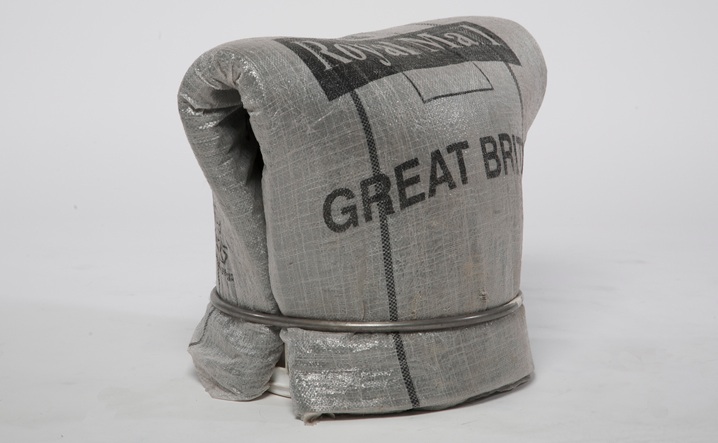
recycled furniture, "upcycled royal stool"Long live the queen, if she can manage to sit on Niloufar Afnan’s recycled ‘Royal Stool’.

At this year’s New Designers Exhibition in London, Lebanese-born designer Niloufar Afnan decided to poke a little fun at the royal family and demonstrate the possibilities of upcycled furniture.  She exhibited Royal Stool (pictured above) and 46 (shown after the jump) – two furniture pieces that show the possibilities of reusing found objects.  Both pieces are made from found furniture parts and scrap materials that Afnan collected and assembled in new ways, showing us that with a little creativity and problem solving even broken items can be functional again.

Global Clean Energy Brokers Meet at Abu Dhabi Emergy Summit This Month

2

world future energy summit laying down clean tech pipingPost-Durban World Future Energy Summit in Abu Dhabi is now a huge opportunity for clean energy developers in the Middle East region.

Ever since the European Union adopted the Kyoto Accord and with it the Clean Development Mechanism (CDM) which funds renewable development in the developing world to offset carbon emissions in Europe, the developing world has become the driving force behind renewable energy investment. And now that Durban expands the Kyoto Accord, even more so.

Gazan Farmers Struggle With Rising Salinity & Water Shortages

5

water-gaza-farmer-salinity
High water demand is putting pressure on scarce water resources and destroying the agricultural sector in Gaza

Water shortages are a widespread and common problem for the people of the Gaza Strip, between Israel and Egypt. There just isn’t enough water for the growing population and an Israeli blockade which limits imports and exports means the locals can do little to alleviate the situation. I recently wrote about the stunning water mural project in the Gaza Strip which highlights the serious water shortages in the area in the hope of encouraging political action. The European Union also recently pledged 10 million euros for a desalination plant that would serve Khan Yunis and Rafah. Until these projects can have the desired effect, however, farming on the land in Gaza has become almost impossible.

Tata Nano Micros – Smart Cars for the Poor Man

1

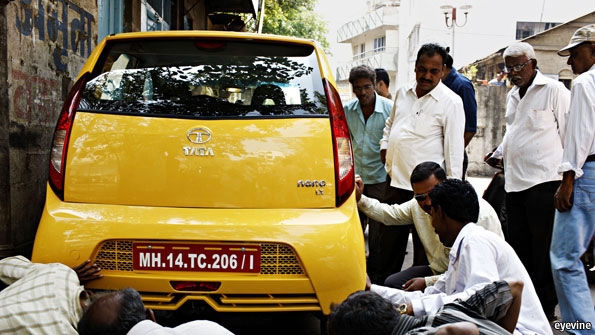
tata nanoA Tata Nano in India – this made-for-masses cheap mini could be the smart car for the poor man, in countries like Israel, Jordan and Egypt

Ever since India’s Tata Motors Company came out with its Nano micro mini car in 2009, and we featured it here on Green Prophet,  people are still wondering if this tiny little bug shaped car is something that people outside of India might want to own as well. When it came out, it offered purchasers three models: the base model, the CX model and LX (“luxury”) model. When originally test driven in 2009,  the LX model was used since it contained some features that more affluent buyers would appreciate; such as air conditioning, a central locking system, reclining front seats, a heater (not a big deal in southern India but good to have in northern Indian states); and a door lock on the passenger side that is not available on other models.

It’s not a gold plated mercedes, but the Tata Nano could be a good fuel-efficient driving model for the poorer Middle East countries.

Heaven Forbid – Recycled Israeli Pencils Land on Saudi Shelves

1

trade, commerce, zionist, arab, recycled wood, recycled pencils, Kravitz, Israel, Saudi ArabiaTo the great shock and horror of a local journalist, recycled Israeli pencils are discovered for sale on the shelves of a popular store in Saudi Arabia.

A journalist from the Saudi paper Jazan was shocked to discover pencils brandishing an Israeli logo on the shelves of his local Abu Rialin store. Made from recycled wood, Kravitz pencils are a hugely popular product in Israel but have never been exported – particularly not to an Arab country.

The Jazan journalist criticized the Saudi Ministry of Commerce for allowing the sale of “zionist” goods in a popular chain store. What’s worse, the pencils are being sold for one third of what they cost in Israel ($1.30). Kravitz CEO Menashe Zilka told Ynet News that he has no idea how the pencils landed up in Saudi.

He suggests that maybe a wholesaler or entrepreneur bought a pile of pencils and persuaded Abu Rialin to stock them.

:: Ynet News

image via Cohdra, Morguefile

More bizarre news from the Gulf:
HAMAD: Sheikh Graffiti Visible From Space
Giant Human Infrared Dryers Slash Carbon Emissions
Dubai Porsche Driver Walks Pet Cheetah on a Leash

Ramot Polin: Crazy Israeli Architecture Gone Terribly Wrong

5

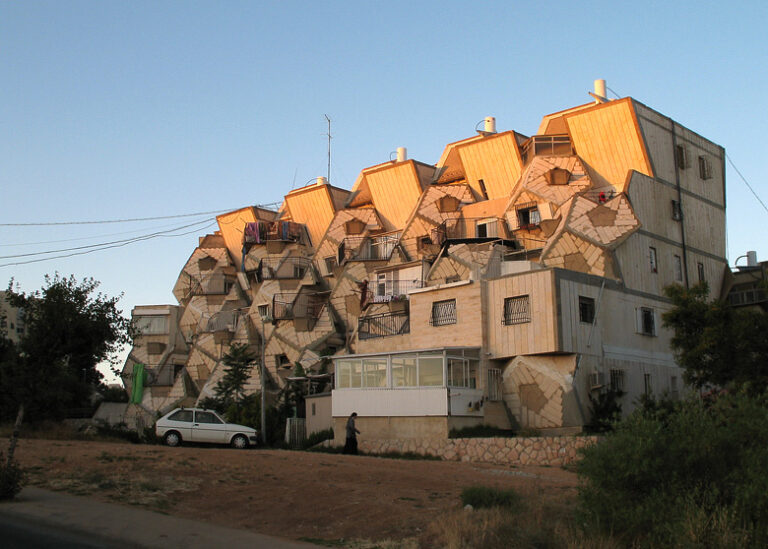
green design, sustainable design, eco-design, sustainable architecture, earth architecture, Ramot PolinA hastily constructed building in Israel designed in 1972 seemed like a good idea at a time, but now it has evolved into a bizarre eyesore and a sanctuary for the country’s Orthodox Jews.

We’ve seen many funky buildings on Green Prophet, including Moshe Safdie’s famous Habitat ’67 and beehive shaped architecture in Syria, but the difference between them and Ramot Polin lies in functionality. While each of the former projects produced cozy, livable residential space, Ramot Polin apartments are cramped, dark, and beset with problems.

Designed by Zvi Hecker after the 6 Day War in 1972, the 720 unit complex built in Jerusalem was an architectural experiment that was supposed to encourage middle-income Orthodox families to settle. Instead, the crumbling Ramot Polin complex now provides sanctuary to low income religious groups.

Neoflam Ceramic Pans Are Allegedly Carcinogenic, Causing Panic in Israel

45

neoflam pots ceramic kolbotekMedia sham or company scam? The Israeli government is now looking into re-testing Neoflam pots and pans over widespread public panic that these “health” pans are allegedly carcinogenic.

With a large share of the market for pots and pans in Israel, the Korean-based company Neoflam is in the media spotlight in the small Middle East country right now — a place where people love to eat, and where grandmothers love to cook. All Jewish holidays revolve around food, so news that a popular company is selling pots and pans with lead and cadmium on them, has created nationwide panic.  For all those people who believed Teflon-coated pans to be unsafe for food preparation, they bought into the promise by Neoflam and other ceramic-coated pots and pans manufacturers, that the new line of non-stick pots and pans are not just healthy, they are good for the environment. An Israeli investigative report, however, may have blown the lid off a new toxic industry that is misleading the public.

Green Muslims Top ‘Muslim 500’ List

0

green-muslims-environmentGreen Muslims have been nominated as some of the most influential Muslim leaders of 2011

While Green Prophet works on its own top green leaders of 2011, the Royal Islamic Strategic Studies Centre had released a list of the 500 most prominent Muslims of the past year. The annual publication highlights the 500 most influential Muslims of the year– which includes several Muslim environmentalists. The Green Grand Mufti of Egypt, Sheikh Ali Goma’a as well as Fazlun Khalid, who I interviewed last year were both included on the list.

Darwin clashes with the Quran and internet filters in Turkey

11

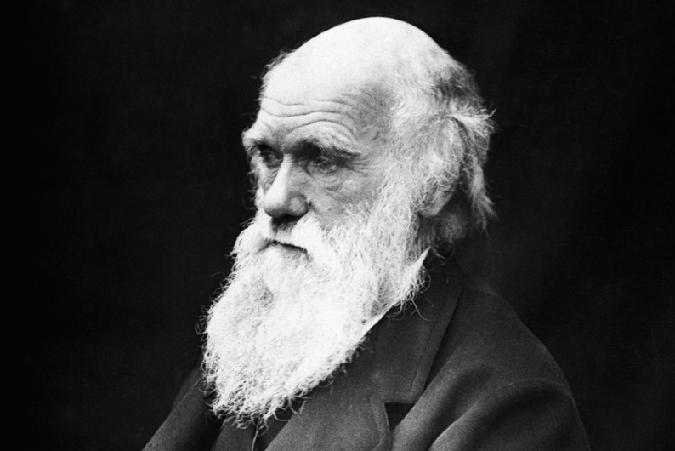
charles darwin photoInternet filters against evolution: Evolutionary biologists find it increasingly harder to work in Turkey

Charles Darwin, the father of modern evolutionary theory, tried to reconcile his faith with his scientific observations about the origin of humans. But few religious fundamentalists in Turkey are willing to try the same: On November 22, the Turkish government instituted a new “Secure Internet” filtering system in the country. While a largely unfiltered version of the Internet is still available to the population, the new system offers two filters that did not previously exist: a “Child Profile” and a “Family Profile”.

A few weeks ago, Turkish independent media network Bianet reported that all websites pertaining to Darwinian evolution are banned under the “Child Profile”.

Online input: a way around the ban?

Some evolution-related websites that were unavailable through the Child Profile, however, are now accessible.

Darwinday.org and evrimianlamak.org (“understanding evolution”), for example, were two of the blocked websites when Bianet’s story ran three weeks ago. But now they are accessible. Other sites, such as aboutdarwin.com and darwin-online.org.uk, are still blocked.

So how did these changes come about? Online votes.

As Bianet reported, the information website for the new filtering system has a webpage where users can search for domain names to check their status under each filter. Unfortunately, any computer can only search for ten dom names — after that, a message pops up saying that the number of queries is too high.

But for those first ten domain names, visitors to the site have the power to vote on whether they should be accessible or not, from either filter. Evidently, darwinday.org and evrimianlamak.org received enough votes to move off the “blocked” list.

Evolving attitudes

Evolutionary biologists have long found it hard to work in Turkey, where many reject Darwin’s theory on the grounds that it clashes with Koranic teachings about the origin of humankind. It is not unusual for high school biology classes to gloss over the theory, or deny it outright.

In March 2009, the Scientific and Technological Research Institute of Turkey (TUBITAK) refused to allow any articles commemorating Darwin’s 200th birthday in that issue of its monthly journal.

Many Turks accept the theory, however, and seem embarrassed by their countrymen who think otherwise. Thousands of marchers protested the decision by TUBITAK in 2009.

Now it’s up to Internet users to decide whether Turkish children using the Child Profile Internet filter can access accurate information about Darwinian evolution or not.

Read more about evolution news from the Middle East:
Man Evolved When Elephant Meat Ran Out
The Tooth That Changes Everything
More Whale Fossils In The Egyptian Desert

 

Is Troubled Egypt Ripe Enough For Eco-Tourism?

0

Red Sea, eco-tourism, sustainable tourism, sustainable development, sinai peninsula, wildlife conservation, environmental degradation, sharksA new eco-village in Upper Egypt raises hopes that the country may move in a more sustainable tourism direction, which we would really love, but most indicators show that won’t happen any time soon.

Hoda Baraka from Almasry Alyoum was one of the first journalists to point out how unregulated development is impacting on the timeless Siwa Oasis near Libya, and recently visited a new eco-village in Upper Egypt – an archaeologically-rich but neglected area south of Cairo. The New Hermopolis Eco Village founder and physician Mervat Nasser and architecture planner Yahia Shawkat both expressed hope during her visit that projects like this could benefit from the revolution – but only if government alters its mass tourism model. We are not so sure.

Kuwait’s Environment REUSE 5.0 Exposition Calls for Applications

31

"reuse exposition kuwait"For the fifth year Kuwait’s eco en.v REUSE exposition will showcase green companies, retailers, galleries, restaurants, social initiatives, and people.

Re-users of all ways, shapes, and forms are now welcome to apply for exhibition space at REUSE 5.0, an exposition that will take place at the Australian College of Kuwait (ACK) in February 2012.  The exposition, which has grown steadily over the past five years, hopes to serve as an opportunity for non-profit organizations, companies, professionals and aspiring creative talents to showcase their accomplishments in the field of social responsibility and sustainability via a range of artistic mediums and interactive activities for the general public.   As Kuwait’s premier exposition for eco-friendly thought, REUSE serves as a vehicle for dialogue among the private, public and civil sectors.

The Cheetah: Nature’s 21st Century Feminist

1

wildlife conservation, cheetahs, South Africa, endangered species, wildlife, animal conservationGreen Prophet recently visited the Hoedspruit Endangered Species center in South Africa to get a better sense of conservation initiatives aimed at restoring the cheetah’s dwindling population.  

The last cheetah we wrote about was a scrawny, injured juvenile running through the streets of Abu Dhabi – another casualty of the Gulf country’s (illegal) obsession with owning exotic pets. But this past weekend we met a host of other cheetahs with a more hopeful destiny in South Africa’s Limpopo province and discovered – to our great delight – that this remarkable creature is actually the animal kingdom’s 21st century feminist.

Egypt’s Red Sea Sharks Face Extinction

9

image-red-sea-sharkThe Arab Spring in Egypt has been a failure for sharks.

Since last year’s political uprising, and consequent deterioration of law enforcement, poachers supplying restaurants with illicit shark fins have driven the Red Sea shark population down by as much as 80 percent, reports Egypt Independent. In 2006, laws prohibiting trading in sharks were passed, with severe penalties attached. However, in the post-revolution chaos, the Egyptian army no longer patrols the coast to stop illegal fishing. (If you’re planning to travel to Egypt these days, you’ll need to read our 5 tips for traveling safely in post-revolution Egypt.)

Genetically Modified Food in Israel, Lots of It

31

image-soybeans genetically modifiedMost Israelis complacently think that there are no GMO foods in Israeli food. But there are, especially in soy products.

“It’s a huge mistake to think that there’s no genetically-modified food in Israel,” said Naama Rosenberg, spokeswoman at the Volcani Institute of Agricultural Research. In a telephone interview, Ms. Rosenberg went on to explain that 90-100% of soy in Israel is imported from the US and of genetically-modified origin.

That of course, includes vegetarian hot dogs and veggie shnitzels, not to mention baby formula and other food children grow up on.  More basic staples, like cooking oil, are soy or canola oil, canola being another well-known GMO crop.

The Arab Spring Was Hibernating in Egypt’s Green Party

2

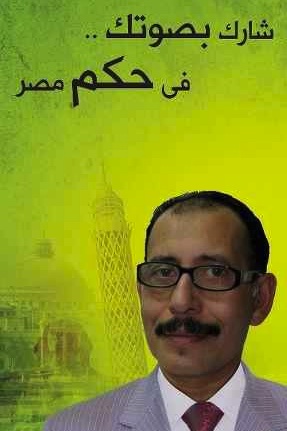
Hisham Zayed egypt green partyEgypt’s green environmental party was founded 25 years ago for green and social change – long before the Arab Spring. The Green Party is working to show Egyptians and the Arab world the connection between their issues and the environment.

The year 2011 will probably be remembered as the year of the Arab Spring. And while the whole world focuses on Islamists no attention goes to the emerging Green parties in this region. That’s why we met with the new president of the oldest Green party in the region, Mr. Hisham Zayed from Egypt.

He was already there twenty-five years ago, barely 17 years old, when the Egyptian Green Party was founded. “In 1986 the German greens warned us that Laban Nido, Egypt’s national baby-milk brand, contained fall-out of the Chernobyl disaster. Instantly we decided to set up an initiative to warn Egyptian society about this,” Zayed tells Green Prophet.