
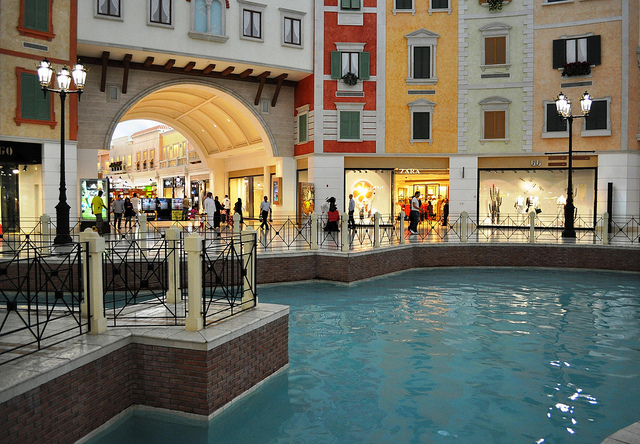
 Authorities have issued arrest orders following Monday’s fire that engulfed Doha’s Villaggio Mall, killing 19 people. The owner of the mall and a handful of officials accused of failing to properly respond to the emergency face arrest, and the owner of the daycare facility where 13 children, including two-year old triplets from New Zealand and three Spanish siblings, faces detention as investigators search for clues that will shed light on the cause of the fire, according to Qatar’s official news agency.
Qatar Mall Owner Faces Arrest for Deadly Fire
Hey Jordan – How About Declaring Litter Independence?
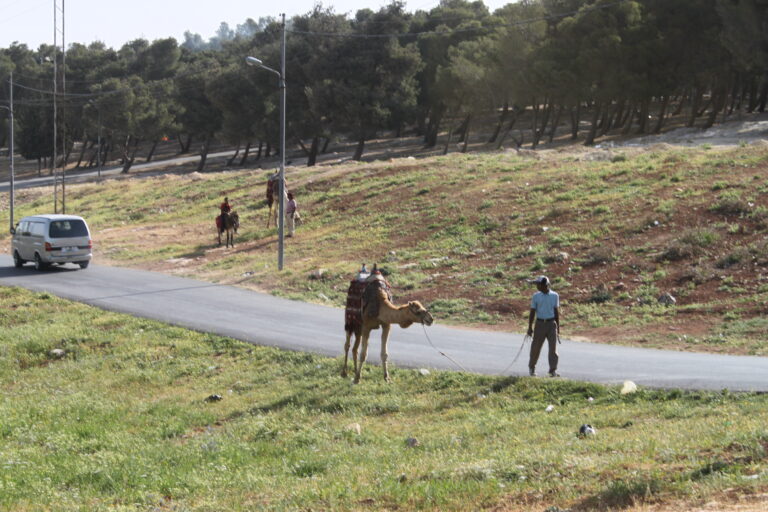
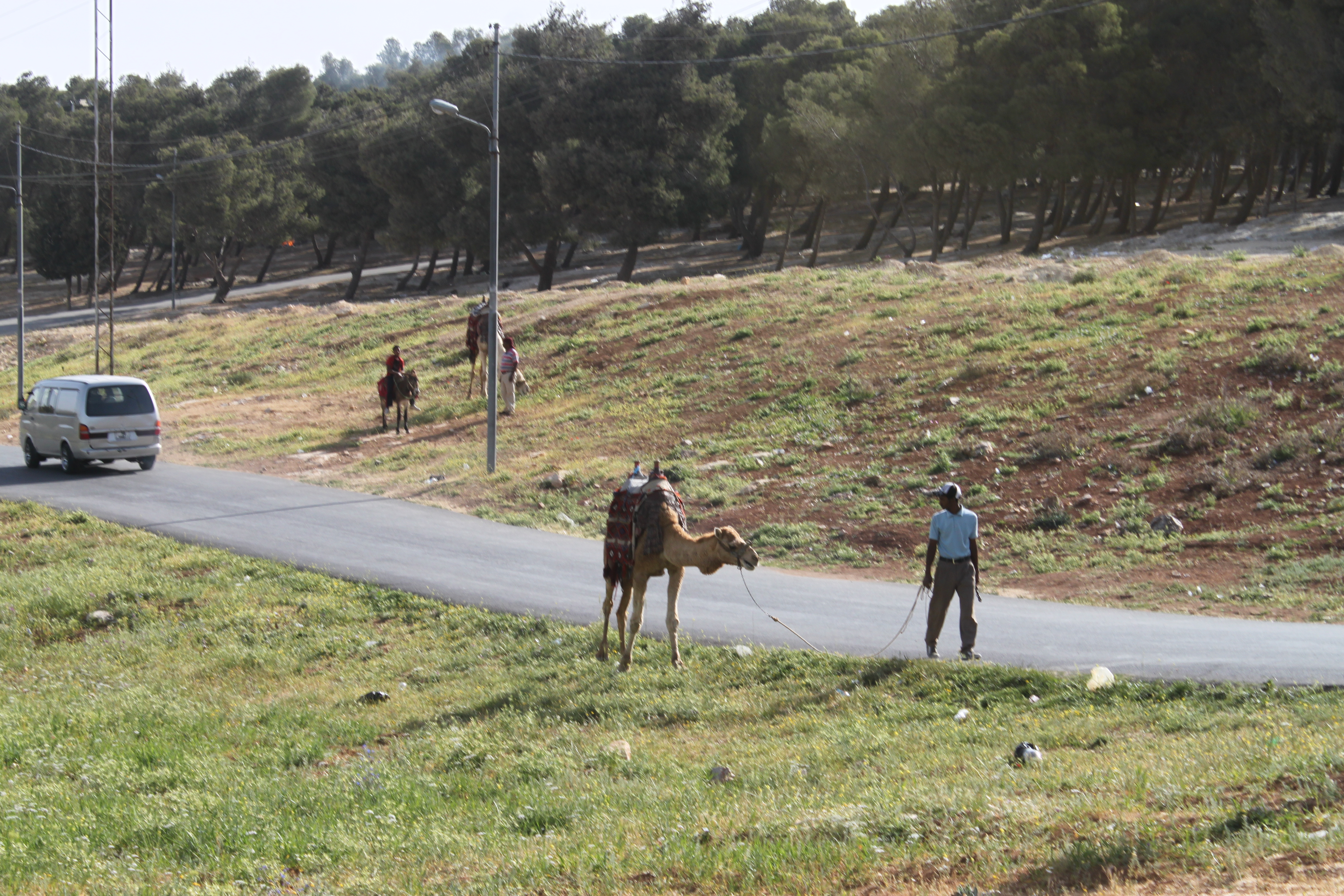
Jordan’s Independence Day rolls around every May 25, celebrating when British command over this land once called Transjordan ended back in 1946. So, last weekend in Amman, the streets dressed up in banners and flags and fireworks blazed in evening skies. Jordan’s party pretty much mirrors America’s July Fourth: less fun on the waterfront, but plenty of music and speeches and barbecues and picnics. Jordanians love their picnics. Who needs a holiday? Picnickers set up camp for any reason anywhere.
The picnic spot du jour is midway between the airport and the city, where you can fire up the grill and watch work crews install the ginormous Aqaba-to-Amman waterline, see the new airport highway go down, or gaze at the Ikea growing out of a tomato field. Lay down a blanket along any busy road, let the kids play catch while 18-wheelers whizz by. Light up your shisha on an inner-city traffic island. Just as Cole Porter presaged: anything goes.
I’ve been a resident tourist for the past ten months, visiting my new home’s most popular attractions. I experienced trash-rage. It was easy to blame the landscape of bottles, cigarette butts and ubiquitous plastic bags on careless foreigners. Then I had an epiphany: it’s unfair to pin-the-trash-on-the-tourists. Locals are the largest litterbugs.
New Toilet Business 2theloo Flourishes in Tel Aviv

Will there be less public peeing on the streets now there’s a high tech public toilet in Tel Aviv?
Haaretz reporter Roy Arad recently wrote that in all his career as a journalist he has never seen people so happy as the Israelis that have just used 2 The Loo on King George Street in Tel Aviv, a new pay-per-use bathroom offering a clean toilet and foamy soap for NIS 3 (about $1). According to one elderly customer: “You saved a life in Israel.”
Dye Your Hair Naturally With Henna
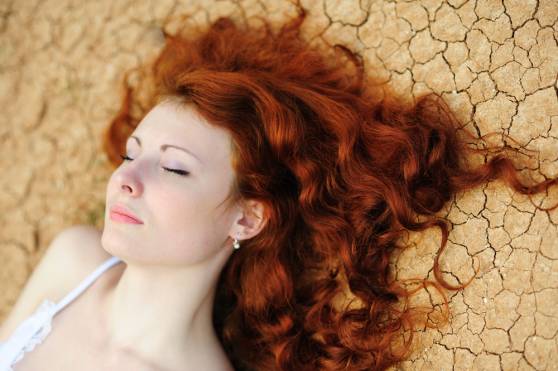

If you want naturally beautiful hair (or temporary tattoos), turn to henna.
Anyone living in the Middle East has often seen little old ladies with kerchiefs tied under their chins and long, orange-colored braids falling down their backs. They dye their hair with henna, the dried and powdered leaves of Lawsonia lythraceae.
But modern women know methods of applying henna that yield lovely shades of hair color, from strawberry-blond to mahogany and even raven black. All this without any of the 500 synthetic chemicals in commercial hair dyes. (And for another shocker, find out what’s in your lipstick.)
Or what new toxin is in your eyeliner.
There are some doubts as to long-term health consequences of conventional hair dyes. While science waits for conclusive evidence of links between cancer and hair dyes, here at Green Prophet we always favor the natural way.
Another advantage of henna is that it’s as good for your hair as our natural moisturizer is for your skin. Any woman used to commercial hair dyes either puts up with dry, itchy, flaky scalp, or treats it with specialized shampoos and hair masks. Henna, on the other hand conditions the hair, leaving it silky-soft and strong.
Some claim henna cures dandruff and even that it gets rid of lice. The last claim may have something to it: the paste may suffocate the insects and their eggs.
There are other herbs that are called henna, also used over centuries to treat hair. So-called “neutral henna” is Cassia obovata, used to strengthen and condition hair without dramatic color change. However, it will stain white or grey hair yellow. There is also “black henna” which is indigo. It gives a harsh, blue-black color to hair and is best mixed with henna for a softer, more natural black.
Pure, natural henna grants only one color change: to red. Depending on your hair color before application, the result will be lighter or darker, but some shade of red it will be. It takes combining henna with other herbs, and a little experimentation to obtain the shade you want. (Suggestions for herbal combinations below.)
You will see that most of the work involves protecting the skin from staining. Applying henna takes just a few minutes, and then you will need at least an hour to sit around while it does its work. Time-intensive and messy? Yes. But think of how less expensive it is than a session at the hairdresser’s. And you won’t need dandruff shampoos and hair masks anymore either.
How to Apply Henna
The smartest way to experiment is to test your herbal combination on hairs taken from your hairbrush, taking notes every step of the way. After applying, rinse the strand with conditioner and then with warm water. If you’re not satisfied, try another herb or re-apply your combination to the same hairs after they dry.
Make sure to buy body art-quality henna powder. It should be a light green and smell like hay. Packaged henna products that include a “developer” contain synthetic ingredients. If you are tempted by a product offering pre-mixed colors, examine the label carefully. If it claims to have 100% henna, it is false. Remember, henna makes hair red, and only red. There are reputable products with mixes of henna and herbs. Their labels list all the ingredients.
Ingredients and equipment:
3 tablespoons body art-quality henna powder
1/2 cup boiling herbal infusion made with distilled water, or plain distilled water
A medium bowl dedicated to this purpose (it will get stained)
An old spoon or a chopstick
A few sheets of newspaper to stand the bowl on
Shower cap, bathing cap, or plastic wrap
Gloves
An old long-sleeved shirt
Conditioner
How to use Henna
12 hours before dying the hair, mix the henna with just enough boiling water (or herbal infusion) to make a thick paste. Stir with a chopstick or another utensil you don’t mind getting stained. Be careful not to splash. Put aside any extra herbal infusion.
Cover the henna paste and let it stand at room temperature 12 hours. Check once or twice to make sure it’s not drying out. If it does, moisten it again, taking care to keep it thick, not runny.
Have a roll of plastic wrap ready, or a rubber cap. Wear an old long-sleeved shirt to protect arms and shoulders from dye stains. Use gloves – this is essential. You do not want to dye your hands orange. Rub non-petroleum jelly or cream around your hairline to protect your face from the dye.
Massage the moist henna paste into your hair. Take your time and be thorough.
Cover your hair with the plastic wrap or cap. You may ask, what did all those grannies do before there was plastic? Well, next time you come across one, look at how uneven her dye job is. Where henna dries out, it stops working.
Keep the henna paste on your hair for an hour at least. It will continue dying the hair as long as you leave it on. 2-3 hours is even better.
To wash the henna out, apply handfuls of conditioner to the hair, still wearing gloves. Massage well and rinse out. Repeat if necessary.
Notes:
- The initial color may be different than expected for the first day or two, while it undergoes oxidation. Be patient and wait to judge if you need another application or prefer to try another herbal infusion. If you’ve done your experimenting on hair collected from your hairbrush beforehand, you will have an accurate idea of what to expect when you apply your mix to all your hair.
- Henna color is permanent. It will change with blow drying or additional treatments, but it will remain until it grows out.
- Extra henna paste can be frozen for the next time.
Some suggested herbal mixes:
- Infuse green walnut leaves in boiling water for 1 hour for rich brown shades.
- Hibiscus tea mixed with henna yields auburn tones.
- Chamomile tea yields blond highlights.
- Marigold flowers yield blond-red color.
- Black coffee mixed with “neutral” henna will darken grey hair.
- Rosemary darkens hair. So does black tea.
- Honey, especially mixed with cinnamon, will lighten hair for quite a long time.
- Lemon peel infused in boiling water also lightens hair.
Cautions:
- Coffee, black tea and rosemary in henna will keep you awake, just as if you had drunk a strong cup of one. If using one of these, apply your henna mix in the morning or early afternoon.
- Likewise, herbs that are used as medicine, for example St. John’s Wort, are sometimes recommended to mix with henna. Avoid them.
- Do not assume that ingredients you’re allergic to won’t affect you. They absolutely will. If in doubt, dab a spot of your mix on your arm or leg and wait 24 hours.
- Lemon juice damages hair. Infuse lemon peel as suggested above, instead. A reader suggests that some may be sensitive to this, so a spot test is a good idea with it.
- Use distilled water only. Minerals from tap or well water may give unexpected results (like blue or green shades).
More on natural beauty from Green Prophet:
5 Things to Avoid to Keep Your Complexion Beautiful
Eco-Conscious Cosmetics
5 Natural Ways to Keep Your Skin Beautiful
Soothing Masks and Cleansers for Summer Skin
Corporate Organic Food Struggles to Compete in Israeli Markets
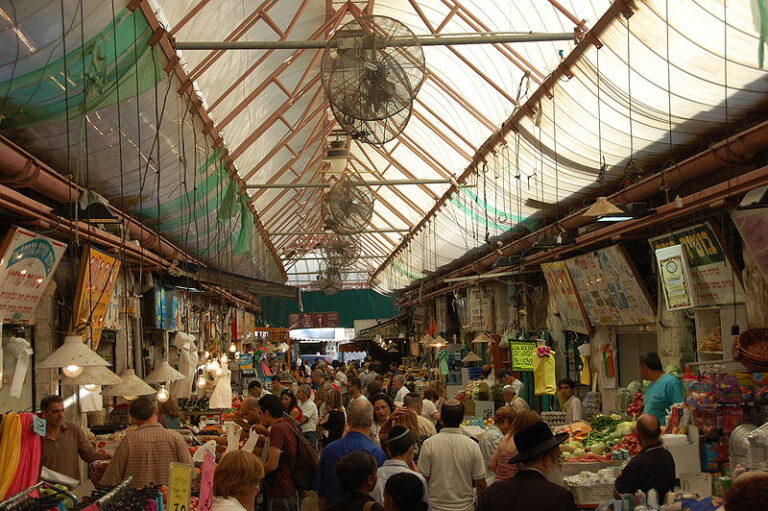
 In Israel the organic food market is still comparatively small and underdeveloped.
According to the Israeli newspaper Haaretz organic food only comprises one and half percent of Israel’s agricultural output. A whopping 90% of it is exported abroad, mainly to European markets.
An annual Agriculture Ministry survey in 2011 discovered that 37.4% of the organic produce sold in Israeli stores was mislabeled. The produce may have contained pesticides or in other ways fallen short of the ministry’s organic regulations. This may be part of the problem.
Outlaw Biking with Headphones Say Israeli Lawmakers in World First Ban

 Headphones kill pedestrians and cyclists who can’t hear traffic. Israel proposes new legislation to ban the music while cycling.
Israel is rapidly becoming a nation of bikers, from cycle-tourism to the bike-sharing program that earned Tel Aviv municipality a Green Globe Award this year. But it has proven a risky method of transit on crowded streets. Sunday, May 13 the Israeli Ministerial Committee for Legislation proposed a bill to improve the safety of urban bike routes. That will mean no headphones on MP3 players, iPhones or iPods while riding.
Clean Reusable Totes, Or Risk Going Green
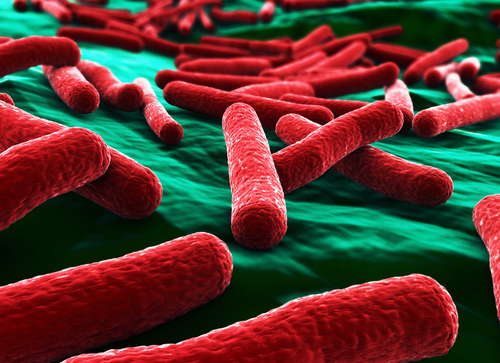

Your reusable totes may be full of bacteria and can turn you seriously “green”. Time to practice good bag hygiene.
Researchers at the University of Arizona tested 84 reusable shopping totes and found over half were contaminated with harmful bacteria, including the dangerous E.coli. Contamination occurs when fluids such as fruit juices and meat blood leak from their packaging and deposit miniscule droplets onto the bag material. Fungus and mold can also thrive among the fibers. Appetising, eh? We plop these bags onto supermarket check-out belts, car trunks, driveways, and kitchen counters. None of these surfaces are sparkling clean; the bags up their invisible “ick” factor with each movement.
The study also showed that most bags are never washed.
Do a healthcheck of that last stat amongst your recycled-bag-using peers: unless mine are especially piggish, none (myself included) ever toss the totes into a hot wash. I’m guilty of throwing the grungiest bag out and buying another, and I see that’s not much better than if I went for plastic in the first place.
Handbags are another germ magnet
During an annual Christmas dinner, my pal Agnes gifted me a dainty enamel butterfly with what looked like a meat hook coming out of its bum. She explained it was a purse hanger and proceeded to destroy everyone’s appetite describing all the invisible schmuck crawling on my purse’s bottom.
Maybe you’ve seen these things? The pretty butterfly alights atop a table, and the fat hook suspends your bag – germfree – below.
I took her point. My favorite bag is “well-seasoned”; it’s clocked more miles than Richard Branson. I take it everywhere, and plunk it down on the floor without thinking twice. I’ve never washed a handbag. Have you?
Good handbag hygiene suggests a daily wipe-down of the exterior with an anti-bacterial soap. Sheesh, who has the time? We ought to keep an eye on what’s inside the bag too: stow lotions, potions and food products in sealable containers. Tighten the caps.
I do wash my backpack. I know better than to let this workhorse fester from the invisible hitchhikers it picks up at the gym and on hikes and in overhead airplane bins.
Same tips apply to our other household reusables
Fruit bowls are an attractive nuisance. Over-ripened fruit and veg can harbor bugs called pseudomonas which can cause infections and severe gastrointestinal upset. Listeria and salmonella also creep inside the cornucopia.
Recall the E.coli organic cucumber outbreak that killed 26 and left thousands gravely ill? Always wash your produce. Swab your storage containers weekly.
Remember that “punish good deeds” folder? Good to get multiple uses from plastic drinks bottles, but refillings will likely contain high levels of bacteria unless bottles are properly cleaned, and refilled with hands that are, in turn, properly cleaned. So, after a week of careful refilling, drop commercial water bottles into recycling. Give your sports-type water bottle a weekly wash in boiling water.
Soft toys are stuffed with dust mites
According to a story in the Daily Mail, researchers at New Zealand’s Otago University found more than half the cuddly toys tested contained high levels of these critters known to aggravate eczema, allergies and asthma.
I learned this fact in the ‘90s. My eldest is mildly asthmatic; his Spartan bedroom was an allergen-free showroom. Easily dusted Lego and plastic Godzillas were the only tenants on his shelves. But for a dozen years, my daughter slept in a sea of Beanie Babies. This kid could sleep in a sandstorm and not sneeze, but I still took precautions. Every week I tossed her toys in the dryer for an hour’s hot tumble. Not even the mightiest of mites could survive.
Better yet, ban plush toys as bedfellows. And never, ever put them in your marketing tote or fruit bowl.
Qatar Fire: Expatriates Furious Over Officials’ Lackadaisical Attitude

Ten minutes after a fire broke out in Doha’s Villaggio Mall yesterday, an expatriate and Doha News reader Paula Rodrigues Duarte claimed that officials failed to discourage her from entering the mall. “Not security or police. I was actually walking towards it unknowingly till I saw people running back and turned around and left. No alarms, no sprinklers, nothing,” she wrote on the paper’s Facebook page. 19 People died in the fire, including triplets from New Zealand.
Saudi Prince Sues the City of Los Angeles Over Palatial Building

Saudi Prince Abdul Aziz bin Abdullah – the son of King Abdullah and deputy Foreign Minister – has sued the city of Los Angeles. In 2009 the King’s third son purchased a 5 1/4 acre plot of land in a wealthy Beverly Hills neighborhood for $12 million through his firm Tower Lane Properties.
But once the surrounding community caught wind of Abdullah’s 85,000 square foot plans (akin to constructing a giant Walmart in their neighborhood, they said), 1,000 residents signed a petition urging the city to ensure that appropriate environmental impact assessments are conducted prior to allowing the project to proceed.
Morocco’s Atlas Kasbah Eco-Lodge is 80% Solar-Powered
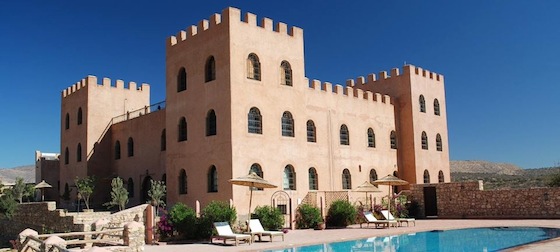
It may look like a castle, but this beautiful red-earth building is actually an 11-roomed hotel that receives 80% of its energy from the sun. And like the eco-lodge, Hassan and his wife Hélène of the Atlas Kasbah are no run-of-the-mill owners. He is Berber, she is French, and they both possess Masters Degrees in Sustainable Development.
Their facility in Morocco’s UNESCO-protected Argan Biosphere Reserve – just a skip from Agadir’s popular beaches – has won a bevy of green accolades that distinguishes it as one of the most sustainable eco-tourism establishments in the entire country (if not the Magreb!)
London Mosques Start Beekeeping Trend
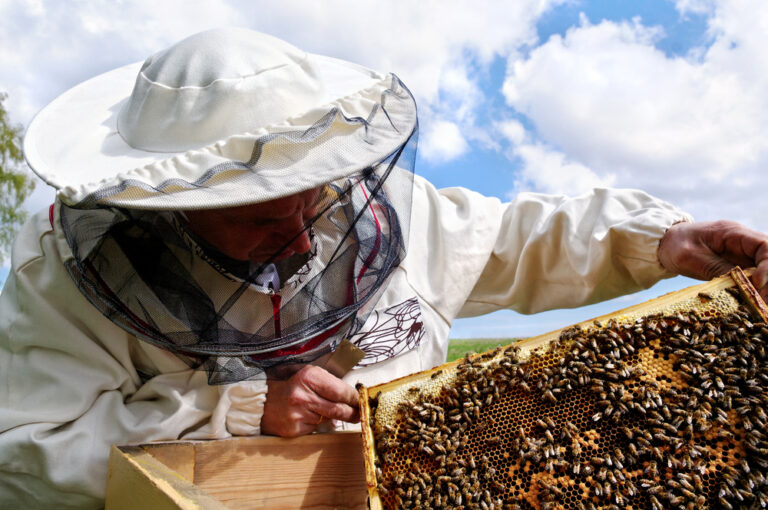
 Two mosques in London have taken up beekeeping – and there are plans to encourage more to join the quest to save dwindling bee populations
When Kingston mosque in London introduced between 10,000 and 15,000 bees onto its premises last summer, the congregation was naturally quite concerned. Would it be safe? Would bee swarms gather at the mosque? Would it be dangerous for children?
However, once local beekeeper Munir Ravalia explained that the beehive wouldn’t be a health and safety risk on the roof, they were pretty eager to find out more. “Once we dealt with worries about safety, lots of people were just curious about how it would all work and when they would be able to get some honey!” explains Munir Ravalia.
Blatt Chaya Revives Traditional Floor Tile Making in Lebanon
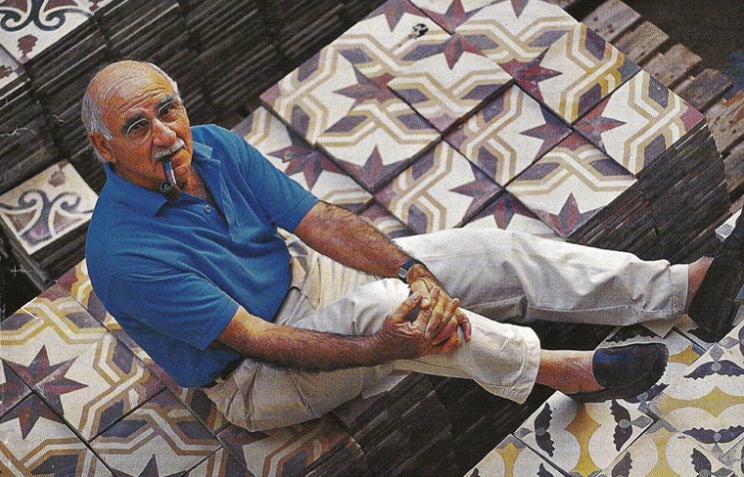
 Edgard Chaya and his family bring back ancient tile making practices and Lebanese “neo-traditional” architecture
After being handed over a case filled with 12 brass molds and stumbling upon a jumble of colored tile fragments and exposed patterns in his family’s wrecked cement tile factory, retiree Edgard Chaya was destined towards a new chapter in his life: reviving Blatt Chaya, his family’s disused artisanal cement tile production in Lebanon.
Turkey’s Early Hydroelectric Dams Featured in Exhibit
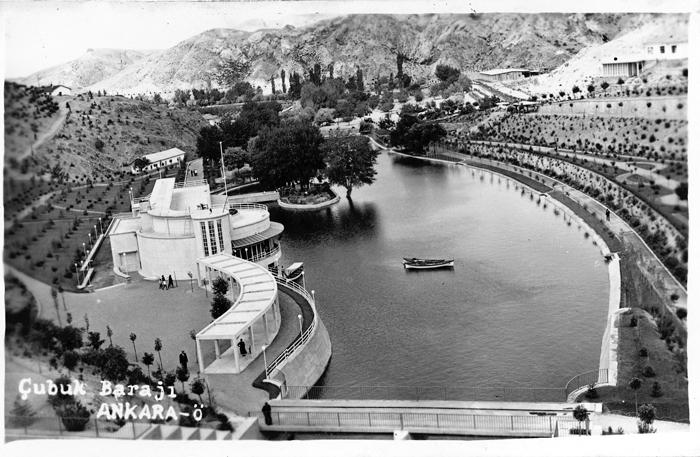
 The first hydroelectric dam built in Ankara, Turkey’s capital city, the Çubuk Dam was promoted as “Ankara’s Bosphorus”.
A new exhibit at Istanbul’s avant-garde SALT Galata gallery, Graft, throws open the archive of material about Turkey’s first major hydroelectric projects in the 1930s. The display critically analyzes the motives behind these early endeavors — and the effects of the extensive hydroelectric industry they spawned in Turkey.
Is Sport Hunting on its Way Out in Israel?

Wild Boars are hunted illegally as well. Photo:Haaretz/Nir Kafri
Wildlife in Israel have always been under threat from economic over-development and hunting, including poaching by migrant farm workers. Illegal poaching and outdoor hunting in the country has now reached levels that could soon result in some animal species becoming extinct or unable to naturally sustain themselves in the wild. This revelation was reported in a recent weekend magazine article in Haaretz. Local Druze for instance are hunting porcupine to extinction.
A variety of wild mammals and birds are at risk, ranging from hoofed mammals such as gazelles and wild boar to smaller creatures such as hares (once plentiful but now scarce), partridges, and at least two species of porcupines.
In addition to the habitats of these animals being diminished by agriculture and housing construction, illegal poaching by hunters (many of them licensed) is becoming a problem that Israel’s Nature and Parks Authority are struggling to cope with.
The Nature and Parks Authority (NPA) is the body that sends out game rangers to patrol open areas where wildlife live. As reported in Haaretz, Dr. Yariv Malihi, wildlife ecologist for the NPA’s central district, made the following foreboding statement regarding the future for many kinds of wildlife – as well as for natural habitats themselves:
“Nature in Israel is fragile and hanging by a thread. It is under assault from every direction: infrastructure, development, activities in the field (including illegal hunting), and the desire of people to live. In recent years, this has been compounded by criminal hunting, which involves night pursuits with the use of projectors, indiscriminate shooting, and intimidation of the wild populations. The animals are in constant stress, and this has a critical influence on their ability to reproduce. This element of stress that hunters inject into their world can bring about the collapse of whole populations that are already at risk.”
The larger hoofed mammals which need more habitat and food supplies to survive are also being threatened by what is now their no. 1 predator : man. Gazelles are hunted illegally for their meat that is sold on the black market for high prices.
Porcupines, a large nocturnal member of the rodent family, are especially prized for their meat by Druze hunters.
Porcupines are often caught in traps baited with vegetables at the entrance to its burrow. If it can’t free itself, the animal is clubbed to death by the hunter, as shooting it damages the meat. Wilds birds, including doves and pigeons, are also hunted as their meat, along with ducks and partridges.
Of the 2,160 hunting licenses still issued each year, the NPA estimates that fewer than 500 people actually hunt for sport. Although many of these try to obey the laws and do not hunt illegally (I used to be one of them until I gave it up more than 12 years ago), many others may be poaching as selling wild game can be quite profitable. Although the law calls for heavy fines, few fines for poaching have ever been issued.
A new law is being considered in which hunting will be discontinued as a sport; only hunters who win permits by lottery will be permitted to hunt wild animals that are considered to be causing damage to crops and private gardens. The animal that falls mostly into this category is the wild boar, which has managed to coexist with humans although it doesn’t go near them, except to raid gardens and crops.
Changing the hunting laws may help protect endangered and stressed wild animal species, but NPA officials are worried that this could put further strain on the fragile “cultural ecology” that exists between Israeli Arabs, Druze and Jewish populations that live within close proximity to each other in the areas where game is hunted, as well as the country as a whole.
Read more on illegal animal hunting and poaching:
Maltese Hunters Legally Massacre Egypt’s Protected Birds
Thai Migrant Workers Poach Wildlife for Food in Israel
Israel Animals Killed by Economic Development
Sheikh Abdul Aziz: A Green Sheikh Who Cares About Our Planet
World’s Largest Artificial Lagoon Nears Completion in Egypt, Despite Chaos

When we first learned about the 120,000 square meter artificial lagoon in Sharm el Sheikh designed to be the largest of its kind in the world, we wondered whether it would lift off or crumble in failure as so many of Egypt’s grand projects have done. We need wonder no more since World Architecture News has reported that it is remarkably close to completion.
Despite all of Egypt’s chaos – the revolution, violent clashes with SCAF and the lead-up to the presidential elections – construction of the massive 7.5 million square meter Citystars Sharm el Sheikh development project, which includes the addition of 12 artificial lakes – has persevered.