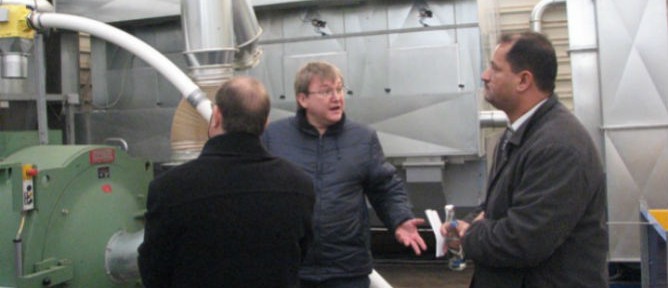
Environmental law has proven to be quite dynamic in the Middle East. Some countries have made great strides toward protecting resources and preventing pollution. Others have done little to tackle environmental problems head on due to competing interests or public funding shortfalls. Although the majority of countries in the Middle East are Arab and Muslim, each has a different approach to its regulatory system. Vermont Law School, recognizing the complex issues surrounding environmental law in the region, recently launched the Middle East Environmental Law Project (MEEL). We caught up with John Echeverria, Director of Vermont Law School’s Environmental Law Center. He explains why environmental law is important in the region, and what MEEL is doing to advance it.
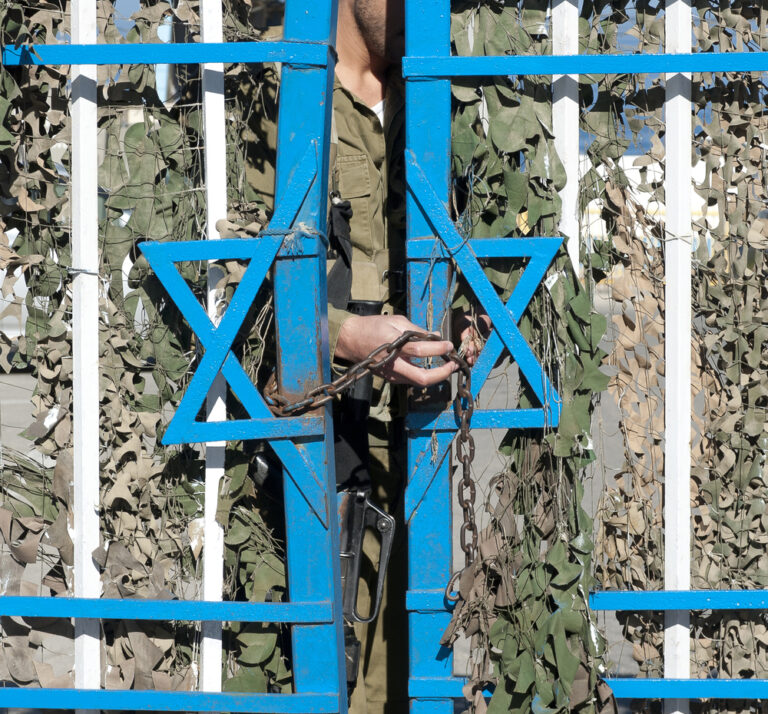
Why Israel Is Wrong To Fear Climate Refugees

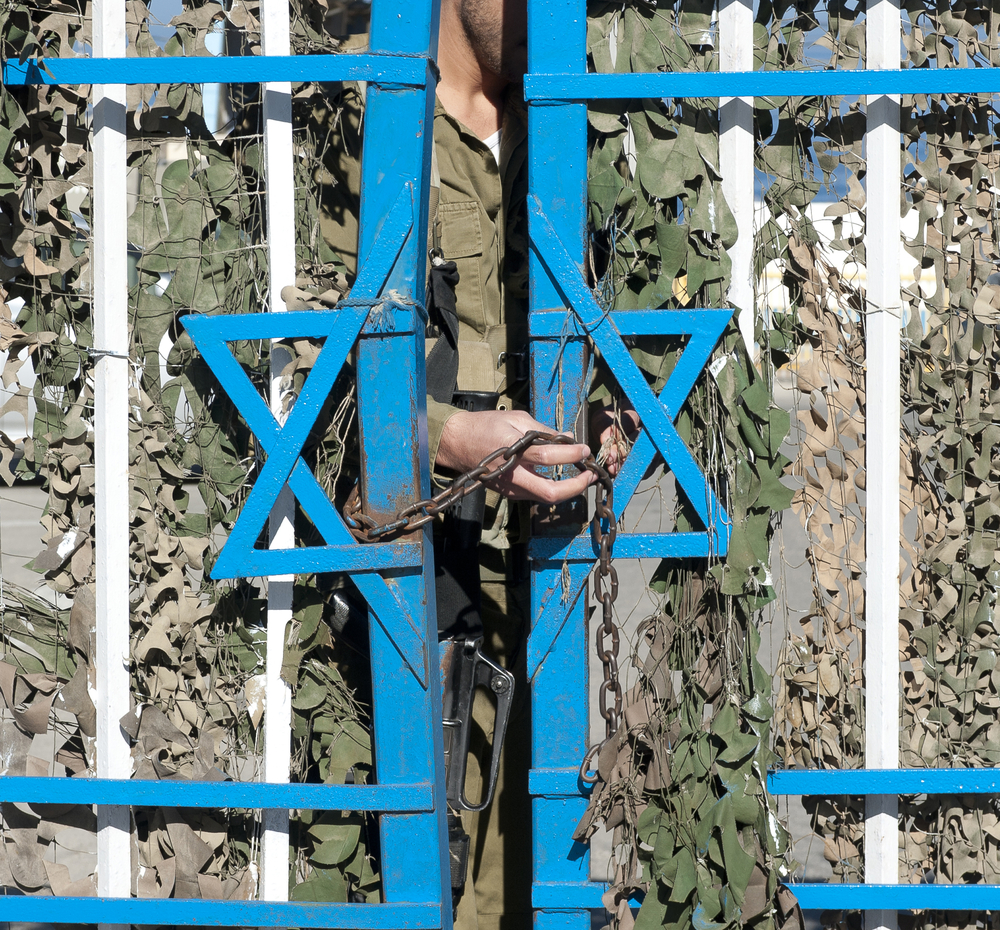
Experts are calling on Israel to completely enclose its borders with a barrier to keep out ‘floods of climate refugees’
Around two months ago, a small piece of research carried out by the University of Buffalo found that in environmental disasters, humans tend to make things worse. Rather than getting together to resolve issues, the bickering starts and the fists start to fly. It’s a pretty bleak look at human society but one which I don’t buy into. I’d like to think that if/when things turn ugly due to runaway climate change, that the human race will sit down and try to avoid all sorts of nasty things like water wars. Indeed, there is a growing body of research which suggests that scarce resources could encourage better regional co-operation.
However, every now and then something happens which makes me doubt my faith in humanity and it’s ability to do ‘the right thing’. The recent report presented to Israel’s environment minister suggesting that they build a border fencing – including a marine border in the Mediterranean and Red Seas – to keep climate refugees out is one such example.
Briton Replaces Gulf Developer’s Costly Cooling with Solar
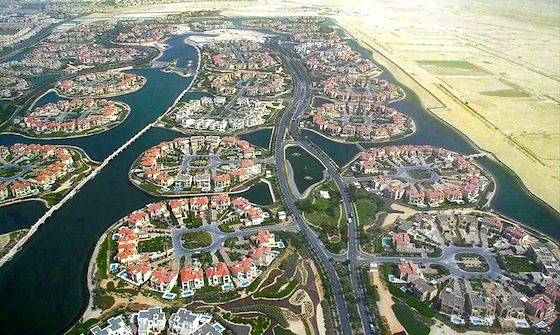
Residents of the artificial Jumeirah Island villas in Dubai face cooling bills of up to $1,600 a month – almost double last year’s price, according to The National. So British national and long-time Dubai resident Tony Caden decided to install an array of 38 solar panels and a giant 20 tonne chiller. Now completely independent of Nakheel’s district cooling service, the head of an oil and gas industry service company says that he is ecstatic to have re-gained control over the quality of his own life.
Can Qatar Balance its Oil Interests and Host a Successful Climate Summit?
I speak to Qatar-based environmental researcher Mari Luomi about the balancing act Qatar has to perform at the upcoming climate summit
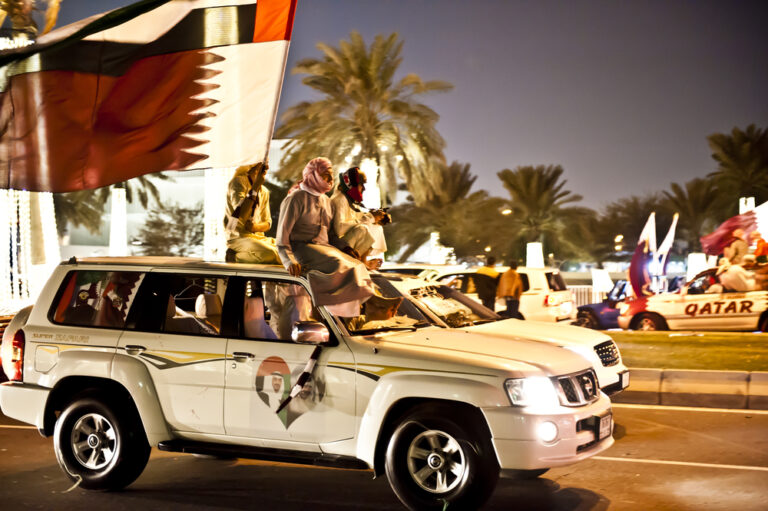
You could say that Mari Luomi’s environmental education began at a very early stage. Wandering through the forests and lakes of Finland when young, she explains that she learnt very quickly that human societies formed a part of the Earth’s ecosystems- and not vice versa. This love and interest in nature later developed into a fully-fledged career and she is now a Post-Doctoral Fellow looking at the environmental issues facing Gulf nations at the Center for International and Regional Studies of Georgetown University in Qatar. In the run of the climate summit in Qatar later this year, I caught up with her to talk politics, the challenge of behaviour change and what an OPEC nation with the world’s largest per capita carbon footprint has to offer the international community in terms of dealing with climate change.
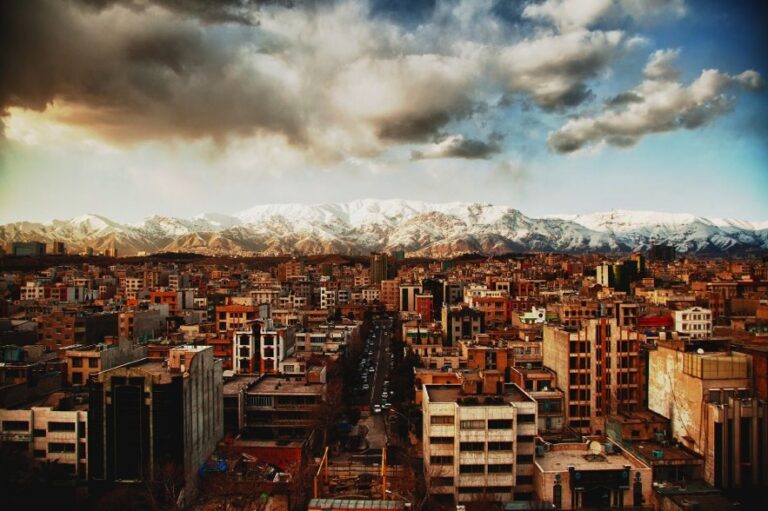
Mesopolis in Tehran: Re-Thinking Daily Floods of Wasted Water
It may surprise many Iranians living in the country’s dense and sprawling desert capital to know that millions of cubic liters of water are wasted every day. But where? Underground mostly, although occasionally modern construction projects smack up against an ancient irrigation system called quanats, resulting in devastating water losses and other destruction.
How to revive one of the world’s most sustainable water irrigation systems that only relies on dynamic aquifers is the focus of an upcoming workshop in Tehran entitled Mesopolis. Although months away, the September workshop led by HydroCity – a Toronto-based academic research team, could use a fiscal boost.
Jordan Suspends Its Nuclear Plans Amid Controversy
Jordan has supported a parliamentary committee recommendation to suspend Jordan’s projected nuclear programme

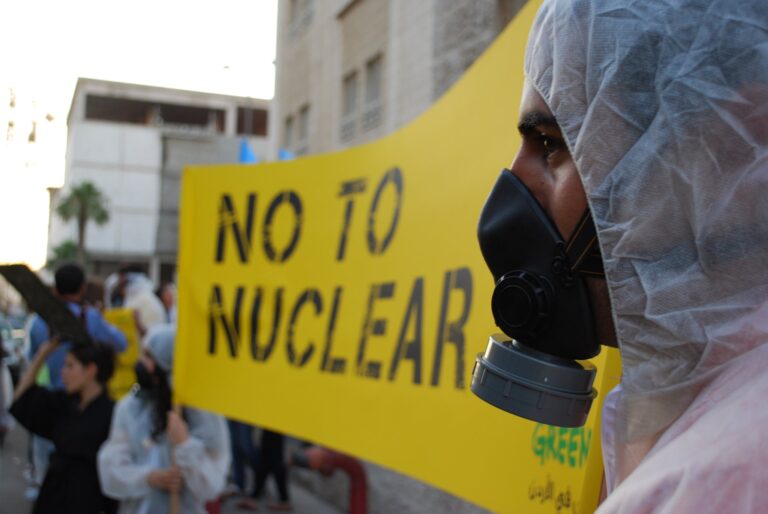
It’s certainly been a busy week for Khaled Toukan who is commissioner of the Jordan Atomic Energy Commission. First, a parliamentary committee releases a report which states that he misled the public about the feasibility of uranium mining in Jordan and that the Commission was “hiding facts” about the cost of a nuclear reactor. Then a recording alleged to be of Toukan emerges in which he calls those against the nuclear programme “donkeys and garbage men.” Following these two events, a protest was held calling for his resignation and MPs are now supporting a parliamentary recommendation to suspend the programme citing the hazardous consequences of nuclear.
Jordanian’s Nuclear Meltdown Resembles a Soap Opera

Jordan’s parliament voted last week to shelve the nation’s nuclear power program due to doubts over project financing. The action stopped this divisive project viewed by some as a solution to the country’s dependence on imported energy, and by others as a reckless use of resources with unacceptable risks. The vote suspended construction of Jordan’s first reactor and also the uranium mining agreement with French energy conglomerate AREVA. Both projects will remain inactive until new economic feasibility studies are completed.
The Eco Army of Cyprus
Going green and doing it for the troops, in Cyprus
“Going green” is a new defense tactic modern military: From the use of solar energy to power field re-chargers for communication equipment to finding new ways to supply troops with drinking water by moisture condensation from vehicle AC units. Armies going green is a new tactical offensive in warfare, especially when it means saving fuel and resulting in less need for fuel supply lines. Cyprus, a small EU island off the coast of Greece and Turkey is the latest army to join the trend. Their reasoning: It’s good for the young troops.
Tire Burning Protests in Lebanon Just Dirty Smoke
Lebanese burn rubber tires as protest, meanwhile the public risks greater chances of cancer
The Daily Star has released a recent on how tire burning is the preferred manifestation of anger and frustration for Lebanese protesters. After each of the recent incidents in Lebanon tire burning took place, during the civil war burning tires were used as makeshift checkpoints, the death of Egyptian president Gamal Abdel-Nasser in the 1970s was mourned by burning tires, in May 2008 Hezbollah Future Movement fighters turned West Beirut into a battle field by burning tires, and when Lebanon’s public transportation sector held a nationwide strike last month: tires were burned. These are just some examples.
Culture Minister’s Daughter Arrested in Connection with Qatar’s Fire
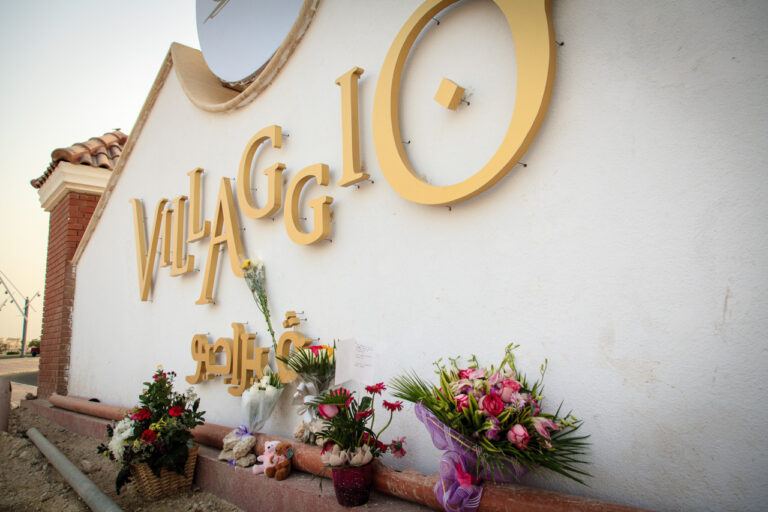
Qatar’s Culture Minister’s daughter is among five people who have been arrested in connection with the fire that swept through Doha’s elite Villaggio Mall on Monday. Imran al-Kuwairi owns the Gympanzee nursery where the fire erupted, killing 19 people. Among the dead are triplets from New Zealand, three Spanish siblings, two firefighters and four caretakers.
The Rock Stadium Rises from the Desert in Sharp Planes
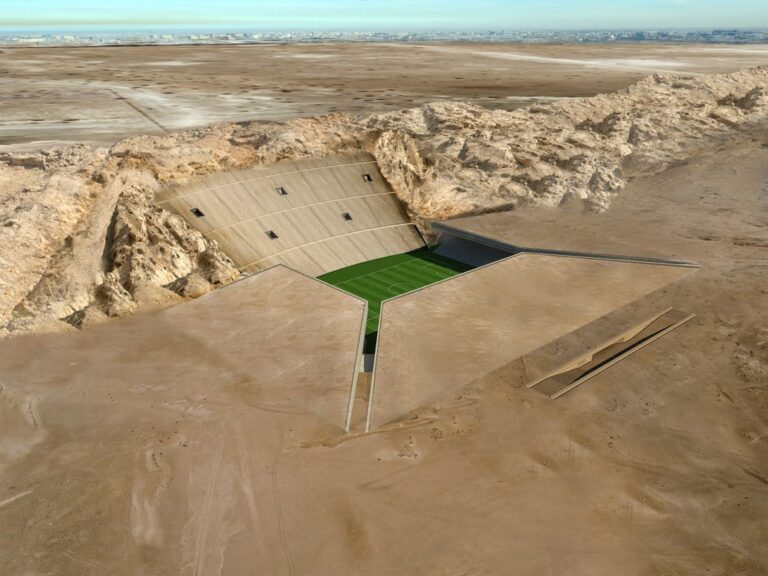
If you’ve ever had the experience of driving through a vast, mostly uncluttered landscape that is suddenly interrupted by a large, ill-fitting manmade structure, then this project by MZ Architects will appeal to you. Sustainability experts with offices in Lebanon, Morocco, Abu Dhabi and elsewhere, the designers have pushed the stadium underground and set it apart from the remaining void with sharp planes that are camouflaged from a distance. The concept has been designed for Al Ain – Abu Dhabi’s second largest city.
Bauhaus Design Goes Underground in Tel Aviv
Galmidi Yitzhar and the industrial designer Yaksein Eliran won first place in a design competition for a new underground train station in one of Israel’s most vibrant cities – Tel Aviv. Borrowing inspiration from some of the city’s most iconic features, such as its ubiquitous collection of Bauhaus architecture and the Ficus Microcarpa trees planted throughout in order to provide shade and shelter, the pair have designed a subterranean space that swims in natural light.
Better Place Electric Car Spotting
Seeing a prototype Better Place EV car is a lot different than the real thing on the road. Photo by Maurice Picow
More than five months have passed since Shai Agassi’s Better Place electric car company put its first 100 Renault Fluence EV on Israeli roads. The event was covered with a certain amount of local fanfare and only afterwards was it revealed that a number of these cars were sent to major rental car companies for their use and not to private buyers. That was obvious to be expected, as the company’s EV car debut in the country where the Better Place electric car idea began is still in its trial period.
TRIDE Links Jordan, Israel and US in Clean Tech
In wealthy Western countries, renewable energy developments are a source of progress, pride and smart business. For Israel and Jordan, two Middle Eastern countries severely lacking in water and energy resources, renewable energy is a matter of survival.
That’s why there’s been a new green twist to the Trilateral Industrial Development Foundation (TRIDE), founded in 1996 as a pilot project under the wing of the BIRD Foundation – the Israel-US Binational Industrial Research and Development Foundation — to create joint ventures between Israeli, Jordanian and American companies. The latest iteration of the cooperative project will support water, agritech and renewable energy companies in the two neighboring nations, which have a peace treaty but only limited dealings.
As Israeli rigs start drilling for natural gas, a new disaster prevention agency is proposed to avert another BP-Florida Gulf disaster.