Home Blog Page 378

Dazzling Carpet of Plastic Bottles Adorns the Moroccan Desert

2

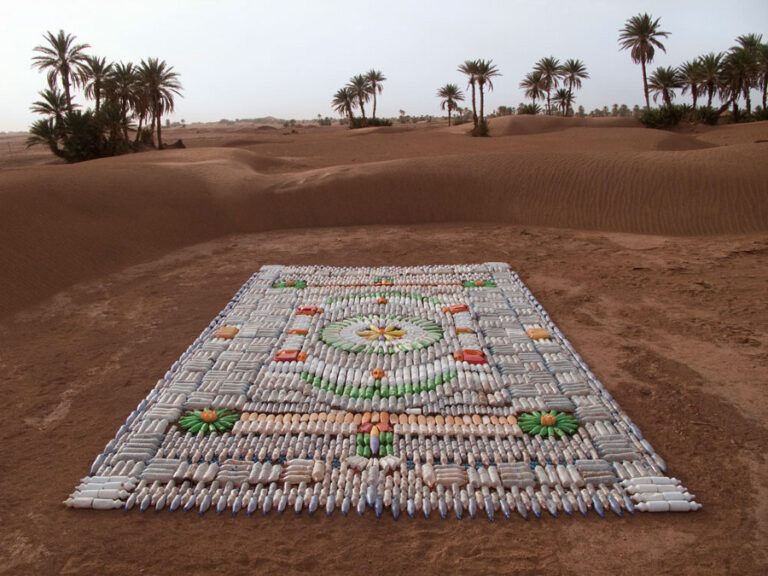
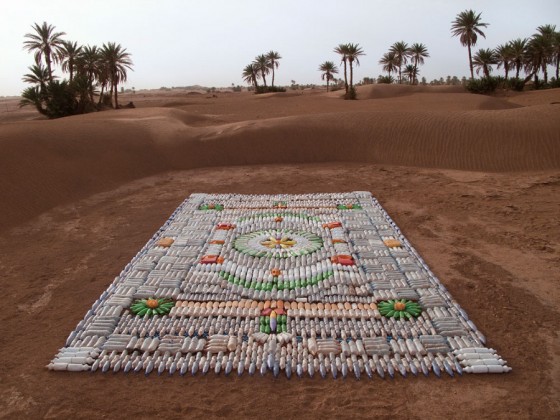
recycled materials, WE MAKE CARPETS, Taragalte Festival, Morocco, eco design, plastic carpet, bottle carpetNobody wants to see rubbish littering the magical Sahara desert, unless of course it belongs to WE MAKE CARPETS.  The Dutch collective has been arranging ordinary household objects into dazzling carpets for a few years now, but their most recent installation commissioned by the Taragalte Festival in southern Morocco is among their finest.

Made entirely out of dozens of plastic bottles arranged in surprising patterns, the Bottle carpet encourages spectators to look at waste with a whole new set of eyes.

Native Green Roof Tops Israel’s Proposed Fallen Sons Memorial

0

green design, Israel, Yad Lebanim, green roof, design competition, urban park, Ramat YishayIsraeli architects Moshe Fluhr, Lee Davidson Lehrer and Yinnon Lehrer submitted this design for a contemporary memorial home for Ramat Yishay – a community situated in northern Israel. The design competition for Yad Lebanim, which means Fallen Sons Commemoration, called for a mixed-use development complete with activity rooms, educational facilities, a library and an amphitheater.

Responding to the dearth of urban parks in the region, the trio topped their proposed design with a verdant green roof.

H&M to Launch the First Global Clothes Recycling Venture

1

H&M, fashion, design, recycled materials, clothing

Swedish retail company H&M recently announced an upcoming clothes recycling venture, starting in February 2013. The fashion recycling campaign will span 48 nations, including the company’s Israeli franchises. This will make H&M the first chain to execute a global textile-recycling venture. H&M is expected to choose two of its Israeli branches to lead the pilot program.

Fruitful Fusion “Trochets” Bean Bags from Trash

1

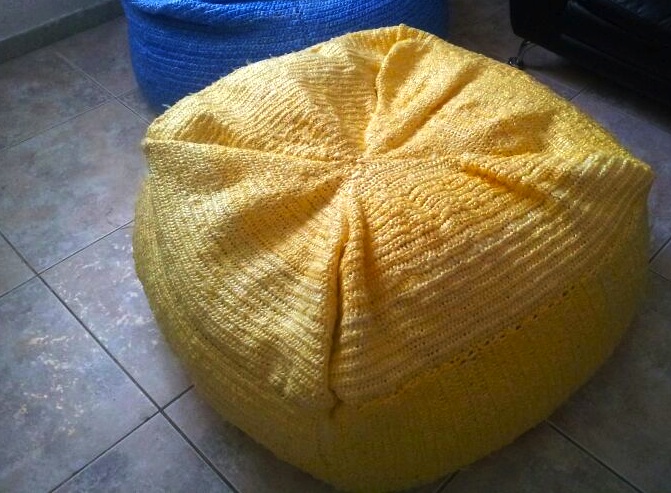
Concerned to reconnect hands and minds and make a worthwhile environmental impact, a few women from Saudi Arabia are crocheting recycled plastic bags into colorful bean bags and other quality crafts. The founder of Ateeq, which is Arabic for vintage, Diane Rayyan teamed up with crochet master Ishrat Khawja to hold a two day “trocheting” workshop. Weighing just under 20 pounds and made entirely from plastic, the bean bags are sold with other eco-goods to generate funds for low-income Saudi women.

GlassPoint Uses Solar Mirrors to Loosen Dirty Oil in Oman

0

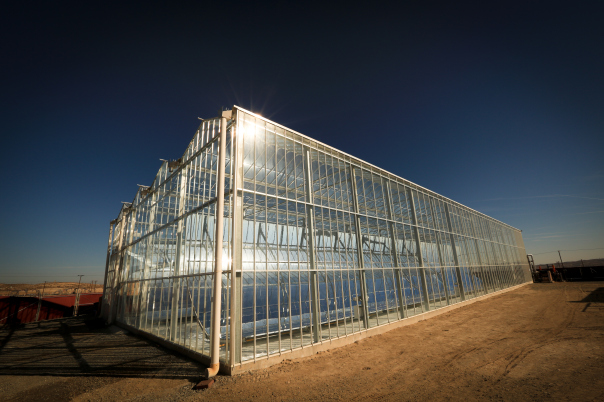
GlassPoint Solar, Greenhouse, CSP, solar energy, oil, Oman, clean techCalifornia-based GlassPoint Solar has installed an unconventional concentrating solar power (CSP) plant in Oman. Comprised of rows of six meter tall steel mirrors encased in glass boxes that look and in some ways act like greenhouses, this 7MW pilot project uses clean technology to extract dirty fossil fuels.

Commissioned by Petroleum Development Oman, GlassPoint has applied technology similar to that used by Areva and Abengoa to generate electricity, except there are a few fundamental differences.

Jordan Offers Cord Blood Bank for Your Newborn’s…Blood

1

muslim baby mom armsIs it creepy or clever to peddle insurance against baby’s first diseases?

Sure, new parents get showered with adorable gifts and well-intended advice, but then the downpour of unsolicited marketing arrives: for baby gear, for college saving plans, and now, in Jordan, for baby blood banking. An unusual building is rising in the desert outside Amman, all swooping curves and gaping windows.  A dewy-cheeked newborn graces the hoarding that skirts the job site, a single word painted across the panels: BabyCord.  The provocative advertising targets hundreds of people in the cars and trucks speeding past on the airport highway.

Israel’s Cruel Meat Industry Exposed by Watchdog TV Show

7

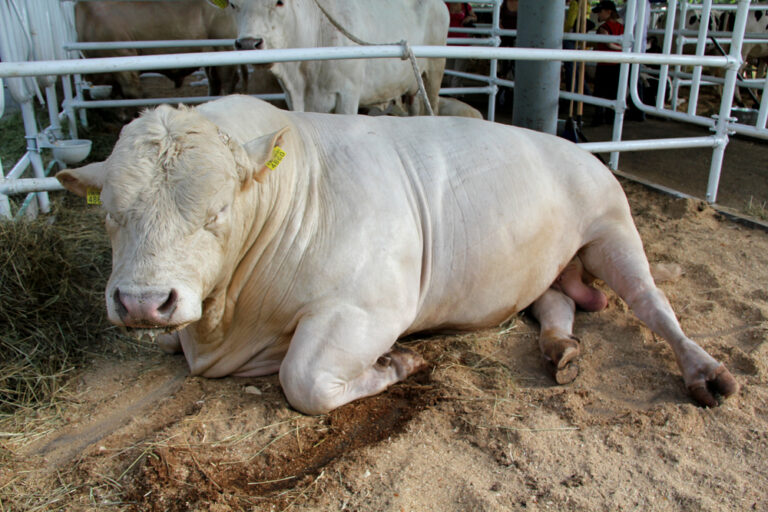
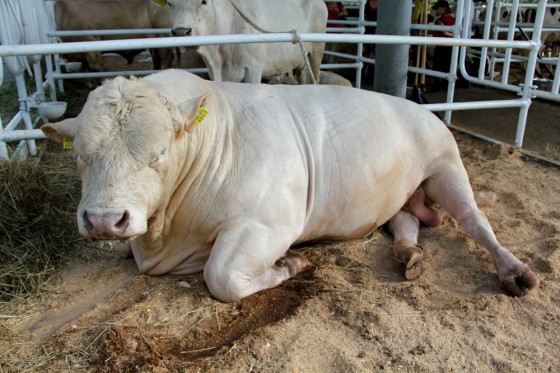
beast beef cattle on kneesWith no where to run, undercover cameras expose the cruelty to animals in the Israeli meat industry.

An Israel TV commercial about the Adom Adom (Red Red) meat packing company’s products seems pleasant enough.  A smiling butcher shows a well dressed matron the wonderful meat cuts being offered by this company which claims to sell “real red meat” and not meat that is loaded up with chemicals and other additives. The issue of meat additives is a concern in Israel and covered in a Green Prophet article dealing with Israeli meat being “fed with feces and pumped with toxic contaminants.” Now we go back to the commercial: At the end of it the butcher pleasantly sends the lady on her way saying “Adom Adom – Shalom Shalom” , which roughly translated means: “Thanks for buying our real red meat products”.

Real meat indeed. Although the processing of meat products at this company appears to be of fairly high standards, what happens physically to the animals brought to what is advertised as being Israel’s best meat packing company, was revealed December 6 on Channel 2 TV by the well known Kolbotek investigative program.

Greenpeace Blasts Turkish Nuclear Energy Institute Over Negligence

7

As Turkey moves to build its first nuclear power plant, there are troubling signs that the country’s nuclear energy institute is not monitoring nuclear hazards carefully.

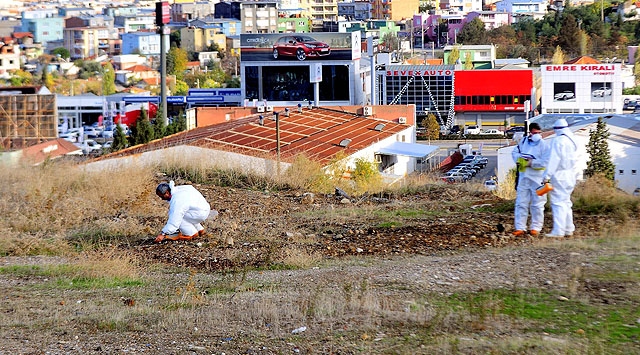
An abandoned lead factory yard used as a playground by local children in Turkey’s western İzmir Province contains high levels of radiation, according to Greenpeace Turkey, yet the Turkish Nuclear Energy Institute (TAEK) said the source of the radiation could not be found and pronounced the area safe.

Dar Beida: Eco-Luxe 18th Century Sandstone Villa in Morocco

0

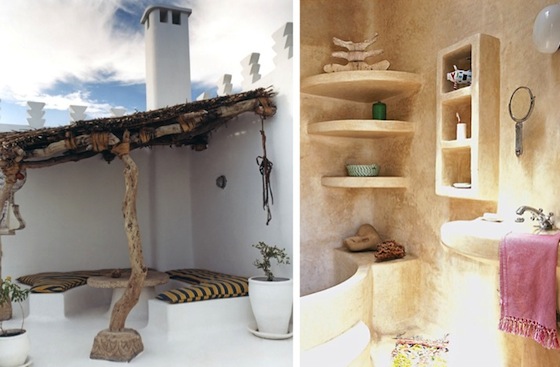
Morocco, Essaouira, Dar Beida, Traditional Moroccan Architecture, travel, eco-luxe villa, sustainable travelWith Christmas just around the corner, hordes of European and English visitors will skip across the Mediterranean for a fast, cheap holiday in beautiful Morocco. Many will fly into Fez to explore one of the oldest medinas in the Arab world, others will ride camels into the desert sunset, while more intrepid travelers will head to the Atlas mountains for some exhilarating ski action.

But for those seeking a relaxing seaside retreat, behold Dar Beida – the White House – an eco-luxe 18th century sandstone villa in Essaouria.

Jordan’s Feed-in-Tariff for Renewable Energy is an Arab World First

1

Feed-in-tariffs, Jordan, Hashemite Kingdom, clean tech, solar power, wind power, ERCJordan is the first country in the Arab world to offer its residents an opportunity to earn money through feed-in-tariffs (FITs). The Electricity Regulatory Commission (ERC) announced last week that citizens of one of the world’s most fuel-deprived nations can sell energy generated with solar panels for 120 fils per kilowatt/hour (kw/h) and wind power for  85 fils per kw/h, The Jordan Times reports. Albeit seemingly insignificant, the move is expected to mitigate the dual problems of excess energy consumption and unfulfilled demand.

Lebanon to Restore Forests

1

Lebanon, cedar, olive, pine, trees, juniper, environment, conversation, forest, activists, climateLebanon celebrated its Arbor Day on December 7. Activists, students and environmentalists gathered in open spaces to plant trees.

Recent years have seen growing grassroots and government efforts to preserve Lebanon’s famed cedar forests, but there has been scant attention paid to rare juniper trees. There is currently no law to protect the vanishing Lebanese juniper tree.

Zucchini Latkehs Hannukah RECIPE

3

image hannukah zucchini latkehsA healthier spin on the season’s  traditional potato pancakes.

Hannukah is one of the most fun holidays in the Jewish calendar, maybe because for a full eight days there’s a feeling of celebration in the air. Family folks often quit work early to be home in time for the candle-lighting ceremony, games with the kids and festive dinner. Adults also get together at least once during the week, often making a pot-luck meal with drinks.

But children and adults all expect to eat something fried. Fried foods are almost mandatory on Hannukah. They are meant to remind the happy eaters of the Hannukah miracle, when the Maccabees rededicated Jerusalem’s Holy Temple after the Syrian-Greek war. The menu often features savory potato latkehs and jam-filled sufganyot (jelly donuts). Everybody loves those, but the conscientious cook sometimes likes to put something lighter and healthier on the table.

I suggest these zucchini-based latkehs, a more sophisticated version of the eternal potato latkeh. And a small boon – since there are no onions in the recipe, there won’t be the odor that usually pervades the house after a session of latkeh-frying.

Interview with Masdar’s Director of Sustainability – Nawal Al-Hosany

2

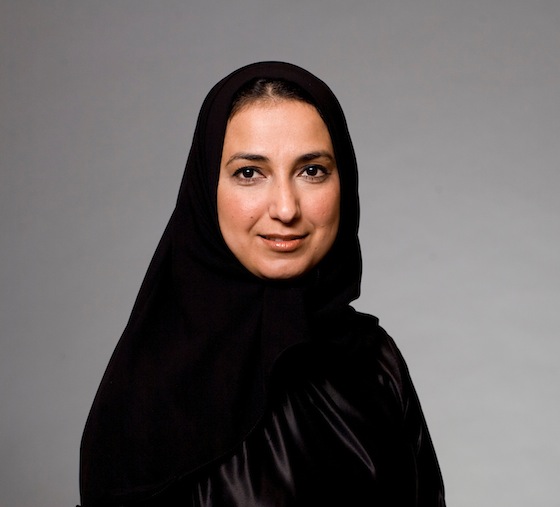
masdar interview director of sustainability nawal al hosanyNawal Al-Hosany, a leading figure in the environmental movement of the Middle East speaks to GreenProphet about renewables, Masdar, education and the absence of women in the climate change debate – both locally and globally

In 2010, after eight days of hiking in freezing temperatures Nawal Al-Hosany reached the Uhuru Peak of Kilimanjaro Mountain. She explains that she underwent the challenging climb to highlight the impact of climate change which is melting the mountain’s snow and to encourage greater action in the Middle East. Al-Hosany who joined Masdar in 2008 as the sustainability associate director is now its director of sustainability. She also director of the influential Zayed Future Energy Prize. I caught up with her to talk about Masdar and how you incentivise renewables in a rich, oil-producing country.

GreenProphet: A recent report titled “Prospects for Energy Technology Advancements in the Energy Sector,” written by yourself and IRENA highlights the opportunities available to MENA if they embrace renewables. Why is now such a good time to adopt renewable technologies?

Nawal Al-Hosany: The MENA region, and especially the Gulf States, has an opportunity to leverage its expertise in energy and move into new sectors, including wind and solar power. The future energy mix will include renewables, and we should embrace this transition. In addition, the region also has an abundant solar resource – an energy we should tap into to address energy security and our rising demands. Although the region’s renewable resources have been underexploited, technology advances and increased deployment are now making certain forms of clean energy economically viable across the region.

You recently hosted an event exploring the role that Arab women should play in securing a sustainable future for the region. Do you think that women are taking enough of a leading role in the region when it comes to climate change and energy?

When it comes to the region, women have an active voice in the climate change discussion. However, we can all do more, regionally and globally. The fact is climate change affects women differently, especially underprivileged, uneducated and un-empowered women. Women form the majority of the 1.3 billion people living in poverty in the world. And it’s people in poverty that shoulder the brunt and burden of climate change. The rural poor – especially women – depend on the environment to provide basic needs, such as food, shelter and fuel. The harsh impacts of climate change on these women are interlinked to social and cultural conditions.

Women have a social, economic and moral responsibility to be equal participants in the fight against climate change. And one way we can immediately help is to encourage women to pursue careers in math and science, where we can advance the renewable, clean-tech and sustainability sectors. Here in Abu Dhabi we have the Masdar Institute, which is an independent, research-driven graduate institute developed with the ongoing support and cooperation of the Massachusetts Institute of Technology (MIT). The Masdar Institute is focused on the science and engineering of advanced alternative energy, environmental technologies and sustainability.

At the Masdar Institute of Science and Technology in Abu Dhabi, 35% of our student body are women. The Institute’s Young Future Energy leaders programme that mentors and trains future leaders in the fields of advanced energy and sustainability has 45% women. It’s these types of outlets in higher education that provide women with a vehicle to get involved and to be part of the climate change solution.

What other things could be done to secure a more rounded contribution from women?

There are a few ways in which we can encourage women’s participation in the climate change debate. One of them is education opportunities especially in the STEM fields. We can actively push for better access to educational grants and scholarships, so that women can pursue advanced careers. Mentoring programmes can also provide young women with role models for their education and career paths.

We also need knowledge-sharing and action-oriented platforms that encourage open dialogue and that unite women fighting for climate change across the globe. We need to work together to identify the relevant areas where women have a role and can deliver an immediate impact. This is both in terms of responding to climate change in a gender-sensitive way, but also empowering women as key actors in the solutions to mitigating and adapting to climate change. Lastly, empowerment via fair opportunity policies at all levels of the government and the private sector can play a key role in promoting more women in decision-making and leadership roles.

Who are some of the women working in the environmental sector that inspire you?

The lack of women working in the environmental sector, and the opportunity to do more, is what ultimately inspires and motivates me. We only have a handful of women across the globe that are participating in the discussion on renewable energy, sustainability and addressing climate change. These are global issues that impact us all, irrespective of the roles we play or that have defined by society.

As the director of sustainability at Masdar, what have been the biggest challenges that you have faced?

There is a need to raise awareness on adopting and incorporating a sustainable approach in the region and beyond – how sustainability can be incorporated in an organization, the benefits of a sustainable approach to operating a business etc. One way we hope to shed light on the subject is during the upcoming Abu Dhabi Sustainability Week (ADSW), taking place from January 13-17 in Abu Dhabi. ADSW will be the largest gathering on sustainability in the history of the Middle East and will bring together companies, policymakers and thinkers from more than 150 countries to discuss the challenges and solutions related to energy, water, climate and other sustainability issues.

Although the UAE is making progress in terms of renewables there is still a long way to go. Is the country heading in the right direction and what is being done to incentivise renewables in such a rich, oil-producing country?

The UAE believes in the adoption of a comprehensive, balanced energy mix that includes different sources of energy, including renewables, traditional hydrocarbons and nuclear. Diversifying the energy mix is critical to meeting future electricity demands, lowering our environmental footprint and our energy security. Investments in renewable energy are also a natural extension of our leadership and long history as energy exporters. The UAE is in a unique position to leverage its resource to advance the economic, social and environmental benefits of clean energy.

For the UAE, a commitment in advancing renewables and clean technology is an investment in our long-term future, reinforcing our economy with knowledge capital. This is a strategic sector that is playing a role in the diversification of our local economy, moving form a resource-based economy to one based on human capital and knowledge.

For more interviews see:

Exclusive: Masdar City Open House Photos

Masdar Visionary Tells the Untold Story

Trash Talk in MENA – Interview with Salman Zafar

Interview: SolarReserve for the MENA Region?

Mixing Beer and Wine With Recycling in Lebanon

0

FERN, recycling, beer, wine, Lebanon, Tawlet, waste management, compostLebanese don’t usually need an excuse to party but they might need an incentive to recycle. Albeit one of the only countries at the COP18 climate change negotiations to commit to reducing their greenhouse gas emissions, Lebanon has a shoddy recycling record – mostly because it lacks the necessary infrastructure.

Which is why the NGO Food Enthusiasts Recycling Nutrients (FERN) is taking matters into their own hands. On the first Thursday of every month the group hosts an awareness and fundraising event at Tawlet – a restaurant in the Mar Mikhael neighborhood to promote the speedier uptake of both organic and non-organic recycling.

Failed COP18 Climate Talks Boil Down to Money (Op-Ed)

1

COP18, failed climate talks, Kyoto Protocol, climate change, global warming, QatarAlthough just about everybody at the COP18 climate talks in Doha, Qatar, understood the importance of arresting climate change following a slew of recent reports that show temperatures and sea levels rising faster than we imagined, the conference closes today without a commitment to cut a single pound of CO2 emissions.

The reasons for that are both complicated and simple: aside from an obvious collective denial about the difficulties that are hurling down the path as a result of climate change, rich nations are especially unwilling to acknowledge their role in the accumulation of greenhouse gases that has put us in so much trouble because they don’t want to pay for it.