Kansas City is attempting to revive protections against conversion therapy with a new ordinance carefully designed to withstand recent First Amendment challenges. Rather than banning conversion therapy by name, the proposal targets harmful therapeutic practices linked to increased risks of depression and self-harm, creating what supporters hope could become a legal model for other U.S. cities.
Choosing a sustainable senior living community means looking beyond appearances to care quality, nutrition, safety, social connection, and long-term well-being.
NuCicer has developed Nuchi, a new class of chickpea with 50% more protein and 25% less fat than conventional varieties. Co-founder Kathryn Cook explains how wild chickpea genetics, AI-guided breeding, and centuries-old biodiversity could transform the future of sustainable protein.
Canada's forests generate billions of dollars in economic value each year, yet vast amounts of irregular timber are downgraded to wood chips or biomass. A collaboration between researchers at Carleton University and Aalto University is challenging that model, demonstrating how "ugly wood" can be transformed into high-value architecture while reducing waste and storing more carbon in buildings.
Corporate training videos often require repeated filming, travel, and production resources every time policies or personnel change. AI-powered face swap tools offer a more sustainable approach by extending the life of digital training content, reducing unnecessary reshoots, and helping organizations communicate more efficiently—provided they are used transparently with clear consent and ethical governance.
Kansas City is attempting to revive protections against conversion therapy with a new ordinance carefully designed to withstand recent First Amendment challenges. Rather than banning conversion therapy by name, the proposal targets harmful therapeutic practices linked to increased risks of depression and self-harm, creating what supporters hope could become a legal model for other U.S. cities.
Choosing a sustainable senior living community means looking beyond appearances to care quality, nutrition, safety, social connection, and long-term well-being.
NuCicer has developed Nuchi, a new class of chickpea with 50% more protein and 25% less fat than conventional varieties. Co-founder Kathryn Cook explains how wild chickpea genetics, AI-guided breeding, and centuries-old biodiversity could transform the future of sustainable protein.
Canada's forests generate billions of dollars in economic value each year, yet vast amounts of irregular timber are downgraded to wood chips or biomass. A collaboration between researchers at Carleton University and Aalto University is challenging that model, demonstrating how "ugly wood" can be transformed into high-value architecture while reducing waste and storing more carbon in buildings.
Corporate training videos often require repeated filming, travel, and production resources every time policies or personnel change. AI-powered face swap tools offer a more sustainable approach by extending the life of digital training content, reducing unnecessary reshoots, and helping organizations communicate more efficiently—provided they are used transparently with clear consent and ethical governance.
Kansas City is attempting to revive protections against conversion therapy with a new ordinance carefully designed to withstand recent First Amendment challenges. Rather than banning conversion therapy by name, the proposal targets harmful therapeutic practices linked to increased risks of depression and self-harm, creating what supporters hope could become a legal model for other U.S. cities.
Choosing a sustainable senior living community means looking beyond appearances to care quality, nutrition, safety, social connection, and long-term well-being.
NuCicer has developed Nuchi, a new class of chickpea with 50% more protein and 25% less fat than conventional varieties. Co-founder Kathryn Cook explains how wild chickpea genetics, AI-guided breeding, and centuries-old biodiversity could transform the future of sustainable protein.
Canada's forests generate billions of dollars in economic value each year, yet vast amounts of irregular timber are downgraded to wood chips or biomass. A collaboration between researchers at Carleton University and Aalto University is challenging that model, demonstrating how "ugly wood" can be transformed into high-value architecture while reducing waste and storing more carbon in buildings.
Corporate training videos often require repeated filming, travel, and production resources every time policies or personnel change. AI-powered face swap tools offer a more sustainable approach by extending the life of digital training content, reducing unnecessary reshoots, and helping organizations communicate more efficiently—provided they are used transparently with clear consent and ethical governance.
Kansas City is attempting to revive protections against conversion therapy with a new ordinance carefully designed to withstand recent First Amendment challenges. Rather than banning conversion therapy by name, the proposal targets harmful therapeutic practices linked to increased risks of depression and self-harm, creating what supporters hope could become a legal model for other U.S. cities.
Choosing a sustainable senior living community means looking beyond appearances to care quality, nutrition, safety, social connection, and long-term well-being.
NuCicer has developed Nuchi, a new class of chickpea with 50% more protein and 25% less fat than conventional varieties. Co-founder Kathryn Cook explains how wild chickpea genetics, AI-guided breeding, and centuries-old biodiversity could transform the future of sustainable protein.
Canada's forests generate billions of dollars in economic value each year, yet vast amounts of irregular timber are downgraded to wood chips or biomass. A collaboration between researchers at Carleton University and Aalto University is challenging that model, demonstrating how "ugly wood" can be transformed into high-value architecture while reducing waste and storing more carbon in buildings.
Corporate training videos often require repeated filming, travel, and production resources every time policies or personnel change. AI-powered face swap tools offer a more sustainable approach by extending the life of digital training content, reducing unnecessary reshoots, and helping organizations communicate more efficiently—provided they are used transparently with clear consent and ethical governance.
Kansas City is attempting to revive protections against conversion therapy with a new ordinance carefully designed to withstand recent First Amendment challenges. Rather than banning conversion therapy by name, the proposal targets harmful therapeutic practices linked to increased risks of depression and self-harm, creating what supporters hope could become a legal model for other U.S. cities.
Choosing a sustainable senior living community means looking beyond appearances to care quality, nutrition, safety, social connection, and long-term well-being.
NuCicer has developed Nuchi, a new class of chickpea with 50% more protein and 25% less fat than conventional varieties. Co-founder Kathryn Cook explains how wild chickpea genetics, AI-guided breeding, and centuries-old biodiversity could transform the future of sustainable protein.
Canada's forests generate billions of dollars in economic value each year, yet vast amounts of irregular timber are downgraded to wood chips or biomass. A collaboration between researchers at Carleton University and Aalto University is challenging that model, demonstrating how "ugly wood" can be transformed into high-value architecture while reducing waste and storing more carbon in buildings.
Corporate training videos often require repeated filming, travel, and production resources every time policies or personnel change. AI-powered face swap tools offer a more sustainable approach by extending the life of digital training content, reducing unnecessary reshoots, and helping organizations communicate more efficiently—provided they are used transparently with clear consent and ethical governance.
Kansas City is attempting to revive protections against conversion therapy with a new ordinance carefully designed to withstand recent First Amendment challenges. Rather than banning conversion therapy by name, the proposal targets harmful therapeutic practices linked to increased risks of depression and self-harm, creating what supporters hope could become a legal model for other U.S. cities.
Choosing a sustainable senior living community means looking beyond appearances to care quality, nutrition, safety, social connection, and long-term well-being.
NuCicer has developed Nuchi, a new class of chickpea with 50% more protein and 25% less fat than conventional varieties. Co-founder Kathryn Cook explains how wild chickpea genetics, AI-guided breeding, and centuries-old biodiversity could transform the future of sustainable protein.
Canada's forests generate billions of dollars in economic value each year, yet vast amounts of irregular timber are downgraded to wood chips or biomass. A collaboration between researchers at Carleton University and Aalto University is challenging that model, demonstrating how "ugly wood" can be transformed into high-value architecture while reducing waste and storing more carbon in buildings.
Corporate training videos often require repeated filming, travel, and production resources every time policies or personnel change. AI-powered face swap tools offer a more sustainable approach by extending the life of digital training content, reducing unnecessary reshoots, and helping organizations communicate more efficiently—provided they are used transparently with clear consent and ethical governance.
Kansas City is attempting to revive protections against conversion therapy with a new ordinance carefully designed to withstand recent First Amendment challenges. Rather than banning conversion therapy by name, the proposal targets harmful therapeutic practices linked to increased risks of depression and self-harm, creating what supporters hope could become a legal model for other U.S. cities.
Choosing a sustainable senior living community means looking beyond appearances to care quality, nutrition, safety, social connection, and long-term well-being.
NuCicer has developed Nuchi, a new class of chickpea with 50% more protein and 25% less fat than conventional varieties. Co-founder Kathryn Cook explains how wild chickpea genetics, AI-guided breeding, and centuries-old biodiversity could transform the future of sustainable protein.
Canada's forests generate billions of dollars in economic value each year, yet vast amounts of irregular timber are downgraded to wood chips or biomass. A collaboration between researchers at Carleton University and Aalto University is challenging that model, demonstrating how "ugly wood" can be transformed into high-value architecture while reducing waste and storing more carbon in buildings.
Corporate training videos often require repeated filming, travel, and production resources every time policies or personnel change. AI-powered face swap tools offer a more sustainable approach by extending the life of digital training content, reducing unnecessary reshoots, and helping organizations communicate more efficiently—provided they are used transparently with clear consent and ethical governance.
Kansas City is attempting to revive protections against conversion therapy with a new ordinance carefully designed to withstand recent First Amendment challenges. Rather than banning conversion therapy by name, the proposal targets harmful therapeutic practices linked to increased risks of depression and self-harm, creating what supporters hope could become a legal model for other U.S. cities.
Choosing a sustainable senior living community means looking beyond appearances to care quality, nutrition, safety, social connection, and long-term well-being.
NuCicer has developed Nuchi, a new class of chickpea with 50% more protein and 25% less fat than conventional varieties. Co-founder Kathryn Cook explains how wild chickpea genetics, AI-guided breeding, and centuries-old biodiversity could transform the future of sustainable protein.
Canada's forests generate billions of dollars in economic value each year, yet vast amounts of irregular timber are downgraded to wood chips or biomass. A collaboration between researchers at Carleton University and Aalto University is challenging that model, demonstrating how "ugly wood" can be transformed into high-value architecture while reducing waste and storing more carbon in buildings.
Corporate training videos often require repeated filming, travel, and production resources every time policies or personnel change. AI-powered face swap tools offer a more sustainable approach by extending the life of digital training content, reducing unnecessary reshoots, and helping organizations communicate more efficiently—provided they are used transparently with clear consent and ethical governance.
Unilever’s new $127 million plant in Konya, which will churn out up to 21 million gallons of Cornetto, Max and Twister ice cream products, is the latest in a string of manufacturing facilities that uses a three-pronged strategy to reduce energy and water consumption and send zero waste to local landfills.
In addition to using alternative energy such as biomass in some of its plants, Unilever captures rainwater – sometimes at several points throughout their factories – and uses waste heat to power some of its systems. They also use energy efficient lighting technology.
All told, the company has diverted 1 million tons of CO2 from the atmosphere since 2008.
“We decided that Konya was the most suitable place for our investment for a number of reasons, such as access to raw materials, good infrastructure and logistics, the availability of qualified works and lower earthquake risks, as well as the good support of Konya’s local administration,” Pier Luigi Sigismondi, Unilever’s chief supply chain officer told an online magazine Green Biz, no longer online.
Granted, many critics argue that the United States Green Building Council’s Leadership in Energy and Environmental Design is not truly green. If Saudi Aramco, one of the world’s prolific oil producers, can snatch up a LEED Platinum building certification, then clearly the standards are not sufficiently high.
And – according to Business Week – a standard Cornetto ice cream uses more palm oil than milk.
(Forested areas the size of Greece are cleared every year in Indonesia and Malaysia to provide palm oil for our luxury products.)
But Unilever has made some noteworthy gains. Although the mega corporation uses up to three percent of all palm oil produced, it has promised to use only sustainable, certified palm oil by 2020.
It was also among the first corporations to commit to using only sustainable teas, and it has won awards all across the globe for building factories that at least attempt to lessen their environmental footprint.
“I’ve set some tough, challenging targets,” Unilever’s global sustainability manager John Maguire told Green Biz.
“Some of them we knew how to achieve, but there are a whole lot of other things that we’re trying to do here that we haven’t done before. I see technology as a key factor in helping us achieve our aims.”
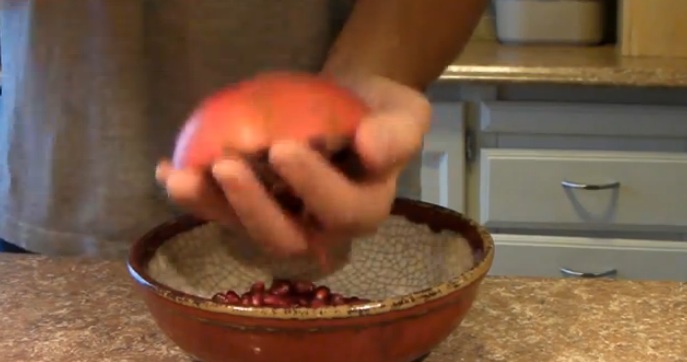
Now that winter is here we celebrate the virtues of the pomegranate. Did you know it is a plant of the Koran and it is also celebrated by Judaism? But how does one eat the seeds of this delicious and healthy fruit without spending hours doing it by hand? This video below shows us.
Doha city skyline. The water needs protected. Maybe filmmakers can help?
Young filmmakers from 19 schools in Qatar will be competing in the first ever Junior Environmental Filmmaker Awards contest. Small teams of three and four kids from grades 7 to 9 will be making movies about water.
Happy New Year to all our Muslim readers today. While not everyone agrees on the date, the Hijri New Year falls around now, and on November 3 and 4 this year for most Muslims.
Rape and sexual assaults on women is just as much a problem in the Middle East as it is in the west, although the “flavor” of assault differs somewhat. Think of Lara Logan, the US journalist assaulted by numerous men while reporting from the streets of Cairo. But with AR Wear, new anti-cut, anti-rape undies, could sexual assaults and date rapes of the future be prevented?
Artisinal olive oil. It has an attractive ring, but think what “artisinal” means. You associate it with ancient traditions that living people continue to maintain – with the material products of those traditions.
But when you pick up a bottle of olive oil, you’re probably thinking of salad, not imagining the physical labor involved in making it. I learned about Israel’s olive crops and the mix of ancient and modern methods of producing olive oil, on a tour of the Galilee olive festival this week. Laurie Balbo reported on the olive tree’s historical origins in this fascinating post.
Every October and November, the the Ministry for the Development of the Negev and the Galilee, the Galilee Development Authority and the Olive Council sponsor the Olive Branch Festival celebrating the olive harvest. Enjoying the cool fall weather, visitors tour villages throughout the Galilee, the Golan and the valleys where olives and their oil are a culture unto themselves.
In the north of the country, it’s an opportunity to meet Druze villagers whose livelihood depends largely on olive oil production. We’ve reported on our Druze culinary experience in this post. And if you like olive oil, you can take advantage of the chance to buy it fresh – almost right off the tree.
This year’s olive festival was in full swing when Green Prophet visited Kibbutz Parod, where the Saba Habib olive oil manufacturer is housed. Saba Habib produces olives, oil, and soaps and other cosmetic products based on olive oil. We met Saba Habib, grandson of the farm’s original founder, and head of the business today. Our tour guide translated as Saba Habib explained in Arabic about the farm and its products.
Saba Habib showed us how to judge the quality of olive oil: if a drop held between thumb and forefinger holds its shape and doesn’t dribble away, the oil is pure olive and fresh.
The Israel Olive Board (website in Hebrew) has its offices nearby on the Hananyah Farm. Prof. Adi Naali, CEO, took us for a stroll in the orchards and gave a short talk about Israel’s olives and how the country has modernized production.
“Until two years ago, Israel couldn’t even keep up with the local demand,” says Naali. “The Galilee has 250 dunams of olive groves that survive on rainfall alone, mostly in Druze villages. The annual average of those trees is 50 kg of olive oil per dunam. The Ministry of Agriculture is encouraging farmers to grow more olive trees, introducing modern agricultural methods like drip irrigation.”
“Farmers were reluctant to irrigate at first,” he notes. “It went against tradition. But it soon became clear that irrigated trees produce four or five times as much oil as non-irrigated trees: an average of 200 kg. oil per dunam.
“We can’t compare our output with Europe’s massive olive oil production. On the other hand, Israel is too small to produce bad olive oil. Large olive farms can’t handle their huge quantities of ripe olives at once; some of their olives may ferment and lose quality while waiting for processing. We have enough labor and mills to process the harvest immediately. There’s a proverb in Arabic: olives should go ‘from the tree to the stone’ – the grinding stones of the mill. Israeli olive oil has earned prizes in international competitions. ”
“Olive trees are tough and resistant to diseases,” adds Naali. “If attacked by the olive fly, we use an organic spray to get rid of it. Olive trees are sustainable agriculture par excellence. They don’t need much water, fertilizer or pesticide. No part of the harvest goes to waste. We compost the pomace, or the mass left over from crushing the fruit. Even the vegetable water that separates from the oil during processing is spread out over the soil in the orchards as fertilizer.”
And olive trees can live for hundreds, even thousands of years. We enjoyed a jeep drive to serene olive groves where ancient trees said to be 2000 years old are still bearing good fruit.
An ancient olive tree in the Galilee
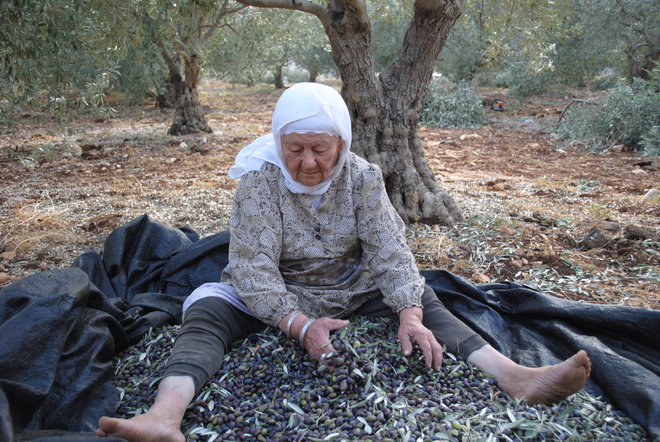
The next sight to meet our eyes was the Druze grandmother winnowing the leaves out of just-picked olives (top photo). It looked like mild exercise that an elderly woman used to a lifetime of outdoor work might like. I reflected on how much human labor goes into artisanal olive oil.
We strolled on and watched the harvest itself. Traditionally, harvest was accomplished by beating the branches, which breaks many of them. These workers used an Italian-made rotating device that knocks the olives off the tree without harming the branches.
The Olive Branch Festival is winding down, with sites open on weekends until November 9th. If you can’t make it this year, be assured that next year it promises to be even richer in events and attractions for domestic and foreign tourists. However, all is not lost – all during Hanukkah week, there will be more tours, activities and workshops (November 28th – December 5th).
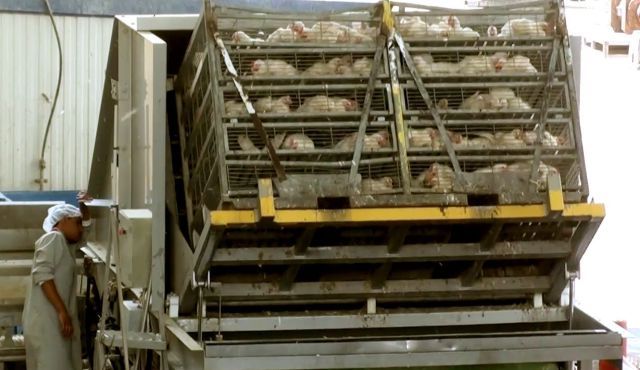
More massive-scale animal abuse found in Israel. This time the kosher status of the company is at stake: Following news that cattle and sheep are being severely mistreated at a large kosher slaughterhouse, Israel’s Kolbotek consumer watchdog program has again revealed large scale animal abuse at the country’s leading poultry processing plant, Soglowek.
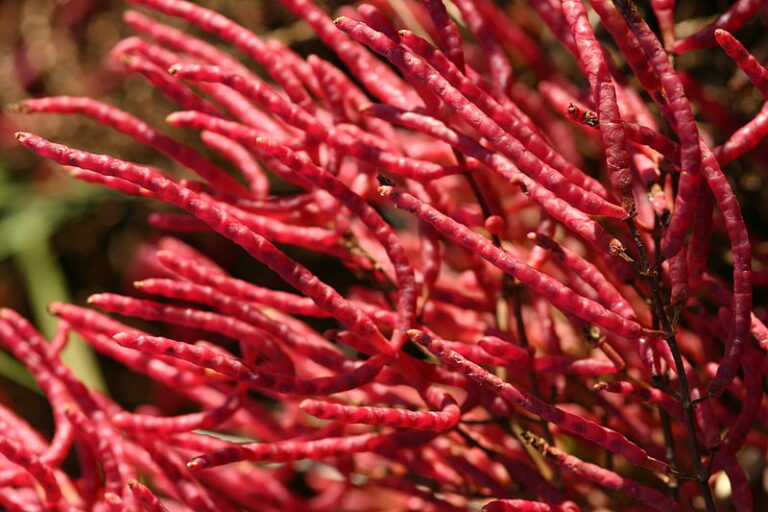
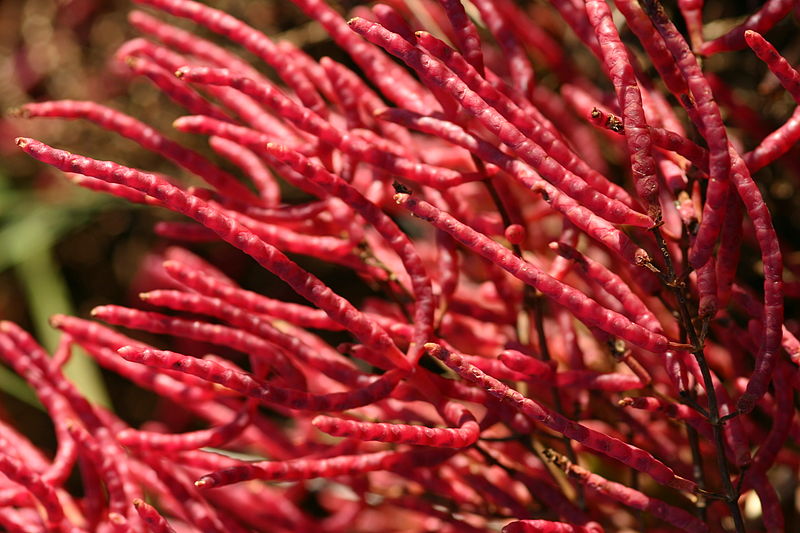
Scientists in Dubai are growing a new kind of food crop in salt marshes along the Persian Gulf coast. A variety of salt-resistant succulent, Salicornia are typically sold in gourmet shops in Europe, but they have other uses as well.
As we’ve learned from this great No Woman, No Cry video by Hisham Fageeh, Saudi Arabian rules ban women from driving. This must drive them and their love interests crazy because provocative eye contact and inter-gender chat between strangers is also taboo. The religious police will arrest anyone caught violating these laws: flirters be warned.
Twenty-eight Greenpeacers, mostly foreigners, and two journalists are held for six weeks now in a Russian prison: In a surprising but not unheard of move, Russia has jailed the Greenpeace activists or “pirates” aboard a Greenpeace International ship for scaling a Russian-owned Gazprom oil platform.
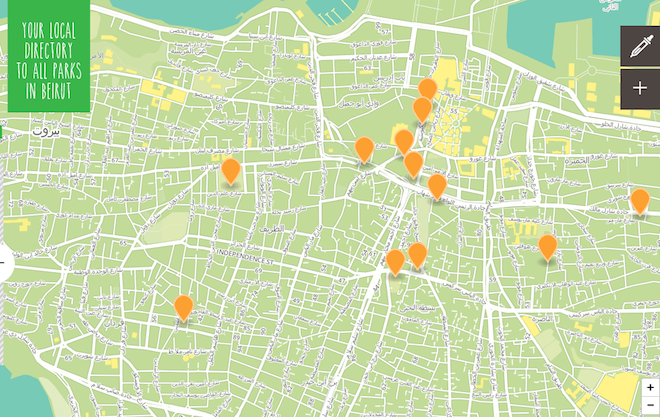
A group of activists in Beirut have teamed up with a local design agency to create the city’s first map of green spaces. Beirut Green Project and Wonder 8 launched the Beirut Green Guide at Tawlet earlier this week, but a few kinks still need to be worked out.
According to the Daily Star:
“The complaint, as common as a winter cold, is familiar: There are no green spaces in Beirut. The assertion, made in the shadow of concrete high-rises and within earshot of the ever-present aural strains of yet more rebar being lifted to the heavens, seems irrefutable. Yet some of Beirut’s must active public space campaigners have chosen to do something other than just gripe about the deficiency of public parks.”
Lack of public access to the Horsh Beirut urban park remains among the most noteworthy and ongoing issues, and activists have engaged city officials in a pitched debate over who has the right to enjoy the historic gardens, but now the group has focused time and resources on highlighting what the city does have rather than what it doesn’t.
By building an interactive web-based map that illustrates the parks and other green spaces that are tucked away among the numerous concrete high rises and raging highways, the group hopes to encourage residents to seek them out, a member of the group, Rana Boukarim, told The Daily Star.
And in order to get word out, an exhibition at the restaurant in Mar Mikhael depicting each space along with its various amenities will remain in place for a full month.
Albeit still in Beta, the green guide is a brilliant, user-friendly tool.
Clicking on any of a series of bright orange icons on the map will bring up a separate page that lists the properties of each destination, including useful information like how many benches are available, whether or not pets are welcome, and if WiFi is available.
Photos are also posted.
Handy “did you know” facts provide information about each spot’s history, though the English spelling is not always correct and there is no Arab translation yet (many of the street names are written in Arabic, however.)
For now, the group has collated information on 22 parks in the city, (not much for a population of more than two million) but they are encouraging users to submit any spots that they have overlooked. And in time, they hope to publish a print version of the guide.
Until the rooftop revolution is complete, and lush green gardens crown all of the city’s featureless buildings, these public parks are all Beirut’s got.
While the Middle East is not a usual haunt for Halloween there are some parents here and there who bring the custom from their native America or Canada. If you are looking for a last-minute costume, now for the fun – a DIY stick figure costume made from LED lights.
Today is D-Day for electric car drivers in condos and apartments in Israel and who use the Better Place charging systems. The Israel Electric Company announced last week that yesterday was the cutoff date.
Turkey inaugurated the Marmaray undersea railway tunnel on Tuesday, linking Europe and Asia. It is the Marmaray, the world’s deepest immersed tube tunnel at 60.46 metres (198.4 ft).
Israeli designers are working hard to curb bicycle theft. One group came up with the “fashionable” Foldylock and the Spine Bike breaks when stolen. But the Cricket uses bluetooth technology to keep sticky hands off urban wheels.