
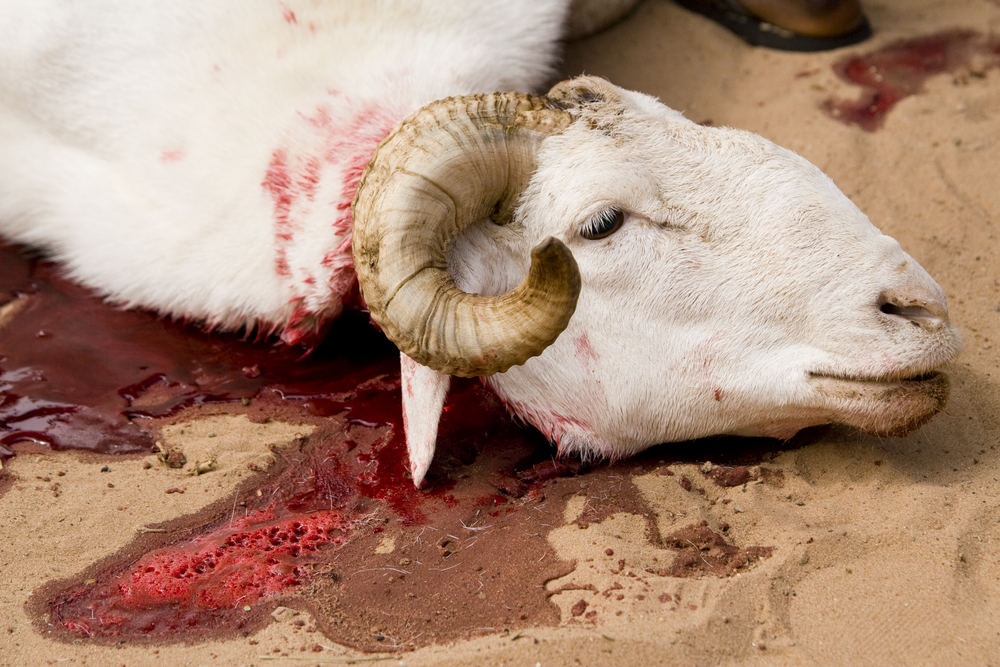
 It’s the final run-up to Eid al-Adha, when Muslims around the planet commemorate God’s test of the Prophet Ibrahim by slaughtering a hapless quadruped: also called Qurbani, it’s an essential religious ritual wherein an estimated 100 million creatures will be killed.
Eco and Halal the Islamic Rite of Animal Sacrifice Qurbani
First Practical Sun-Powered Car Stella Wins World Solar Challenge 2013

Stella, a solar-powered family car designed by students from the Eindhoven University of Technology (TU/e) in has won the World Solar Challenge 2013, ushering in a new era of efficient, practical cruisers that get all of their juice from the sun. It should inspire sun-lovers in the Middle East.
Solar Team Eindhoven from the Netherlands spent over a year developing their family car, which features photovoltaic solar panels on both the roof and rear, according to Dezeen. The latter are flipped up to optimize solar absorption and generate energy while the car is not in use.

Stella produces double the amount of energy that it needs to run, which allows the vehicle to contribute power to the national grid.
A biennial race across roughly 1,877 miles of Australian outback, the WCS has historically attracted solar-powered vehicles that aim for speed above all.
This year, however, in an effort to encourage a greater emphasis on practical vehicles that can be scaled up for commercial distribution, the competition organizers added the cruiser category.

While still held to the same standard as other categories, including energy efficiency, features, styling, and aesthetics, vehicles in this category had to demonstrate superior comfort and practicality as well.
And Stella performed better than the other 39 teams with an average speed of 42mph, a top speed of 75mph, and an average of three people on board throughout the journey from Darwin to Adelaide.

“I congratulate Team Eindhoven on their innovation, practical design and foresight, to think outside the square and add the extra seats,” said World Solar Challenge director Chris Selwood.
“‘Stella’ is a wonderful solar car in a field of exceptional cars and teams. I look forward to 2015 and the prospect of more cruisers as we work toward the world’s most efficient electric car.”
While this competition has formerly neglected every day pragmatism for exceedingly high-tech vehicles that the average family could never use, this year’s win signals a hopeful shift toward innovations that actually benefit humanity. That was the point, after all, when Denmark’s Hans Tholstrup first conceived the competition in the 1980s.

“The design of the car of the future has to meet the needs of modern consumers,” the team said when the car was unveiled earlier this year. “The car must be capable of transporting a family from the Netherlands to France in one day, it needs to be suitable for the daily commute to work, and it needs to achieve all this in comfort.”
Solar Team Eindhoven narrowly beat Japan’s Tokai University, which won the WSC in both 2009 and 2011, and it is also the only car that competed in this year’s challenge that actually has a license plate.
Bake Traditional Emirati Khameer Bread
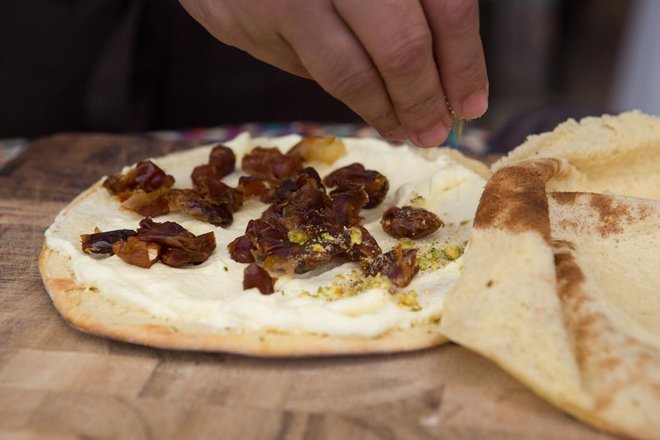
Khameer, a round flatbread of humble Beduin origins, once fell out of favor with the upscale eaters of the United Arab Emirates. But the tender round bread with its golden top is enjoying a comeback. We show you how to make it.
Gently slit open, the puffy top separates from the flexible bottom layer to make room for whatever stuffing takes your fancy. In the Mama Tani Cafe, Dubai, you can buy khameer filled with an exotic saffron-flavored cream, chopped dates and crushed pistachios – or go with something savory, like labneh (get the recipe for labneh here), basil, walnuts and black olives.
Unlike the current craze for camel meat dressed up in truffles and chocolate sauce, stuffed khameer is sold at reasonable prices. To the Emiratis enjoying the old-fashioned bread, it’s the taste of childhood snacks and times gone by. Maitha Al Shamsi, owner of the Mama Tani Cafe, claims that nostalgia is the biggest draw to her business. Al Shamsi keeps her recipe a secret, but we found this recipe and see that it’s not hard to make.
Khameer Bread Recipe
Serves : 6-8
Ingredients :
- 1 tablespoon yeast
- 2 cups wheat flour
- 2 cups all purpose four
- 3 eggs
- 1/2 cup sugar
- 1/2 cup powdered milk
- 1/2 cup oil
- 1 teaspoon ground fennel
- 1/2 teaspoon saffron
- 1 teaspoon cardamom
- 1 teaspoon salt
- 1 ½ cups warm water
- Dissolve yeast in tepid water. Put dry ingredients in a bowl. Make a well in the center. Add eggs, yeast and oil.
- Add enough water to make a very thick pancake batter. Whisk well, cover tightly and put in a warm place for 10-12 minutes.
- Warm a small ungreased frying pan. Take a handful of dough and put it in the pan, patting in flat with little water in your hand, to form a round patty which is not too thick.
- Heat through and when it starts to bubble, put a teaspoon of beaten egg on top and sprinkle sesame or black cumin seeds over it.
- When the bread begins to swell and turns brown on the bottom, remove from the pan, and put under the grill until brown on top.
- Continue in this way with the reminder of the dough.
More Middle-Eastern breads on Green Prophet:
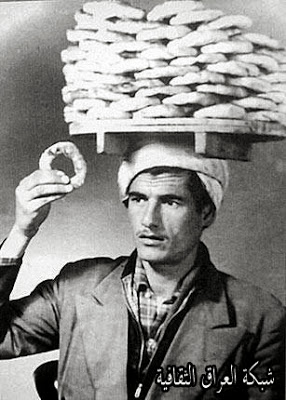
- Simit, Iraqi Bagel
- Moroccan Anise Flatbread
- Yemenite Whole Wheat Pita
- Zalabya, Bread With Black Cumin Seeds
Photo of khameer bread by Amelia Johnsoon
Sinkholes Transformed into Art by Liliana Ovalle
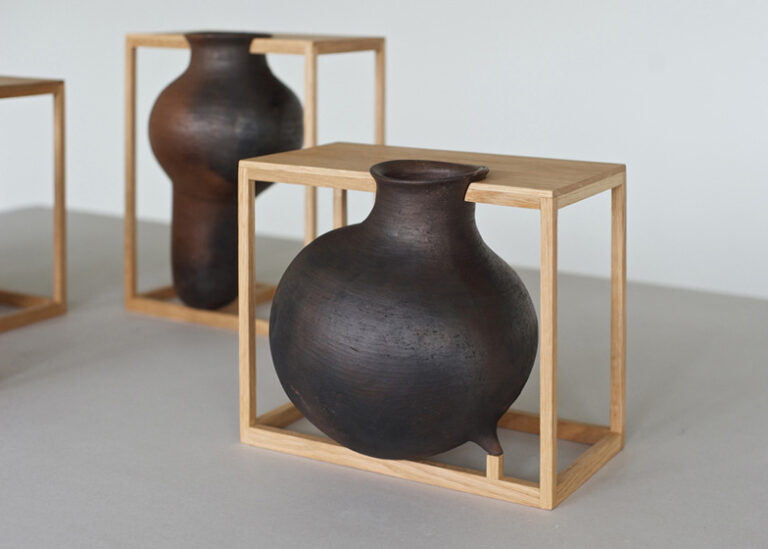
 Mexican designer Liliana Ovalle has created a series of clay vessels based on the geological phenomena of sinkholes as part of a recent exhibition at London Design Festival 2013. The bulbous, irregular shapes replicate the geometry of ground surfaces that have been erased, pulling attention not to mass, but to void.
Tripoli’s Doshma Creative Hub Has a Recycled Shipping Container Core
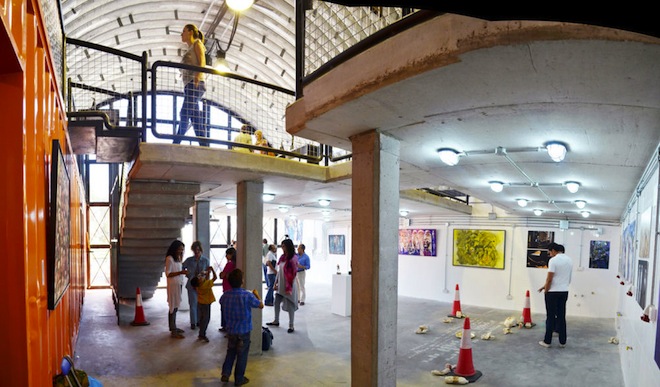
So many countries in the Middle East and North Africa rely way too much on concrete for their building needs, but Libya Design bucks the trend with Doshma – a new creative hub built in part with a used shipping container.
Kurdish Men Dress In Drag to Support Iranian Feminism
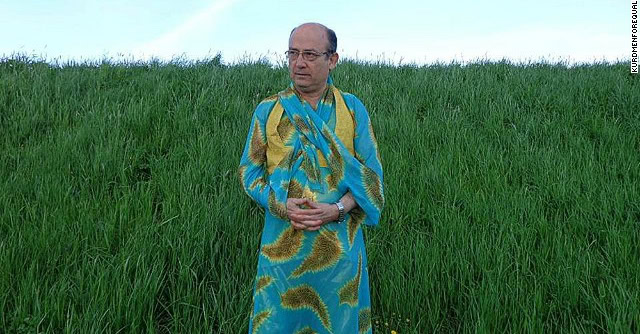
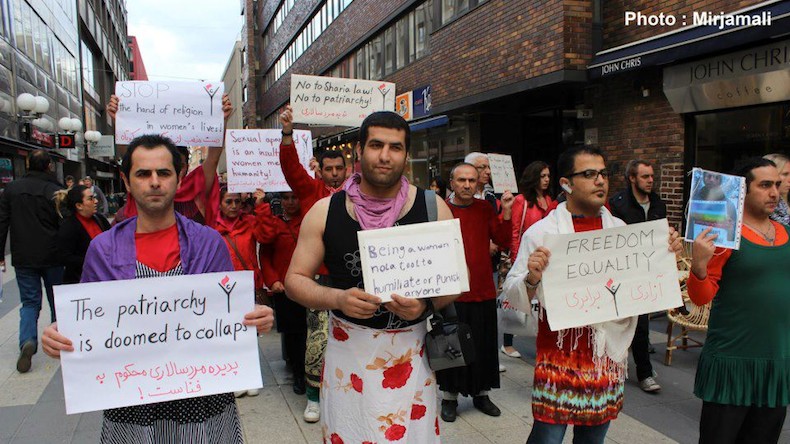 It takes a special man to carry off a skirt. In Iran, a growing group of Kurdish guys are rocking girly frocks to promote a serious message: being a woman is nothing to laugh at.
It began when a convicted domestic abuser was sentenced to parade around town dressed in traditional Kurdish women’s clothing.
Old Bus Converts to Mediterranean Penthouse Suite on Wheels
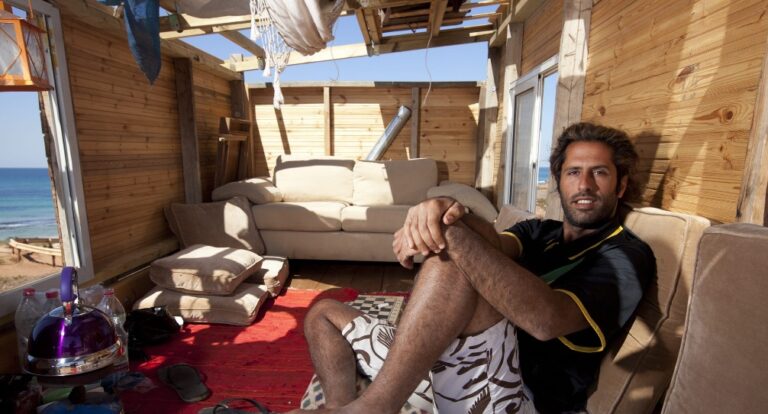
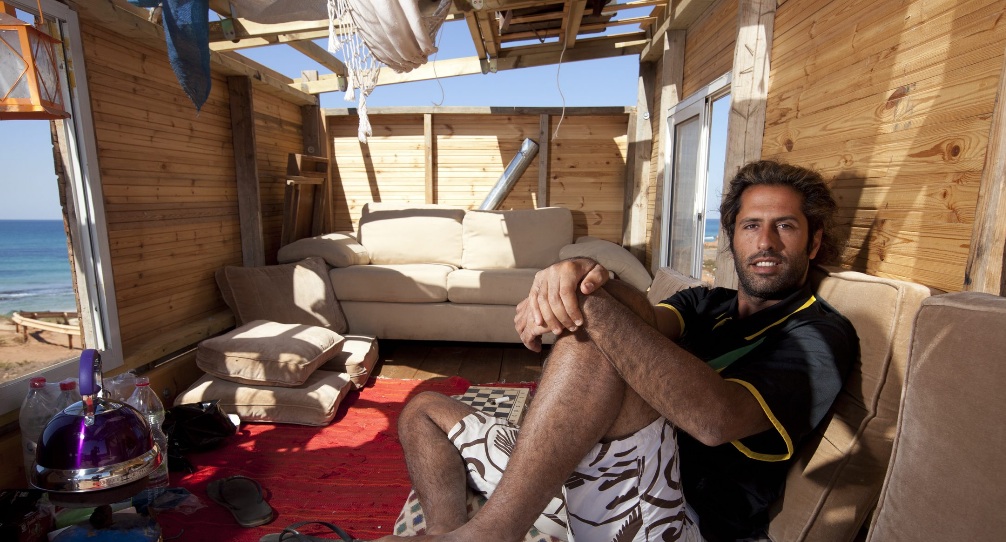 A young Israeli man has renovated and transformed a disused public transport bus into a double story apartment that even boasts a penthouse guest room and basement. This is the second such bus conversion we’ve seen in Israel recently, a trend that kicks dust in the face of high rent prices.
Mysterious Sinkholes Threaten to Sink the Dead Sea
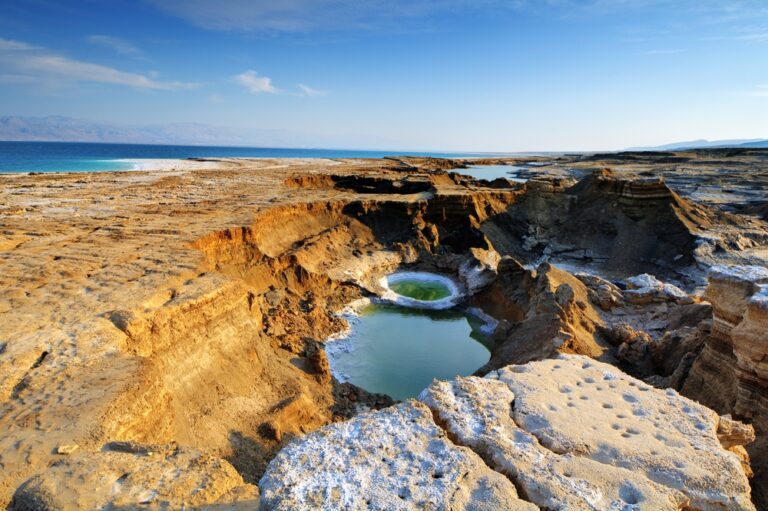
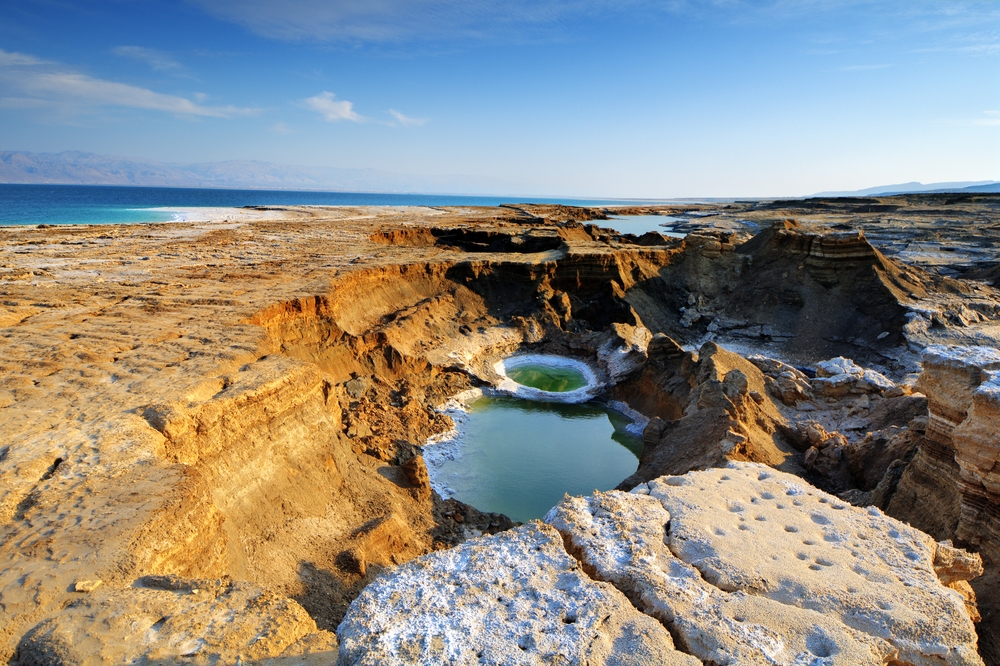 Watch your step, kibbutzniks and spa-mavens! Diminishing water levels in the Dead Sea are causing changes to surrounding groundwater flows. Freshwater moves through the aquifer, dissolving subterranean salt deposits and creating underground voids, which cause surface collapse. Dramatic and unpredictable, sinkholes appear at the alarming rate of nearly one a day.
First observed around the Dead Sea in the 1980s, geologist Eli Raz estimates that today there are over 3,000 on the Israeli side alone. “Sinkholes are caused by human irresponsibility,” he told Slate Magazine, “For more than 30 years, I’ve been trying to warn everyone—especially government officials—that if we don’t do something about the situation in the Dead Sea, the sinkholes will swallow us up.”
The Dead Sea (which is technically a lake fed by the Jordan River) spans more than 60 miles. Its shorelines include Jordan, the West Bank, and Israel. Located 1,388 feet below sea level, it’s the lowest place on earth, and with no outlet for minerals deposited over millennia, its waters have become ten times saltier than the north Atlantic.
In the past half century, the populations of Jordan, Israel, and the Palestinian territories have ballooned from 5 million to over 20 million. Along with Syria and Lebanon, these thirsty nations pull water from the Jordan River and its tributaries, cutting flow to the Dead Sea to less than 26 billion gallons per year compared to 343 billion gallons a century back.
Next, factor in Dead Sea industries like the Israel Chemicals Company and the Jordanian Arab Potash Company. To support their mineral extraction processes, these companies extract enormous volumes of seawater, accounting for about 40% of the water level decrease.
As a result, the Dead Sea is shrinking over three feet a year and receding from the shore at an even greater clip. There are loads of videos to be found online showing the changes: the one below is short, vivid, and refreshingly void of conspiracy theories and New Age prophecy:
[youtube]http://youtu.be/3x2JlBctc7Y[/youtube]
Several nations have jurisdictions over the Sea, so remedies are fraught with international complexity. Ongoing debate undermines action. And doing nothing is the worst alternative of all.
Signs in Hebrew, English, and Arabic warn to beware of sinkholes. Raz laughs, “How can you be careful? No one knows where the next one will open up. It’s only a matter of time until we have to leave this entire area.”
To date, no one has yet died in an Israeli sinkhole, but there have been serious injuries. Sinkholes are a direct threat to agriculture and tourism, the main livelihoods of the kibbutzim and entire Dead Sea region. Jordan is also investing heavily in regional tourism, and the Palestinians plan to develop resorts in their future state.
The unique Dead Sea natural habitat is also at risk as the surrounding ecosystem includes spring-fed oases that support a rich range of plant and animal wildlife.
How can an environmental catastrophe be averted? One possibility is a World Bank plan to replenish the Dead Sea with water from the Red Sea. Environmentalists warn that the ecological effects of the long-touted Red-Dead project might drive the nail in the sea’s coffin.
Raz prefers to see the Dead Sea’s problems solved by rehabilitating the Jordan River and utilizing desalination to supply water to Israel’s densely populated Mediterranean coast. But something must be done, and done now.
“Water should not be a reason for conflict—there isn’t enough to argue about, certainly not in the Dead Sea basin. Water should be the reason for smart, regional cooperation.” says Raz, “There’s an expression from the army: ‘If we can’t hang onto each other, we’ll be hung next to each other.’ But no one seems to get it.”
Kuwaiti Gaydar Test to Ban Gays Entry to Arab Countries?

Circling around the news is something that may violate human rights in the Middle East, pointing out just how bad it might be for gays living in these countries: some Arab states are looking to develop a “gay” test to bar gay travelers from entry.
It is illegal to be gay in 78 countries around the world, but in five countries –– three of which are in the Middle East (Iran, Saudi Arabia and Yemen) –– it is punishable by death.
There are no clear scientific guidelines on how Kuwait, the country to come up with the idea, will in fact use and meter out the test proposed for a number of interested countries.
But the intended test is for entry to Kuwait or any of the Gulf Cooperation Countries (GCC). The GCC includes of Bahrain, Kuwait, Qatar, Oman, Saudi Arabia, and the United Arab Emirates.
Yousouf Mindkar, director of public health at the Kuwaiti health ministry, said that the routine clinical screening of expatriates coming into the GCC will include tests to identify LGBT people who will then be banned from entering the country.
Mindkar says he has the technology to “detect” gays and prevent them from coming across the GCC borders. The plan will emerge in all its detail on November 11 when the Gulf Cooperation Countries committee convene.
“Health centres conduct the routine medical check to assess the health of the expatriates when they come into the GCC countries,” he told local daily Al Rai. “However, we will take stricter measures that will help us detect gays who will be then barred from entering Kuwait or any of the GCC member states.”
We can presume that this proposed “gaydar” test is meant to stop the spread of HIV/AIDS and other communicable diseases from entering those conservative states and countries? Some gay “scenes” may also be associated with illicit activities that detract marry-able people from getting married and having kids. But straight people can act just as naughty!
We have received a personal email recently from an Indian national denied entry into the UAE for suspected TB scars. This lawyer accused the UAE of gross human rights violations.
While it is important for countries to try and keep communicable diseases in check (think about the MERS virus), diseases that “gays” get actually affect all humans.
Any ideas on what kind of factors would be included in the gay test? Will it be a lie detector, some hair-brained blood test or a the way a guy or girl talks or walks?
I suggest these same countries start working on testing air pollution, greenhouse gas emissions, human rights standards at home, marine effluents and general poisons going into the environment.
Gays, at least the ones I know, are usually progressive thinkers in these areas: they are often the first to fight for the unjust when it comes to human and animal rights. They are among the world’s best artists and lead the way in veganism.
Meanwhile, gay travellers can find a very warm welcome in Tel Aviv, Israel, and while it is frowned upon in Turkey, gay travellers reportedly do not have problems there. I met a gay male traveller when I was staying in the Kasbah du Toubkal in Morocco though he was single at the time. But he seemed pretty at ease with being in Morocco.It seems to be hard, by these accounts, to be gay in Cairo. Dubai seems pretty friendly by far out of all Middle Eastern Arabian cities.
Oh, and if we have enough problems on our hands wondering if the FIFA 2020 World Cup should be in Qatar’s winter or summer, people from the LGBT in the UK are proposing an outright boycott.
I think some input and dialogue from locals who live in the GCC is worth considering before big boycotts are discussed.
My mom told me about a time when she travelled to Florida when it was illegal for blacks to be on certain buses and beaches there, and that was only about 40 years ago. Why am I saying this? The Gulf countries may need a little time catching up to what the western world thinks about sexuality and how one should choose to celebrate their personal choices.
Instead of a boycott, how about some (green) travel to the GCC countries to support the gay men and women there? Come November, see if you can pass the test.
Fashionable Foldylock Keeps Tel Aviv Bicycle Thieves at Bay
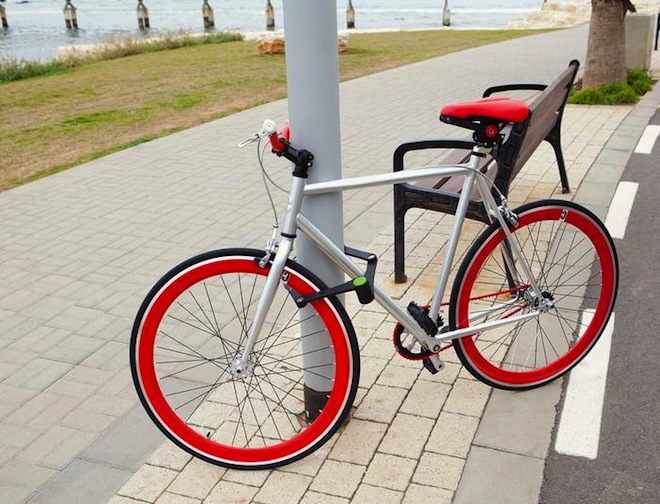
A group of friends from Tel Aviv got so tired of lugging enormous locks to foil would-be bicycle thieves that they got together to design what may be the world’s only fashionable solution: the Foldylock.
Jordan’s Tkiyet Um Ali Serves Up Big Eid Eats for All

The smirky little ram gracing billboards across Amman, Jordan is the face of Tkiyet Um Ali, an organization launched in 2006 by Jordan’s Princess Haya Al-Hussein in memory of her mother, the late Queen Alia, who conceived this project to (literally) cater to the needy.
Walking Shelter Are Shoes You Could Live In

Can’t find a couch to surf? Too broke for Air BNB? No need to cancel your travel plans, just lace up a pair of Walking-Shelter sneakers and hit the road.
Damien Hirst’s Birth Sculptures Challenges Doha’s Sense of “Science”
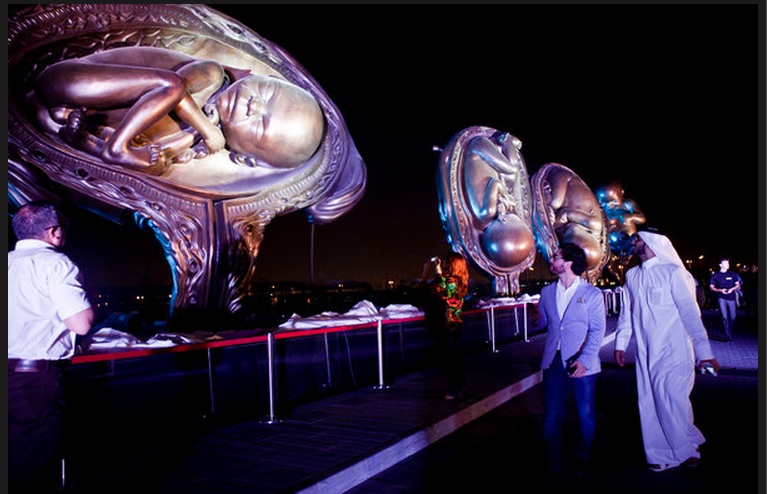
It’s something we can’t avoid as human beings: we begin as naked embryos that go through stages of gestation. We emerge naked, until clothed.
Marijuana eases Multiple Sclerosis symptoms Israeli cannabis researchers find


Multiple sclerosis is an inflammatory disease in which the immune system attacks the nervous system. The result can be a wide range of debilitating motor, physical, and mental problems. But smoking a spliff might decrease this inflammation, scientists from Israel find.
MERS Risk and Hajj – How to Prepare for a Healthy Pilgrammage

Public health officials in the Gulf states are playing down fears about an outbreak of the deadly MERS coronavirus among pilgrims travelling to the Hajj in Saudi Arabia this month, though doctors are advising the elderly, people with existing health conditions, pregnant women and young children to stay away.