
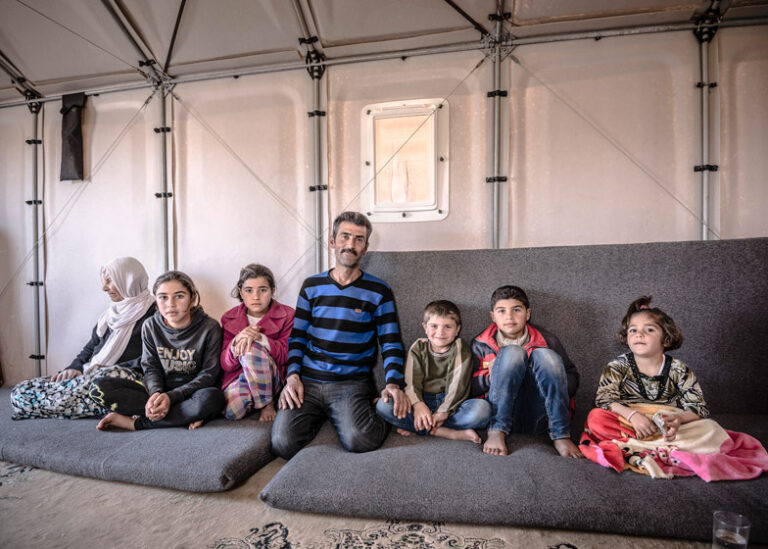
 IKEA and UNHCR (the United Nations High Commission for Refugees) emerged from two years of research with a prototype shelter suitable for refugee families anywhere. It features an innovative roof that reflects 70% of the sun’s rays during the day yet retains heat during the night, and it’s fitted with solar panels that power an interior light fixture and a USB outlet both built into the structure. They’ve begun producing 10,000 of these temporary homes, and as you’d expect from the Swedish home goods giant, they arrive via flat-pack shipping.
Ikea rolls out 10,000 flat-pack refugee shelters
Heat hackers breach computer systems by “breathing” data whispers
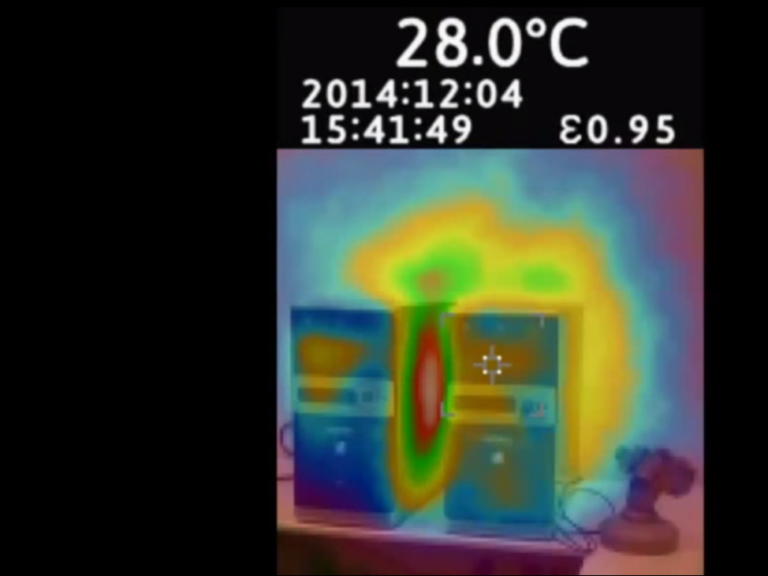
How can the environment around computers be used to hack data? Computer scientists have now determined that it’s possible to send data or “steal” data by using heat transfer between computers – those typically used as servers in high profile institutions like banks and police. Their exercise in hacking heat points out vulnerabilities in today’s computer systems so security experts can build walls around them.
The researchers from Ben Gurion University developed what they are calling BitWhisper to breach into computer systems that use air gapped cooling. This breach lets the computers talk to one another through heat. Wow or what?
According to the researchers, “The scenario is prevalent in many organizations where there are two computers on a single desk, one connected to the internal network and the other one connected to the Internet. BitWhisper can be used to steal small chunks of data (e.g. passwords) and for command and control.
Stealing with a breath of warm air
“These properties enable the attacker to hack information from inside an air-gapped network, as well as transmit commands to it,” the BGU researchers explain. “Only eight signals per hour are sufficient to steal sensitive information such as passwords or secret keys. No additional hardware or software is required. Furthermore, the attacker can use BitWhisper to directly control malware actions inside the network and receive feedback.”
The research, conducted by Mordechai Guri, a Ph.D. student is part of an ongoing focus on air-gap security. Computers and networks are air-gapped when they need to be kept highly secure and isolated from unsecured networks, such as the public Internet or an unsecured local area network.
Typically, air-gapped computers are used in financial transactions, mission critical tasks or military applications.
The new development of BitWhisper bridges the air-gap between the two computers, approximately 15 inches (40 cm) apart that are infected with malware by using their heat emissions and built-in thermal sensors to communicate.
It establishes a covert, bi-directional channel by emitting heat from one PC to the other in a controlled manner. By regulating the heat patterns, binary data is turned into thermal signals. In turn, the adjacent PC uses its built-in thermal sensors to measure the environmental changes.
These changes are then sampled, processed, and converted into data. Scary. Hackers stealing through heat. Let’s put minds like this on cracking bee colony collapse disorder and we’ll have started a revolution in bio hacking.
Worth their weight in gold: biggest losers in Dubai win coins for weight lost
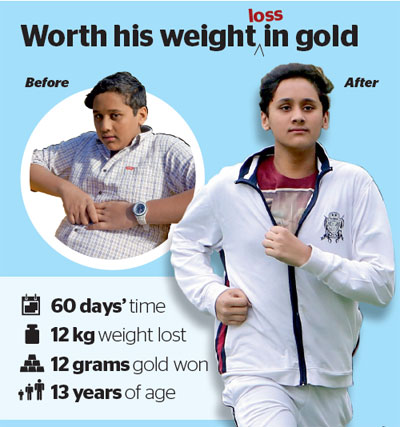
The Middle East is seeing the worst rising weights of obesity in the world: but a new Biggest Loser contest in Dubai, is showing that locals there, and children, are taking on the challenge for losing weight. If the prize is gold coins for every pound you’d drop, you’d want to lose too! Consider this is a region where people drive cars made from gold. So gold is a great prize and incentive.
According to Yahoo a 54-year-old woman emerged as the “biggest loser” while a 13-year-old boy became the winner among child contestants. Winners received bags of gold for the efforts.
The woman Sharada Serigara won by losing a whole 32.2kg from 96kg during the two month ordeal. The child, Somesh Chakrabortty, a grade nine student lost 12kg from a starting point of 97kg. Sharada won 32 grams of gold, the boy 12 grams.
We do hope that those running the contest have a sustainable plan so the biggest “losers’ of weight will be able to keep it off.
Below are some tips for keeping it off.

An alternative to standing desks: is it on The Level?


Is sitting the new smoking?
Nature designed human bodies to be in constant movement throughout the day, but when modern office jobs plant us in seated positions, only our fingertips get a workout. Now there is compelling evidence that prolonged sitting kills, even if you exercise regularly. In fact, the paradigm that moderate physical exertion, such as going for a run, promotes good health may be completely wrong. New research is instead showing that sedentary behavior is our primary health problem and anything that stops us from sitting will increase our fitness. Take a stand against sitting with a beautifully designed tool that brings new meaning to the term “internet surfing”.
Pee Power is making energy from urine in Africa
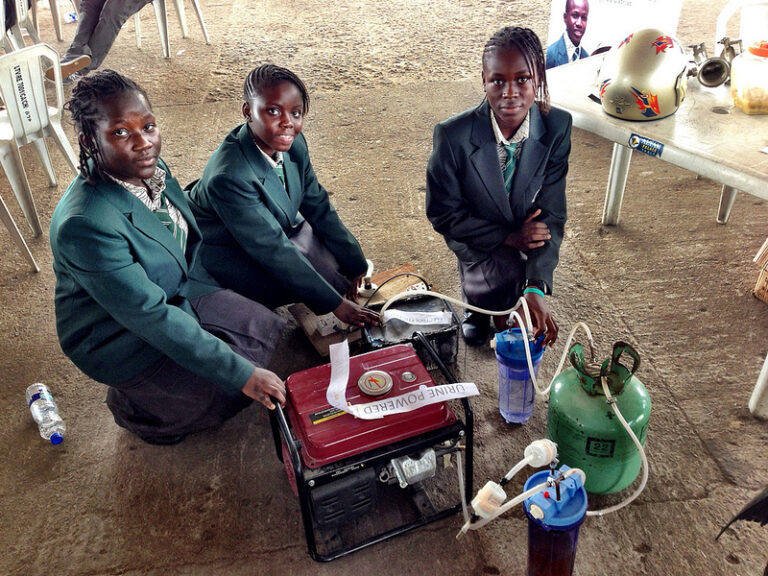
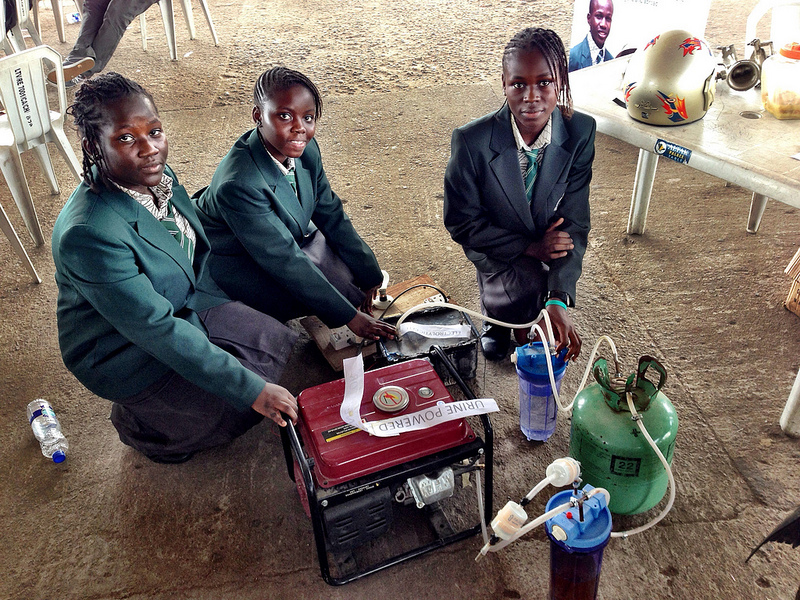
It’s already well known that manure or poop can be recycled for making products like paper
as well as creating biogas power from methane gas. Turning urine or pee into electricity is another matter. This readily available “resource”, whether it be from animal or human origin, is now being experimented with to actually generate electricity by using our pee’s basic ingredients to create enough hydrogen to provide electricity for both homes and businesses.
Four teenagers in Lagos Nigeria, working on a school project, created a practical way to separate hydrogen from urine, and then use it to power a generator to create electricity (see photo above). The “pee power” project was entered by the girls in an annual nationwide competition in Lagos, Maker Faire Africa, and it created enough electrical power to run the generator for six hours from one liter of pee.
The pee-power process occurs like this:
1. Urine is put into an electrolytic cell, which separates out the hydrogen.
2. The hydrogen is then filtered in a water filter for purification, and then is sent to a gas cylinder, similar to the kind used for outdoor barbecue grills.
3. The gas cylinder pushes the filtered hydrogen into another cylinder that contains liquid borax, to remove moisture from the gas.
4. In the final step, the hydrogen is sent into a power generator, which creates in electricity.
Although still a long way off from being implemented on a mass scale, this basic way of creating electricity from a substance normally disposed of can be a practical way to create electricity in places where normal electrical power has been cut off due to devastation by floods or other natural disasters, including severe storms. It can also be used to create electricity in poor rural agricultural areas that are common in Africa and Asia; including many parts of the Middle East.
The Pee Power idea is starting to take hold. Students and faculty at Bristol-based University of the West of England are being asked to use a special urinal that sends all the urine collected there to be used to produce hydrogen for powering an electric generator that creates additional electricity for the campus.
If this pee-power prototype project is successful, the idea of using urine produced hydrogen to power hydrogen powered cars is also being considered. Pee as you drive instead of stopping at rest stops? A curious idea. Not bad ideas for a waste product that normally winds up in the sewers.
Read more on recycling and creating bio-fuel from excrement:
5 Brilliant Projects That turn Poop into Power
Israel’s 4MW Biogas Plant to Clean Up After 14,000 Cows
What Recycled Paper Products From Poo Look Like
Photo of pee-power project generator by Maker Faire Africa
Thermo-piezoelectric tires by Goodyear produces energy for your electric car
Like Israel’s Softwheel for wheelchairs and bikes, Goodyear is asking: Can new ways of engineering tires extend the cruising ranges of electric cars to make them more saleable in the aftermath of the the demise of Shai Agassi’s Better Place electric car venture?
Despite some success in selling electric cars like Nissan’s Leaf model and General Motor’s Chevrolet Volt (more a hybrid), the cruising range of most electric cars is still one of the main issues that cloud a possible electric car success story. Yes, even with Tesla on the market.
Electric car manufacturers are exploring ways of extending the present cruising range of EV cars between battery pack recharges that in most cases are no more than 160 km (100 miles). At least a partial solution may be found in special “concept tires” being developed by the Goodyear Tire and Rubber Co. which will actually help recharge the EV car’s battery pack while the car is in motion.
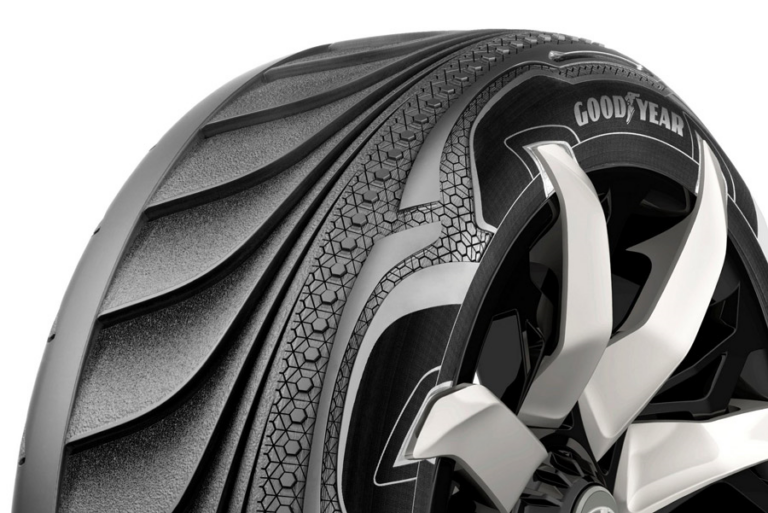
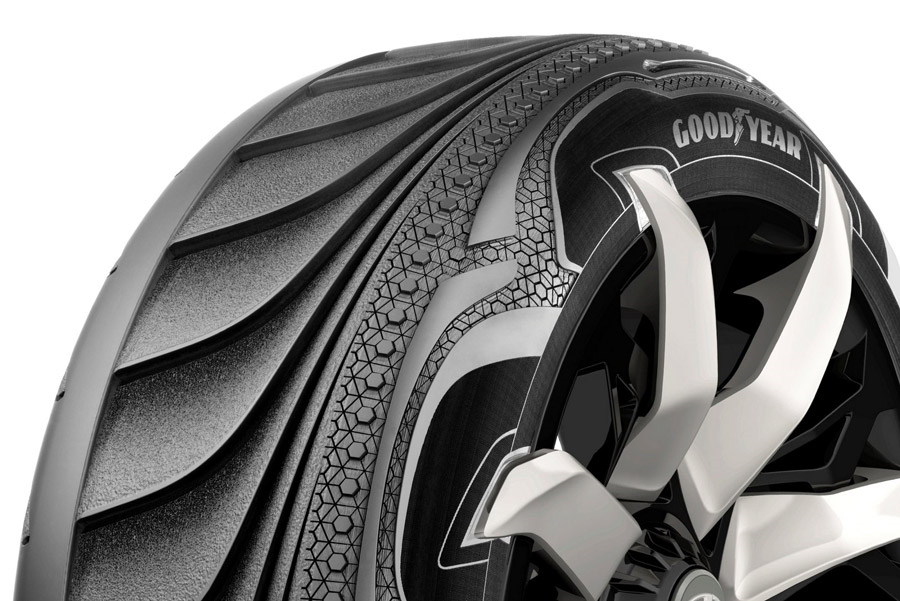
The tires were exhibited recently as the BH03 Concept Tire at the Geneva International Motor Show. They feature special heat conductors that convert heat generated by road movement into electricity that can then be conveyed to the car’s battery pack. Another feature is a thermo-piezoelectric layer built into the tire wall to collect energy from the sun when the car is parked.
This tire is not yet in production, partually due to its very high developmental costs. If it is made available it could help increase the cruising range of electric cars by virtually supplying electrical energy to the battery while driving on the road or sitting in a parking lot.
Better Place may be gone, but electric cars as Elon Musk is proving, are now becoming reality. They just need novel ways to get their drivers further down the road.
Read more on electric cars:
Can Israeli Cars Run on Alternatives by 2025?
What Tesla Can Learn from Better Place’s Post-Mortem
Renault Gives Up on Israel’s Swappable Electric Car Batteries
The Best Electric Cars of 2012, According to the American Buzz
Japan’s Fukushima nuclear meltdown – 4 years later
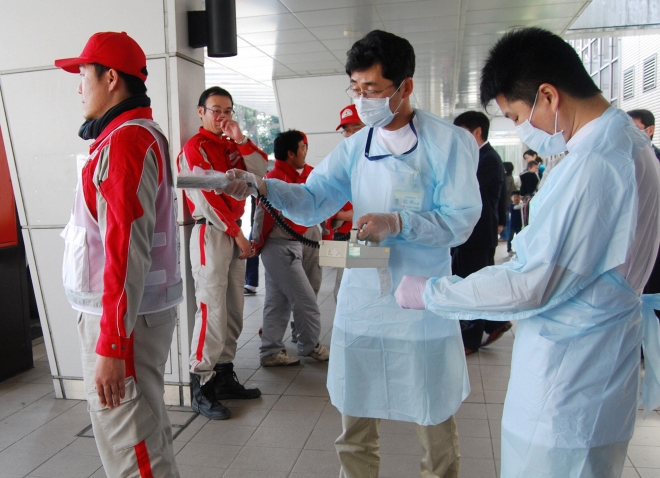
Iran’s aggressive nuclear energy program seems to be constantly in the news these days; while other regional countries, including Jordan, have nuclear power ambitions of their own. As the fourth anniversary of the March 11, 2011 Fukushima nuclear reactor meltdown is commemorated by Japan last week, the world may still not have learned the entire lesson of that tragic event. Many environmental activists are referring to the Fukushima reactor meltdown as much worse than Chernobyl.
Fukushima is now considered the world’s worst nuclear power plant disaster, and at least 250,000 Japanese are still displaced from their homes and businesses by the effects of both the giant earthquake-caused tsunami and nuclear reactor meltdown that killed more than 16,000 people and resulted in 2,500 more still missing.
Extremely high levels of radiation in locations near the destroyed Fukushima facility have prevented many Japanese from returning to their former homes; possibly forever. Entire communities are now no more than ghost towns, where wild animals like wild boars and monkeys roam free.
Not only the Japanese were affected, but also foreign rescue personnel who were sent there to aid and rescue the victims of this double tsunami and nuclear meltdown tragedy. This includes more than 500 American naval personnel who became ill from a variety of diseases and medical conditions which may have been caused by over-exposure to nuclear radiation.
Statistical information on radiation caused diseases, like cancer, and birth defects caused by the exposure of the Japanese population to high amounts of radiation have not yet been revealed as well.
Despite being the only country whose civilian population has experienced the effects of nuclear weapons first hand, Japan still depends on nuclear energy to supply much of its total electricity needs. The Fukushima tragedy may have changed this, however, with government officials now looking for other means to supply the country’s energy needs.
Statistically, the facts and figures of the need for nuclear reactors, are evident. Japan still has 48 nuclear reactors in operation, generating more than 42,500 MW of electricity. France, Europe’s largest nuclear reactor user, has 58 in operation, generating more then 63,000 MW. With 99, the USA has the largest number of nuclear reactors in operation, generating more than 98,700 MW of electricity.
The Middle East is still depending largely on oil and natural gas to supply its energy needs. At present only Iran has a functional nuclear reactor, producing around 915 MW of electricity. Seven more reactors are planned however. Other Middle Eastern countries planning to construct nuclear power reactors include Jordan with 2, Egypt with 2, Saudi Arabia with 16 and the UAE with 10 (3 are under construction).
These figures do not include “scientific reactors” in countries like Iran and Israel. With the tragic memories of the Fukushima reactor meltdowns still relatively fresh on peoples minds, we might all ask ourselves if the potential dangers of these power sources are really worthwhile?
Read more on Fukushima nuclear reactor meltdowns and the effect of nuclear energy on world environment:
Plans for Turkey’s First Nuclear Power Plant Revealed
Dr. Helen Caldicott: Fukushima nuclear meltdown much worse than Chernobyl
“Worst Case Scenario” Realized as Three Fukushima Nuclear Reactors Melt Down
‘Arabian Ark’ is saving UAE wildlife from extinction
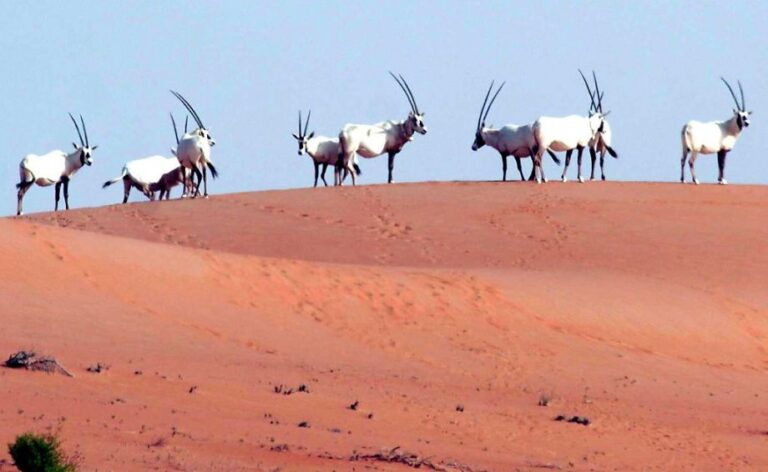
 Oryx, giraffes and cheetahs – species once facing regional extinction – are making a robust reappearance on a desert island off the coast of Abu Dhabi. Sheikh Zayed Bin Sultan al-Nahayan, founder of the United Arab Emirates (UAE), created the remote nature reserve in 1971. Forty years after Sir Bani Yas island received its first ‘imported’ animals, over 13,000 protected creatures now call the “Arabian Ark” home.
Today is a once-in-a-century Pi Day!

 Today is Pi Day. Celebrated around the world every March 14th (3/14), the day focuses on the mathematical symbol that represents the constant ratio of a circle’s circumference to its diameter, approximated as 3.14159. This year’s Pi Day is a once-in-a-lifetime event; it will be 100 years until we experience 3/14/15 9:26:53 again – that’s pi to ten places!
Caveman found living in Jordan mountains!
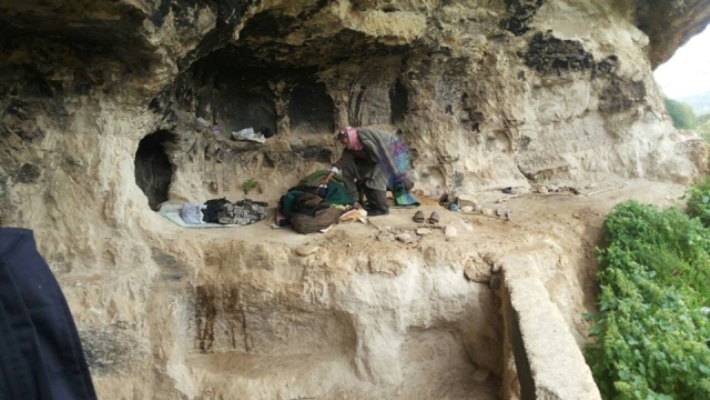
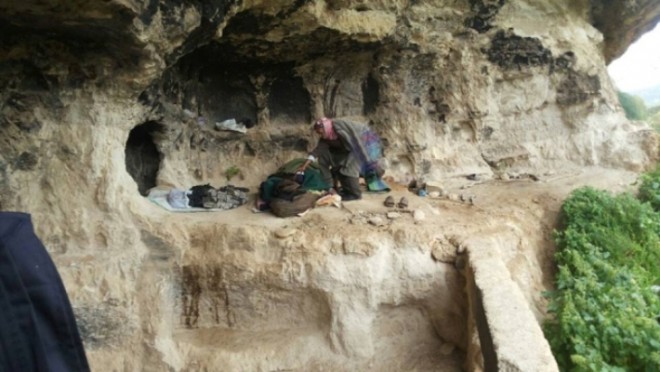
For the past two decades a 70-year old man lived in a cave in northern Jordan, alone with no water or power or reliable access to food, exposed to the elements and wild animals. An unidentified caller contacted radio station Amen FM to alert them to the modern caveman. Last Thursday the kingdom’s Public Security Department (PSD) found him and brought the septuagenarian to safety.
Abu Dhabi falconers think drones are for the birds
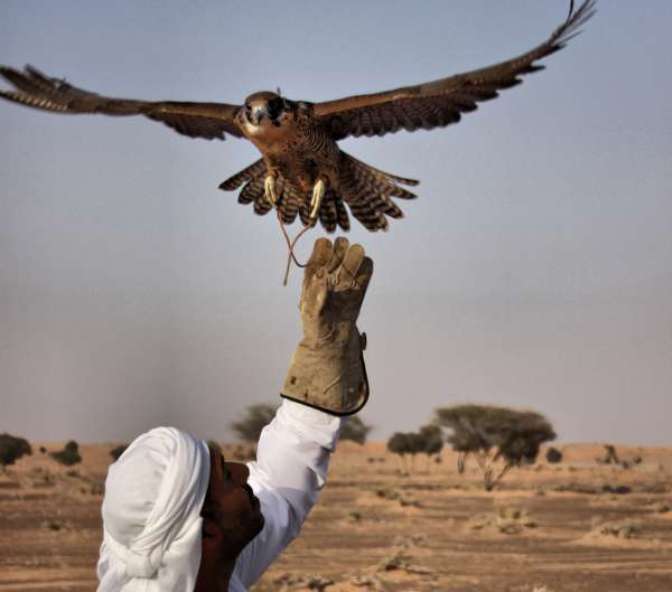
 Falcons have been trained for hunting and sport for thousands of years across the Middle East. Now falconers in the United Arab Emirates are turning to drone technology as a new tool to teach their birds to fly increasingly higher and hunt more efficiently. Can technology teach old birds new tricks?
Falcons hunt by scanning the ground below them using a cone-like field of vision; imagine a spotlight scanning the earth – the bird’s-eye-view is limited to what’s moving within that beam. The area within the cone expands when the bird soars higher above ground, but falcons don’t always fly high while scanning terrain, so falconers train them to fly higher, which increases the potential hunting area.
For centuries, falcon trainers have used kites and balloons. They tie a lure to a line, which is attached to the kite or balloon. The falcon chases the device as it flies upwards, then snatches the bait and returns it to its trainer for a reward. Over time, the bird learns to fly higher and hunt prey over a larger area. Replacing kites with small unmanned aerial vehicles, or quadcopters, puts a modern twist on an ancient technique.
The machines act as tiny helicopters, operated by remote control. They can travel in pre-determined paths, further and higher than ground-tethered balloons and kites.
Watch a video of drone training a falcon below. (The bird makes his appearance at around 0:40.)
https://www.youtube.com/watch?v=YT5Ak63rR1U
A drone is also being used – today – to carry a falcon to the top of the world’s tallest building, the Burj Khalifa in Dubai. It will carry the bird inside a special cage to the top of the 2,722 feet high tower.
The cage will open, and Victor the falcon will soar free, filming his journey using a special camera strapped to his chest. Live images of the world-record-breaking flight (this is Dubai, after all) will be shown on an enormous screen set along the shore between the Dubai Mall and Burj Khalifa.
Drones are deployed in many new ways, but our favorites remain those with environmental benefits, whether raising awareness to abominable practices of Big Food, helping to clear plastic from our oceans, or replacing delivery vehicles that run on fossil fuels.
Investors get primer on Impact Investing in Israel
What’s the social value of a new app that connects me to the best pizza in town? Or a gadget that can help me talk to a fellow gamer in China? Maybe the answer is zero, but maybe not. There is a new investment trend in town and it’s called Impact Investing. While the East and West Coasts of America are already familiar with the term Impact Investing, the Middle East is not. But you know some Impact companies already: Tom’s Shoes. Ben and Jerry’s ice cream.
Doing good for people and planet are known themes in the eco world. But investors haven’t caught up. They may have followed on the clean tech bandwagon, and got burnt from solar, but since that’s fallen out of fashion, what’s next?
Aligning language with practice is a new organization in Israel called Impact Investing Israel with a mission to motivate investors and startups to connect to that place, grounded in reality, where society impacts made by companies can be tangible, measurable and real. You can find Impact Summits from Chicago to New York to San Francisco and now Israel is getting its first.
What can Impact Investment mean? A new startup that 3D prints artificial limbs? A device to help people grow food more sustainably? An app that saves people’s lives from malaria?
The idea of Impact investing seems to have been a natural knock-on effect of what’s been happening in the world of sustainability over the last 15 years where die-hards follow the Triple Bottom Line: People, Planet, Profits. Impact loosely follows the spirit, and is guided by organizations like the B Corp in the US which helps develop criteria for Impact investors to know – what kind of company will have a measurable impact on society?How can we judge and predict a startups’ future Impact?
Over in Israel, investors and entrepreneurs will explore the theme and opportunities at the country’s first Impact Investing Conference taking place on Monday, March the 16th.
I’ve been covering the startup scene in Israel for nearly 15 years. There are so many Israeli companies in biotech and cleantech that could easily be branded as Impact companies, a good idea now that the word clean tech is out since solar energy investments, and investments in biofuel, even promising electric car ventures went belly up. Impact is less specific and gives more room to breath. This is my assessment but I am sure I have lots to learn.
Getting to Know Impact
 Ronny Faivelovitz, the founder of Impact Investing Israel tells me that the event is a primer, a way for the Israeli investment community to “get to know Impact Investing. There is a lot of talk and buzz about investing in this field,” she says, “but not everyone knows about how to do it right.
“The conference is about aligning this information,” Faivelowitz stresses. Coming from the sustainability world and now charged with the goal of impacting Impact, “I want to give all the information knowledge and techniques to Israeli investors and startups so they can assign to global standards. We will show case studies and ways to learn from experience.”
In the past Faivelowitz best describes her work with startups in the areas of “clean tech, water solutions, social businesses.”
She saw that Israel has a lot to offer and that Israeli companies have great ideas that can make an impact on society. And no, Impact isn’t just about Africa and feeding the poor, she stresses: “Companies need to know how to build a business plan and an Impact plan. That’s what an Impact Investor will want. They can’t just want to change the world, but need a sound ROI strategy in a global language standard,” she tells Green Prophet.
As for who’s on target for Impact, the event will showcase 11 Israeli startups that have demonstrated a measurable effect or potential for greatly influencing the health of society. But this is more of an event for investors: “The main subject we are dealing with is not from the side of startups,” Faivelowitz urges.
“We want to talk with VCs, private investors, philanthropists. We want to show them how and hold their hand as they take their first steps out in the field.”
Countering notions that Impact companies take longer for the Big Exit or IPO, Faivelowitz shrugs this off. “It’s not that all companies take more time. Each one is different. Most startups from the outset will not make an exit.”
What she does want to do is encourage traction in this investment area, because it’s worth it: “Investors should take it on as a professional field and strategic move. Research has shown that if you invest in these companies they will be more sustainable, and there is less of an investment risk over all because they are built according to regulation. And most can be profitable,” Faivelowitz says.
Consider this: “If you are building a company by definition as Impact it can actually help you with the next funding round because there are a lot of big institutes now already courting publicly their investments in Impact companies,” she concludes.
The event next Monday expects to bring out 300 people, mainly investors.
Who’s got it right? There is an Israeli company called Keepod that provides makes a small computer on disk on key, or a flash drive, for $7.
When you buy one the company also sends one to someone else in Africa. Like the Tom’s Shoes model. It all goes back to eco in the end. But I am going with the flow and believe Impact will be a much more sustainable direction than the eco brand or green, at least in terms of semantics. If not practice.
Among the speakers at the Impact Investing Conference will be:
- Sir Ronald Cohen, Social Impact Investment Taskforce
- Abigail Noble, World Economic Forum
- Eitan Stiva, Vital Capital
- Chemi Peres, Pitango
- Danny Almagor, Small Giants
- Robert Rubinstein, TBLI
According to the Impact Investing Israel group Israel has more “high tech start-ups and a larger capital industry per capita than any other country in the world. Now, an increasing number of Israeli innovators and social entrepreneurs are focusing their attention on solving some of the world’s greatest social and environmental challenges, from addressing issues of food security through agricultural technologies to providing sustainable energy and health solutions.”
Let’s wait and see what sort of Impact investments will be coming out of Israel.
Sensilize delivers chemistry lab by drone to the farmer’s field
Drones, those small, unmanned remote controlled airplanes with cameras can now be ordered by anyone online. They freak some people out. Not everyone loves the idea of a drone honing in on you in your backyard, but in agriculture, forestry and even in conservation they are the hot topic of the year. How can we make the most of drones to better food production, and help our planet?
Consider that Abu Dhabi is already using drones to train eagles, and for conservation efforts, but Abu Dhabi has banned drones for recreational use. American and European farmers are already enjoying the remote control possibilities of “seeing” their crop from the office at the farmhouse.
But just sending out a drone to man the fields doesn’t solve the bigger questions: what to do with all the footage, and how to make smart decisions from the hours of data collected?
Two wonder whizzes from Israel have the key. Robi Stark, the CEO of Sensilize, and his partner Yoav Zur are experienced scientists that understand imaging data. They’ve both done PhD level work in the area long before going on to work in remote sensing for defense companies like Elbit Systems. In recent years they decided that they wanted to make an impact on this world and set themselves on a year-long journey studying what’s missing in agriculture.
After buying their own drone and then realizing the legal framework for flying the vehicles is rife with complications – from the United States to Europe to Asia – they understood that a tool for drones, to help them collect better data, would scale their skills and expertise.
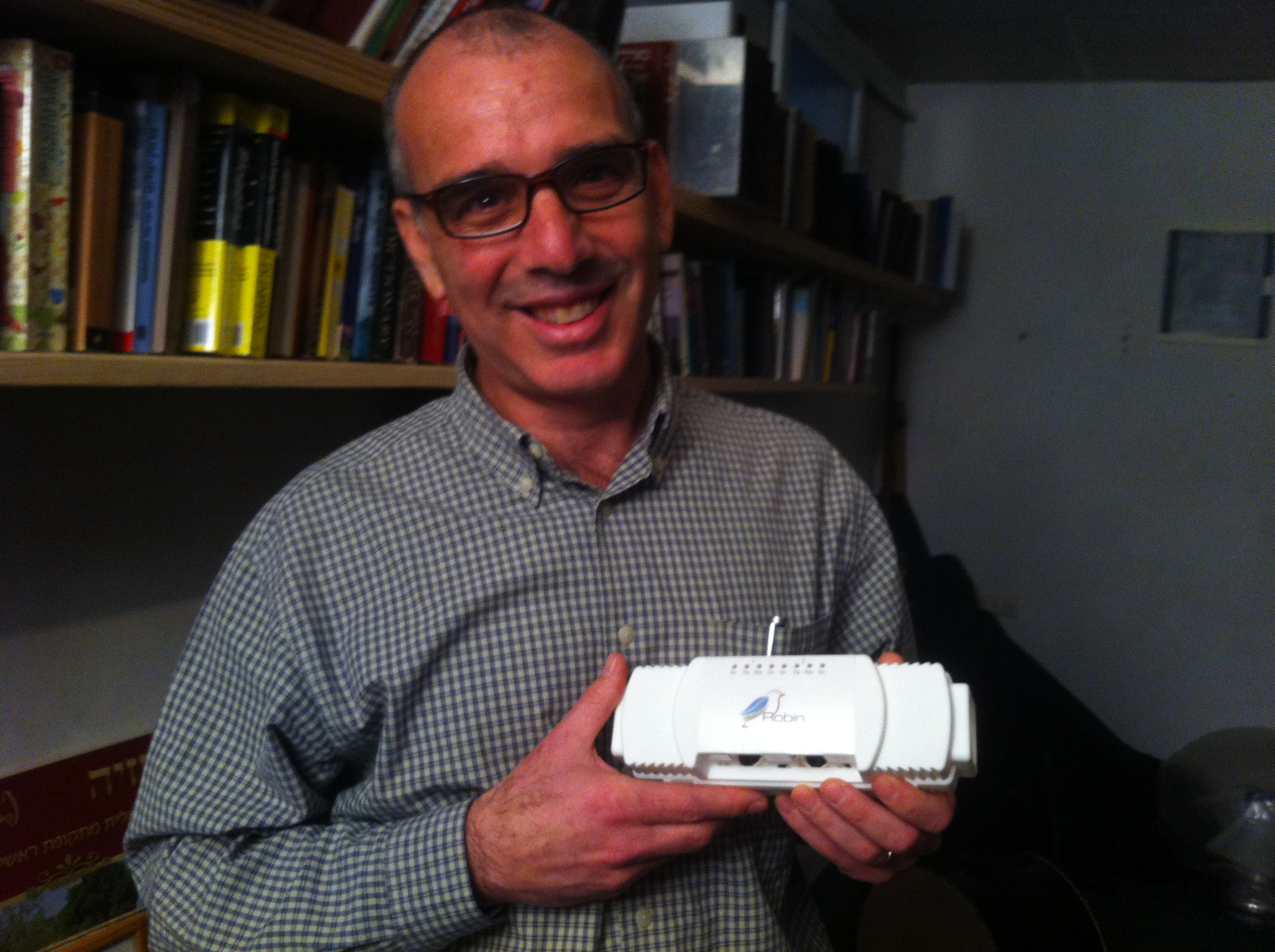
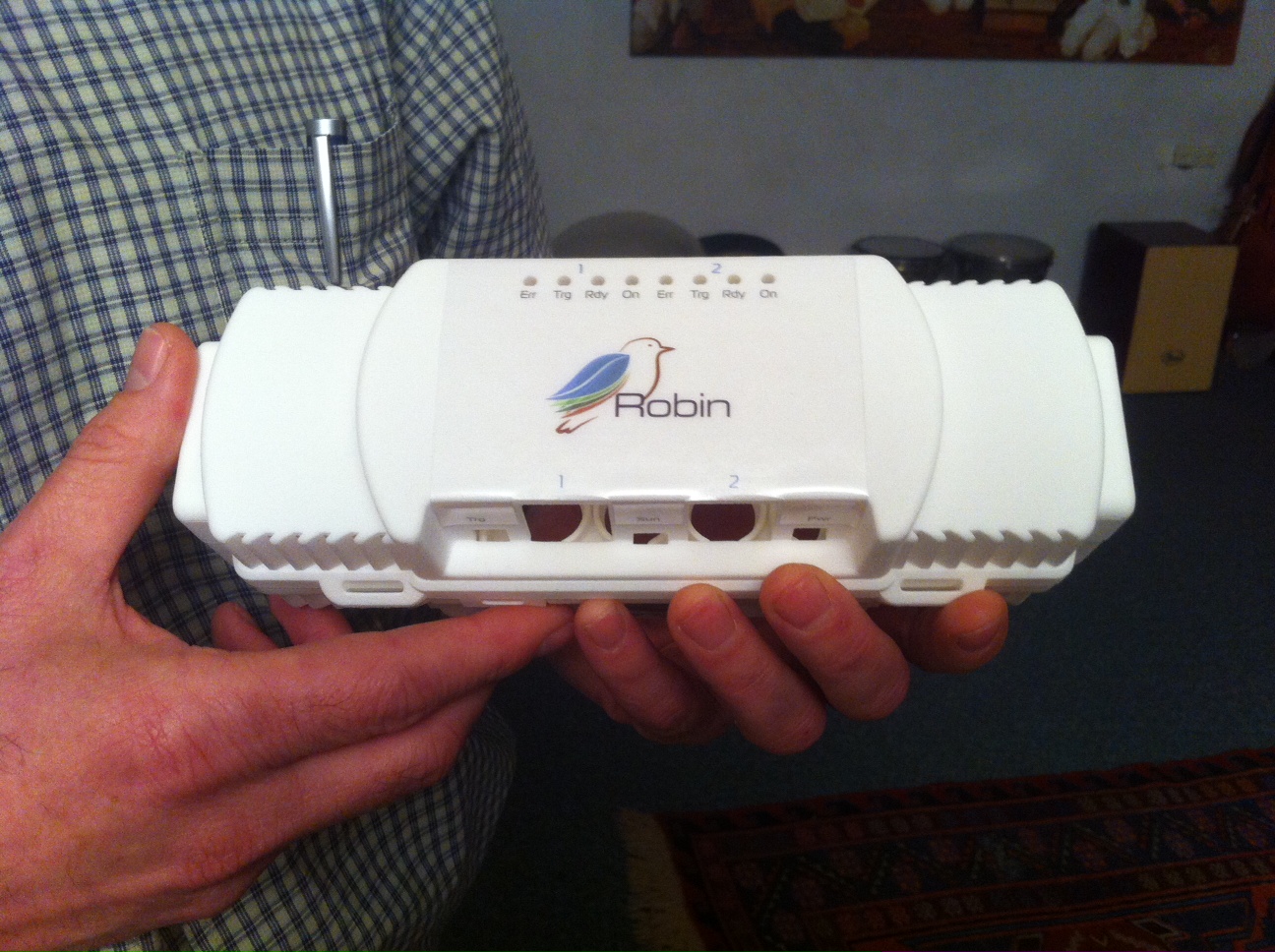
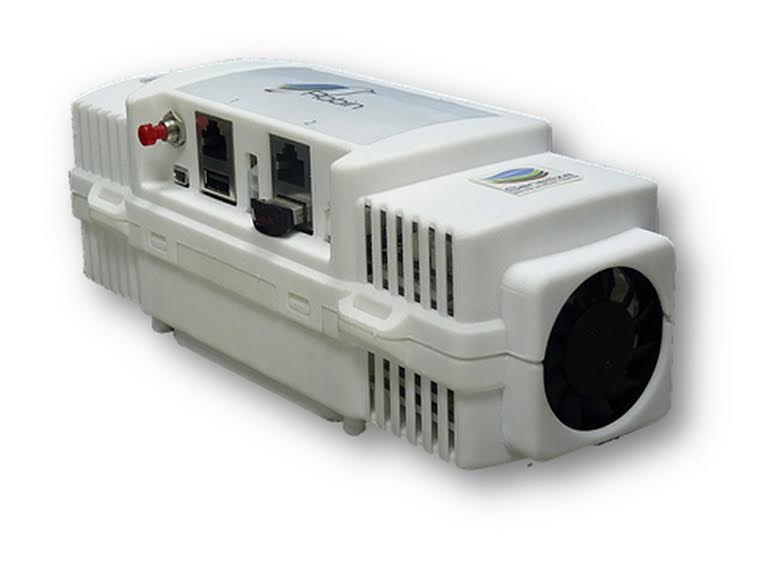
Today Sensilize offers the Robin system: one component is the Robin Eye, a small lightweight sensor about the size of a pencil case that is integrated into the drone. It collects raw data imagery so farmers, or those advising them, can make smarter and swifter decisions about crop management. When disease strikes, or when it’s time to harvest thanks Robin Mind, the software behind the sensors, can analyze the acquired data.
Just a few weeks ago the Food and Agriculture Organization’s director Jose Graziano emailed me saying that “Agriculture must change.”
Can this form of monitoring help change the way agriculture is managed? Stark is just back from the World AgriTech Investment Summit in San Francisco where he presented the Sensilize solution. He tells Green Prophet that he saw an enormous interest in his technology from CEOs of leading agtech companies and related industries.
 “Precision agriculture is going into the big farming operations. Everyone is looking to feed the world,” says Stark in an interview with Green Prophet. “We can’t provide our needs only by GMOs and biotech but also by better management.”
After a flyby with Robin on board Sensilize, the technology drills down using image processing to map vegetation mapping while conducting leaf analysis from above to see if there is any stress or deficiency in the crop or forest canopy.
Current solutions just take pictures of what’s going on below without any deep level analysis of what’s really happening, Stark tells Green Prophet.
“Others seem to deal with contours or geospatial issues. We are getting into the image and map looking at actual quantitative concentration of the pigment as a chemical lab, in a non-destructive way. All of this based on the “fingerprints” of the crops and soil.”
Getting to that point was an evolution inside the company:
“At first we wanted to develop applications to the consumer world, help you shop so you know which fruits are fresh and which are rotten, then we moved to the flower industry. After understanding challenges there we moved onto vegetation in the professional agtech market and matched this with drones.”
The mistake was actually buying a drone. “It was a flop because regulations globally are too complicated and the importance not rely with the platform of flying but with the data and the ability to transfer it precisely into actionable information,” says Stark.
“With this approach, we are now seeing interest from farmers, agronomists who manage farms, utilities companies and conservationists concerned about forest and land management practices.
“We wanted to create a tool that is available for use and which is simple. Drones are cost effective tools that are flexible. Whereas, satellites have problems with resolution and aircraft is expensive.
“We developed a solution that can be used by most of the drone platforms that exist in the market and once we decided this move everyone became our friends. So we knew that we were on the right track and that our end user wanted data analysis. Today we are one of the few companies that builds an application with sensors for vegetation mapping.
With seed money and later on another investment, both from the BLUE Private Equity Fund Stark and his team raised funds and started working.
Response from the world is that “Everyone from investors to innovators are looking to agriculture. The money is in the data. And with us drone companies can sell more drones. Some 15 plus UAV companies around the world have shown interest in integrating our sensor and using our solutions. Some of them have integrated it already and others are in the pipeline,” says Stark.
“We are bringing good data for actionable information. Taking this whole approach makes us unique. At the end of the day what is important for everyone it is the data..”
Others in the space include Airinov and MicaSense, which have both been acquired by Parrot.
Clients and users that already tested the Robin include Israel’s Jewish National Federation, the organization that plants trees in Israel. They want to use the system know about sick or diseased trees that may fall.
While the plan is not to put foresters out of business, Robin, ready for market this April, aims to arm foresters and farming stakeholders with a plan they can act on before disease or destruction takes root.
If that can save time, money, forest fires and prevent us from using dangerous pesticides we will be the first ones to fly with Sensilize.
Solar-powered plane’s round-the-world journey underway!

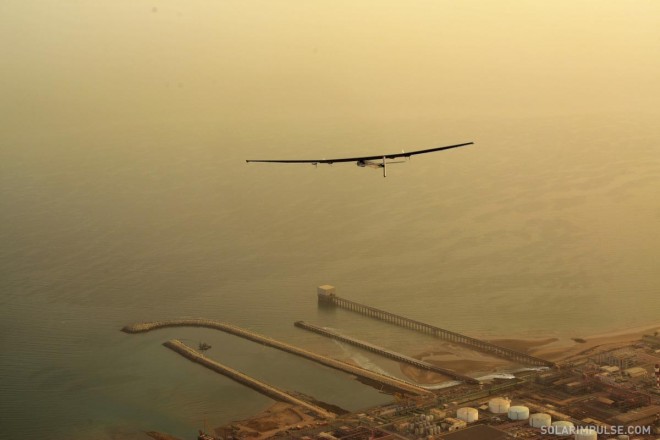 We’ve all heard of the benefits of solar power and the emergence of innovative new projects that are making use of the sun’s energy. But one is soaring above the rest of them – a solar-powered plane attempting to fly round the world!
Solar Impulse 2 took off from Abu Dhabi in the United Arab Emirates early on Monday morning and has already completed its first 250-mile (400km) leg, landing in the Omani capital of Muscat. It’s now on its way to India.
Two pilots are attempting the potentially record-breaking voyage. The journey will take several months to complete, and if successful the plane will be the first to fly round the world without any fuel.
Solar Impulse founders André Borschberg and Bertrand Piccard will take it in turns to fly the plane, swapping at each stop. Their 5,000 km (22,000 miles) journey has been organized to garner international attention on sustainable energy.

After stopping in India, the plane will head to Myanmar and China before flying over the Pacific Ocean and across the United States and southern Europe to eventually arrive back in Abu Dhabi in approximately five months.
The plane weighs around the same size as a family car (2,300 kg, 5,100 pounds,) yet it actually has a wingspan as wide as the largest passenger airliner.
The Solar Impulse website states that: “Solar Impulse wants to mobilize public enthusiasm in favor of technologies that will allow decreased dependence on fossil fuels, and induce positive emotions about renewable energies.” Well, they’ve got off to a flying that with that!
The project has been over 12 years in the making, with research, tests and development. The Solar Impulse team is made up of around 90 people, including engineers, technicians and mission controllers. It also has about 100 partners and advisers to advise on the project, financially and technologically.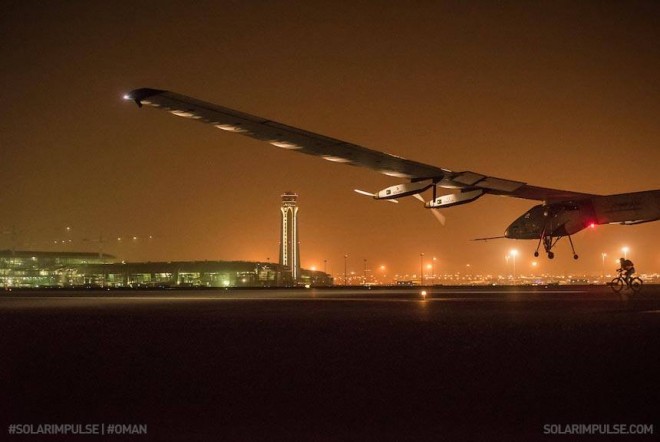
Images courtesy of solarimpulse.com
Weasel on a woodpecker? Discover Dubai through an eagle’s eye instead!


The world went wild last week over an unforgettable image of a weasel riding bareback on a woodpecker in flight. It is difficult to imagine a more astonishing moment that the one captured by amateur British photographer Martin Le-May, unless maybe if that woodpecker had a camera strapped to his chest. But that sort of nutty nature photography could only happen in Dubai, right?