Home Blog Page 25

Chinese submersible goes into the deepest ocean trench on earth

0

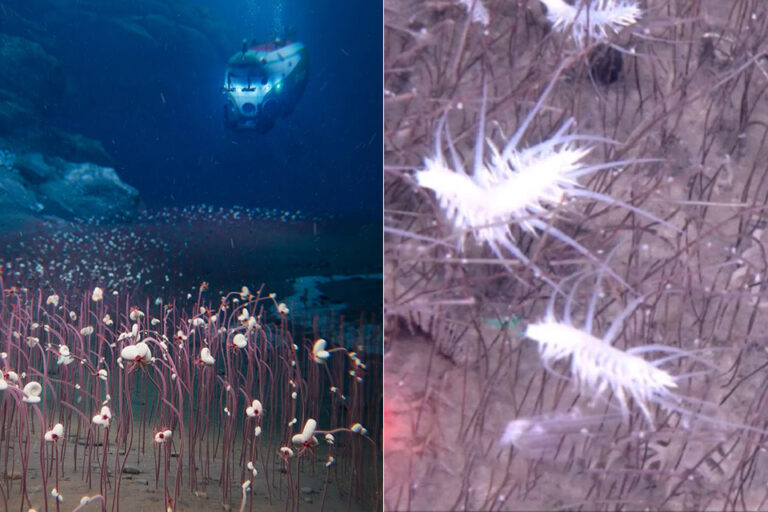
deep sea ecosystem, chemosynthetic life, hadal zone, Kuril-Kamchatka trench, Aleutian trench, methane seep, hydrogen sulfide seep, deep ocean biodiversity, marine invertebrates, extreme environment, tubeworms, deep sea discovery, hadal research, deep ocean science, Earth’s deepest ecosystem, Chinese Academy of Sciences, Mengran Du, ocean exploration, trench ecosystems, life without sunlightIn the black depths of the northwest Pacific Ocean, between 6,000 and 9,500 metres beneath the surface, scientists have discovered what is now considered the deepest complex chemosynthetic ecosystem ever recorded. This remarkable find, located in the Kuril-Kamchatka and Aleutian trenches, is composed of tubeworms, clams, snails, sea cucumbers, and other invertebrates — all thriving without sunlight by feeding on energy from methane and hydrogen sulfide seeping from the seafloor.

The discovery, led by a team from the Institute of Deep-sea Science and Engineering of the Chinese Academy of Sciences, was detailed in a study published in PNAS (Proceedings of the National Academy of Sciences) on July 29, 2025. Using submersibles and remote-sensing technology, the researchers identified methane seeps supporting densely packed animal communities in the hadal zone, which begins at 6,000 metres and is among the least explored regions of the planet.
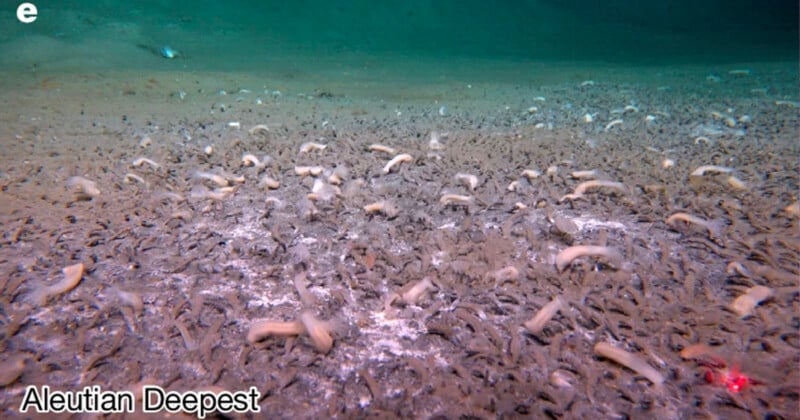
Aleutian Trench
Aleutian Trench

“What makes our discovery groundbreaking is not just its greater depth – it’s the astonishing abundance and diversity of chemosynthetic life we observed,” said Mengran Du, a marine geochemist with the Chinese Academy of Sciences, in an interview with Reuters. Du added that descending into the trench was like “traveling through time,” as the ecosystem was so isolated and unfamiliar.

Study co-author Xiaotong Peng, program leader for the hadal exploration project, described the environment as one of “cold, total darkness and active tectonic activities,” emphasizing the global significance of the find: “These are the deepest and the most extensive chemosynthetic communities known to exist on our planet.”

Previously, cold-seep ecosystems had been documented at depths of up to approximately 7,700 metres — such as those in the Japan Trench. But this new discovery extends known biological limits by nearly 2,000 metres, with seep communities observed as deep as 9,533 metres — nearly twice the depth of the Titanic wreck.

These ecosystems function without photosynthesis, instead relying on bacteria that convert methane and hydrogen sulfide into organic material. This process, chemosynthesis, forms the foundation of the food web at such depths and allows life to thrive in some of the harshest conditions on Earth.

Why It Matters: Implications for Earth, and Beyond

1. Ecology at the Edge of Habitability
The discovery underscores life’s resilience in environments of immense pressure, zero sunlight, and low temperatures. It also highlights the adaptability of microbial and macro-organisms to extreme conditions, offering a glimpse into biological possibilities once thought implausible.

2. Conservation in the Deep
The hadal zone, once considered barren, is now recognized as an ecologically rich frontier. With growing commercial interest in deep-sea mining for rare-earth minerals and polymetallic nodules, this research emphasizes the need for conservation frameworks to protect fragile deep-ocean ecosystems from irreversible harm.

3. Deep-Sea Mining: A Warning Sign
Areas like the Clarion-Clipperton Fracture Zone — a current mining target — could harbor similar ecosystems. Previous studies have shown that seabed disturbances can last decades or longer, making environmental safeguards critical before exploration or extraction efforts proceed.

4. Methane and Climate Models
Understanding how these deep ecosystems metabolize methane could enhance our models of carbon and methane cycling — especially as methane is a potent greenhouse gas. Studying these systems may reveal new sinks or sources in the global methane budget.

5. Clues to Life Beyond Earth
Organisms that live entirely off chemical energy in pitch-black, high-pressure environments are potential analogues to life that might exist on other worlds. Moons like Europa and Enceladus, with their icy shells and suspected subsurface oceans, may host similar chemosynthetic life forms if geothermal or tectonic activity provides the right conditions.

6. Microplastics and Human Reach
While microplastics were not part of this particular discovery, their documented presence in deep-ocean trenches highlights human influence on even the most remote environments. Understanding how pollutants interact with such ecosystems is vital to assess long-term ecological risk.

What Comes Next?
This discovery prompts urgent scientific and ethical questions: How widespread are similar ecosystems across global trench systems? Can these systems withstand anthropogenic impacts like mining or pollution? What unknown species or biochemical pathways might still be hiding in the hadal depths?

To answer these, scientists call for expanded international deep-sea exploration, integrated with policy frameworks to protect vulnerable zones. The study authors have urged that hadal research should not only advance science but also guide ocean governance, ensuring that exploitation does not outpace understanding.

The Satellite That Sees Earth Breathe: How NISAR Could Transform Sustainability From Space

0
NISAR satellite, NASA ISRO collaboration, climate satellite, synthetic aperture radar, Earth observation, environmental monitoring, startup climate tech, disaster resilience, sustainability from space, radar mapping Earth, glacier monitoring, deforestation tracking, smart agriculture satellite data, Middle East water crisis solutions
This satellite watches the earth breathe

Last week, the most advanced Earth-mapping satellite ever built left Earth to watch over it. The joint NASA–ISRO Synthetic Aperture Radar (NISAR) satellite launched from India’s Satish Dhawan Space Centre into sun-synchronous orbit. This powerful radar sentinel will orbit the planet every 12 days, capturing changes on Earth’s surface in astonishing detail—down to a few centimeters—whether in daylight, darkness, or through thick clouds and vegetation.

Related: Make Sunsets geo-engineers climate with cooling credits

While the technology may sound like science fiction, NISAR’s mission is urgently practical: to track our changing planet and provide a planetary MRI scan every two weeks. The implications for climate, agriculture, disaster preparedness, and sustainable development are profound—and entrepreneurs are already eyeing the satellite’s open data streams as a platform for innovation.

Developed over a decade by NASA and the Indian Space Research Organisation (ISRO), NISAR is equipped with dual-frequency L- and S-band synthetic aperture radars, making it the first satellite of its kind. This unique combination allows it to detect subtle shifts in Earth’s crust, vegetation, ice sheets, and even groundwater levels.

Its potential applications are wide-ranging: In the Arctic, NISAR will track how fast Greenland and Antarctic ice sheets are melting.

In Indonesia or the Amazon, it will monitor deforestation, peatland collapse, and forest biomass.

In urban zones, NISAR can observe subsiding infrastructure, helping cities adapt to rising seas and overextraction of groundwater.

NASA’s Earth Science Division Director Karen St. Germain called it “the most advanced radar system for Earth observation we’ve ever put into orbit.”

For India, this is a leap into space-enabled environmental management. For a warming planet, data is power. By measuring the movement of glaciers, the expansion of wetlands, or the sinking of deltas, NISAR offers vital intelligence for managing climate adaptation and natural disasters.

Every region, from coastal cities to desert farms, is going to be impacted by changes NISAR can see coming,” says Karin Kloosterman, the editor of Green Prophet. This technology is like giving Earth a health checkup every two weeks. Existing startups in agtech, climate, solar, energy and mining will be improved with this robust new data. Thousands of exciting new opportunities in sustainable and clean tech await.”

Critically, NISAR’s data will be publicly available. That means not only scientists and governments, but also nonprofits, local planners, and startups can build tools and services using the data.

Entrepreneurs, take note. NISAR’s raw power is just the beginning—it’s what we do with it that matters. A few promising directions:

Disaster tech startups could build risk maps and alert systems for earthquakes, landslides, or floods based on ground deformation data.

Agri-tech companies can combine NISAR’s soil moisture and terrain maps with AI to help farmers in Africa or the Middle East optimize irrigation.

Climate risk insurers may use NISAR insights to assess premiums for homes near eroding coastlines or unstable hills.

Carbon credit marketplaces can verify reforestation or wetland projects through updated biomass assessments, ensuring transparency and accountability.

At a time when political uncertainty has cast doubt on future U.S. funding for Earth science missions, NISAR is a bright spot. But it could be among the last of NASA’s major Earth-monitoring projects for years if proposed budget cuts by U.S. lawmakers take effect.

Related: The history of drip irrigation

Still, the baton may be passing. By building collaborative platforms around satellites like NISAR, we can democratize access to Earth data and decentralize its benefits. In the face of floods, droughts, fires, and rising seas, it’s not just the scientists who will act—it’s technologists, policymakers, and concerned citizens who will rise to the challenge.

As climate change accelerates, our window to act narrows. With NISAR watching from above, we gain a clearer view of where the planet hurts—and where we still have time to heal.


Mineral Sunscreens and the Planet: Sun Protection That Respects the Environment

0
Sunscreen, mineral-based, for your teens

As individuals become more aware of their environmental impact, they begin to reconsider the products that they use in their daily lives, including sunscreen. 

Conventional chemical sunscreens normally contain compounds that may harm marine life, especially coral reefs. But here’s the good news: mineral sunscreens are not only safer for your skin but also gentler on the planet. Learn how making the switch can help protect our oceans and contribute to a healthier future.

Which Sunscreens are Eco-Friendly?

Not every sunscreen product is the same, especially when it comes to environmental impact. Ingredients like oxybenzone, octinoxate, and avobenzone, commonly found in chemical sunscreens, have been linked to coral bleaching and harm to marine life.  These chemicals rinse off your skin when you swim or shower, making their way to waterways and weak ecosystems.

In contrast, mineral-based sunscreens use physical blockers like zinc oxide and titanium dioxide to effectively protect against the sun’s UV rays. When formulated correctly (using non-nano particles and without harmful additives), they are a reef-safe method of sun protection. 

Understanding the Ingredients: Zinc Oxide and Titanium Dioxide

So what’s the difference between zinc oxide and titanium dioxide? They are naturally occurring minerals with broad-spectrum UV protection that block both UVA and UVB rays.

Unlike chemical filters, which absorb UV rays and convert them into heat, potentially irritating sensitive skin, mineral filters sit on the skin’s surface and physically block the sun. This makes them especially suitable for sensitive skin types, including children or individuals with conditions like eczema or rosacea.

Notably, reef-safe formulas do not contain nano-sized particles, which can cause danger to the environment. Rather, non-nano mineral-based sunscreens have minimal chances of being consumed by marine creatures or diffusing to the environment.

Beyond the Ocean: Greater Environmental Impact

You can make your own sunscreen, using mineral-based ingredients

Being eco-friendly is not just about what is inside the bottle. Many brands are also committed to creating sustainable packaging that uses recyclable or even biodegradable materials. This limits plastic waste and supports the shift to a circular economy.

Some formulas are also biodegradable, meaning they can break down naturally without causing any damage to the environment. These products help you approach sustainability in a comprehensive way, allowing you to take care of your skin while taking care of the environment around you.

Safe for You and The Planet

Mineral sunscreens are one of nature’s most thoughtful solutions. Unlike many chemical options, mineral filters are not absorbed into the bloodstream and are less likely to induce an allergic reaction, making them a smart choice for individuals with sensitive skin, allergies, or autoimmune conditions.

By choosing mineral sunscreen, you’re making a conscious decision that aligns with not only the well-being of the planet, but also your health.

Final Thoughts

You don’t have to choose between protecting your skin and protecting the environment. Mineral-based sunscreens offer effective, reef-safe UV protection while supporting a more sustainable lifestyle. Whether you’re just beginning to explore green skincare or already committed to it, switching to mineral sunscreen is a great place to start.


Put Summer In A Bottle: Brew Raspberry Cordial

iced raspberry cordial

Raspberries are in full flush now, so take advantage of that abundance to brew raspberry cordial. You can call it a home-brew because the juice ferments and becomes slightly alcoholic. It's sweet, light, and a clear red color, with the true raspberry flavor. Uncork a bottle in winter, and the fragrance immediately takes you right back to summer. At least, while you’re drinking it.

If you’re using fresh raspberries, you won’t need to add yeast because the yeasts needed for fermentation exist on the fruit. But if the cordial has been sitting around for a couple of days and there still isn’t foam on the surface to indicate fermentation, stir in a tiny pinch of baker’s yeast to encourage it. Confession: I’ve made the cordial with supermarket frozen raspberries more than once, and haven’t needed to supplement it with commercial yeast.

This recipe is adapted from Leda Meredith's Preserving Everything.

  • large bowls
  • potato masher or food processor
  • sieve or colander
  • cheesecloth or clean kitchen towel
  • very clean, very dry bottles. How many depends on the volume each contains.
  • funnel
  • Ziploc bag or balloon for each bottle
  • needle or pin
  • corks or other dependable stoppers
  • 2 quarts – 8 cups – 2 liters – fresh or frozen raspberries
  • 2 cups boiling water
  • 2 cups granulated white sugar
  1. If using frozen berries, thaw them out.
  2. Crush the berries in a non-reactive bowl with a potato masher. Or pulse them briefly in the food processor, then transfer the mass to a crock or bowl. Don’t attempt to puree the berries, just break them down into fine chunks.
  3. Have the water boiling. Stir it into the raspberry mass.
  4. Cover the bowl with cheesecloth or a clean kitchen towel. Now leave it in place for 24 hours, stirring once in a while.

  5. Strain the liquid into the second clean bowl through a sieve or colander lined with cheesecloth. The more you strain, the more juice you get and the less seeds to deal with.

  6. Discard the seedy pulp.
  7. Add the sugar to the juice, stirring. Stir well again every 15 minutes for the next hour, making 5 times altogether.
  8. Strain the sweetened juice again.
  9. Funnel the cordial into your bottles. It will continue fermenting.
  10. Do not cork the bottles yet; fermentation creates gases that can pop corks right off and spew your beautiful cordial everywhere. Fit a Ziploc bag or balloon over each bottle and secure it with a rubber band. Pierce each bag once with the needle. This keeps dust and bugs out and allows fermentation gases to escape.

  11. Put the bottles upright in a cool, dark place. The bag will inflate as the cordial ferments. When they deflate, you can cork the cordial. This should take about two months.

  12. Store the bottles on their sides in that cool, dark place for a further 2 months. The wait is worthwhile to let the cordial mature.
  13. The cordial may be a little fizzy when first poured out. Drink it that way if you like. Otherwise, decant it. There may be some sediment at the very bottom of the bottle. In that case, pour the cordial off gently to leave the sediment behind.
  14. Kept corked and cool, the raspberry cordial will stay delicious at least a year. But you’ll probably drink it up way before.

How to serve raspberry cordial: Pour it into tumblers or small glasses, either at cool room temperature or cold. I like it iced, myself.

Other seasonal berries like yellow raspberries, blackberries, mulberries, and blueberries can be substituted in this recipe. Naturally, the color will be different according to the fruit used. Best is to use organic or foraged fruit. 

If making the cordial in quantity, it’s worth investing in one or more fermentation locks, as many as needed for your bottles. These locks do a great job of keeping the cordial clean while allowing gases to escape. Find them at local winemaking suppliers or order online.

Drinks
American

fresh raspberries for cordial

Setting Up a Green Business: What You Need to Know

Nacelle turbine home
A wind turbine tiny home. Do you have a website to sell your sustainable products?

If you’re dedicated to protecting the environment, you can start a business that promotes sustainability. This means you’ll have to source your products ethically, use renewable energy, minimize business waste, and save water. If possible, you should also go paperless. So, how can you ensure that your green business grows into a profitable operation? Here are a few tips.

Get a High-Quality E-Commerce Website

One thing your customers care about is your professionalism, and this can be displayed through the quality of your website. That’s even more important if you consider the fact that your site will give customers the first glimpse into your business. Designing a great website is fairly easy. You’ll just need a website builder like IONOS and a scalable web hosting service.

You can also use AI (artificial intelligence) to come up with text and images for your website. Just make sure you know which prompts to use for the best results. Finally, add security features like SSL encryption and a firewall.

Highlight Your Contribution to Sustainability

Taking care of the planet is a noble cause, and highlighting your contribution can inspire other members of the community to lower their carbon footprint as well. On top of that, it can serve as a marketing method, since many people would be happy to work with a sustainable brand. For this reason, you should make it clear that your goal is to minimize environmental pollution.

Find a Suitable Marketing Strategy

All businesses need a marketing strategy. Before you come up with a promotion policy, you should define your marketing goals, your target market, and the amount you can spend on promotions. Many forms of digital marketing have fairly high returns on investment (ROIs). Some of the best methods are influencer marketing, social media marketing, and affiliate marketing.

Various traditional marketing methods may also suit your business model. For example, you can put up banners, buy newspaper and magazine ads, or market at events.  

Optimize Your Website for Google

Getting your website to the first page of Google should be a priority for all business owners. That’s because most of your customers will search for your products online before visiting your store or making an order. The first thing you’ll need to do is make sure your website offers a high-quality user experience. Visitors should be able to load your site in less than 2 seconds, and they must also enjoy easy navigation.

Something else Google has to check is your content. Although adding relevant keywords is important, you shouldn’t stuff these phrases in your articles. Instead, focus on providing value to your readers.

Conclusion

Launching an environmentally friendly business is a great way to contribute positively to your community. Before starting your business, you should create a website and optimize it for Google and other search engines. It’s also important to come up with a marketing strategy that matches your goals and budget. Finally, make sure you highlight your contributions to environmental protection.


How Israel’s Strikes Avert Iran’s Environmental Threat

0
destroyed Natanz Nuclear facility
Natanz Nuclear Facility after Israeli strikes

When Israel launched a surprise, precision strike wave against Iran’s nuclear and other essential infrastructure on June 13, 2025, the world’s attention turned not only to the military, political, and human fallout but also to the environmental risks. Iran and its leaders immediately accused Israel of committing environmental war crimes. The supporting evidence for this claim was fires at oil depots, fuel deposits being damaged, and the targeting of nuclear research and development facilities.

From Israel’s perspective, these accusations are just distractions and diversions to ignore a larger truth: Iran’s pursuit of nuclear weapons poses a larger and longer-lasting environmental threat to the Middle East than Israel’s defensive measures ever will.  

Israel has long believed and employed the practice of stopping existential threats before they come to fruition. This doctrine led Israel to conduct strikes, similar to its 2025 attack, on nuclear facilities in Iraq in 1981 and Syria in 2007. While both operations were controversial at the same time, which seems to be the trend with Israel’s attacks, they are now acknowledged to have prevented potentially worse, specifically environmental, outcomes.

In June 2025, Israel used the same logic when it attacked Iran. Nuclear facilities in Natanz, Fordow, and Arak, among other infrastructure, where uranium enrichment along with other nuclear activities were targeted. Israel’s goal was clear: cripple Iran’s nuclear program before it had operational weapons. For Israeli leaders, the alternative to not attacking was unthinkable. An Iran with nuclear capabilities would not only destabilize regional politics but also risk a major humanitarian and environmental disaster.  

See Related Article: Experts at US-Arab Policy Conference debate Mideast’s future as global energy supplier

Critics of the attack warned and cited instances of radioactive leaks. However, agencies like the International Atomic Energy Agency (IAEA) confirmed the lack of leaks and are also continuing to measure sites to ensure no radioactive increase. Chemical exposure is the real environmental danger. Chemicals used in enrichment that are not cared for and stored properly can become toxic and can potentially be inhaled or contaminate groundwater. The underground nature of Iran’s nuclear development facilities helped decrease the chance of air exposure. Additionally, Israeli military planners deliberately designed strikes to maximize damage to infrastructure and minimize environmental fallout. Israel’s precision proves that Israel recognizes environmental safety even amid war. 

Israeli Air Force Jets

Iran’s environmental department has accused Israel of targeting fossil-fuel storage, oil depots, industrial plants, and nuclear facilities with the intention of causing environmental destruction. Tehran’s state media highlighted fires at oil depots and refineries, claiming that the attacks and subsequent destruction created toxic air and soil contamination. Israel rejects these accusations. Its view is that the strikes were carefully planned and carried out with precision to undermine Iran’s economic, military, and nuclear programs.

By crippling key infrastructure, Israel seeks to cut off financial and physical resources as well as the support they provide for Iran’s proxies. From Israel’s perspective, Iran is attempting to weaponize environmental justice as propaganda while ignoring the larger risks that they are creating by their national ambitions. 

See Related Article: Iran is sinking in sinkholes from overwatering

While Iran points towards oil fires and chemical leaks, Israel argues that the long-term environmental risks of a nuclear Iran far outweigh the immediate impact of its targeted strikes. Consider the following situations:

  • Nuclear accident: Poorly secured and contained enrichment facilities could leak uranium into soil, water, and other resources
  • Regional proliferation: If Iran secures nuclear weapons, other nations in the region may pursue their programs in response, exponentially increasing the risk of accident and sabotage
  • Terrorist access: With Iranian proxies active across the Middle East, material or weapons could fall into the hands of groups with no regard for environmental or human safety
  • Regional instability: A nuclear Iran would increase the likelihood of war, where nuclear attacks would devastate the environment 

For Israel, these risks make preventative action not only the way to save human life but also to save the environment from potential destruction.

Iranian Missiles

Iran’s accusations of environmental war crimes fit into a broader narrative attempting to portray Israel as reckless and destructive. But Israel points out key hypocrisies. Iran’s secrecy, blocking inspectors from accessing facilities, Iran’s industrial pollution, and their weaponization of outrage shift their malpractice onto Israel. 

Israel frames its strategy around an ethical argument: to allow Iran to continue unchecked would not only be a gamble in terms of Israeli lives but also with the environmental health of the Middle East as a whole. 

The strikes on Iran have sparked fierce debate, but from Israel’s perspective, the choice was easy: either accept the risks of a nuclear Iran or act decisively to stop it.

Israel chose action, not out of disregard for the environment, but because it views preventive strikes as the lesser of two ecological evils. The immediate damage pales in comparison to the devastation a nuclearized Iran could unleash.

For Israel, protecting the land, air, and water of the Middle East means ensuring that a nuclear catastrophe never becomes part of the region’s future.

Emirates Turns Retired Aircraft into Luxury Bags

Emirates Aircrafted 2025, upcycled aviation bags, sustainable fashion Middle East, Emirates retrofit project, eco luxury bags, aviation waste upcycling, Emirates official store, handmade luggage Dubai, aircraft material recycling, sustainable design UAE, circular economy aviation, Green Prophet Emirates, Emirates Airline Foundation, eco-conscious travel accessories, Emirates A380 retrofit, Dubai green innovation

Emirates, the UAE airline, is giving aviation waste a second life—and a stylish one at that. Following the rapid sellout of its 2023 launch, the Dubai-based airline has unveiled a second limited-edition collection of handmade bags crafted from retired aircraft interiors.

The Aircrafted by Emirates 2025 Collection includes 167 collector pieces now available for purchase through the Emirates Official Store. Like the first drop—which raised over $17,000 for children via the Emirates Airline Foundation—most proceeds will again support children in need, blending sustainability with social impact.

Each bag in the new collection is a one-of-a-kind artifact from aviation history. Materials have been salvaged from Emirates’ retrofitted Airbus A380 and Boeing 777 aircraft—upcycled elements like aluminum headrests, leather from First and Business Class seats, and even the faux-fur covers from the Captain’s chair.

Related: is sex on an airplane legal? Probably not in the United Arab Emirates

The result? A line of thoughtfully crafted trolley bags, backpacks, and handbags, ranging in price from $80 to $350. Some feature functional Emirates seatbelts as straps. Others are lined with brand-new fabric and include hardware upgrades like zippers and leather conditioning. All materials are laundered, deep-cleaned, and disinfected before being reimagined into luxury bags.

What makes this even more impressive is that the entire collection is handmade by Emirates’ own cabin tailors—a 14-person team usually tasked with maintaining aircraft interiors. Now, thanks to the growing popularity of the initiative (including a special Aircrafted Kids line), these artisans are working full-time on creative reuse. We hope they are getting a good wage.

This isn’t a PR gimmick, so they say. The project is a spinoff of Emirates’ massive fleet retrofit, launched in 2022—a multi-billion-dollar effort to upgrade 219 aircraft. So far, the airline has reclaimed more than 30,000 kilograms of high-quality aircraft materials, proving that large-scale industrial projects can have a second life, with both aesthetic and environmental benefits.

Aircrafted by Emirates offers a new kind of aspirational shopping experience—luxury that’s upcycled, local, and charitable. For consumers looking to reduce their carbon footprint without sacrificing quality or design, this initiative points to a broader future for sustainable fashion in the Gulf and beyond.

And yes, if past demand is anything to go by—these bags will fly off the shelves.

Octopus falls for the rubber arm trick – time to take them off the menu?

0

octopus rubber arm illusion, octopus intelligence, cephalopod consciousness, animal body awareness, proprioception in animals, Callistoctopus aspilosomatis, marine neuroscience, sustainable marine ethics, octopus brain research, animal sentience, marine life protection, octopus behavior study, intelligent ocean species, ethical seafood, neuroscience and sustainability

In a surprising crossover between neuroscience and marine biology, researchers have shown that octopuses can fall for the “rubber arm” illusion—a trick long used in human studies to explore how the brain integrates sight, touch, and proprioception (our internal sense of body position).

Related: is keeping a pet octopus cruel? 

The team, led by scientists studying the plain-body octopus (Callistoctopus aspilosomatis), crafted a realistic fake arm and gently pinched it while simultaneously stimulating the real limb—just as psychologists do in human tests. The octopus responded to the fake touch as if it were its own, demonstrating a form of body ownership never before confirmed in invertebrates.

An octopus as a pet
Have you thought about keeping an octopus as a pet?

The researchers suggest the octopus displays a “primitive form of bodily self-consciousness,” indicating a potential shared basis for body ownership perception across very different species.

The implications are profound—not just for understanding intelligence, but for rethinking our relationship with non-human minds. Octopuses have long fascinated scientists for their problem-solving skills, tool use, and complex behaviors. Now, this illusion-based test reveals they may also share a self-body awareness once thought to be uniquely mammalian. Should we be eating them?

From a sustainability standpoint, this study feeds into a growing conversation around how we value marine life and intelligence in environmental policy. If octopuses exhibit this level of sentient processing, how should that affect the way we fish, farm, or conserve them?

As we develop more empathetic frameworks for environmental stewardship, understanding the inner lives of other species—especially one as cognitively complex as the octopus—may be key to designing more ethical, intelligent, and sustainable systems.

The study revealing that octopuses can experience the “rubber arm” illusion was led by Sumire Kawashima and Yuzuru Ikeda at the University of the Ryukyus in Okinawa, Japan. They tested six plain-body octopuses (Callistoctopus aspilosomatis) and found that when the fake and real arms were stroked simultaneously, the animals responded defensively to a pinch on the fake arm—evidence of body-ownership perception in octopuses.


Optimists wear the same rose-colored glasses

0

optimism brain study, optimistic brain activity, pessimism and depression, neuroscience of optimism, brain imaging emotions, mental health and outlook, Kuniaki Yanagisawa, shared brain patterns, emotional processing brain, depression and pessimism link, positive thinking neuroscience, how optimists think, brain activity study 2025, social psychology optimism, optimism neural patterns

Optimists don’t just see the glass as half full—they also share similar brain activity, according to a new brain-imaging study. Researchers found that people with an optimistic outlook displayed synchronized neural patterns, especially when processing emotional information. In contrast, pessimists showed more individualistic and variable brain responses.

The study also revealed that optimists make a clearer distinction between positive and negative events, a cognitive pattern that may act as a buffer against mental health conditions like depression.

“The dramatic part of this research was seeing a very abstract, everyday feeling — the sense that some people think alike — become literally visible in the patterns of brain activity,” says co-author Kuniaki Yanagisawa, a social psychologist.

The findings open new avenues for exploring how shared perception and outlook may influence mental resilience—and offer insights into the neural underpinnings of emotional health.

The $19 Strawberry Is a Symbol of Grocery Sticker Shock and Economic Anxiety

0

$19 strawberry, grocery sticker shock, food inflation 2025, rising grocery prices, food security crisis, economic anxiety groceries, Erewhon strawberry, cost of living USA, consumer behavior food prices, DIY food trends, backyard chickens, sourdough bread trend, Uma Karmarkar, psychology of spending, food inequality, grocery haul anxiety, cost of eggs 2025, luxury food backlash, economic instability food, viral grocery prices

It started with a single strawberry—priced at a surreal $19 at the upscale Los Angeles market Erewhon. The berry, imported from Kyoto and polished like a luxury item, went viral and became a flashpoint in a growing cultural conversation about food, privilege, and economic pressure in 2025. It is not much different from gold flake crazes or people eating rare, and protected animal species like lions or sharks.

My husband was in Japan years ago and said he found $250 melons at the store. So this kind of food upscaling isn’t new to Japan. But to Americans?

Related: make jam with $19 strawberries

Outrage over the strawberry quickly morphed into memes, TikToks, and a wave of grocery-haul anxiety content, with people showing off rising receipts for basics like eggs, milk, and bread. But beneath the humor and viral rage lies something far more serious: food prices have become a daily referendum on trust in the economy, perceptions of fairness, and personal security.

chef moshe basson in his garden
Chef Moshe Bason gardening

“Food is one of the key human needs, and food security is an important source of psychological security,” explains Uma Karmarkar, a neuroeconomist at UC San Diego. “Increases in the price of food can signal threats to our own safety as well as our ability to take care of loved ones like children.”

Influencers and the $19 strawberry

We may joke about expensive berries or luxury oat milks (just make your own here), but the real stress point is what’s happening to the cost of essentials. Unlike rare splurges, grocery shopping is routine and emotionally loaded. As Karmarkar notes, “Grocery prices are a frequent and familiar cost. People understand in concrete terms what things ‘should’ cost, so they’re especially sensitive when that changes.”

Related: easy ways to save money on your grocery bill

This phenomenon—what she describes as “prediction error”—creates what we now call sticker shock. And because groceries are weekly (or even daily) purchases, that shock keeps getting reinforced, making it harder to ignore.

For many, the emotional toll of rising food costs is also driving a new wave of DIY food resilience. From backyard chickens to sourdough starters (we have an expert recipe here), people are reclaiming a sense of control. “DIY means additional effort, but it also means reducing the feeling of being forced to rely on others,” says Karmarkar. “It may or may not save money in the long run, but the overall benefit of confidence in one’s ability to take care of oneself can be quite valuable.”

home made butter on napkin, with sourdough bread and knife

And in a time when grocery giants post profits while customers cut back, these efforts carry deeper meaning. They’re not just lifestyle trends—they’re personal acts of resistance in an economy that feels increasingly out of reach.

So yes, the $19 strawberry might be outrageous. But it’s also a mirror. In its fleeting sweetness, many saw a bitter truth about inequality, trust, and survival in a warming, wobbling world where even basic nourishment has become a luxury for some.

EPA May Repeal Key Climate Health Ruling — But Scientists Warn of Dire Consequences

EPA endangerment finding, greenhouse gas regulation repeal, climate change health risks, US climate policy, carbon emissions rollback, wildfire climate link, Michigan climate action, clean energy jobs, climate change insurance rates, environmental policy USA, university of michigan climate experts, Andy Hoffman climate, Richard Rood climate policy, Ann Jeffers wildfire risk, Liesl Eichler Clark clean economy, EPA carbon emissions decision

The US Environmental Protection Agency (EPA) is reportedly considering repealing the 2009 endangerment finding—a landmark declaration that identified greenhouse gas emissions as harmful to human health and the environment. The decision could have sweeping consequences for climate regulation in the United States. But scientists and climate experts from the University of Michigan say rolling it back now would be a dangerous step backward.

Related: the EPA tries to stop Make Sunsets and home-grown geo-engineering

“The EPA’s potential decision to rescind the endangerment finding on climate change would, in effect, be saying that climate change is not a threat,” said Andy Hoffman, Professor of Sustainable Enterprise. “We can deny that threat, but the insurance industry most certainly is not, with increasing storm frequency and severity leading to rising property insurance rates, reduced coverage, increased deductibles, more exclusions and, at the extreme, complete withdrawal from certain markets.”

Mária Telkes, solar energy pioneer
Mária Telkes, a solar energy pioneer in America

The endangerment finding has been the scientific and legal backbone of US climate policy for more than a decade. Without it, the EPA loses its authority to regulate carbon emissions under the Clean Air Act.

“The role of science in regulation and policymaking has been understated in the current deconstruction of our science enterprise,” said Richard Rood, professor emeritus of climate and space sciences. “The persistent and consistent efforts over many years to dismantle the infrastructure and institutions for climate regulation show that this is more than the actions of a single administration.”

For Ann Jeffers, an associate professor of civil and environmental engineering specializing in fire safety, the threat is literal and blazing. “Removing restrictions on carbon emissions will only exacerbate climate-related disasters. If you think America has a wildfire problem now, just wait,” she warned. “Carbon emissions are known to be the leading cause of climate change, which has produced a hotter, drier climate in North America. This, in turn, has resulted in more frequent and more intense wildfires… like the Los Angeles fires earlier this year, which resulted in thousands of structures burned and billions of dollars in losses.”

In Michigan, local leadership is already charting a more resilient path. Liesl Eichler Clark, the university’s first director of climate action engagement, emphasized the momentum at the state level: “Americans are suffering on a daily basis from our changing climate—from devastating floods to hurricanes to the now-commonplace challenge of wildfires. Climate change is causing loss of human life and property and harming human health.

Michigan is making progress on limiting our CO2 emissions in a cost-effective way… led by the MI Healthy Climate Plan roadmap, relying on clean energy solutions that are often cheaper and easier to use. Clean energy jobs in Michigan continue to grow, and our clean economy expands. We will continue to lead.”

The EPA is expected to make a decision in the coming weeks. If the endangerment finding is reversed, it could severely limit the government’s ability to confront climate change—just as the evidence of its toll becomes undeniable.

Thirst pics of jaguars caught on camera

0
jaguars Guatemala, artificial watering holes, Maya Forest conservation, climate change wildlife, drought in Mesoamerica, Laguna del Tigre National Park, Mirador-Río Azul National Park, wildlife adaptation, tropical forest drought, water scarcity animals, tapirs and jaguars, camera trap conservation, WCS Guatemala, biodiversity crisis Central America, climate resilience ecosystems
Jaguars caught taking a drink on camera

As drought tightens its grip across northern Guatemala, a surprising solution is helping jaguars, tapirs, and other wildlife survive in the parched jungles of the Maya Forest: artificial watering holes.

Faced with shrinking water sources in Laguna del Tigre and Mirador-Río Azul National Parks, conservationists have begun installing durable, man-made water points in remote locations. Built to withstand extreme weather and difficult access, these oases are now attracting a remarkable cast of wild visitors.

Camera traps have captured thirsty jaguars, pumas, snakes, and rare margays stopping in for a drink. Scientists say this glimpse into animal behavior under heat stress is invaluable.

“During the dry season, many natural watering holes dry up completely,” says Rony García-Anleu of the Wildlife Conservation Society in Guatemala. But what surprised researchers most: animals are using the waterholes even during the rainy season—suggesting that the land is drying out faster than expected, and wildlife is adapting in real time.

The project, backed by groups including WCS, WWF, FUNDAECO, and CECON-USAC, highlights how low-tech, science-guided fixes can offer real lifelines in the face of escalating climate extremes. Still, experts warn these artificial waterholes are a stopgap, not a cure.

But for now, they may be the only thing standing between life and death for some of the Maya Forest’s most elusive creatures.


Can Herpes Kill Cancer? A Modified Virus Offers New Hope for Skin Cancer Patients

0

Herpes

In a surprising twist of medical fate, the herpes virus—long known as an annoying, recurring rash-maker—may soon be your body’s best line of defense against advanced skin cancer.

A genetically modified version of herpes simplex virus type 1, known as RP1, is being hailed as a potential game-changer in the fight against melanoma, one of the deadliest forms of skin cancer. In a recent clinical trial involving 140 people with hard-to-treat, advanced melanoma, about a third of participants who received RP1 in combination with the immunotherapy drug nivolumab experienced tumor shrinkage. Even more remarkably, half of those responders saw their tumors vanish entirely.

Related: Herpes and STDs in the Middle East

RP1 doesn’t just rely on brute viral force. It’s been engineered to selectively infect and kill cancer cells while leaving healthy ones intact. Once inside the tumor, RP1 replicates and bursts cancer cells open, triggering the immune system to recognize and destroy the remaining malignancies. Combined with nivolumab—a checkpoint inhibitor that helps immune cells stay active—the results have been promising enough to attract attention from the U.S. Food and Drug Administration (FDA).

According to Dr. Gino Kim In, the oncologist overseeing the RP1 study, the FDA could greenlight the therapy as soon as the end of this month, potentially making RP1 the second virus-based cancer therapy ever approved in the US, after Amgen’s T-VEC (also based on herpes).

A larger, confirmatory trial involving 400 patients is still underway. But the urgency of treating late-stage cancers, and the strength of the early data, could fast-track approval.

This isn’t the first time viruses have been enlisted to fight disease—they’ve been modified to deliver gene therapies, kill antibiotic-resistant bacteria, and now, to train the immune system like a microbial bootcamp. What makes RP1 stand out is its double action: kill cancer cells directly and activate the immune system for the long haul.

Related: half of all medical cannabis (CBD and THC) not labelled right

So, can herpes kill cancer? Not the kind you catch on a bad date. But a lab-modified version of the virus might just save lives, turning a once-feared pathogen into a new kind of precision weapon in oncology.

We’re watching closely for the FDA’s verdict. Because if RP1 gets the green light, it won’t just be a victory for virology—it’ll mark a new era in living cancer drugs.

The Journey of Georgia’s Ancient Wheat to the Svalbard Seed Vault

0

seed vault, Svalbard Global Seed Vault, genetic diversity, crop preservation, heirloom seeds, Georgian wheat, climate change agriculture, traditional farming, seed conservation, food security, indigenous knowledge, gene banks, biodiversity, ancient grains, sustainable agriculture, farmer-scientist collaboration, climate-resilient crops

In Zemo Alvani, a village nestled in Georgia’s Caucasus mountains in the north of the country, Natia Matcharashvili carefully handpicks the ripest wheat grains from her fields. As a first-generation farmer, she takes pride in every harvest that will soon be milled into flour.

Natia and her husband Shota moved their family back to their village from the capital, Tbilisi, to be closer to nature, especially for the sake of their children. In fact, Shota had longed to follow in his grandfather’s footsteps and become a farmer. He felt it his calling to bring native wheat varieties back in use, as they were slowly disappearing from Georgian fields.

seed vault, Svalbard Global Seed Vault, genetic diversity, crop preservation, heirloom seeds, Georgian wheat, climate change agriculture, traditional farming, seed conservation, food security, indigenous knowledge, gene banks, biodiversity, ancient grains, sustainable agriculture, farmer-scientist collaboration, climate-resilient crops

“It’s our responsibility to protect these traditional wheat varieties that have adapted to our soil and climate over generations,” says Natia. “We wanted to share our traditions and live in harmony with nature,’’ she explains about moving back to Zemo Alvani.

For Natia and Shota, growing these traditional varieties of wheat, which are used in the fresh bread and cookies sold in their bakery, is a way to share their heritage with their customers.

“What started as a simple desire became our livelihood. Now we’ve grown a few [native varieties] and tasted them, and we want to keep going, discovering more of these forgotten Georgian varieties and bringing them back to life, ” Natia explains.

Living heritage at risk

seed vault, Svalbard Global Seed Vault, genetic diversity, crop preservation, heirloom seeds, Georgian wheat, climate change agriculture, traditional farming, seed conservation, food security, indigenous knowledge, gene banks, biodiversity, ancient grains, sustainable agriculture, farmer-scientist collaboration, climate-resilient crops

Georgia is home to remarkable wheat diversity. Of the fourteen wheat species grown in the country, five originated from Georgia itself.

Yet, without action, this living heritage risks being lost forever.

Native wheat varieties have nearly vanished from Georgia’s fields, replaced by modern varieties developed by professional breeders. Decades of centralized agriculture in the Soviet era left large, state cooperatives instead of small private farms that used to be tended to by generations of farmers.

That’s where Tamriko Jinjikhadze, an agricultural scientist at the Scientific Research Centre of Agriculture (SRCA) of Georgia, stepped in to reverse the troubling trend of genetic diversity loss.

“Some of our country’s most important crops varieties are quietly disappearing,” Tamriko explains.

With international support, Tamriko’s team launched seed collecting missions to remote areas, identifying local varieties still cultivated by small-scale farmers.

seed vault, Svalbard Global Seed Vault, genetic diversity, crop preservation, heirloom seeds, Georgian wheat, climate change agriculture, traditional farming, seed conservation, food security, indigenous knowledge, gene banks, biodiversity, ancient grains, sustainable agriculture, farmer-scientist collaboration, climate-resilient crops

It was on one such mission that she first met Natia and Shota. The couple knew that they were growing a local wheat variety, but they did not know its name or its specificities. Tamriko’s team collected seeds found on Natia and Shota’s field for identification at the SRCA.

Local varieties are important to Georgian farmers because they generally perform better in their place of origin, having adapted to specific conditions through generations of cultivation. For instance, native Georgian wheat varieties have higher resistance to fungal diseases and higher productivity than other varieties.

Georgian wheats are genetic treasures, carrying invaluable genes for local adaptation. “They serve as initial breeding material to develop resilient wheat varieties that can survive climate change and new pests and diseases,” Tamriko explains.

Journey to the Arctic

The journey of these ancient seeds didn’t end in Georgian soil. More than 200 samples of seeds of traditional Georgian varieties, such as Lagoedkhis Gdzeltavtava and Dolis Puri, the two local wheat varieties found on Natia and Shota’s fields, traveled with Tamriko from the remote Georgian mountain villages to the Arctic Circle, where the world’s largest seed reserve is based.

Located in northernmost Norway, about 2 000 kilometres north of the country’s capital, Oslo, the Svalbard Global Seed Vault maintains a constant temperature of -18°C to ensure long-term seed viability. This Vault holds seed duplicates from around the globe, safeguarding the world’s future food supply.

“It’s very comforting to know that our local varieties are safely preserved in Svalbard,” says Shota. ” This makes me feel confident about the future.”

This security couldn’t come at a more crucial time, as climate change and environmental challenges are eroding genetic diversity. As a result, preserving crop varieties through methods such as secure storage in gene banks and the Svalbard Global Seed Vault has become more important than ever.

“The journey of these seeds begins in the hands of farmers—their knowledge is as vital as the seeds themselves,” says Tamriko. “We, as scientists, are here to support them—not just to conserve seeds, but to ensure they can be used for livelihoods.’’

For Natia, this work represents both her heritage and her future. “By growing these local wheat varieties, we’re ensuring both their survival and the transmission of our knowledge,” she concludes.

When customers bite into fresh bread at Natia and Shota’s bakery, they’re tasting ancient seeds recovered by scientists, duplicated and safeguarded in the Svalbard Global Seed Vault and conserved by farmers in Georgia, ensuring that the past continues to nourish the future, one seed at a time.

Afghan Taxis Get Ancient Persian A/C Hack—And It Works Better Than Yours

0
Afghan windcatchers on taxis
Afghan windcatchers on taxis, via the AFP

In the desert heat of Kandahar, Afghanistan, where the asphalt cooks and air conditioners wheeze in surrender, Afghan taxi drivers have taken a cue from Ancient Persia. Temperatures are now over 104 degrees and air con repairs are too expensive. Forget Tesla’s climate control or fancy freon-fueled chillers—these drivers are mounting DIY windcatchers on their car roofs and turning their beat-up Toyotas into eco-cooling machines. The cost? $43.

Call it badgir 2.0: A clever, water-cooled evaporative system rigged from plastic jugs, PVC pipe, swamp-cooler pads, and a 12V pump, all held together by hope and centuries-old wisdom.

Afghan car cooler, DIY car air conditioner, evaporative cooling system, windcatcher technology, Persian windcatcher, sustainable car cooling, off-grid AC, homemade car AC, eco-friendly air conditioner, Kandahar taxi innovation, low-tech air cooling, passive cooling system, DIY swamp cooler, solar car cooler, ancient Persian technology, car cooling without electricity, desert cooling hack, traditional air conditioning, Afghan taxi cooler, budget car air conditioning

These contraptions—locally called “badnivil”—aren’t just a funky roadside gimmick. They’re actually working better than factory-installed AC in dry climates, cooling the entire cab and earning high praise from passengers, who now prefer the “natural AC” over the old mechanical kind.

Afghan car cooler, DIY car air conditioner, evaporative cooling system, windcatcher technology, Persian windcatcher, sustainable car cooling, off-grid AC, homemade car AC, eco-friendly air conditioner, Kandahar taxi innovation, low-tech air cooling, passive cooling system, DIY swamp cooler, solar car cooler, ancient Persian technology, car cooling without electricity, desert cooling hack, traditional air conditioning, Afghan taxi cooler, budget car air conditioning

“With these coolers, you feel the breeze everywhere,” says one driver in a now-viral AFP video. “The AC just blows cold at the front. This is more like nature.”

Related: 5 ways to use air conditioner water

These rooftop air chillers are inspired by windcatchers—tall structures in Persian architecture designed to funnel and cool breezes into homes, often enhanced with water or ice for maximum effect. Combine that principle with a little MacGyver spirit, and you’ve got Kandahar’s answer to climate adaptation on four wheels.

Afghan car cooler, DIY car air conditioner, evaporative cooling system, windcatcher technology, Persian windcatcher, sustainable car cooling, off-grid AC, homemade car AC, eco-friendly air conditioner, Kandahar taxi innovation, low-tech air cooling, passive cooling system, DIY swamp cooler, solar car cooler, ancient Persian technology, car cooling without electricity, desert cooling hack, traditional air conditioning, Afghan taxi cooler, budget car air conditioning
Via the BBC

While the world waits for billion-dollar innovations to solve heat resilience, these Afghan tinkerers have already built theirs—for about $15. Afghan opium producers also rely on solar energy to grow poppies.

So… Want to Make Your Own McGyvered air con for your car?

You don’t need to be in Kandahar—or even be particularly handy—to build a mini version for your car. Here’s a stripped-down DIY guide to create your own Afghan-style windcatcher cooler. No tech degree or camel required.

Afghan car cooler, DIY car air conditioner, evaporative cooling system, windcatcher technology, Persian windcatcher, sustainable car cooling, off-grid AC, homemade car AC, eco-friendly air conditioner, Kandahar taxi innovation, low-tech air cooling, passive cooling system, DIY swamp cooler, solar car cooler, ancient Persian technology, car cooling without electricity, desert cooling hack, traditional air conditioning, Afghan taxi cooler, budget car air conditioning

?️ DIY: Afghan-Style Evaporative Car Cooler

What You’ll Need:
Item Notes

20L plastic water tank or jerry can (mounts on roof or trunk)
Swamp cooler pad / burlap / sponge (acts as the cooling surface)
Small 12V submersible pump (available online or at garden shops)
Flexible tubing or hose to circulate water
Ducting or vent hose to channel cooled air inside
Mesh screen keeps bugs out, air in
Basic tools, zip ties, sealant for rigging and mounting
Optional: solar panel to power the pump without draining your battery

How Jerry-rigged AC Works

The pump draws water from the tank and keeps the cooling pad wet.

As the car moves (or from natural breeze), air blows through the wet pad.

Water evaporates, heat disappears, and cool air is piped inside.

Because your AC runs on water and physics—not gasoline.

Build Instructions (simplified)

Mount a plastic box or crate on the car roof with airflow holes on both sides. Stuff it with wet cooling pads, burlap, or even old T-shirts—just keep them moist.

Run tubing from a small water tank (placed nearby) to a pump that trickles water onto the pad.

Connect a duct from the back of the box down into your cabin (through a window or vent).

Power your pump via your car battery or a tiny solar panel.

Enjoy the quiet hum of sustainability while everyone else melts in traffic.

Pro tip: If your city is humid, this won’t work as well—evaporative cooling is most effective in dry desert air. For urban use, pair it with a small fan for airflow boost.

The Afghan windcatcher car cooler isn’t just clever. It’s low-cost climate adaptation. With rising global temperatures and millions of cars still without functioning air con, it’s a design-for-the-rest-of-us moment. A punk rock move in a world of overdesigned heat tech. Plus, it’s deeply sustainable: no refrigerants, no increased fuel use, no carbon guilt. Just water, airflow, and a little DIY spirit.

My friends in the hot and dry Negev Desert own a Desert Cooler mounted on the roof to keep their home cool, and delightfully more humid in the hot, desert and dry sun. Why these have fallen out of fashion is anyone’s guess.