France has passed a new law that bans cups, cutlery, plates, and takeaway containers made from plastic. It’s The part of the nation’s Energy Transition for Green Growth Act, which will also carry out a ban on plastic bags in grocery shops and markets beginning in July. The law comes into effect in 2020.
French President Francois Hollande says the law aims to make France ‘an exemplary nation in terms of reducing greenhouse gas emissions, diversifying its energy model and increasing the deployment of renewable energy sources’. Viva la France! But why stop at its borders?Arash Derambarsh, a municipal councillor for the commune of Courbevoie in Paris, has called for the ban on single-use plastics to be implemented across Europe. Derambarsh is an environmental action figure; he previously led a successful campaign to ban French supermarkets from throwing away unsold food products.He told The Independent, “This problem of recycling exists in all European countries. We have to pass the same law in all European countries to tackle this very important problem of waste.” He describes the new law as one part of a circular economy of waste disposal, one of several legislated measures to reduce waste production and divert remaining waste from landfills.
The law requires all plastic single-use items to be made from biologically-sourced materials that can be composted after use.
It’s not rocket-science. Bans on free-issue plastic shopping bags have been on national law books for over a decade. The Republic of Ireland (enacted in 2002), Denmark (2003), Belgium (2007), Mexico (2010), Wales and Italy (2011), Scotland (2014), and England (2015) all tackled the problem with legislation.
China, Bangladesh, South Africa, Uganda, Somalia, Rwanda Botswana, Kenya and Ethiopia have enacted total bans. The United States does not consider it a federal issue, instead leaving it to states, counties, and cities (since 2013, at least 17 states, and 98 cities and counties have enforced bans).
The Middle East has been slow to join in, despite having many of its main touristic venues and natural habitats seriously polluted by uncollected plastic garbage. EcoMENA reports that some governments have tried to raise public awareness and incite behavioral change, but full-bore bans – with rigorous enforcement – have not been enacted.
In 2009, the UAE Ministry of Environment and Water launched the “UAE free of plastic bags” initiative. Dubai Municipality launched a “No to Plastic Bags” campaign to eliminate 500 million plastic bags from circulation. Smaller scale efforts in Saudi Arabia, Qatar and Kuwait encourage clean-up campaigns in seas, deserts and cities, but do not deter usage of disposable plastics.
In 2014, Jordan announced plans to ban plastic bags and wraps used in food sales, but two years on there is little evidence of policy enforcement. In 2017, two years after the initiative was first raised, Israel passed a law that halted free issue of plastic bags at all large supermarket chains. The law also imposed a full ban on very thin plastic bags (less than 20 microns).
Hurghada, Egypt became the first plastic-bag-free governorate with a 2009 ban which also generated employment opportunities for women who create reusable cloth bags to replace plastic ones.
The French law moves beyond bags to include food industry single-use plastics. France is the first nation on the planet to do so, an action that could be repeated everywhere to forcibly halt our culture of waste. Predictably, the law faces opposition from the European packaging industry, who claim that the ban violates European Union rules on free movement of goods and protection of manufacturers.
Pack2Go Europe, a Brussels-based trade organization representing manufacturers, has said it will fight the new law and work to prevent its adoption by the rest of the continent. “We are urging the European Commission to do the right thing and to take legal action against France for infringing European law,” Pack2go Europe secretary-general Eamonn Bates told The Associated Press. “If they don’t, we will.”
Bates believes there is no proof the biologically-sourced materials are more environmentally beneficial and that the ban might exacerbate pollution worse as people may increase littering, thinking the products degrade instantly when exposed to natural elements. It’s a view shared by Daniella Dimitrova Russo from the Plastic Pollution Coalition (read her Op Ed on the matter – link here).
Perhaps edible plastics are the way to go? Feed the world by literally eating up potential litter. There’s an idea to chew on.
Image from Metro UK

 Say hello to the “Anthropocene”, a new geological epoch brought about by humanity’s impact on planet Earth. A team of geologists say that ash from fossil fuels,
 I’m going to thank Donald Trump Jr. for providing a simple way to visualize our decisions regarding human refugees. He said that we should pretend that













 ines
ines

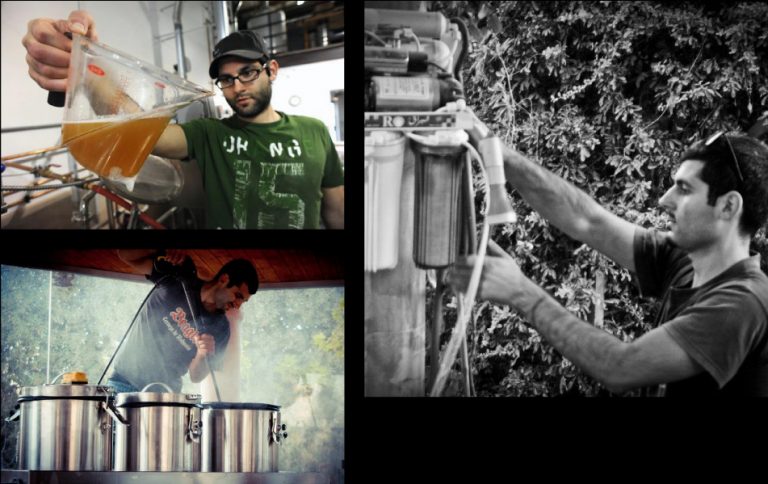
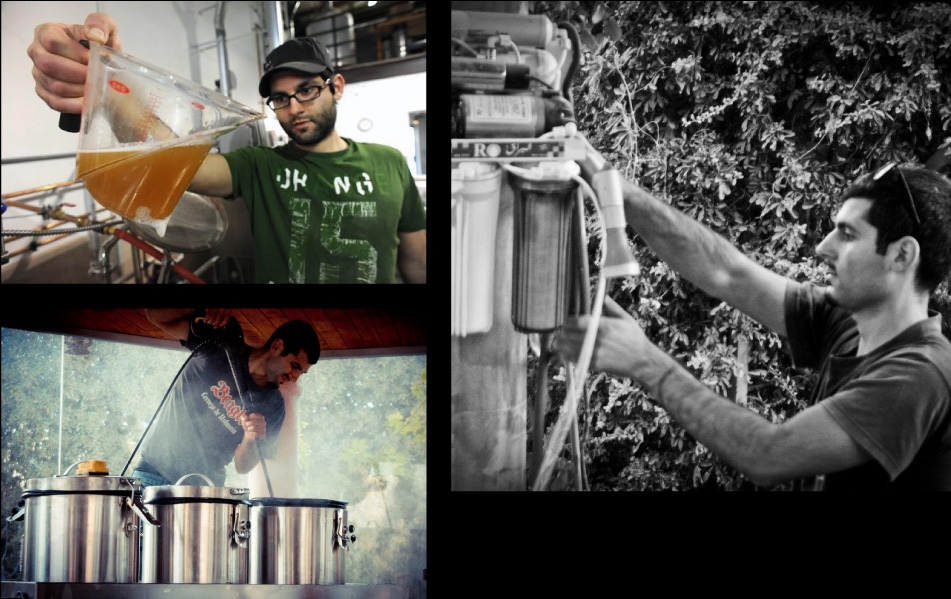

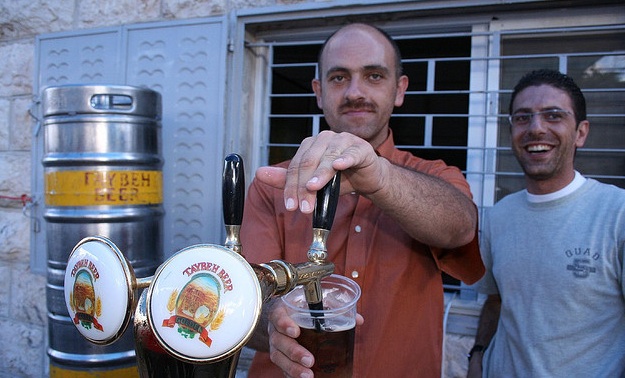


 Thanks to a french import Yossi Dan, and his company Challengy, Israel is about to put some serious spice into the international Food tech scene. Dan is looking for 100 Food Tech companies to duke it out Battleground style, at the Google Campus in Tel Aviv later this month.
 Details about the pitch:








 Pieces include a gigantic soaring bird made of electric light tubes by Iraqi artist Adel Abidin (above) and an intricately woven screen made of fine copper wire by Jordanian architect Hiba Shahzada (below).
 Architects Yazeed Obeid and Jeries Al Ali contributed a skeletal tower that references the welded metal minarets towering over rural Jordan. The sculpture morphs with movement; walk around it and the shape of the internal void creates new illusions of mass.
 There are spectacular furnishings made from marble and granite, some carved with lasers to mimic Palestinian embroidery. Arabesque motifs inspire the “Unfolding Unity Stool Marble Edition” by Aljoud Lootah Design Studio (below).
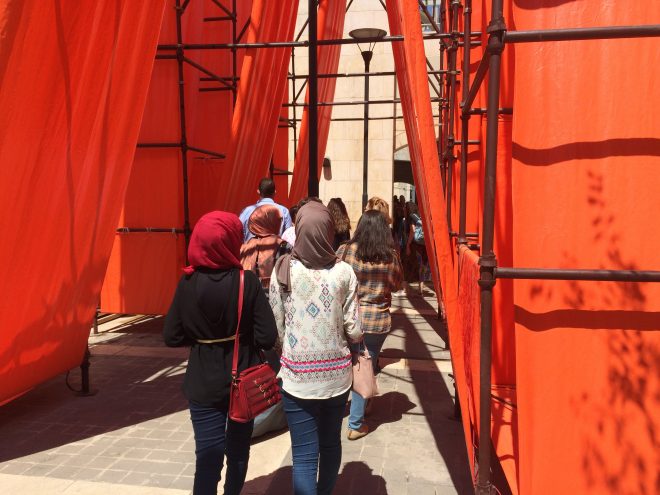
 The pieces begin to engage more fully with their urban surroundings at the Raghadan Tourist Terminal, where portions of the facility have been wrapped with brilliantly colored fabric and rope, creating marvellous shadows that move with the sun (above and below).
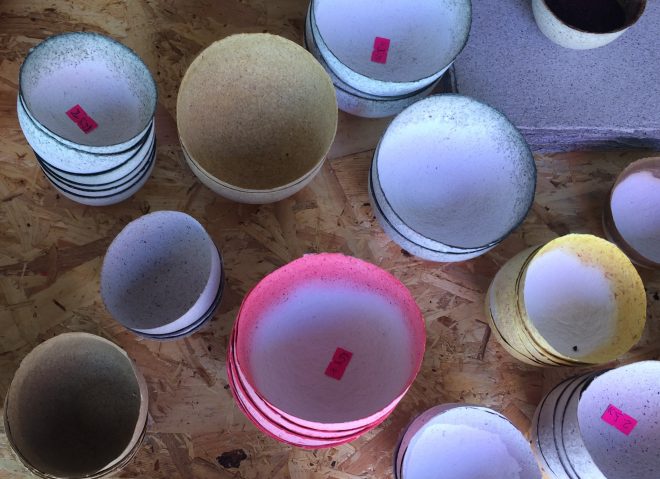
 Find handmade paper cards, notebooks, and home accessories by the Association of Iraq Al Amir Women, a small community south of Amman supported in part by the craft collective. Their colorful paper spice bowls are shown, below.
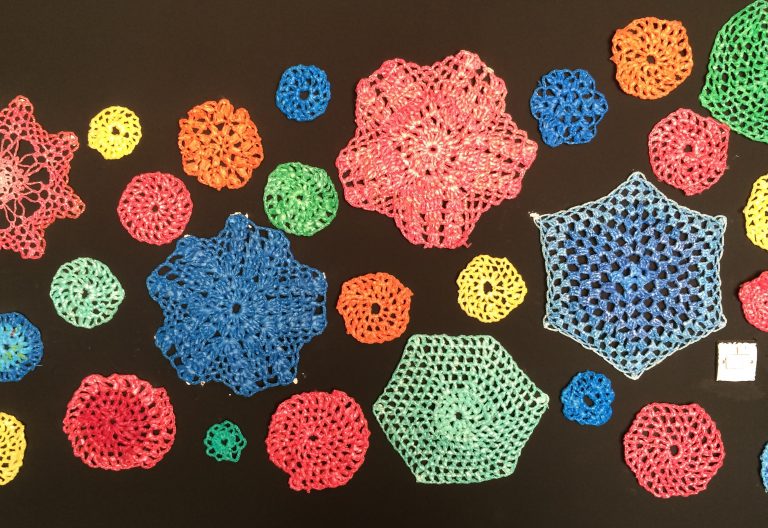
 Twenty-seven artists crocheted the #KeesChic Canopies providing shade along the marketplace corridors (below), diverting 25,000 plastic bags from local landfills.