Home Blog Page 205

An ancient salad recipe from the Rambam

0

image maimonides saladMaimonides, referred to as the Rambam, was a philosopher, codifier of Jewish law, and a renowned doctor in 12th-century Egypt. Israelis follow his startlingly modern-sounding health advice until this day. He wrote that the best breakfast is a big, leafy salad: it clears digestion and the kidneys and purifies the blood.

bagged salad unsafe

That’s not how I remember breakfast when I was growing up in the States. Half-asleep and in a rush to get out the door, my siblings and I would tip into a bowl some cold cereal extruded by machines into shapes designed to entertain kids. The artificially colored and flavored bits were loaded with different sugars. We’d pour plenty of milk straight from the fridge on top. Then we’d wait outside for the school bus, the cold milk inside us making us shiver, while the sugars made their way into our bloodstream and made us frantic. By the mid-morning, we were exhausted from the sugar crash.

Has it changed much? Judging from the packages on supermarket shelves, it doesn’t look like it. Cold cereals have made their way into Israeli supermarkets too, and busy families find them as convenient as mine did. Probably the kids experience the same sugar highs and lows, too.

But many Israelis still love salad for breakfast. Any “Israeli breakfast” in a cafe includes a choice of chopped tomatoes and cucumbers, or a mixed leafy salad along with your omelet, roll and butter. Housewives pride themselves on offering a variety of salads before serving the main hot dish at Shabbat lunch.

Did Rambam’s (Maimonides) ancient book of herbal recipes give clues to finding new anti-cancer vitamin?

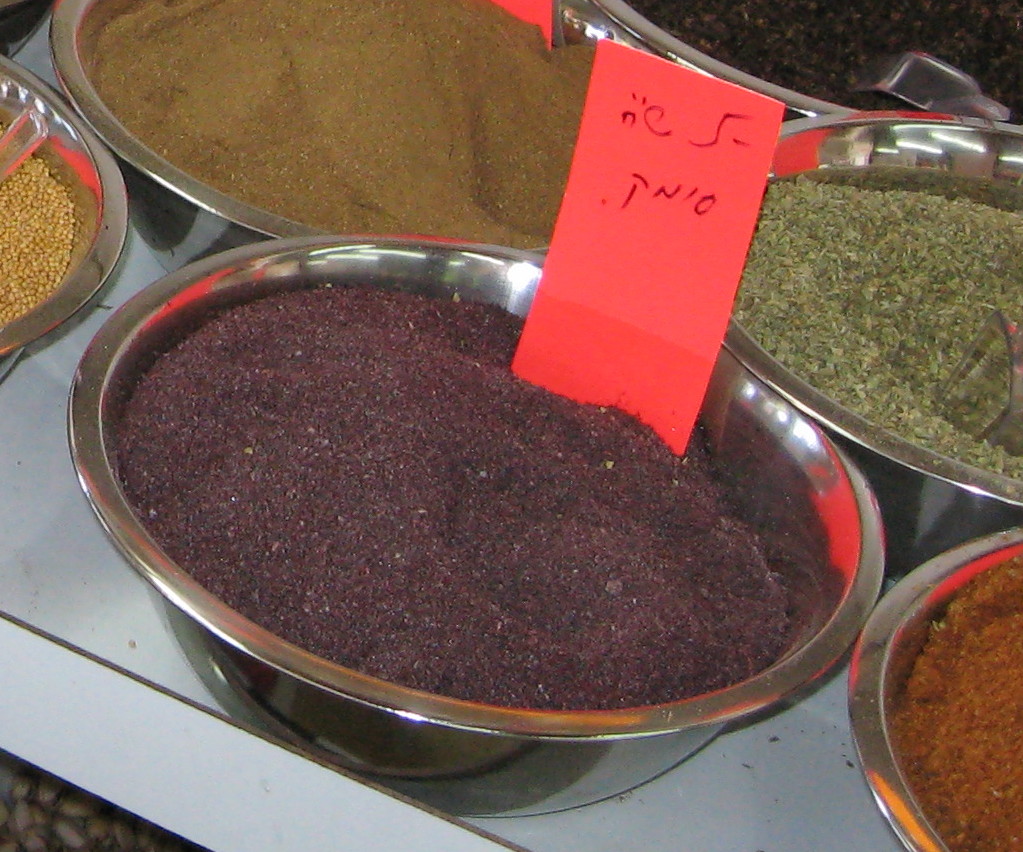
The Rambam’s salad takes minutes to chop up, and it’s the kind of food that makes you feel like it’s going to be a good day. You’ll need plenty of green, leafy vegetables and a little fruit. The simple dressing consists of lemon juice, salt and olive oil, and one more important ingredient – sumac. Sumac trees bearing edible fruit grow wild in this part of the world. The wine-colored dried spice has a lemony flavor and lends an attractive deep color to any savory food.

I like to season chicken and fish with sumac, but hadn’t thought of it in salads until I learned the Rambam’s recipe.

Maimonides Salad

Serves 4

2 large celery stalks, with leaves

1/4 medium cabbage

1 large cucumber, unpeeled if possible

2 handfuls fresh dill or cilantro

A small handful of fresh parsley

Several dollops of olive oil

Juice of 1 large lemon

Salt to taste

2 teaspoons powdered sumac

Dried or fresh, sliced fruit to taste.

Slice everything thinly into a large bowl. Douse it all with fresh lemon juice and olive oil, salt everything to taste and dust generously with sumac. Add something sweet at the last – not too much – for balance: sliced dried fruit, a handful of dried cranberries, some pomegranate seeds, half a thinly sliced apple or sections of a fine fresh orange. Don’t add so much fruit as to overwhelm the vegetables.

Sumac, a popular Middle Eastern spice

That’s it. You can prepare the fresh ingredients beforehand, stash them, covered tightly, in the fridge, and pour the lemon juice/olive oil over it just before serving. Remember to sprinkle sumac generously over all.

Do’s and Don’ts of Liquidation

0

For the savvy small business owner, the world of liquidation and returns can be a very lucrative one. When big businesses accept returns that they have no intention of restocking and reselling, or when businesses of all sizes quickly liquidate their assets at low prices in order to pay off creditors, they create opportunities for resellers to snap up those goods at rock-bottom prices and resell them for a big a profit.

A good liquidation and returns business can net big bucks for its owner, but there are always ways to streamline your business and improve your odds of making a great living. Here are the dos and don’ts that you should keep in mind as you guide your liquidation and returns business toward the biggest profits possible.

Do know who you’re buying from

Big companies like Target and Walmart are able to unload return pallets at low prices because the scale at which they operate makes that the most efficient thing to do. But not all companies are created equal. You want to buy lightly used and reliable goods, and you’re more likely to get those from certain trusted brands.

Be careful when you consider liquidation stock from companies you’re less familiar with. Make sure you know where your products are coming from, so that you can confidently say that you’re getting authentic brand name returns, and not the latest products from a knock-off factory somewhere. Always, always know who you’re actually buying from!

Don’t buy from just anyone

When big companies like Amazon, Target, and Walmart liquidate their stock, they work with certain reputable resellers. No, we’re not talking about individual resellers like you—we’re talking about online auction houses that turn the stock over in bulk, still at very low prices.

It’s important to turn to a trustworthy auction site for your purchases. Consider this a corollary to the rule that you should always know who you’re buying from. After all, you need to work with a reputable auction site if you’re going to be confident that the goods you’re reselling are really coming from the big companies that you think they are. Working with a trusted supplier means you’ll know for sure that your Target liquidation stock is really Target liquidation stock.

Do develop a specialty

The key to buying and reselling at a profit is knowing the value of what you’re buying and selling. Follow prices closely, and familiarize yourself with the market for your products. That’s easy enough to do, as long as you focus.

Working with one product or type of product will help you here. You’ll be better equipped to make fast and wise decisions about purchases and selling prices if you’re really immersed in a given market segment. Trying to track the prices and sales trends of a bunch of different products is going to get complicated fast. And flying blind by just buying and selling whatever you can get your hands on will be very inefficient because you’ll constantly find yourself being ripped off by savvy buyers who know about pricing trends that you don’t.

Don’t spread yourself too thin

Trying to focus on too many types of products at once is one way to get yourself confused and make your business inefficient. But it’s not the only way to spread yourself too thin, so be careful!

Make sure that you operation grows at the same pace as your acquisitions and sales. Remember, you’ll need room to safely and securely store your stock before you resell it. You may need help to post products on marketplaces and fulfill orders, and you may need funding. Bring in employees and partners as necessary, and make sure that your eyes don’t get bigger than your stomach. In other words, if your ambitions grow too much faster than your business, you’ll make mistakes and could end up losing money.

How it is to be an addicted Jew: A faith-based approach for addiction recovery

0

The phrase ‘addiction doesn’t discriminate’ has been used for years as a reminder that drug and alcohol abuse can affect anyone. People from all spiritual backgrounds and religions can find themselves in a trap of addiction.

There’re many faith-based rehabs in the U.S., and many treatment programs are designed specifically for people from the Jewish faith. These programs offer the same treatment methods as traditional programs that have proven their effectiveness and also incorporate the revival of faith as an important part of recovery.

Judaism and Addiction

Alcohol and drug abuse is not something the Jewish community is vocal about. But the mere existence of a Jewish drug rehab makes it clear that the subject is ceasing to be a taboo.

Due to the tendency to deny the reality of addiction, there always was a lack of statistics on substance abuse among Jews. It was long believed that religious Jews couldn’t face this problem.

Nowadays, these approach and belief are things of the past. The community is becoming aware of the issue of drug and alcohol dependence.

Rabbi Dr. Abraham Twerski discards the myth that Jews never drink alcohol or use drugs. He worries about the “growing malignancy” of substance abuse. If it remains ignored, the consequences may be fatal not only for the abuser. It can ruin families and ultimately destroy a whole community.

Twerski wants the Jewish community to no longer sweep Jewish alcoholism and drug use under the rug, but to acknowledge that the disease exists. He also encourages religious leaders to establish training programs for Clergy and other Jewish professionals to teach them to help people with problems.

Recovery via Spiritual Enlightenment

Treatment for the multilayered problems of addiction is based on altering the thought and the behavior patterns of the addict. Jewish rehab centers usually provide pastoral counseling that addresses the spiritual sides of the disease. It helps the patient to break an addictive pattern and develop spiritually oriented thinking and behavior.

Addiction results from a spiritual void in one’s life. So, the pastoral caregiver deals with the problem within a spiritual framework by making references to the Bible and Midrash. For example, the Israelite Exodus from Egypt is presented as a model for the escape from addiction to substance-free life.

Egypt (in Hebrew, Mitzrayim) literally means a “place of narrowness.” The Hebrews lived there in the slavery that endured 400 years. The word “addiction” comes from a root of the Latin word “addictus” which means “to give oneself over.”

Someone who suffers from substance addiction is enslaved. A person in this state has no control over life and is powerless. For each addicted Jew, the story of the Exodus from Egypt symbolizes the personal story of breaking free from his or her narrow place. In spite of the repeated temptations to backslide, they struggle until they reach the promised land of spirituality and recovery.

What Is a Jewish Rehab?

Jewish rehab programs contain the components of a traditional treatment program but accommodate them to the principles of Jewish faith. The programs combine the tenets of the Torah and the 12-step philosophy.

Inpatient treatment programs usually require the patients to live in the facilities at least for a month. These 30 days are dedicated to working with detox specialists, licensed addiction therapists, and psychiatrists.

When addicts become the patients of a particular Jewish rehab, they undergo a medical detox, like in any other traditional rehab. Detoxification aims to rid the body of the harmful toxins that have accumulated in the body during the abuse. Medical professionals supervise this process as detoxing from some substances can be dangerous for health.

After that, patients are evaluated by the therapist and physiatrist. They check them for other diseases.

The majority of Jewish drug rehabilitation centers offer faith-based programs that comprise spiritual modalities centered toward Judaism. Patients attend individual and group therapy sessions run by professional therapists.

Group therapy helps the recovering addicts to share feelings and experiences. They see that they are not alone in their struggle with alcohol or drug dependence. The therapy can also cover such topics as codependency relationships, relapse prevention, and anger management.

Other services that enhance recovery process include:

  • A healthy diet and regular physical exercising
  • Spiritual guidance and direction for individuals and their families
  • 12-step program based on the Torah
  • Praying and meditation with religious scriptures
  • Alternative types of therapy, such as art or equine therapy.

Most addicts involved in recovery understand the role of meetings, support groups, therapy and spiritual counseling in combatting addiction.

The Benefits of Jewish Rehabs

Getting addiction treatment at Jewish rehabilitation facilities has its advantages:

  • Faith-based approach: This type of rehab attracts Jewish people that are suffering from the same problems. Thus, a feeling of belonging starts to emerge and deep connections are beginning to form. Moreover, the programs provide counseling sessions founded on religious philosophy and therapies that meet the special needs of addicted religious Jews.
  • After-care support: When a patient successfully completes a treatment program, this isn’t over yet. Recovery from addiction is a lifelong process. Ex-addicts need assistance as they reintegrate into their usual life. A “sober living” program is available for approximately half a year or more. People learn to live drug-free or alcohol-free life and better manage the stressful situations that caused their substance abuse.
  • Sponsorship and networking: When people return home, they have an opportunity to get assistance from outreach sponsors and specialists. They also can work with addicts that are on the path to recovery and share their own experience with them. It creates a sense of being part of the Jewish community and a feeling of being helpful, thus increasing the chances of staying sober.

So, a Jewish rehabilitation center is the best choice for Jewish people. They renew their faith and get rid of addiction while living in a safe environment and communicating with professional staff and patients that share the same religious views.

About the Author

Thanush Poulsen is a health columnist from Denmark who closely investigates the problem of addiction. As today it is an issue of a rising concern, Thanush aims to increase people’s awareness of it to prevent an increasingly growing number of drug deaths and drug crimes.

The Egyptian Academy in Rome Emphasizes the Value of Cultural Diplomacy

When wandering in the streets and piazzas of Rome, it is always a surprise to encounter Egyptian obelisks and Pharaonic monuments, reminders of the ancient links between Egypt and Rome. However, it is even more exciting to visit the prestigious Egyptian Academy, a cultural facility established near Rome’s Villa Borghese, next to a group of international fine arts academies representing various countries in the world.

Although the Egyptian Academy is one of seventeen fine arts academies that exist today in Rome, it is the sole representative of the African continent and the Arab world. In fact, only the Egyptian and Japanese academies represent the “East” among those academies. 

The Academy serves multiple objectives, hosting Egyptian art students in Rome while promoting Egyptian culture beyond its borders, also as a source of pride for Egyptian and Arab people. 

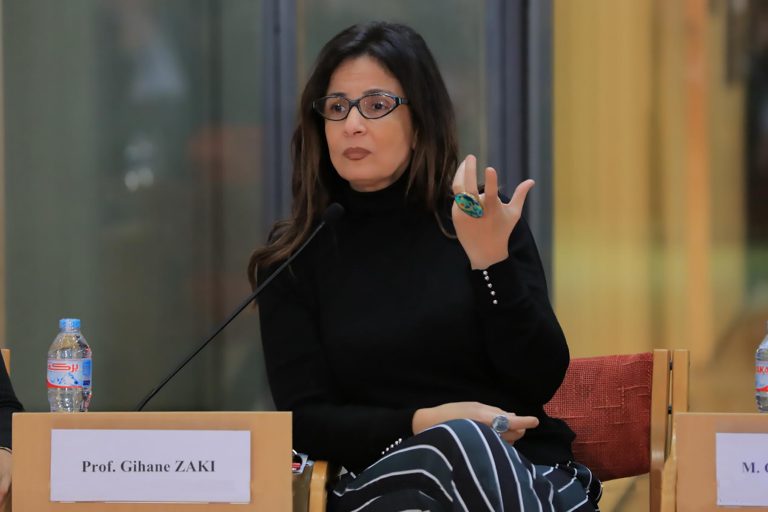
With this simple message, the Academy’s director Dr Gihane Zaki welcomed us. Her great charisma and passion bring an additional dimension to the visit. When Dr Zaki speaks with such depth of knowledge and experience, you feel you are speaking to a true ambassador of culture and the arts, especially when she talks about her role to convey the message of Egyptian culture to the world.

As we walked around the Academy, Dr Zaki spoke to us about her journey since her appointment as the Academy’s director in 2012, and her subsequent election to the Council of ICCROM (International Centre for the Study of the Preservation and Restoration of Cultural Property) in 2013, representing Egypt.

Q: Dr Zaki, would you please tell us about the Egyptian Academy in Rome?

Gihane Zaki: The Egyptian Academy has been in existence since 1924 and came to the present location near the Villa Borghese in 1966. In addition to hosting Egyptian art students for a period of study in Rome, the Academy evokes the glory of Egyptian art and culture to people from Italy and the West, while encouraging Arab people from all corners of the Middle East to take pride in this rich heritage. Though there are many fine arts academies in Rome, the Egyptian Academy is the only one of both the Arab world and Africa.

Q: What is the importance of the Academy’s role today?

Gihane Zaki: Right now we are living in a real culture war. In a period of black-and-white thinking, the Egyptian Academy has a brand with a social role that has many dimensions, particularly when it comes to interpreting history. We want to show that experts have a role, and that when you interpret history, it’s important to put in a touch of tolerance. This is true even when history is written by the winners – maybe especially then.

The role of the Academy is also to show another image of the Arab world, both to Arabs and to the West. We want to show a positive image of the Arab world that is also real and genuine. The Arab world is not what they show on television, ISIS and terrorist attacks and guns and black masks. The Arab world is the great stars of Cairo cinema, glorious art, haunting music and delicate calligraphy. This is the cultural diplomacy of reducing tensions between East and West. And not just to the West but also to Arab people. The message is – I shouldn’t be shy about presenting myself as an Arab person. I present a positive image. This positive image shared through cultural diplomacy can become a locomotive.

I see my role as bringing the message of Egyptian culture to Europe. I want Arab people to be proud of their culture, and I want Europeans to appreciate it. Cultural diplomacy is key now to understanding and putting people together. And culture, heritage and history are its flag.

Q: Could you speak to the importance of cultural diplomacy?

Gihane Zaki: The persuasive or soft power of culture and the arts can be seen everywhere. Culture can be used to negotiate with and encourage a range of stakeholders, from the highest echelons of power to poor and at-risk populations. Culture and the arts appeal to people’s minds and hearts, and widen their perspectives. And if you’ve touched their hearts just once, they will come back a second and third time.

I see cultural diplomacy as a weapon in the culture war. The Academy is not political, but my role is also to use it with politicians and ambassadors. Their desire to understand culture is huge, and often it is not encouraged in the environments they live and work in. Yet they very much appreciate the chance for open dialogue through culture, and for connecting with groups that it may be difficult to approach in any other way. That is the value of cultural diplomacy. From this place, dialogue can start.

Q: Whom does the Academy reach out to?

Gihane Zaki: At the Egyptian Academy, we open our doors not only to diplomatic circles but also to the community of Egyptians living in Italy, of which there are many, particularly in Milan. I also invite school groups, particularly 9 to 12 year olds, both Italian and international. They come and learn about the magnificence of Egypt’s history. I can put a piece of Egypt inside their hearts that they will never forget. They may even go on to study Egypt and Egyptology, as I did!

Recently the Academy also opened its doors to a very different group – and here I mean young Egyptian illegal immigrants in Italy, mostly 18 to 21 years old with little or no education. Their families sent them on boats to come to Italy, thinking they would become rich. Now they are here with no awareness of what Europe is, or even what Egypt is.

I was recently contacted by a French non-profit that works with these young boys and men, and I said, of course they must come to the Academy. I showed them the gallery of Egyptian film stars and they don’t know who any of them are. I share with them the Tutankhamun exhibit and tell them, “Your grandfathers built this.” I invite them to movie evenings and they bring their friends. Afterward we all sit in the garden, I make dinner for them and we laugh together and have a wonderful time. They too will never forget it. And one day this may keep them from going to the other side.

Q: So this really is a line of defense in the culture wars?!

Gihane Zaki: The cultural mainstream, too often very elitist, has forgotten or neglected to do exactly this with at-risk populations – include them, engage them, show care for their welfare. That is exactly why ISIS has been so successful with this group. The social inclusion role cannot be forgotten by any institutions, especially cultural ones. If we do, we’ll lose the culture war, and we will not have the open and stable society we want. To have it, we must invest. We can have the beauty of culture, or we can have a flood of radicalism submerge the Arab world.

Q: What do you see as ICCROM’s role in the Arab region moving forward?

Gihane Zaki: ICCROM will continue to be a force supporting culture and society in the Arab region in many ways – especially in planning for the post-conflict period – with risk preparedness, with first aid, with community engagement. These conflicts will not last forever. We must think and plan for the future. ICCROM is always at its best when intervening in crisis situations, just as they did at the time of Abu Simbel and the Aswan High Dam in the 1960s. There will always be a role for ICCROM.

Q: Any final thoughts?

Gihane Zaki: Culture is a strength. I’ve seen it through my experience at the Egyptian Academy in Rome, and it’s not a small platform. We’ve worked for six years under very difficult conditions, not only in Egypt but throughout the Arab region. We’ve seen revolutions, wars, armed conflict, illicit trafficking in antiquities and many horrors. But deep down I have this confidence that culture matters – cultural education and art, but above all, everything that is human. If we can touch the masses that are suffering and drifting away, it’s through culture, by changing the minds of people. We have a duty, all of us who are culture workers, to really move forward on everything we see happening around the world and not give up.

NYC dance company commemorates Dance or Die hero

0

We told the story to readers of Ahmad Joudeh over two years ago. We shared how, in the middle of the Syrian crisis, despite danger and dire straits, he continued to dance and teach dance to his young students.

With a special interest in the Middle East, after studying Arabic and also teaching dance to underprivileged children in Jordan, I was touched when I learned about Joudeh. Then around this time last year, in rehearsals for a modern dance show, I found out that one of the pieces I would perform centered around him. An excerpt from the documentary that introduced Joudeh to the world would play on the screen at the back of the stage. This good fortune moved me; I felt so lucky and eager to embrace his “Dance or die” spirit, to embody his movement, to give his story the spotlight it deserves – this time on a New York City stage.

In his documentary, there was one scene in which Joudeh dances on a barren concrete rooftop. It’s a beautiful day, a minaret and dome of a mosque visible beyond the roof’s border, but one inevitably fears that there isn’t much time before all of the structures pictured will crumble, the dust will block out the sun…

Joudeh ushers in a sense of hope to that roof, though, as he sweeps his leg around, tumbles to the floor but then reaches an outstretched hand to the sky. His movement is big; you can tell that he needs this art as much as it sustains him.

I, too, like to move big, and I know I dance better when I am emotionally charged. In this piece by the company Born Dancing, Inc., called Grey 5 because it was the fifth of a set of pieces dedicated to Syria, collectively called Grey, I started mimicking Joudeh’s movement pattern, dancing with him as I faced the back, looking at him on the screen. Three dancers joined and we danced in canon, and then it was complete accumulation: all six of us were flying and reaching alongside Ahmad Joudeh.


View the video on Facebook here.

The piece ended with pictures of Syrian children affected by the war flashing over the screen, and the dancers reacting to it. I remember that the director, Melissa van Wijk, did not choreograph our reactions; she let us feel the way we felt, and manifest that through movement, whatever it was. I appreciated that freedom awarded us, when usually dance is so exacting.

On the subject of freedom, I would like to give an update on Joudeh’s whereabouts. He is now dancing with the Dutch National Ballet. No doubt his technique and artistry have soared, and his future dance students will be all the more lucky to have him. Last month his first book, an autobiography, called Danza o Muori, Italian for Dance or Die, was published by DeA Planeta Libri. I have to brush up on my Italian, and then I’ll pick up a copy.


Tonight is opening night of Born Dancing, Inc.’s fourth production. Although we will not be showing all of Grey, and that means no Grey 5, there is a duet, Grey 2, that we have pulled to show, and I have the honor of dancing in it. I assume the role of a mother figure as I dance with an 11-year-old named Emily, who represents Syrian refugee children at large. We play, I support her, she supports me, and love is palpable.


This weekend, I bet Ahmad Joudeh is performing, too. Although we won’t be sharing the stage in person or thanks to digital technology, we will still be close: I plan to carry his love of dance in my heart, and that’s as close at it gets.

First photo courtesy of Born Dancing, Inc. Photo of Danza o Muori taken off Ahmad Joudeh’s Instagram page.

The state of fishing for the Mediterranean and Black Sea

0

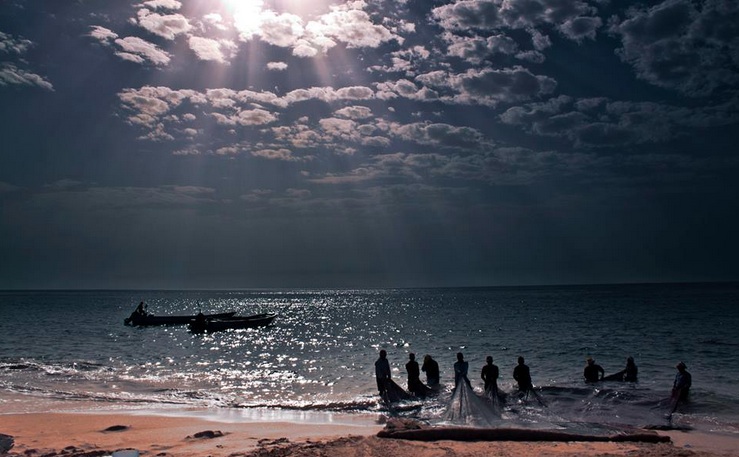
cormorands fishing

Although the main commercial fish species in the Mediterranean and Black Sea are still over-fished, pressure has reduced over the past years, raising hopes – for the first time – for the recovery of fish stocks, according to new FAO-GFCM report launched today.

The percentage of overexploited fish stocks decreased by 10 percent – from 88 percent in 2014 to 78 percent in 2016. More efforts are needed, however, to ensure long-term fish stock sustainability, warns The State of Mediterranean and Black Sea Fisheries.

This means more support for the small-scale fishing sector, which employs most fishers and causes least environmental damage; reducing bycatch and discards; and introducing more drastic measures such as significantly reducing fishing or establishing fisheries restricted areas  (areas where fishing activities are regulated).

The latter is particularly needed to safeguard the most heavily fished species, such as  European hake, which is fished nearly six times beyond its sustainable level.

“Fisheries provide the region with an important socio-economic balance and are essential to ending hunger and poverty,” said Abdellah Srour, GFCM Executive Secretary.

“Sustainability may be expensive in the short term, but there is nothing more expensive than running out of fish,” said Miguel Bernal, FAO Fishery Officer and one of the report’s coordinators.

Mediterranean and Black Sea fisheries are under threat in the long run because of the effects of increased pollution from human activities, habitat degradation, the introduction of non-indigenous species, overfishing and the impacts of climate-driven changes.

Most over-fished fish species

The European hake remains the species subject to the highest fishing pressure in the whole Mediterranean, followed by turbot in the Black Sea and horse mackerel in the Mediterranean.

Stocks fished within biologically sustainable limits mostly include small pelagic species (sardine or anchovy), and some stocks of red mullet and deep-water rose shrimp.

Catch levels – latest trends

Overall, fish catch levels have been stable for the last few years, but are significantly down from the record years of the 1980s – 1.2 million tonnes in 2016 versus 2 million tonnes in 1982.

The 1.2 million of tonnes comprise of 830 000 tonnes of fish caught in the Mediterranean and 390 000 tonnes of fish from the Black Sea. The bulk of catches consists of small pelagics (sardines, anchovies accounting for a third of all catches) although the catch is composed of a high number of species compared to other areas of the world.

Across, the region, the ranking of capture fisheries production in 2014-2016 continues to be dominated by Turkey (321 800 tonnes and 26 percent of total landings compared to 31 percent in 2013), followed by Italy (185 300 tonnes and 16 percent, similar to the 2013 percentage). Algeria (96 300 tonnes and 8 percent) and Greece (65 700 tonnes and 5 percent) also maintain the same (2013) percentages in landing contribution. Both Tunisia (185 300 tonnes) and Croatia (74 400 tonnes) show an increase compared to 2013 (from 7 to 9 percent for Tunisia and from 3 to 6 percent for Croatia). Total landings for Spain (78 200 tonnes) decreased from 8.5 percent to 7 percent of the total).

Among subregions, the Black Sea continues to provide the largest contribution to capture fisheries production, with a 32 percent of the total, followed by the western Mediterranean (22 percent of total), the Adriatic Sea (16 percent), and the central and eastern Mediterranean (15 percent each).

Discards and incidental catches of vulnerable species still of concern – 275 000 tonnes of fish discarded every year

Some 230 000 tonnes of Mediterranean fish is discarded every year – about 18 percent of total catches. In the Black Sea, discards are estimated at around 45 000 tonnes or around 10-15 percent of total catches.

Some sectors generate more discards than others – trawling, for example, accounts for over 40 percent in some areas, whilst small-scale fisheries tend to be below 10 percent.

According to the report, incidental catches of vulnerable species are relatively rare events but are important because the species caught are of conservation concern. Among the vulnerable species most affected by incidental catches, are sea turtles (which appear in 8 out 10 of reports on incidental catches) followed by sharks, rays, and skates (appearing in 2 out of 10 reports on incidental catches each). Seabirds and marine mammals represent the lowest number of incidental catches, and are only occasionally included on incidental catches reports.

The report was launched on the occasion of the first GFCM Forum on Fisheries Science (Fish Forum 2018) organized at the FAO headquarters from 10th to 14th December 2018, as a recognition of the instrumental role of science in improving knowledge towards sustainable fisheries management.

Other key facts and figures from The State of Mediterranean and Black Sea Fisheries

  • Marine capture fisheries in the Mediterranean and Black Sea produce an estimated annual revenue of $2.8 billion and directly employ just under a quarter of a million people.
  • Unlike other major fishing areas, Mediterranean and Black Sea fisheries lack large mono-specific stocks, and exploit instead a variety of benthic and pelagic stocks of fish, as well as molluscs and crustaceans.
  • The officially reported fishing fleet operating in the Mediterranean and the Black Sea in 2017 comprises around 86 500 vessels, 6 200 units less than in 2014.
  • Small-scale vessels make up by far the biggest proportion of the region’s fleet (83 percent in the Mediterranean and 91 percent in the Black Sea)
  • Small-scale fishing vessels generate most employment (59 percent) in the sector, but generate only 26 percent of total revenue. Workers on small-scale vessels only earn about 50% of what workers on trawlers/purse seiners earn.
  • The Mediterranean and Black Sea are one of the most carefully monitored regions in the world – the main commercial species, about 50 percent of the total catches, are scientifically assessed.

NASA and FAO launch Collect Earth Online to track land-use and landscape changes anywhere

forest bathing, woman hipster contemplating nature in dark green forest

Seeing both forests and trees is about to get easier, thanks to a new open-access tool developed by US National Aeronautics and Space Administration (NASA) and the UN’s Food and Agriculture Organization (FAO), with support from the Google Earth Engine Team and the US Government’s SilvaCarbon Program  – allowing anyone to track land-use and landscape changes anywhere.

Collect Earth Online (CEO) amplifies the power of FAO’s Open Foris Collect Earth tool, which for the past few years has enabled the collection of data on land use, deforestation and for other purposes with the help of satellite imagery. CEO will become a central technology supporting FAO’s global Remote Sensing Survey. The new platform is web-based, free of charge, open to all, requires no downloads or installation, and allows users to systematically inspect any location on the Earth with satellite data.

The next generation tool makes it easier to conduct surveys, collect samples and use crowdsourcing techniques. CEO can be accessed by simply clicking on a link http://collect.earth/ and registering on the platform.

“This innovation allows collection of up-to-date data about our environment and its changes in a more efficient and participatory manner using the local experts that know the landscape and the underlying ecology.  Thus, it helps us to obtain and upscale practical inputs at a time when environmental challenges are taking on urgent and unprecedented importance,” said Mette Wilkie, Chief, Policy and Resources of FAO’s Forestry Division.

“The CEO platform is a satellite-imagery based, crowd-sourcing platform that changes how we collect data about the Earth,” says SERVIR Global Program Manager for NASA Dan Irwin. “It leverages four decades of satellite data and can help countries around the world better map and monitor their forests.”

Collect Earth Online is now available through FAO’s Open Foris – a collection of tools and platforms that break existing technology barriers. CEO uses innovative forest and land monitoring tools and technologies and allows reference data for forest and other landscape assessments to be produced quickly.  CEO will be integrated into SEPAL (System for Earth Observation Data Access, Processing and Analysis for Land Monitoring), FAO’s powerful cloud-based platform, early in 2019, making it easier to link reference data directly to processing chains for generating accurate and transparent maps, data and statistics.

“The addition of Collect Earth Online to FAO’s Open Foris further strengthens the comprehensive set of innovative tools for measuring, monitoring and reporting on forests and Land use. Collect Earth Online when used in combination with SEPAL will allow countries to advance quickly in the fight against climate change,” said Tiina Vahanen, REDD+/National Forest Monitoring Coordinator at FAO.

SERVIR is a program jointly run by NASA and the US Agency for International Development (USAID) that co-develops state-of-the-art geospatial services to help improve environmental decision-making among developing nations in more than 45 countries, with regional hubs in Kenya, Niger, Nepal, Thailand – where much of the initial work of CEO was done – and soon a new hub in South America. The US Government’s SilvaCarbon Program also provided funding support and technical expertise in the development of CEO and is currently developing training materials.

More accessible and easier to use

CEO, which provides access to high-resolution satellite imagery from multiple sources as well as historical imagery and mosaics from NASA’s Landsat network and the European Union’s Sentinel system, can be used by anyone as a stand-alone application.

It will be integrated into SEPAL (System for Earth Observation Data Access, Processing and Analysis for Land Monitoring), FAO’s powerful cloud-based platform, early in 2019, making it easier to link reference data directly to processing chains for map creation.  In 2019, CEO will also integrate TimeSync, a Landsat time series visualization tool created by Oregon State University and the US Forest Service.

Monitoring the world’s forests has become an increasingly challenging and rewarding task, as their importance for timber and fuel is now enriched by awareness of their role in carbon storage, pest control and agriculture. FAO’s Locust Control Unit, for example, has used Open Foris tools to improve forecasts and control outbreaks.

Both FAO and NASA expect further innovative uses – in disaster management and glacier monitoring, for example  – will emerge as more people use the tool. Its open-source and cloud-based nature not only broadens access but is a buffer against data loss, a significant value when digital and computing resources are limited. That opens promising prospects for ventures ranging from trying to protect natural wildlife habitat to broader projects measure links between biomass and poverty.

The Islamic Bank seeks to innovate social causes

0

On December 10, the Islamic Development Bank Launched IsDB Innovate, a groundbreaking
initiative that seeks to connect entrepreneurs in the science, technology, and innovation sectors
with funders around the world.

IsDB Innovate is an initiative of 8 crowdfunding platforms — one global hub, and seven regional
platforms. This is the first time a global development organization has launched multiple
crowdfunding platforms in multiple jurisdictions.

The platform launched with 14 projects, which range from low-cost solution to reducing enteric
diseases in Bangladesh to the world’s smallest glucose monitor to help diabetics monitor their
blood sugar.

You can find all the platforms here:
– hub.isdb-innovate.org
– turkey.isdb-innovate.org
– morocco.isdb-innovate.org
– bangladesh.isdb-innovate.org
– senegal.isdb-innovate.org
– kazakhstan.isdb-innovate.org
– indonesia.isdb-innovate.org
– malaysia.isdb-innovate.org

The platforms are translated into:

– English, French, and Arabic (the official languages of IsDB)
– Turkish
– Bengali
– Malay
– Kazakh
– Indonesian

The first cohort of projects on the platform have already raised thousands of dollars from the
crowd and have ~3 months to complete their fundraising efforts. The platform was built with help from AlliedCrowds, a tech and data firm focused on alternative finance in emerging markets.

8 Ways Eco-Entrepreneurs use instagram to market green products

0
social gas mask
A strange device that cleans the air you breathe

Innovative marketing is essential if you’re an entrepreneur. You probably know that social media is a big component of an effective marketing plan. However, you might feel confused or overwhelmed by the prospect of navigating the ins and outs of these platforms, or even which ones are the most effective for reaching potential customers. Many business owners are unaware of just how much growth the photo-sharing site, Instagram, has gained over the years.

These days, there are around one billion active monthly users. The sheer volume of people interacting on the site make it a valuable marketing tool for nearly any type of company. Take a look at these eight ways an entrepreneur can use Instagram to make money so you can begin to take advantage of the growth potential this powerhouse platform can offer.

Get Strategic

If you want to see Instagram growth, it’s important to understand your posts can’t be random. You need to consistently add new content to your feed, and you should have an end goal in mind when creating your posts. Content strategy refers to the development of social media posts in a way that aligns with your company’s brand in a way that seeks to meet specific end goals like creating awareness, driving traffic or generating leads. If you are green and sustainable, walk the walk.

Show the world how you live. Lead by example.

You want to always maintain a consistent brand voice that your audience can relate to and trust, while also cultivating engagement.

Make It Visually Appealing

a mayu water filter
Re-energize your water with a Mayu

What some entrepreneurs forget is that Instagram is all about the visuals. After all, it is an image sharing site. Your content must be interesting enough to catch the eye of followers as they’re scrolling through their feed. That means your photos have to be clear and sharp. Blurry images just won’t do.

You don’t have to be a pro, but you should at least learn some basic photography tips or invest in hiring someone to shoot your images. Take a look at what your competition is sharing to get some idea of what works and what could use some improvement. Refer to your content strategy when planning your photos to be sure your images support your intended goals. We’ve seen great Instagram feeds that are shot using an iPhone. With camera phones improving daily, don’t worry about gong tech overboard. but if you want a great camera go for the Sony Alpha. That’s what I use.

Engage Your Community

Social is the name of the game when it comes to social media. The whole point is to make connections, generate conversations, show a company’s human side and build excitement around your brand in ways that simply aren’t possible through the use of traditional media outlets. You always want to reply to comments or questions from your followers, as this provides a foundation for engagement. Are you selling a new water filter, man-made diamond, solar energy system for an off-grid tiny home? Maybe you have a new mattress made from bamboo?

Find new Instagram followers through your competitors or by searching relevant hashtags. You can do this through the Instagram app on your phone or laptop. Like and comment on their stuff. They just might give you a return follow. Keep the engagement going through fun and creative methods. Sponsor contests, give a tour of your business headquarters or offer fans’ only promotions.

Pay Attention

Once you begin to gain followers and to create engagement, be sure to pay attention to the messages you’re receiving. Take note of what is well-received and what flops. Try to recreate patterns of success in future posts. Take follower feedback seriously and make every effort to rectify mistakes or give users what they’re asking for. Make adjustments as needed if you want Instagram to work in your favor.

Promote Yourself

Don’t be afraid to self-promote, as long as you do it sparingly. You can do so through formal channels like Instagram ads. These are great because they can be targeted to certain demographics that are relevant to your business. You can also cross-promote your Instagram content to your other social media channels inviting your fan base in these locations to check out your Insta feed. Get creative. It’s all good, as long as it’s not spammy. Hey, and you can always ask for a follow. Want to follow Green Prophet?

Harness the Power of Video

A lot of folks are intimidated by creating a video, but it truly is a powerful medium for sharing your message. People watch social media videos now more than ever, and they have great potential for ROI. Remember, you don’t always have to be the face of your video marketing. Creating your own video content will take you to new heights. So, don’t stress if you’re camera shy. Feel free to enlist your team to get creative. You could also feature your products or share customer testimonials.

Check Your Analytics

Instagram Insights is a tool that allows you to view your profile’s Instagram analytics. You can see demographics such as follower location, when your followers are active and which posts receive the most activity. This information can help you to make crucial marketing decisions with regard to content and advertising. By monitoring your analytics, you’re able to test out your promotions, ads, and content to see what works best for your brand.

Make It Easy to Shop

Finally, with a business account, you can actually make some of your content shoppable right from Instagram. If you have a tangible product, you can sell it directly through your posts and in Instagram Stories. Tagging products in your posts and adding stickers to your Stories is easy. These simple steps let your fans make purchases with just a few clicks from Instagram. When it’s this convenient, the likelihood of making sales increases. We’ve seen products like Linktree works.

4 Tips on Finding the Best Land for Your Lifestyle –

Pete Davis

Maybe you want to be like the moneyless man and live off the grid? Or maybe you want to scale down and buy into the tiny home dream? Interested in finding land for sale in order to build your dream home? Tired of renting in the city and looking for a way to become a homeowner and benefit from a bit of elbow room? There are plenty of benefits to finding land on which to build, but you will need to know a few things about finding the right parcel for your particular lifestyle.

Geographic Area and Proximity to Natural Features

One of the first things to consider when considering land for sale is the geographic area in which the land is set, as well as the parcel’s proximity to natural features that matter to you, your family, and your lifestyle. For instance, do you love taking holidays at the beach? If so, you’ll want to buy land for sale within easy reach of the shore. Do you prefer the mountains? A forest getaway? The same consideration applies.

Type of Area

Once you’ve decided on a geographic area, you’ll want to consider the type of area. Are you looking for something in an urban setting, or very close to an urban setting? Would you prefer a more suburban area? Are you interested in rural living? All three areas have their own benefits, but they are not the same. For instance, urban living might mean easier access to work, shopping, dining and the like, but it will also mean more congestion and higher taxes. Rural areas have lower taxes and more privacy, but the distance to amenities is greater.

Interests and Passions

Carefully consider your interests, passions, and hobbies when choosing land for sale. How well suited is the land (or the overall area) for you and your family? For instance, do you want to grow your own vegetable garden? If so, you’ll want a larger plot with plenty of soil. Do you want easy access to nightlife options? Proximity to a larger city would be the best choice.

Site Considerations

Finally, you need to consider the parcel itself. Does it need significant work to make it usable for your lifestyle? What sorts of improvements are needed in order to meet your usage needs? What is the neighbourhood like – are there young families with children who will grow up with your own kids? Are there retirees with whom you can spend time if you are older?

With these four considerations, you should be better set to compare land for sale and arrive at the ideal solution for your needs.

What to Do before Travelling to Dubai

0

3d strategy villa

Gone are the days when Dubai would attract only pearl merchants and British marines, remaining for the rest of the world an obscure land populated by exotic people almost sprung from the pages of Scheherazade’s tales. Now the city is so flooded with inquisitive foreign faces that Emiratis themselves seem to be hard to come by on its streets and resorts, outnumbered by expats to the tune of six to one.

The popularity Dubai now enjoys among the westerners means that traveling to its shores no longer involves shooting in the dark. Anyone considering a journey to Dubai these days can arrive there sensibly equipped with information about its customs, tradition, national attractions, and even the useful ways to secure online privacy, when accessing tourists’ websites prudently blocked by the UAE government.

What not to do before travelling to Dubai

Don’t have poppy seeds on your shoes. CBD oil in your pocket or a drink on the plane.

Armed with this information, you will spare yourself inconveniences and embarrassment occasionally felt by earlier uninstructed travelers.

Planning a vacation to Dubai may require more careful consideration.  The first matter to think over is the time when to book your Dubai holidays.

If you are leafing through your calendar and marking the summer months for your trip, turn a couple of pages more until you reach November. Heat in the spring and summer in that region is so unbearably scorching that you will see Dubai only through the window of your hotel room or taxi, if you make a mistake of flying there in this season.

Venturing outside in the temperature that climbs to 45 degrees °C is equivalent to jumping into a well-preheated oven, and you will not find this experience particularly enjoyable.

The most suitable time to travel to the United Arab Emirates is between November and March, when temperatures there average a pleasant 22 °C degree and when loitering outside at the local bazars would not immediately cause you a headache and dehydration.

Therefore, aim to spend your Christmas, New Year Eve, or the Valentine’s Day in Dubai, and make sure you order your plane tickets in advance. Holidays in the United Arab Emirates are so in demand that all reasonably priced tickets are sold out months before the date of the flight. You will have a less costly adventure, if you do not board the plane to the Emirates on the spur of the moment having bought your ticket straight from the airport ticket counter.

Don’t display flesh in Dubai

Equally important is to pack the right set of clothes, when you go to the United Arab Emirates. Although Dubai is crowded with foreigners not adhering to the Five Pillars of Islam, its authorities do not look kindly upon the display of flesh in public places.

Naked torsos in men and exposed arms and legs in women are bound to elicit critical responses from the local government and might get you fined. Whatever is your personal taste in fashion, choose the least tight and revealing clothes for your pastime in Dubai’s malls and restaurants. You do not need to imitate the Emiratis people by wearing abaya (a female cloak) or hijab (a female headscarf) or thobe (a male cloak) or ghutra (a male headcover), but you will appear respectful of their traditions, when you dress smartly and modestly in their country.

Don’t kiss in Dubai

For the same reason, it is appropriate to refrain from demonstrating affection in public, when you are in Dubai. Authorities in the United Arab Emirates deem public kissing, hugging, and even hand-holding between people of the opposite sex as lewd and offensive and never show leniency to those who disregard this restriction.

Before you decide to spend your vacation in Dubai with your significant other, discuss this sensitive topic between yourselves and make sure that both of you understand that behaving affectionately there might lead you to imprisonment.

What will also make your trip to Dubai easier and more enjoyable is acquainting yourself with its topography in advance. It will help you greatly, if you study the map of the city and read about its cultural and tourist attractions online, taking notice of their exact locations.

Taxi drivers in Dubai will not always know routes to the places you will want to visit or will not always understand your instructions, unless you point to a desired destination on the city’s map.

However cheap Dubai taxis are, they are not always useful as a means of transportation from one address to another. Yet even if your taxi driver takes the longest route or loses himself in the city, do not forget to tip him, because tipping is expected in Dubai.

To slip money into the hands of the staff in your hotel or bar, you will need to have cash in your pocket. Withdrawing at least a small amount of the United Arab Emirates Dirham from the airport ATM machine is, therefore, advisable, though you will be able to pay for other services and goods with your credit card.

Daniel Cheong

World Soil Day today, it’s not looking great

Urgent action is needed to address soil pollution and contain the multiple threats it poses to global food safety and food security, said FAO today marking  World Soil Day.

Thousands of chemicals, which are commercially produced on a large scale, plastic and electronic waste, non-treated wastewater can all become a source of soil pollution, paving the way for the pollutants to enter the food chain with serious consequences for the health and wellbeing of people and planet. 

“About 33 percent of all soils are degraded – and soils continue to deteriorate at an alarming rate,” said Deputy Director-General Maria Helena Semedo at the World Soil Day Ceremony at FAO’s Rome headquarters. “Soil acts as a filter for contaminants. But when its buffering capacity is exceeded, contaminants can enter the environment and the food chain. This undermines food security by making crops risky and unsafe for consumption”.

“Human activities are the main source of soil pollution. It is in our hands to adopt sustainable soil management practices,” she added.

She called “for greater political support and significantly increased investment towards healthy soils”. Maintaining healthy soils helps ensure safe and nutritious foods and is essential for achieving the Sustainable Development Goals and Zero Hunger.

Reuse, recycle and reduce

Hydroponics, pioneered by robotics companies like flux, can take pressure off the soil.

This year the World Soil Day theme is “Be the solution to soil pollution”, and FAO offers a number of recommendations on how to reduce the soil contamination at the state, industrial and consumer level.

For example, growing cities are producing mounds of garbage that end up in landfills and enter the soil, up to 80 percent of which could be recycled.

As technological progress accelerates, electronic waste is considered as a new emerging threat to soils. Fifty million tons of e-waste are generated every year, making it one of the world’s fastest growing pollution problems affecting our soils. FAO encourages people to donate or recycle old devices rather than throwing them away.  

While agrochemicals can help meet the world’s growing demand for food, they leave a legacy of soil pollution and degraded agroecosystems. Nearly 60 percent of the top agricultural soils in 11 European countries contain residues of multiple persistent pesticides. FAO urges governments to promote the responsible and sustainable management of agrochemicals.

One third of the plastic produced globally ends up in our soils with plastic particles then entering the food chain and the environment.  Stronger environmental policies and regulations are needed to prevent the use of excessive packaging and chemicals by industry. However, each and every person can also contribute to solving the problem by simply carrying a reusable bottle and grocery bag, and buying products with reduced or recycled packaging.

Economic impact of soil loss in Malawi  – new study

FAO today also presented the key results of its first ever economic assessment of the impact of soil erosion and soil nutrient loss. The study which was conducted under a pilot project in Malawi funded by the UNDP-UNEP Poverty-Environment initiative, allows for a better understanding of the economic damages incurred by soil loss.

According to the study, a 25 percent increase in soil loss in Malawi would result in a reduction of GDP by 0.64 percent, which is the equivalent of about $40 million per year.

“Soil degradation has high economic costs: loss of soil health leads to reduced crop yields,” Semedo said. “Preventing soil pollution must be a top priority worldwide”, she concluded.

The Glinka World Soil Prize winner announced

During the World Soil Day ceremony, the Glinka World Soil Prize 2018 was awarded to Professor Rattan Lal, the President of the International Union of Soil Science (IUSS), for his outstanding contribution to sustainable soil management.

Professor Lal has been listed among the World’s Most Influential Scientific Minds (2012) and among the top one percent of all researchers in agriculture. His scientific work has notably contributed to soil organic carbon restoration and improvement of soil structure but also played a major role in converting science into policy and decision-making.

The Glinka World Soil Prize, named after the pioneering Russian scientist Konstantin D. Glinka, was established by the Global Soil Partnership with the support of the Russian Federation in 2016 and honours individuals and organizations whose leadership and activities have contributed to the promotion of sustainable soil management and the protection of soil resources.

This year the Russian Federation has also approved the financial contribution of $2 million to support the activities of the Global Soil Partnership in its second phase (2018-2020).

Today, the first World Soil Day Award was also delivered to Practical Action Bangladesh for organizing the best World Soil Day celebration in 2017. The new FAO-established award is funded by the Kingdom of Thailand.

Natural methods and attitudes to look younger

0

They say an ounce of prevention is worth a pound of cure and while Franklin Roosevelt’s famous quote was meant for fire safety, the same holds true for your health and appearance. Every day we are bombarded by new cures, new ideas, new approaches to lifestyle. Should we be in the present, the here and now, or think about the future as this NY Times article points out?

The answer to looking young or youthful or full of life and vigour is probably a balance of both. On one hand being in the present and being mindful of others and other things helps us enjoy where we are and what we have. But the human essence of planning for the future, and one’s place in it, is also an important part of one’s life journey and maintaining the overall balance needed to stay healthy on the inside and out.

According to this article in the Washington Post, by the time you become 50 the way you age is about 70% up to the choices you make in diet and lifestyle and 30% up to your genetics, so there is obviously a whole lot of space and wiggle room for you to dodge looking old before your time. And you don’t need expensive lizard creams and miracle cures to make that happen. Some research shows that the more natural and simple a cream is, the better it is because it doesn’t contain preservatives or materials that might actually cause damage to your immune system.  

Quick fixer-uppers to make your body healthy, like a detox weekend might make the appearance of aging and stress look less on your body the long-run sustainable way to manage your looks and health is an overall package of diet, stress management and exercise. Botox is made from a naturally-occuring bacteria, but there are some risks with its use.

Botox treatments require the injection of botulinum toxin for improving age and hyperactivity related rhytids, also known as wrinkles. Botox has been used around the world for over 30 years, but it wasn’t used in the USA until 2002, when at that time it was approved by the FDA for widespread use.

Not smoking, avoiding sun damage and not drinking much can overall effect the way you age too, so avoid those behaviors or limit them, if possible to stay looking young.

A diet low in red meat and high in foods like fish and vegetables can slow down the aging process as well. Dark fruits like blueberries, blackberries, dark romaine lettuce and watermelon have been noted to be excellent sources of antioxidants.

Moisturizing your skin and taking care of it with natural products (see our sugar scrub post) in concert with choosing the right job and managing your stress levels with exercise (cardio and activities like yoga) can all contribute to a younger, healthier looking you.

According to the New York Times, managing your stress in the right way can make you stronger, not weaker, so ultimately looking younger has so much to do with your mind and the choices you make every single day, and less about genetics and the raw materials you were given at birth. Watch this fascinating TED talk on how you can make stress your friend.

What is the Internet of Things?

0

internet of things, chain link fence

The Internet of Things, (IoT) is the current hot topic in technology world and one can is left to marvel why almost every industry is over-excited about it. As new-fangled as it may sound to many, IoT isn’t really a new technology but one that has been with us for quite some time. The concept is simple yet so powerful and set to storm the whole of the IT industry.

What is Internet of Things?

IoT is depicts a scenario where everything – human, device, network etc. -has an exclusive identifier and also the capability of communicating over the Internet. The idea behind it is to basically create a condition where one doesn’t have to control every piece of their equipment separately, rather have one top-level control mechanism over a compound chain of integrated procedures, over a ‘mass’ of interconnected devices which can intercommunicate with each other and also humans too.

IOT combines a number of trends, including advanced connected devices, cloud computing, Big Data, the amassed use of videos, and the increased importance of most mobile apps compared to outdated computer applications.

History of IOT

The idea of including sensors and some intelligence to basic gadgets was discussed heavily throughout the 80s and 90s, but apart from these early projects -including internet-connected vending machines – the progress was initially slow simply since this kind of technology wasn’t at that time ready.

Processors that time were relatively cheap and also power-saving enough but disposable before it became a cost-effective measure of connecting up billions and billions of devices. The implementation of RFID tags-the low-power chip which can allow wireless communication solved a huge chunk of this issue, along with an increase in availability of cellular and also wireless networking and broadband internet.

The implementation of IPv6 which, amongst other approaches, should offer enough IP addresses for all the devices out there in Top internet of things companies and the world as a whole- was also a huge and necessary step for IOT technology to scale.

How Internet of Things devices connect

IoT devices have a variety of ways to be able to connect and even share data: offices and homes can use standard Bluetooth or wi-fi systems to enable connection of these devices. Other devices may use LTE or satellite connections to enable communication. However, the other enormous number of options for connection has led some key players in the technology world to debate that the IoT communication standards should be accepted and applied on most devices just like the wi-fi technology is today.

IoT Security

Every device that is connected over the internet can be a victim of hacking, IoT systems/devices are no exception when it comes to this rule.

IT Security experts have argued that there’s not enough that is being done so as to implement high security and strict privacy measures into IoT systems at these first stages, and to even prove these claims, they have committed a number of intrusions into devices, from interconnected baby monitors to even automated lighting systems and even smart fridges, extending to city computerised systems like traffic signals.

The future of IOT

In the foreseen future, the expansion of IoT market will inescapably convey more compatible and inexpensive consumer end products which will be made available to more and more people. But, with all that said on the benefits IoT will bring, Top internet of things companies should put more interest on creation of security measures to be placed on the IOT systems and also privacy terms be laid out.

Ways to make money for students

0

eat smart study better

If you were a student back in 90’s, you could have worked part time at cafeterias and diners to earn some money. There wasn’t much work to find and all updates you got was through college boards or weekend classifieds. Now, it is simply a matter of clicks before you are looking at hundreds of part-time jobs to search through and apply for but many of them might still be far away from your college or it might not be paying so well. One thing has remained static over the years; a student’s budget is always a tight one and some extra amount of money is always appreciated. Here are a few tips for students to earn some decent amount of money:

  1. Become a TA– Being one of the oldest, it is still one of most sought-after on-campus jobs; not only does it pay well, but provides plenty of perks like waiving off a part of fee for foreign students. Students prefer it because they get to learn first-hand from the professor and the workplace is nearby as well. There are also a few other on-campus jobs such as a tour-guide, campus tutor, or a library assistant. You can find vacancies posted on the college notice board or ask the employment office for such updates.
  2. Connect with apps like Uber and Lyft– If you own a car or motorcycle, you can connect with Uber and work part-time to earn a proper amount; you will have to pay for the gas though. Uber confirms that more than half of its drivers work lesser than 10 hours per week; that is lesser than what most part-time jobs demand. Looking on an even brighter side, you always get to meet new people and explore places.
  3. Internships– These are a great source of getting some money and adding valuable experience to your CV. Though most of the internships are full-time, many companies allow to work part-time as well; you can find internships on Indeed, LinkedIn, and Internships for any postings that allow you to work part-time. A number of internships make your CV attractive to the recruiters and also open you up to different avenues.
  4. Social Media Entrepreneur– You will find many individuals across all social media platforms who went out there doing what they were good at, and earning money and a name for themselves. If you have passion to live for, you can write or speak about it in posts. If you have a talent that amazes your friends, you can go make a video and see how people like it. People with a quirky sense of humor have tried making memes and they did gain popularity and money through advertising later. You can use your ideas and innovative thinking to create viral memes that may take over your niche community and attract a loyal following. All in all, it will take intense work and hours from your side to maintain a level of standard and to grow.
  5. Be a Writer– There are tons of websites online that allow you to write and earn money, but the amount of money depends on how good you actually are. Upwork is the most popular for freelancers to create a profile and let the companies choose them for work based on their credentials and the rate per hour.
  6. Various odd Jobs– Babysitting is one of the most common part-time jobs to take up but mostly, females are preferred for this one. There are also various odd jobs you can take up to earn some money; examples being- walking a dog, buying groceries for another, standing in queues for another, mystery shopper , and delivering food for a restaurant. Go on Cragislist and you will find plenty of odd jobs available to work that will get you quick money.
  7. Some students learn the stock market, some invest in Bitcoin, others turn to several types of brokers to help them earn cash.