Home Blog Page 202

Guess what? Plants blink, maybe even wink

0
plants can blink

Arabidopsis thaliana. Like eye’s adjustment to sudden changes in light, plants have sensitive mechanisms to protect their leaves from rapid changes in radiation

Plants have control mechanisms that resemble those in human senses. According to a new Weizmann Institute of Science study, plants adjust photosynthesis to rapid light changes using a sophisticated sensing system, much in the way that the human eye responds to variations in light intensity. This sensory-like regulation operates at low light intensities, when the photosynthesis machinery is most efficient but also most vulnerable to sudden light increases.

A widely accepted view has been that since the more sunlight a plant absorbs, the more energy it has for growth, photosynthesis would tend to increase proportionally to sunlight intensity. Only upon reaching a level at which excessive radiation causes damaging “sunburn” would the plant to turn on repair mechanisms and turn photosynthesis down. Prof. Avihai Danon of the Plant and Environmental Sciences Department and his colleagues evaluated plant fluorescence (light reemitted by nonproductive photosynthesis, used as a nonintrusive proxy to measure photosynthesis levels) at low light exposure, and they were surprised to see a back-and-forth pattern.

Danon initiated a collaboration with Prof. Uri Alon of the Molecular Cell Biology Department, whose lab studies biological networks and circuits, among them, those in the human body. The team – Avichai Tendler (from Alon’s lab) and Drs. Bat Chen Wolf and Vivekanand Tiwari (from Danon’s lab) – exposed Arabidopsis thaliana, model plants from the mustard family, to a series of step-by-step, 10-minute-long increases in light intensity in the low to moderate range, roughly equivalent to outdoor morning light – that is, below the level that causes stress to the plants.

Like pupils, when the antennae grow larger, they harvest the light more efficiently and grow more sensitive to small changes in light intensity

As reported in iScience, the scientists saw that the fluorescence, instead of rising steadily when the light grew stronger, soared for a short while at each step, then dropped back to the initial level. Each time, its peak was smaller than at the previous step. This was because, as the researchers found, when the light grew stronger, fewer photons arrived at the plant’s photosynthetic reaction center than would have been expected from the increase in light intensity. Each time the researchers had to double the light’s intensity to produce the same fluorescence peak as at the previous step – a pattern typical of sensory mechanisms in bacteria, animals and humans.

These findings supply evidence that under low-light conditions, the control mechanisms of photosynthesis resemble those operating in such sensory systems as, for example, human vision. When the pupils adjust to the brightness of light, these adjustments not only protect the retina but ensure we remain sensitive to our surroundings despite changing light conditions.

When the pupils are narrow, we distinguish only high contrasts in lighting. In low-light conditions, for example at dusk, the pupils widen, letting in more light, thus enabling us to identify objects that differ only slightly in their reflected light. In the same manner, the photosynthesis antennae – the light-harvesting complexes of proteins and chlorophyll molecules in the plant – shrink in bright light and enlarge under low-light conditions. Like pupils, when the antennae grow larger, they harvest the light more efficiently and grow more sensitive to small changes in light intensity – but they also become more vulnerable to change, especially sudden change.

“Plants handle photosynthesis in a cautious manner that sacrifices efficiency in the short term for the sake of long-term stability,” Danon says. “In a way, the photosynthesis machinery ‘senses’ the environment, making rapid adjustments to the amount of ‘harvested’ light before the situation runs out of hand, rather than escalating its activity in an uncontrolled manner until sustaining damage.”

The newly discovered controls kick in fast, buying time for the slower mechanisms that adjust photosynthesis to developing conditions. This exquisite coping strategy is one of the ways in which plants make the most of sunlight under rapidly changing outdoor conditions, for example, when clouds come and go, or when the wind alters the angle of leaves to the sun.

A new method of measuring how forests moderate the climate gets tested under extreme conditions

0

The tower at Yatir research station gives scientists a unique opportunity to study how forests respond to hear

A dry seasonal heat wave, known as a hamsin in Israel, usually sends residents indoors to the air conditioning. But a group of researchers from Austria, Germany and Italy made a special trip to Israel’s Negev desert early last summer during the height of a hamsin. The semi-arid pine tree forest there, surrounding the Yatir Research Station operated by the Weizmann Institute of Science for the past 18 years, provided the perfect testing ground for their innovative approach to checking how well plants and trees in a given area remove carbon from the atmosphere under different conditions.

Plants take up carbon and convert it to biomass during photosynthesis, so tracking photosynthesis on the level of a forest or ecosystem is vital to assessing how much carbon the living plants and trees can remove from the atmosphere. But current methods rely on indirect observation. In particular, they often employ satellite data that measure the reflection of solar light, using this as a proxy for photosynthesis. The problem is that from space evergreen forests like the Yatir pine forest look the same over the short periods in which heat waves pass through, or as long as there is no significant change in the leaves’ storage of chlorophyll (the pigment required for photosynthesis). That is, the amount of pigment may remain the same, even as photosynthesis levels go up or down.

The SIF method may eventually be used locally, as it was in the Yatir forest, or the equipment might be mounted on drones or planes, and on satellites

Some scientists had suggested a proxy – one that would give a closer estimate of photosynthesis: testing the light that is reemitted in the process. While most of the light plants take in is converted to chemical energy for photosynthesis, very small amounts are either dissipated as heat or reemitted as light. This re-emitted light, technically known as fluorescence, is limited to specific wavelengths, so measuring just those wavelengths would reveal the amount of photosynthesis taking place. But until recently, no one had managed to create a device to accurately measure the fluorescence from plants in the presence of sunlight, when actual photosynthesis occurs.

Rising above the forest canopy

Yatir Research Station, which is headed by Prof. Dan Yakir of the Weizmann Institute of Science’s Earth and Planetary Sciences Department, has been a magnet for research teams from Europe and the US wanting to investigate the flux of carbon and its compounds – including the major greenhouse gas, carbon dioxide – through the soil, biome and atmosphere. Both in the Yatir forest itself and a lab-in-a-truck known as the Biosphere-Atmosphere Research Mobile Lab, also operated by Yakir and his group, tall towers or masts enable equipment to rest above the forest canopy and conduct various experiments on plant-atmosphere interactions.

The scientists – Dr. Georg Wohlfahrt, Katharina Gerdel, Dr. Albin Hammerle and Felix Spielmann of the University of Innsbruck, Austria; Mirco Migliavacca of the Max Planck Institute for Biogeochemistry in Jenna, Germany; Tommaso Julitta of the University of Milano-Bicocca, Italy; and members of Yakir’s team: Dr. Eyal Rotenberg, Dr. Fedor Tatarinov and Jonathan Müller – set out to test a new fluorescence-tracking system developed in Italy and Germany.

Measuring Sun Induced Fluorescence (SIF) during a summer heatwave revealed a sharp dip in photosynthesis

“When we heard about the prototype of a new device to measure “sun induced fluorescence” (SIF), we invited the teams working on it to bring the equipment to Yatir to try it out,” says Yakir. “One of the attractions here in Israel is the seasonal hamsinevents (extreme heat waves lasting three to five days) that provide an excellent opportunity for experimentation, as the only environmental variables that change during a hamsin are temperature and humidity, but these change drastically. This means that we could directly measure the effects of the heatwave on the photosynthetic level.”
Indeed, the European team arrived with the equipment and hooked it up to the research station just at the start of a hamsin season. A sophisticated camera-like device hoisted to the top of the tower was aimed at the foliage and connected through optical sieves to a very high resolution spectrometer. Further computer analysis translated the fluorescence signal of the trees to an indicator of photosynthetic activity. The inventors hope that the SIF method may eventually be used locally, as it was in the Yatir forest, or the equipment might be mounted on drones or planes, and on satellites.

A dramatic drop

The findings of the experiment – a dramatic drop in photosynthesis right at the peak of the heatwave – showed the advantage of using sun-induced fluorescence:  “Photosynthesis can slow and ultimately stop for two reasons,” says Yakir.

“Either the plants tightly close the pores in their leaves, called stomata, limiting evaporation but also carbon dioxide uptake; or else there is direct damage to the photosynthetic mechanisms in the leaves.” Combining SIF with other methods developed in Yakir’s lab, the team showed that during the hamsin, the first effect – the stomata closing – developed along with the rising temperatures; at the height of the hamsin, however, the internal damage to photosynthesis occurred and this was reflected in the sharp dip in the trees’ fluorescence.

The levels of photosynthesis returned to normal within 24 hours after the hamsin had passed. “It’s a sign that even after suffering extreme heat – a phenomenon that is becoming increasingly frequent – the forest is, for now, resilient,” says Yakir.

Prof. Dan Yakir

The findings provide evidence that the SIF method, because it tracks light that is emitted from the internal structures of the leaves, rather than that reflecting off them, is indeed a powerful new and better way of assessing photosynthesis than existing methods. This knowledge is crucial for understanding the role that forests play now and will play in the future in removing carbon from the atmosphere.

Prof. Dan Yakir’s research is supported by the Sussman Family Center for the Study of Environmental Sciences; the Cathy Wills and Robert Lewis Program in Environmental Science; and Dana and Yossie Hollander.

Hundreds of Disney style palaces lay in ruin in this ghost town in Turkey

0

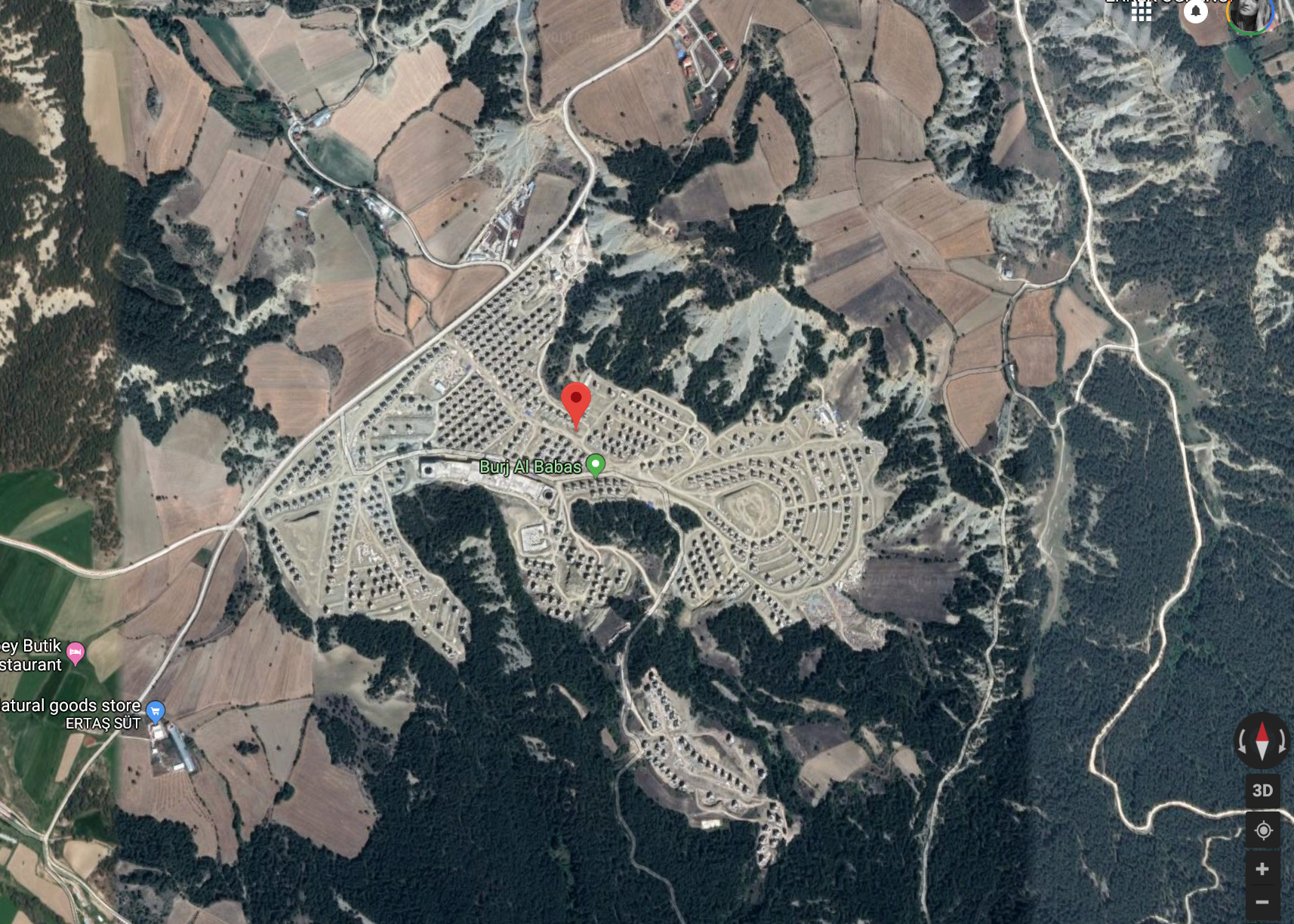
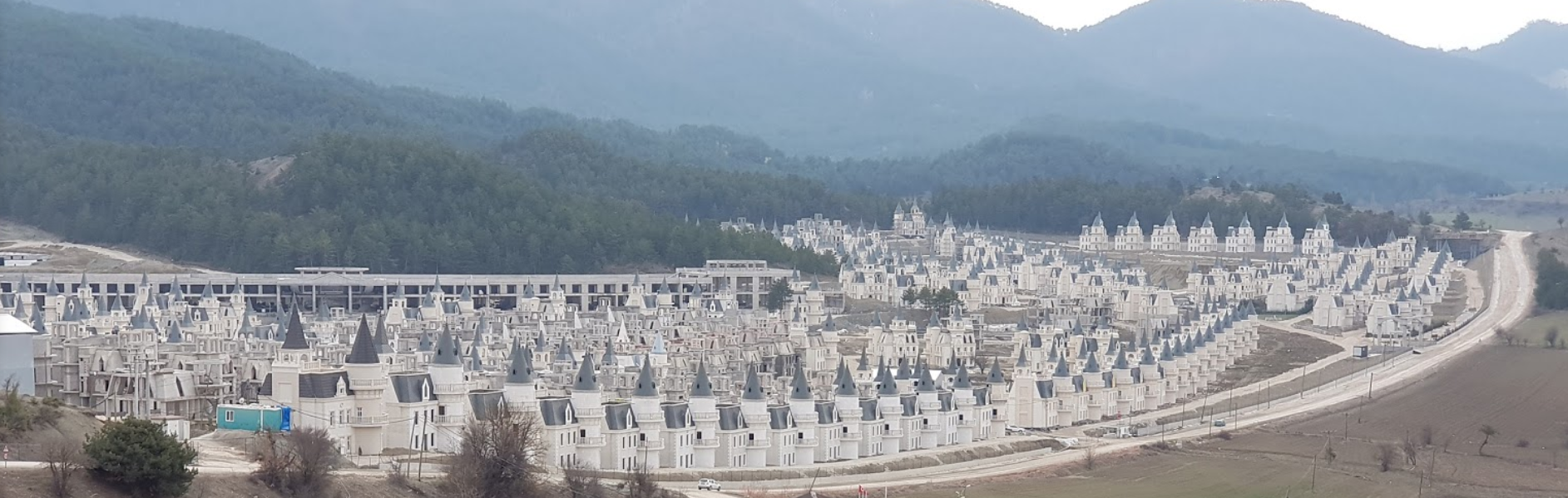
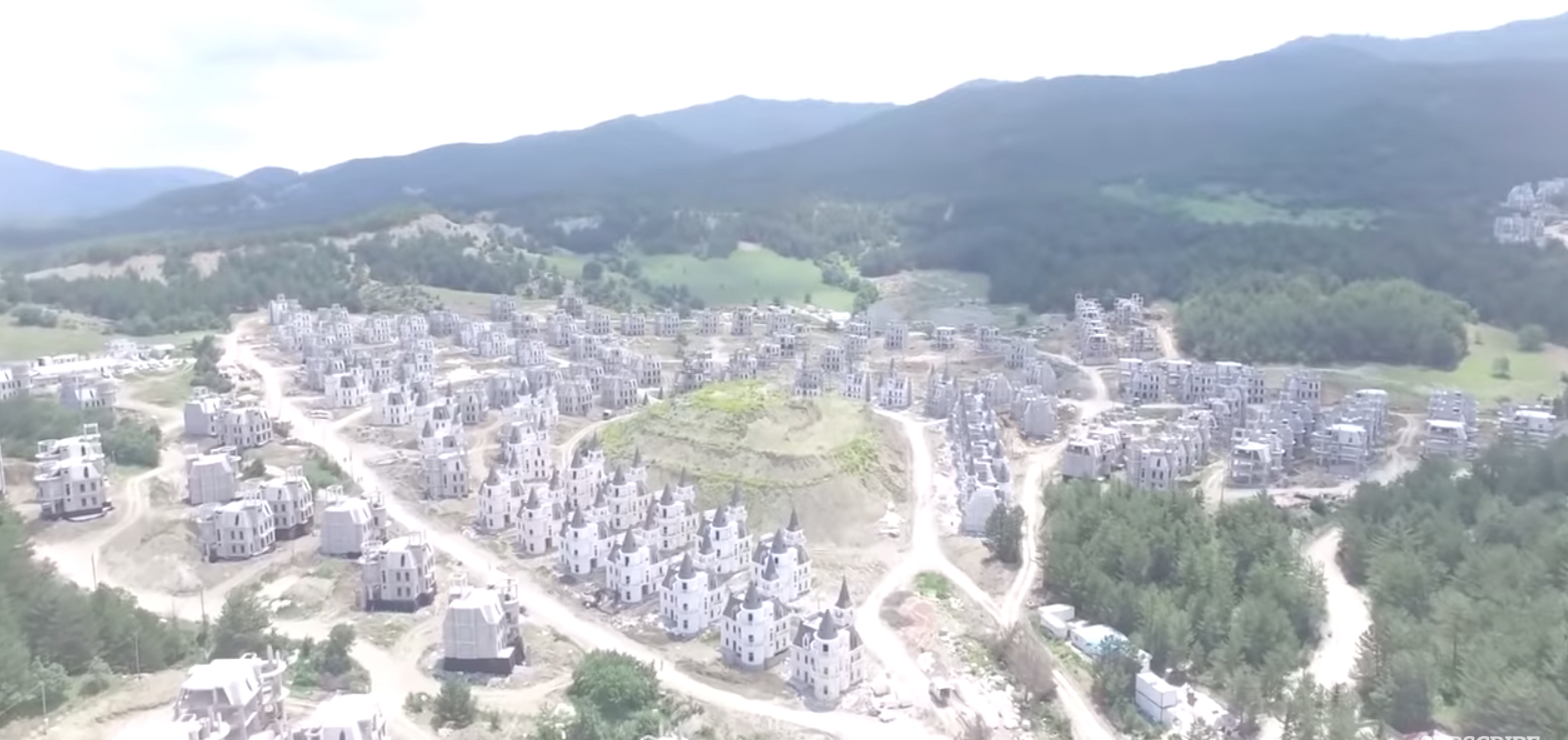
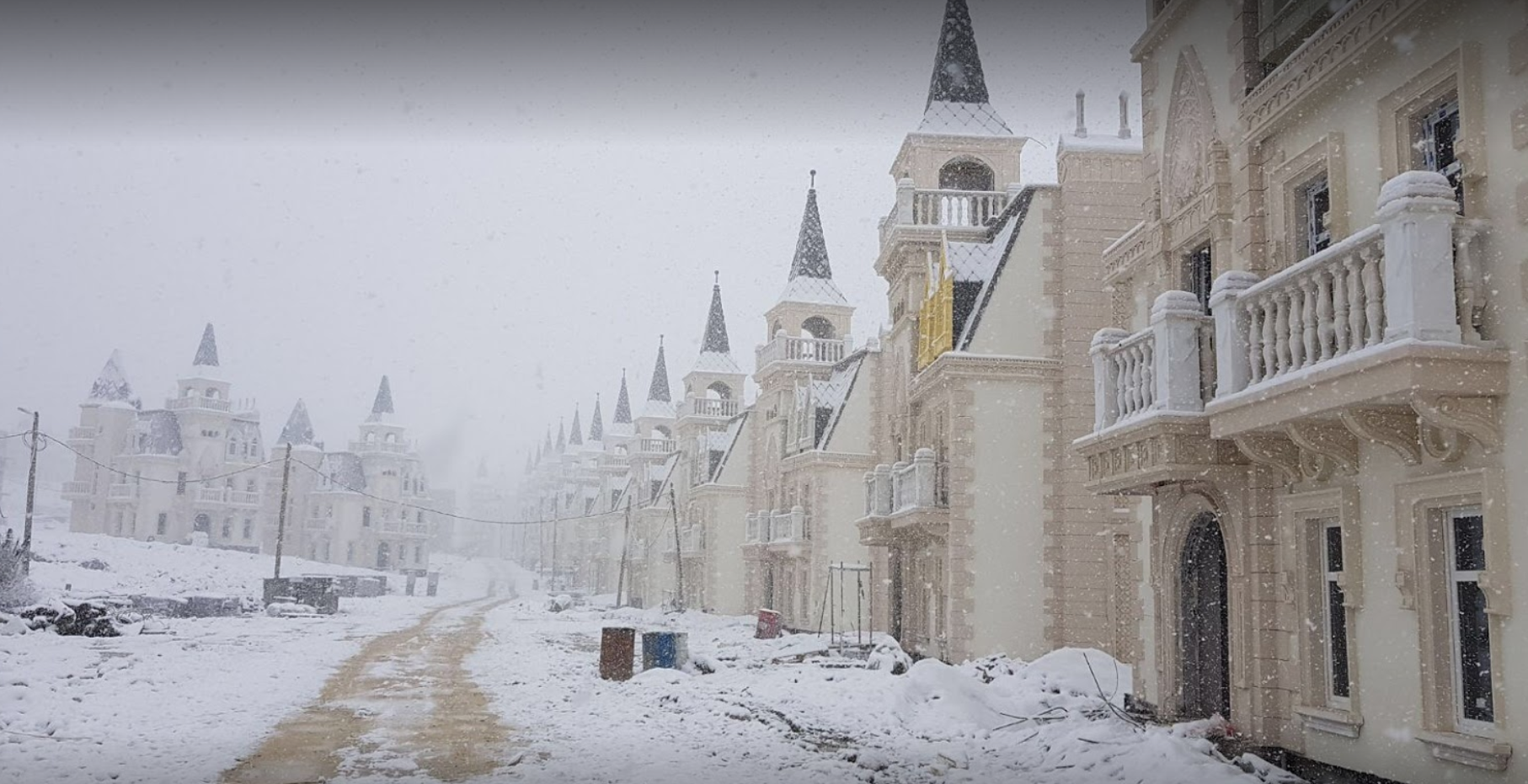
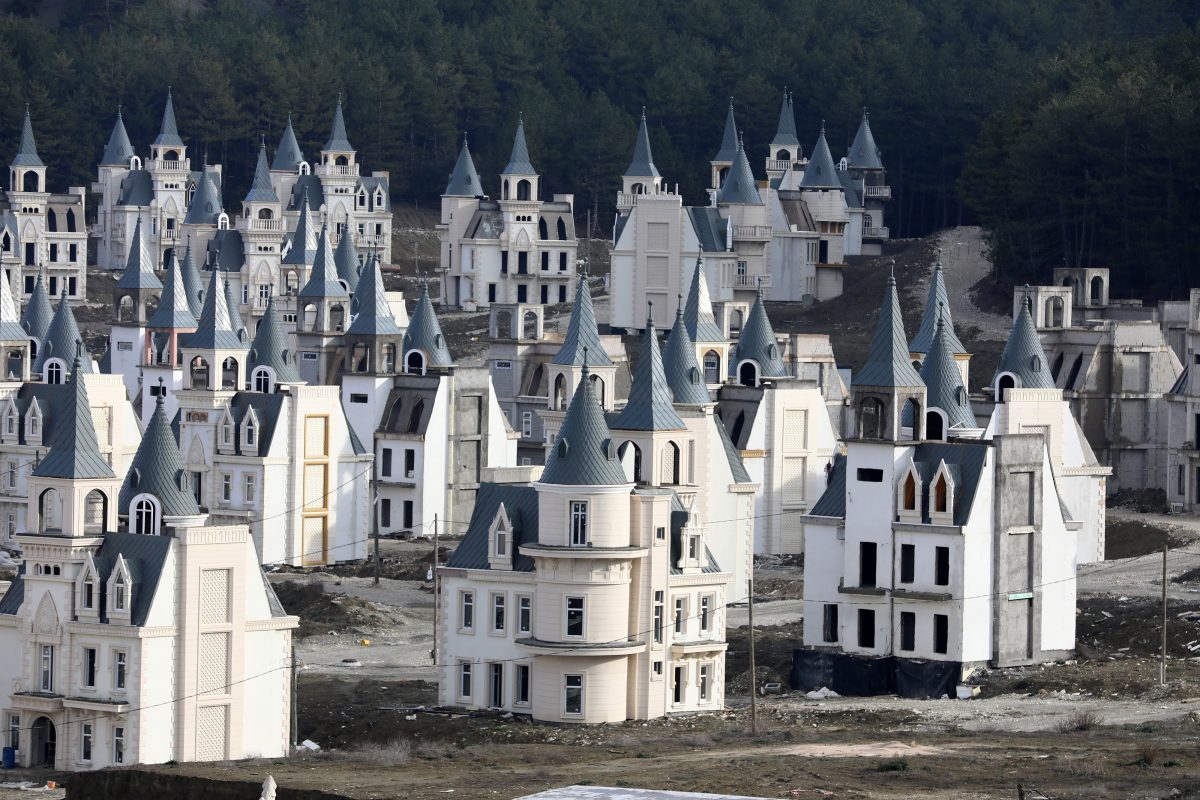
It’s every little princess’s dream and an environmentalist’s nightmare: a little palace for everyone. Well some developer in Turkey had their own dream and build a complete suburb of hundreds of palaces, Disney-style and on steroids, and all the palaces now lay abandoned in what’s more like a ghost town nightmare. Drone footage and Google Earth over Burj al-Babas reveals the extent of the “vision” and failure of what happens when people from other cultures try to replicate the western ideal.

The homes were intended for ultra-rich vacationers from the Persian Gulf region.

The western ideal of living in a McMansion has already been shown to be an environmental nightmare. Yet Turkish developers somehow thought this was a fantastic idea. Drone footage shows an eerie ghost town of mini castles. It sheds some light of Turkey’s shift in values to the west, while being steeped in economic woes.

Checked in 2025, and Google Earth shows that the site is still uninhabited.

Burj al Babas palace turkey

The “luxury” housing development called Burj al Babas, near Mudurnu, a village roughly halfway between Istanbul and Ankara, was left abandoned last year after developers Sarot Property Group went bankrupt.

Costing about $200 million to build, the future of the 300 chateaux-style palaces is uncertain. The idea started in 2014 and the houses would be holiday homes for ultra-rich Gulf tourists, who seem to love extravagance at almost any cost.

Burj al Babas turkey

But at a price of about $500,000 each, only a handful of the Disney-style homes were ever sold, however, and investors pulled out. There were 732 planned buildings, yet 587 were completed, according to the Guardian.

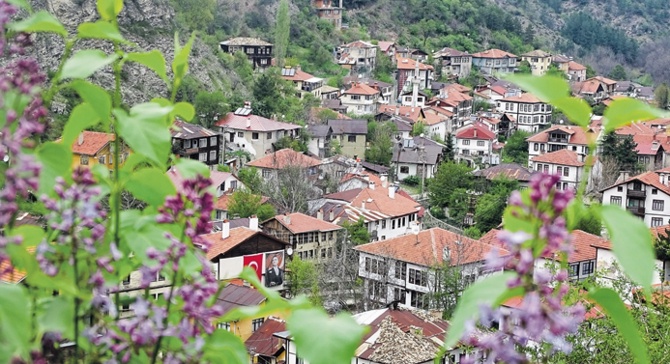
The locals in the Mudurnu region are reported to have hated the project as it did not keep with local Byzantine building traditions, their Ottoman wooden houses and a 600-year-old mosque.

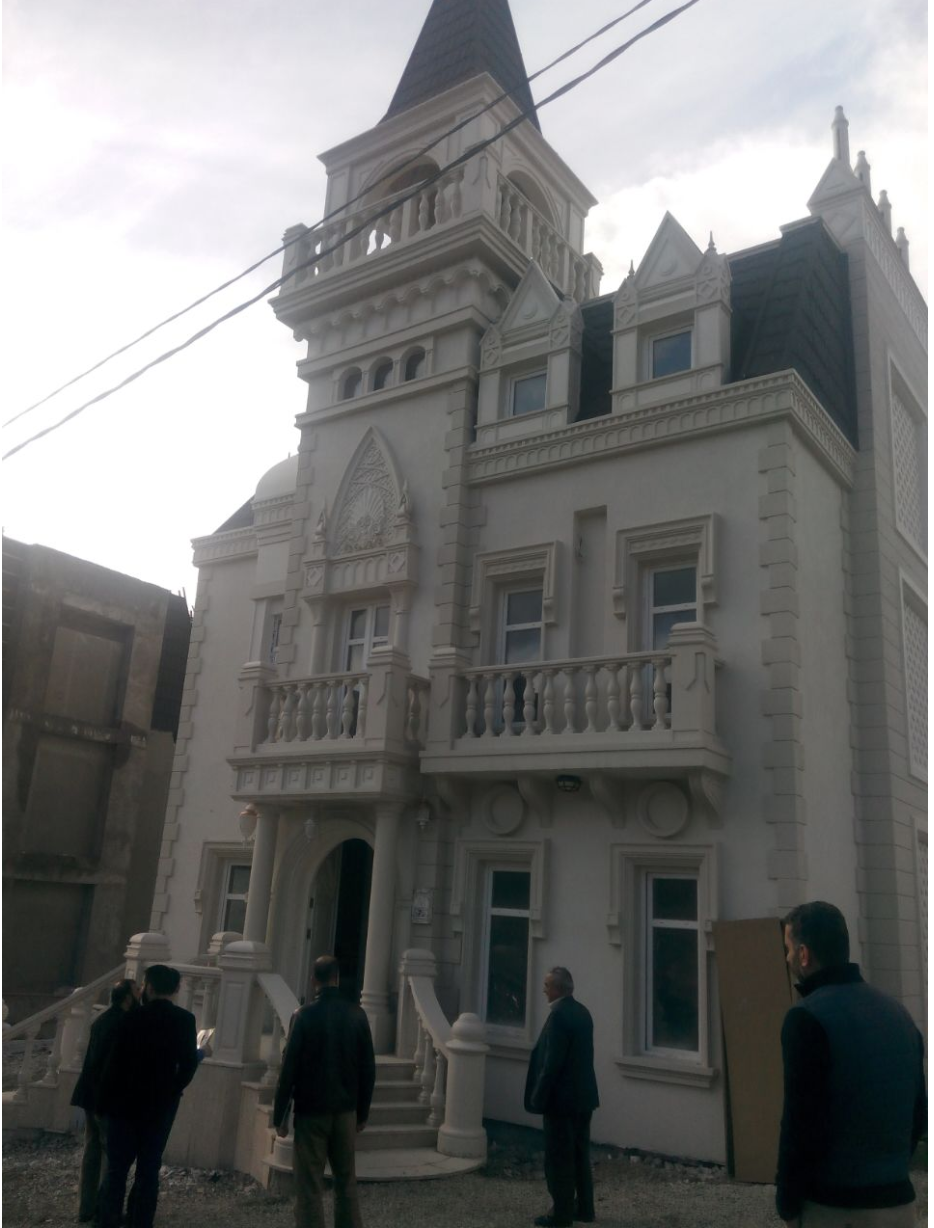
A finished building at Burj al Babas, holiday resort

Just after this project got the green light the Turkish Government has since introduced new building regulations designed to preserve local character and heritage.

It may be too late to undo some of the damage, said Yaşar Adnan Adanalı, an Istanbul-based urban development researcher: “I worry that projects like Burj al Babas opened Pandora’s box, in some respects,” he said. “Developments without proper planning that do not contextualise the geography and history of their surroundings have exploded in Turkey since.”

Village of Mudurnu

Turkish president Recep Tayyip Erdoğan has encouraged a construction boom during his time in office, even allowing foreigners to now buy Turkish homes and property.

But the weakening Turkish lira has left many building companies struggling to pay off their debts in foreign currencies.

Still, the Sarot Group is hopes that Gulf investors aiming to eventually acquire Turkish passports will swoop in and buy into Burj al Babas.

Mudurnu palaces Burj al Babas

“We only need to sell 100 villas to pay off our debt,” a developer told the Guardian. “I believe we can get over this crisis in four to five months and partially inaugurate the project in 2019.”

Related: see the ghost town in Turkey that used to belong to Christians

We have a better idea: get funding and give these homes to Syrian refugees. Maybe they can turn them into something better than a summer getaway home for the rich and vulgar.

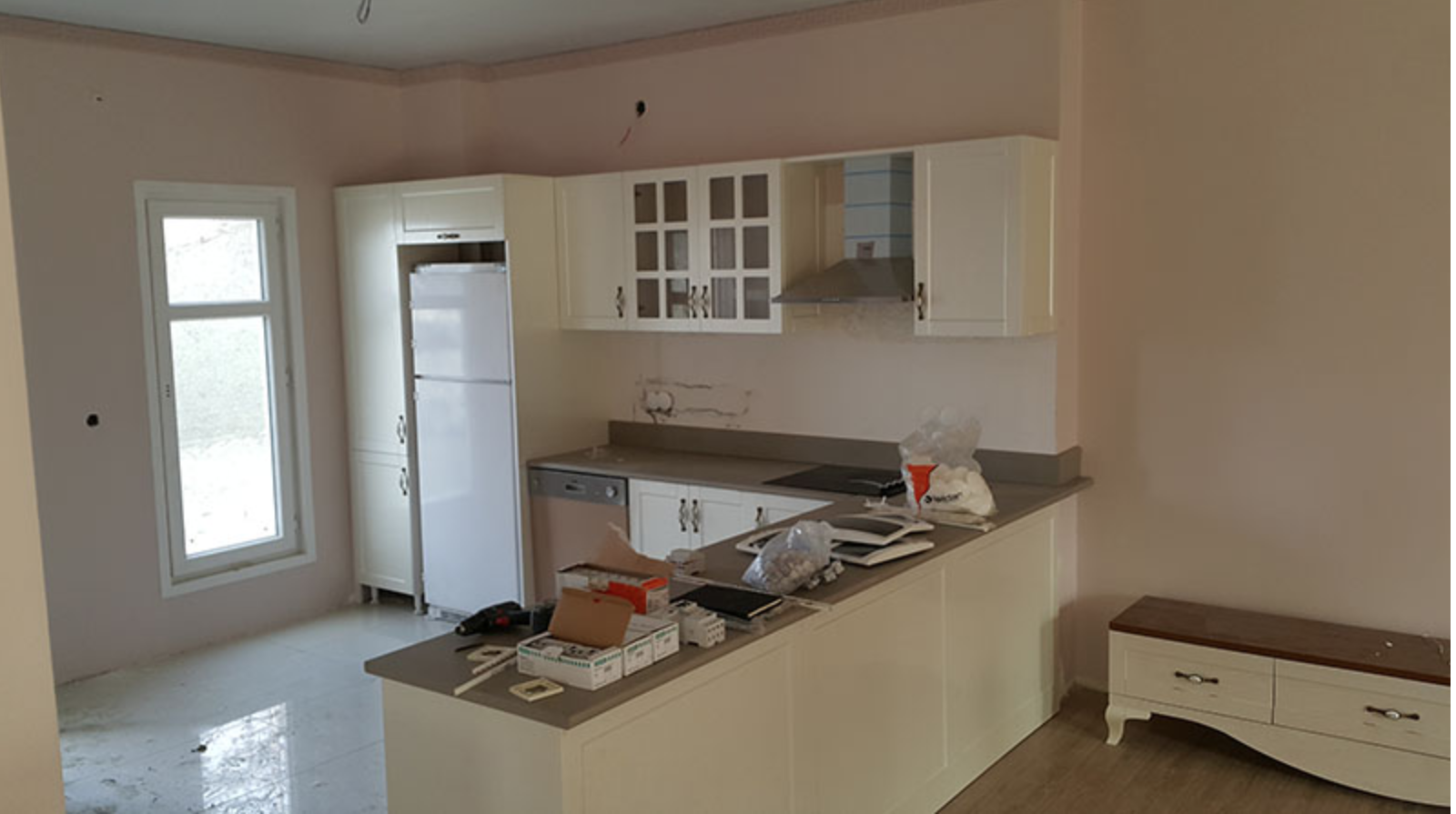
While the company website is mostly not functioning (see here), we did manage to find some less than appealing interior and exterior shots they have offered for marketing purposes. A couch full of light switch fixtures. A salon full of dust. Not from our fantasies in any sort of way. We’d rather stay in a yurt. What about you? After these images see the ones that they hoped would attract investors.

A Google Earth update in 2024: the Disney-like town is still in ruins. This could be a great project for refugees or new housing options. Bring in water generators and solar power and try and get this town up and running.

Burj Al Bankruptcy


Iran’s capital city being swallowed by sinkholes

0


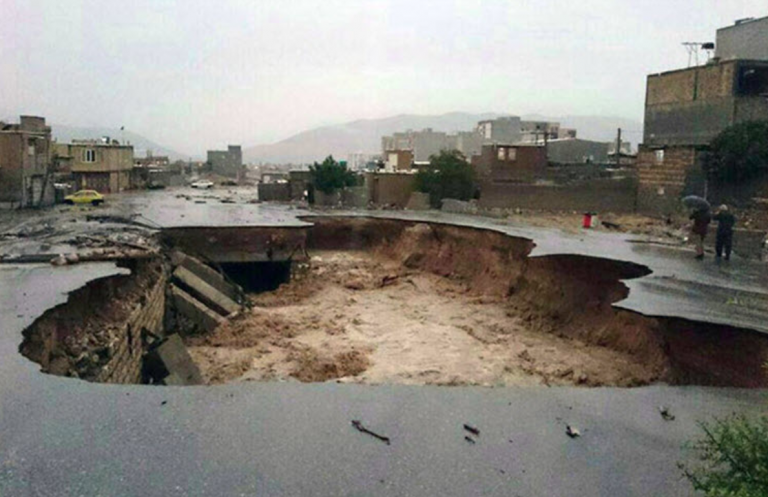
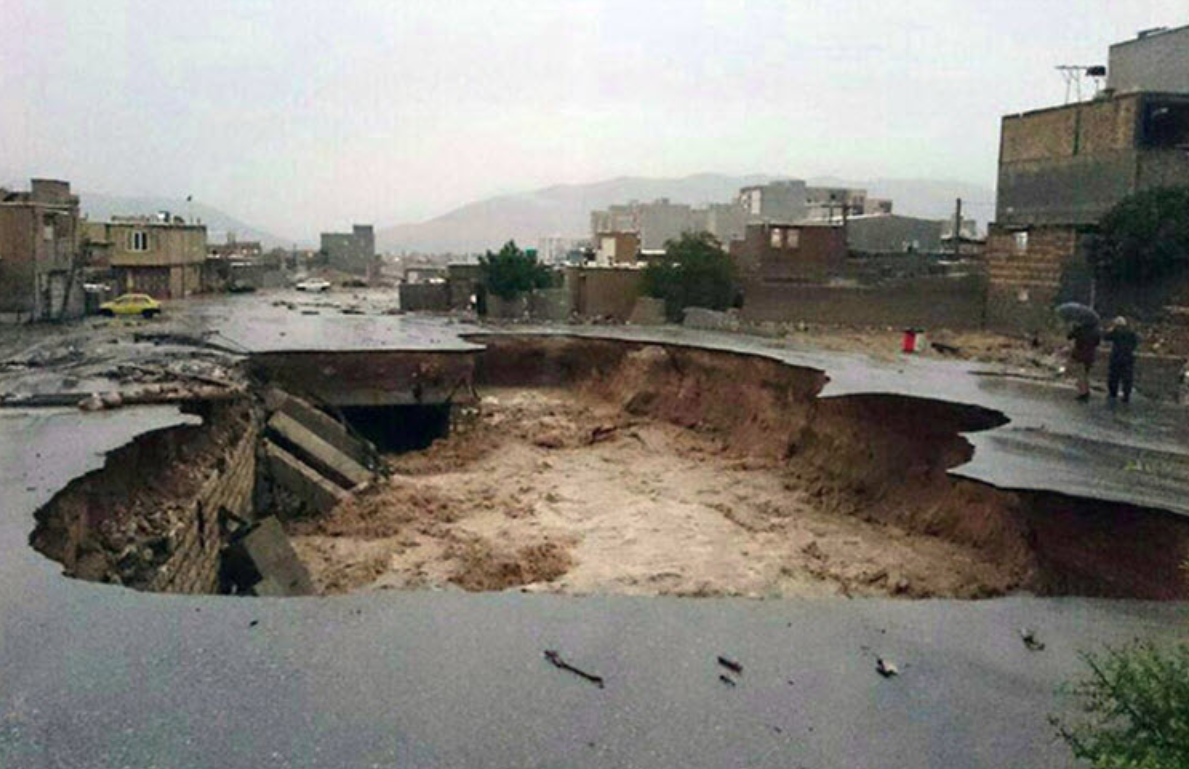
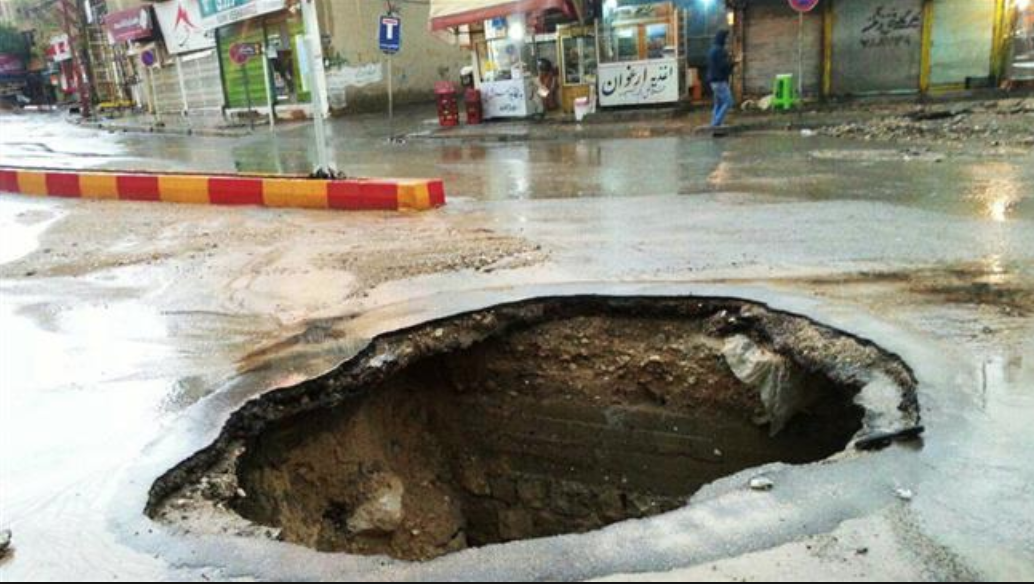
Thanks to drought and over-pumping underground water reserves in the western region of Tehran, Iran’s capital city, fissures also known as sinkholes are opening up, causing Iran’s major city and capital city to sink.

The sinkholes threaten people’s homes and the local infrastructure.

While some Middle Eastern countries like Israel are seeing record rain, Tehran is feeling the effects of a three-decades long drought. Ongoing desertification and over-use of water from a growing population is the major cause to these dangerous sinkholes that can open anywhere, anytime.

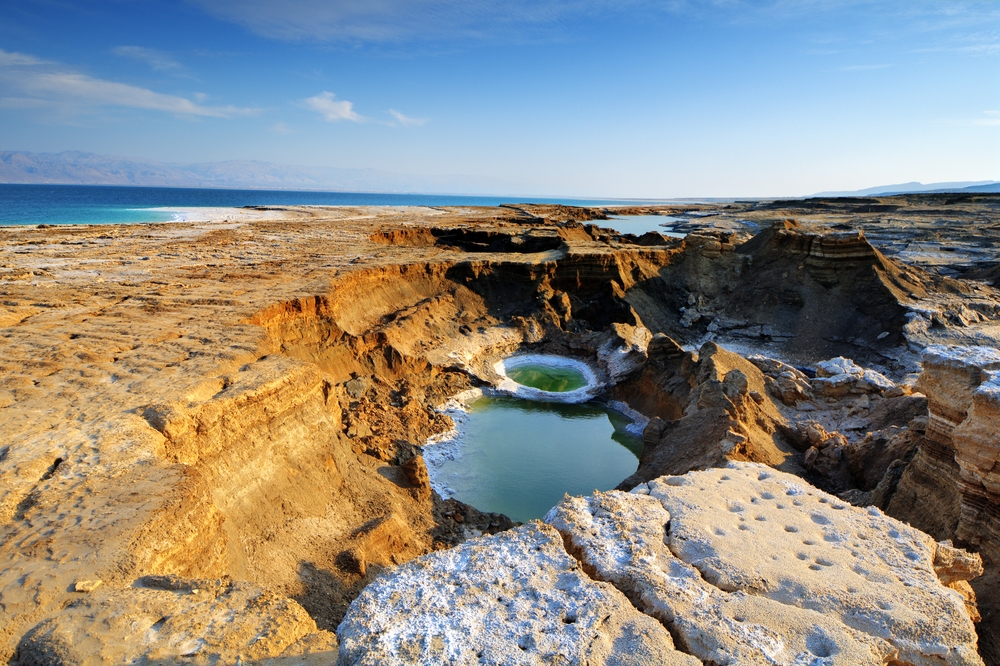
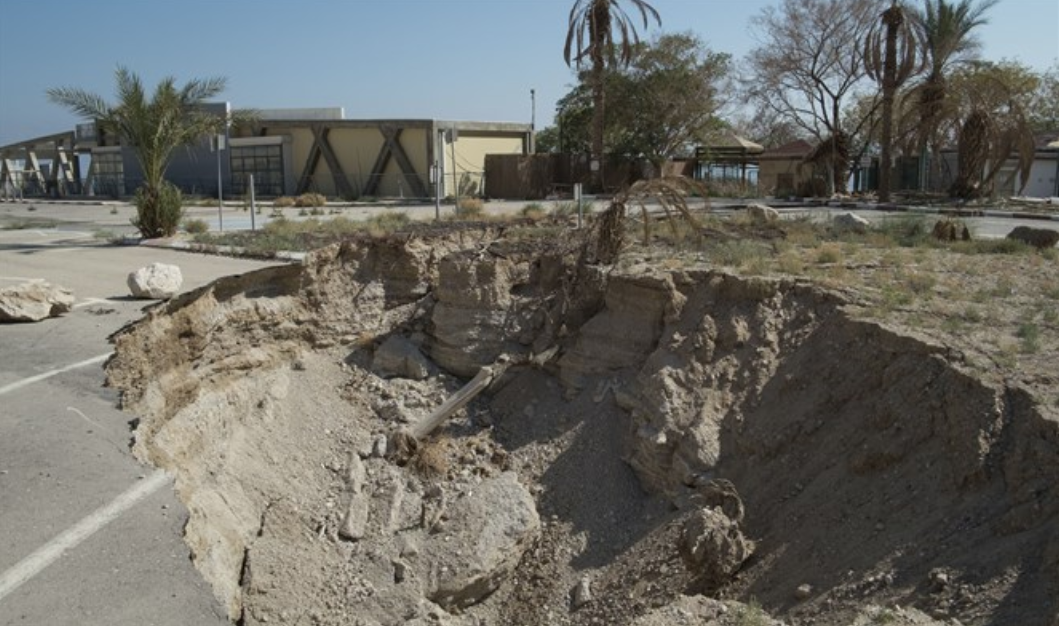
The Dead Sea regions of Israel and Jordan have also seen a growing number of sinkholes as the large body of inland water recedes more and more every year. See below.

Dead Sea sinkhole Israel

Tehran is growing to a record 8.5 million people, and underground aquifers now over-pumped get saltier and saltier every year. Instead of going straight to the taps, a large amount of water goes to growing food in a very inefficient way.

The Tehran region is known as one of the 10 driest places on earth and the sinkholes are now causing the area 3,900 feet (1,200 meters) above sea level, to shrink 8.6 inches (22 centimeters) per year, according to the Iranian government.

What happens when your city is sinking? Cracked water pipes, gaping holes in the sidewalks, and miles long fissures that can swallow anything in its path threatening the airport, oil refinery operations, railroads and highways.

International sanctions against Iran have hurt it. But these have been going on since the 1979 revolution. Iran has sought to produce enough food locally to feed all of its people but in term has caused permanent damage to its local geography.

A recent study found that even if there is more rainfall the local terrain seems to have lost the ability to hold water.

Israel allows medical cannabis exports (finally!!!)

1

cannabis israel export

Following a flurry of rumors which has caused Israeli investors to become “high” on purchasing cannabis company stock running to invest in companies like iCan exportation of medical cannabis  from Israel may be nearer to reality. Following announced approval by the Israeli government cabinet, the first shipments of medical cannabis may be taking place in six to 12 months.
image-cannabis-tikun-olam

One such report, as aired on Israel’s Toknit Chisachon (Savings Plan) announced that Israel’s cabinet has given approval for exportation of high quality medical cannabis by “a few select companies”. The program said that approval will be given only to companies which conform to strict standards set up by the Health Ministry.

Actual exportation will only take place in 9 to 12 months. It is not sure whether the approved companies will themselves be able to export medical weed or it this will be done under under tight control and supervision by a government entity.

Israel has made great innovations in the growth (see Flux), study and testing of various medical derivatives made from cannabis plants. The actual use of medical cannabis in patients suffering from serious health problems, including cancer, has been occurring for more than a decade now. According to the Globes the potential annual revenues from exporting medical cannabis could be more than 1 billion USD.

The delay in export implementation is due to the need to work out the necessary export process, including required supervision and controls. The upcoming elections on April 9, is most likely another reason for the delay.

If all goes according to plan, Israel may become the second Western country to actually export medical cannabis, with Uruguay being the first, since 2017. Potential export markets are currently aimed toward Canada and Germany. Canada now has legal “recreational use” of marijuana since October 2018. This follows the historical approval by Canadian legislative bodies in June, 2018.

Germany’s situation involving medical cannabis is a bit different, however. While it became legal to use medical cannabis in 2017, the actual green light for production and importation has still not been implemented by the German Federal Health Ministry .

Despite the delays, the Israeli Cabinet decision is a big step forward toward exportation of Israeli grown medical cannabis, which will make a definite contribution to the country’s economy.

Read more on Israeli cannabis:
Israeli investors are high on cannabis company stocks
All you need to know about medical Marijuana
Agritech is going to pot

27 new drug leads to help treat liver cancer, diabetes and obesity

0

Professor Amiram Goldblum and his team at the Hebrew University of Jerusalem’s Institute for Drug Research have discovered 27 new molecules.  These molecules all activate a special protein called PPAR-delta and have the potential to treat fatty liver disease, obesity, diabetic nephrotoxicity, and to heal wounds.

News of these findings was published today in Scientific Reports, a Nature journal, and was made possible thanks to a new, award-winning algorithm that Goldblum’s team developed.  This algorithm sifted through a database of 1.56 million molecules and picked out 27 with a strong therapeutic potential, as determined by biologists at the Novartis Genomic (GNF) Institute in San Diego.

To date, these new molecules are undergoing pharmaceutical evaluations to treat two main health conditions. The first is Fatty Liver Disease, also known as NASH (Non-Alcoholic SteatoHeptatis).  This disease currently has no cure and is a leading cause of liver cancer in the Western world. The second is obesity.  PPAR-delta activation has the potential to increase physical endurance and trim waistlines by getting muscle cells to burn more fat.  Future evaluations will hopefully include testing treatments for improved wound healing, and to prevent kidney toxicity in diabetics.

Professor Goldblum is cautiously optimistic about these findings. “With such a large group of highly active molecules, there is a high probability to find treatments for several common diseases. However, we should wait till all the experiments are done before we get our hopes up too high,” he shared.

To date, there is much pharmaceutical interest in Goldblum’s new molecules.  Integra Holdings, Hebrew University’s biotech company, determined that 21 of the 27 have the potential to reach pharmaceutical success, especially as a possible cure for Fatty Liver disease.  Additionally, Israel’s Heller Institute of Medical Research is currently testing PPAR-delta’s physical endurance properties on mice. Goldblum predicts that in a few years we will hopefully be seeing several of these molecules in the pipeline for clinical studies on humans.

6 Reasons To Hire A Lawyer For Your Eco Business

0

Pascale Habis creates beirut cookbook

Considering the current business climate, it is safe to assume that business owners must have a lawyer on their team. Lawsuits and any other legal complications can arise anytime. As such, you have to be protected by all means possible.

If you are unconvinced by the prowess that lawyers provide, then you have come to the right place. Here are some reasons why it is time to consider lawyering up your business! Even eco minded companies need legal protection. Especially ones engaging in renewable energy.

  1. Titles the field to your advantage

Yes, that is right – having a lawyer can easily tilt the field to your advantage. This is truly the case when a lawsuit surfaces. Let’s say you are being threatened with legal action. A lawyer can hit the ground running, as he has the skills and knowledge about your business. For instance, you have legal dispute with your employees. An employment lawyer can help you mitigate the process and make sure that your interests are well-kept.

  1. Avoid mistakes

When running a business, it is really possible for you to make mistakes. The only catch, however, is that most of them are the types you are fully unaware of. Either way, they are still considered potential legal pitfalls that could be detrimental to the success of your business. If you are not careful, your company might just plummet. A good business lawyer will be there to help you avoid these mistakes, particularly the ones that you are unaware of.

Consulting with corporate law firms Dallas can provide the specialized legal guidance needed to navigate these risks effectively. Their expertise can help you put preventive measures in place and ensure long-term compliance.

  1. Ensure all contracts and legal agreements are correct

This is perhaps one of the main reasons why you really need to have a lawyer on your team. Believe it or not, a lot of business owners tend to neglect the importance of having solid contracts. Or even if they do, it is too late to make significant actions. As a result, the agreements or contracts they made are either incomplete or vague. That is why they are easily taken advantage of by their associates, contractors, or even clients. With a lawyer on your team, you can prevent these mishaps from happening and further protect your business’ reputation.

  1. Makes it easier to get paid 

Let’s say a client or vendor owes you a huge sum of money. Unfortunately, you are having a hard time getting your hard-earned cash since he is dragging his feet on the matter. Your best course of action here is to ask your lawyer to send a request on your behalf. You will be surprised that an immediate action will take place momentarily. Of course, this may not be enough to convince the person to pay you. However, your lawyer already knows what the next steps are in order to collect the money the individual owes you. To put it simply, your lawyer is always several steps ahead.

  1. Refer you to specialized assistance

A lawyer is the type of professional who has mastered the different ins and outs of running a business. He knows if you are going to need additional help in order to run your company effectively. This is quite important especially when it comes to complicated tax matters. Regardless of whatever specialized assistance he will recommended, you can rest assured knowing that you have someone who is ready to back you up. More importantly, he can quickly refer you to other professionals who can provide the much-needed assistance and guidance in running your business.

  1. Mitigate damages

Your lawyer is also capable of reducing the damages you will face in the event of a lawsuit. And while you might wish to not pay at all, this is better than having to shell out tons of cash. Just remember to be honest with your lawyer, as you want him to know everything in order to help you better.

Pulling the plug on crypto payments

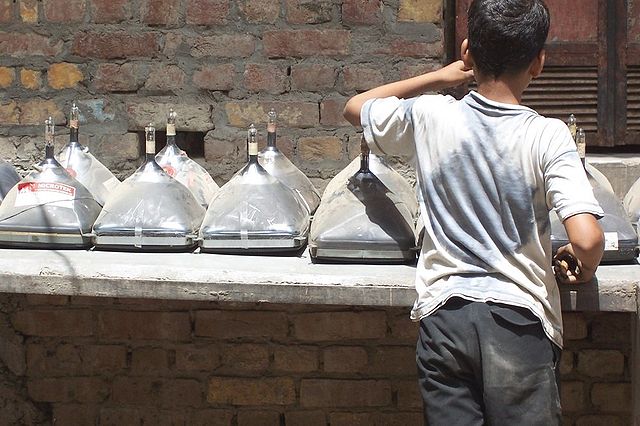
A child with old cathode ray tubes. Photographed in New Delhi (Shastri Park) by Thousandways via Wikimedia. License is CC-BY-SA-2.5

Forward-thinking waste management firm, Business Waste, have said that they are ‘reluctantly’ no longer accepting cryptocurrencies – such as Bitcoin – as payment for their services.

The company originally announced it had become the first refuse and recycling business to accept these virtual currencies as payment in 2017  in order to give flexibility to their customers in an increasingly digital age. However, the firm says that despite its efforts, the uncertainties of the market are making digital currencies an unreliable source of payment. If you invest in crypto in the US it is not uncommon for your account to be suddenly shut down and you shut out.

Mark Hall, Communications Director of BusinessWaste.co.uk, said of the figures:

“Cryptocurrencies have become much more mainstream in recent years – which is why we were happy to move with the times and accept these digital forms of money as payment. As a business we are dedicated to being thought leaders and innovating to provide the best service to our clients, and accepting internationally-recognised digital currencies was one way we could do that – but, as with many emerging technologies, there are still wrinkles to be ironed out within the cryptocurrency market.”

These forms of currency – which include the most well-known, Bitcoin, as well as other forms such as Ethereum and Litecoin – are not tied to a particular country’s economy as with standard, or fiat, currency. This means it has a tendency to be much more volatile than fiat currency; for example, in 2010, when the currency made its first real-world transaction, 1 Bitcoin (BTC) was worth less than £0.01. In December 2017, 1 BTC was worth over £15,000 – a fluctuation many times higher than a fiat currency would experience over a 7-year period.

Cryptocurrencies can also be damaging to the environment.

This volatility has come to be considered an intrinsic hazard of a currency whose value works much like traditional stocks and shares – where market rumors and movement have potentially massive knock-on effects on its value. This could have potentially serious ramifications for businesses who accept crypto payments and then find themselves with a payment which has dropped significantly in value within a short period – such as in December 2017, when 1 BTC fell in value from £15,000 to £2,500 today in response a crackdown on improper practices in the market.

However, the popularity of cryptocurrencies has also led to unscrupulous users attempting to use ‘scam’ or fake coins to pay for goods and services. Cryptocurrencies rely on key information to verify that they are legitimate, such as the ‘white paper’ which details the origins of a coin, who made it, and how it works. However, these papers can be forged and simply just made up – which can cause businesses who end up with scam coins to be out of pocket.

Hall concluded:

“We’re reluctant to pull the plug on cryptocurrencies for now – but we have to think about the implications for the business.

“Market fluctuations and scams surrounding cryptocurrencies are, unfortunately, part of the current environment surrounding these digital forms of payment, and until this is no longer the case we will stick to fiat currency.”

Electrical Engineer needed for supervising solar PV operations in Dubai

0
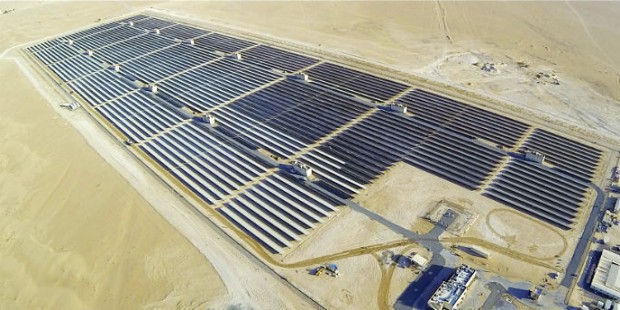
World's largest solar farm
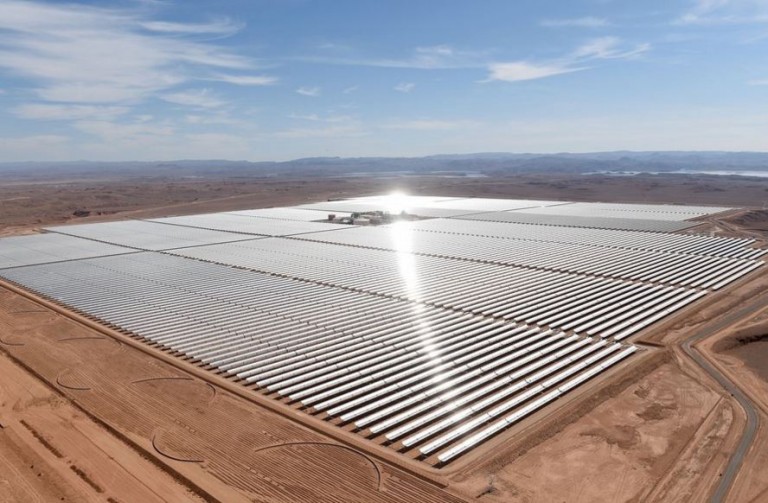
Solar energy farm in Morocco. Look how the desert and an economy can be transformed.

Thinking about working in solar energy and fancy a career change for a year in the Middle East? You will need some experience in the industry and some experience working in the United Arab Emirates (UAE) but this short term contract job, which may be extended, might be a great way to work on something new while you plan your next career move. It’s a supervisory role, Commissioning Electrical Superintendent, and you must have background in solar PV installations.

Solar power in the United Arab Emirates really has the potential to provide most of the country’s electricity demand. It is still a major oil producing country, but the United Arab Emirates is taking some major steps to introduce solar power on a large scale. Be a part of this radical change as we shift from the oil industry to renewables.

Get used to Sunday to Thursday work days, as is common in the Middle East. Getting the job will also require that you have

  • Minimum 1-2 Year of experience in UAE
  • 3 years minimum as Commissioning Electrical Superintendent
  • 5 years’ experience in the SOLAR PV plants
  • Currently based in UAE or With experience working in UAE
  • Have a UAE driving License (get one by following this advice)
  • Available within a month or ASAP
  • Specialization: Electrical Engineer / Commissioning

Your job will assume a high degree of responsibilities, with tasks including:

  • Ensure work is executed according to contract specifications, approved design drawings, agreed on procedures, and method statements
  • Estimation and Tender Quotation
  • Coordinating with local authorities, clients and subcontractors
  • Responsible for ensuring safe and successful execution of commissioning activities in their area
  • Schedules work activities and manpower requirements to meet established completion dates.
  • Monitors workforce productivities / progress relative to schedule
  • Monitors environmental compliance, as required
  • Supervises the mechanical completion phase and transition to the final hookup and commissioning phase
  • Manages all punch list items outstanding
  • Coordinates with construction team
Have a Good Job you want to share? One for the environment, the energy industry, water, animals, peace in the Middle East? Send us more to [email protected].

Dream sales job in sunny solar open in Dubai

0

Ever see the video Follow the Frog? We posted it below so you can have a good laugh before you go out and embark on a poor career choice as you save the world. While the video does an excellent job of branding products for the Rainforest Alliance Certified mark, it does a less good job of conveying the real jobs that are available to you that can and will make an impact in changing the world. Like the jobs in the solar industry; like the jobs available in the Middle East waiting to be filled by skilled people like you. The job we offer below does require some years of experience, there is no time like the present in building your experience toward the direction of the sun.
Consider working in Dubai for world-changing solar energy projects: Beresford Wilson & Partners is looking for a solar sales executive to run its mission of creating energy efficient solar energy installations in the Middle East. Salaries to live in Dubai will be competitive, and it’s a great way to secure a job in an industry that is only growing steeply upward. You will need to have some experience in the industry and some experience already working in the United Arab Emirates.

Not long ago Dubai was relatively undeveloped. Today it has dreams of bringing on the best and most novel sustainability solutions for the region, stewarding them in and implementing them across the entire United Arab Emirates. Foreigners are pretty free to live their own lives, and there are large communities of English-speakers and expats from your country in town so you won’t feel lonely as you adjust to the new culture which you can be a part of shaping.

dubai solar energy plant

The company is looking for a key Account Manager to join their growing sales team. And your job will be to develop the solar energy market in the United Arab Emirates and Jordan.
Jordan is very much in need of renewable energy. With ample sun, it is still one of the poorest countries in the world, and new energy initiatives can jumpstart ambitious projects the nation has in areas like water security. Read about Solar Mamas for some grassroots background. And see this project on hydroponics.
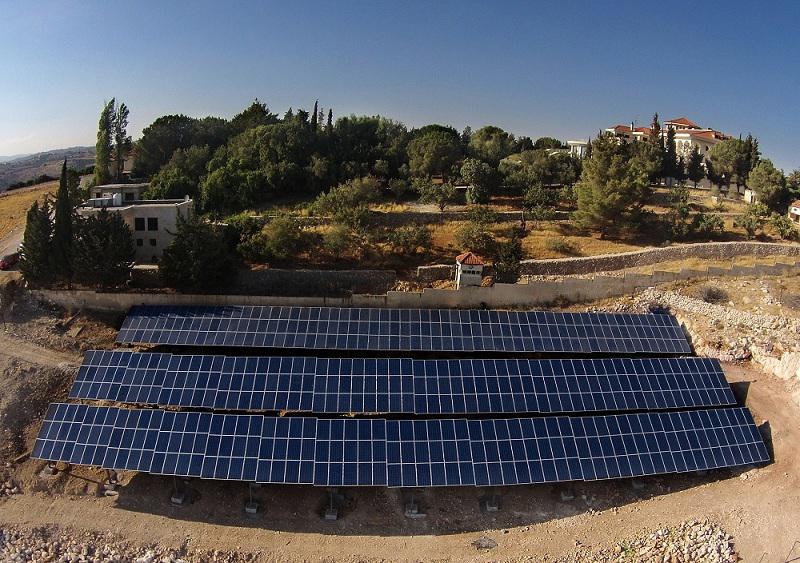
Solar panels give energy to the Jordanian palace

The sales job will involve promoting and selling products related to solar inverters. Inverters are key for increasing efficiency and output of solar panels and installations. Even if you are yet to be experienced in solar, it’s an industry that is easy to learn, and easy to fall in love with.  The company is also working closely with the SHAMS initiative in Abu Dhabi. It is one of the world’s largest solar concentration plants, and it is diversifying the UAE’s Energy Portfolio.

If you want the sales job you will need:

  • 5+ years working in the UAE with a Solar Manufacturer
  • Proven sales record
  • Fantastic market knowledge
  • Extensive network with EPC, Developers, Engineering Consultants, ETC

MORE ABOUT THE SALES JOB HERE

We all want to see a world move away from oil. And no better place to make your impact than in the Middle East, a region still so reliant on the power of oil.

Now watch the video below and have a laugh.

Have a Good Job you want to share? One for the environment, the energy industry, water, animals, peace in the Middle East? Send us more to [email protected]. We aim to feature 5 great jobs a week.

Conflict-driven hunger worsens; Middle East hit hard

0
yemenit child
A child in Yemen.

A new report to the UN Security Council shines a spotlight on hunger in conflict zones: The situation in the eight places in the world with the highest number of people in need of emergency food support shows that the link between conflict and hunger remains all too persistent and deadly, according to a new report released today by the United Nations’ Food and Agriculture Organization (FAO) and the World Food Programme (WFP). The report was prepared for the UN Security Council which in May adopted a landmark resolution on preventing hunger in conflict zones.

We talked about the dire situation in Yemen back in 2011. Was anyone listening?

The situation in Afghanistan, the Central African Republic, the Democratic Republic of the Congo, South Sudan and Yemen worsened in the latter part of 2018 largely because of conflict, while Somalia, Syria and the Lake Chad Basin have seen some improvements in line with improved security. In total, around 56 million people are in need of urgent food and livelihood assistance across the eight conflict zones.

“This report clearly demonstrates the impact of armed violence on the lives and livelihoods of millions of men, women, boys and girls caught up in conflict,” FAO Director-General José Graziano da Silva states in the report foreword. “I would strongly encourage you to keep in mind that behind these seemingly dry statistics are real people experiencing rates of hunger that are simply unacceptable in the 21st century.”

Violence against humanitarian workers is growing, the report states, sometimes forcing organizations to suspend operations and deprive vulnerable populations of humanitarian assistance. In 2018, aid workers and facilities were attacked in all the countries covered in the report.

“This report shows again the tragic link between conflict and hunger and how it still pervades far too much of the world. We need better and quicker access in all conflict zones, so we can get to more of the civilians who need our help. But what the world needs most of all is an end to the wars,” the World Food Programme Executive DirectorDavid Beasley states in the foreword.

Condemnation of starvation as a tool of war

The UN Security Council’s Resolution 2417 is an unambiguous condemnation of starvation as a tool of war. It calls on all parties to armed conflict to comply with their obligations under International Humanitarian Law to minimize the impact of military actions on civilians, including on food production and distribution, and to allow humanitarian access in a safe and timely manner to civilians needing lifesaving food, nutritional and medical assistance.

“The millions of men, women and children going hungry as a result of armed conflict will not be reduced unless and until these fundamental principles are followed”, the report states.

Unprecedented and unacceptable hunger

The growing number of protracted conflicts in the world is creating unprecedented and unacceptable levels of hunger.

Yemen’s three-year war is a stark demonstration of the urgent need for a cessation of hostilities to address the world’s largest food security emergency. In its country analysis, the report states that conflicting parties disregarded the protected status of humanitarian facilities and personnel which made scaling-up operations to prevent famine a difficult and dangerous endeavour.

In the second half of 2018, the Democratic Republic of the Congo had the second highest number (13 million) of acutely food insecure people, driven by a rise in armed conflict.

In South Sudan, where civil strife has persisted for more than five years, the lean season is expected to start earlier than normal, according to the report, pushing those in need of urgent support up to more than 5 million between January and March 2019.

Across the Lake Chad basin including north-eastern Nigeria, Chad’s Lac region and Niger’s Diffa, where Boko Haram militants are active, a major deterioration in food security is projected during this year’s lean season (June-August 2019), and 3 million people are expected to face acute food insecurity.

In Afghanistan, the percentage of rural Afghans facing acute food deficits is projected to reach 47 percent (or 10.6 million people) by March if urgent life-saving assistance is not provided. In the Central African Republic, armed conflict remained the main driver of hunger in 2018, with 1.9 million people experiencing severe food deficits.

Rain as a blessing in Israel breaks 20-year drought

0
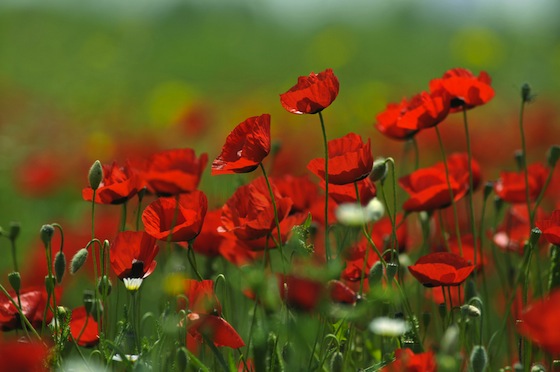
Kalaniot in bloom in Israel, in winter

Ask any rabbi or an ordinary Israeli and many will tell you that rain is directly connected to the spiritual realm. When in some countries you curse when it rains, in Israel and the Middle East heavy rains indicate that the heavens are opening up and prayers are being answered. Rains started again today further extending record rains, the likes of what haven’t been seen in 20 years.

Records were already broken in December when Israel received more than 150% of the rain it can expect on average for an entire winter season. Winter rains in Israel usually start around the holiday of Succot (Festival of the Booths), sometime in October and usually end in time for Pessach known by most people as Passover.

What the rains mean is that the national worry, the amount of rain the Kinneret or Sea of Galilee is up once again; underground aquifers are getting replenished, overwintering ponds seasonal in nature are teaming with life, and flowers are blooming everywhere, including the desert which is exploding in green.

An island emerged this last summer in the Sea of Galilee. The drought was so bad. Water levels too low.

It’s hard to imagine Israel, known in pictures as a desert Mediterranean climate exploding in colors. But that’s what is happening now. Another little known secret is that Israel also has a mushroom collecting season; the mushrooms are cropping up in forests everywhere thanks to the damp and rainy weather. Locals are loving the Ben Shemen Forest halfway between Tel Aviv and Jerusalem, about 20 minutes each way, as a popular weekend spot for hiking and mushroom hunting with the kids. With flights to Israel at the lowest prices now in any season pretty much, it’s a perfect time to travel to travel to beat the ridiculous heat of the summer.

If you are thinking about planning an escape with your whole family, the winter rains bring out the best in everyone. Cafes are still open, parks abound in cities and in nature for little and big kids, and as a country attuned to family life, there are plenty of seasonal things to do with kids and families, including hikes to see all the pretty flowers in bloom.

Note to tourists: most of the flowers in Israel’s parks are protected, so it’s better to look, not pick. Same with mushrooms: since there is only a new culture to go out mushroom hunting, only travel with and sample with an experienced guide. So many mushrooms like chanterelles have poisonous and similar looking cousins, so always ask before eating.

Bon voyage. And enjoy your winter travels.

Mead: The Ancient Wine Is Back

0

Mead

What do you think of when you think of mead? You might imagine Vikings with braided beards quaffing something potent out of cow’s horns. Or possibly, jolly Hobbits clinking pewter cups of golden liquid between nibbles of seed-cake and tarts. But mead is no longer the drink of the mythical past.

As the recipe for Ethiopian Tej has been handed down over generations, so has the taste for mead stayed ever-green in the hearts of discriminating hooch lovers. And it’s making a big come-back now.

Mead is probably the oldest known dram, although some like to argue that beer came first. As it’s fairly simple to brew at home, people have been brewing some form of it across Asia, Africa, Europe and the Americas since ancient times.

Where grapes don’t grow for wine, there’s honey to ferment for mead. Archaeologists have discovered residues of a fermented honey drink in Chinese vessels that date back to 7000 BC. Mead was enjoyed in ancient Greece, while around 60 CE, the Roman agriculturalist Columella left a homely recipe for it. Well, he did say that the water should have been “rainwater stored for several years,” probably to ensure that all sediments had fallen to the bottom of the container. 

More recently (about 100 years ago), my Ukrainian great-grandmother brewed mead for the family to enjoy during Passover week get-togethers; probably a low-alcohol, kosher-for Passover version to offer instead of beer.

Don’t let anyone tell you different: wine or beer flavored with honey isn’t the same drink at all. (On the other hand, mead flavored with wine grapes is still mead, albeit in a specific category, pyment.) Mead’s base is honey and water, and yeast to ferment it.

It may or not be flavored with spices, fruit, or vegetables. There are as many varieties of honest mead as there are of grape wine, depending on the skill and taste of the mead-maker. Today, no one’s afraid of infusing any flavoring they like into mead. Imagine: pineapple mead. Chocolate mead. Lapsang Souchong mead (I’m not kidding). Varietal mead that shines with the flavors of its original honey only.

You can drink a fun sweet mead infused with chilies at a BBQ or sip a dry mead fermented with cherries at an elegant dinner. Or taste a delicate Swedish mead flavored with elderberries; malted Welsh braggot, or a festive metheglyn spiced with cinnamon and cloves. Red meads, white meads, sweet meads, dry meads.

Mead-makers have long adapted good wine-making practice in brewing the honey potion. Strict attention to cleanliness, fermenting with specially developed yeasts, and fermentation vessels with airlocks to let gases escape while preventing dust and small insects from dropping in – these, and other modern techniques reduce the chances of spoilage and help the home mead maker to produce a gallon or ten of delicious brew in her own kitchen.

Mead’s alcohol varies from 5%, like beer, or up to 20% (appropriate for sweet dessert meads), again depending on the style desired by the mead maker. The encyclopedic Gotmead site provides all the mead recipes and discussions that a mead maker will ever need.

If homebrewing isn’t your thing, Google “meadery” in your locale, and you may be pleasantly surprised to find one near you. While California leads with the largest number of meaderies, commercial mead is sold across the UK, in France, Australia and New Zealand, and even in Costa Rica. New, boutique meaderies pop up all the time.

Time to find out what that honey brew is all about, don’t you think? Want to mead? We supply Joe Mattioli’s Ancient Orange Mead recipe below.

joes ancient orange mead

How to make Joe’s ancient mead

Ingredients

Ingredients:

  • 1 gallon batch
  • 3 ½ lbs Clover or your choice honey or blend (will finish sweet)
  • 1 Large orange (later cut in eights or smaller, rind and all)
  • 1 small handful of raisins (25 if you count but more or less ok)
  • 1 stick of cinnamon
  • 1 whole clove ( or 2 if you like – these are potent critters)
  • – optional – a pinch of nutmeg and allspice (very small )
  • 1 teaspoon of Fleishmann’s bread yeast (now don’t get holy on me — after all this is an ancient mead and that’s all we had back then)
  • Balance water to one gallon

A little caveat before you start. This recipe flies in the face of just about all standard brewing methods used to make consistent and good Meads. It was created by Joe Mattioli to make a fast and tasty drink out of ingredients found in most kitchens. It is therefore perfect for the beginner, which has resulted in it being perhaps the most popular Mead recipe available on the internet.

As Joe himself says “It is so simple to make and you can make it without much equipment and with a multitude of variations. This could be a first Mead for the novice as it is almost foolproof. It is a bit unorthodox but it has never failed me or the friends I have shared it with. (snip)…it will be sweet, complex and tasty.”

Follow the instructions exactly as provided and you cannot go wrong. If you want to make larger batches, just scale up the recipe keeping all ingredients in the same proportion.

Process:

  1. Use a clean 1 gallon carboy.
  2. Dissolve honey in some warm water and put in carboy.
  3. Wash orange well to remove any pesticides and slice in eights –add orange. (you can push em through opening big boy — rinds included — its ok for this mead — take my word for it — ignore the experts)
  4. Put in raisins, clove, cinnamon stick, any optional ingredients and fill to 3 inches from the top with cold water. ( need room for some foam — you can top off with more water after the first few days frenzy)
  5. Shake the heck out of the jug with top on, of course. This is your sophisticated aeration process.
  6. When at room temperature in your kitchen, put in 1 teaspoon of bread yeast. ( No you don’t have to rehydrate it first– the ancients didn’t even have that word in their vocabulary– just put it in and give it a gentle swirl or not)(The yeast can fight for their own territory)
  7. Install water airlock. Put in dark place. It will start working immediately or in an hour. (Don’t use grandma’s bread yeast she bought years before she passed away in the 90’s – wait 3 hours before you panic or call me) After major foaming stops in a few days add some water and then keep your hands off of it. (Don’t shake it! Don’t mess with them yeastees! Let them alone except its okay to open your cabinet to smell every once in a while.

Racking — Don’t you dare

Additional feeding — NO NO More stirring or shaking — You’re not listening, don’t touch After 2 months and maybe a few days it will slow down to a stop and clear all by itself.

Then you can put a hose in with a small cloth filter on the end into the clear part and siphon off the golden nectar. If you wait long enough even the oranges will sink to the bottom but I never waited that long. If it is clear it is ready. You don’t need a cold basement.

It does better in a kitchen in the dark. (Like in a cabinet), likes a little heat (70-80). If it didn’t work out… you screwed up and didn’t read my instructions (or used grandma’s bread yeast she bought years before she passed away).

If it didn’t work out then take up another hobby. Mead is not for you. It is too complicated. If you were successful, which I am 99% certain you will be, then enjoy your mead. When you get ready to make different mead you will probably have to unlearn some of these practices I have taught you, but hey— This recipe and procedure works with these ingredients so don’t knock it.

It was your first mead. It was my tenth. Sometimes, even the experts can forget all they know and make good ancient mead. And there you have it. You have made your first Mead. Now come the steps that must be followed to make a good, and eventually a great Mead.

Photo of glasses with mead by Sam Easterby-Smith via Flickr.

Organic Muslim prayer mat inspires us to get closer to The One

0

We think it’s always good to give attention to an important cause, like finding more sustainable ways to help us at prayer. See our story on the sustainable prayer mat that is taking over the internet! And of course something is more sustainable if there is simply fewer or less of the thing, but we love the simpler, more natural approach — buying products made with wholesome materials and made with love.

The young designers of Rahatnook are offering an organic prayer mat, one that they refer to as their “space of silence”, both spatial and spiritual. “It stands for the time we deliberately take for our daily prayers to immerse ourselves into “another world,” designers of Rahatnook say.

“In pursuit of rahat we are passionate about finding the best, ethically sourced and fair traded natural materials to create timeless and functional products for a muslim’s everyday use. To us, thoughtfulness and sustainability plays an important part in worshiping the One, and by honouring the raw materials He provided us with, we intend to make products that are made to last.

“A daily commodity such as the prayer rug, which symbolises the outer boundary between daily life and meditation, should convey the same naturalness and timelessness as prayer. Our Rahatnook is made to embody the realm of tranquility and peace that we enter inwardly while experiencing contemplation and spirituality.

“Rahatnook was born from the desire to establish naturalness and organic consciousness within every corner of our everyday lives. By doing so, we wish to offer muslims a pleasant framework for their daily ibadah in accordance with our principles: a natural, sustainable and fair approach dealing with our environment and our fellow human beings.

“With a focus on organic materials, we do not compromise on quality, fair manufacturing and sustainability, and the timeless classic design of our products owns up to our deliberate rejection of unnecessary mass consumption.”

We can say Amen to that.

Muslim prayer mat designed to use 50% less material

prayer mat for muslims, sustainable Islam rug

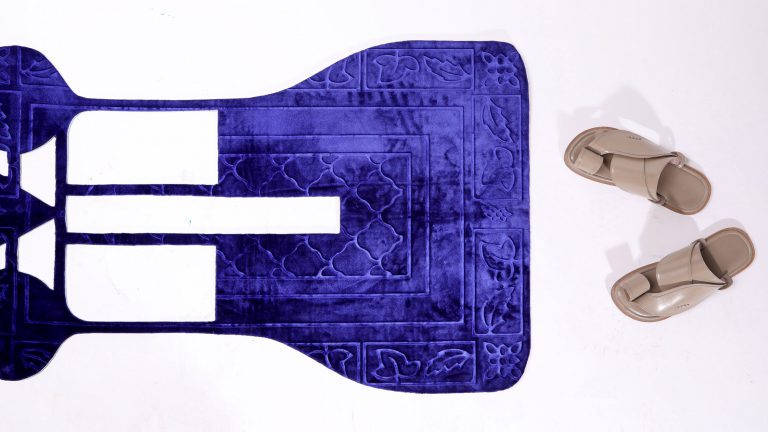
The Bahraini design office Shepherd Design Studio has tongue-in-cheek reinterpreted the traditional Islamic prayer mat to make it more sustainable. Their solution? Use 50% less material but removing the bits y9ou don’t need. Featuring an unusual form, the rug will certainly catch the eyes of your neighbors during your call to prayer. 

“When Muslims are in prostration during prayer, there are seven points that make contact with the mat: the forehead, two hands, two knees and two feet,” explained Shepherd Design Studio.

The firm presented its novel prayer rug at Saudi Design Week. The Riyadh-based studio wanted to find an aesthetic solution that is an alternative to the standard rug used by 90% of the Saudi Arabian population 5 times a day.

While a more sustainable solution might involve upcycling old material, and knit by those in need of work (any ideas out there?) the design firm catches our eye and makes us think about new possibilities. Sometimes great designers do just that –– they open new horizons.

The studio designed the mat so it is made of three main sections: two circles for the hands, one triangle for the forehead and a base to sit or stand on. These are then connected with thin strips of material and decorated with patterns of leaves and flowers.

prayer mat for muslims, sustainable Islam rug

Still in its prototype phase, the studio is looking to incorporate adjustable straps to allow the user to customise the distance between the sections, to best suit the dimensions of their body. Any maybe a carrying case, like the ones used for yoga mats?

muslims prayer mat sustainable

“The overall form is also designed to guide the user to maintain correct posture during prayer, as well as encouraging them to reflect on the notion of consumption as a social and environmental responsibility,” explained the studio.”Our goal is not only to help the environment but also present a comfortable option for all types of users, from young to old,” said Shepherd.

The mat was displayed at Saudi Design Week, which took place in early October, 2018.