Before promoting sustainability progress, companies must ensure their initiatives are genuine and measurable. Today’s audiences are increasingly skeptical of vague environmental claims, particularly as awareness of “greenwashing” has grown.
Sydney is best known for the Opera House and the Harbour Bridge. If you’re looking to enjoy dinner with views of these landmarks, here are some great options.
It's sea turtles which may in the end save islands in the Seychelles. They may also better help us understand climate change. Like rings on a tree, scientists have found a way to read sea turtle shells and how they are impacted by climate change tells a story.
For centuries, the Sámi shaman drum was one of the most powerful sacred objects in northern Europe, and one of the most feared by church and state. If ISIS looks bad to us today for its religious fundamentalism, Christians were just as fervent.
Before promoting sustainability progress, companies must ensure their initiatives are genuine and measurable. Today’s audiences are increasingly skeptical of vague environmental claims, particularly as awareness of “greenwashing” has grown.
Sydney is best known for the Opera House and the Harbour Bridge. If you’re looking to enjoy dinner with views of these landmarks, here are some great options.
It's sea turtles which may in the end save islands in the Seychelles. They may also better help us understand climate change. Like rings on a tree, scientists have found a way to read sea turtle shells and how they are impacted by climate change tells a story.
For centuries, the Sámi shaman drum was one of the most powerful sacred objects in northern Europe, and one of the most feared by church and state. If ISIS looks bad to us today for its religious fundamentalism, Christians were just as fervent.
Before promoting sustainability progress, companies must ensure their initiatives are genuine and measurable. Today’s audiences are increasingly skeptical of vague environmental claims, particularly as awareness of “greenwashing” has grown.
Sydney is best known for the Opera House and the Harbour Bridge. If you’re looking to enjoy dinner with views of these landmarks, here are some great options.
It's sea turtles which may in the end save islands in the Seychelles. They may also better help us understand climate change. Like rings on a tree, scientists have found a way to read sea turtle shells and how they are impacted by climate change tells a story.
For centuries, the Sámi shaman drum was one of the most powerful sacred objects in northern Europe, and one of the most feared by church and state. If ISIS looks bad to us today for its religious fundamentalism, Christians were just as fervent.
Before promoting sustainability progress, companies must ensure their initiatives are genuine and measurable. Today’s audiences are increasingly skeptical of vague environmental claims, particularly as awareness of “greenwashing” has grown.
Sydney is best known for the Opera House and the Harbour Bridge. If you’re looking to enjoy dinner with views of these landmarks, here are some great options.
It's sea turtles which may in the end save islands in the Seychelles. They may also better help us understand climate change. Like rings on a tree, scientists have found a way to read sea turtle shells and how they are impacted by climate change tells a story.
For centuries, the Sámi shaman drum was one of the most powerful sacred objects in northern Europe, and one of the most feared by church and state. If ISIS looks bad to us today for its religious fundamentalism, Christians were just as fervent.
Before promoting sustainability progress, companies must ensure their initiatives are genuine and measurable. Today’s audiences are increasingly skeptical of vague environmental claims, particularly as awareness of “greenwashing” has grown.
Sydney is best known for the Opera House and the Harbour Bridge. If you’re looking to enjoy dinner with views of these landmarks, here are some great options.
It's sea turtles which may in the end save islands in the Seychelles. They may also better help us understand climate change. Like rings on a tree, scientists have found a way to read sea turtle shells and how they are impacted by climate change tells a story.
For centuries, the Sámi shaman drum was one of the most powerful sacred objects in northern Europe, and one of the most feared by church and state. If ISIS looks bad to us today for its religious fundamentalism, Christians were just as fervent.
Before promoting sustainability progress, companies must ensure their initiatives are genuine and measurable. Today’s audiences are increasingly skeptical of vague environmental claims, particularly as awareness of “greenwashing” has grown.
Sydney is best known for the Opera House and the Harbour Bridge. If you’re looking to enjoy dinner with views of these landmarks, here are some great options.
It's sea turtles which may in the end save islands in the Seychelles. They may also better help us understand climate change. Like rings on a tree, scientists have found a way to read sea turtle shells and how they are impacted by climate change tells a story.
For centuries, the Sámi shaman drum was one of the most powerful sacred objects in northern Europe, and one of the most feared by church and state. If ISIS looks bad to us today for its religious fundamentalism, Christians were just as fervent.
Before promoting sustainability progress, companies must ensure their initiatives are genuine and measurable. Today’s audiences are increasingly skeptical of vague environmental claims, particularly as awareness of “greenwashing” has grown.
Sydney is best known for the Opera House and the Harbour Bridge. If you’re looking to enjoy dinner with views of these landmarks, here are some great options.
It's sea turtles which may in the end save islands in the Seychelles. They may also better help us understand climate change. Like rings on a tree, scientists have found a way to read sea turtle shells and how they are impacted by climate change tells a story.
For centuries, the Sámi shaman drum was one of the most powerful sacred objects in northern Europe, and one of the most feared by church and state. If ISIS looks bad to us today for its religious fundamentalism, Christians were just as fervent.
Before promoting sustainability progress, companies must ensure their initiatives are genuine and measurable. Today’s audiences are increasingly skeptical of vague environmental claims, particularly as awareness of “greenwashing” has grown.
Sydney is best known for the Opera House and the Harbour Bridge. If you’re looking to enjoy dinner with views of these landmarks, here are some great options.
It's sea turtles which may in the end save islands in the Seychelles. They may also better help us understand climate change. Like rings on a tree, scientists have found a way to read sea turtle shells and how they are impacted by climate change tells a story.
For centuries, the Sámi shaman drum was one of the most powerful sacred objects in northern Europe, and one of the most feared by church and state. If ISIS looks bad to us today for its religious fundamentalism, Christians were just as fervent.
The port town of Ashkelon has been known for its strategic importance throughout history, and indeed since pre-history. You read of Ashkelon as archaeologists excavate neolithic artifacts and stroll through time as its story unfolds. It’s a town that’s known the Canaanites, who established an international market there; by the sea people who came to trade and schlepped up the hill with their loaded donkeys, and by many who stopped at a roadside shrine on the way to pray to a silver calf god, for good fortune.
Battles between the Crusaders and the Fatimids. The Greeks came, the Romans, the Byzantines, the Ottomans, the British, and the Israelis. Whew – so much history.
On a lighter note, did you know that “scallion” and “shallot” are words derived from the Latin Ascalonia, which was how the Romans named the town? In the Ashkelon National Park today, there’s a vegetable plot where they’re growing shallots retrogressively, hoping to culture them back to the original vegetable once again.
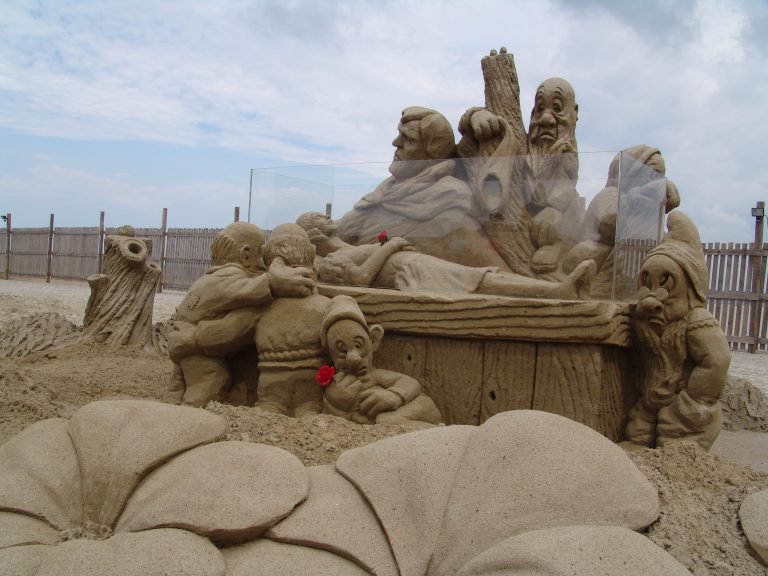
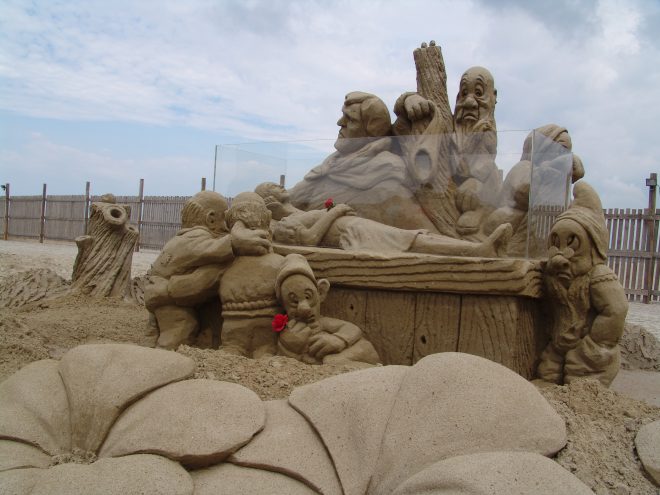
But enough of history and shallots and all that heavy stuff. It’s time to play on the beach, and Ashkelon has some beautiful beaches. Today, and until the 23rd of this month (August 2019), the Bar Kochba beach boasts 15 enormous sculptures created from fairy tales and sand.
It’s Israel’s first sand sculpture festival. Artists devoted to the ephemeral art have arrived from Holland, Spain, Russia, the USA, the Czech Republic, and other countries, to make elaborate fairy tale images that the wind and the encroaching sea will eventually destroy.
Sand sculptures need a special, gritty sand whose grains hold together. Over 1000 tons of this sand were used to sculpt the figures of Snow White, Gulliver in the land of the Lilliputians (which required 380 tons of sand and stands two meters high and nine meters long), Aladinn’s genie, and other characters beloved by children the world over.
The Ashkelon Sand Sculpture Festival takes place until August 23 on the Bar Kochba beach. Hours for viewing the sculptures are from 10:00-22:00. From 18:00, there are festive activities and shows on the promenade. Events are free.
Although enlightened people are turning to more sustainable sources of protein (like our vegewarian recipes), it’s not likely that the human hunger for meat and milk will ever go away. While dairy and meat industries continue expanding to meet market demands, the manure of cows, sheep, pigs, goats and camels continues raising the levels of land and water pollution.
And what of that by-product, manure? Most often, it gets dumped into local waterways or shoveled into piles and left to decompose. Statistics show that in the US alone, livestock produces over a billion tons of waste every year.
Livestock manure has traditionally been used as fuel. Some companies have extracted biogas from it, but as the amounts of waste increase globally, so does the need for a more efficient treatment system. Sustainable Green Technologies (SG Tech) is an Israeli start-up that addresses the issue with an out-of-the-box attitude and a promising new technology.
Daniel Madar, a reusable energy specialist working with SG Tech says,
“You can take cow manure and use the material as fertilizer without any prior treatment, but when you turn the material into biogas, you get two or three products out of one raw material. When you take the manure and treat it, you solve the problem of smell and contamination, and then you get energy plus fertilizer.”
The drawback of biogas production up till now has been that it’s time-consuming and creates an unusable side-product, digestate. That’s the water that remains after treating waste, containing high levels of nutrients and salt. It’s not irrigation-safe. What to do with it? Pouring it into the sewage system could overload water-treatment facilities to the point of collapse, Madar forecasts. And purifying digestate too expensive to consider.
Spraying digestate onto fields only harms them. “It can be used as a fertilizer because it has a lot of nutrients in it. However, it is too concentrated, and the result is that this digestate seeps into water aquifers, pollutes them and causes salinization of the fields,” Madar explains.
Reuven Eitan, IP and PR manager at SG Tech adds: “SG Tech is producing biogas and obtaining 20% more of the methane concentration; thus producing 20% more energy.” SG Tech methods, claims the company, provide a solution that produces “…clean energy, clean water, and nutrient-rich organic compost.”
There’s no denying that biogas also affects the environment. But compare these figures:
The amount of waste that livestock animals produce in the US could potentially create 108.8 billion kilowatt-hours of energy. Greenhouse gases produce could rise to 69.6 million metric tons.
Obtaining the same amount of electricity from coal would produce 109.3 million metric tons of greenhouse gases.
Clearly, biogas is a more reliable and efficient source of fuel than coal, with fewer gases produced. SG Tech also claims that the amount of digestate produced by their system is minuscule compared to that created by current waste treatment.
In 2015, Israel’s agriculture produced 2.26 million metric tons of gases; 2.8% of all greenhouse gases.
Realistically, the world can’t rely only on livestock waste for fuel needs. Madar estimates that in Israel, and likely in other countries, biogas from waste would account for 7% of energy produced.
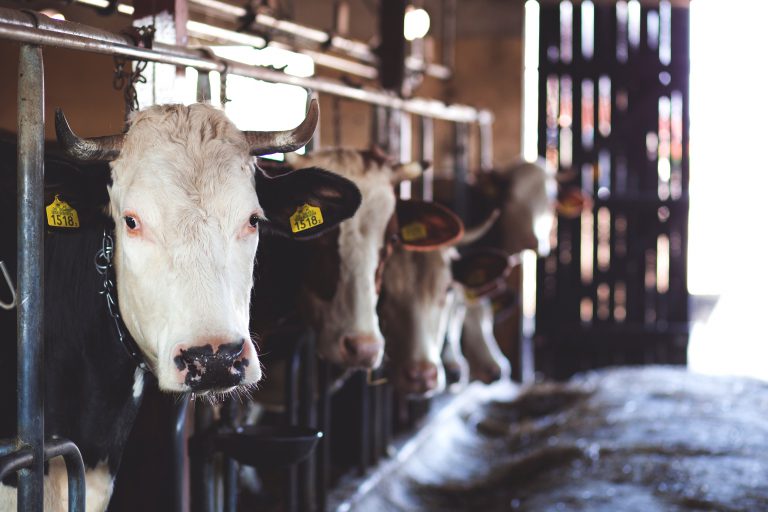
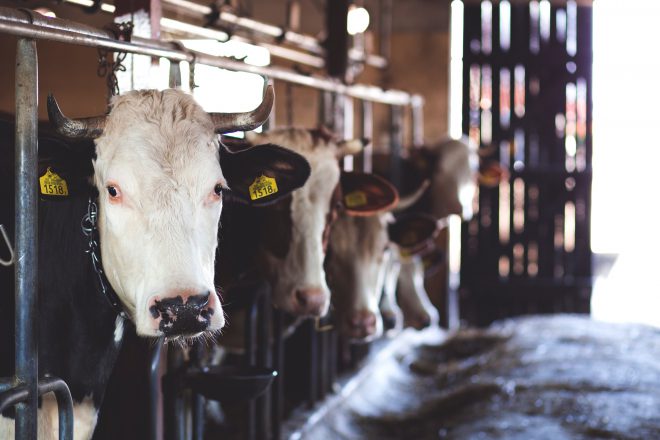
“It’s not really a replacement for coal or natural gas or petroleum. However, if we use this waste to produce energy, we can reduce the cost of getting rid of this waste, and we can turn it into something more green and more sustainable,” he says. He adds that this new technology is the only one that can handle the waste treatment of cow sheds that hold up to 2,000 cows. Medium-sized dairies could fuel themselves using it.
The SG Tech system has already been tested in several dairies. There are now plans to install it in 10 medium-sized cowsheds in Israel and across the world by the end of 2020.
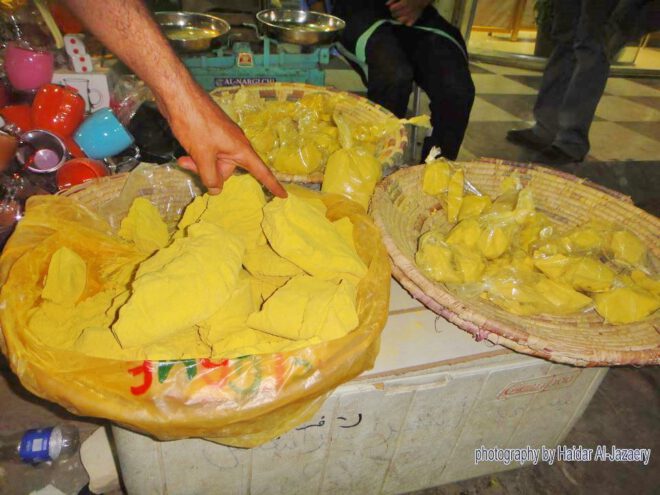
A rare sweet pollen based candy pulled out from the marshes of ancient Iraq.
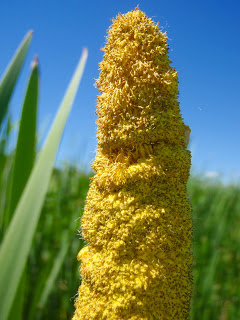
Khirret, an old-fashioned sweet made in southern Iraq, is concocted from male cattail reed pollen. It’s intriguing as an historical relict, but not so much for its taste. People who still remember the flavor and texture of khirret agree that it tasted faintly-sweet and felt like chalk in the mouth. Best known in Iraqi culinary history, it might be one of those foods best left to history altogether.
Cattail reeds are a useful plant that has helped sustain indigenous people wherever it grows, around the globe. Native Americans have many uses for all of its parts.Traces of cattail tubers have been found in crumbs of Neolithic bread found in Jordan. Those long-ago people wasted nothing they found nutritious.
And Iraqi tradition, according to food historian Nawal Nassralah, knew the value of khirret well:
Khirret as medicine
“Khirret is a nutritious food high in protein, and its medicinal benefits are believed to be many. People eat it to relieve indigestion. It is said to be good for the colon and respiratory tract. It is used to cleanse the urinary system and stop diarrhea. The raw pollen is put on wounds to heal them. It is also popular among women during the early stages of pregnancy. Moreover, it come in very handy for bee-keepers, who use it to feed their bees.”
An Indian blogger at sindhirasoi.com also has memories of khirret, which she knows as bhuri. As she recalls, eating it was less than pleasant. She describes the flavor as fermented-floral. But her parents encouraged the family to eat it, presumably because it was cheap and nutritious. It has almost disappeared in her culture as well.
Recipe for khirret
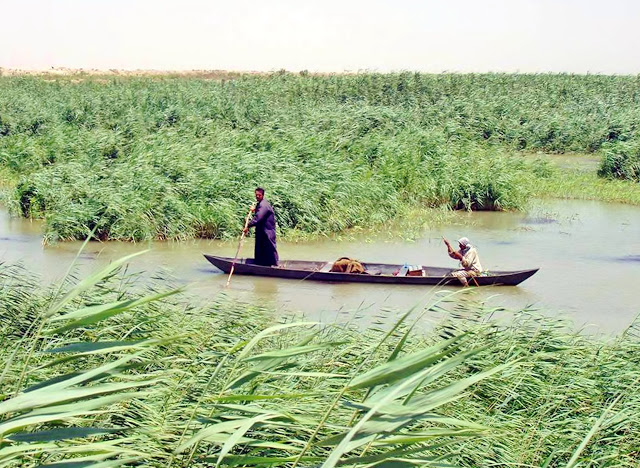
To make khirret, you first need to row out to where the reeds grow in a marsh and gather cattail reeds plump with bright yellow pollen. Back on dry land, you strip the pollen off the stalks with your hands, sieve the collected material to separate any insects, and set it out to dry in the sun. A video below shows how it’s done.
Mixed with sugar, the pollen is then steamed inside a cloth until solid, traditionally over a boiling pot whose edges are sealed with mud. There must be a point in which the experienced khirret cook knows it’s ready, but that’s information no one has provided. Someone wants to take on the challenge?
It’s then broken up into irregular chunks and is ready to eat.
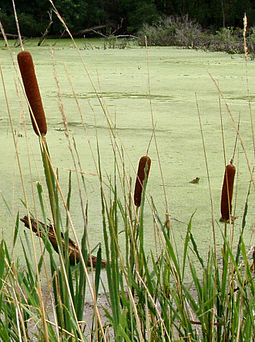
Male cattail full of pollen
What brought Nasrallah’s attention to khirret was a memoir of life in Bagdad in the 1920s by the scholar Abbas Baghdadi. He recollects khirret as being a street food manufactured only by Jewish vendors. He says that the Jews of Bagdad ate it especially at the festival of Purim, which occurs in March/April – just when the male cattail reeds are loaded with pollen and ready for processing.
I asked food historian and chef Moshe Basson, 69 years-old and himself a descendant of Iraqi Jews, if he had memories of eating khirret. He doesn’t recall eating it, although he knew what it was from hearing of it at home: perhaps his parents mentioned it at around Purim.
There’s no folklore or connection with Biblical stories about the candy that Basson is aware of. Presumably it was simply a seasonal treat whose golden color was appropriate to the general air of festivity at the time. He does recall that his childhood Purim treats included a coconut candy that was also bright yellow; maybe a reference to the khirret tradition left behind.
Iraqi Jews abandoned khirret when they left Iraq for Israel. There’s very little marshland in Israel, and that located in two nature reserves. They took to agricultural work and small businesses, and so the tradition in Israel has died away.
Khirret is still made in southern Iraq and other parts of the Middle East, but it’s appreciated for its rarity, rather than a sweet that stands in competition with commercial candies. But as for its medicinal value? Worth exploring more.
Photos of khirret and reed with pollen from Nawal Nasrallah’s blog, In My Iraqi Kitchen.
Walking outdoors under the summer sun can be a trial. The sun beats down, everyone’s hot and thirsty, and people’s tempers are noticeably shorter. It’s harder to exercise outdoors, and no wonder: it’s projected that by 2050 daily temperatures will rise by 2-3 degrees Centigrade.
We instinctively feel that shade reduces temperature, and research has also discovered that shade in cities can reduce the thermal load by as much as 50%. You’d think that cities should provide more shade-making structures like pergolas, and plant more leafy sidewalk trees to keep people comfortable.
But there’s more to shade than that.
A recent Israeli report funded jointly by the Ministry of Housing and Construction and the Ministry of Health suggests that when people know there will be shade on their way, they’re more likely to walk or ride their bikes, and less likely to drive. Maybe they don’t think of it as exercise, but it is.
The larger the numbers of people exercising, the deeper the statistical drop of ailments like cardiovascular disease and strokes, type 2 diabetes, colon cancer, breast cancer, and obesity in the population. As is well known, regular physical exercise also strengthens immunities and relieves stress and depression.
Dr. Aviad Hadar, one of the initiators of the report, says,
“Over the past decade, dozens of research papers, articles, and policy documents have been published, demonstrating how the lack of shade in Israel’s public spaces harms public health. There even have been urban design exhibitions aiming to raise awareness of this specific problem.
“It’s important to understand that the presence of shade in urban areas has a crucial impact, either consciously or subconsciously, on the decision to leave the car at home and instead use less or non-polluting alternatives, especially in city centers that suffer from heavy air pollution due to car traffic.”
Let’s consider the global rise of skin cancer, a disease often triggered by sunburn and frequent exposure to the sun. According to the World Cancer Research Fund, 300,000 new cases of melanoma, the most common skin cancer, were reported in 2018.
In Israel, 1,674 patients were diagnosed with melanoma in 2015. 185 died of it. I myself recall with sorrow the death from skin cancer of a friend in my Jerusalem neighborhood; a mother of six. Having access to shade from childhood on can be a factor in preventing such sad outcomes.
How about cleaner air? Trees and bushes planted on sidewalks and road medians absorb and disperse air pollution. We’ve written how houseplants keep the air clean in your home, but on a major scale, making cities greener with shady trees also reduces the amounts of invisible particulates that we absorb with every breath.
But trees for shade are a long-range project; they need years to grow into their maximal shade coverage. Placing artificial structures like pergolas, extensive awnings over shop fronts, and long roofs where crowds come and to, like at Tel Aviv’s HaHagana train station, would be more efficient and timely.
Prof. Nir Becker and Or Neviot are the researchers at the Tel Hai Academic College who wrote the Israeli report on shade. They say that apart from health benefits, shade could have an indirect but powerful effect on the national budget.
An example is a school where $80,000 USD was invested in shading a 200-square-meter outdoor area. Encouraged to play outdoors, 30% of the kids became more physically active at school, with a marked improvement in their health. Annual health benefits for each child cost was about $25 USD, a total of $about $25,000 for the entire school. In less than three years, the initial investment in shade will be recouped and money saved.
Not enough recognition is given to shade’s potential financial benefits. Dr. Amiel Vasl, deputy director of the Ministry of Construction and Housing’s policy department and one of the initiators of the report, says professional publications all say shade is a good thing, and that Israel need lots of it, but there are too many less than useful guidelines. He adds,
“These reports do not examine the potential economic benefits of shade. No one talks about how much money shade could actually save.”
The researchers made cost-benefit analyses of increased urban shade. Comparing the calculated costs to the potential savings obtained, they concluded that shade, which helps reduce disease and mortality, could contribute significantly to the national budget in savings.
“In Israel, a large part of medical treatment is covered by the state. So if a population is healthier due to shade, the country saves money,” says Becker.
Vasl adds that not only children, but adults and especially elderly people, need shady encouragement to walk outdoors.
“The greatest economic benefit comes from making adults walk. It’s a target audience that we ignored until now, and a vital use of shade that needs to be focused on,” he says.
Israel’s savings from shade, the report concludes, could amount to thousands of shekels per capita every year.
So there it is. Shade not only makes Israeli summers more pleasant, it helps keep the population healthy by increasing the desire to exercise outdoors. Shady trees reduce air pollution. Shade could save the country plenty money. Now let’s encourage city planners to get moving on making more shade.
Lisbon is and has always been a popular holiday destination thanks to its gorgeous architecture, great food, colourful culture and hot weather all year long. As it is located on the coast of Lisbon (Portugal) is not only a city full of tourist attractions and sightseeing opportunities, but also a real heaven for all the beach holiday lovers. The only possible drawback of spending your holiday in Lisbon is struggling to choose what to visit first.
Here are some of the best places to visit in Lisbon:
Alfama district – the old town of Lisbon
The first thing to see in Lisbon for anyone who appreciates architecture and wants to see the colourful culture of Portugal is of course the old town of Lisbon, which is also known as the Alfama district. As Lisbon is one of the oldest cities in Europe, its old town is full of ancient streets and buildings mixed up with modern, hipster cafes and beautiful boutiques. Getting lost in the old town with no map might be a great way to appreciate the vibrant feel of Lisbon, however, walking tours in Guruwalks are always available as well, for those who have a great thirst for learning the history behind the buildings. Or jump on a Facebook group and see what’s happening around the time of your travels.
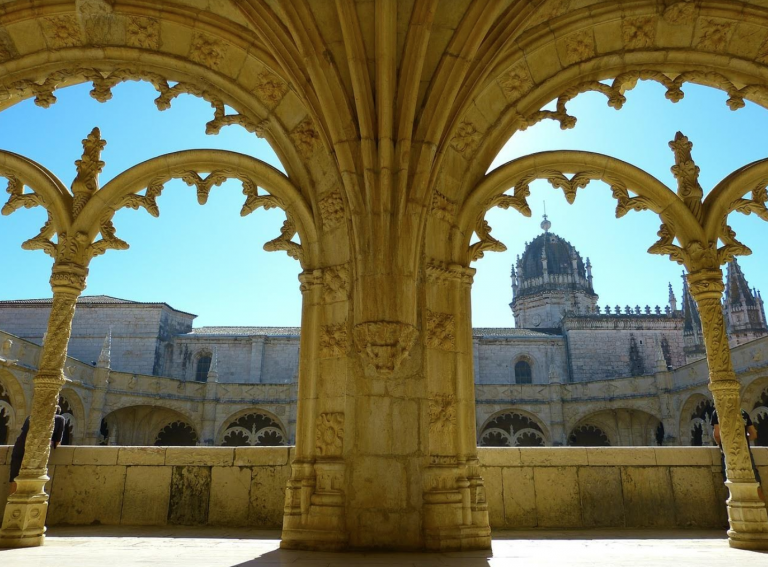
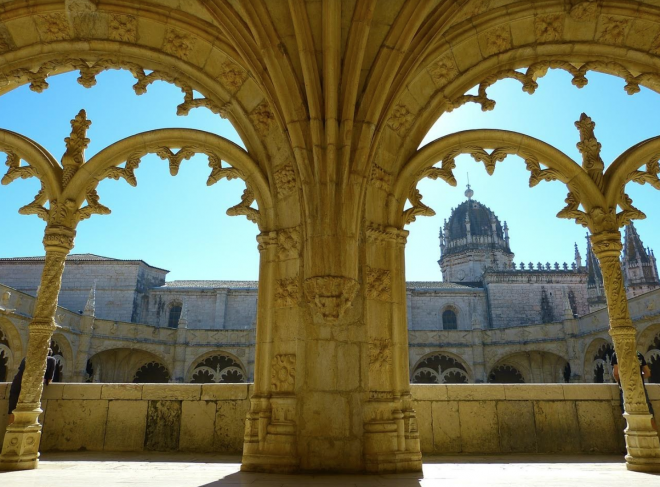
Jeronimos Monastery
If you want to be blown away by the historical heritage of Lisbon, Jeronimos Monastery is a perfect destination for you. This breathtaking building is not only impressive due to its maritime motifs and sculptural details, but also its vast historical value. Jeronimos Monastery is known as a symbol for the age of discovery, when Portugal was at its peak of wealth and power in Europe, therefore, the place is proudly recognised by UNESCO and classified as a World Heritage monument.
The Monastery was built in 1502 to celebrate Vasco da Gama’s voyage right before he took off with his crew to travel around the world as well as has a tomb built inside to honour him. The story behind Jeronimos Monastery is what makes the visit an unforgettable experience.
Parque das Nações (Park of Nations)
To contrast the ancient feel of Lisbon with something modern and futuristic, visiting Parque de Nações is an absolute must. This area was specifically re-developed for the World’s Fair that was hosted in Lisbon and became one of the most popular and busy tourist attractions of the capital city. This place is praised for its beautiful cafes and restaurants at the waterfront as well as the futuristic contemporary architecture of the buildings.
The area is also full of attractions to visit, such as the stunning water gardens, one of the longest bridges in the world, cable car rides and the Lisbon’s state-of-the-art Oceanarium, which is often praised as one of the most impressive oceanariums in the world. And if that’s not enough, Vasco da Gama shopping center with a glass roof top is one of the greatest places to splurge on some shopping for all the holiday shoppers.
São Roque church and museum
For all the art fans out there São Roque church and museum is perhaps one of the most fascinating buildings you might ever see. Although the church might not look like much from the outside, the interior will take your breath away for sure, with it being known as the world’s most expensive chapel.
The interior was transported to Lisbon in 1747 with a blessing of the Pope himself, holding such expensive materials as silver, gold, ivory, agate and lapis lazuli. Besides the incredible detailing and rich materials, the church is home to many paintings from the 16th century.
Praia de Carcavelos Beach
If you wish to spend your holiday at the beach and enjoy the hot Portugese sun, Lisbon will definitely not disappoint you. As the capital city is located on the coast, any beach is of easy access either with a car or public transport. One of the most popular beaches of Lisbon is Praia de Carcavelos Beach that is greatly enjoyed not only by tourists, but by the locals as well.
This beach could be easily praised as a hidden treasure on earth, with the golden sands, bright blue sea, opportunities for surfing and an endless selection of beach cafes and restaurants. This beach is loved by so many people and families, that it is never empty and always full of fun activities.
With Lisbon offering so many different attractions or activities for any needs and interests, the only thing left to do is to plan your holiday to the fullest and pack it with unforgettable experiences. The ancient feel and rich history of this city is a perfect getaway, with the possibility to join free tours in Lisbon and see many of the above attractions in the same day. Besides that, the modern and futuristic side of Lisbon will not cease to amaze, with great opportunities for shopping or fine dining with a water front view.
Some things in life are so predictable, that they’re basically a foregone conclusion.
For example, we all know that our chances of keeping our New Year’s Resolutions are zero percent (it might even be less than that), and yet each time the calendar flips, there we are promising to create less carbon emissions, lose weight, spend less time working, learn a language, travel — and the list of lofty aspirations goes on.
Or, we know without hesitation that if we need to go to the post office — which is thankfully a lot less these days than in the past — that there’s going to be a long wait, no matter what. It’s just how things are. It’s a fundamental law, like gravity or flight delays.
And then….
There is another scenario that is utterly predictable: any attempt to talk to your spouse about money is going to quickly turn into a confrontation that either leads to hours, days or maybe weeks or hurt feelings and passive aggression, or get thrown in the “let’s talk about this later” bucket — which, of course, is nothing more than joint denial (but at least nobody has to sleep on the couch, right?).
However, research shows that money woes are the leading cause of stress in relationships, and the number one reason for separations and divorces. It’s not leaving the toilet seat lid up, failing to put the cap back on the toothpaste tube, or disagreeing about whether the final season of Game of Thrones was the best thing in TV history, or the worst. It’s money madness.
And so, to help you go from saying “I do” to “I’m out,” here are five ways that you can talk to your spouse about money, when you’d rather chat about movies, sports, music, politics, cars, dental office design — or basically anything and everything else.
Appreciate that not everyone perceives money the same way.
If you grew up comfortably middle-class or wealthy and your partner grew up economically disadvantaged (or vice versa), then you’re both bringing all of that history with you. Appreciating and understanding where your partner came from can help create empathy and understanding.
Don’t play the blame game.
It’s tempting to go into attack mode and start listing off all of the questionable (read: crazy) things that your spouse has done. Resist this temptation, and focus on the present and the future.
Don’t lie or keep secrets.
Ask any divorce lawyer and they’ll confirm that hiding debts or exaggerating (or just plain making up) holdings, investments and other assets — like a non-existent inheritance due from a non-existent rich uncle — is the fastest way for a marriage to hit the skids, and come to a permanent and premature end.
If at First You Don’t Succeed…
Talking about money the first time, is like working out for the first time. It’s painful and agonizing, and you can’t imagine why anyone would want to do it again. But after a while, you turn a corner and working out becomes enjoyable and beneficial. The same pattern applies to the money conversation. The more you do it, the easier and more effective it becomes. So, if at first you don’t succeed then try, try again.
Physicist and video-game inventor Seamus Blackley enjoys studying Egyptology and baking sourdough bread. That’s not all he does. Recently, he succeeded in physically traveling through time. That is, he baked bread from an original, 5000-year-old Egyptian yeast culture, and with flour milled from the grains the ancients would have used. Eating history. That’s as close to time-travel as you can get.
Together with microbiologist Richard Bowman of the University of Iowa and archeologist Serena Love of the University of Queensland, Blackley obtained permission from Boston’s Museum of Fine Arts and Harvard’s Peabody Museum in Massachusetts to collect yeast from their collections of ancient Egyptian pottery.
The yeasts have lain dormant inside the clay pots since the last time bakers used them to make dough rise: about five thousand years ago. In an interview with the London Times, Blackely explained how he collected it.
“You pump a fluid in carefully with a syringe and some sterile cotton in contact with the ceramics. It soaks in and you vacuum it back out.”
Most of the samples taken from the ancient vessels went off to Love and Bowman’s labs for analysis and preservation. Blackley kept some for his own experiment at home.
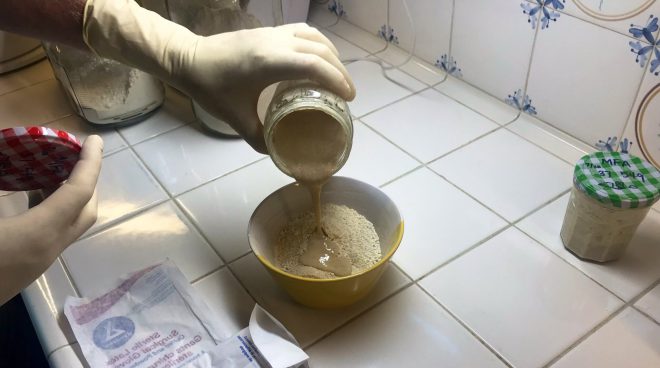
Blackely undertook the delicate, finicky task of creating a live sourdough starter from the 5000-year-old yeasts. To minimize contact with modern yeasts and bacteria, he sterilized all the equipment, even to the point of sterilizing the flours used to make the starter and the dough. However, he stored the semi-liquid result in an endearingly modern (sterilized) jam jar.
Voilá, a bubbly sourdough starter from yeasts woken after a millenial sleep.
The results: a delicious-looking, perfectly raised loaf of bread, marked with the hieroglyphic for bread.
Afraid that the ancient yeast culture will open the way to weird ancient diseases? Hardly. Once yeasts have done their job of making the dough rise, baking kills them. If I had the chance, I would happily sample some of that bread myself.
Blackely unfolds the whole story on Twitter. He says, “The crumb is light and airy, especially for a 100% ancient grain loaf. The aroma and flavor are incredible. I’m emotional. It’s really different, and you can easily tell even if you’re not a bread nerd. This is incredibly exciting, and I’m so amazed that it worked.”
You can follow the entire story, complete with hilarious “mummy” comments, at @SeamusBlackely. The physicist-turned-microbiologist writes entertainingly, and provides a generous number of photos of the process for bread nerds like me.
Trapping the true yeasts is an ongoing experiment. The team is determined to isolate the original culture via genetic testing. It may be possible to reproduce it without any contamination from modern airborne yeasts and bacteria. But they’re reasonably sure that the cultures already obtained have enough of the original Old Kingdom yeasts to reproduce the daily bread that people ate back then, in ancient Egypt.
The next step, Blackley says, is to bake the bread by the ancient baking methods. Presumably this means baking the dough in a charcoal-fueled oven, in the clay cones that look like our modern flower pots. This method was already successfully replicated in 1993, by American biologist and master baker Ed Wood, who flew to Cairo with a team of like-minded scientists and the archeologist Mark Lehrner for that purpose. They constructed a bakery based on a surviving ancient model and after much trial and error, baked ancient-style bread.
I’m waiting excitedly for the next phases in this experiment. Who knows, maybe some day we’ll be able to taste the bread of the ancients and do a little time-travel ourselves.
If you believe in yourself, in people and causes, then you must believe in movements because these are three major components of a movement.
In its simplest form, a movement is a group of people, small or large, working together for a common cause, be it social, political or cultural. Any one person, from the billions living on earth, can start a movement. Each one of us is unsatisfied with something within our community, society, nation or the world so each one of us might have the motive to start a movement. History has proven that from the Civil Rights Movement in the 60s to newer ones concerning equality, climate change, women’s rights and many more, movements do create change.
Studies have shown that all movements have similar elements in them. Some of these elements include:
Vision and Frame: The vision is the goal and the frame is what centers the debate.
Commitment:The building of power to continue for the long haul.
Underlying and viable economic model: The growth strategy being used.
Vision of governance: Working to shift power or policy.
Willingness to network with other movements: The new way of organizing is building ecosystems of organizations that make change together.
With a movement, there are expected outcomes, usually 4 types:
Change the story
Change the policy
Change the outcomes
Change the power relationships
Typically, movements begin to develop as a small group of early starters. This group motivates other potential followers to join the movement to stand up for a cause, fight an issue, create awareness and help the targeted population. From this point, there is the attempt to build viral participation in order to take action. This is the peak of the movement and piques and drives the interest of the general public. Over time, through a movement, a long-term solution can be found.
These are the basics of a movement, now how do you put all this together?
Have your outcome ready:The first stage of the social movement is known as emergence. Within this stage, social movements are very preliminary with very little organization, if any. It’s usually just a small group of dissatisfied people about a certain issue, expressing their grievances. To start a movement, you need to work backwards and propose your desired outcome first. Obviously, it’s easier to get people behind you if they know what they can expect. You need to be able to explain how you plan to achieve the outcome in a clear manner with tangible results.
Be among the people:Stage two, known as coalescence, or the “popular stage,” is characterized by a more clearly defined sense of discontent. It’s no longer just about a feeling of unease, but rather a much better sense of what the unease is about and who or what is responsible. Ideally, a movement should have a leader and that leader needs to be at the forefront, not working behind the scenes. As a leader, you belong to two groups; those creating the movement and those who are going to benefit. Being among the people means to listen to those who support you and what they need and want to do.
Don’t totally depend on social media: While social media takes over anything digital, you can’t completely depend on it for changes on the ground. Your hashtags or change of statuses are not what is going to change things around. They are just extra tools provided to work with; to spark conversation, for example. The way to change minds is through face-to-face engagement.
Building the belief:The third stage is known as bureaucratization, and characterized by higher levels of organization and coalition-based strategies. In this stage, social movements often experience some success. You want everyone participating in the movement to believe in it and be an active participant. If you have a look at trvst.world you will see the many and diverse causes people believe in and are truly involved in the process, from fundraising to campaigns, and this is what needs building. Through their projects, Trvst brings together corporations, philanthropists, investors and engaged citizens to co-create new solutions through collective actions and showcasing inspiring and thought – all of which create initiatives for change.Go by the notion that most people are good by nature, and want to help each other to build up belief.
Mobilize: Movement members need encouragement to take action. This could be done through peaceful protests, petitioning, advertisements, assemblies and more. Always keep in vision the ultimate goal you want to reach. It’s also important to know that smaller, localized movements with very specific goals often have a better chance at outright success.
Storytelling: If you’ve ever taken a creative writing course, you’ll know about ‘show, don’t tell’. The same is true in movements; don’t just tell people about it, show them things they can see in order to create empathy and be able to relate to what is happening. Use pictures, videos, and get real life cases to talk to people on why they’re in the movement.
Make it about others:Even if you are the brainstorm of a certain movement, at one point you will have to remove yourself from the spotlight and make it about others. Any movement becomes successful when the supporter feels directly connected to those they are helping. While the vision is still there, what begins to matter more are the actions that will be taken by others in the movement to achieve results.
Keep the engagement going:Finally, the last stage in the social movement life cycle is decline, or “institutionalization.” Decline does not necessarily mean failure. Some do decline because they’ve been successful and the results have been incorporated into the mainstream. Never assume that you’ve exhausted all ideas. There are always new ways to keep people interested in the movement you began; just remind them why they wanted to be involved in the first place, while trying to recruit more new members.
Something bigger than all of us
Social movements continue to be a major force in the world. They usually start small and can end up changing an entire culture. They don’t all go through the stages as described, and some may skip stages altogether. But they need to inspire others to rally behind it and push it forward. Any element that goes into a movement should be utilized to be a tool of change. We can assume there are two ways to bring about change. One is through force that only the villains in a story want. The other is via peaceful motivation and inspiration. Remember that people want to be a part of something bigger than themselves. They want to play a role in the bigger story; that of a movement.
The Middle East is full of countries to visit, places to see, authentic markets to explore yet few destinations are able to seamlessly blend the old with the new like Dubai. Or maybe you are planning to see the World Expo 2020 in Dubai?
One of the most populated emirates of the UAE (United Arab Emirates or just The Emirates) Dubai has become a go-to-travel destination in the Middle East.
Dubai has a lot to offer. whether in the form of shopping, sightseeing, beaches, historical sites and a lot more.
To travel to Dubai, you are in for a great moment in the Arab-speaking country which is conservative but open minded.
5 Must-Visit Landmarks of Dubai:
Offering a variety of activities and places to visit both historical and modern Dubai does not lack in places to go or things to do. Here are some must see landmarks of the city:
Burj Khalifa:
A true testament of modern Architecture in Dubai labeled the tallest building in the world at a daunting 829.8. Ascending to the 124th floor is a must do as the beard eye view of the city is nothing less than breathtaking with presentation in the background of information about the city and the tower.
The night view however is something else attracting photographers from all over the world like moths to a flame due to the city’s famous light panoramas. With a stunning view of the city, beautifully designed gardens with plenty water attractions Burj Khalifa is a must see attraction. But it is also a bit of an environmental nightmare. Consider that sewage, at least 10 tons of it, must be trucked out every day from the tower.
Dubai Opera:
On par with many great cities around the world such as manhattans Broadway or London’s west end Dubai has its very own opera house situated in the New “Opera district”. This magnificent piece of architecture can function both as traditional opera house and a traditional theatre. Boasting a seating capacity of 2,500 seats and a 800-seat playhouse.
Dubai Mall:
It would be an understatement to consider Dubai mall as your normal run in a mill commercial mall. Aside from the unique, truly luxurious and top notch shopping experience it also contains a variety of family activities and attractions. One of these many attractions is the Dubai Aquarium and underwater zoo showcasing more than 300 forms of aquatic life including Sharks and stingrays swimming around you while navigating the underwater tunnels.
The massive 76,000 square feet VR Park is also a must see in door attraction. Once Themed after the Sega’s beloved Mascot Sonic the Hedgehog and other Sega video game characters now fully dedicated to virtual reality. The Mall is also a champion world record breaker with many amazing feats under its belt such as:
Second largest mall in the world by the total land area of 1,124,000 m².
More than 5 million visitors in the month of March in the I-month Dubai shopping festival event.
Possessing the world’s largest OLED screen
Dubai Miracle Park
The park has been expanded to include a first of its kind in-door butterfly garden.
Dubai Museum:
Same as the displayed historical items within the Dubai museum the building holding these items is in itself a piece of history. The museum built in 1787 is located within the Fahidi Fort and aims to preserve the traditional way of life.
The museum also has a lot of separate galleries some covering the different development phases of Dubai as a country ranging from the pre-oil era to the post oil era with life size models of carpenters, vendors and buyers.
Expo 2020:
Although not a landmark of Dubai the 2020 Expo being held Dubai is a testament to the growing place of Dubai not just as a destination but as a country and how far its infrastructure and facilities have developed . The expo 2020 is one of the most coveted events in the world a multinational meeting of sorts with retail options several, galleries and exhibits from all around the world it’s an event that can’t be missed.
What to Consider before Heading to Dubai:
Here are some tips to make your trip to Dubai the best it can be:
Visit between October and April:
The Arab Gulf is known for its hot weather however the months between October to April tend to be more forgiving. Known as the winter season it brings with it perfect blue skies and optimum beach weather.
Book flights and hotel accommodations in advance :
Buying your travel tickets is not a bad idea as airline ticket prices tend to be cheap, you don’t necessarily have too but it’s a good way to cut down on costs. Same goes for hotels the periods between October and April is the peak of tourist activity so it’s advised to book the rooms earlier.
Alcohol and cannabis consumption:
Although alcohol is not restricted in Dubai nevertheless public drinking and driving while drinking is prohibited. For personal consumption a drinking permit is required from both you and the seller. If you are using medical marijuana and board a flight to Dubai, consider that you might get arrested for just having cannabis THC in your blood or CBD oil in your medicine pouch. This could land you in jail.
All in all Dubai is a result of heritage preservation and keen eye for the future seamlessly blending the past, present and future making it a more than stellar, must see headings in the Middle East. Be careful though about buying ancient things in Dubai and bringing them home with you. Exotic and damaging animal trade and the availability of dinosaur bones and other international treasures may be legal to own in Dubai, but perhaps not so in England or New York State.
Plogging is a kind of jogging where you pick up trash along with your run
Global warming and climate change are at the forefront of nearly everyone’s mind as of late. And for good reason. Atmospheric carbon dioxide levels have been on a meteoric rise since the 1950s. The result? The average surface temperature has risen almost 1.62 degrees Fahrenheit since the latter end of the 19th century.
For a long time, the conversation about the impact hasn’t been very tangible for the average person. The concepts of glaciers melting, the oceans becoming acidified, the oceans warming and the likes isn’t something that directly impacts the masses in their day to day life.
In order to reach people on this topic, you have to connect it to them, their lives, wellbeing, and their passions.
According to a recent report presented at the IAAF Global Running Conference, in 2018, there were almost 8 million runners who participated in a marathon, half-marathon, 10k, or 5k. 8 million people with a passion for running who are only etting slower.
The recent study, analyzing 19.6 million race results and the trends of climate change makes it clear; one of the culprits for this slowdown is global warming. But just how much can we really blame on climate change?
What the data shows us is that the average runner can expect to have their race times increased by as much as 1 minute and 25 seconds for every additional degree in Fahrenheit when racing. With the overall yearly climb in temperature being approximately .07 degrees Fahrenheit, runners are experiencing a 6-second increase in their average race time every year.
Although the blame of rising ocean levels and glaciers melting does not fall on the running community, there are many “runner specific” ways you can help!
4 ways runners can help the world!
Recycling your shoes
Avid runners increase the mileage on their shoes quickly. With some runners needing a new pair every 3-6 months. Even when we buy new shoes to run in, sometimes we just convince ourselves that we should hold onto these old pairs. Until something sparks the need to throw them out. Instead of waiting and trashing, recycle your shoes.
Gadget-loving runners need to recycle your products
Every year there are more and more unique gadgets coming out. Over time, these products end up breaking down or replaced with the next best thing.
There’s no convincing millions of people to not use their favorite fitness trackers and watches, but what you can do is just recycle them. There are a bunch of organizations and programs that accept old electronics to be recycled and disposed of responsibly.
Eco-recycle organizations we love like Call2Recycle, Earth911, and even your local BestBuy offer these services locally. A quick Google search can help you find the closest electronic recycling drop off spot near you.
Don’t participate in races if they aren’t eco-friendly
When it comes to making organizations and companies change their ways and go more green, let your participation and wallet do the talking.
How do you tell if a race is not eco-friendly? – Is the race still using paper cups?- Do they give out water or sports drinks in plastic bottles?
– Do they specifically work to recycle all paper, plastic, and old shoes on location? – Is the food given out at the races or at the finish lines eco-friendly? – Do they support locally-grown food or corporations at the race? – Are the leftover food and drinks being donated or thrown away?
Do they call for international participation that requires a lot of flying in but no way to offset your carbon? If they don’t have the answers for this on the website, all it takes is a simple email or call to find out. Or if you are an offset company, check out a new client base. If the race isn’t “running green” then let the organizers know that you won’t be attending for this specific reason.
Go for a plog!
Plogging is a newer trend that picked up some attention in 2018. Simply, runners are making a massive difference in their local communities by picking up trash as they go for their runs. Something for Hash House Harriers?
All they have to do is bring a small bag with them on their runs. As they go and come across trash, whether it is recyclable or not, they are picking it up and bringing it along for them on their runs.
Many running trails and local communities have seen a rise in plogging that has significantly reduced the amount of litter, trash, and damage to the environment.
When all of this is then disposed of properly, whether through recycling or composting, the end result can be an amazing one for climate change. Especially if we were able to activate the full 8 million runners who are out there every day.
Many of us global travellers have been there; even those who try to swear off polluting air travel to spare us some greenhouse gases –– we are in a city for a day, a long stopover and we want to get out and see the city a bit. Who wants to waste their lungs on the stale airport environment?
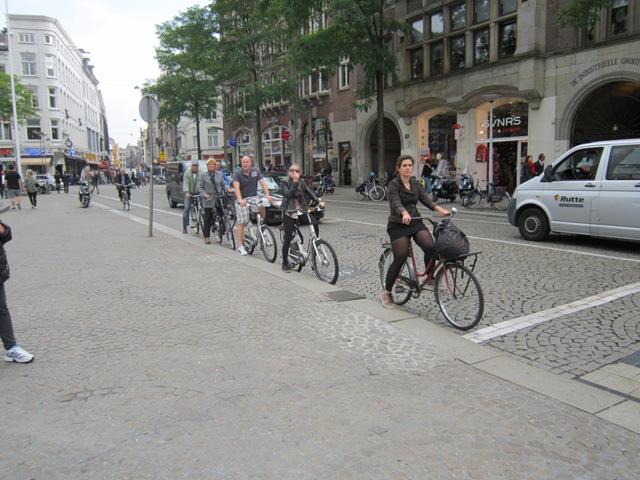
About 10 years ago I had a 7-hour stopover in Amsterdam. I had a friend there I wanted to see (no time to meet all those cool sustainable designers in Rotterdam yet) and on a budget I had to figure out how I was going to get in and out on time, alive and no deeper in than 50 Euros.
My friend reassured me that all the trains arrive on time, even complicated ones coming from remote places so that visiting him in his suburb would not be a challenge getting in or out. I trusted him and the universe and went for it.
After landing in the airport I put my suitcase in a locker down below (follow the signs) and I jumped on a train going into the city. Got off in a snap downtown, bought an apple strudel, and then decided to try one of those Amsterdam canal boat cruises. It was lovely. I didn’t need to book in advance, but just jumped on the first one I came across. It was small, not like the large canal boats in Paris and I liked the intimacy of it.
Visiting Amsterdam the day after the Dutch Independence Day I was a bit surprised to see orange debris floating around in the canal and hanging off of those spectacular little bridges we floated under, but I could not have asked for a more intimate way to meander through the channels, peering into the lives of people who lived on the canal in boats, and into the front windows of the people who lived on the narrow roads lining the canal. It seems like no-one uses curtains there. Less than an hour later, we were done and I felt like I had seen enough of Amsterdam.
With little time to contemplate museums or historical sites I called my friend. I walked to the central train station and did as I was told. Within 20 minutes he was waiting for me at the train stop and we walked through his neighborhood back to his flat, at the time an anti-squat office space. We used bicycles to ride from one room to the next it was so spacious.
Went with my friend to the local market, we returned home and I played with his kids, we ate a glorious dinner, and not long after he was directing me on how to take the train back to the airport. Are you sure I am going to make it even with the connections? Don’t worry, trains in Amsterdam are not like the Middle East, and a hop, skip and a jump and I was back on the train and in the airport.
Now this was more than a few years ago. Long before Uber, Via and all those ride-sharing apps came to the scene. In fact before apps were a daily part of our lives. I think I even had to go to an Internet café to make contact with him. Or use a payphone. Today it’s more than easy to get around unfamiliar cities when you have a phone in your hand. I see the good side of this.
The phone is your lifeline and with it you can take even more risks than I did back then, because you know with the press of a button that you can order a ride to get you back to there in the knick of time. So jump on a canal boat, visit a friend and eat that strudel.
It can get overwhelming to choose your next vacation destination, especially given that you may only have 3 weeks out of the entire year to travel. Wherever you choose to go, it better be worth it, right?
Despite the fierce competition – I mean, there are so many incredible destinations – Ecuador belongs in your top ten. Here’s why.
Small, but diverse.
Though a relatively small country compared to its neighbors Colombia and Perú, Ecuador has much to offer. In fact, it has arguably more to offer. The reason is that given its smaller size, travel between regions is much easier. In the course of two or three weeks, you can realistically experience Ecuador in all its diversity.
Ecuador is one of the most biodiverse countries in the world. The Andes Mountain Range, which cuts through the country, is a natural barrier that has spurred evolution and biodiversity. On one side of the range, you’ll find the Amazon rainforest as well as a cloud forest, both teeming with otherworldly creatures.
The Andes itself hosts a number of distinctive ecosystems, such as the paramo, a type of high altitude grasslands. In Ecuador, this mountain range is lined with enormous volcanic peaks, many of which remain active. The Andes is rich in cultural, as well as natural, diversity, and during your travels you’ll have the chance to explore traditional markets and visit historic cities like Cuenca.
Heading towards the coast, on the other, western side of the Andes, you’ll find yet another type of cloudforest. Within this lush environment, there are hundreds of hummingbird and butterfly species, as well as epiphytes and orchids. The cloudforest transitions into tropical jungle hugging much of the coast, except for the southern provinces, where dry forest prevails.
Great beaches and amazing adventure destinations
Across this spectacularly diverse country, you’ll come across some of the continent’s best beaches and adventure destinations.
If you’re into surfing, you’ll definitely want to visit Montañita, Ayampe, and Mompiche. These beach towns are also good options if you’re not into surfing and just want to spend a few days chilling by the sea, sipping a piña colada and snacking on fresh ceviche.
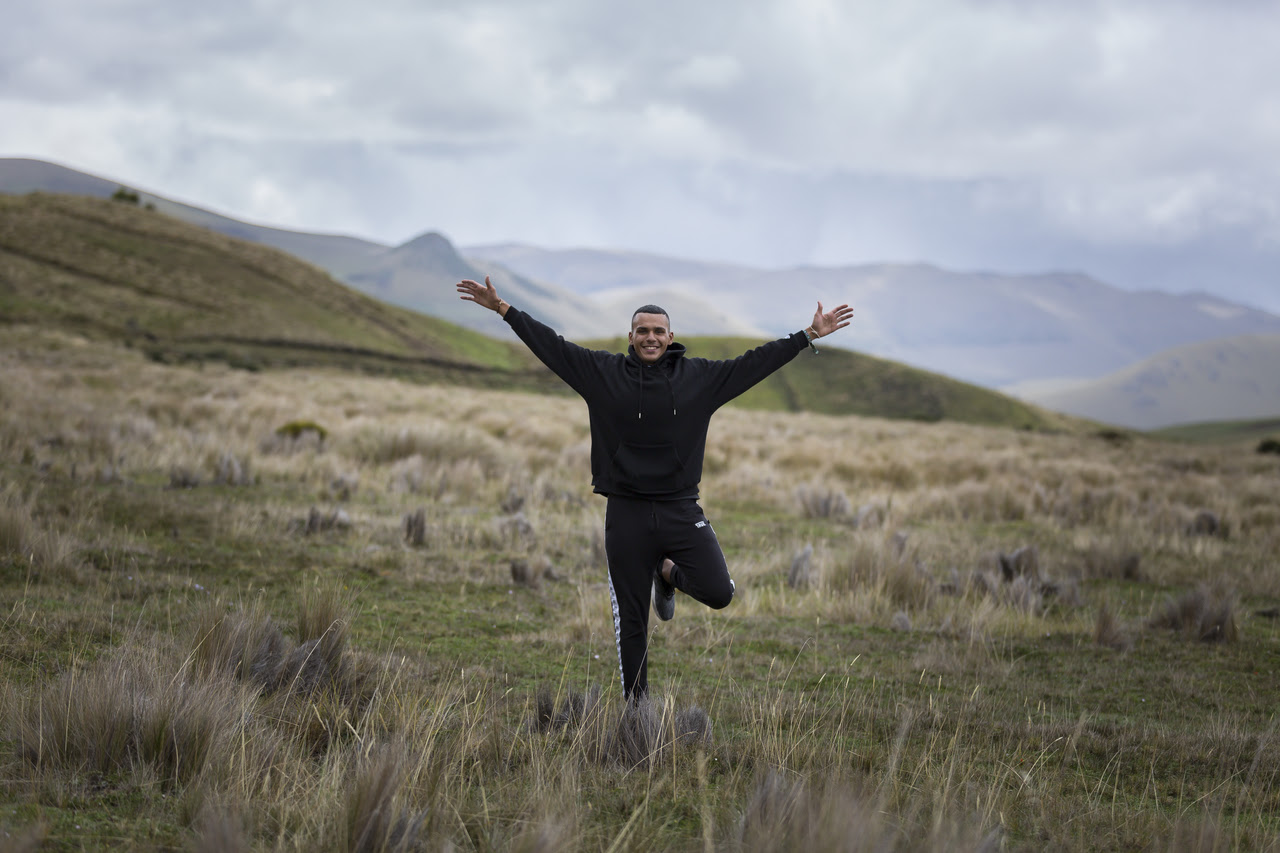
Due to its natural wealth and untamed landscape, Ecuador lends itself perfectly to outdoor adventure. Hikers and mountaineers can enjoy climbing through the thin air (+15,000 feet / 4,500 meters) to the summits of Volcano Cotopaxi, Tungurahua, Cayambe or doing multi-day treks like the Quilotoa Loop. Downhill mountain biking and horseback riding are other ways to get the adrenaline pumping while appreciating the landscape.
Another option is finding your own sustainable community based tourism opportunities based on searches near you. Try “sustainable tourism+ destination”.
Closer to the Amazon, you’ll find the city of Baños, which is considered the Ecuadorian adventure destination. Visitors come here to zipline across tropical gorges, bungee jump off bridges and river raft through spectacular canyons. Or try going on a cruise right through the Amazon!
The best way to travel around Ecuador
One of the reasons Ecuador makes for an excellent backpacking destination is because it’s so easy and inexpensive to travel through the country. Regular bus transport is surprisingly cheap, averaging at $1.00 per hour travelled. You’ll be able to get almost anywhere in the country, though in some cases it might require a few buses.
That said, an alternative to regular buses is becoming more popular, and with good reason. It’s called the Wanderbus Ecuador and it’s a hop on, hop off system with added benefits. Instead of picking up and dropping off passengers at difficult-to-reach bus terminals in sketchy neighborhoods at odd hours (that would describe the regular bus system…), the Wanderbus has convenient pick up and drop off locations closer to the Old Town and Marsical, where most travelers spend the night. Because of this, it’s a much safer way to get around by bus.
Additionally, it offers passengers the opportunity to meet like-minded travelers and the bilingual guides on each bus provide recommendations about hostels, restaurants and activities at every stop. Which leads me to another benefit of the Wanderbus: its routes are designed to take you directly to every must-see destination across the country.
Do you want to know the best part about travelling in Ecuador? You can experience all of this – the beaches, adventure, natural wonders, and more – well within your budget. That’s right, to top things off, Ecuador may be one of the most affordable countries to visit in Latin America. Has it made your bucket list yet? I’d add Morocco and the Kasbah to yours, if I could.
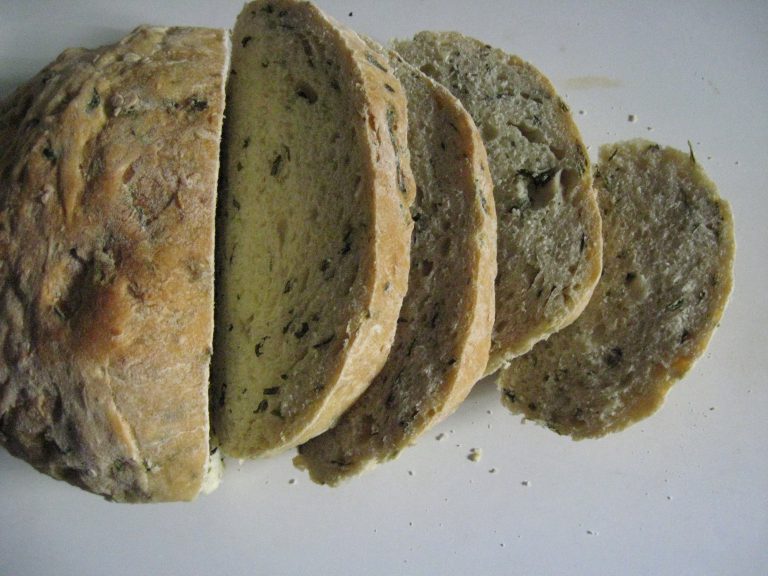
This unusual bread needs lots of fresh basil. And that’s a good thing if you’re growing basil, because you’re probably looking for recipes to use it up. Even one plant in a container gives plenty of leaves for pesto (see our recipe for pesto here), to snip into salads and to cook with your favorite tomato sauce. But at some point, you wonder what else you can do with all that basil.
My basil plant now wants to reproduce, flowering almost from one day to the next. To keep it from going leggy, I pinch off the flowering tops and harvest yet more leaves. My answer to the basil overflow problem is to bake green bread.
It makes wonderful sandwiches. You need only a couple of basil bread slices, a flavorful tomato, lettuce and a film of good mayonnaise to make a summer snack that you’ll remember long after the weather turns cool and your basil plant goes sleepy.
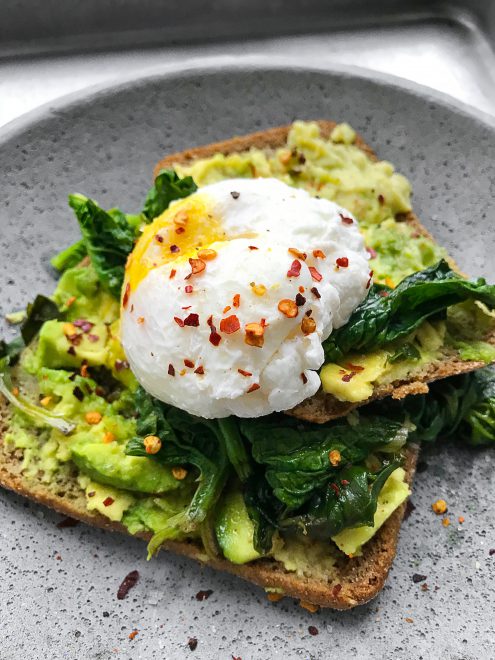
For a light meal, spread mashed avocado over two basil bread slices, set sautéed greens over them, and top the whole thing with a poached egg. Or two.
Another delicious thing to do with the dough is roll it out thin and make pizza.
Leftovers? Make croutons and float them in your next bowl of soup. You’ll never have croutons like those made from basil bread.
Basil Bread Recipe
Makes 1 large round loaf
Ingredients:
2 oz. (50 grams) fresh yeast or 2.5 teaspoons active dry yeast 1 cup plus 2 1/2 tablespoons warm water 3 1/2 tablespoons olive oil 2 1/4 teaspoons salt 1 teaspoon sugar 3/4 cup fresh basil leaves, tightly packed 4 1/2 to 5 cups all-purpose flour
Rinse and carefully dry the basil leaves. Chop them into fine ribbons.
In a medium bowl, dissolve the yeast in all the water.
Add sugar; stir to dissolve. Add oil, salt, and chopped basil leaves. Mix well.
Add half-cups of flour, stirring well each time, until you have a loose dough. This should take about 4 cups.
If using dry yeast, add it to 4 cups of flour in a large bowl. Mix the water, salt and sugar in a medium bowl; stir this into the yeasted flour. Mix the chopped basil in.
Cover the bowl with a moist kitchen towel or a recycled plastic bag. Allow to rise till the dough is spongy, about 1 hour, at room temperature.
Deflate the dough by stirring it. Sprinkle more flour in, first stirring, then kneading lightly until the dough is supple. Add the flour cautiously – you don’t want dough too stiff to knead.
Let dough rest for 15 minutes.
Knead again, lightly, and form a ball. Drizzle a little olive oil over it. Turn it around in the bowl a few times. Cover the bowl again. Leave the dough to rise for 45 minutes .
Heat the oven to 350°F (175° C) about 20 minutes before you plan to bake.
At the same time, shape your loaf and put it to rise once again, in a 1-1/2 lb. loaf pan (for square slices) or on a baking sheet as a rounded loaf. It will be very light and bubbly when it’s ready to bake.
Bake 30 minutes. When the crust is golden and sturdy, turn the loaf upside down to finish baking, 10-15 minutes more.
Note: Use only fresh, leafy basil for this bread. Dried basil won’t do it.
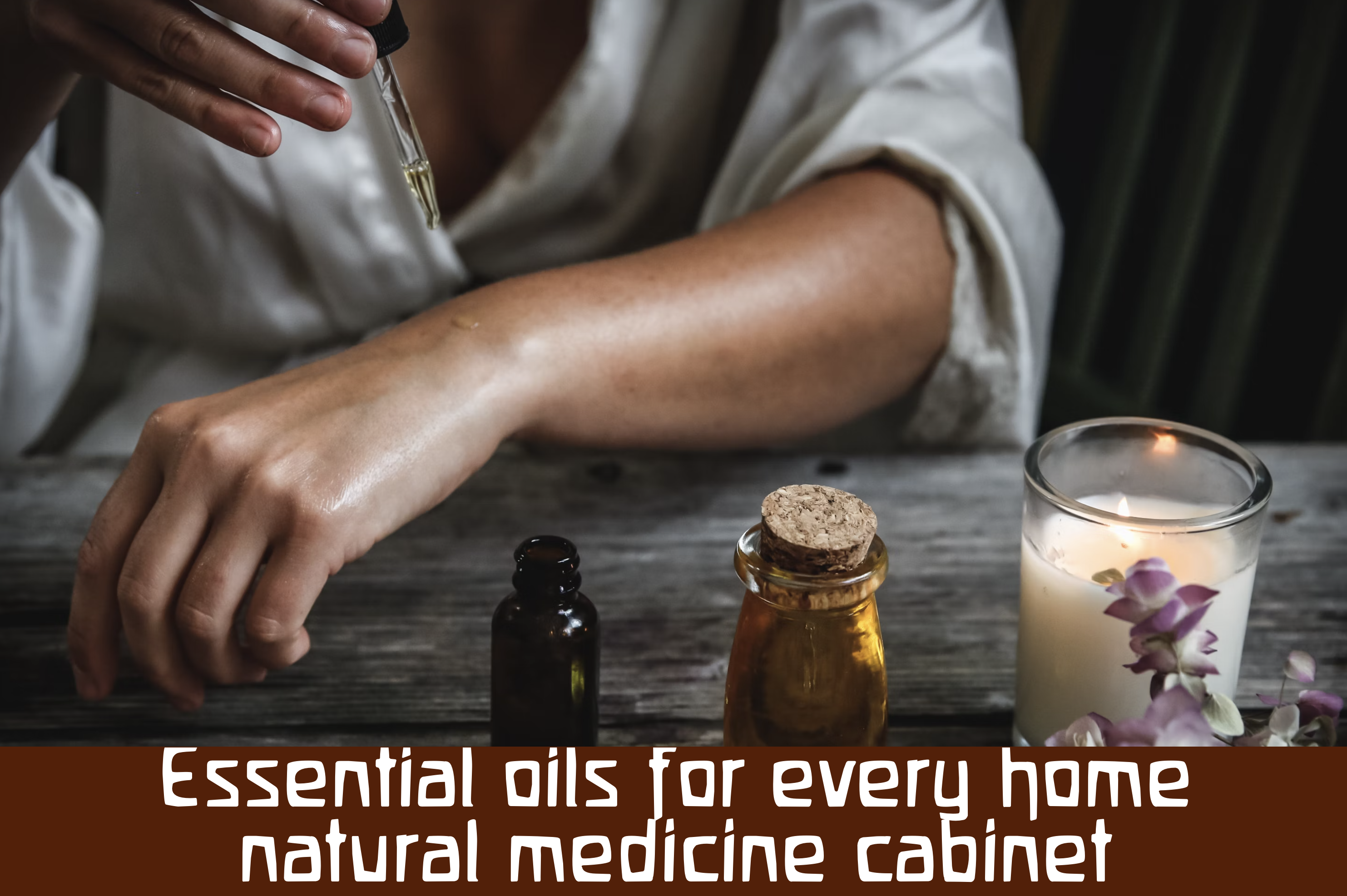
Those cute little bottles of essential oils that you see in health food stores contain powerful medicine. Here are 11 essential oils (eos) that you should always have in your medicine cabinet. From mundane tasks like eliminating household odors, to healing yourself, and to making time special time with a partner even more special, eos are there to help.
Quick list of essential oils:
Organic lemon oil
Tea Tree Oil
Organic lavender oil
Bergamot oil
Roman Chamomile
Peppermint essential oil
Rosemary essential oil
Sweet basil essential oil
Rose absolute oil
Ylang Lang oil
Ginger oil
Eliminating odors:
Lemon essential oil. Keep your refrigerator smelling clean: deodorize it with lemon essential oil. Mix 15 drops of lemon essential oil into a box of baking soda.
Keep the box open and stash it in the back of the fridge, where it’s less likely to spill. Replace the lemon/baking soda once a month.
Tea Tree Oil. Deodorize smelly shoes: Fill two old (clean) socks with baking soda. Mix 5 drops of tea tree oil (melaleuca alternifolia) into each full sock. Tie the socks shut with string or rubber bands. Fit them into the shoes and keep them there for a few hours or overnight. Moisture in the shoes will be absorbed by the baking soda, while the tea tree oil clears away odors and even helps to reduce bacteria.
Tea tree oil. Best known as an antifungal, 3-4 drops of tea tree oil swirled into a teaspoon of neutral lotion or salve helps eliminate athlete’s foot.
Shake up your full shampoo bottle with 3 drops of tea tree oil and see how it helps get rid of dandruff. Note: don’t use tea tree oil if you have eczema or psoriasis.
Lavender (lavanda officinalis) heals minor burns. Called “the Swiss Army Knife of essential oils,” lavender has multiple uses for health and beauty. It’s also the one essential oils that you can apply directly to the skin, although never in great quantity. In the case of minor household burns, a thin film of lavender essential oil stops the pain and helps the skin to heal amazingly quickly.
Lavender is the Swiss army knife of essential oils
Eessential oils for improving mood and relieving stress:
Use essential oils to relieve stress after a high-pressure day. Massage is the preferred method but it also helps to drop some into a diffuser. You don’t need to spend time and money on professional massage either, wonderful as it is: massaging your own feet and legs, hands and arms with eo-perfumed lotion is effective too. Just don’t jump up and get busy right away; give yourself at least 10 minutes of rest following your self-treatment.
Lavender, again, helps you relax and even makes you drowsy. A good oil to put into a diffuser in the baby’s room. Note: use only 1-3 drops of any essential oil when treating children, and make sure the room is well ventilated. See the note at the end of this post about eos for kids. It goes without saying to make sure all the baby’s needs have been met in the first place.
Bergamot (Citrus bergamia). Studies conclude that Bergamot essential oil relieves anxiety and stress, either inhaled from a diffuser or incorporated into lotion and massaged into the hands. I’d say, massage the feet and legs with it too.
Roman Chamomile (Chamaemelum nobile) has been used in its flower form as a relaxing tea for centuries. The essential oil helps loosen stress in massage or inhalation via diffuser. Wonderful, diluted into good oil, to massage a cranky baby. Or teenager. Or partner.
Essential oils for energy and focus:
Keep a bottle of Peppermint (Mentha piperita) or Rosemary oil in your desk drawer to sprinkle into a diffuser. Both, alone or in combination, wake you up and energize you.
Sweet Basil (Ocimum basilicum) helps clear brain fog. Your office colleagues may appreciate the benefit of Basil as it wafts towards their cubicles.
Essential oils as aphrodesiacs
Sweet-smelling Rose, Ylang-Ylang and Jasmine oils have relaxing properties that open the senses to pleasure. Put some into a bedroom diffuser, or massage your partner with lotion imbued with one of those e.o.s.
How to use essential oils
How to tell if the essential oil in the shop is worth buying: A high-quality essential oil is always bottled into dark glass, to prevent light exposure. Don’t buy oils displayed on a sunny shelf; light causes deterioration. In the same way, you should keep essential oils away from light at home.
Another sign is some Latin on the label. If the rosemary oil you’re looking at reads “Rosemary Essential Oil” with “Rosmarinus officinalis” underneath, you can be confident that the manufacturer took their work seriously.
Essential oils are the powerful expressions of medicinal plants and are toxic if used unwisely. It’s not safe to apply them undiluted to the skin, with the exception of lavender. Do not swallow essential oils! Keep the bottles in a child-safe place.
For topical applications
Swirl the chosen eo into a carrier oil, lotion or water. Use no more than 3 drops of e.o. per teaspoon of preferred carrier. For massaging children from 5 years old and adults, 1 drop per teaspoon is enough. To treat babies and toddlers, dilute it further: use 1 drop in 4 teaspoons of carrier oil.
Diffusers, steam tents and baths:
Diffusers disperse the oils in the air. You benefit from inhaling the steam in the room. Make sure the room is ventilated.
For sinus and respiratory therapy, specific eos are mixed into a bowl of hot water for a steam tent; or mixed with bath water. This requires professional advice, or advice taken from a reputable book.
Eos are useful as compresses.
For painful joints (use Ginger eo), or use one as a poultice for minor wounds, acne and chafed skin (use Sage). Dilute the oil in warm, not hot water. Dip a thin, clean cloth into the basin and apply it. Leave for 10 minutes. Put a hot water bottle over the damp cloth if wanted (not on the face or head).
Essential oils have been around for thousands of years. The ancient Egyptians, Chinese, Indians and Persians knew how to extract these oils from plants, and traded in them. Modern aromatherapy refined the manufacture of essential oils and uses them in many applications for health and beauty. Hundreds of essential oils exist. To know more about them and their uses, buy or borrow some good books on the topic.
This article recommends using essential oils for minor ailments only. It doesn’t replace advice from a qualified aromatherapist or a doctor for treating serious illness.
Telling the truth about environmental crimes can have consequences. If you need to get the story out to editors here are tips to help you avoid leaving a digital footprint. If you live in some countries like Iran your life might be in danger.
Our conversations at the doctor’s office or in the bedroom may not at all be that interesting. It’s when you have something to lose, like your career or life that you wonder about the extent of your digital footprint. We’ve had people reach out to us from countries such as Saudi Arabia, Iran and Egypt. They have told us about crimes in their local environments that they could never report to the authorities. Nuclear spills. Activists in jail. Activists who have disappeared because they thought they were above the law. They weren’t.
Update in 2022 when no-one in Iran or China can browse the internet freely without being spied on. A trusted VPN is more important than ever.
Tips for hiding your online identity
If you want to whistleblow to a news site and avoid detection, here are some general tips that might help you avoid getting found out.
Buy a burner phone: colleagues from my startup used to laugh at me every time I travelled to the US or Europe because my phone number would change. I didn’t do this to avoid detection. It was just a cheaper solution for me than keeping the same number or buying an international plan on my everyday cell phone. With cash it’s easy to buy a cell phone and a SIM card to communicate with others while avoiding building on your previous personal digital footprint. In some countries, like India for instance you might have to supply ID to buy a SIM. Try to work with locals to figure out a good solution.
Turn off location apps. Any way you slice it, if you want to avoid being found you should go to your settings are turn off all location tracking apps like Waze, GPS, photos, etc.
Go on “stealth mode” when you search on Google, Yahoo or any other search engine. The browser you use has a privacy mode. It’s also known as incognito mode on some browsers. Make sure you delete all cookies and restrict the browser from sending location details.
There is a server that deflects your location. Every day people use this to watch streaming TV in locations that might not let them. You can Google VPN and choose from a site you trust. Reddit has some good threads on what company to work with. Stay up to date on Reddit for the best advice.
Make sure social sites you might use are not tracking you. We have a lot of motivation to provide personal information to Facebook, on Twitter, LinkedIn, Instagram and others, because, hey isn’t that all the fun to say I ate at Nobu when I was in New York City! But use your head. These sites follow and track what we do and where we go even when we have logged out of them. Like something, or share something? You are being tracked.
These steps might help you clear your tracks:
For Facebook – Go to Facebook settings > Advertising to control – this is whether ads are targeted based on your clicks in and out of Facebook. You don’t want this.
For Twitter – Go to your Access settings > Security and Privacy area. Then uncheck the box for “Tailor Ads”. You don’t want this. Tailoring ads means they are tracking you.
For LinkedIn – Go to your Privacy and Settings > Accounts > Managing Advertising Preferences. Uncheck anything that looks like it might be tracing you.
And voila. Enjoy being a dissident. Now start saving the world.