Home Blog Page 165

Maraya the biggest mirrored building in the world

Maraya the biggest mirrored building in the world

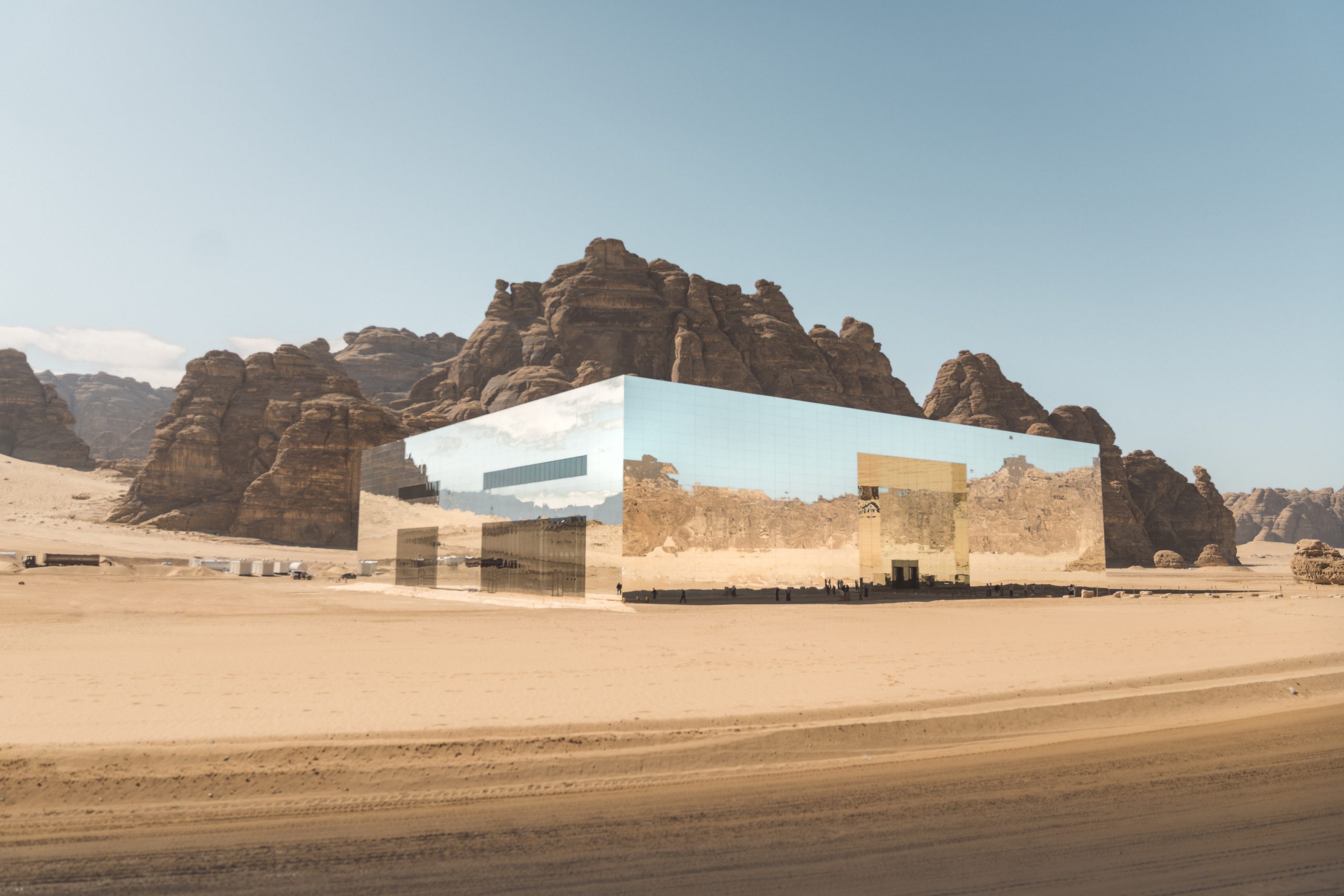
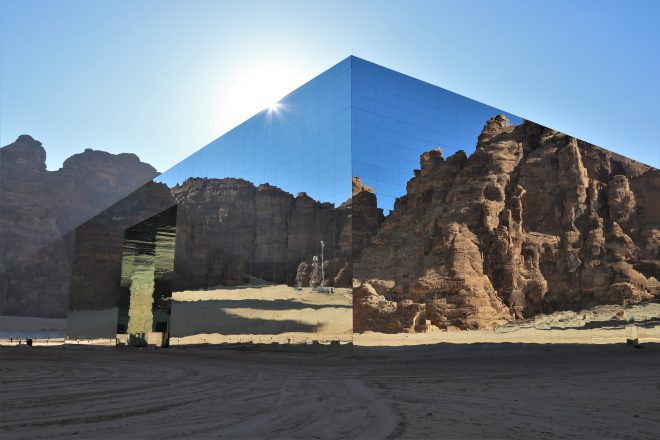
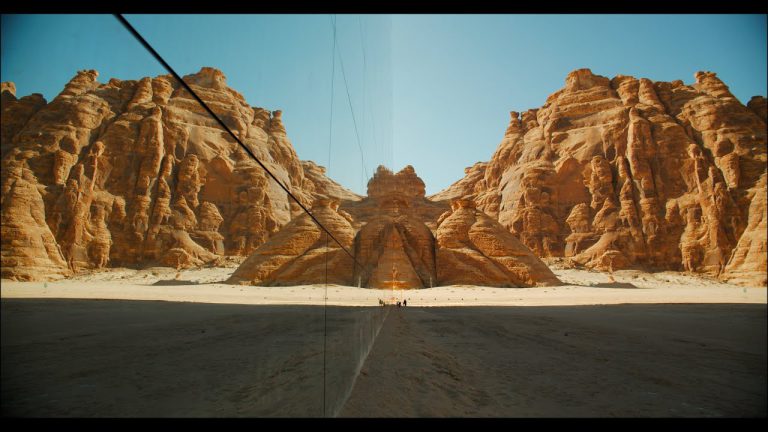
Maraya, a multi-purpose concert and entertainment venue in AlUla, North West Saudi Arabia, has been named a winner in one of the world’s biggest architecture awards. AlUla is a destination of global significance with 200,000 years of human history and culture at the crossroads of ancient civilisations.

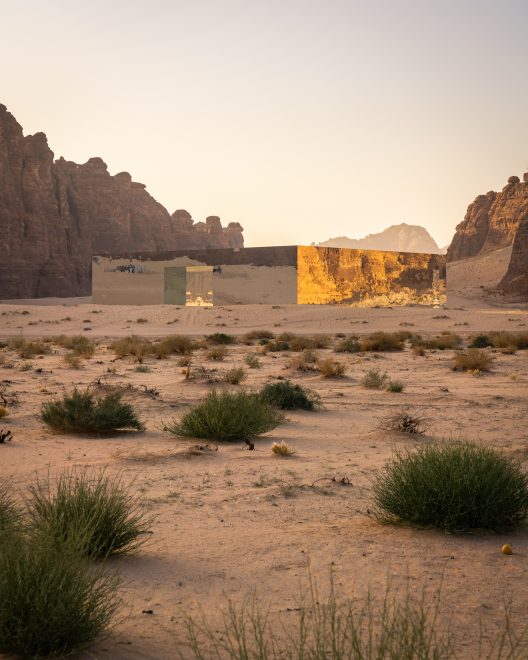
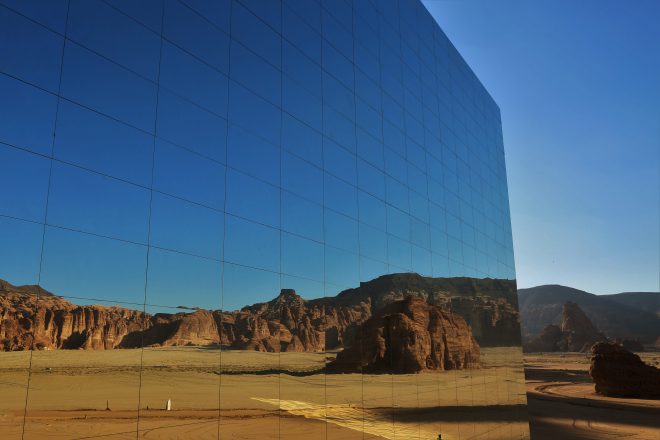
maraya in the desert, saudi arabia

maraya in the desert, saudi arabia

A finalist in the Architecture + Glass category, Maraya was selected by Architizer online magazine and distinguished luminaries from fields as diverse as design, technology, real estate and fashion. Finalists were selected for excellence in architecture with criteria based on form, function and impact. Maraya achieved the most public votes in its category to be named the 2020 popular choice winner.

Phillip Jones, Chief Destination Management and Marketing Officer at Royal Commission for AlUla said the venue will be a key draw factor when AlUla officially re-opens to visitors as a year-round destination in late 2020.

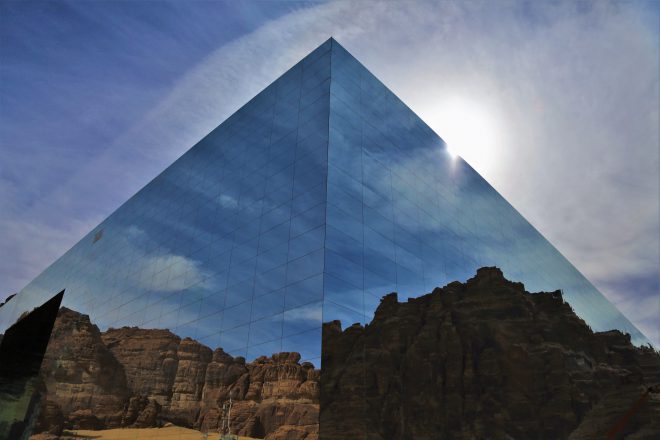
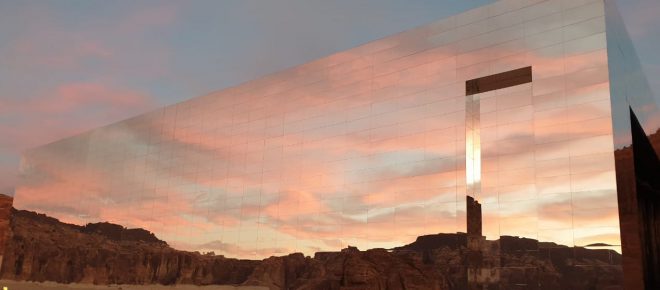
“Visitors are truly mesmerised by Maraya’s impact and by the way it blends in so perfectly and reflects its surroundings,” says Jones.

“Maraya has been conceived and designed as part of the Saudi Vision 2030 and in line with RCU’s core values to develop AlUla using a sensitive and responsible approach. AlUla is a significant, undiscovered archaeological wonder and we look forward to welcoming the world when we re-open the sites,” said Mr Jones.

The planned city Neom is also part of the Saudi Vision 2030.

Maraya the biggest mirrored building in the world

Maraya contains a total of 9740 square metres of mirrors reflecting the vast and stunning desert surroundings of AlUla. The building set a Guinness World Record for being the largest mirrored building in the world in 2019 with its 26-metre-high theatre.

Maraya’s giant retractable window of more than 800 square metres opens to nature for an authentic experience blending nature and entertainment.

In Arabic ‘Maraya’ means mirrors. The building, by designer Florian Boje of Gio Forma, Milan was inspired by the landscape in the same way that the landscape has inspired architecture and art for civilisations from the Nabataeans through to this day. Read here about Nabatean water conservation.

International artists who performed at Maraya in its first year include Andrea Bocelli, Lionel Richie and Yanni.

The Royal Commission for Al-Ula (RCU) was established on July 20th, 2017 to protect and safeguard AlUla, embarking on a long-term plan to develop and deliver a sensitive, sustainable transformation of the region, reaffirming it as one of country’s most important archaeological and cultural destinations and preparing it to welcome visitors from around the world.

AlUla is located in North West Saudi Arabia, one-hour flight from Riyadh. Or about 1,000 km by car. Maraya is located in the historic Ashar Valley, ten-minute drive from Saudi Arabia’s first UNESCO World Heritage Site, Hegra. Visitors will be able to access AlUla’s main heritage sites including Hegra, Dadan, Jabal Ikmah and access cultural touring options and a range of adventure experiences from October 2020. Sounds like a destination venue and something for the bucket list.

Boat-in theatre makes waves in Tel Aviv, not all welcome

0
Tel Aviv is creating new solutions for missing culture in the city like the “boat in theatre” instead of addressing the centers and culture that exists.

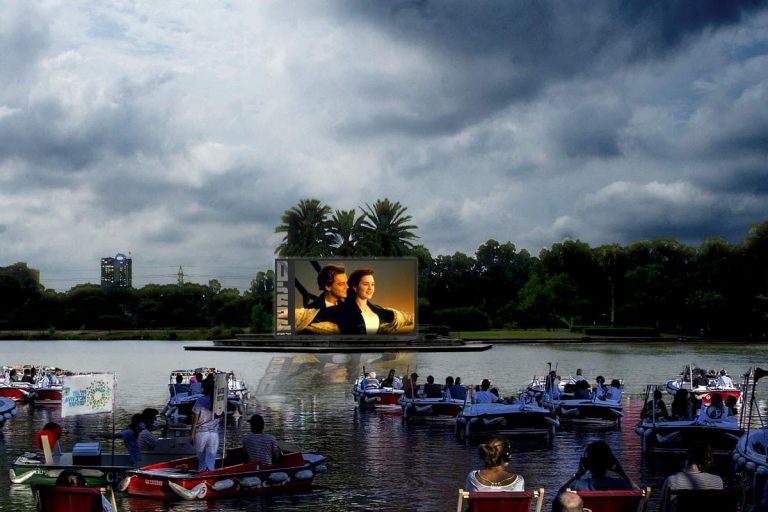
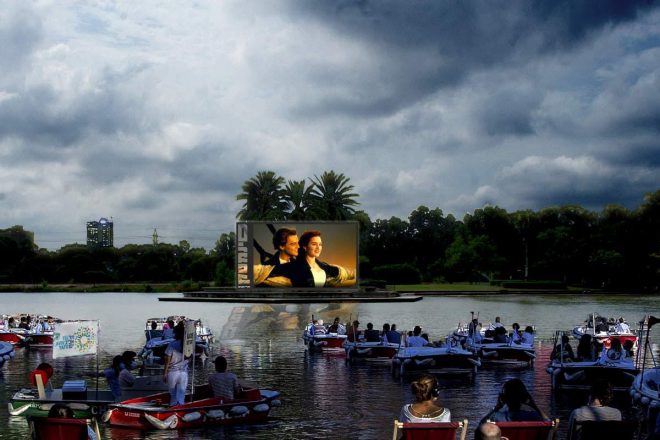
Perfect for Muskoka or Tahoe in the summer: the city of Tel Aviv has started a boat-in theatre this summer. Those with boats or dinghies can sail in within safe distance to other boaters to enjoy movies on the boat lake of Tel Aviv.

The coronavirus outbreak has proved particularly challenging for the cultural sector worldwide, with outdoor initiatives representing almost the sole solution for cultural events.The Tel Aviv-Yafo Municipality will now launch a “sail-in” floating cinema under the clear night sky from August 22 to 28, in partnership with Tel Aviv Cinematheque. 

A total of 70 socially distanced boats will be available to moviegoers seeking to enjoy a night of cinematic entertainment under the stars, the city writes in an announcement it sent Green Prophet. Boats will be distanced two meters apart (or 6 feet) at all times opposite a large screen allowing all ticketholders to float away and unwind from the daily grind for at least a few hours.

“The coronavirus crisis poses new challenges for Tel Aviv-Yafo Municipality, including bringing cultural life to a halt in the city. During recent months, we have been constantly examining ways of providing assistance. The initiative to screen movies at HaYarkon Park’s boating lake is another creative way to spend the hot August days,” says Ron Huldai, Mayor of Tel Aviv-Yafo.

The launch of the floating cinema joins a long list of municipal initiatives launched in recent months to support cultural activity in the city. Meanwhile people who own decades-old cultural centers in the city such as the East West House in Jaffa are drowning in a labyrinth of paperwork, with no one to speak with at the City Hall.

Yisrael Borochov, the founder of the East West House, one of the main cultural centers of Jaffa, runs the non-profit organization which supports local and ethnic music from the Arab and Jewish cultures. Borochov is very confused about the current situation and decisions of Ron Huldai.

East West House
The East West House in Jaffa could easily provide socially distanced shows outdoors. Instead the City Hall is giving money earmarked for it to venues that have no experience in music.

He tells Green Prophet: “I got a letter from the government, from the Ministry of Culture who sees our cultural center as foundational to the city of Jaffa and they said they earmarked money for our organization. We just have to apply to get it. We haven’t been operating normally since March and are used to sold out shows every week. Now we have zero income. The Culture Ministry told us to apply for the money coming to us from the city.

“I filled out the forms and called the City and no one is answering or acknowledging our requests,” Borochov tells Green Prophet. He continues: “The government is telling me to go to the city to start performances, an activity that the government is also forbidding us to do, while on the other hand the city is allowing new venues such as museums and bars to host the same musicians that used to come to my center to perform. Instead of addressing the problem they are creating a new flawed system that will devastate the cultural heritage of the city.

“While I think it’s important to social distance, and we could do this at outdoor performances at the East West House in Jaffa, the city is creating new projects that only put a colorful bandaid on the bigger problem: the collapse of real cultural activities in the city, for the centers, the artists and the supporting teams like the sound crew,” Borochov relates.”

Most of the demonstrations as of late have been related to the collapse of the cultural sectors and those demonstrating are artists and supporting professions who are now without work. Instead of operating like Berlin or London, cities that support existing artists Tel Aviv is operating to the beat of its own drum.

The city has started musical performances on the roof of the Eretz Israel Museum as a new activity while those at existing centers collect dust and foot the bill for their many years of cultural service to the community.

How To Set Up Your Small Business With Sustainability In Mind

0

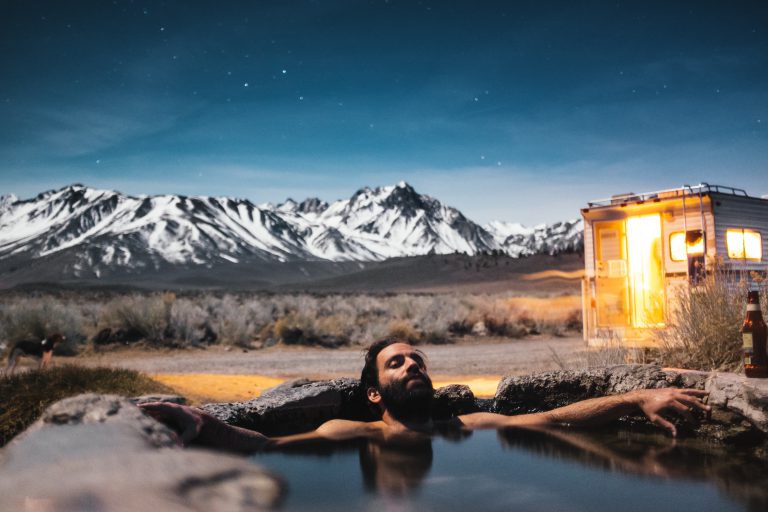
van life eco retreat airbnb rental on vrbo
Covid makes us all push for staycations. How about a week in a #vanlife AirBnb?

If you are starting a small business in the green sphere, sustainability needs to be part of your very ethos. You cannot afford to be wasteful in setting up your business. Wastefulness will diminish what you are trying to achieve as well as tarnishing your brand.

Fortunately, over the past couple of decades, we have learned a lot about sustainability when it comes to small business. One of the few benefits of COVID-19 is that even big corporate businesses have found ways to work with more efficiency, whether or not their focus is on sustainability.

With this in mind, here is some guidance on how to set up a small business on principles of sustainability.

Keep it web-based

Unless you are selling physical products or services, there is likely little reason for you to have physical branches. Instead of renting out office space, or even using a shared space like WeWork, you can do everything from home. With a personalized virtual private network (VPN), you can give staff access to your database and any other data they need while they work from home as well.

The future of customer service is web-based, too, with advancements in AI technology making it possible for clients to get help without having to speak to a human being when not dealing with complex problems.

Keeping everything web based minimizes the natural resources you consume. Staff do not have to travel to an office, and you do not have to buy and use electronics, paper, and office furniture. You also save people the need to buy lunch, giving them the opportunity to use what they have in the fridge to avoid wastage.

Data efficiency

When you do set up your website, there are steps you can take to keep even this seemingly small aspect sustainable. You will need to find web hosting and choose the best server for a small business. Instead of renting out a whole server for your business, consider choosing shared or VPS hosting.

A full server requires a lot more processing power than shared hosting, and you will better maintain your principles of sustainability with the latter.

Provide green benefits

One of the struggles you will face as a small business owner is getting staff on board with your green vision. You may idealistically go into the hiring process believing applicants care as much about the cause as you do. But the reality is that people are generally just looking for jobs. It is somewhat rare that jobseekers end up doing something they actually care about.

However, that does not mean it has to stay this way. Although your employees may not start with the same passion as you, you can help them find it. Perhaps the most effective way to do this is by providing green benefits. Partner with companies to give them discounts on green vacations, solar power, and so on. See what your own business can do for them.

Over time, they will buy into the principles or at least get on board with them in the context of your business.

Keeping your business sustainable is crucial as a green company. Fortunately, in 2020, it is becoming easier than ever.

“We’ll stop cutting trees” part of Tel Aviv’s climate action plan

0

bird scooters in Tel aviv

Spend a few years or a dozen in a coastal city like Tel Aviv or Beirut and you’ll see how in a short time the season’s have changed. Tel Aviv this winter experienced an unprecedented level of flooding (we told you so), which killed two people and left people kayaking down the streets looking for stranded people in cars. The City Hall of Tel Aviv Jaffa says it has a plan, giving that the annual number of super hot days will increase by 30 in the next 10 years.

Tel Aviv has published a detailed climate action plan to cope with the threat of climate change, including the launch of a series of significant, new municipal initiatives. The action plan, we see, presents an in-depth look at the key threats and challenges facing the city, and details required actions to cope with them, with an emphasis on a rapid response for vulnerable population groups.

havie upcycled hipsters
Encouraging more local handmade businesses like Havie will make a city smarter.

The plans were developed within the framework of its membership in the C40 Cities Climate Leadership Group, a global network of cities fighting global warming. As part of its membership, the municipality committed to adopting a program for adapting to climate change, including preparing for rising temperatures and changes to rainfall trends and quantities.

What are the threats to the western east Mediterranean? 

  • An increase of approximately 30 annual hot days (exceeding 33 degrees Celsius) over the next decade.
  • Rising sea levels
  • A decline in natural water sources and an increased risk of flooding
  • An increase in population groups considered to be vulnerable

Plan for making Tel Aviv cool

  • Urban forest management, edible forests, increasing green urban planning, increasing shaded areas, climate-appropriate construction, encouraging sustainable communities.
  • Water management – including enhanced natural drainage, strengthening the resilience of the coastal ecosystem, preparations for coastal flooding and reducing risks, preparations for urban flooding, and saving water in gardening, buildings and infrastructure.

The 3 phase plan

  • Immediate response (2020-2021): Formalizing an action plan for heatwaves and extreme heat; enabling solar energy independence for public buildings during times of crisis; reduced removal of trees; strict implementation of permeation requirements in construction plans and permits; and economic assessments for damages and measures required to cope with climate change.
  • Gradual response (by 2030): A series of wide-scale operations to enhance the city’s ability to cope with climate change, commencing with vulnerable areas of the city and subsequently continuing in all neighborhoods. Operations include planning; infrastructure development; guidelines and regulations; community involvement and education.
  • Fostering urban innovation: Activities to connect municipal preparations for climate change with efforts to reduce greenhouse gases, improve sustainability and enhance quality of life in the city. This will be facilitated by data collection and fostering research; advancing new technologies; the establishment of innovation zones for pilot programs and demonstrations; increasing competition; supporting community-based entrepreneurship; and encouraging businesses to operate in an eco-friendly manner.

Kibbutz in the city

“The climate crisis is not slowing down – even faced with COVID-19 – and if we do not act today, the resilience of our society will be drastically harmed in the generations to come,” says Ron Huldai, the Mayor of Tel Aviv-Yafo.

Read more about Israel’s Boring Company

“Among other trends in the coming years, we will see fewer vehicles and more trees, we will reduce greenhouse gas emissions and promote the use of renewable energies in all public buildings in the city.

“This is not a straightforward process but we have already taken significant steps in the same direction: we are placing pedestrians and cyclists at the top of our priority list in transportation planning; we adopted a ‘kibbutz in the city’ approach for smart and shared use of resources;

“We are implementing the ‘Cool Cities’ approach in various parts of the city; and of course we are active in the C40 – together with leading cities in the world – to ensure that we, our children and our grandchildren, may continue to enjoy life in Tel Aviv-Yafo and all of Israel.”

Greenpeace against Arab world’s first nuclear power plant

0

The first nuclear energy plant in the United Arab Emirates goes online on the Gulf Coast east of Qatar.

In a desert region full of oil, and well unlimited sunshine, Abu Dhabi still plans to go ahead and build a nuclear energy site despite the risks. Remember Japan? And Greenpeace, which runs an active unit in the Arab world and Middle East, called Greenpeace MENA, isn’t thrilled about the development. (They weren’t thrilled about Jordan going nuclear as well, in 2011. That seems to be off the table for now.)

After seeing the lack of Middle East oversight of dangerous chemicals in Beirut, some groups like Greenpeace worry about the dangers of a nuclear Arab world. The United Arab Emirates  will become the first Arab country to produce nuclear energy when commercial operations start at the $24.4 Billion USD Barakah nuclear power plant in 2020.

Until 2006, the six oil-producing states of the Gulf Cooperation Council (GCC) had been vocally opposed to nuclear power in the Gulf, however, as Iran’s nuclear ambitions advanced, the position changed.

Once all four of Barakah’s reactors are operational in 2025, the plant will provide the UAE with 5.6GW of power generation capacity – about one quarter of the country’s anticipated energy requirements.

Greenpeace believes that this action will further deplete natural resources such as water, which is very scarce in the United Arab Emirates.

Currently desalination is looked to as a viable option, but creating it is energy intense. Creating a nuclear reactor to run desalination is much like a snake biting its own tail.

The plant in Abu Dhabi was set to open in 2017 but its start-up was delayed for what officials say were “safety requirements” according to the BBC.

The UAE is oil rich but despite that plans for Barakah to meet ts energy needs, as the region of seven emirates adopts more sustainable energy sources.

Two weeks ago the UAE sent a mission to Mars, another scientific first for the Gulf nation.

A threat to peace? 

The UAE also has plans to invest in solar, putting into question the logic of the Barakah nuclear plant. Solar power is cleaner, cheaper, 100% renewable and makes a lot more sense in a region plagued by terrorism and political problems over oil and wealth. See solar energy at Masdar City.

masdar-shams-1-solar-energy
Solar energy farm at Masdar

The BBC reports that “last year Qatar called the Barakah plant a flagrant threat to regional peace and environment. Qatar is a bitter regional rival of the UAE and Saudi Arabia.”

Greenpeace says they “condemn the start-up of unit 1 of the Barakah Nuclear Energy Plant, located in the Al Dhafrah Region of Abu Dhabi, as a wasteful investment in the wrong technology that will only deplete the scarce water resources of the Emirates.

Established in 2016, the Nawah Energy Company plans on running 4 nuclear energy units, the first nuclear energy plant in the United Arab Emirates.

Nawah will generate up to 5,600 megawatts of energy from the 4 units at Barakah, supplying approximately 25% of the UAE’s electricity requirements.

Julien Jreissati, programme manager at Greenpeace Middle East and North Africa, commented: “Nuclear energy is not the energy of the future, and definitely not the solution. With it we are leaving our future generations with nothing but a toxic legacy of radioactive and dangerous nuclear waste”.

He continued: ”The UAE has been a regional leader in developing and investing in cheap, safe and green renewable energy such as solar. This innovative country should keep its focus on capitalising on its abundant and generous sun instead of “betting” on the nuclear race. After the legacy of Fukushima and the high price Japan had to pay for relying on nuclear power, countries around the world – like Germany-  are opting for phasing-out nuclear energy not the other way around.”

Building new nuclear plants is more expensive and takes longer than building renewable energy plants, Greenpeace argues.

Building a nuclear plant in a water scarce country is just a bad and dangerous investment that will compete with the UAE people on accessing much needed water resources, the organization points out. In a region that has been prone to conflicts, the reactor also poses considerable safety risk to the people. 

Baked herbed salmon with zucchini recipe

0

Zucchini’s at peak season, and it complements fish beautifully.  For light summer fare, try this herby salmon and zucchini dish. It bakes in one pan, and needs only good bread and a salad (like our Maimonides salad) to round the meal out. And it takes 20 minutes max in the oven.

Herbed Salmon and Zucchini
Yield: 4 servings
Prep time: 15 minutes
Cook time: 16-20 minutes

Ingredients:

4 zucchini, any color, chopped thickly
2 tablespoons olive oil
Salt and freshly ground black pepper, to taste

4 (5-ounce) salmon fillets

To season the salmon:

2 packed tablespoons brown sugar
2 tablespoons freshly squeezed lemon juice
1 tablespoon Dijon mustard
2 cloves garlic, minced
1 teaspoon fresh dill, finely chopped
1 teaspoon fresh oregano or za’atar, finely chopped
1/2 teaspoon fresh thyme, finely chopped
1/2  teaspoon fresh rosemary, finely chopped
Salt and freshly ground black pepper, to taste

Garnish: 2 tablespoons chopped fresh parsley leaves

Note: To use dried herbs instead of fresh, halve the quantities given.

Preheat oven to 400 degrees°F – 200 C°.
Lightly oil a baking sheet, or line it with baking parchment.
Mix the brown sugar, lemon juice, Dijon, garlic, dill, oregano, thyme and rosemary; season with salt and pepper, to taste.

Place the zucchini in a single layer on the prepared baking sheet. Dribble olive oil over the slices and season with salt and pepper.

Place the salmon fillets in the pan, in between the zucchini slices.. Spoon some of the herb mixture over each fillet.
Bake until the fish flakes easily with a fork, between 16-20 minutes. Check for doneness at 16 minutes. If not quite cooked through, give it another 2-4 minutes.

Garnish with the chopped parsley, and serve.

Enjoy!

CBD Oil for Pain and Inflammation: How To Choose The Right One?

0

forest bathing, woman hipster contemplating nature in dark green forest

Inflammation is a sadly common ailment caused by numerous illnesses and injuries. The condition can appear as an aggravated nerve, sprained joint, pulled muscle, or more. Inflammation is when a wound or injury becomes red, warm, and painful, and is essentially your body trying to protect you from an irritant.

It can be worrying – especially when it lasts for a prolonged time – and can prevent you from doing routine tasks. Chronic inflammation is more severe and can be a symptom of autoimmune diseases such as asthma, arthritis, celiac disease, pelvic inflammatory disease (PID), and inflammatory bowel disorder (IBD). A state of ongoing inflammation can cause severe pain and anxiety and is sometimes linked to depression.

Besides pharmaceutical treatment, research has shown CBD to be a potential anti-inflammatory treatment without any side effects. This article will review the best CBD oil for pain and inflammation by bioMDplus if you’ve been looking for a natural treatment with no negative consequences. Here are the top four:

1) Citrus CBG: CBD Oil

Features

  • This is a full-spectrum extract from high-quality hemp plants. The CBD is sourced from a strain of industrial hemp that is rich in cannabinoids but contains little THC.
  • It’s extracted using safe CO2 methods, not harmful solvents.
  • Fully tested to ensure it works without harm to its users.
  • This product is legal in all states in the United States.
  • Enhanced with natural terpenes, including:
  • Limonene is one of the natural plant terpenes, which gives the product a citrus flavor. It helps in overcoming anxiety, stress, chronic pain, and inflammation.
  • Linalool adds the scent of lavender and promotes a good mood, relieves depression, and is thought to have neuroprotective effects.
  • Humulene enhances the CBD oil by giving it an earthy aroma as well as reducing inflammation.
  • Terpinolene, which has the scent of flowers and pine trees. It combats stress and relaxes the body.
  • Free from added flavors, sweeteners, and preservatives. Learn more about CBD

Pros

  • Helps reduce pain in joints and muscles: CBD oil may impact the endocannabinoid receptor activity, reducing pain, and interacting with neurotransmitters.
  • Reduces acne: Based on recent research, CBD oil may help treat acne because of its anti-inflammatory properties as well as reducing the production of sebum, an oily secretion made by the skin.
  • Helps reduce anxiety and depression: CBD oil shows great benefits as a treatment for anxiety and depression because it acts on the brain’s receptors, which regulate mood and social behavior.
  • Reduces pain caused by arthritis and other autoimmune diseases: CBD oil has shown benefits as an immune suppressor, meaning it eliminates inflammatory responses caused by autoimmune disease.

Cons

  • No cons/side effects associated with this product.

Verdict

This is a great anti-inflammatory product with positive responses, especially with reducing chronic pain, anxiety, and depression.

2) Natural CBG: CBD Oil (Full Spectrum)

Features

  • Sourced from GMO-free hemp grown in Colorado
  • The hemp has been grown organically without the use of pesticides.
  • Thoroughly tested and verified by third-party labs.
  • The product is produced using safe and solvent-free extraction
  • Enhanced with a terpene blend. It also includes fractionated coconut oil.

Pros

  • Full-spectrum Unwind CBD oil is effective against muscle pain, pain in joints, and headaches.
  • It helps to reduce anxiety and depression, and has the potential to treat other mental health challenges.

Cons

  • More comprehensive studies need to be done on Full-spectrum CBD oil.

Verdict

Full Spectrum Natural CBG: CBD Oil is an effective treatment for conditions such as depression, anxiety, muscle aches, and headaches.

3) Cold Therapy Menthol & CBD – Pain Relief Cream

Features

  • This BioMDplus pain cream is produced from organic hemp grown in Colorado, without the use of pesticides.
  • The creamy formula acts very fast bringing relief in seconds.
  • It is extracted using solvent-free processes, ensuring that it’s safe for use.
  • The product has been verified by third-party labs to ensure the standard.

Pros

  • This cream gives fast, effective, and long-lasting pain relief.
  • Targeted relief for inflamed areas on the body, such as arthritis in the hands or sore muscles.
  • Promotes relaxation of muscles after a workout, so users can quickly recover.
  • The cream is good for the skin.
  • Quick and easy to apply.

Cons

  • A greasy residue may be left on hands and skin after applying.

Verdict

This cream, which is 500mg in strength, has proved to be effective in providing fast relief to sore muscles and other painful areas. Its effect is also long-lasting, so top-ups aren’t necessary throughout the day.

4) Vegan CBD Gummies (Isolate)

Features

  • Ingredients of the Vegan CBD gummies include CBD extract, lemon-lime natural flavors, strawberry, raspberry, and mango.
  • The gummies are produced using safe methods such as solvent-free CO2 extraction.
  • The safety and quality of the gummies have been confirmed through third-party testing.
  • The hemp used in making the Vegan CBD gummies is organic, GMO-free, and pesticide-free.

Pros

  • A good alternative for people who don’t like the taste of normal CBD oil.
  • Promotes full-body wellness.
  • The hemp from which the oil is extracted is grown organically, so there are no known side effects.
  • Reduces anxiety and depression.

Cons

  • Some users feel that it wasn’t as effective as they thought it would be.

Verdict

These vegan gummies are not only great tasting but also deliver advantageous cannabinoids, amino acids, and terpenes to your body. They are perfect for those trying to replace animal consumption with plant products, especially in their inflammation treatment (sometimes it’s not possible to get vegan medications).

Buyers Guide: What to Look for When Buying CBD Oil for Inflammation

Before buying any product, it’s fundamental to know precisely what you’re about to consume. Here are five things to consider when purchasing CBD oil.

  • Methods of sourcing and manufacturing

You should ensure that the process of growing and harvesting the hemp follows strict agricultural guidelines. Avoid manufacturers that grow their hemp using pesticides, residual solvents, and other harmful chemicals. The manufacturer should also test the oil.

  • Type of CBD oil

There are three main types of CBD available in the market: CBD isolate, full spectrum, and broad spectrum.

CBD isolate has no other compounds of hemp plants such as THC, meaning it is 99% pure.

Full Spectrum contains all the hemp plant extracts and cannabinoids, such as THC, flavonoids, terpenes, fatty acids, and phytocannabinoid compounds. This type is more beneficial if you want a psychoactive effect, though may not be appropriate for everyday use, such as at work.

Broad-spectrum is ideal if you’re looking for purely health benefits and no psychoactive element, because it lacks the effects of THC.

  • THC content

You should check whether the CBD oil you are purchasing has THC in it or not. THC is the compound that gives a psychoactive effect.

  • Third-party testing

Read third-party testing results to ensure that the manufacturer is truthful about their product – this means that you will get an unbiased view of the product.

  • Method of consumption

There are many different ways of consuming CBD, and each one has its strengths. CBD-infused creams can be applied to the skin allowing it to react with the body’s cannabinoid receptors, which helps to relieve pain. You can also ingest CBD in the form of gummies or capsules.

Conclusion

Now that you know what to look for when purchasing CBD oil, you should start looking for the right products.

Purchase bioMDplus CBD products today, such as vegan gummies and cream, and get relief from inflammation and pain.

Dogs can smell Covid-19 virus, find German scientists

Scientists in Germany have trained dogs to sniff out people with coronavirus. And they are accurate 94% of the time, reports Bloomberg. The science comes from researchers at the University of Veterinary Medicine in Hannover, Germany.

During tests, they found that eight Germany military dogs could correctly identify the presence of the coronavirus 94 percent of the time after only being trained a week, according to Bloomberg.

“We think that this works because the metabolic processes in the body of a diseased patient is completely changed,” Maren von Koeckritz-Blickwede, a professor at the university, said in a video statement posted by the university on YouTube. “We think that the dogs are able to detect a specific smell produced” by the metabolic process. See the video below.

Despite dogs being used to sniff out explosives, cancer, criminals and drugs, “people have not really realized the potential a dog could have to detect diseased from non-diseased patients,” says Holger Volk, head of the small animal clinic at the University of Veterinary Medicine Hannover, in the video.

The method could be employed in “public areas such as airports, sport events, borders or other mass gatherings.

Since the COVID-19 samples were completely randomized, neither the dog handlers nor the researchers knew which samples were positive and which ones weren’t positive.The researchers therefore guarded against the “Clever Hans” effect, where animals can appear to be solving complex problems, but in fact are taking cues from their master, hard for people to perceive, but easy for animals.

“These preliminary findings indicate that trained detection dogs can identify respiratory secretion samples from hospitalised and clinically diseased SARS-CoV-2 infected individuals by discriminating between samples from SARS-CoV-2 infected patients and negative controls. This data may form the basis for the reliable screening method of SARS-CoV-2 infected people,” the researchers sum up in their online report.

Israel’s boring company maps 90 miles of underground trains

Israel boring company, with chinese contractors

Get stuck in an Israeli gridlock and you feel like you are better off in LA. The fast lane doesn’t really work. Traffic in the Mediterranean sun makes people nervous, especially when it can take you an hour to drive 3 miles. There is no wonder the dangerous but fast electric mopeds and bikes have taken the city by storm. With little oversight and supervision, kids bones are getting broken and grannies overturned as the merciless young cyclists overtake the citizens of Jaffa and Tel Aviv, day by day by day.

The idea of an Israeli subway system always seemed perilous in the height of terror attacks in Tel Aviv and Jerusalem. A bus with 20 or 50 people blowing up isn’t tolerable, but a mass transit system with an expected 2 million passengers per day, about 1/4 of the country’s population? That’s what’s being planned for Israel. We imagine the terrorist threat is either under control, or we’ve got bigger fish to fry.

The Greater Tel Aviv Metro M2 line was presented earlier this spring in Israel amidst the corona crisis. This line will be about 15 miles long and will connect the suburban cities of Petah Tikva to Holon, with Tel Aviv and Jaffa in the middle.

The overdue project is being implemented by government company NTA – Metropolitan Mass Transit Ltd. About 90 miles of subway is being planned for the country. Consider the size of Israel – about the same size as New Jersey. A nation-wide subway system wouldn’t be thought impossible.

The central M2 line will have 22 stations and among other locations will serve Bar-Ilan University, Bloomfield Stadium in Jaffa, the Carmel Market in Tel Aviv, Habimah Theater and Wolfson Hospital.

Like Elon Musk touted in California with the announcement of his Boring Company if you can’t go over traffic, you might as well tunnel below it. The Israeli system won’t be tunnels for your cars, but rather an underground train system like in New York City. Tunnel boring machines are expected to dig as much as 10 meters per day (about 11 yards) which will be about  25-40 meters or yards underground, with a diameter of 7 yards. This new subway or underground train will complement the light rail train currently being built throughout Tel Aviv and Jaffa.

Avoid a transport system collapse

With the income levels of people rising and the need to commute to work to cities like Herzliya, citizens demand a better way to get around, especially from inside the city. We also expect tourism, post covid-19 will want to enjoy a good public system.

Tel Aviv traffic
Tel Aviv traffic. Always add a half hour, just in case.

To get to another city like Jerusalem from inside Tel Aviv, expect your journey to last at least a few hours or more once there. While major transport hubs exist and are okay (actually rather loathsome and confusing), getting there is a challenge and getting to your destination – the last mile – is impossible especially in cities like Jerusalem where the bus system is complex and hard to navigate.

I used to take the train from Tel Aviv to Jerusalem years ago to get dropped off in a far away suburb that buses don’t pass through. You needed a car to take the train! Things have been improved since the creation of a new Tel Aviv to Jerusalem line.

The point of the subway system, the project builders argue, is to make cars extraneous, explained Gilad Zwebner, VP Planning and Design of NTA – Metropolitan Mass Transit Ltd., the government company implementing the metro system. Zwebner has said that 90% of traffic in the Tel Aviv Metropolitan area is from private vehicles.

“A system based on a metro could bring us to 40% usage of vehicular traffic. According to all the scenarios that were considered, without a metro, there would be a complete collapse of the transport system,” said Sharav.

One more question: will it run on solar or renewable energy? Please say yes. Israel needs to increase its commitment to solar energy. Read here.

No kissing the kaaba at this year’s hajj

Hajj with Ebola fear
The year was 2014 and already Ebola was on everyone’s minds. Mers and avian flu have scared off people from hajj, but covid-19 has closed Saudi’s doors.

As news of the Covid-19 virus broke this year one of the first dramatic headlines was that hajj was cancelled. Hajj, an annual and often just once-in-a-lifetime pilgrimage Muslims make to Mecca in Saudi Arabia was cancelled over fears of coronavirus spread.

Hajj has fielded viruses before but was not immune to the MERS virus and the H1N1 avian flu, that most of us believed would spare us. This year was the first time in 90 years that hajj was effectively cancelled to foreign pilgrims. Normally 2.5 million people come every year.

But now the Saudi Arabian government, which has faced one of the most devastating impacts of Covid-19 in the Middle East, with more than 250,000 infections and nearly 3,000 deaths, has renewed its support for the life-defining pilgrimage by allowing people from 160 different nationalities already residing in Saudi Arabia, to complete the journey, safely and with social distancing measures in mind, reports the New York Times.

“The hajj is one of Islam’s most important and profound requirements, performed once in a lifetime. It follows a route the Prophet Muhammad walked nearly 1,400 years ago and is believed to ultimately trace the footsteps of the prophets Ibrahim and Ismail, or Abraham and Ishmael as they are named in the Bible.

“The hajj, both physically and spiritually demanding, is intended to bring about greater humility and unity among Muslims. But rather than standing and praying shoulder-to-shoulder in a sea of people from different walks of life, pilgrims this year are social distancing — standing apart and moving in small groups of 20 to limit exposure and the potential transmission of the coronavirus.”

The Saudi Government, which is not an elected government but overseen by King Salman bin Abdulaziz al-Saud, will welcome pilgrims to hajj which starts today Wednesday July 29. They will already let up to 10,000 people already living in the kingdom for the pilgrimage to complete the mission, and will provide for them meals, hotels, transportation and healthcare.

No kissing the kaaba!

Al Jazeera gives an update on how those already in Saudi Arabia will be permitted to perform hajj. Here is an excerpt:

Pilgrims will be tested for the new coronavirus before arriving in the holy city of Mecca and will be required to quarantine at home after the ritual. Wearing face masks at all times will be mandatory for pilgrims and organisers.

Touching or kissing the Kaaba, the holiest site in Islam, will be banned during Hajj this year, and a physical distancing space of 1.5 metres (five feet) between each pilgrim during the rituals – including mass prayers and while in the Kaaba circling area – will be imposed, according to a statement by the Centers for Disease Prevention and Control.

Congregational prayers are permitted, but worshippers are required to wear face masks and to maintain physical distancing. Also, access to holy sites at Mina, Muzdalifah, and Mount Arafat will be limited to those with Hajj permits until August 2.

How to save money by switching energy supplier

0

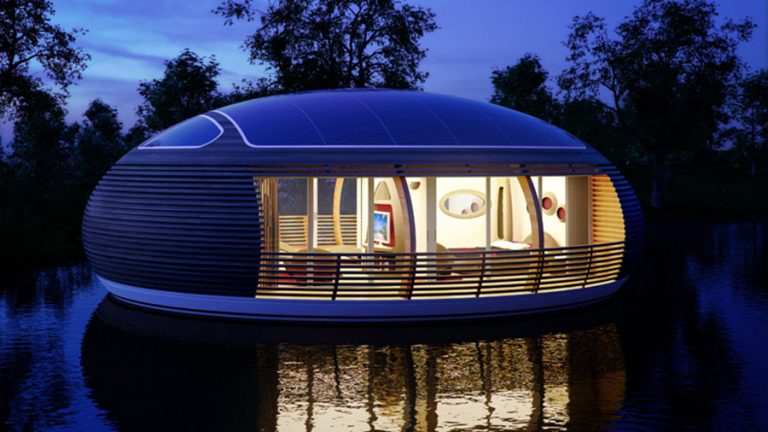
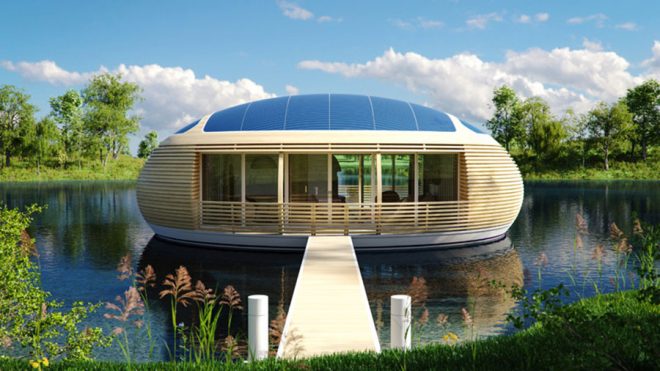
floating home
Every home should feel like an eco oasis, and it can be done by saving energy. Here’s how it can be done.

Switching energy suppliers is one of the smartest ways to save money on your gas and electricity bills. It’s a lot simpler than most consumers think and takes very little effort on your part as the supplier will manage the whole switching process for you.

We have created this step by step guide which shows you how to switch energy supplier and start benefiting from cheaper gas and electricity.

What information do I need to switch energy company?

To switch your energy company, you will need the following: your postcode, a copy of your most recent energy bill or annual statement and an estimated 10-15 minutes of your time. For those that want to pay for their bills via Direct Debit, your bank account details will be required to set up this payment method. It’s useful to know that this is the cheapest way to pay for your gas and electricity supply.

Don’t panic if you can’t find your latest energy bill or annual statement. You will be able to see an estimate of how much energy you consume by answering a few basic questions about your household.

You should now have the above details ready. The next step is to head on over to one of the many price comparison sites that can be found online. Here are the four steps you will need to follow once you’re on one of these sites.

Step 1: Enter your home postcode

Enter your postcode and select your home address from the drop-down menu. Prices for gas and electricity are set on a regional basis. This means that not all suppliers and tariffs will be available to you. By entering your home address, you will only be shown deals that are relevant to you.

Step 2: Enter your current energy usage

Next, the online comparison site will want to know how much energy you currently consume. This will allow it to determine how much you could be saving when you switch energy company. Your usage details can be found on your latest bill or annual energy statement. If you don’t have this information to hand, an estimate can be provided by answering a few basic questions about your household.

Step 3: Choose your new energy tariff

Did you know that there are currently more than 55 energy suppliers in the UK? This competition helps drive down the price of gas and electricity but has the drawback of making your decision a little more difficult. Fear not as the comparison site can filter deals based on what you are searching for. It will be able to sort tariffs by lowest price first; a great way to quickly see how much you could save by switching energy companies.

Those that want to narrow down their results even further can do so. Other factors that may be important to you in addition to price may include the following:

  • Green tariffs that use sustainable energy
  • A tariff without an exit fee
  • Various contract lengths (12, 18 or 24 months)

Step 4: Confirm your energy switch

The final step when switching energy suppliers is to confirm your switch. To complete this, you will need to provide your contact details and payment information.

That’s it! You have now completed the process. Your new supplier will contact your previous supplier to arrange a switchover date.
Here are answers to some of the most frequently asked questions after making the switch.

Will my gas and electricity supply be interrupted?

No matter what energy company you choose, your gas and electricity supply will not be interrupted whatsoever. In fact, it will continue to run as normal. The only real change you will notice is that a new energy supplier will now send you a bill and your unit rate will be altered to reflect the tariff you have chosen.

How long will the switch take?

Comparing energy prices and confirming the switch online can take up to 15 minutes. The actual switch normally takes around three weeks. During this period, your new energy supplier will manage the transition for you behind the scenes. If you do change your mind, there is a 14-day cooling off period.

Will I hear from my new energy provider?

The energy company that you have switched to will send you a letter and welcome pack in the post within a few days of the switch. This highlights the terms and conditions that you have agreed to, it includes information about your new tariff.

They will request that you take a meter reading. This will be forwarded to your old supplier to allow them to calculate your final bill.

In summary, comparing and switching energy companies is easy and simple with the help of an online comparison site. The new energy supplier will manage the whole process for you.

How a Greenhouse Business helps the environment

0

greenhouse coffee shop

There are numerous reasons to start a greenhouse business, and nearly all those reasons have environmental benefits. A greenhouse allows a gardener to turn their hobby into a full-time job. Whether you’re growing large or small crops, live in a tiny house with a small garden or a commercial greenhouse can be an excellent money-making opportunity for anyone with a green thumb. Here are a few reasons to start an eco-friendly greenhouse business in your home or commercial garden.

Multi-Purpose Sustainability

If you own a greenhouse it can be used to grow a range of crops. For instance, you can grow organic flowers, bulb plants, vegetables, exotic plants, and seedlings. For a sustainable approach, consider changing the crop every year so the soil’s nutrients don’t get depleted. No matter what you’re planning to grow, a commercial greenhouse is a safe, environmentally friendly option.

Consistency and Quality

When you’re running a commercial greenhouse, it’s easy to grow plants regardless of seasonal changes and climate fluctuations. Extreme temperatures, excessive rainfall, and long droughts won’t cause serious issues for plants grown in a greenhouse. In this line of work, you won’t just be helping the environment; you will also have the flexibility to run your business as you wish.

Providing the Right Environment for Your Plants

Whether you’re growing vegetables, flowers, or herbs, those plants will likely do best in a moist, warm environment. In a commercial greenhouse, plants are in an environment that’s conducive to growth. After all, the purpose of a greenhouse is to trap water vapor and heat, so humidity and warmth are maintained.

Great Design

secret greenhouse corner
Secret romantic greenhouse

Like pergolas and gazebos, it’s possible to design a commercial greenhouse that suits any landscape. There are numerous designs available, and with the right choice, you can create a space that has visual appeal and a commercial purpose.

Saving Money

It’s easy to spend hundreds of dollars on seedlings at the start of the planting season, but in many cases, growers are still left lacking. With a greenhouse business, though, you can grow enough plants to sell and to share. You’ll be helping the environment by spreading the love!

Endless Customization Options

If you’d rather build a greenhouse that’s different from everyone else’s, or your plants have certain requirements, it’s easy to customize your setup. Even in the commercial setting, it’s easier to put up a greenhouse than it is to build a pond or patio. For greater environmental impact, you can customize the position of plants, storage areas, doors, and more.

Better Health

Running a greenhouse business isn’t just good for the environment, it’s good for your health. Being out in nature is a great way to escape from the daily stresses of being a business owner. In fact, a greenhouse with diffused lighting may help to minimize SAD, or seasonal affective disorder. When you’re a commercial greenhouse owner, you can help the environment while lifting your own spirits.

In Closing

Though starting a greenhouse business requires a substantial initial investment, the money spent on such an endeavor is worthwhile in the long term. With so many environmental benefits, it’s easy to see why running an agricultural business is such a great idea. For more information on getting into the business of cultivating plants, visit our blog today.

Why Businesses Should Go Green With Their Architectural Plans

moshe safdie crystal china
Moshe Safdie, Metalocus in China

Many conventional buildings that were built these days were designed with that modern and futuristic look. But, behind these looks is also the increased demand for energy production. Not to mention the adverse impacts on the environment that these modern yet poorly designed buildings have created. Unfortunately, a lot of skyscrapers that modern cities boast of have substantial impacts on the environment. Many of these buildings use resources, emit greenhouse gases, and degenerate waste that harms the environment. This is the same environment where people and other living things also live.

The damage that these modern buildings cause can be too profound that one may not have the exact idea of how it wreaks havoc to the environment. Thus, the need to create buildings that are focused on the concepts of green architecture.

Understanding Green Architecture

Green architecture refers to the concept of constructing and designing buildings while taking into consideration sustainable sources of energy. All aspects of the building must be created to become environmentally efficient. These are the kinds of buildings that require less energy to operate and use for many years to come.

Reasons to Go Green with Architectural Plans

Improvement in Energy Efficiency

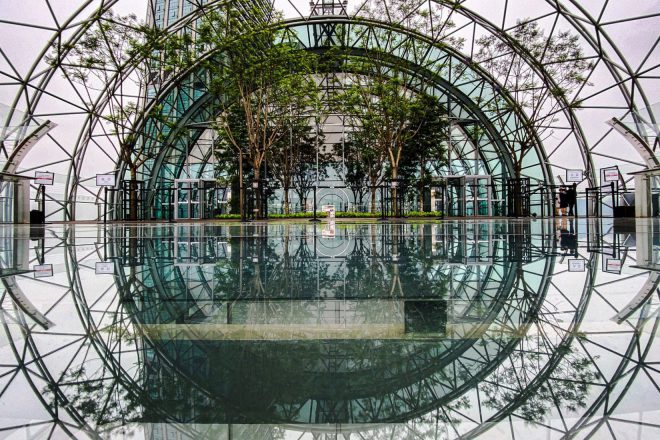
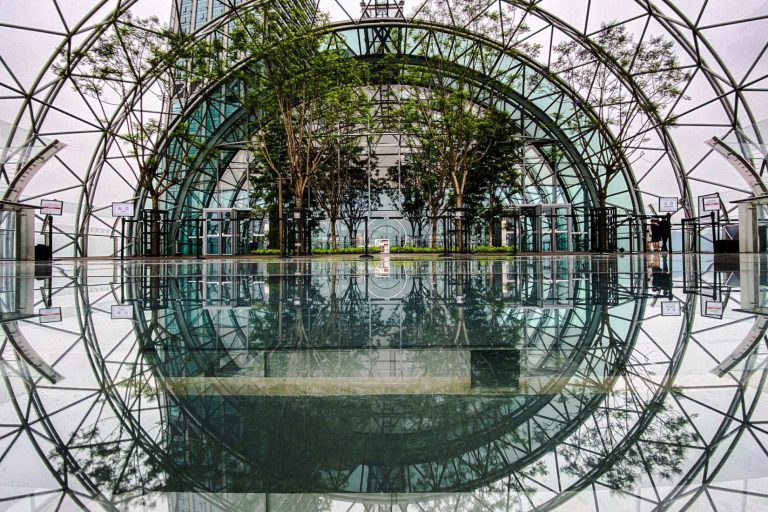
Project Jewel, Moshe Safdie, Habitat 67, Israeli architects, Singapore, Changi Airport, Mixed Use Development, Bio Dome, Indoor Garden, green wall, bio dome

Foreign investors who are planning to expand their businesses overseas will surely be impressed by the ecological awareness that your company building manifests. This is one way of showing that your establishment stands out from its competitors who are still in conventional buildings. The professionals from Architectural Cladding Suppliers believe that green architectural designs are brand differentiators. It is one of the best ways to show to your prospective investors that your company is among the leaders in terms of environmental awareness. Nowadays, leading lenders, along with the investors market have come to recognize the economic benefits of having a green building. Many of these investors are also looking to invest in companies that operate in green buildings that have earned certifications from environmental organizations. These certifications can also attract outstanding talents that are also just as environmentally conscious.

Makes Water Efficiency Possible

Buildings that adhere to eco-friendly architectural designs are built with water resource systems that make water efficiency possible. Many green buildings have alternative water sources in place which greatly reduce the strain that people may experience with shared water resources. These alternative water resources allow the purification of water while also enabling the process of recycling. These things are made possible because green buildings have sustainable plumbing systems. It gives all the building occupants the chance to use water responsibly. Water catchment systems may vary depending on what’s most suitable for your building design. An environment-friendly water catchment system makes it possible for a building to store and capture rainwater that can be used for different applications.

Reduction of Operational and Maintenance Cost

Green buildings are designed to lower the costs of energy usage. These buildings maximize the use of daylight, one lighting strategy that paves the way for lowered electricity costs. This feature alone of a green building already has a huge impact on the environment. Energy use accounts for 80 percent of the lifetime costs of maintaining a building. This also translates to more earnings and more money saved for building owners. Buildings that adhere to green architectural plans may entail higher costs during construction compared to conventional buildings. But, with the reduced costs spent on maintenance and operational costs, these green buildings are still considered cheaper over a while.

There are a plethora of benefits to green architectural plans. Businesses will be able to save on energy costs, with these in place. Not to mention the potential to attract more jobs and make significant contributions to the economy.

Russians make cheese and wine from invasive American weed

0

hairy beggerticks in the wild
Russian scientists found that an invasive plant brought from America has the enzymes to create a plant-based enzyme that makes wine and cheese.

Like making lemonade from lemons (or fermented lemons which are even better) Russian scientists have found the best way to use an invasive weed brought from America – and called hairy beggarticks or Bidens pilosa officially. Its other names are black-jack, cobbler’s pegs and Spanish needle. The Russians found that the leaves of the plant contain an interesting enzyme, one that could function as a vegan alternative in the food industry to make cheese and wine, they report in the International Journal of Scientific & Technology Research. This plant, like duckweed as a superfood (see the startup GreenOnyx), could be a promising new ingredient that is vegan, kosher and halal.

Eating a Plant-Based Diet

The scientists say that the leaf extract of hairy beggarticks (let’s say it three times: hairy beggarticks, hairy beggarticks, hairy beggarticks!) contains enzymes that speed up fermentation in wine and which help turn milk into cheese, working as a plant-based alternative to the expensive enzymes used in the food industry such as rennet which comes from an animal stomach. Vegans are looking for alternatives to animal based products constantly such as sturgeon or gelatine as wine clarifiers. Remember when Starbucks got called out for putting crushed red beetles in its frappuccinos? That’s what we are talking about.

According to the authors from South Ural State University, the technique they now use with the invasive plant can produce cheaper plant alternatives to expensive enzymes necessary in wine and cheese production. And obviously the vegan alternative is much desired as more people turn to a plant based diet.

“There is a long tradition of using Bidens pilosa as a medicine,” says Irina Potoroko from the Russian institute. “Due to its prevalence, its use, in our opinion, is extremely beneficial in winemaking and milk processing, where the Bidens pilosa extract can become an alternative to many food animal enzymes,” she said.

In the experiments, the researchers proved that fresh leaves of Bidens pilosa have high protease activity in an acidic buffer pH 4 (8.2567 × 10⁻⁷ mM / mg / min) compared to an alkaline buffer pH 10 (5.15 × 10⁻⁷ mM / mg / min) at 30 degrees Celsius. The scientists were able to determine the optimal conditions for the enzymatic activity of the leaf extract, which makes it possible to use in various technological processes.

Potoroko believes that it is necessary to continue the research in order to find out which part of the plant (roots, stem, flowers?) has the greatest protease activity, because the research carried out was focused only on fresh leaves.

Bidens pilosa is widespread in the world as a weed imported from America. In Russia, the plant was found in the Far East. Bidens pilosa belongs to the quarantine weeds prohibited for import. Going forward, the scientists want to break down even more parts of the plant, which originated in the U.S. but spread throughout the world as an invasive weed.

Solar panel “Roomba” Ecoppia gets $40 million investment

It’s like a Roomba but for industrial scale solar panels. Meet Ecoppia.

Robotics, we have shown with the Israeli solar helicopter invention to spin panels in 3D, is important in advancing solar energy goals and renewable energy at large. While gig economy companies like AirBnB and Uber have nose-dived during a global pandemic with no clear path for recovering, renewable energy projects are still a safe bet going forward, despite job loss and overall investor cautiousness. In fact this is one of the only sectors that can get us out of future messes with pandemics and global warming hot on our heels. Meet the latest Israeli company making strides in solar.

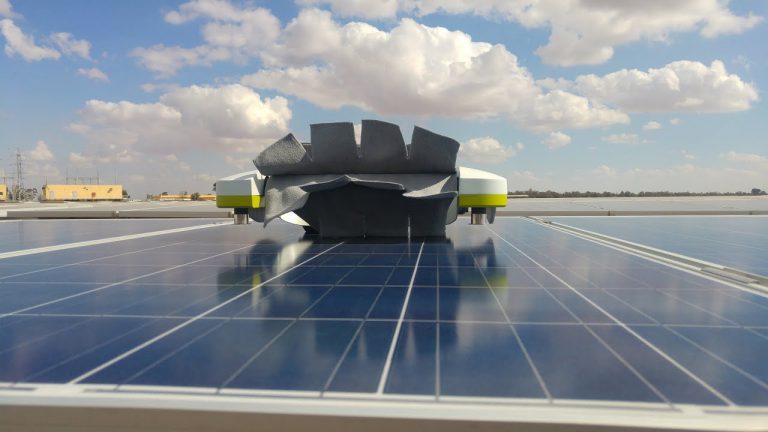
Ecoppia cleaner robots

One of the biggest challenges in solar energy is keeping the solar panels clean. Solar parks in the desert face two major challenges: a lot of dust on the photovoltaic panels and not enough water to clean them. Dust can cause up to a 40% decrease in efficiency of the panels. So there is  huge interest to avert this problem. Normally teams of humans come in with squeegees to clean the panels by hand.

Ecoppia founders understood there could be a better way: bring in the robotics cleaners.

Ecoppia, which we wrote about here in 2014, based in Israel announces a US $40 million strategic investment in the company by the $60 billion real estate holding company CIM Group.

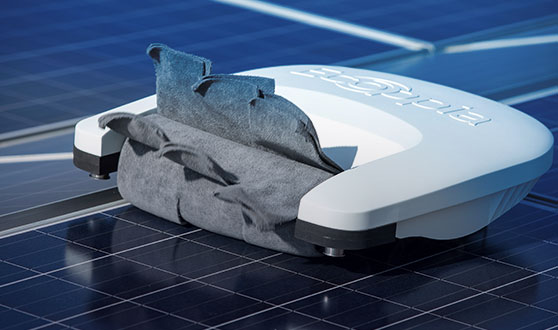
roomba solar cleaner
Like a Roomba from iRobot cleans your floor, Ecoppia cleans solar panels of large solar panels once the sun has set.

Ecoppia’s robotic solutions are deployed globally in utility-scale sites and have been field-proven to keep solar panels at a year-round peak performance while minimizing operating and management costs. Despite the unique challenges of the ongoing covid-19 pandemic, Ecoppia has secured over 10 gigawatts worth of energy of new projects over the last three quarters alone.

On a pilot site in Israel at a solar plant called Ketura, it would take up to five days to clean the panels manually and it was hard work that often put cleaners and panels at risk. But if they didn’t clean the panels, their ability to absorb the sun’s energy was reduced by about 35 percent. Over time, that amounts to a significant loss.

Completely self-sufficient, nearly one hundred E4 robots cleaned the plant’s panels every day after sunset. Using a sophisticated winch system, they clean 54 square feet in 30 seconds, and Ketura said they were thrilled with the results: “Ecoppia has changed the way we run the Ketura Sun field,” says Yanir Aloush, VP Operations at Arava Power which runs the site at Ketura. 

The solar energy sector uniquely requires vendors to meet stringent standards of financial integrity in order to deploy in large scale projects. With the CIM investment, Ecoppia says it strengthens its balance sheet and reduces its cost of debt. This brings the company in line with expectations of its tier-1 energy clients, who include ENGIE, EDF, Fortum, Actis, Brookfield and others.

“This latest investment by CIM Group is a vote of confidence from one of the most prominent and sophisticated US investors,” said Jean Scemama, CEO of Ecoppia. “This capital infusion will allow Ecoppia to continue its geographic expansion, as more and more regions realize the benefits of shifting to robotic cleaning.”

CIM explained why they invested: “Following an extensive market analysis and due diligence, which CIM undertakes in its proven investment process, we recognized Ecoppia as the leading robotic player in the solar industry,” said Jennifer Gandin, Principal, Investments of CIM Group. “We believe that Ecoppia will continue to pioneer the automation of the solar industry with its experience and data analysis capabilities,” she added.

More on Ecoppia

With over 17GW of secured projects, Ecoppia removes dust from solar panels on a daily basis leveraging advanced machine learning and IoT capabilities. Remotely managed and controlled, the Ecoppia platform allows solar sites to maintain peak performance with minimal costs and human intervention.