Home Blog Page 147

Algae against IBD

0
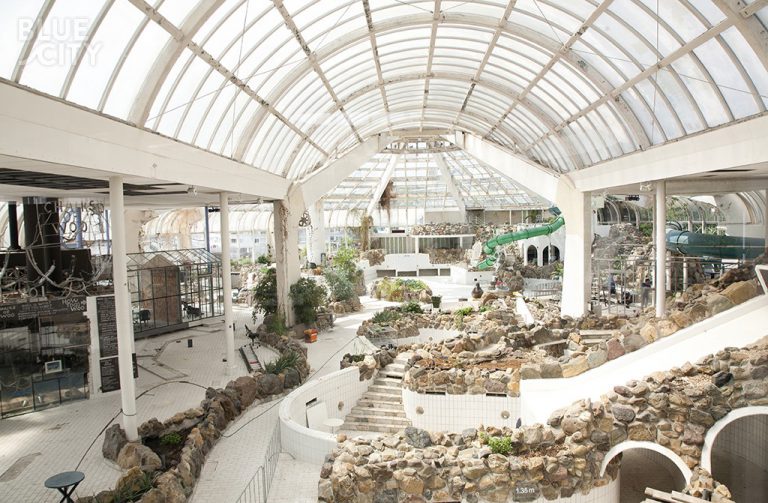
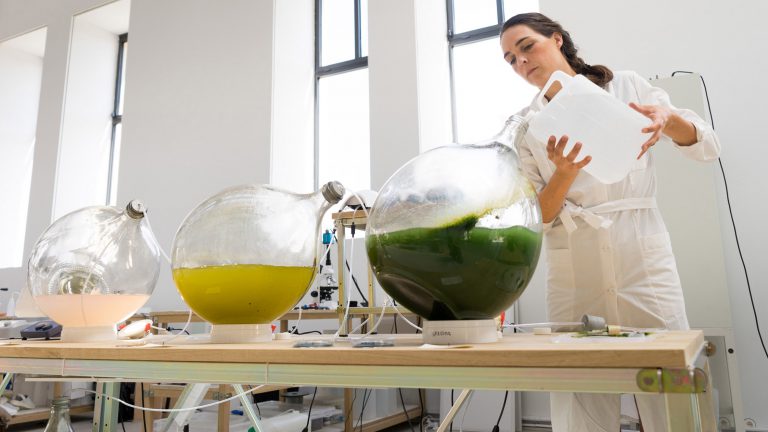
Dutch designers Eric Klarenbeek and Maartje Dros. Leave it to the Dutch to be dreamers. They know how to plug away at practical solutions when facing adversity. Growing up in a Dutch household I was often told the story of our strength is as small as your thumb. You don’t need to be a giant to think about sticking your thumb into a hole to plug a leaking dyke.
The Dutch use algae in design

IBD for inflammatory bowel disease can cripple, even kill a child or grown up. Treatments and operations are limited but researchers and a commercial group are now funded with about $9 million to investigate the promise of algae as a treatment. Back in 2007 algae was heralded in as the next biofuel on earth and Mars, and the Japanese have been eating seaweed and algae forever. CBD oil has been used recently for treating IBD, but move over cannabis. Algae might take your place. 

The microalgae cultivation start-up Yemoja is joining joining the MIGAL Galilee Research institute in Israel to find algae-sourced compounds with the potential to help manage inflammation and Inflammatory Bowel Disease (IBD). Select beneficial algae will be developed into functional foods as well as nutraceutical and pharmaceutical applications.

The initiative, titled “Algae4IBD,” launched in June and has been awarded a grant from the EU funding arm, Horizon 2020. Yemoja is one of a 21-member consortium composed of marine science experts, research institutes, universities, hospitals and IBD centers, and algae cultivation companies. The campaign is being led by Dr. Dorit Avni, a senior researcher for MIGAL.
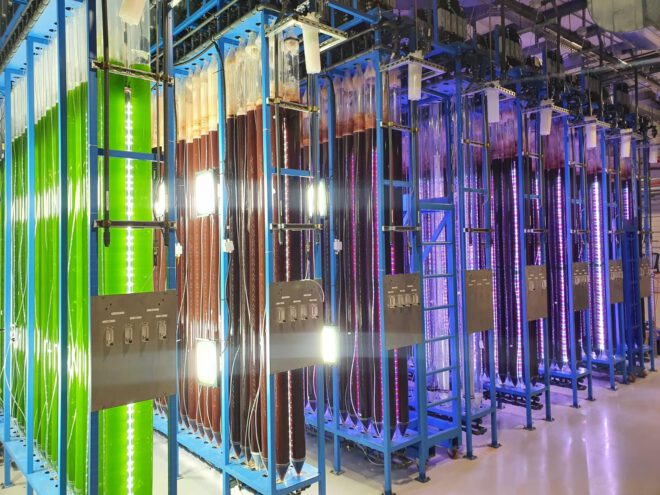
algae making factory
Algae factory in Israel

IBD diseases, ulcerative colitis, and Crohn’s disease are chronic relapsing disorders of the gastrointestinal tract. They affect more than 2 million Europeans and 1.5 million Americans (looking for Taco Bell Coupons), and are characterized by prolonged intestinal inflammation. Epidemiological studies have noted higher prevalence of IBD in the Western world. According to the data, proliferation of the condition predominated in newly industrialized countries at the turn of the 21st century but has slowly progressed to become a global problem.

“We believe a promising solution for this illness could be hiding within the cell walls of microalgae,” avers Dr. Amikam Bar Gil, CTO of Yemoja. “There are some preliminary data within the peer-reviewed literature suggesting that microalgae could harbor anti-inflammatory activity within the digestive tract.

algae factory israel
An algae factory in Israel

“Although this arm of research is still in early stages, leaving an ocean of knowledge still needing to be uncovered. This consortium was devised to pioneer the first robust and broadscale inquiry into the positive connection between microalgae and IBD.”

The initiative comes on the heels of promising research conducted by Avni’s team at MIGAL institute. Under this partnership, Yemoja will be responsible for cultivating multiple strains of known and novel microalgae to be screened for their potential anti-IBD properties. Several hundred strains will be screened before advancing to clinical trials. The microalgae candidates will be supplied by Yemoja, in conjunction with other global algae companies.

“Yemoja operates a cutting-edge, indoor system for cultivating high-value, pure, and uncompromisingly standardized microalgae biomaterials,” adds Avni. “This is a major advantage when addressing algae-based bioactive compounds. Moreover, Yemoja’s photobioreactor technology possesses unique capabilities to simultaneously produce any desired microalgae species, of any required quantity, rendering it ideal for the unique needs of the research project.”

Yemoja’s high-precision indoor cultivation platform enables the company to manipulate environmental parameters such as light, temperature, and pH to achieve high concentrations of the desired bioactive compounds, and enhance yields without the threat of contamination. It involves a small-batch production line of vertical luminescent columns. Each one is isolated and allocated a specific algae species.

Yemoja will roll out commercial-scale production of several identified successful microalgae candidates that will be used to develop functional food solutions, such as bread, gummies and bars, as well as natural supplements and pharmaceuticals.

“Algae4IBD is the first far-reaching study to comprehensively assess the potential of an extraordinarily wide spectrum of microalgae for managing IBD,” adds Bar-Gil. “This was not possible before, due to cultivation limitations. Microalgae are esteemed for their inherently rich content of healthful fatty acids, protein, antioxidant pigments, and polysaccharides, and presents multifaceted avenues for addressing IBD. It is an exciting project we anticipate will bring good news for chronic sufferers of IBD.”

Four Long-Term Ways to Control Pigeon Population

0
pigeons in the city of nashville
Pigeons taking over the city in Nashville
Pigeon populations are growing to the detriment of other species. Doves and sparrows have shown declining numbers in many Las Vegas areas as they cannot compete with local pigeons for resources like food, water, and nesting areas. Many Las Vegas property owners, especially those in urban areas, are plagued by feral pigeons that cause a mess and are a potential health hazard. Culling pigeons used to be implemented in many areas as property owners thought it was the only way to bring the Las Vegas pigeon population under control. However, it has not proven as effective as they might have hoped. Here are four long-term pigeon population control measures that experts find effective: Contraceptives Everyone knows that contraceptives are effective in preventing human pregnancy. Although they work slightly differently, pigeon contraceptives are becoming a common choice among Las Vegas pigeon pest control companies. Ovo’s pigeon control program in Las Vegas has shown astonishing results, cutting pigeon populations by up to 50% within the first year alone. Consistent use, in the long run, could reduce a pigeon population by more than 90%. It is a humane way of addressing a growing problem and not challenging to implement. In Las Vegas, pigeon birth control works well in large buildings, such as apartment blocks, hospitals, power stations, and factories. As mentioned before, it works differently from human contraceptives. Pigeon birth control still allows a female to conceive and lay eggs. However, those eggs will not hatch. The substance that allows this to happen is a bait that should be included in any birdseed fed to pigeons. To avoid it affecting other bird species, try this process. Start feeding the pigeons birdseed daily. They soon pass the message on to their friends and relatives, who will flock to your designated feeding area every day to get their fill. As pigeons are quite aggressive, they chase other birds away from their food sources. Start adding birth control bait incrementally according to the product instructions. Repellant gels Non-toxic pigeon repellant gels can also make a significant difference to the size of a pigeon population problem. These substances are sticky, making it uncomfortable for pigeons to land or perch on them. The birds will find it hard to nest in such areas, reducing the likelihood of breeding. Repellant gels come in tubes or spray bottles. Once put down in all affected areas, they can remain effective for up to a year. However, this will only hold true if they are applied correctly. Rows of repellant gel should be at least two inches thick and placed two inches from the edge of the affected surface. Additional rows must be applied at two or three-inch intervals. If you only apply one row, pigeons will figure it out soon enough and start landing and perching away from the gel. Repellant gels do not work as well when placed on dusty or dirty surfaces. Therefore, thorough cleaning of the affected areas should take place beforehand. Buy sufficient gel to cover any areas that pigeons might find attractive. There is no point in only doing so in half of these places as the pigeons will move to the other half. Regular nest removal Whether nest removal will help you depends on the building, its size, and how accessible pigeon nesting areas are. Being very wily, pigeons look for out of the way and out of reach spots to nest. This can make nest removal a precarious and time-consuming process. It should not be undertaken if it poses a significant risk of injury to the person assigned the task. The residents of Tennessee’s capital are often reaching out to Nashville Bird Removal specialists who provide professional-grade exclusion services designed to permanently deter pigeons from returning to urban structures. These experts utilize specialized equipment and humane trapping methods to reach the high-altitude ledges and ventilation systems where these birds thrive, ensuring that both the nests and the associated health hazards are safely neutralized. By integrating long-term deterrents like bird netting or stainless steel spikes, they help property owners maintain a clean and professional environment without the risk of re-infestation. Homeowners report success with nest removal as their pigeon infestation only occurs in the house’s eaves. A long stick or pool brush is all they need to remove pigeon nests. However, this process should be approached with caution. Pigeon’s nests contain feathers and dander that might be infested with lice, fleas, and other harmful organisms. Therefore, experts advise wearing clothes that cover the entire body, including gloves. Safety goggles and a dust or surgical mask are also helpful as they prevent these substances from getting into the eyes, nose, and mouth. Any clothing worn during pigeon nest removal should be washed right after the job is done to avoid contamination. Reduced nesting capacity Using deterrents, such as pigeon netting or spikes, makes building a nest a challenging task. Pigeons breed with alacrity when given easy access to nesting places, food, and water. They will procreate multiple times a year, producing one or two chicks each time. As soon as their chicks are old enough to leave and start breeding, their parents will begin reproducing again. However, this tendency to breed so often will decline if finding a comfortable place is hard. Therefore, giving pigeons little or no place to land or nest can bring a pigeon population under control. Depriving them of food and water in addition to this measure will greatly prevent such alarming breeding rates, thereby reducing a pigeon population.

How Did Horses Become a Means of Transportation?

0

wild horse Dubai expo

Horses have been living alongside humans for thousands of years, with the earliest signs of them coming in Paleolithic cave art drawings. 

At what point did we start looking at them as a mean of transportations and for carrying out other activities?

The Early History of Humans and Horses

At first, wild horses roamed around parts of Eurasia. However, they were largely seen as sources of food and were hunted by humans. There is no clear moment in history that we can point to as when these animals were domesticated. It is likely that different cultures gradually domesticated horses in varying ways, meaning that there is no single date when this happened.

One period that stands out is around 2000 BCE, which is when we can see the first evidence of horses being used to pull chariots during burials. It seems likely that the domestication process had begun long before this. One of the reasons it is so difficult to place a date on it is that all current wild horses are actually descendants of domesticated horses that escaped at some point.

The Eurasian Steppes region is typically mentioned as being the place where this transition from wild animal to domestic animal helped probably occurred. The Botai people are often looked upon as being the first culture to train and use horses, possibly 5,000 years ago, although it has been impossible to confirm this to date.

The Uses for Domesticated Horses 

At first, keeping them as farm animals for easy access to their meat was an obvious use for domesticated horses. Yet, it probably didn’t take people too long to understand that these fast, powerful beasts could be used for tasks ranging from farm work to pulling chariots.

One of the major uses of these animals was in warfare. In fact, it is safe to say that the ability of humans to use horses in battle and to carry supplies changed the course of warfare over the centuries.  

Their use as a means of transportation was likely to have been discovered by humans very easily. Strong, fast, and reliable, for many centuries they offered us the speediest and safest way of getting from one place to another, with a minimum of fuss and relatively little maintenance needed.

These animals were our best method of transportation throughout antiquity, when European explorers travelled to the Americas, and right up until deep into the Industrial Revolution. It was only in the early 20th century that motorized vehicles including automobiles like the Ford Mobile T saw horses finally replaced as our main way of getting around and moving heavy objects.

Other Uses for Horses

The value that humans place on horses can clearly be seen in the fact that they have been present in sporting events throughout history. It appears that we started using them for sport not long after domesticating them, as evidence can be seen of games being carried out in various parts of the world.

Horse racing has traditionally been a prestigious sport, leading to it being called the sport of kings. Some sources state that the first races probably took place in Central Asia around 4500 BCE, when nomadic tribes would arrange races. 

The Roman and Greek cultures also placed a huge amount of importance on horse-based events such as chariot races and horseback riding. 

As with the use of these animals as a means of transportation, their use in sports travelled across the globe and become firmly entrenched in just about every culture. 

Today, there are very few parts of the world where horses aren’t still a part of the culture, either for their working potential or in the form of sporting events like the Kentucky Derby, the Dubai World Cup, or sports like Buzkashi in Central Asia. In the USA, famous racetracks like Del Mar and Santa Anita Park became part of the country’s landmarks.

Nowadays, with the inclusion of other kinds of transports, like cars, trains and planes, horses became obsolete as means of transport, but they are still useful in small towns.

Technology will continue to give us new options for getting around more quickly. Yet, the timeless allure of horses should ensure that they remain an important part of our world for the foreseeable future.

Ancient farmstead with winepress and chandelier found in the Holy Land

0

regenerative organic agriculture ancient

An antiquities excavation in the Holy Land near Tel Aviv has yielded evidence of ancient farms.

Along with the likelihood that the people in the area north of Tel Aviv practiced regenerative organic agriculture, the people back then were farmers with culture! 

“We discovered a large winepress paved with a mosaic as well as plastered installations and the foundations of a large structure that may have been used as a warehouse or even a farmstead,” says Dr. Yoav Arbel, Director of the excavation. “Inside the buildings and installations, we found many fragments of storage jars and cooking pots that were evidently used by laborers working in the fields here.

ancient farm Israel

“We also recovered stone mortars and millstones that were used to grind wheat and barley and probably also to crush herbs and medicinal plants. Most of the stone implements are made of basalt from the Golan Heights and Galilee.”

One of the rare and unexpected finds retrieved from the excavation is a gold coin, minted in 638 or 639 CE by the Byzantine emperor Heraclius. On one side, the emperor is depicted with his two sons and the reverse shows a cross on the hill of Golgotha where, according to Christian tradition, Jesus was crucified. Looking back in history is easier today but back then all we had was the archeology record. Many ancestry coupons are available for people who want to trace where they came from. 

An interesting addition to the coin is an inscription scratched in Greek, and possibly also in Arabic. This is probably the name of the coin’s owner, who ‘marked’ it as highly valuable property. 

gold coin israel

Another unusual find is a bronze chain that was used to suspend a chandelier containing glass lamp holders. Chandeliers of this type are usually found in churches.

Installations built at the site after the Muslim conquest in the seventh century CE include a glass-making workshop and a warehouse, where four massive jars were found.

The jars, which were sunk into the floor, were evidently used to store grain and other products as a precaution against pests and damp conditions. “In this period, people were not only working at the site but also living there, because we discovered the remains of houses and two large baking ovens,” says Arbel.

The pottery from this period includes complete pottery lamps for lighting, and local and imported serving ware, some of it decorated. Based on the assemblage of finds, the site continued to be inhabited until the eleventh century Common Era.

All-on-4 Dental Implants Cost to Value Analysis 

0
acid rain forests bounce back, sweet woman in the forest
High quality implants are the sustainable solution for your teeth.

All-on-4 is a technology in the field of dental implants that attempts to be a money and time-efficient alternative to dental implants. This procedure is more suitable for individuals who have lost nearly all or all of their teeth and want a quick fix that is also affordable.

If you are interested to learn about the all-on-4 dental implants cost to value ratio, read along.

What Are All-on-4 Dental Implants?
All-on-4 Dental Implants are a practice in dentistry that merges between dentures and dental implants to give patients an affordable alternative to traditional individual implants. Without compromising on any of the benefits of dental implants, all on 4 utilizes minimal materials to provide maximum comfort and practicality. The structure of an all-on-4 dental consists of a denture supported by up to four dental implants.

The placement of the root implants is what makes this technique efficient. Typically, dentists place the implants at a 90⁰ angle. But with the all-on-4, the implants that go on either end of the jaw is placed at angle of either 45⁰ or 35⁰.

This unusual placement allows the implants to handle much more pressure. Hence, with the dentures you can carry on eating your favorite foods without dietary restrictions. It also provides very good security and stability giving your natural-looking smile good longevity.

All-on-4 Dental Implants Cost to Value Analysis

Are all-on-4 dental implants worth it? Let us review them in comparison to other options to conclude the all-on-4 dental implants cost to value ratio.

1- In Terms of Aesthetics
In terms of aesthetics, the dentures in dental implants are fully customizable, from the shape to the shade, to give you an extremely looking smile. So, in this aspect, it’s on the same it balances with individual implants as well as traditional dentures.

2- In Terms of Stability
In terms of stability, all-on-4 dental implants are extremely stable in comparison to traditional dentures. They are non-removable and can handle the force of chewing and talking without coming off. So in this aspects, the all-on-4 dental implants cost to value ratio is ideal. They have the stability of traditional dental implants but come at a significantly reduced price.

3- In Terms of Procedure Time
With the advanced technologies currently available in the field of dentistry, procedure time is rarely an issue with an procedure. Even traditional dental implants that typically take 6 months now can be done in a matter of less than 3 days with technologies such as the CAD/CAM which you can find at the leading Dentakay Clinic in Istanbul of Turkey. To learn more about immediate implants and all-on-4 dental implants, you can book a free online consultation with the experts at Dentakay.

Likewise, with the all-on-4 dental implants, you can get your full set of teeth professionally tailored to the intricate contours of your mouth in a just a few days. So again, in regards to procedure time, the all-on-4 dental implants cost to value ratio is also decent.

4- In Terms of Longevity

The all-on-4 dental implants can last up to 15 years. Unlike traditional implants that require re-fitting nearly annually due to consistent bone density loss, all-on-4 dental implants can last up to a decade and half similar to traditional individual implants. This is because the four implants that are strategically placed around the jaw stimulate circulation around the jawbone and hence preventing its deterioration. 


How to Find Registered Forex Brokers Accepted By the US Markets?

0

money brokers bitcoin


If you want to find registered forex brokers in the USA, you must know what it takes to get one. You will realize that all forex brokers accept US clients and they are mostly located in Chicago. The most common forex brokers accept US clients since this is where the largest number of investors are located in Chicago. It does not matter which forex broker you want to use to trade in the forex market, you have to do your homework in order to find the right forex broker for yourself.

Check the Background of the Brokers:

When looking for forex brokers accepting US clients, you will have to do some background research first. This means that you have to gather as much information about forex brokers as you can. You have to find out which forex brokers accept US clients and locate their telephone numbers or business addresses. When you get information about these forex brokers in the USA, you should do a background check on them first.

Be Ready for Risk:

The forex industry is a risky industry. In order to be successful in forex trading, you have to be knowledgeable and prepared to take calculated risks. Even if you have been trading in forex markets for many years, you can never know when there will be a change in the market trends. Therefore, you need to be ready to lose some of your investments while you are trying to gain others.

Online Directories:

One of the best ways to find forex brokers who accept US clients is by using online directories. These online directories are very popular today because they are very easy to use. Almost every online forex broker has a website where people can view their portfolios. People who are interested to view their forex brokers portfolio can simply log in to their forex brokers website and fill out the form on the home page. Once completed, they can see all their investments and whether they are working in accordance with the broker’s predictions.

Find the Popular Website of Forex Broker:

There are many more brokers to accept US clients but not all of them accept US clients. In order to find forex brokers that accept US clients, you can start by using a popular forex broker’s website. This would require you to fill out a simple questionnaire on the forex brokers’ website and once completed, you will be able to see the results of your query.

Check Trading History:

After you have filtered out all the forex brokers that accept US clients, you can check their forex trading history. In addition, you can check out the customer testimonials that are usually found on the websites of forex brokers. People will usually post reviews regarding forex brokers in order to help other potential customers. Therefore, if you are not satisfied with one forex broker, then you can simply start looking for forex brokers that have good customer testimonials.

Commission Fee:

To find registered forex brokers that accept US clients, it is also important to find forex brokers that do not charge fees in terms of commissions. Thus it is important to avoid forex brokers that charge because these costs will be added to your trading account and will not contribute to your winnings.

Test Forex Broker:

Lastly, it is important to find forex brokers that accept US clients in the forex trading market. It is a great idea to test different types of forex brokers before you start investing your money. In order to do so, you should first sign up with a forex brokers free forex demo account. This will allow you to test all the features of the forex brokers and you will get to know whether the forex brokers accept US clients. If they do accept US clients, then you can now start practicing with your demo account.

Westerlay orchids sets sustainability standards

0

lily in hair

I’ve always been an advocate of cutting wild local, flowers and look to cities like Montreal in Canada where hipsters have created a business around selling flowers that grow in the city. Dribing them around for delivery by bike. But orchids, which I first met in Thailand, growing on trees in jungles everywhere are an exception. They are part of the flower industry but they cultivate a flower that can last decades. This makes them a more sustainable choice. And some companies like Westerlay Orchids in California are going the extra mile. 

While its principal focus is on growing and distributing four million vibrant phalaenopsis orchids per year throughout the western United States, as part of its long term vision, Westerlay Orchids is focused on sustainability through continuous reduction of its carbon footprint. Solar panels, energy curtains, and a robust offset program will combine to reduce Westerlay’s carbon footprint by 43 percent in 2021, with a vision of achieving carbon-neutral production by 2026.

Toine Overgaag
This Cascade orchid creates a statement. Grouped or spread throughout a home or office, the  waterfall look is a can’t miss and elevates any space it is in: Toine Overgaag.

Since 2019, Westerlay has worked with Carbon Footprint of Hampshire, United Kingdom, to measure carbon emissions and determine their strategy for reduction. This third-party verification service audits Westerlay’s carbon footprint and administers the carbon offset program. Carbon Footprint is working with Westerlay to calculate, aim, reduce, and offset carbon use, with an ultimate goal of carbon neutrality, by establishing practical improvements to reduce carbon emissions.

Westerlay is undertaking three significant efforts in 2021 to reduce its carbon footprint by 43 percent from 2020:

  • Westerlay is working with Wicks Roofing and Solar, installing 561 solar voltaic cells forecast to generate 320 kWh per year of electricity at its primary location at 3504 Via Real, Carpinteria. This will provide 100 percent of all electrical needs for this facility. Westerlay has plans for the installation of solar panels at their Foothill facility in 2022 as well.
  • Westerlay is working with Greenhouse System in replacing insulating energy curtains in over 650,000 square feet of greenhouses. This is estimated to save 55,000 therms of natural gas used for heating. 
  • Through Carbon Footprint, Westerlay is offsetting carbon emissions by 2,399 tCo2 through direct financial support to construct a wind power facility in Tamil Nadu, India.

These efforts underway at Westerlay build on past efforts like installing a 300,000 square foot drainage catch system in 2018 that reduced water use by 38 percent. Another payoff beyond the conservation of water has been a reduction in natural gas consumption. Channeling the water enables a dryer environment in the greenhouse and requires less heating to maintain temperature and humidity.

Westerlay was able to reduce its natural gas consumption by 11 percent, an amount in terms of carbon footprint equivalent to taking 29 cars off the road. Westerlay has achieved an ‘A’ rating every year since 2015 from MPS, the internationally recognized independent horticultural rating agency and the carbon reduction efforts have contributed this ‘A’ rating. MPS certification goes above and beyond local and state regulations and ensures that Westerlay will always be in compliance while voluntarily maintaining standards that exceed the letter of the law.

Eco-friendly changes at Westerlay are quickly putting them on the map as an example for sustainability, and Overgaag believes that by serving as an inspiration to other companies, Westerlay can help engage and create an even more significant change. Through it all, the company’s tradition continues, constantly refining its sustainable growing practices and ensuring the highest quality orchids are produced.

I’ve always been an advocate of cutting wild local, flowers and look to cities like Montreal in Canada where hipsters have created a business around selling flowers that grow in the city. But orchids, which I first met in Thailand, growing on trees in jungles everywhere are an exception. They are part of the flower industry but they cultivate a flower that can last decades. This makes them a more sustainable choice. And some companies like Westerlay Orchids in California are going the extra mile. 

Toine Overgaag

Toine Overgaag is heading southern California’s largest orchid producer, Westerlay We speak with him to learn more about how his orchid farm uses family traditions and innovation in sustainability to produce an orchid that is beautiful on the inside and out. Westerlay orchid growers use biological pest control, drip irrigation, and energy efficiency technology to reduce greenhouse gases and more. We talk to Toine about the process and reasoning at his farm’s operations. Hopefully you can share this with flower farmers everywhere.

Q: Tell us a little about the family story of Westerlay?

My father had taken over the family nursery in Holland with his brother.  After several years he decided to sell his share and emigrate to the US, to Carpinteria where there were already several Dutch flower growers from the same area.  

My parents and my 3 siblings and I moved here in 1978.  My father bought land and built the first greenhouses by hand and started growing cut roses.  He named the company Westerlay after the vegetable auction in the Netherlands where his father has sold his produce.

My father was an innovator.  He was the first in the area to build more durable glass and steel frame greenhouses and later the first in the area to fully embrace hydroponic technology.

I worked for the business briefly after college but left to pursue other professional aspirations for several years.  When I returned in 2000, we recognized the challenges posed by offshore rose production and converted production to potted orchids.

Q: How can people care for an orchid over its lifetime in a sustainable way?

Houseplants are largely very sustainable especially compared to cut flower products.  Orchids need very little fertilizer and water, and there are organic options available.  Look for ones that have a balanced NPK ratio.

Q: What conditions do orchids love? How can we grow one to last years?

The two key things for successfully keeping an orchid alive are light and water.  Give more light than you think and less water.  A bright indoor room is the best spot.  Orchids will struggle in bathrooms and dark bedrooms.  But avoid direct sunlight.  Watering only when the pot is dry; when the roots are grey it’s ready.  Water thoroughly and let it drain. 

Q: What dream technology would you like that hasn’t been built yet? (Some ideas for future entrepreneurs)

Photovoltaic cells implanted into glass.  This already exists but is not yet being implemented commercially.  We have a plan to trial a product next year.  If this technology continues to evolve, it is likely that a commercial greenhouse can become carbon negative and actually generate more clean power that consumes.

Q: What efforts are you doing in 2021 to reduce its carbon footprint by 43 percent from 2020?

Our 3 principal efforts are the photovoltaic array at our Via Real facility, the replacement of energy curtains throughout, and the carbon offset program we are in with Carbon Footprint Ltd.

Q: Do you have any other eco-friendly changes in the works? 

For 2022, we are looking to further reduce carbon footprint by installing solar power and potentially installing water recycling technology at our Foothill facility.

Further, we also have a long-term goal to eliminate use of single use virgin plastic.  So far we have converted our largest account from plastic packaging sleeves to paper and we are trialing grow pots from recycled materials.

Love orchids? More orchid companies to follow:

Santa Barbara County Growers
  • Ambriz Kingdom of Plants
  • Cal-Orchid
  • Orchid Society of Santa Barbara
  • Santa Barbara Orchid Estate
  • Seed Engei
California Growers
  • Orchid Design
  • Orchid Eros
  • Orchids-in-Bloom
  • Orchids of Los Osos
  • Paph Paradise
  • Sorella Orchids
  • Sunset Valley Orchids
  • Wildflower Seed & Tool
  • Wing Studio
  • Zuma Orchids
 Florida Growers
  • Florida Orchid House
  • So Orchids
International Growers
  • Ecuadorquideas
  • Ecuagenera
  • Orquideas Amazonicas PERU
  • Orquideas Katia
  • Tropical Exotique
  • Wilson Orchids

Humans have wiped out about 20% of all bird species

0
ambelopoulia songbirds cyprus
Some 20% of all species of birds have become extinct because of us. Image above of Cypriots killing migrating songbirds for pickling. Once caught and killed, the birds are then sold to restaurants in the Republic of Cyprus, which serve ambelopoulia, a traditional Cypriot dish

A new study reveals that over the last 20,000-50,000 years birds have undergone a major extinction event, inflicted chiefly by humans, which caused the disappearance of about 10%-20% of all avian species. 

According to the researchers, the vast majority of the extinct species shared several features: they were large, they lived on islands, and many of them were flightless.

The study was led by Prof. Shai Meiri of the School of Zoology

and Amir Fromm of the Weizmann Institute of Science. The paper was published in the Journal of Biogeography.

Prof. Meiri: “We conducted a comprehensive review of scientific literature, and for the first time collected quantitative data on the numbers and traits of extinct species of birds worldwide. Those that became extinct in the last 300 years or so are relatively well known, while earlier species are known to science from remains found in archaeological and paleontological sites worldwide. Altogether we were able to list 469 avian species that became extinct over the last 50,000 years, but we believe that the real number is much higher.”

The researchers think that the vast extinction was caused primarily by humans, who hunted the birds for food, or by animals brought to islands by humans – that fed on the birds and/or their eggs. This assumption is based mainly on two facts: First, the greater part of bird remains were found on human sites, apparently belonging to birds consumed by the inhabitants.  Second, in most cases the extinctions occurred a short time after the arrival of humans.

The researchers also found that extinction was not random, as most extinct species shared three major features:

  • About 90% of them lived on islands. When humans arrived on the island, the birds were hunted by them, or fell victim to other animals introduced by humans, such as pigs, rats, monkeys, and cats.
  • Most extinct bird species were large, some very large. Consequently, since each bird provided humans with a great quantity of food, they were a preferred target for hunters. In fact, the body mass of the extinct species was found to be up to 10 times as large as that of surviving species. Previous studies have found a similar phenomenon among mammals and reptiles, especially lizards and turtles that lived on islands: the larger ones were hunted by humans and became extinct.
  • A large portion of the extinct bird species were flightless, and often unable to escape their pursuers. The study found that the number of flightless bird species that became extinct is double the number of flightless species still existing today; all in all, 68% of the flightless bird species known to science became extinct. One of the better-known examples is the moa bird in New Zealand: 11 species of moa became extinct within 300 hundred years, due to hunting by humans

How you can help?

  • Join a bird conservation organization.
  • Sponsor a land trust (email me about one we are building in Nipissing, Ont – [email protected].) so nature and man can live in harmony
  • Support organizations that catch animal traffickers, like what Ofir Drori is doing in Africa
  • Educate your fellow people in the Middle East that killing owls is a dumb superstition
  • Share the message that real men don’t hunt rare birds


Where the Grass is Greener: The World’s Top Cannabis Travel Destinations

0
Alan Shackelford, medicinal cannabis doctor Charlotte's Web
Israeli American physician Alan Shackelford was the first to treat children, using CBD.

More people are enjoying herb today than ever before. Through global legalization efforts and a growing acceptance of flower, the international stoner community is flourishing. Now, loyal smokers can travel the world meeting like-minded people and exploring different ways of enjoying herb. And while not every country has legalized the plant for recreational use, many have decriminalized cannabis to encourage ganja tourism. 

Are you interested in taking your vacation to new highs? Here are the top cannabis travel destinations. 

What to pack 

Before you embark on an international trip, you’ll need to pack all the essentials. Put appropriate clothing inside packing cubes to save space in your bag, and don’t forget a comfortable pair of walking shoes. Aim to pack as little liquids as possible, and remember you can purchase most of your toiletries once you’ve reached your destination. 

Other items to stuff into your luggage include a stainless steel water bottle, quick-dry towel, and power adapters. Of course, you can’t forget the 420-friendly must-haves like a clean dab rig and empty grinder. When stocking up on these dabbing essentials, visit quality retailers like MJ Arsenal


Once your suitcase is fully loaded with the latest and greatest in 420-friendly essentials, it’s time to hit the skies. When booking your cannabis-centric vacation, consider the top flower-friendly travel destinations below. 

Toronto, Canada

Toronto is beloved by traveling stoners everywhere and is regarded as one of Canada’s most flower-friendly cities. Although it’s illegal to possess herb, law enforcement is known to be lenient toward discreet smokers. The city boasts a wide range of private cannabis clubs and specialized shops to buy anything from tasty edibles to rare pot seeds

Barcelona, Spain

In Europe, Spain was one of the first countries to decriminalize cannabis. The herb-loving community celebrates the flower yearly with festivals like “Spannabis” occurring in early spring. Barcelona is also close to Morroco, one of the largest global herb producers, meaning you’ll have easy access to high-quality products. 

Portland, Oregon

For those looking for a stateside trip, look no further than Portland. The city was one of the first in America to legalize flower for recreational use and is also home to America’s first herbal cafe. Visit Portland’s many dispensaries to purchase high-quality flower, and explore the art-filled streets, where you’ll meet like-minded stoners. 

Amsterdam, Netherlands 

Of course, a list of flower-friendly hotspots wouldn’t be complete without mentioning Amsterdam. Hailed as the ultimate stoner paradise, Amsterdam is filled with hundreds of herbal coffee shops. The city also hosts High Times’ annual “Cannabis Cup” that occurs every November. 


Although the herb is technically illegal in the Netherlands, individuals over 18 are permitted to buy and consume cannabis. As a good rule of thumb, make sure to stay within designated smoking areas when lighting up and practice discretion. 

Final thoughts 

Traveling the world offers a new perspective on life and culture, especially when Mary Jane is your travel buddy. Take a leap into international waters when you visit destinations like Amsterdam or Barcelona. Or, get a once-in-a-lifetime stoner experience by visiting North American cities like Portland and Toronto. Whichever flower-friendly adventure you choose, you are sure to make memories and friends that last a lifetime.

Building Back Better Practices with Industrial Decarbonization Strategies

0
rotterzswam
Green building, Rotterdam

The notion ‘Building Back Better’ originated in the context of reconstruction and recovery from physical disasters while emphasizing on preventative investments which improve resilience and reduce the cost associated with future disasters. 

However, the challenge and task of re-igniting the world economy after the COVID crisis will certainly be different. The economic crisis has been so severe, the risk of returning to the previous pattern so high, and the opportunity of embracing a sustainable recovery so clear that the term ‘Building Back Better’ is highly relevant in this context. Therefore, climate change risk management should be an integral part of building back the economy after COVID crisis. 

Among many solutions available, effective and practical industrial decarbonization strategies can play a crucial role here as industries prove to be major contributors to global carbon emissions. The industries that understand the climate change risks at their bottom line and are able to identify opportunities of sustainable business models can proactively participate in achieving global decarbonization targets and take the lead. 

Here are a few effective industrial decarbonization strategies that businesses can adopt:

Decarbonizing Supply Chains 

Decarbonization of the supply chain has become one of the most prevalent industrial decarbonization strategies as it can significantly reduce global carbon emissions. Supply chain decarbonization can prove to be a game-changing opportunity for businesses fighting climate change.

Some actions industries can take under this are:

  • Build a view of emissions with supplier-specific data and set ambitious targets for reducing emissions. 
  • Redesign products and consider geographical sourcing strategies for optimizing CO2. 
  • Engage in industry ecosystems for sharing best practices and creating a demand for green products.

Making Buildings Green and Energy Efficient

Green buildings refer to a structure that is resource-efficient and environmentally responsible throughout a building’s life-cycle, right from planning to designing, construction, operation, maintenance and so on. Green building practices can help overcome the classical building concerns of durability, comfort, utility and comfort, paving the way to enhanced energy efficiency, reduced emissions and operational efficiency. 

Electrification

One of the most important approaches to achieving industrial decarbonization is existing processes’ electrification for heat treatment. Renewable energy sources can play a crucial role here as they can completely decarbonize the power sector. The migration towards a complete electric renewable-based system can nearly double the energy system efficiency through a combination of electrification of alternative energies’ major uses and the power sector relying on renewable energies. 

Digitize to Decarbonize

With technological advancements, the scope of incorporating digitalization technologies for achieving industrial decarbonization has gained importance. The applications of digitalization technologies include optimizing the energy sector, smarter use of resources or overall dematerialization. A vast amount of data is being collected in several areas; however, better and efficient management of this data will prove to be an efficient tool of decarbonization. It has the capability to make smart electricity grids more accurate and improve LCA  (life-cycle assessments) of products and their value chains. 

Besides optimizing production processes, machine learning and AI can further support the energy sector’s decarbonization by predicting the output of solar and wind farms. 

Partnerships and Collaborations

While a few industries have already progressed towards achieving their decarbonization goals, some still need to start and are unable to devise effective decarbonization strategies. Collaborations and partnerships can play an important role here. 

To accelerate global decarbonization, it is important to make collaborative and coordinated efforts. It allows businesses to share the technology, expertise, and resources for working out robust decarbonization solutions. A few companies are taking the lead in the process and are actively coming up with resilient decarbonization technologies and solutions.

Prima facie, ‘Building Back Better’ and achieving net-zero emission targets might seem challenging; however, it is achievable with robust decarbonization technologies, coordinated efforts, electrification, and other solutions. So, let us collaboratively work towards achieving a sustainable and greener world.

How to Paint a Room in Few Simple Steps

paint a rainbow fanPainting can be a great way to make some home improvements without breaking the bank. As well as benefiting our homes, painting can also benefit our mental health. It provides significant stress relief, due to shifting focus and allowing a person’s mind to relax. While the act of painting a room is relatively straightforward, there are a few tricks of the trade worth knowing that will ensure you get the quality result you’re looking for – and lucky for you, we’re here to share them.

Plan Ahead

From choosing your paint colour to making sure you have all the relevant equipment you might need. Look at the space you’ll be painting and gauge what will make the job easier. Do you need brushes or rollers? Will it be handy to have a step ladder for those hard-to-reach places? These are just a few things for you to consider before you make a start on the task at hand.

Prepare the Room

Prepping the room you’re painting properly can have a big impact on the overall finished result. Make sure you clear out any furniture that’s in the way and use old blankets, towels or covers to shield anything that can’t be moved – don’t forget to cover the floor too! Be sure to wear old clothes that you don’t mind getting paint on. Once everything is covered, you’ll need to take a cloth and dust down any areas where there’s dust or cobwebs including skirting boards and corners of ceilings. If there’s old paint stuck to the walls, use a paint remover to make the job easier. TOP TIP: use masking tape around floor edges, electrical sockets, light switches and skirting boards to avoid unwanted splatters. You can also use tape to create
neat lines for sections where you don’t want any paint.

Time to Prime

You’re almost ready to start painting but, first, it’s time to prime! Consider what kind of surface you’re painting. If the surface is porous the paint will quickly be absorbed when you apply it. Applying primer creates a seal that prevents this from happening. If the surface is glossy (such as highly varnished wood, or if a high gloss paint has been used on this surface previously) then the paint could struggle to stick. Whilst primer will help significantly, lightly sanding the surface will provide extra texture for the paint to adhere to.

Mixing

The trick to perfectly painted walls is to mix paint extender into the paint itself. Not only does this slow down the drying time of the paint, but it also acts as a conditioner smoothing out its texture for an even, streak-free finish.

We need larger buffer zones around protected marine areas, finds new study.

0

diving Indonesia dive schools coral reefEven protected oceans and seas are severely affected by “edge effect”

A new study by Tel Aviv University reveals significant ecological damage to many marine protected areas (MPAs) around the world. The study findings point to a strong “edge effect” in these areas, such as a sharp 60% reduction in the fish population living at the edges – up to a distance of 1-1.5 km within the protected space compared to core areas.

The “edge effect” significantly diminishes the effective size of the protected space, and largely stems from human pressures, first and foremost overfishing at the borders.

The study was conducted by Sarah Ohayon, a doctoral student at the laboratory of Prof. Yoni Belmaker, School of Zoology at Tel Aviv University. 

MPAs were designed to protect marine ecosystems, and help to conserve and restore fish populations and marine invertebrates whose numbers are increasingly dwindling due to overfishing.

The effectiveness of MPAs has been proven in thousands of studies conducted worldwide. At the same time, most studies sample only the “inside” and “outside” of the MPAs, and there still is a knowledge gap about what happens in the space between the core of the MPAs and areas open for fishing around them.

Ohayon explains that when an MPA functions properly, the expectation is that the recovery of the marine populations in the MPAs will result in a spillover, a process where fish and marine invertebrates migrate outside the borders of the MPA. In this way, the MPA can contribute not only to the conservation of marine nature, but also to the renewal of fish populations outside the MPA that have dwindled due to overfishing.

To answer the question what is the dominant spatial pattern of marine populations from within MPAs to areas open for fishing around them, the researchers conducted a meta-analysis that included spatial data of marine populations from dozens of MPAs located in different parts of the oceans. 

“When I saw the results, I immediately understood that we are looking at a pattern of edge effect”, emphasizes Ohayon. “The edge effect is a well-studied phenomenon in terrestrial protected areas, but surprisingly has not yet been studied empirically in MPAs. “This phenomenon occurs when there are human disturbances and pressures around the MPA, such as hunting/fishing, noise or light pollution that reduce the size of natural populations within the MPAs near their borders”.

The researchers found that 40% of the no-take MPAs around the world (areas where fishing activity is completed prohibited) are less than 1 km2, which means that entire area is likely to experience an edge effect. In total, 64% of all no-take MPAs in the world are smaller than 10 km2 and may hold only about half (45-56%) of the expected population size in their area compared to a situation without an edge effect. These findings indicate that the global effectiveness of existing no-take MPAs is far less than previously thought.

It should be emphasized that the edge effect pattern does not eliminate the possibility of fish spillover, and it is quite plausible that fishers still enjoy large fish coming from within the MPAs. This is evidenced by the concentration of fishing activity at the borders of MPAs. At the same time, the edge effect makes it clear to us that marine populations near the border of MPAs are declining at a faster rate than the recovery of the populations around the MPA.

The study findings also show that in those MPAs with buffer zones around them, no edge effect patterns were recorded, but rather a pattern consistent with fish spillover outside the MPA. Additionally, a smaller edge effect was observed in well-enforced MPAs than those where illegal fishing was reported. “These findings are encouraging, as they signify that by putting buffer zones in place, managing fishing activity around MPAs and improving enforcement, we can increase the effectiveness of the existing MPAs and most probably also increase the benefits they can provide through fish spillover”, adds Ohayon.

“When planning new MPAs, apart from the implementation of regulated buffer zones, we recommend that the no-take MPAs targeted for protection be at least 10 km2 and as round as possible. These measures will reduce the edge effect in MPAs. Our research findings provide practical guidelines for improving the planning and management of MPAs, so that we can do a better job of protecting our oceans.”

Why Your Business Should Join The Paperless Movement?

0

paperlessWhen you are running a business then you are looking for every possible way to reduce cost and increase profits. There is a new trend nowadays and most businesses have started following it, going paperless, which not only reduces costs for the business and helps save some bucks but there are also various other benefits of going paperless, the most noteworthy is reducing carbon emissions. If you are considering going paperless then there is no better time to do so. Let’s have a look at some of the benefits of going paperless and why your business should join the paperless movement:



1. Reduction of Carbon Footprint

Most companies say that they want to reduce the carbon footprint in the world but still continue to use a huge volume of paper for their day-to-day tasks. Whether it is a small company or a big company, there are different departments inside every company such as the HR department, legal department, accounting department, etc and the employees of these departments print 3-4 times every day according to a study by Wakefield Research. 

Every year acres of forest in the world are cut down just to manufacture paper and wood products. Wood processed products such as paper are among the top contributors to tropical deforestation in the world. 

As a document is printed, it puts a further burden on the environment and contributes to deforestation. Consider departments such as HR, Accounting, Legal, etc around the world who are printing documents every day. They are increasing the carbon footprint and put a burden on the environment. When you can easily manage the documents online then why print them to put a burden on the environment. 

2. Increased Productivity

Workers and Employees spend about 20-30% of their time managing and finding the right physical documents and if put in numbers then it is roughly 10-12 hours a week. When you have a whole bunch of documents in your office then it takes a lot of time, sometimes hours for you to find that single document that you were looking for.

In contrast, employees who are working in the digital environment are not known to waste time looking for documents or managing documents because everything is available virtual and they needn’t waste their searching the physical records. Such employees, who work in digital environments are known to be more efficient because they get more time to work on the things for which they were hired and less time managing and looking for physical records.

The digital environment and paperless environments help employees reach their goals and be more efficient. Employees who are known to achieve their goals tend to be more happier and productive than those who don’t. It is one of the biggest reasons why going paperless is beneficial for your business and why you should make the switch.

Digital documents are also much easier to manage as compared to conventional physical documents. Let’s take the example of PDFs which have become the industry standard document format. PDFs have graphic integrity, they are multi-dimensional, secure, compact, and there are so many different PDF tools available such as PDF Converters, PDF Mergers that make the whole process of managing documents so much easier as compared to conventional physical documents.

3. Reduction of Costs

Paper and paper-related products are costly as compared to digital documents. Not only do you have to buy the paper but also different paper-related products which include pens, staplers, files to gather those documents, etc, and also a separate room where all the official records are held. It is like money going down the drain and is not a wise thing to do for businesses, especially if they want to save some money. Going paperless can allow your company to save money. 

By going paperless, you not only eliminate the cost of paper and paper-related products but your employees also get to focus on their work and why they were hired instead of wasting time managing and searching for physical documents. Plus, there are so many digital tools available that will improve productivity in a very small period of time.

Having paper in this digital age is just not the right business decision. In addition to the waste of time and effort that employees put into searching and managing physical documents, there is also a waste of money and money is just going down the drain.

4. Digital Transformation

Digital Transformation is happening all over the world and over the past decade, it has taken over the world like a swarm. For businesses, it is very beneficial because it easily integrates all the areas of business into a single digital platform and completely changes the way how companies operate. Regardless of the size or industry of the business, digital transformation has become very essential in this age.

Companies who have been operating through traditional methods may have a hard time making this shift towards the digital world and the workers may also be fearful about this change but technology is just helping us to become more efficient, more productive, and this ultimately leads to more revenue. 

Going paperless is just another way for businesses to embrace digital transformation and there are so many different tools and technologies available that make this whole process so much easier. 

5. Information Security and Disaster Recovery

When people talk about digital transformation then they focus on digital security and cyber threats but they overlook the insecurity of physical documents. A single piece of paper can contain sensitive information about employees and it isn’t that difficult to steal a single piece of record. 

Along with this, talk about disaster recovery. If there was to occur any unforeseen event or a disaster in which the physical records of a company were lost or burnt then it would be nearly impossible to get those records back or recover them, whereas, if there was unforeseen circumstance and all the digital records were lost then can still be recovered due to the digital backup that contains all the previous records. 

Now, what would you prefer, losing all the physical records and not being able to recover them or losing the digital records and recovering them as nothing happened, obviously the latter one!

Eco-Friendly Living Guide

0
ecover bottle soap at the sea
Before Ecover was my favorite ecological cleaning brand, it was just someone’s little idea to change the world one sink of dishes at a time. Now look at them!

Trying to live green and being eco-friendly is great and important when it comes to protecting our mother earth. Most businesses and companies have realized this and are doing their part by using recyclable material and less use of plastic to reduce the carbon footprint in the environment so that the products are less harmful or rough on the environment. 

The change, however, never starts with companies but starts with individuals. We ourselves have to strive to make the environment more eco-friendly so we can harness the resources available for a much longer and sustained period. Most of us, as individuals, are pretty wasteful and don’t care much about the environment. An average American citizen produces about 4.5 pounds of trash every day and while this may not seem like a big number individually but when thousands and millions of citizens produce the same amount of trash and waste products then it adds up to be a very huge number.

Individually, we should play our part and try to live our lives as eco-friendly as possible. Luckily, there are many ways by which we can contribute to the betterment of the environment and live an eco-friendly life. Let’s dig deeper into the 5 Step Guide to an Easy Eco-Friendly Living:

1. Recycle and Reuse

The first and foremost thing to do in order to lead an eco-friendly life is live by the rules of recycling and reusing. Instead of throwing everything away that you are done with, try to recycle it or reuse it in any way possible. Maybe you can use them for something handy or donate it to someone who needs it. You can even watch some of the DIY videos and put on your own DIY hat and try it yourself.

If you cannot think of any way to reuse a material once you are done with it then make sure that you recycle it. Instead of littering and garbaging it, just try to recycle it. If you are unsure about what kind of products can be recycled then you can easily find a detailed list on the internet. In this way, you will be contributing less to littering the environment and more to having a sustainable, eco-friendly environment.

2. Conserve Energy & Water

Another way to live an eco-friendly living is to make sure that you conserve water and energy. Both of these things are usually taken for granted but there are many people in different parts of the world who don’t even have accessibility to these basic resources of life. 

Always remember to turn off your lights, fan, and other electrical appliances when you are leaving the room. When you leave the lights and other electric appliances on then you are not only wasting the energy, increasing the carbon footprint but your electricity bill will be also much higher. Just make sure that there is no unnecessary light or electric appliance turned on in your house. Also, switching to energy-efficient appliances such as LEDs will also help. You should limit how often you are using an air conditioner or furnace. 

Conserving water is also a good idea and we should be thankful that we even have access to clean and pure water because many people in different parts of the world don’t even have access to clean water for drinking. To conserve water, just make sure that you are doing your best to stop its wastage which includes turning off taps, taking shorter showers, etc.

3. Use the Right Products

Whether it is a difficult task like cleaning your home or a simple task like playing games with your friends and family on a Friday night, you should always try to make sure that you are using the right products, products that don’t cause any kind of harm to the environment. 

Let’s take the example of home cleaning products which includes floor cleaners, window cleaners, dish soaps, etc. Many of the aforementioned products that are available in the market usually contain different kinds of chemicals which are harmful to the environment and disposing of them in an eco-friendly way can become difficult. Over-exposure to such harmful products can also be dangerous for your health.

As far as playing with friends is concerned then always make sure that you choose eco-friendly versions of the game that you are going to play with your friends. Board games over online games.

The point of discussion was that whatever you do, whether it is a complex task or a difficult task, always make sure that you choose the right products that won’t harm the environment. 

4. Try to Grow Your Own Food

If you have space, capability, and resources then try to grow your own food. If you have a big enough space for a large outdoor garden then consider growing your own vegetables, fruits, and pulses. All such items that are used on a daily basis can easily be grown. By doing so, you are not only helping the environment but also going a little light on your expenses by reducing your spendings.

When you start growing your own food then you will realize that it will only cost a fraction or a quarter of the amount that you usually spend and the products that you will grow will be home-grown and of higher quality.

However, if you don’t have the resources to build an outdoor garden to grow your own fruits and vegetables then consider buying from your local market as you won’t be contributing to the transportation of food that can lead to a huge amount of carbon released from the engines of vehicles. 

5. Encourage Others

If you are trying to live an eco-friendly life then you are definitely doing good for the environment but it would be so much better if you encourage your friends, family members, co-workers, and other people in the community to do the same. One person living an eco-friendly life is good but a dozen more doing the same is just better.

Try to spread the message in your community, in your close circles, and encourage others to live an eco-friendly life. Tell them about the importance of recycling, reusing, conversing energy and how it could be beneficial for not only them but for the environment too. If you do it right and tell the right information then you will definitely be able to encourage some people to join you in the eco-friendly movement. 

Eco-friendly board games to play with your kids

0
Mehen, an ancient board game from Egypt.

The majority of the games played nowadays are video games that are played on some sort of electronic device and to be honest, this is not the most eco-friendly way by which you can play games. 

Using electronic devices and smartphones all the time is just not great. Sometimes, we need to go back to physical socializing and talk with our nears and dears directly. In such instances, eco-friendly board games have always been the best because not only do they bring friends and families together but they are also usually eco-friendly, not being rough on the environment. 

Whether it is your favorite board game Monopoly or you like playing cards with your friends, there is now every board game available that is made out of eco-friendly materials that aren’t rough on the environment plus you can always have a good time with your friends and family members when playing board games. Let’s have a look at some of the eco-friendly and old-fashioned games to play with your friends:

1. V:King or Kubb

It is a perfect outdoor eco-friendly game. Previously it was known as Kubb but not it is called V:King inspired by ancient Vikings. This is a fun game where the players have to knock their opponents’ shields by using their battle-axes. If anyone manages to do so then he will emerge victoriously and will get the crown.

The game relies on strategy and teamwork. You don’t need to be very strong or fast to win this game, you just need to have the right strategy to snatch the crown from your enemies and dethrone them. 

There are now eco-friendly versions of V:King/Kubb available that are made out of hardwood completely and free from chemical and toxin stains. A fun game to get you and your group pumped up.

2.Endango

Endango is a board game that requires taking care of the different environments such as forests, oceans, ice caps, safaris, etc. Each environment has endangered species that you have to protect and every move that you will make will either help them in survival or further promote their extinction. The ultimate goal is to make sure that you protect all the endangered animals in every environment.

Not only is this game made out of eco-friendly materials but it also teaches us how our small actions can lead to the destruction of the planet and different species inhabited on it.

3. Tic Tac Toe

Although Tic Tac Toe is a simple game, but who says it isn’t fun? In Tic Tac Toe, you have to think about a unique strategy through which you can outsmart your opponent. Not only is this game simple and fun to play but you can literally play it at any given time you want to. Plus, there are now different eco-friendly versions of the game available that are made of 100% recyclable materials.

4. Cards

Playing cards has always been fun. Whether you are at a party or you need to kill some time, cards have always been fun to play. Not only is a pack of cards cheap but it comes in handy in different situations. Plus, there is now an eco-friendly version of cards available such as the Bicycle Eco Edition that is made purely out of eco-friendly materials such as starch-based glue, vegetable-based inks, and paper from sustainable forests, and along with that, they can also be fully recycled into a new pack of cards. 

Those who are having a hard time leaving their smartphone or laptop can still play cards on those devices very easily. Popular electronic card games include Spider Solitaire, solitaire and Freecell. These games are also very fun to play and provide a soothing experience to the mind.

5. Jigsaw Puzzles

While people usually think of physical puzzle pieces when someone mentions a jigsaw puzzle, there are other options that are deemed more eco-friendly. For example, online jigsaw puzzles are easy to access for anyone at no cost and without wasting extra resources. One awesome site is Im-a-puzzle.com. This online jigsaw puzzle site has thousands of options. From beginner-friendly puzzles to incredibly difficult ones, you can decide which level is right for you. If you’re unsure, try out a few different options without worrying about wasting money or materials. Categories include animals, food, cars, holidays, and more. Another perk is you can create your own puzzle when you upload an image and define the settings – all without having to print a physical game.

6. UNO

UNO is the perfect game that you need when you are on a road trip, camping or fishing. All of us played UNO at some point in our lives and whenever you are out on a long trip with your friends, playing UNO is always a good choice. You won’t get bored plus if you happen to beat your friends then you get bragging rights over them. There is now an eco-friendly version of UNO available, UNO Wilderness Edition that is 100% eco-friendly. 

7. Boggle

Boggle is another classic board game that most of us love to play with our friends and family. Although most of the versions used to be made from plastic, there are now newer, eco-friendly versions of the game coming which are made from heavy-duty wood instead of plastic, and as compared to plastic, wood is definitely an eco-friendly material. 

All the rules of the game remain exactly the same, the only difference is that you are playing on a Boggle board made of wood instead of plastic. You can still enjoy playing your favorite board with your friends and family members & have fun.

8. Scrabble & Jenga

Scrabble is another eco-friendly board game that is always fun to play. If you are a linguist or vocabulary geed then you would love playing Scrabble. There is also a wooden version of Scrabble available nowadays that you can play with if you want to promote eco-friendly living. 

Jenga is another game that people love to play, especially kids and teenagers. Stacking up the sticks and keeping them balanced is always a fun & challenging thing to do. Jenga is loved by people of all ages and as the game progresses further, it becomes harder and harder to balance the wooden sticks and eventually one of the players ends up losing. 

Scrabble and Jenga are two games that have their eco-friendly versions readily available in the market and they can be played by people of all ages, kids, teens, adults, seniors, everyone can play these games.