Let’s say you have a startup that aims to change the world for growing more food, saving water, solving health problems. You need to raise money – but how?
These financing rounds work in the following way: a specific individual, government organization or company invests a certain amount. Suppose the business reaches (or exceeds) a particular milestone, the lending party deposits another predetermined amount of financing. This is also a frequent strategy for some later-stage investors.
Typically you will go out to friends and family once you have a great presentation that perhaps you created after looking at great pitch decks on the internet from other startups.
Get a Lawyer
If you haven’t already done so, now is the time to hire an attorney to draft the agreements with any friends or family members who are willing to help, even if simple loans are the option you’re going for. Some lawyers in Silicon Valley or in Tel Aviv will barter their help in exchange for options in your company. Look around for accelerators and tech hubs that sometime offer free legal help as part of a startup package you might win, earn or become a part of.
It’s vital to employ someone who has experience working with many startups because it’s all too usual for a well-intentioned (but inexperienced) attorney to cause problems down the line if the initial structure and setup aren’t done correctly. If your clean tech solution is software, find someone who deals with IP in software.
Also, while it is feasible to find attorneys that work for stock in startups (as we mentioned above), it is not always encouraged, because having a neutral party is critical for crucial advising work (although it may be appropriate for more duties like contracts and terms/conditions agreements).
A deferral arrangement is more frequent, allowing you to pay off your balance once you’ve raised a significant amount of money. However, this is a straightforward way to build up payables. Beware of mounting legal expenses, and frequently talk with your attorney about budget expectations before work begins.
An IP attorney is different than one who works with intellectual property and patents. You will need both kinds if you have created an innovative solution.
Be Specific About What You Will Do With the Money
While having a complete pitch deck, executive summary, and financial model to present with your friends and family isn’t necessary at this time, the more you have in place, the better. If you think about it, an investor should know what they’re getting themselves into and that the item they’re investing in will have market value in the future and potential to generate a profit. An Excel chart with forecasts 3 years ahead will be expected.
As you raise later rounds, you’ll need to get into the habit of having updated paperwork for your investors, but for now, focus on a precise plan for what you want to accomplish in terms of your product, marketing, sales, and team growth.
Attorney Discussions:
Convertible Note Options if Friends or Family Want Stock in Your Startup
Convertible notes are a simple financial instrument with the ability to convert into stock later, comparable to a regular loan (term, interest, etc.). Convertible noteholders are issued shares according to the arrangement’s terms when a funding round establishes a startup valuation. This is often done at the Series A level.
Your attorney will likely advise you that it’s generally a good idea to propose going this route if your friends or family are throwing money in, and the standards of an accredited investor.
Be Cautious with Your Cap Table
One of the most typical early-stage errors is having too many full-fledged co-founders (those who plan to work full-time for the startup) and giving away too much stock. You should review all of this with your startup attorney, but in general, you want two or three people to control the great majority of your startup’s stock. You also want to vest the options over 1, 2 and 3 years. Founders quit and move on. You don’t want their shares of the company tied up if they aren’t all in. Build an all-in clause.
If you’re bringing on partners for equity splits, be wary of giving away too much to what are essentially service providers who act as early co-founders.
What is a Cap Table?
A capitalization table, sometimes called a cap table, is a spreadsheet or table that displays a company’s stock capitalization. Startups and early-stage companies most typically use a capitalization table, but any company can use it. The capitalization table, in general, is a detailed analysis of a company’s shareholders’ equity.
In the early phases of a startup, cap tables are generated initially, before other company documentation. Cap tables become more complicated after a few financing rounds and layout of the owners of stock and shares.
After Series A, a good rule of thumb is that the founders should hold at least 50% of the startup. From there, you can navigate your way back and forth.
The following are features of a suitable cap table:
The CEO/Founder owns the majority share of the startup.
As much as possible is owned by the founders.
There is now an ESOP (employee stock ownership program) in place.
There haven’t been any previous rounds where investors, including family and friends, bought more than 30% of the startup.
Outside investors should own less than 50% of a company.
There are no investors on the cap table with a poor reputation or who could cause a future conflict.
There are no advisors, or other investors awarded a disproportionately large number of shares.
The majority of rounds are between 10% and 25%, but it isn’t good if you’ve given up 50% or more in a single round.
Founders and potential investors, including friends and family, might try a recap with existing investors, threatening that there won’t be any additional rounds if there isn’t a recap.
Your Friends and Family Money can be Part of Your Success
We can safely say that most startups fail between the original concept and the first few weeks after the product launches due to a lack of customer/user engagement and investor/team motivation to persevere.
On the other hand, founders have an excellent opportunity to boost their chances of developing a successful company with the appropriate combination of a strong team, original service providers, and friends and family money invested wisely.
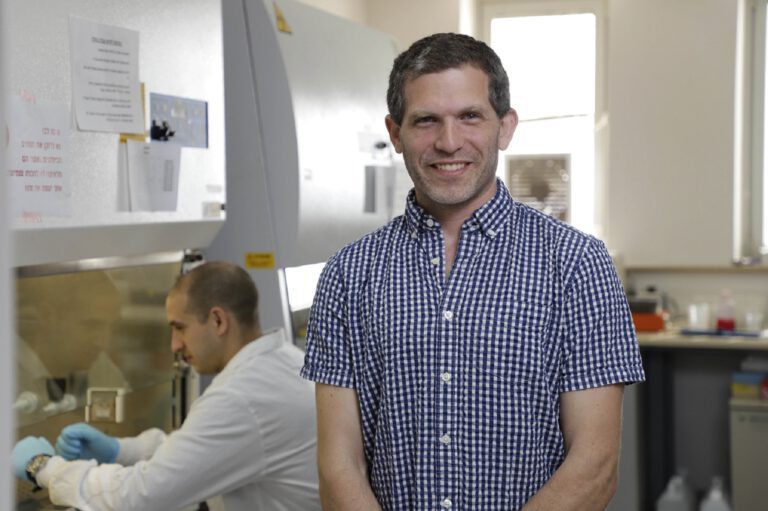
A new Tel Aviv University on bats study found that, like humans, bats living in Tel Aviv enjoy the wide variety and abundance of food that the city trees have to offer, in contrast to rural bats living in the country, who are content eating only one type of food. The study was led by research student Katya Egert-Berg (below) and Prof. Yossi Yovel.
The researchers explain that despite the intensification of urbanization processes, which tend to lead animals to leave the city, there are animals that are able to thrive in an urban domain. One such example is the fruit bat. These bats, like humans, live in a variety of environments, including the city and the countryside; there are even some that forage in the city and then go home to roost in the country.
Prof. Yovel: “How animals cope with urbanization is one of the most central and important questions in ecological research today. Understanding the ways in which animals adapt to urban areas can help us in our conservation efforts. The urban environment is characterized by much fragmentation, and we currently have little understanding of how animals, especially small animals, like the bats, move and fly in such areas.”
The urban environment is fundamentally different from the rural environment in terms of the diversity and accessibility of food. Although the city has a larger variety of trees per area, there are many challenges that bats have to face, such as buildings and humans.
In rural areas, on the other hand, most of the trees are concentrated in orchards without barriers, but have less diversity – the trees are mostly of one type. Because of the fundamental environmental differences between the city and the country with regards to the distribution and variety of fruit trees, the nature of the bats’ movement when foraging in these areas differs as well.
In this new study, the researchers compared the nature of the movement of rural bats and city bats as they foraged for food. They used tiny GPS devices to track the bats, to see if the way they moved while searching for food was affected by their living environment, or the environment in which they were foraging.
They found that fruit bats foraging in the city are much more exploratory, enjoy the abundance of the urban environment, visit a variety of fruit trees every night, and feed from a wide a variety of trees. In contrast, the rural bats focus on only one or two fruit trees each night. Moreover, the researchers found that among the rural bats who roost in the countryside, there were many who left their rural homes every night in search of food in the city, and then flew back to the country after their meal. During their stay in the city, such bats share the same flight patterns as those of the bats that live in the city around the clock.
Minolta DSC
The study’s findings led the researchers to assess that even bats that live in rural environments their entire lives will be able to orient themselves in an urban, industrialized environment. They explain that there are animal species that are flexible – for them, the ability to adapt to a new and unfamiliar environment such as an urban settlement is an acquired skill. Such species, of which the fruit bats are an example, will in many cases be able to adapt to life in urban areas.
Dogs on a boulevard cafe in Tel Aviv, on Rothschild Boulevard
It was talked about in 2008 and we reported on it –– that dog inspectors in Tel Aviv were going to track you down by your dog’s poop if you don’t stoop and scoop. Finally the great idea to clean up the city is taking effect. The city will start a bylaw that will make dog owners submit a sample of their pet’s poop when renewing a dog licence in Tel Aviv and Jaffa.
According to the new bylaw, city inspectors will be able to test samples of uncollected dog waste and match it with DNA samples on the municipal database. The relevant dog owner will receive a fine in the post, and even be liable for the sampling and test costs.
We have two dogs (that we adopted from Ramallah where dogs run free and are shot, then thrown in a garbage bin) could we get away with just sending in one sample and poop for the price of one or could they know? Could I enact an evil plot and just send in a sample of my neighbor’s fouling dog? What about the rights of an animal? Can he be sequenced without his consent? I had a dream last night, kid you not, that every animal on the planet was given the same rights as human beings, by us human beings.
One dog for every 10 people
I am sure others will have some better ideas too. The ratio between Tel Aviv-Yafo residents and dogs is among the highest worldwide, with over 40,000 households looking after a four-legged friend – or one dog owner for every 11 residents.
Recognized among the world’s most dog-friendly cities, Tel Aviv offers free dog waste bags in public areas, has established dozens of dog parks throughout the city, and hands out fines to the minority of dog owners who fail to pick up waste in public areas.
According to municipal data, approximately 1000 tons of dog waste is not picked up by dog owners on a monthly basis. We could argue that that amount is just in the neighborhood of Florentine, the foulest smelling neighborhood in the city. Feral cats urinating and defecating everywhere and lack of public toilets make it the stinkiest place in Israel.
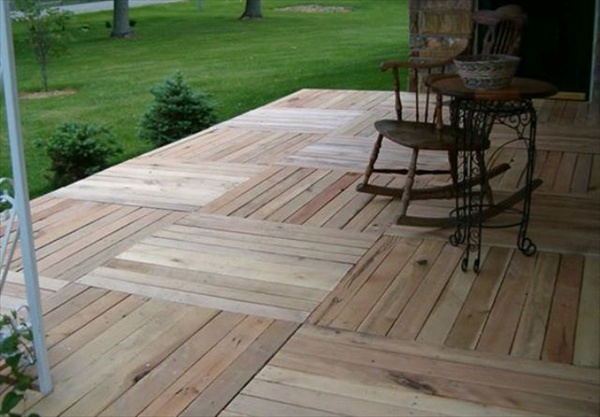
A deck made from pallets. Source: unknown. You can also just use pallets for the frame.
We know that the wood industry is causing deforestation, harm to animals and people and climate change. That affects us all. A new UN project to track illegal timber is now set up, but play your part by making “smart wood” choices when building a new deck this summer, or winter if you are in temperate climates.
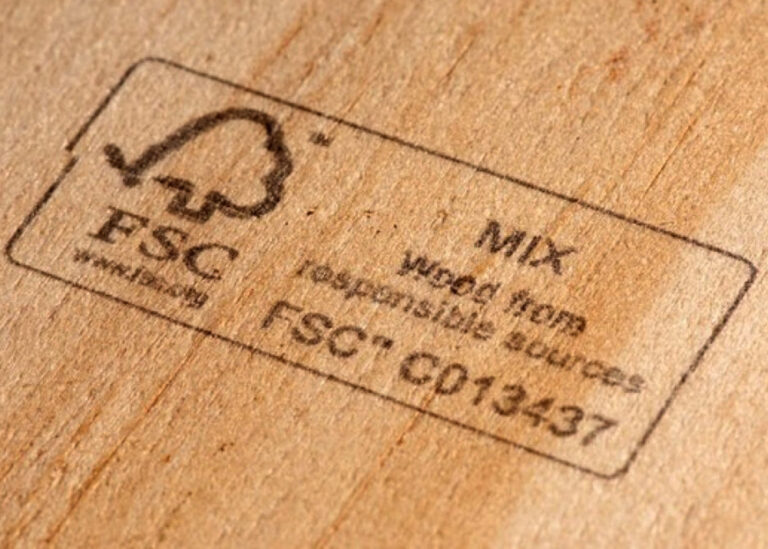
Look for the FSC label
Order wood through a trusted source and look for the FSC label that the wood was harvested sustainably. FSC labels are used on products to identify that the product has been verified to come from an FSC-certified source. FSC labels can be found on millions of products around the world: from toilet roll to your favourite book, that milk carton in your fridge, and other food products. I have friends who were part of the founding initiatives of the FSC in Canada. Read about its history here. Lumber can be treated with chemicals that are considered harmful to your health like arsenic and copper so not all “natural” wood is really good for you.
Work with Trusted Builders
Hiring experienced professionals ensures that your deck is built sustainably and safely. A knowledgeable contractor will help you source eco-friendly materials, minimize waste, and use construction methods that reduce environmental impact. When selecting a builder, look for companies with a commitment to sustainability and transparent sourcing practices. If you’re in Illinois, consider reaching out to deck builders Naperville who specialize in environmentally friendly designs and materials. They can also guide you on maintaining your deck to extend its lifespan, reducing the need for replacements. Choosing the right builder not only enhances durability but also ensures your deck complements the surrounding environment.
Reclaim old wood
Consider using vintage wood if it’s hardwood. The video below shows how you can build a new deck with old wood.
Upcycle pallets
If you don’t mind that it won’t last long, build a deck from pallets. You can also just use them for the frame and add a layer of higher quality wood.
Composite wood
Consider composite wood. It can also be used for decks. But never used it on raised beds for gardens, as it contains plastics and chemicals that can leach into your food. Composite wood typically offers between 15 to 20 years life span, lasting way more than wood. Invented in the late 1980s, wood-plastic composite decking (also called “composite wood decking”) is made of wood fibers encased in plastic. Composite decking is readily available at big box home improvement stores like The Home Depot and Lowe’s, as well as local lumberyards throughout the US.
As more builders and homeowners learn of wood decking problems, many are turning to high-performance composite decking.
• Resistant to severe weather.
• Very minimal maintenance cost.
• Thanks to its plastic feature, it is highly mould resistant, irrespective of how exposed to moisture it is.
• It is lightweight and has a lock style, making boards easy to figure out for a successful DIY installation
If you go for “wood” find wood that is harvested local to you. If the wood you buy is forested in Canada, sent to China for treatment and then sold to you in Texas it is not sustainable wood. Find local, just like strawberries.
Avoid treated wood for your health and for the fish:
Chromium copper arsenate, or CCA, according to the Environmental Working Group, was once widely used as a preservative and insecticide in pressure-treated wood. In 2001, tests by the group and the Healthy Building Network showed that wood treated with CCA could expose people to dangerous levels of arsenic, spurring the Environmental Protection Agency to force its removal from the market.
Copper-based chemicals replaced the arsenic preservative, but some of them are also hazardous. For example, alkaline copper quaternary and copper azole are extremely toxic to aquatic life and should never be used in areas where runoff can be carried to surface waters, marshes or coastal areas. Borate-based wood preservatives are also common, but they can leach out of wet wood, leaving the wood vulnerable to decay.
Don’t build a deck
People everywhere are noticing the benefits of grounding. How about just planting yourself in the grass or wild weeds and avoid the deck altogether. More sustainable long lasting options could be ceramic tiles, like the ones used in Mexico and Costa Rica although these tend to break during the freeze and melt in really cold climates.
The FSC, while easily forged, is a stamp to know if the wood you harvested is legal.
Up to 30% of the wood sold in markets globally is harvested illegally, according to international agreements. This deforestation causes habitat loss and extinction (read about how your bank is burning the Amazon) and a new UN initiative wants to track the bad guys, or rather tell you about the source of your wood, through a new app.
The cost of wood has tripled in the last year offering new channels for illegal wood to be harvested and sold on the black market. China, Canada, Germany and the USA are the top exporters of wood, globally.
The Food and Agriculture Organization of the United Nations launched a new online portal providing information on forest-related laws around the world in order to help promote legal forest management, timber production and trade, and contribute to efforts to make forest resource use sustainable.
The first such portal of its kind: TimberLex provides information on legislation relating to forest management, timber production and trade from 46 timber consumer, processing and producer countries.
Illegal logging and related trade are estimated to account for up to 30% of the global timber trade – or up to $100 billion annually – and impairs poverty alleviation, food security and climate change mitigation while undermining efforts to manage forests sustainably.
In an effort to address this issue, major wood-consuming countries are increasingly imposing requirements for timber imports to document their legal status.
“One of the challenges to promoting legality and transparency in the timber trade is knowing what regulations are in place that may impact actions along the value chain, as each country’s legal system is of course, unique,” stated Daphne Hewitt, Manager of the UN’s European Union Forest Law Enforcement, Governance and Trade Programme.
“It can be very challenging for timber producers, exporters, importers and regulators in timber exporting and importing countries to find reliable information on national legal requirements around timber legality,” she added.
Legislation from major timber producing and consuming countries
“The unique selling point of the portal is the user-friendly nature which allows easy access to national legislation in three languages,” said Blaise Kuemlangan, Chief of the Development Law Service of the UN’s FAO Legal Office.
The TimberLex portal points users to specific measures and verbatim citations within legal texts and allows easy and direct comparison between legal frameworks. Country profiles catalogue legislation around four clusters encompassing the different stages of the timber value chain considered critical to the legality of timber: land tenure and forest management; timber harvesting activities; processing, transport and trade; and taxes and fees.
The portal aims to enable more effective law enforcement and contribute to improving forest governance, curbing illegal deforestation and associated forest degradation, and promoting global production and trade in legal timber.
The database is aimed at legislators, policymakers, forestry departments and law enforcement officers, private sector producers, processors and traders, civil society and non-government organizations.
Reading about this and watching my cousin build a new deck at his nature retreat Kingfisher Bay in Ontario, got us talking about the price of lumber, composite decks and dock renovations.
How to make your deck sustainable
Look for FSC Label
A deck made from pallets. Source: unknown. You can also just use pallets for the frame.
Order wood through a trusted source and look for the FSC label that the wood was harvested sustainably. FSC labels are used on products to identify that the product has been verified to come from an FSC-certified source. FSC labels can be found on millions of products around the world: from toilet roll to your favourite book, that milk carton in your fridge, and other food products. I have friends who were part of the founding initiatives of the FSC in Canada.
Read about its history here. Lumber can be treated with chemicals that are considered harmful to your health like arsenic and copper so not all “natural” wood is really good for you.
Consider using vintage wood if it’s hardwood. The video below shows how you can build a new deck with old wood.
Pallets can be used to make a deck
Consider composite wood. It can also be used for decks. But never used it on raised beds for gardens, as it contains plastics and chemicals that can leach into your food. Composite wood typically offers between 15 to 20 years life span, lasting way more than wood. Invented in the late 1980s, wood-plastic composite decking (also called “composite wood decking”) is made of wood fibers encased in plastic. Composite decking is readily available at big box home improvement stores like The Home Depot and Lowe’s, as well as local lumberyards throughout the US.
As more builders and homeowners learn of wood decking problems, many are turning to high-performance composite decking.
• Resistant to severe weather.
• Very minimal maintenance cost.
• Thanks to its plastic feature, it is highly mould resistant, irrespective of how exposed to moisture it is.
• It is lightweight and has a lock style, making boards easy to figure out for a successful DIY installation
5. If you go for “wood” find wood that is harvested local to you. If the wood you buy is forested in Canada, sent to China for treatment and then sold to you in Texas it is not sustainable wood. Find local, just like strawberries.
Avoid treated wood for your health and for the fish:
Chromium copper arsenate, or CCA, according to the Environmental Working Group, was once widely used as a preservative and insecticide in pressure-treated wood. In 2001, tests by the group and the Healthy Building Network showed that wood treated with CCA could expose people to dangerous levels of arsenic, spurring the Environmental Protection Agency to force its removal from the market.
Copper-based chemicals replaced the arsenic preservative, but some of them are also hazardous. For example, alkaline copper quaternary and copper azole are extremely toxic to aquatic life and should never be used in areas where runoff can be carried to surface waters, marshes or coastal areas. Borate-based wood preservatives are also common, but they can leach out of wet wood, leaving the wood vulnerable to decay.
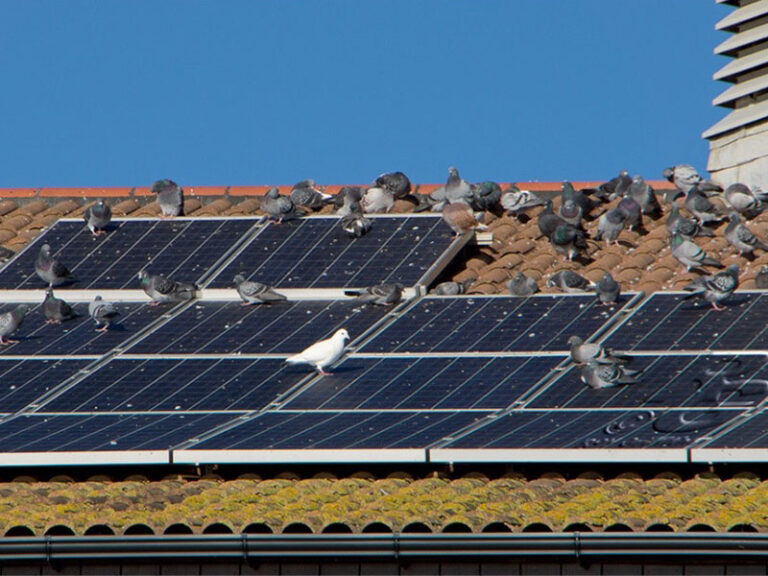
Noticing birds under your solar panels is horrible for all involved, and sometimes, it can be difficult to spot before the infestation is large. Unfortunately, when you notice a bird issue, it’s probably now a significant infestation, and the risk of diseases and damage will have multiplied. So we spoke to an expert to help put together the best tips to prevent birds and stop issues under your solar panels.
#1 – Clean from top to bottom
The first step to prevent the chance of pests ever taking a fancy to your solar panels is to make sure they are as clean as possible. Problems tend to thrive in environments that are dirty and have food lying around in the garden. Start by keeping your garden spotless, as this will limit the food source for birds. Then, make sure to work your way around other areas where food may be available such as the bushes and bins. Professional cleaning products have strong anti-bacterial properties, which will make surfaces unsuitable for birds to live off. Cleaning is one-stop for many in the challenge of stopping birds visiting your solar investment; you also need to follow other steps mentioned throughout this article.
#2 – Choose a professional company
The second tip we would recommend would be to contact a professional pest control company to get rid of the birds. If cleaning your garden has not helped, a professional will understand how to remove the creatures with the best possible impact. London’s top pest control company, integrumservices.co.uk, suggest that performing bird control by yourself is extremely dangerous. You take the risk of falling, or if you have allergies, then you may become seriously ill due to build up of nesting material and poo. A professional will control the population living at your home and have access to some techniques that are not available to the public.
#3 – Secure all ingress points
birds are known to gain access to a solar panels by entering through entry holes, or as professionals call it, ingress points. This opening allows birds to access solar panels, and the most common places that they tend to be located include cracks and crevices around the side of the panels. Check all of these areas for potential holes that pigeons, seagulls, jackdraws and other birds may gain access to. Smaller birds don’t need big holes to be able to gain access.
#4 – Natural pest control methods
You may have heard of some old wives tales, such as using strong-smelling oils, vinegar and herbs. Many of these natural pest control methods can be effective if used in the right situation and with the correct bird. For example, using coffee grounds in areas outside your home where you may locate birds. Most birds hate the smell of coffee, so it can put them off from visiting again.
Ultimately, when it comes to using natural remedies, you will have to try a few different options before finding one that might work effectively. However, if you already have a substantial infestation, there is a good chance that no natural method will work, and you will have to refer back to tip #2 to find a professional to complete the removal.
#5 – Take your trash out often
One of the most common issues that cause birds to infest your home is the build-up of food sources. If rubbish builds up in your garden, it’ll likely produce a strong smell, and it will attract birds, and with bird problems comes diseases. So make sure to take your rubbish out often and make sure it is completely sealed. Leaving outside rubbish storage open allows for a food source for birds meaning they will use your garden as a place to feed.
If possible, we would recommend storing waste away from your home and taking it to a recycling plant if you can, which will result in stopping any birds from being attracted to your property in the first place
#6 – Buy bird scarers
Bird scarers are often an afterthought when it comes to treating solar panel infestations. However, birds can be scared of these bird scarers. Often, bird scarers can work very well, so check out amazon or ebay and get yourself a couple. Again, this method is not guaranteed and the only true way to remove birds from under solar panels is to use a professional proofing company.
A new device developed in Tel Aviv inspires hope among people who have lost their sense of touch in the nerves of a limb following amputation or injury.
The device is a tiny sensor that is implanted in the nerve of the injured limb, for example in the finger, and is connected directly to a healthy nerve. Each time the limb touches an object, the sensor is activated and conducts an electric current to the functioning nerve, which recreates the feeling of touch. The researchers at Tel Aviv University, where it was developed, emphasizes that this is a tested and safe technology that is suited to the human body and could be implanted anywhere inside the body.
The technology was developed by Ben M. Maoz, Iftach Shlomy, Shay Divald, and Yael Leichtmann-Bardoogo and Dr. Amir Arami from the Sackler School of Medicine and the Microsurgery Unit in the Department of Hand Surgery at Sheba Medical Center. The study was published in the journal ACS Nano.
“It should be understood that this loss of sensation can result from a very wide range of injuries, from minor wounds – like someone chopping a salad and accidentally cutting himself with the knife – to very serious injuries,” says Maoz.
“Even if the wound can be healed and the injured nerve can be sutured, in many cases the sense of touch remains damaged. We decided to tackle this challenge together, and find a solution that will restore tactile sensation to those who have lost it.”
In recent years, the field of neural prostheses has made promising developments to improve the lives of those who have lost sensation in their limbs by implanting sensors in place of the damaged nerves.
But the existing technology has a number of significant drawbacks, such as complex manufacturing and use, as well as the need for an external power source, such as a battery. The new approach uses a triboelectric nanogenerator (TENG) to engineer and test on animal models a tiny sensor that restores tactile sensation via an electric current that comes directly from a healthy nerve and doesn’t require a complex implantation process or charging.
The researchers developed a sensor that can be implanted on a damaged nerve under the tip of the finger; the sensor connects to another nerve that functions properly and restores some of the tactile sensation to the finger. This unique development does not require an external power source such as electricity or batteries. The researchers explain that the sensor actually works on frictional force: whenever the device senses friction, it charges itself.
How does the nerve stimulation work?
The device consists of two tiny plates less than half a centimeter by half a centimeter in size. When these plates come into contact with each other, they release an electric charge that is transmitted to the undamaged nerve. When the injured finger touches something, the touch releases tension corresponding to the pressure applied to the device – weak tension for a weak touch and strong tension for a strong touch – just like in a normal sense of touch.
The researchers explain that the device can be implanted anywhere in the body where tactile sensation needs to be restored, and that it actually bypasses the damaged sensory organs. The device is made from biocompatible material that is safe for use in the human body, it does not require maintenance, the implantation is simple, and the device itself is not externally visible.
According to Dr. Maoz, after testing the new sensor in the lab (with more than half a million finger taps using the device), the researchers implanted it in the feet of the animal models.
The animals walked normally, without having experienced any damage to their motor nerves, and the tests showed that the sensor allowed them to respond to sensory stimuli. “We tested our device on animal models, and the results were very encouraging,” he says.
“Next, we want to test the implant on larger models, and at a later stage implant our sensors in the fingers of people who have lost the ability to sense touch. Restoring this ability can significantly improve people’s functioning and quality of life, and more importantly, protect them from danger. People lacking tactile sensation cannot feel if their finger is being crushed, burned or frozen.”
Trammell S. Crow, a Dallas-based businessman and father of four, is focusing his efforts on impact investing, and media that focuses on saving the planet through EarthX.
Smart investment firms know the writing is on the wall: Companies that make the environment count as part of their business model will outperform traditional businesses. It might take a couple of more years but putting sustainability practices first pays off. Recently, investors and bankers have learned that those same traditional businesses that have been profitable for decades may now be a liability as global awareness attunes to human, animal and planet rights.
Whistleblowers are waiting around any corner to derail steady stocks and bonds. How can your family office, bank, venture capital firm or bank steer clear of obstacles and invest in companies that put sustainability first and make planet and people count? Started in Dallas and now global, Trammell S. Crow founded EarthX and through it hosts an annual E-Capital Summit, tying investors and businesses together –- aligning them with the right frame of mind for future-forward business and environmental accountability.
Startups are invited too. Those that have attended the events over the last five years have gone on to raise about $500M in investment capital. It’s like Techcrunch for companies that care about the planet.
This year EarthX hosted its 5th summit. The event brought together policy makers from the White House, The Department of Energy, banks, family offices and traditional companies –– offering case studies and frameworks on how to build businesses that create a sustainability impact from the bottom up –– or from the top down.
“Our vision is to demonstrate to industry leaders from the investment, business, and deal making systems that sustainability and profitability are not mutually exclusive but actually go hand-in-hand.” says Vikram Agrawal, Director of EarthXCapital, the impact investment arm of EarthX.
Vikram Agrawal, EarthX
Some of the topics cover finance innovation in sustainability infrastructure. Few traditional businesses may not realize that the entire solar energy business, for instance, is built on feed-in tariffs and building solar infrastructure for your company can be a new stream of income. Are you managing a family fund and want to create climate-forward investments for your portfolio that are risk averse? Are you running an NGO, green energy business or leading government and city policies on investment in infrastructure? We’ve tapped into one of America’s leading minds on impact investing. Take 5 minutes and dive into what Vikram Agrawal says on how green financing can spur rapid environmental turnaround.
Vikram’s EarthX Capital is run by EarthX, America’s largest environmental expo, conference, film festival, and virtual TV channel, and is a member of IUCN, International Union for Conservation of Nature. EarthX was founded in 2011 as Earth Day Dallas by environmentalist and businessman Trammell S. Crow.
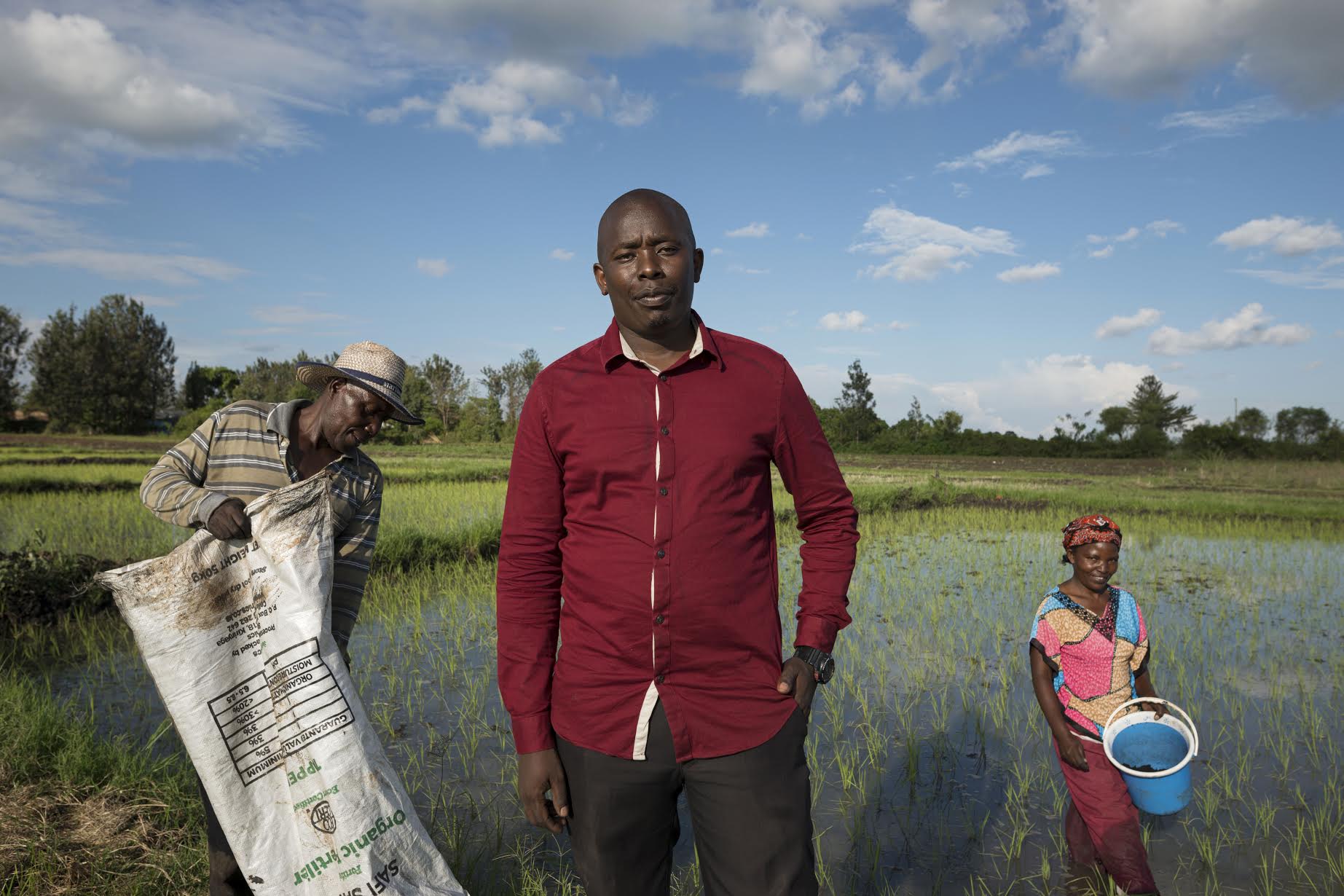
Samuel Rigu, EarthX Climate Tech Prize 2021 winner and CEO and founder of Safi Organics. Safi has developed a process to manufacture fertiliser using a thermochemical treatment of crop residues such as rice husks; Wang’uru, Kenya.
Green Prophet to Vikram Agrawal: Tell us a little about your background?
Vikram: I am a mission-driven, operationally-focused investment and management professional with an ethos that everyone deserves an opportunity to be successful, however they define success. I have nearly 15 years of experience across several industry sectors in the United States and the emerging markets (Latin America & the Caribbean and emerging Europe, Middle East, & Africa).
I started my career in investment banking and international finance focused on the emerging markets but, over the past seven years, I have been focused on US private equity, having worked with both companies in need of a strategic or operational turnaround as well as those in full-on growth mode.
While developing several investment theses related to sustainability and resiliency, I met Trammell S. Crow, a well-respected Texan environmentalist, businessman, and philanthropist. Trammell founded EarthX, an international environmental nonprofit organization based in Dallas, Texas that is dedicated to educating and inspiring people and organizations to take action towards a more sustainable future.
Trammell and I decided to partner together where I would have a dual mandate. I am launching a private investment firm focused on sustainability & resilience-related companies. In addition, I am helping lead the EarthxCapital team which has a mission to develop an investment, business, innovation, and deal-making ecosystem focused on leading and catalyzing impact and action.
My passion for sustainability, conservation, and resiliency started when I was young. It fully blossomed nearly twenty years ago when I had the opportunity to work on sustainability initiatives in rural India. I witnessed how solar energy installations, water conservation, and better agricultural practices could drastically improve people’s lives and provide them with critical resources that I took for granted growing up here in the United States.
Since then, I have realized that sustainability is not only important for the earth, for environmental justice, and for tackling broader social challenges –– including creating millions of much-needed jobs. I realize that sustainability is critical for business and investments by driving profitability, enhancing value, and driving risk-adjusted returns.
Why do we need such an event, and why now?
In April 2021, we hosted the 5th annual invitation-only E-Capital Summit. EarthxCapital’s signature event of the year seeks to convene, inspire, and catalyze action from hundreds of global investment firms, early to late-stage innovators, established global companies, industry leaders, policymakers, incubators & accelerators, dealmakers, and researchers. Our objective is to have substantial, positive impacts on investments, businesses, people and our planet.
In a highly polarized society that is dominated by misinformation, we take great pride in convening a diverse group of individuals and organizations representing a diverse group of perspectives in the middle of America: Dallas, Texas. We actively seek all perspectives and civil (and well-informed) discourse from all parties, regardless of the industry or profession you represent or whether you are a Democrat or Republican, climate change believer or denier, pure capitalist or philanthropist. We urgently need to have more inclusive debates with opposing views where we learn to collaborate and value each other’s diverse perspectives to better develop solutions.
What we all need to realize is that a majority of us share similar values and goals and that it will take a holistic solution from the investment, business, policy, research, civic, and non-profit communities partnering together to solve short-term and long-term challenges. At the end of the day, we all want clean water & air, a resilient economy and supply chains, jobs for millions of Americans, power & energy, and a better future for generations to come.
However, being sustainable is trending and sexy today. Don’t get me wrong: this is great but it could also lead to “greenwashing” and have negative implications if investors lose capital, like they did a decade ago in the last cleantech bubble, especially if the public markets’ “ESG play” falters.
Many traditional investors and businesses are wary of this but will continue to do what they can to “check the box” if large investors and consumers demand this. Therefore, to truly have sustainable sustainability, it’s critical to show how sustainability and profitability are not mutually exclusive, but in fact go hand-in-hand. It’s our mission to show how sustainability can improve a company’s profitability, improve resiliency, and create a greater Strategic Value Proposition thereby enhancing value and increasing risk-adjusted returns.
How is the investment climate different under Biden?
Even prior to President Biden being sworn in as President, there was significant interest in sustainability investing. The International Finance Corporation, a World Bank Group, estimates that in 2020, ~$2.1 trillion AUM of a total of $10 trillion AUM was focused on impact investing in private markets.
However, President Biden is providing guardrails for sustainability investing through his fiscal policy and regulatory agenda. For example, billions of dollars in the infrastructure bill will support many cleantech and sustainability-related initiatives including EV infrastructure, energy/power grid resilience, and water infrastructure. Unfortunately, investors will be wary of such changes (especially if they are done via Executive Order or without bipartisan support), as they could be easily undone by a new Administration.
It remains unclear what the Biden Administration’s impact will be on sustainability investing but I’d bet most people would say that it will have a very positive short-term and long-term effect.
How has Covid changed anything in Impact investing?
First off, please allow me to offer my condolences and thoughts with the millions of people around the world who were impacted by COVID-19 and the global pandemic, which continues to ravage on. Unfortunately, millions of people around the world lost their lives and an even greater number of people will be impacted for years to come due to various economic, social, and health – physical and mental – challenges. We will need to develop innovative solutions to overcome those challenges.
To answer your question, impact investing can mean different things depending on who you ask. For the purpose of our discussion today, I’ll be focusing on environmental sustainability related issues given the focus of EarthX; however, that doesn’t diminish the importance of many other critical topics and challenges that are being addressed by a variety of impact investors including Diversity, Equity, and Inclusion; inequality and justice; health and wellness; access to education, and many more.
The pandemic highlighted the importance of resilience but also magnified the global inequalities and challenges faced by many daily, many of which are addressed by the UN’s Sustainable Development Goals (SDGs). From a COVID-19 prevention and treatment perspective, millions of people do not have access to clean drinking water – or even water to wash your hands – nor do they have access to proper nutrition (giving your body and its immune system to fight a virus).
These are only a few examples of the many investment opportunities that comprise the $2.5 trillion annual financing gap needed to achieve the SDGs. Many investors have responded by focusing their investment and philanthropic endeavors in underserved communities and look to be creative in finding opportunities to address these challenges. Given Covid-19, there may be greater emphasis, which is very much needed, on topics and investment theses related to environmental justice and health and wellness.
Can you give us three trends to look out for in the coming year?
Tension between greenwashing and defining what sustainability means
It seems like every week we hear an announcement from a major financial institution or corporate leader on their massive investment or pledge towards a new ESG or sustainability-focused strategy.
As an environmentalist, I’m excited to see the news every week but am wary if such announcements will convince traditional investors and businesses to execute long-lasting strategies. For example, I see this challenge with carbon offsets. First, I’d argue that carbon or GHG footprint reductions by operational or business plan improvements are in fact better than carbon offsets from unrelated sources.
Footprint reductions are permanent solutions and can hopefully be good for business profitability, which also leaves more offsets for other essential businesses unable to change operationally or a stronger foundation to rebuild the environment. Second, as Bloomberg has reported before, there aren’t enough trees (or land) in the world to support these continued statements. Therefore, to preserve credibility we must address true measures to address sustainability, but what does “sustainability” actually mean?
I always joke that if you ask five different people what sustainability means, you get ten different answers. However, as major institutional investors and public/private asset managers continue to employ and pledge trillions dollars of assets towards “sustainability” investment strategies, it will be important to define what constitutes sustainability.
As a pragmatist, and as a newly adopted Texan, I am excited to highlight how traditional energy companies are making oil and gas operations more sustainable. Oil and gas is critical to our economy, employs millions of Americans, and is a valuable resource for multiple end-products. While still holding the industry accountable for its actions, we should bring them to the table and celebrate their efforts, not shun them.
However, I’m sure many of your readers and many of my friends are raising their eyebrows as I put sustainability and oil and gas in the same sentence. So I ask, is making oil and gas a more environmentally-friendly sustainability strategy? I think so but others may disagree.
Developing measurable metrics
In addition, it will be important to identify standardized specific and quantifiable metrics, both of which have inhibited acceptance among traditional investors. The Biden Administration has already started to broach this issue and I’d expect some critical discussion in the coming months.
For example, the Wall Street Journal has done great coverage on this subject especially looking at companies deemed to be ESG top-performers and how various rating agencies ranked these companies differently on their sustainability scorecard due to differing metrics. Investors and businesses prefer standardization and certainty. It’s hard to plan if the goal line keeps moving.
Resilience
Resilience is the new buzz word and will be one of the most important topics for discussion across industry verticals globally. As with sustainability, resilience will become a dominant discussion topic especially as individuals and businesses grapple with increasing disruptions related to everyday activities.
A recent conversation with a major US city’s Chief Resilience Officer reminded me how resilience encompasses a broad range of issues. However, my current focus is on environmental and severe adverse weather resilience. COVID-19 and the recent February winter storms highlighted how ill-prepared our mission-critical industries are to shocks to the system.
As we begin to recover from COVID-19, I expect this to be a topic at more dining room tables, in more boardrooms, and in the halls of Washington, DC.
What kinds of businesses are most at risk if they don’t start to think “impact”?
Not to sound cliché, but every single business will be at risk. However, it will not be a one-size fits all strategy. For example, climate change and severe adverse weather events will have an impact on critical infrastructure assets, global supply chains, and the built environment. Not only will key industries like power, water, and food/ag be impacted (thereby challenging millions of Americans and billions of humans around the world), severe adverse weathers will affect all industries.
Mother Nature doesn’t know the difference between Blue and Red states. According to the NOAA, over the past 40 years, the United States has had more than 250 severe adverse weather events that have caused more than a billion dollars of damage (inflation adjusted) totaling more than $1.7 trillion… important to note that this doesn’t even include the hundreds of other “smaller” severe adverse weather events that happen each year across the country. This has a direct financial impact on insurance companies and businesses seeking access to insurance and capital.
From a finance perspective, it feels like every week you hear of another international financial institution that proclaims their intention to limit their exposure to fossil fuels, thereby increasing the cost of capital for companies with high exposure to such resources. With increased costs of capital, the energy industry will face reduced returns and capital expenditures thereby increasing the cost of traditional energy.
This, interestingly enough, could make alternative fuels and sustainable forms of energy more attractive from a cost competitiveness basis thereby giving them sufficient time to mature and increasing long-term competitiveness as compared (think of the drop in cost per unit of energy from solar and wind technology given increased adoption over the past two decades).
Can you give us an example of innovation in sustainability investing? I brought up the idea of solar and feed-in tariffs, can you give another?
I’ve learned that one of the greatest challenges for sustainability investing is the lack of patient capital for truly innovative enterprises. Unlike other innovations or industries, many clean technology and sustainability-related solutions take time to develop, commercialize, and eventually drive a return.
In addition, unfortunately, political gridlock has also inhibited private and public capital inflows for solving less sexy sustainability-related issues like infrastructure. Therefore, as I have learned of different forms of “innovation” in sustainability investing I’ve been impressed by many organizations that are looking to solve those problems. However, two firms – both past E-Capital panelists – with innovative financing models have come to mind:
Prime Coalition is a 501(c)(3) public charity that partners with mission-aligned investors to support extraordinary companies that combat climate change, have a high likelihood of achieving commercial success, and would otherwise have a difficult time raising adequate financial support to scale. Prime has leveraged catalytic capital, including grants and program-related investments, to drive much needed investment in innovative companies from patient and risk-tolerant capital providers. Most importantly, they don’t look to sacrifice returns while supporting industry game-changers.
Quantified Ventures is leading outcomes-based financing solutions across the country, solutions very much needed to solve our country’s environmental and aging infrastructure crisis. The firm is credited with structuring the first ever Environmental Impact Bond in the United States for DC Water, which helped them solve several challenges. DC Water was able to implement green infrastructure through an approach that shared performance risk with investors by linking their returns to the project’s success. I expect an increase of these forms of investment/financial structures throughout the country.
If you had unlimited capital, where would you put it first? 3 ideas — you have access to a magic genie
I think this is a better question for folks who are much smarter and more experienced than me (and with a lot more capital)! However, based on my experience, the following examples could be some of the greatest opportunities (in addition to the themes I’ve mentioned previously like resilience which I’ve been thinking about for several years now):
Sustainable Solutions for traditional industry
Although we like to focus on easily marketable and identifiable sustainability initiatives (like replacing plastic straws), true fundamental changes to consumer or business behavior will be needed to move the needle.
For example, investing in corporate sustainability and resilience is great for business and investments by improving profitability, strengthening business resilience, creating a greater Strategic Value Proposition, and enhancing value for all stakeholders thereby increasing risk-adjusted returns.
Inflation adjusted, the US economy has grown ~2% over the past 20 years and ~3% since World War II, however no investor or business would deem that as a high ROI for an individual investment. Therefore, if top-line growth is focused to be so low, then significant measures need to be taken to improve gross margins and operating margins, thereby improving net profit margins.
These initiatives (like the Circular Economy) can be good for business but also great for people and the environment, especially when they concern efficient use of materials and critical resources like energy and water. McKinsey & Company has done several studies that support how sustainability and profitability can go hand-in-hand. If I had unlimited capital I’d be targeting these areas as the opportunities are endless and can help sway traditional businesses and investors to implement simple measures.
Supply chains for leading innovators
Everyone likes to highlight the business and financial success of industry-leading sustainability innovators like Tesla, Chargepoint, AppHarvest, NextEra Energy, and point to them as the best sustainability-focused investment opportunities. That could be true, but I think you also need to focus on the incredibly diverse set of companies that are needed to support these large enterprises and their supply chains.
If we expect growth in any of the sustainability-focused end markets, capital (and patience) will be needed for those businesses that are supporting sustainability innovation and completely new industries.
EV Infrastructure and energy storage
Regarding an industry-specific opportunity, I believe that Mobility, in particular EVs, is one of the hottest sectors for the public and private investment markets. Now, before I start greenwashing you, let’s be reminded that EV cars only represent ~2% of the US car market today. However, this is a significant increase from the past decade where some reports put market share at less than 0.2%!
Earlier this year, California announced that all new car sales will need to be electric by 2035. As published in the journal Nature Climate Change, University of Toronto researchers found that 90% of US cars would need to be electric by 2050 to meet stated climate goals.
However, according to a Deloitte consumer auto study, the greatest concern for 54% of Americans was the perceived shorter driving range and lack of EV charging infrastructure. If investment professionals, policy makers and the auto industry hope to capitalize on the tremendous environmental, business, and investment opportunity, this issue must be addressed. We need greater EV infrastructure to support the increase in EV unless you think Green Hydrogen is a more realistic proposition.
COVID-19 has had some terrible and tragic consequences, killing millions of people worldwide. The tiny virus has had an enormous impact on the way we live, revolutionizing how we develop vaccines, for example. Another revolution has come about with the way that we work. The “new normal” of working from home was forced upon us thanks to the pandemic, but many remote workers want to continue working from home to some degree, even when it’s safe to work back in the office.
Remote Work – Is it a Good Thing?
Pre-pandemic commutes to work across the world were getting longer each year. Long commutes are rarely seen as a positive thing- two-fifths of those surveyed considering the commute the worst part of the day. A significant cause of stress, a long commute means less time at home, less exercise and fast or faster, processed food. Some studies have even found that commutes that last longer than one hour are correlated with a higher risk of divorce by as much as 40%.
With more than 25 million pre-pandemic Americans commuting over 90 minutes every day, the data do not add up too well. Remote working and a hybrid approach to work, combing remote and office-based work, is likely to result in much higher satisfaction for workers who, in the main, are keen to continue working from home to some degree.
Remote Work & The Environment
Remote working does cut carbon emissions, but it can significantly increase individual utility bills and carbon emissions generated at home. However, according to this Ted Talk presented by Jackson Carpenter, it is possible to drastically cut your carbon footprint by signing up to a renewable energy supplier.
By signing up to an alternative energy supplier, one that uses renewable energy as the energy source, you can cut your carbon footprint today by 15%. In addition, if your AC unit runs on electricity and your heating runs on electric you can reduce your carbon footprint by an additional 17%
Using biodiesel for other heating appliances and converting your car to use alcohol or biodiesel can cut your carbon footprint by an additional 28% – for those days, you are working from the office or taking the kids to soccer practice.
Creating a Green Home Office
Using a renewable energy supplier is a great idea, but if you want to make renewable energy a step further and learn some new skills at the same time, creating a solar-powered home office might be a project to consider.
Always remember to get a qualified installer to check your work during and after installation. Consulting a professional can also be a great idea before you buy any solar equipment. If you are self-employed, you can run a business from your garden shed, especially if you are willing to outsource phone answering duties and maybe even a virtual office address.
If you don’t have an outbuilding, then a shed can make a brilliant home office. For example, a Tuff Shed or summerhouse can be easily converted into a home office, with a few additional pieces of furniture. If you don’t have a spare room, outbuilding or shed, you can always build one. Another viable alternative is to convert a large van into an office and attach the solar panels to the van’s roof.
In addition to a building with a roof sturdy enough to take the weight of several solar panels, you will need:
– Solar Panels (4 x 100w)
– Mounting Brackets
– Charge Controller
– Battery
– Inverter
– Fuse block
You will also need the necessary cables to connect relevant parts and sections of equipment together, for example, the solar panel to the charge controller. You can buy solar panel kits that have all of the essential equipment. For example, the 400 watts solar panel kit from Renogy comes with four solar panels (100w each), wires, a charge controller, a blue tooth connector, mounting brackets and screws.
It is usually recommended to install solar panels on the side of the building that faces south to maximize exposure to the sun. Of course, if you are using a van, it doesn’t matter too much!
Step by Step Solar Panel Power
Disclaimer – always get your work supervised and checked by a professional electrician or solar power installer.
Before you start, ensure that you know the dimensions of the solar panels and the roof on the shed or outbuilding – to make sure that they fit! You may also wish to mark on the roof exactly where the solar panels are to be placed.
You may also need to drill some holes so that the leads/wires from the solar panels can be fed through from the roof, into the building or the van. You may also need some kind of mount, for example, a wooden board attached to the inside of the shed’s wall, to place the charge controller.
The batteries can also be relatively large, so finding a safe and sturdy way to mount and store the batteries is important if you are using them.
We recommend not attaching the main cables to the solar panel until the rest of the kit is set up and in place.
Mount the charge controller & batteries safely inside the building
Screw the mounting brackets onto the panels, ensuring they are tight
Place the solar panels on the roof.
Connect the wires to connect all of the panels
Use a drill to screw the solar panel’s brackets to the roof (typically 3-inch screws)
Without attaching them, feed the wires into the building or van – you may need to drill a hole.
Attach the wires to the charge controller – red wire to the positive inlets, black to the negative*
Tighten the wires into place with a screwdriver
On the charge controller outlets, attach the red and black wires to the positive and negative outlets, respectively.
Attach the wires coming out from the outlets on the charge controller to the terminals on the battery. The battery will have a negative inlet that will have a negative symbol, or it will be black. The positive terminal will be red or have a positive symbol (+).
If you wish to test everything – attach the relevant wires to the solar panels and inspect the lights on the charge controller to ensure power is coming into it.
To attach the invertor, we now need to remove one of the solar panel cables to remove the power source and then remove the wires from the battery (more info here)
Separate from the battery – attach the wires for the invertor to the invertor. Always connect the wires to the inverter first before attaching them to the battery. You can add a fuse to the positive cable if you wish.
Attach the negative wire from the inverter to the negative terminal on the battery and the positive wire (usually red) from the inverter to the positive terminal on the battery. They may be a spark when you attach the positive.
If you are screwing holes into the top of a van, be sure to use the necessary sealant to ensure that water does not leak into the van. Here is a step-by-step video detailing how to add solar panels specifically to the top of a van.
*Be sure to double-check that this is the case; some solar panel kits may use a different system or identification for positive and negative.
And that’s it! Again, we emphasize the need or at least the recommendation that you use a qualified electrician or installer to guide and sign off your work. Here is an excellent step-by-step video that also takes you through the process.
Forest bathing is a kind of therapy called for in some cultures like Japan.
Addiction to drugs or alcohol is a common problem nowadays. People often started doing drugs and alcohol as a means of fun and relaxation and later feel health, mind, and many more issues. This is a very serious problem that more than fifty percent of the population around the world faces. Dealing with such a problem is crucial, but it is costly.
Several rehabs are present out there that take in patients who feel addiction problems and treat them properly. These rehabs are costly, but the services they provide make that cost justifiable. There are also several insurance policies for such addicted patients. Such policies can take to cover up their rehab expenditure and also health care treatment with sand plans.
The Tricare drug rehab coverageis a huge benefit for such patients. Now, in this article, we shall see in detail about this plan and what it covers.
What areas does the plan cover?
In the following areas of the article, we shall discuss all the things that the plan covers.
Briefly stated, the Tricare drug rehab coverage includes the following areas:
Inpatient and Outpatient Treatment
Drug and Alcohol Detox
Medication-assisted treatment along with partial hospitalization
Residential treatment
Impatient Treatment Coverage:
TRICARE patients must face a mental or physical health-related emergency linked or caused due to addiction requiring immediate hospitalization for the Tricare rehab plan to cover up the expense.
Patients facing addiction problems requiring emergency hospitalization in any nearest inpatient treatment centres. From there they get overall expenses covered by the Tricare drug rehab coverage.
This plan also covers non-emergency care only if the patients opt for care from one of the qualified treatment centres.
Outpatient Treatment Coverage:
For the Tricare rehab plan to cover up this type of expense, the patient must face active addiction problems. But, it does not need immediate hospitalization and all the time care in a hospitalized setting. In such scenarios, the patients do not require prior authorization before seeking out Tricare drug rehab coverage expenses.
People suffering from substance abuse and those transferring from inpatient treatment centre are also eligible for the plan’s availing. This plan also covers the treatment of several co-occurring disorders like mental health disorders and so on.
Detoxication of drug and alcohol:
Several or rather, most of the Tricare rehab plans cover drugs and alcohol detoxication as well. These detoxication treatments are only covered if done from a qualified medical centre. Medical care, along with the rest of the medications used for controlling the withdrawal symptoms, falls under the Tricare drug rehab coverage.
After a patient enrols in an inpatient or outpatient care program, the drugs and alcohol detox coverage start in the Tricare plan.
Medication-Assisted Treatment Coverage:
Several patients require continued medications and medical therapies and help after the care program ends. For such cases, the Tricare rehab plan covers all such expenses.
These include mental health therapies, medications for prevention against withdrawal and discourage relapse, etc.
Since this part of the plan does not fall under emergency health issues. So the plan requires you to get prior authorization before activating this.
Sober Living House Coverage:
This part of the plan falls under the partial hospitalization course of the plan. This program helps the patients to achieve recovery along with receiving medical support services.
This plan is for 24 hours a day but for helping the patients time to time to receive sober housing environment a develop relapse prevention skills.
Patients who show or exhibit an inability to achieve and maintain recovery with outpatient services can avail of this plan. This intensity of impairment that is brought forth by addiction can interfere with the person’s everyday life and functions. That is why this plan allows the patients to active partial hospitalization and cover up their sober living houses.
In Conclusion:
Drug and alcohol addiction is a severe problem. Many people face this problem and need proper help against such issues. The Tricare drug rehab is a plan that helps these patients face these problems head-on and get rid of them without having to worry about the charge.
If you are investing, try to invest in renewable energy and impact investing projects that help the environment
Based on the recent study, we can assume more that ninety percent of retail Forex traders fail. According to some sources, failure rates as high as 97% are possible. Regardless of the exact figure, you may have dealt with thousands of merchants throughout the years. We have all heard the standard justifications: expertise, discipline, and strategy. While those may be important considerations, there are also some less visible differences.
Successful Forex traders think differently than the rest of the traders. They do not care if they have a high win percentage or trade every day regardless of market conditions. Suppose we would like to clarify how we will define success in this essay before getting into the attributes. A successful Forex trader’s story must feature continuous earnings. However, there is more to success in any venture than mere money. It is also about the happiness and excitement it brings to your life.
1. They embrace losing trades
There is not a single Forex trader who has not lost money. However, there is a significant distinction between how a novice trader loses and how the top Forex traders lose. A loss is viewed as a terrible thing by most newcomers to the Forex market. It is a manner of indicating that they have made a mistake.
And it isn’t very nice to do anything incorrectly. That is, at least, what we have come to believe throughout our lives. A successful trader, on the contrary, does not consider a loss to be a “bad” thing. It is also not something that happened to you as a result of the market. The Forex market has no idea where you joined the market or where your stop-loss order is. The market, unlike you, is always neutral. When you lose, you must reflect on what you could have done differently.
2. They Make Use of Price Movement
Every successful Forex trader uses price action, has encountered in some fashion. This does not imply that they use price action in the same way you do, but it means that they incorporate it into their trading strategy somehow.
To become the most significant Forex trader you can be, you must have a basic understanding of where buying and selling orders are positioned in the market. It can help any trading strategy by highlighting potential entry points as well as profit targets. For more explanation visit the official site of Saxo and enhance your knowledge on price action trading skills.
3. They Have a Well-Defined strategy
It is no surprise that so many traders fail to understand what an edge is and establish their own. It is determined by the time you trade, the price action tactics you employ, the critical levels you have identified, your risk-to-reward ratio, and other considerations. It contains your pre-and post-trading routines as well.
4. They always trade in relax way
This may be true in other areas of life, but Forex is an exception. Excessive effort is an indication that something is not right, according to successful Forex traders. You cannot spend too much time learning the ins and outs of different currency combinations or how to draw critical levels, for example. The more you strive to understand those specific issues, the better.
5. They Have a Risk-Averse Mindset
The principle of thinking in terms of money risked is no exception when it comes to Forex trading. It’s a straightforward notion that can significantly impact your quest to become a top Forex trader. You probably think that statement is self-evident, yet a surprising proportion of traders do not consider the amount of money at stake before entering a trade. This is since they evaluate risk using an arbitrary percentage, such as one or two percent of their trading account balance. Consider your most recent trade for a moment.
6. They Never Quit
Although it is the last item on the list, it is the most critical to your trading success. That leads us back to the first section of this article, discussing the importance of passion. You cannot expect to succeed in Forex if you quit, and you can’t expect to stick it out if you don’t enjoy trading. To be a successful trader, you must have a strong drive to succeed. You trade because you want it, not because you wish to make more money. Trading is, without a doubt, the worst way to generate money in the world.
Because there is no finish line, embrace the journey. Even those who have consistently made money have more to learn. Anything less would be a waste of time.
Selecting the perfect blinds for your home can be a real challenge. With a variety of blinds that can sometimes turn out uncoordinated, dingy, and ugly after installation, there’s a need to consider the type of blinds you want for your home. The best part is, faux wood blinds for modern home can make all the difference. These wood blinds are a durable alternative to wooden blinds. And are stylish and look chic throughout.
Additionally, faux wood blinds can complete varying looks throughout the house. And are a low cost and low maintenance option. Their versatility makes them one of the best options to consider for your windows.
Other perks of faux wood blinds include:
Moisture resistant
Most people prefer faux wood blinds. And that is because, unlike natural wood blinds that get susceptible to moisture, faux wood blinds do not share that weakness.
When natural wood blinds absorb moisture, they tend to warp, crack and even rot. And this may hurt your investment. However, faux wood blinds will not fall apart. And will help you transform your modern house into a beautiful space.
Effortless to clean
Faux wood blinds are effortless to clean and manage than wood blinds. That is because you can wipe them or give them a quick rinse if needed. As a plus, faux wood blinds are water-resistant.
Durable and long-lasting
Another perk of having faux wood blinds is that they are highly resistant to heat and humidity. That means that they get to last longer and stay in their original shape for long. Also, these kinds of blinds can get refurbished if needed.
Environmentally friendly
Compared to usual wood, faux wood blinds are more environmentally friendly. That means that by purchasing the latter, you contribute to reducing the cutting down of trees. Also, many faux wood blinds are recyclable. And that helps significantly minimize the amount of refuse in landfills.
Also, faux wood blinds are attractive to consider for your modern home since they look like usual wood. Most people cannot tell them apart. Since many people have difficulty distinguishing the two, you don’t have to point out that you are not using the usual wood for your blinds.
Available in many colors and variety
Another perk of faux wood blinds is that they are available in varying sizes and colors. That means that you can tailor-make them to your needs. You can also get them in a variety of colors that can fit your home’s overall theme.
The ideal rooms to use faux wood blinds
Best for bathrooms and kitchens
Faux wood blinds are made from high-quality synthetic materials, meaning they can withstand the test of time. And as mentioned above, resistant to moisture. That makes them an ideal choice to use in the kitchen and bathroom.
Faux wood blinds can withstand water splatter from the sink and any steam from the shower. And not fade or warp due to moisture. You can use water to clean them or use a microfiber cloth to keep dust away.
Also, faux wood blinds are ideal for controlling privacy in the bathroom.
Ideal for the children’s room
Since faux wood blinds get made of durable material, it makes them a reliable option for the kid’s room. They also come with a cordless design, making them a safe choice for your minors.
Also, faux wood blinds allow light control, meaning that you can block any unwanted light any time of the day, meaning privacy is enhanced.
Suitable for your outdoor space
Outdoor spaces are a treasure spot for most modern homeowners. That is because they help them relax, unwind, bond, rest and have fun. To make your space even more habitable, having faux wood blinds can make all the difference.
These window coverings help to reduce glare. And this makes your space more comfortable. They also add to your outdoors décor and ambiance, making your modern home look amazingly beautiful.
Final thoughts
Before purchasing your faux wood blinds, remember to measure the width and height of your windows to ensure that you get the ideal size. The right fit makes your modern house look beautiful and improves its overall ambiance.
This Butterfly Pea Flower Latte is a delicious alternative to coffee in the morning and can be enjoyed later on in the day to help unwind. The blue butterfly pea flower tea has a woody and earthy flavor, and it has a similar taste to that of fine green teas and a lightly sweet aroma. You can blend the blue tea with lemon, chamomile, honey, and lemongrass.
Blue pea flowers are a rich source of antioxidants. Antioxidants are known to minimise the damage to the cells of the body. The lesser the damage to cells, the lesser the risk of all types of cancer.
Equipment Small mesh strainer Battery operated milk frother Small saucepan Whisk
Ingredients 8 oz rice milk (try Better Than Milk) ½ tsp blue butterfly pea flower powder 1 tbsp maple syrup ½ tsp vanilla extract 1 tsp rose petals (optional)
Instructions 1. Heat rice milk on medium heat until starting to steam. 2. To prevent clumping, sift the butterfly pea powder into the warmed rice milk. Whisk in butterfly pea flower powder with maple syrup and vanilla extract until frothy. Keep whisking until the powder is dissolved and you see no clumping. 3. Take off heat, and aerate with milk frother for 30 seconds if desired. Pour into cup.
Notes Garnish with rose petals if desired. Using an electric frother helps with the frothing. Be sure to mix the butterfly pea powder well as soon as it is added. Sifting the powder through a mesh strainer helps prevent clumping.
Vegans have helped us all understand how important milk alternatives are to our diet and to the planet. Cow or bovine-based milk in America is pumped with hormones, the calves are cruelly separated from their mothers, the lactose in it is highly allergenic and animal product consumption creates devastating greenhouse gases.
For some time now we know that when a Starbucks barista offers you 5 different milk alternatives, or when you go to Trader Joes and see 5000 brands on the shelves, it is not because customers are fussy. It is because people need a choice and each one whether it is almonds or oats offers some alternative that the old fallback of soya cannot promise. Some of the choices made today are about the bees and the almond industry in America, or the alt-milk being organic – look out for the problems with non-organic oat milk.
So how do you find a brand to carry in your cafe or to drink in your coffee? I like the new environmentally fit label Better Than Milk for a number of reasons and my top list of whys is because the company sources simple ingredients and doesn’t try to thicken its milk with artificial gums and thickeners that aren’t good for us (read about bone health and additives here).
Rather than work with pesticide-applying and bee-killing commercial farms in oats and almonds, Better Than Milk sources its raw ingredients from small holder organic farms and it uses fresh, free-flowing spring water from the source to “milk” the basics into a drink. To top it off, its paper-based recyclable carton is capped with a lid from sugarcane, not petroleum. One less thing to worry about, thank you.
If you want to be perfect you will need to grow your own grains and nuts on a one-acre permaculture farm (like Woody Harrelson says) but until then Better Than Milk will probably be your fallback liquified beverage for cereal, cooking and coffee. Its preservative-free line of soy-free products, including rice hazelnut, are currently found online at Vitacost & Amazon but also in person at Erewhon Market, Nugget Markets, Earth Fare, Pete’s Fresh Market, Buehler’s Fresh Foods, and Jewel-Osco.
Green Prophet: Tell us what the problems are today with alternative milks found in American supermarkets?
A: At Better Than Milk we are focused on providing a plant-based milk that is not only better for you, but environmentally fit as well. We stand out because of our passion and commitment to provide both a sustainable clean-label plant-based milk made from 100% organic ingredients that are packaged in renewable eco-friendly materials.
An excellent example of this is how our plant-based milks are made with only an average of 5 ingredients, which are all free from processed oils like Canola Oil, compared to the plant-based milk category average of 11 ingredients which include Canola Oil, Xanthan Gum, and other unwanted ingredients.
How has the Better Than Milk mentality shifted thinking “alternative” into a new product?
A: We like to think of Better Than Milk plant-based milks as more than a healthier replacement to dairy milk. We are all about empowering people to live a healthier & eco-friendly lifestyle that helps protect our plant and should not be hard to accomplish throughout their daily routine.
It looks as though your product has checked all the boxes except for greenhouse gas emissions from transport and production. What are you working on there?
A: We are excited to share that we are working on a carbon footprint assessment of Better Than Milk to help us further evaluate and plan a carbon offset initiative. Be sure to follow along as we announce updates in the future.
A flag lover, seeking the best set of collections of flags? Look no further, as Ultimate Flags online store has all kinds of flags that you desire. The Ultimate Flags Collection comprises a very wide variety of flags. Whether you want a branded customised flag or an international flag, you can get it on the online store.
So, if you’ve been combing the internet, looking for the online store with the best flags collection, it’s time to rest, as Ultimate Flags is your surest bet at getting the best flags. In this article, we’ll be looking at a few flags from the collection of Ultimate Flags.
Ultimate Flags Collection
Here, we see a flagship of the collections you find in the Ultimate Flags online store collection.
50 Star USA Flag – American Flag – 3 X 5 Ft Standard
The USA flag is the Flag of the United States of America. Also known as the American Flag, US Flag. The red stands for valour the blue for justice, and the white is for purity. The blue field represents the Union while each star stands for every state in the Union. Each red and white stripe stands for one of the original British colonies that formed the Union.
It is made of the standard Super-weave polyester and 100% synthetic waterproof material, the most popular quality level.
What else is this prestigious flag made of?
It has 4 rows of stitching on the fly. The designs are through-printed and visible on both sides
Also, it is bright and designed with fade-resistant inks.
Having double stitched edges all around, the reinforced grommet holes with metal rings make it easy to attach to any flag pole with grommets.
USAGE
Fairweather outdoor display
Lightweight lets flags fly well even in a light breeze
Excellent for events, indoor display and theatrical use
A seasonal decoration, home use
Demonstrations, protests, parades
1st Navy Jack 3 X 5 Nylon Printed Flag With Grommets (Double-Sided)
This flag measures 3×5 feet and it’s a double Sided Flag.
The 2 flags are sewn together with a liner in the middle so nothing reads backwards on the back of the flag.
More so, it is Nylon Printed is perfect for high wind areas- All-Weather Quality.
Increasingly, it has double the toughness of the “Standard Quality”, and it is long-lasting, waterproof, tear and fray resistant Nylon.
As expected, it is made of bright and fade-resistant inks, which makes it lasting.
Finally, it has reinforced grommet holes with metal rings, making it easy to attach to any flag pole.
USAGE
All-weather outdoor display use.
Permanent flag displays (not taken down at night/rain).
Excellent for events indoor/outdoor.
Long term decoration use.
Commercial/professional use.
Commodore Perry Flag, Don’t Give Up The Ship Flag 3 X 5 Ft. Standard
This flag, flown by Commodore Perry during the war in which his ships captured a British squadron consisting of HMS Detroit, HMS Charlotte, and 4 smaller vessels.
It is of standard quality, having Super-weave polyester and 100% synthetic waterproof material.
More so, its reinforced grommet holes with metal rings allow for easy attachment to any flag pole with grommets
The designs are through-printed and visible on both sides, with bright and fade-rest resistant inks.
USAGE
Fairweather outdoor display
Lightweight lets flags fly well even in the light breeze
Excellent for events, indoor display and theatrical use





 The researchers explain that despite the intensification of urbanization processes, which tend to lead animals to leave the city, there are animals that are able to thrive in an urban domain. One such example is the fruit bat. These bats, like humans, live in a variety of environments, including the city and the countryside; there are even some that forage in the city and then go home to roost in the country.