Covid has taught us one thing. We love to cook at home and we need to have fresh, meaningful and healthy food at our fingertips. Making your kitchen a great place to cook and hang out in at the heart of your home is a big step towards a very sustainable home.
If you have a love for baking and are always whipping up cakes, pies, cookies, brownies, and other delectable desserts but don’t have enough storage in your kitchen, you need a baker’s rack. A baker’s rack with drawers is an even better idea. These baker’s racks provide enough storage for your supplies and ingredients. Everything is kept in one place, so you aren’t scrambling around the kitchen.
But, before you run out and buy one, there are a few things to take into consideration. One of those things is the size of the rack. Take measurements, so you know what dimensions will fit. You don’t want one that will overwhelm the space, especially if there’s already a lot of heavy furniture in the room. A wooden rack with cabinets may be too much, but a wire rack is visually much lighter and may be the best option.
The material is just as important to your décor as the size. Metal baker’s racks are very common and less expensive than solid wood racks. However, the durability offered by a wooden rack would be right for busier households.
Wrought iron is another popular material for baker’s racks that are used outdoors. They’re great for gardeners to store their tools and other supplies. Gloves, trowels, fertilizer, and dirt can all be kept on the shelves. When you want to show off your green thumb, place plants or flower arrangements on display.
Bakers racks with drawers are a storage solution that won’t steer you in the wrong direction. Place one in your bathroom and keep all the extras you need in the drawers, everything from toothpaste to toothbrushes to ointments and salves.
Use one in the guest bedroom and keep it stocked with everything your visitors need to enjoy their stay. Body washes, towels, tissues, and more will all be in one easily accessible central location.
Drawers give the rack an organized, clean look. When you have them, you don’t have to worry about finding baskets to keep everything in its place.
Your living or family room will also benefit from storage provided by a baker’s rack. Is our television set mounted to the wall? If so, you may still have placed a bulky media stand underneath it to hold the cable box and streaming devices your household uses. Your gaming console may even be on the stand.
Get rid of that media stand and free up some floor space with a slim baker’s rack. One with four to six tiers should be able to handle your streaming boxes and game console. Place it next to the television and give the space a more streamlined look.
There are a few other features you want to look for in a baker’s rack. Casters are one of them. If you want to move the rack around the kitchen as you cook, the casters will make the piece mobile. Choose a rack that allows you to enjoy being at home.
Done making a great, sustainable kitchen? Don’t stop here:
Ever visit a 7-11 in Thailand? Or a convenience store anywhere in the world? How about the middle aisles of every grocery store? Single bananas wrapped in plastics. Refined foods, sub-divided, then wrapped. Single cookies. Single candies. Single everything in a plastic coating in a plastic bag in a plastic lined box. How long can this go on? Climate scientists call for a plastic diet, asking governments to cap production.
An international group of experts says the production of new plastics should be capped to solve the plastic pollution problem. The authors argue that all other measures won’t suffice to keep up with the pace of plastic production and releases. The letter was published in the journal Science.
Plastic Soup draws an atlas of plastics and where they are accumulating around the world.
Capping production of new plastics, the authors implore, will help cut their release to the environment — and the release of dioxins, PVC, Bisphenol A— and brings other benefits, from boosting the value of plastics to helping tackle climate change., the scientists write in their plea.
Regulating, capping, and in the long term phasing out the production of new plastics.
“Even if we recycled better and tried to manage the waste as much as we can, we would still release more than 17 million tons of plastic per year into nature,” says Melanie Bergmann of the German Alfred-Wegener-Institute, the initiator of the letter. “If production just keeps growing and growing, we will be faced with a truly Sisyphean task,” she adds.
The gold dust bought at Walmart may make your graduation photo pretty. But one blow and it’s forever cycling as microplastics that will get into our lungs.
Research published in Science in 2020 shows that plastic emissions can only be cut by 79 per cent over the next 20 years if all solutions available today are implemented, including replacing some plastics with other materials, and improved recycling and waste management.
“The exponentially growing production is really the root cause of the problem, and the amounts of plastics we have produced thus far have already exceeded planetary boundaries,” says Bethanie Carney Almroth of the University of Gothenburg, Sweden. “If we don’t tackle that, all other measures will fail to achieve the goal of substantially reducing the release of plastic into the environment,” she said.
Why we should plastics in feeding animals
Phasing out the production of new plastics from fresh feedstocks should be part of a systemic solution to end plastic pollution, the experts from Canada, Germany, India, Norway, Sweden, Turkey, the UK and the U.S. argue. This approach is supported by the best science available today and in line with what political and legal experts proposed in Science last year.
Along with measures to address the consumption and demand side of the problem — such as taxes — a comprehensive approach must also cover the supply side, meaning the actual amount of plastics produced and put on the market.
Gradually cutting the production of new plastics will come with many societal, environmental and economic benefits, the scientists say.
Sedat Gündoğdu of the Cukurova University, Turkey, says “The massive production also feeds the plastic waste transfer from the Global North to the South. A production cap will facilitate getting rid of non-essential applications and reduce plastic waste exports.”
“We gain a lot of benefits from plastics but reducing production will increase the value of plastics, boost other measures to curb plastic pollution, help tackle climate change and promote our transition to a circular and sustainable economy,” adds Martin Wagner, an ecotoxicologist at the Norwegian University of Science and Technology.
That means with every fish you eat that’s caught from the sea, chances are other wildlife paid the price for your palette. And not just dolphins, but seals, sea turtles, sharks and sting rays are also getting trapped and killed by fishing nets.
With this herring I thee wed: woman marries dolphin in Israel
An international team of researchers from the United Arab Emirates and the UK have developed a method to assess sustainable levels of human-caused wildlife mortality, which when applied to a trawl fishery shows that dolphin capture is not sustainable. (But is dolphin marriage? Remember the story about the woman from the UK who married a dolphin in Israel? The dolphin died in 2021)
The new study, led by scientists at the University of Bristol and United Arab Emirates University was published in the journal Conservation Biology.
Human activities like commercial fishing can result in the accidental death of non-targeted wildlife, threatening protected and endangered species. “Bycatch and discarding of marine wildlife in commercial fisheries are major challenges for biodiversity conservation and fisheries management the world over”, said Simon Allen of Bristol’s School of Biological Sciences, who studies dolphin behaviour and interactions with fisheries.
Bycatch Reduction Devices were placed in Western Australian trawl nets in 2006, but no quantitative assessment of the impact was carried out.
“We set out to model different levels of dolphin capture, including those reported in skippers’ logbooks and those by independent observers. Unfortunately, our results show clearly that even the lowest reported annual dolphin capture rates are not sustainable”, Allen said.
How to solve the dolphin bycatch problem?
The study’s lead author Oliver Manlik, Assistant Professor at the United Arab Emirates University explained how the researchers introduced a novel approach to assessing human-caused mortality to wildlife that can be applied to fisheries bycatch, hunting, lethal control measures or wind turbine collisions.
“And when we incorporate stochastic factors, random events, we show that previous methods of assessing wildlife mortality were not conservative enough,” says Manlik: “This raises concerns for the dolphin population and highlights a problem with other assessments that do not account for random events, like heatwaves, because these environmental fluctuations are becoming more frequent and intense with climate change.”
With only voluntary or low levels of fisheries monitoring and no quantitative conservation objectives, Allen notes that the UK and EU are also failing to address the bycatch problem.
Greater transparency and the application of more rigorous methods would improve the scientific basis for decision-making around the impacts of fisheries on non-target species like dolphins, whales, seals and seabirds.
While the authors suggest ways for better reporting the problem the only solution seems to be up to you – just don’t buy fish? Seems like a drastic solution but it impacted the tuna industry at some level. Although if the reporting standards are low anyway chances are the tuna industry, even the so-called sustainably caught tunas, are probably greenwashing our conscience.
A new peer-reviewed research report published by the Soil Health Institute provides fresh insights into the vital role that soil organic carbon levels can play in preventing drought, reducing flooding and improving the health and water retention of the soils used to grow crops.
The publication includes the development of new pedotransfer function equations, available for use by other researchers, that enable more precise measurement of the correlation between carbon levels, water retention and various soil types.
Learn how to raise soil carbon levels
These new equations will allow scientists to better predict how much water farmers can provide to their crops through improved soil health – specifically, by raising their soil carbon.
According to the Institute healthy soil that is rich in carbon acts like a sponge to soak up rainfall and store it for crops. While farmers have known this for a long time, it has been hard for scientists to predict how much extra water farmers can expect when they use regenerative agriculture practices that improve soil carbon. This is important because many farmers consider water management to be the biggest reason to adopt soil health management practices like no-till or cover crops.
“A positive, causal relationship between soil organic carbon and plant water-holding capacity has direct benefit by increasing crops’ resistance to drought,” said Dianna Bagnall, a soil research scientist and lead author of the study.
According to Bagnall, previous research on this relationship has been mixed, with some findings showing negligible impact on soils’ water-retention capacities from higher soil carbon levels while others showed a substantial increase in water holding.
This new study took a different approach, drawing on a more comprehensive sample of soil from locations throughout North America, using more natural, preserved soil structures, and identifying levels of calcium carbonate, which can impact water-holding capabilities, in the soil samples as part of its analysis.
“Our findings showed an increase in water-holding capacities for non-calcareous soils (those lacking calcium carbonate) resulting from soil organic carbon that was more than double that of earlier studies,” Bagnall said. “This is an exciting development, since it provides a concrete incentive for farmers to adopt more responsible soil management practices that will positively impact their productivity and profitability.”
To help farmers evaluate the impact carbon sequestration and other practices might have on their businesses, the Institute is developing a decision support tool, “to allow farmers to review various management practices to achieve a targeted increase in available water-holding capacity and better drought resilience in their soils,” Bagnall said.
The new equations discussed in the study are freely available for use by other scientists. Find them here.
“Our hope is that other scientists and conservationists will build on this work to develop new models for how soils can offset carbon emissions and make agriculture more drought resistant,” Bagnall said.
The world’s biggest chemicals and food companies, owned by a dozen multinationals, are diving deeper into the protein alternative movement as more people turn to veganism. DuPont, the chemical company that makes teflon, lycra, polyester, and lucite, will now be making artificial salmon, using spirulina, a type of algae. They have partnered with an Israeli company to harvest and isolate the reddish-orange components from the algae to give the taste and texture to the cultivated salmon.
I just finished a green veggie shake made with spirulina this morning. Known for its rich in a range of vitamins and minerals essential for maintaining a healthy immune system, like vitamins E, C, and B6, some research finds that spirulina also boosts the production of white blood cells and antibodies that fight viruses and bacteria in your body.
But fish-in-a-lab from spirulina? Why not just eat it as it is? This is one of the growing problems with the food industry today: making fake meat and fish and marketing them to consumers who might be better off just eating the same vegetable based products in their original form. Read here how the Slow Food movement is rallying against fake meat.
But the news is in, DuPont, now known as IFF-DuPont is joining up with an Israeli foodTech start-up called SimpliiGood to develop the first commercial smoked salmon analog made entirely from a single ingredient: fresh spirulina. The company is growing its spirulina in the Israeli desert under ample sunshine.
Mercury free fish?
The plant-based salmon-like cut is uniquely crafted to take on the appearance, color, texture, and flavor of smoked salmon, reports the companies in a joint press statement, yet without the ocean pollutants that living fish are commonly exposed to. These include compounds such as mercury, fossil fuels, and industrial waste. The final product contains 40% protein.
In the new partnership SimpliiGood provides the raw material and texture and color qualities of fake salmon, while IFF-DuPont contributes the flavor and smells. The product is expected to hit the market by the end of 2023. In 2020, the global sales value of salmon amounted to approximately 15 billion USD.
SimpliiGood specializes in cultivating and harvesting fresh blue-green algae, as well as producing of a range of spirulina-centered food products.. Its current portfolio encompasses a range of meat substitutes, including hamburgers and chicken nuggets, as well as popsicles, ice cream, crackers, and beverages where spirulina serves either as the base ingredient or as nutritional enrichment.
“Our spirulinacan act as a complete replacement for animal-based protein or be easily integrated into existing food products as an added-value ingredient, as it has a neutral flavor and maintains its full nutritional value,” says Lior Shalev, CEO and Co-founder of Algaecorem the parent company of SimpliiGood.
Spirulina is heralded as one of the most nutrient-dense plant-based forms of protein on the planet, being a naturally rich source of whole protein, plus antioxidants, chlorophyll, vitamins, (including B12), and minerals, especially iron.
Chaga tea, lion’s mane mushroom, kale, spirulina and fiber powder are all part of a new health food diet fad
The spirulina market is relatively young and is dominated by dried and powdered forms of the ingredient which is easy to use when making shakes, baking breads or sauces. An orange, salmon-like hue has been expressed through identifying and isolating the native beta carotene pigment naturally present in spirulina.
Who else is making lab fish?
Plenty of companies from around the world are looking to print salmon and other kinds of fish to stop over fishing and over consumption of fish in the wild. The Israeli startup Plantish showed a prototype of whole-cut vegan salmon filets earlier this year. The “meat” offers a flakey texture, it’s buttery in the mouth and created to duplicate the sensation of salmon.
One other startup working to reel in the big fake fish is Good Catch Meals which offers an American-made salmon burger. The “salmon” burger is made from six plants: peas, soy, chickpeas, faba beans, lentils, and navy beans. They also offer a vegan tuna and different seafood appetizers and entrées to offer customers a fish substitute.
Hong Kong-based OmniFoods known for its plant-based pork products launched OmniSeafood. They are looking to replace fish with vegan options and products include alternate options to canned tuna, breaded fish, and filets and its first vegan crab muffins launched on the menu of Starbucks Hong Kong. This month, its plant-based fish made it onto the menu at McDonald’s in Hong Kong.
From greenhouse-to-fork?
Like all the hydroponics farms touting “sustainability”, the makers of animal alternative protein are doing the same though there is yet little justification for it, except for animal suffering. Critics of alternative meat companies (links to the NY Times which needs a subscription) say that the extensive process of making these products cannot yet claim to be good for the environment, though it’s a feel-good proposition that wins favor with the public. The term for that is “green-washing”.
I’d rather see a world where people eat real food and real meat products, unprocessed in a lab, including real meat and real fish, products that are trapped, hunted from healthy forests and fish caught from unpolluted seas. We’d rather, as a species, be better informed about consuming animal products and if we choose to eat them, do it much, much less, while focusing on quality over quantity.
We need to focus on reducing our need for ready-made packaged products. Make our own real food, plant our gardens or buy from locals who have made farming a better way of life for them and their community.
Strauss shows the stressors of globalization
Strauss, a food company from Israel, which has heralded the support of alternative protein companies through its investment arm The Kitchen (also supported by the Israeli government using grants from the Office of the Chief Scientist), has invested in Flying Sparks (makes protein from insects), Aleph Farms (meat in a lab), and Wanda Fish, a company that makes alternative fish proteins. Last week Strauss suffered from a massive financial blow after its food products were recalled due to a salmonella outbreak.
Leonardo DiCaprio invests in Israel’s Aleph Farms
It is one of the largest food recalls in Israel’s history and its impact will be global. Friend and fellow environmentalist (and Eco Bible author) Yonathan Neril noted: “There are likely millions of food items included in this recall. Once the products are returned from the stores, Strauss destroys them. This is food waste on a tremendous scale.
“We live in a strange world. In Yemen, 2,000 km southeast of Israel, about 25 million lack enough food, with many experiencing severe malnutrition. Ditto for 25 million Afghanis, a few thousand km to the east.
“Food contamination is a dark underbelly of industrial food production. If modern society produced food on a smaller scale, if would not have to discuss obscene amounts of food when salmonella or e-coli bacteria are food in the production process.
“How many of the 800 million people on this planet would be happy to take the tiny risk of eating these chocolate bars, wafers, cookies, and cakes, in order to experience the satiation of eating a normal amount of calories for one day? Can food recalls involve distributing the food to people facing severe malnutrition, and just include a warning label– there’s a tiny chance that this food is contaminated with salmonella– eat at your own risk?” Neril asks.
Or for now eat from food made by your own hands that don’t come in so much packaging and your risks and expenses will be much less?
In March, Ferrero, the makers of Nutella and other products faced a global recall. The World Health Organization said a salmonella outbreak reported in the UK on March 27 was linked to chocolate produced by the Ferrero Corporate plant in Arlon, Belgium, which has been distributed to at least 113 countries.
A global alert was released by the International Food Safety Authorities Network, initiating a global product recall of Kinder products marketed to young children. So far, a total of 151 genetically related cases suspected to be linked to the consumption of the relevant chocolate products have been reported from 11 countries.
The affected countries are Belgium, France, Germany, Ireland, Luxembourg, the Netherlands, Norway, Spain, Sweden, the UK and the US.
Is the Ferrero contamination linked to Israel where some of Ferrero’s raw materials might have been used? We’ll know more soon, I am sure.
But back to the fake meat, fake fish, fake food: I was excited about Impossible Foods and the ISO Group and the Beyond Burger for a while and I chose to pay 4 times the price of real meat to consume no animal protein but after a dozen or so burgers couldn’t get over the coconut oil flavor that permeates everything — and the hard to digest pea protein that is prone to give digestion problems. In that I mean stomach upset and extreme gas. So don’t eat one before a first date or working at the office.
There is no verdict here. You have to look deeper and decide for yourself. After living in Israel for more than 20 years I can see how real, fresh food goes a long way to satisfy the tastebuds and soul. Let’s ditch all the business models, marketing and greenwashing and just go back back to basics. Regenerative farming anyone? Or on the flipside, our collective climb into technology and food might bring us eventually to the right place, one hundred or one thousand years into the future.
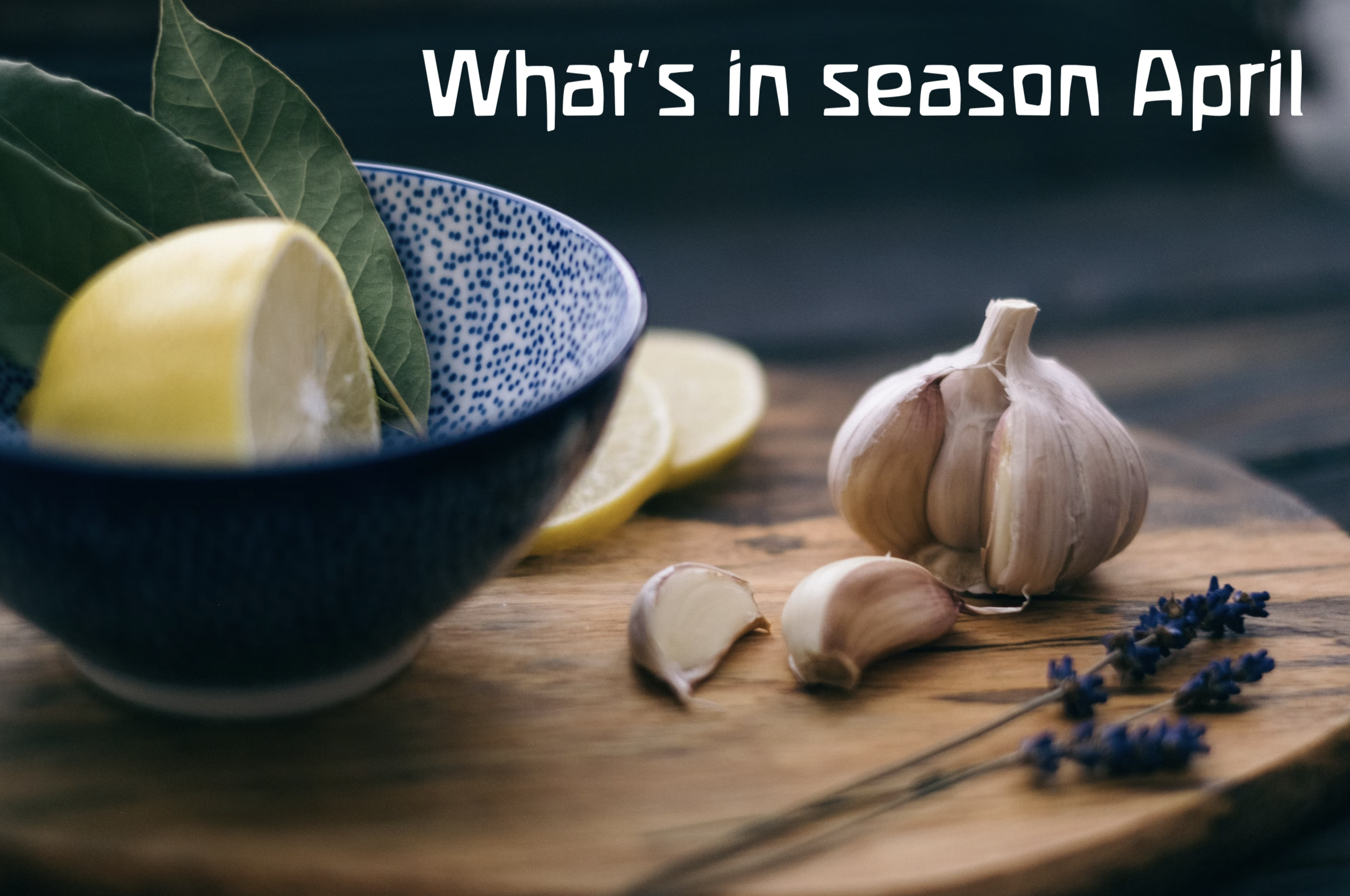
If you love the odorous bulb – and don’t mind your house smelling like a salami for a few days – now is the time to head out to the Middle East market, or shuk, and snatch up braided ropes of fresh garlic. Or braid your own, or simply hang it up to dry in a shady, dry place. It will keep for at least 9 months.
Prices are about the lowest they’re going to go, so hurry to buy now, because garlic season will soon be over. And with a stash of dried local garlic, you can afford to ignore the bleached Chinese garlic in the supermarkets.
What fruits are in season?
Fruit: Avocados are still going strong. Strawberries are wonderful now, with prices going down. Now really is the time to make strawberry ice cream and jam (recipe for strawberry jam below).
Cantaloupes, honeydews and watermelons are all excellent, just in time for hotter weather that approaches. Fresh green almonds in their fuzzy pods are now sold in the shuk. Crack their shells open and scoop out the milky, gel-like kernel. It’s a taste like no other, and doesn’t last long because the kernels begin hardening within a few days of harvest.
Loquats are still falling off trees in neighborhood gardens, as are oranges, clementines, grapefruit and pomelos. For those who don’t have those trees, look for the fruit in markets. Small, squat peaches just appeared, but prime peach (and apricot) season will come in the next weeks. Lemons are still abundant.
Bananas are good, with reasonable prices. There are local apples and green pears, but they seem to have come from cold storage. There are plenty of flavorless imported apples.
Vegetables in season in April
Vegetables: Cauliflower heads are full, fat, and white right now with good prices. Broccoli, however, looks sad and not worth buying unless you chance upon a new crop. Fresh, green ful (fava) beans are in, as are string beans, broad Italian beans and wax beans.
For some reason, all those fresh beans are still quite expensive, although in season and looking good. Root vegetables continue good: kohlrabi, beets, turnips, and red radishes. The exotic radishes such as daikon seem to be played out for now.
Cucumbers, zucchini, and corn are abundant and at good prices. Cabbages, both white and red, are very inexpensive right now – time to make sauerkraut before the weather goes really hot.
Artichokes are still available, but very much at the end of their season. All the nightshade vegetables are in and affordable: tomatoes, eggplants, and all the varieties of peppers. Fennel is in evidence and looking full and fat. Potatoes continue excellent, although the new-crop baby potatoes aren’t so new anymore.
Herbs in season in April
Fresh zaatar
Herbs: Are much the same as in March, with the exception of new za’atar (chop some up to top pita, as in our recipe), oregano, and savory. The herb vendors display the usual lettuces (romaine, iceberg, ruffled white and purple), Swiss chard, leeks, mushrooms, spinach, parsley, sorrel, chives, wormwood, rocket, watercress, celery, parsley and green onions. Mint is especially big and beautiful now.
Fresh mint in season for tea, salads, lemonade
Get a bunch of mint and put in cold water with a slice of lemon for a refreshing drink. You can also dry some for future teas, and put a few big sprigs in water to grow roots. Some markets carry fresh grape leaves now.
Foraging in April
Forager’s notes: Local trees are full of citrus blossoms. Gather a small handful to flavor malabi or warm, sweetened milk. Use the blossoms to bake in sweets or treats or cocktails, alcoholic or non. Plantain still hasn’t dried up. Wild oats are everywhere – pick the whole aerial part for a soothing tea, and to give to pet birds. Birds love pecking at wild oats, either fresh or dried.
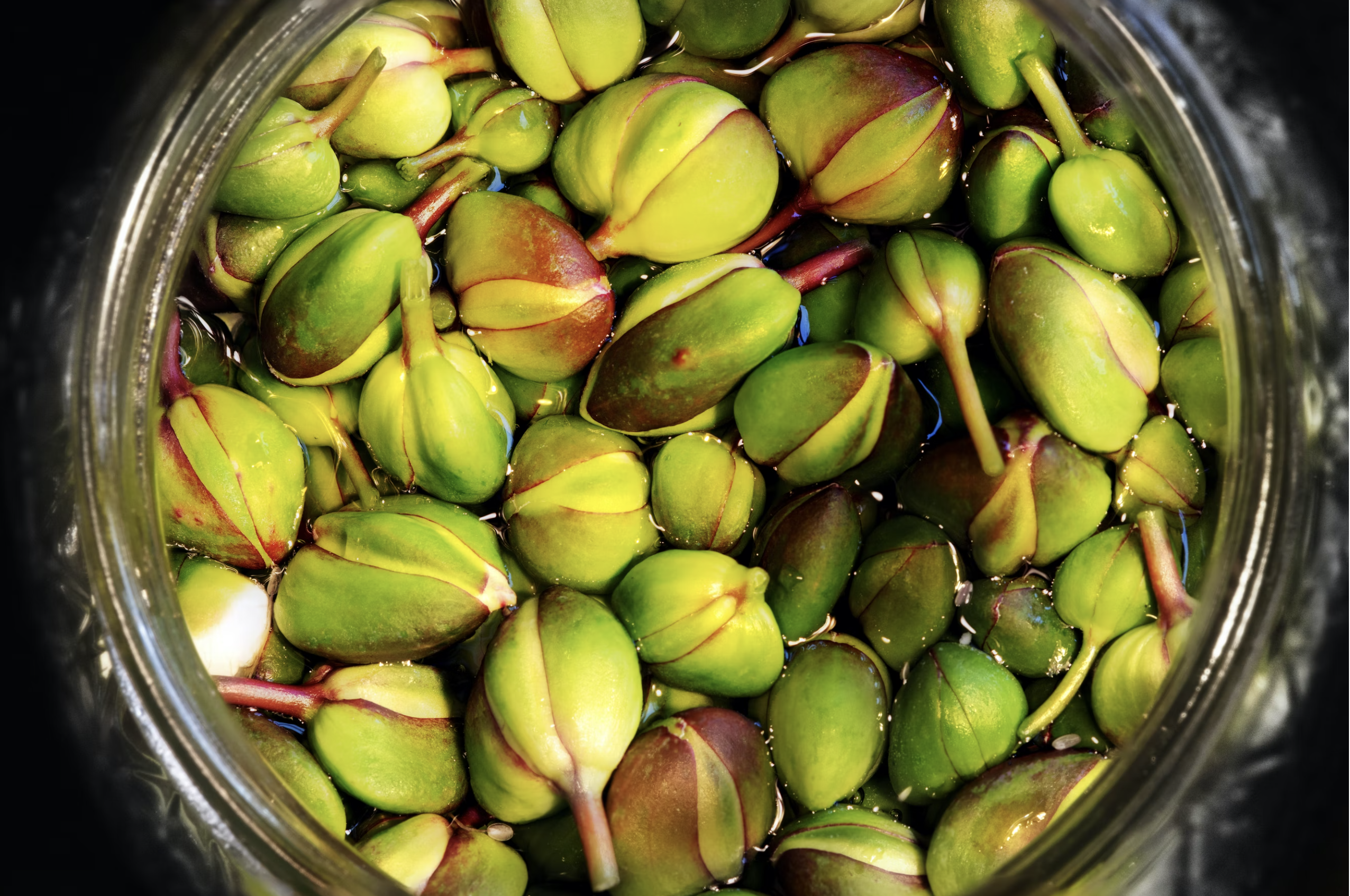
You may find wild rocket (eruca sativa) for your salad. Capers have started to bloom – brave the thorns and pick a few buds that have opened just enough to show a white stripe. Place the bud in a little bowl of water and it will open into a beautiful white and purple flower in your home.
Wild hollyhocks are in glorious bloom: snip off a few leaves and flowers to dry as a cough-remedy tea for winter. Hollyhocks also grow easily from seed, so if you see any dry brown seed capsules, take a couple and plant them in your garden or in pots.
Recipes starring Middle-Eastern produce in season in April:
Hydrogen is a fuel of the future if it’s created with renewable sources like the sun.
With Tehran, Iran enveloped in black smog from dust and fuel and Cairo constantly being known as one of the more air polluted cities in the world, it is good to see that the United Arab Emirates, blessed with fossil fuels, making good on making the world better.
Masdar, a renewable energy company that built the net-zero energy city under its namesake, along with Hassan Allam Utilities, are investing in the future of renewable energy. They announced just now that they will develop green hydrogen production plants in the Suez Canal Economic Zone and on the Mediterranean coast.
What is green hydrogen?
According to experts at the World Economic Forum, green hydrogen is the only version of hydrogen that is sustainable. Hydrogen, around us everywhere in air and water, is the simplest and smallest element in the periodic table. No matter how it is produced, it ends up with the same carbon-free molecule.
However, the pathways to produce it are very diverse, and so are the emissions of greenhouse gases like carbon dioxide (CO2) and methane (CH4).
Green hydrogen is defined as hydrogen produced by splitting water into hydrogen and oxygen using renewable electricity. This is a very different pathway compared to both grey and blue.
Green hydrogen featured is a number of emissions reduction pledges at the UN Climate Conference, COP26, is a means to decarbonize heavy industry, long haul freight, shipping, and aviation. Governments and industry have both acknowledged hydrogen as an important pillar of a net zero economy.
The Egyptian organizations concerned include the New and Renewable Energy Authority, the Egyptian Electricity Transmission Company, The Sovereign Fund of Egypt, and The General Authority for Suez Canal Economic Zone.
HE Mostafa Kamal Madbouly, Prime Minister of the Arab Republic of Egypt, expressed his happiness at this signing with the UAE, highlighting the directives of President Abdel Fattah El-Sisi, to strengthen and consolidate relations with the UAE in various sectors, so as to contribute to achieving the interests of the two nations.
He stressed that the state is working to encourage investment in green energy projects, due to Egypt’s potential to become an important pivotal and regional hub in this vital sector, which is expected to transform the global energy system during the upcoming period. These projects will also accelerate energy transition process in the region.
Sultan bin Ahmed Al Jaber, UAE Minister of Industry and Advanced Technology, UAE Special Envoy for Climate Change and Chairman of Masdar, said, “Today’s partnership agreements to explore the development of green hydrogen production demonstrates the strength of the close relationship between The United Arab Emirates and the Arab Republic of Egypt.
“These projects will build on the UAE’s and Masdar’s position as an early mover in the global hydrogen market and expand our capacity to deliver zero carbon energy solutions. As our two countries prepare to host the next two COPs [United Nations climate events], we look forward to working with our partners in Egypt to make practical advances in the energy transition that will provide significant benefits for the economy and the climate.”
Making hydrogen from Egypt’s sun and wind
Egypt has abundant solar and wind energy resources that would provide a suitable location for renewable energy projects at a competitive cost. Along with its proximity to global markets that are looking to import green hydrogen via the Suez Canal, this will allow significant growth for this sector in the future, and the agreements are in line with “Egypt Vision 2030” and its sustainable development strategy.
In the first phase of the project, Hassan Allam Utilities and Masdar aim to establish a green hydrogen manufacturing facility, which would be operational by 2026, producing 100,000 tonnes of e-methanol annually for bunkering in the Suez Canal.
The electrolyser facilities in the Suez Canal Economic Zone and on the Mediterranean could be extended to up to 4 GW by 2030 to produce 2.3 million tonnes of green ammonia for export as well as supply green hydrogen for local industries, according to materials released to the press.
Masdar and Hassan Allam Utilities see Egypt as a hub for green hydrogen production, targeting the bunkering market, export to Europe, and boosting local industry. Egypt enjoys abundant solar and wind resources that allow generation of renewable power at a highly competitive cost –a key enabler for green hydrogen production.
Active in more than 40 countries across the world, Masdar is invested in a portfolio of renewable energy assets with a combined value of more than US$20 billion, and a total capacity of more than 15 GW. In December, it was announced that Abu Dhabi National Energy Company PJSC (TAQA), Mubadala Investment Company and Abu Dhabi National Oil Company (ADNOC) will partner under the Masdar brand to create a truly global, clean-energy powerhouse intended to spearhead the drive to net-zero carbon by 2050 while cementing the UAE’s leading role in green hydrogen.
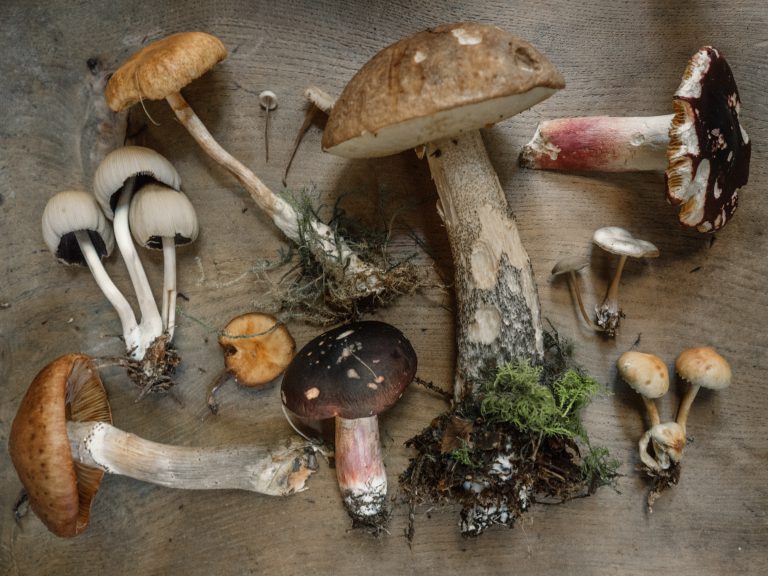
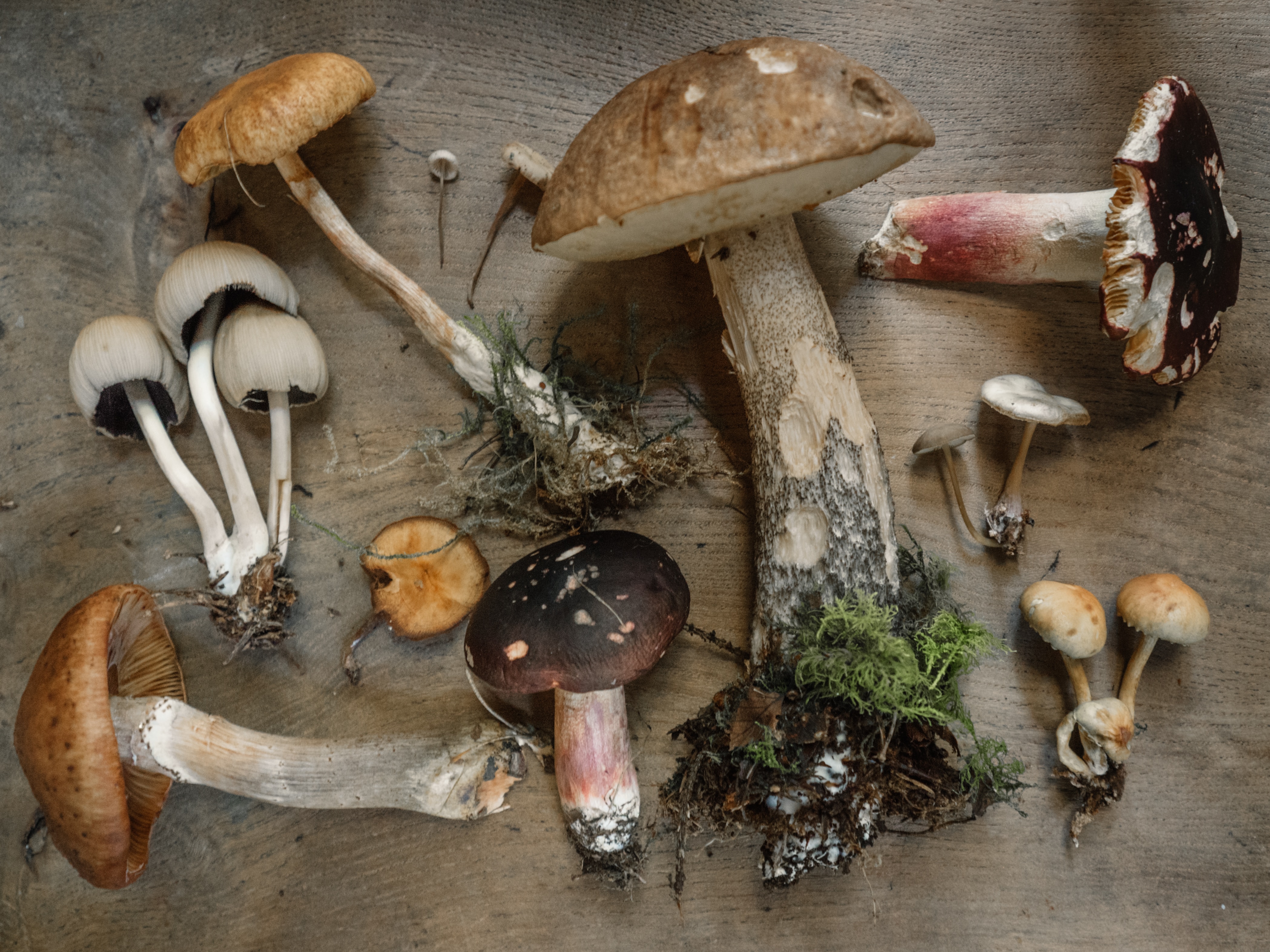
A quest for mushrooms might mean your body wants Vitamin D.
New research shows humans possess surprising nutritional intelligence: they “know” how to pair food for the right micronutrient combinations. The new research started out as a disagreement between food researchers.
Pioneering research has shed new light on what drives people’s basic food preferences, indicating our choices may be smarter than previously thought and influenced by the specific nutrients, as opposed to just calories, we need.
The international study, led by the University of Bristol, set out to re-examine and test the widely-held view that humans evolved to favour energy dense foods and our diets are balanced simply by eating a variety of different foods.
Contrary to this belief, its findings revealed people seem to have “nutritional wisdom,” whereby foods are selected in part to meet our need for vitamins and minerals and avoid nutritional deficiencies.
“The results of our studies are hugely significant and rather surprising,” says lead author Jeff Brunstrom, Professor of Experimental Psychology. “For the first time in almost a century, we’ve shown humans are more sophisticated in their food choices, and appear to select based on specific micronutrients rather than simply eating everything and getting what they need by default.”
The paper, published in the journal Appetite, gives renewed weight to bold research carried out in the 1930s by an American paediatrician, Dr Clara Davis, who put a group of 15 babies on a diet which allowed them to “self-select”, in other words eat whatever they wanted, from 33 different food items. While no child ate the same combination of foods, they all achieved and maintained a good state of health, which was taken as evidence of “nutritional wisdom.”
What about the Dorito effect?
Its findings were later scrutinised and criticised, but replicating Davis’ research was not possible because this form of experimentation on babies would today be considered unethical. As a result, it has been nearly a century since any scientist has attempted to find evidence for nutritional wisdom in humans – a faculty which has also been found in other animals, such as sheep and rodents.
To overcome these barriers, Professor Brunstrom’s team developed a novel technique which involved measuring preference by showing people images of different fruit and vegetable pairings so their choices could be analysed without putting their health or wellbeing at risk.
In total 128 adults participated in two experiments. The first study showed people prefer certain food combinations more than others. For example, apple and banana might be chosen slightly more often than apple and blackberries. Remarkably, these preferences appear to be predicted by the amounts of micronutrients in a pair and whether their combination provides a balance of different micronutrients. To confirm this, they ran a second experiment with different foods and ruled out other explanations.
To complement and cross-check these findings, real-world meal combinations as reported in the UK’s National Diet and Nutrition Survey were studied. Similarly, these data demonstrated people combine meals in a way that increases exposure to micronutrients in their diet.
Specifically, components of popular UK meals, for example ‘fish and chips’ or ‘curry and rice’, seem to offer a wider range of micronutrients than meal combinations generated randomly, such as ‘chips and curry’.
The study is also notable as it features an unusual collaboration. Professor Brunstrom’sco-author is Mark Schatzker, a journalist and author, who is also the writer-in-residence at the Modern Diet and Physiology Research Center, affiliated with Yale University. In 2018, the two met in Florida at the annual meeting of the Society for the Study of Ingestive Behavior, where Schatzker delivered a talk about his book, The Dorito Effect, which examines how the flavour of whole foods and processed foods has changed, and the implications for health and wellness.
Interestingly, Professor Brunstrom and Mark Schatzker’s research originated from a disagreement.
Professor Brunstrom explained: “I watched Mark give a fascinating talk which challenged the received view among behavioural nutrition scientists that humans only really seek calories in food. He pointed out, for example, that fine wine, rare spices, and wild mushrooms are highly sought after but are a poor source of calories.
Fast food is turning nutritional wisdom against sus
“This was all very intriguing, so I went to see him at the end and basically said: ‘Great talk, but I think you’re probably wrong. Do you want to test it?’ That marked the start of this wonderful journey, which ultimately suggests I was wrong. Far from being a somewhat simple-minded generalist, as previously believed, humans seem to possess a discerning intelligence when it comes to selecting a nutritious diet.”
Mark Schatzker added: “The research throws up important questions, especially in the modern food environment. For example, does our cultural fixation with fad diets, which limit or forbid consumption of certain types of foods, disrupt or disturb this dietary “intelligence” in ways we do not understand?”
“Studies have shown animals use flavour as a guide to the vitamins and minerals they require. If flavour serves a similar role for humans, then we may be imbuing junk foods such as potato chips and fizzy drinks with a false ‘sheen’ of nutrition by adding flavourings to them. In other words, the food industry may be turning our nutritional wisdom against us, making us eat food we would normally avoid and thus contributing to the obesity epidemic.”
The Road Train can help you get better fuel efficiency. Using a GPS can help as well.
Now, the logistics sector undoubtedly plays an integral role in the supply chain and all the industries including healthcare, manufacturing and all are getting the benefits of it. But the innovation speed and technology that is evolving each passing day has become a concern for modern businesses. They need to complete the rapid demands of their customers and companies find it struggling to keep up with the fast-paced up world according to the latest developments in the technology. Though the best local moving companies like A-1 Auto Transport are trying to adopt the latest innovations still there are many challenges that all the transportation organizations are facing right now. If you want to know these then have a look here:
Completing the customer’s expectations
As technology is becoming more and more advanced, this has also changed the expectations of the people. this makes the entire industry go under tremendous pressure. of course, they need to go out of the box to make their clients happy and satisfied and have to improve both the efficiency and delivery speed.
Digital requirements
Evolving IT technology is also a concern for companies. Many companies present there stick to the traditional logs, paperwork, and records and are not using the digital technology but now it is required at the government level which is putting pressure on companies to get digital. The industry needs to be at the top in the advancement and have to make all the improvements in processing.
To reduce the transportation cost
To have happy and satisfied customers, organizations are required to offer their services at a less costly but the truth is that transportation is very expensive in logistics. But when considering the bright side, certain ways can help an organization to reduce the cost like coordinating incoming orders, optimizing the shipping routes as much as possible, meeting dock time, predicting the weather and traffic conditions, and many others that can be specific to your company only.
The increasing cost of fuel
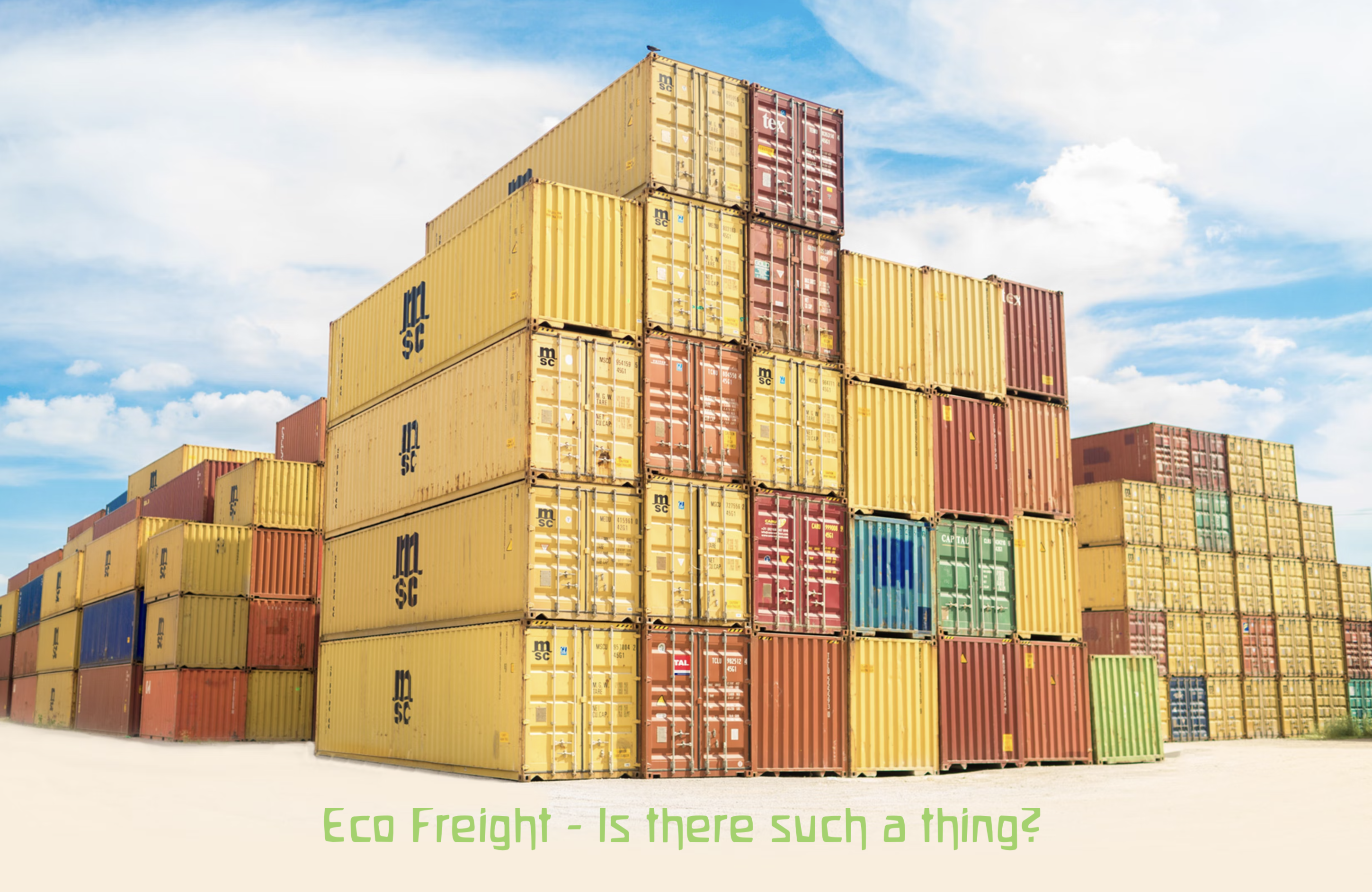
Stacks of freight cargo
With each passing day, the rates of fuel are increasing at a rapid rate which has become a challenge. Earlier, it was easier to run transport companies as fuel prices were low so they can generate a significant amount of money via it. Now, fuel prices have hit the roof and are affecting the margins of the companies making it challenging for companies to provide services efficiently while generating profit. This also makes them increase the cost of their services which makes them lose their customers and decreases the demand for services in the market.
American ethanol is driving food prices up globally. Time to rethink the allure of biofuels?
Unforeseen delays
The sector is affected by unpredictable things as the certainty is not there. The sector gets affects by traffic, weather, poor conditions on the road, and so on. Though yes, these things are predicted before embarking on the process but the accuracy is not a hundred percent. These uncontrollable factors increase the cost of service and also delay the process making unsatisfied clients.
Environmental issues
A Tesla semi? The next wave of transport?
The transportation industry has to follow a lot of protocols set by the higher authorities and government. Considering the environmental impact of transportation, carriers face significant compliance regulations that have been imposed thereby federal, state as well as local authorities. The emission of CO has put it necessary for higher authorities to set some standards.
Automation
There is the rise of automation in the industry. Both automation and AI are going to be big components of the company of the future. Automation helps companies to have more satisfied clients as it helps in fulfilling orders tracking the products and much more. But the transportation industry is experiencing the change too rapid making it tough for all the companies to stay up to date with the latest technologies to complete the demands of the customers.
Wrapping it all up
The transportation industry is growing at a rapid rate but is not without challenges. Upgraded technology is one of the main concerns. Though the industry is also enjoying the benefits of the innovation and also understands its benefits they are facing issues as they don’t know how to implement these technologies and how to get the advantage of them. Also, this leads to investing which currently they are not ready to make.
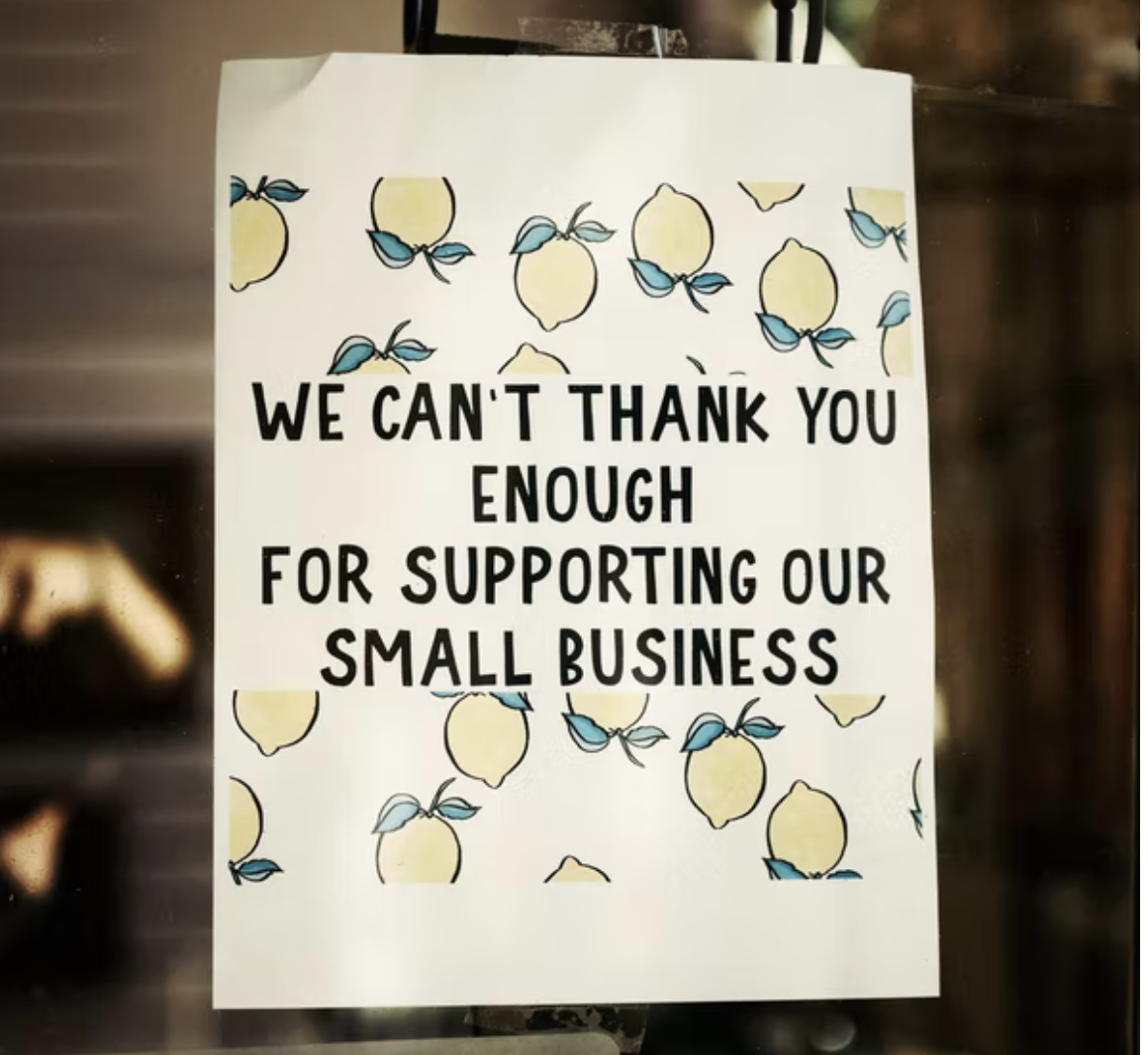
Small businesses provide 75% of new jobs in the U.S. They also offer 40% of jobs and pay 44% of payroll taxes. The smallest companies create 13 times more patents per employee than large companies. 99.7% of employer firms are small businesses. If you have an idea for a startup, the first thing to ask is should this be a startup at all, or should it be a small business? There are dozens of reasons why you must support small businesses.
We’ve discussed them below;
Benefits of Small Businesses
Create more job opportunities
Startups play a key role in the creation of jobs. This is especially important during a recession when unemployment is high. The U.S. Small Business Administration states that small businesses create two out of every three new jobs in the country. That’s a huge number, now that startups comprise 98% of all businesses in the U.S, in accordance with SBA. According to SBA estimation, one in every two employees in the U.S. owns a small business.
Contribute to the development of the local economy
Small businesses also benefit the local economy by purchasing goods and services from other local companies, creating a cycle of economic growth within the community. Local businesses are more likely to support community programs
Thanks to small businesses, consumers have a chance to support their local community and keep money within it. Money spent at small businesses can be re-spent in the local economy rather than being sent away to corporate headquarters or investors. This helps build a stronger local economy and encourages further business development and growth.
Highly flexible
Small businesses can be more flexible than large corporations. Some small companies can make changes quickly, such as implementing new business processes or shifting directions in response to market demands.
Besides, when starting, you have everything to gain and little to. You don’t have to worry about corporate politics, making the numbers on a quarterly report, or pleasing anyone but yourself. If there’s a project you want to undertake or a new way of doing things you want to try, there’s no one standing in your way except for your own beliefs and fears.
Easy to change direction
With a startup, you can opt for a different direction with ease. If one part of your business isn’t working for you, it’s easy to shut it down and start over. Because you’re not tied down by large overhead expenses or investors’ expectations, it’s easier for you to make decisions based on what feels right for you and your business.
Innovation
Small businesses can innovate faster than large corporations because they typically have a flatter organizational structure and less bureaucracy, allowing them to make decisions with greater agility.
Essentially, one thing is for sure- big companies are not good at innovation. Although they seem like a great place to find innovation due to the availability of resources, they struggle with innovation. But resources are a double-edged sword. The more important a project is to a company’s future, the more risk-averse they tend to be. To get an idea of how this works in practice, just look at the corporate world’s record in adopting new technologies: it’s pathetic. Innovation has little to do with funding. When it comes to coming up with new ideas, you can’t beat small groups of clever people working on problems that interest them.
Key Takeaway
Starting a small business is the best decision. That’s because startups contribute to the growth of the local economy, lead to job creation and offer personalized customer service. Because small companies have fewer employees, customers often receive customized services that a large corporation may not be able to provide. Besides, they promote an entrepreneurial spirit. Working for a small company can empower employees who want to contribute on many levels of the business and grow professionally in ways that may not be possible in larger companies.
The Iranian city now passes as one of the world’s most polluted cities, as smog, dust and smoke overcomes it.
Kids were allowed to go back to school in Tehran in April but despite the freedom from Covid’s endemic status the students were told to stay indoors as the air pollution surpassed all global limits, making Tehran in mid-April, the most polluted city in the world in terms of air quality.
Al Jazeera reported that Tehran’s “very unhealthy” average real-time air quality index was 236, according to global air quality monitoring company IQAir.
The Swiss company’s index showed an “unhealthy” reading of 183 by noon on Saturday mid-April, but local estimates on Friday at one point indicated an index of more than 500, the maximum level that can be read by the scale.
Old vehicles, smokestacks from factories and low-quality fuel used in Tehran were not the main cause this time. Storms and strong winds carried dust mainly from Iraq, and the effects of the more than normal dust is likely caused by climate change, drought and desertification.
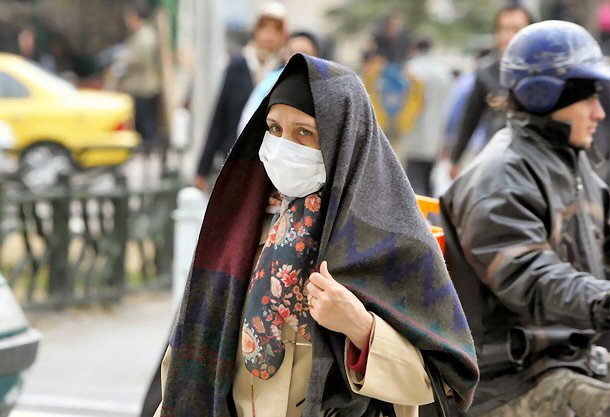
A woman in Tehran wearing a mask years before Covid struck. She is protecting herself from the air pollution.
Some years ago Iranians opted to try car-free Tuesdays to curb air pollution. In 2016 it was estimated that 26 people a day die from Tehran’s poor air quality.
Tuesday was the day picked because it is in the middle of Iranian week when traffic congestion is high and air pollution is at its worst.
According to the New York Times air pollution in megacities is hitting an all-time high and it is causing unprecedented rates of early deaths:
“In many megacities, pollutants increased between 8 and 14 percent year to year, which is up to three times as high as national or regional rates of increase. And the vast majority appeared to come from industrial and residential sources, not from agricultural practices like biomass burning that have historically driven air pollution in tropical regions.
“Some 180,000 premature deaths in large tropical cities in 2018 alone were attributable to increased exposure to pollutants since 2005, according to researchers at University College London.
“That number, they noted, is made all the more alarming by the fact that nearly three-quarters of megacities, those with 10 million or more residents, are expected to be in the tropics by the end of the 21st century.”
People like Beth Moon who took this shot travel the world photographing trees. If Instagram is how you grow your eco and green business, find new ways to keep the business flowing while freeing up some of the time needed for social media.
If you’re intent on growing your Instagram followers, whether it’s for business use or as an individual – perhaps you’re a budding Influencer? Staying active on this popular platform is a full-time job! You need to keep your brand name high in your users’ minds and help it to regularly appear on your followers’ feed. You also want to be discovered by all of those other Instagram accounts, by using hashtags, posting Instagram Stories, using IGTV and the LIVE feature.
As well as regular posts, you need to be creative and post relevant, useful information that catches people’s eyes. It takes time to craft the perfect post, take the best-looking image and decorate it with emojis, symbols and hashtags. Most people don’t have time to just focus on their Instagram account – but even a few, rushed Instagram posts at random times of the day could cost you dearly. If you aren’t keeping your followers engaged, they will go elsewhere and worse still, click the dreaded “Unfollow” button! Don’t forget – for best credibility, your Instagram account needs to be verified, especially if you’re a business or brand. Find out about Instagram verification in this useful link.
How to Schedule Instagram Posts
You may already know that you can schedule Instagram posts and if you didn’t know that – then you do now. There are various tools available online, and even through Instagram (if your account qualifies) that you could take advantage of to plan your Instagram posts for the future. Once you’ve spent time scheduling a few, attractive and exciting posts, you free yourself up to get on with other things that matter, such as building your brand or business – or just getting on with your regular tasks of the day.
Why You Should Schedule Your Instagram Posts
In this piece, we’re going to teach you how to schedule Instagram posts using a variety of innovative tools. Before we do so, let’s recap the benefits of learning how to schedule Instagram posts:
You can grow your social media presence and ensure that you’re targeting the right potential followers. To further boost your profile, did you know that you can also buy Instagram followers for $1? Alternatively you might want to try buying likes for Instagram and buy Instagram views cheap – but choose a reputable Instagram marketing company in order to do so successfully.
It frees up your time so you can focus on other things you want to do.
When you book out an hour of your week to plan your Instagram schedule, you can use the time to get creative with your posts.
You perfect your posts in the future, and schedule them at times you know when you get the biggest audience engagement.
You stay active on the platform, even when you’re not “there”!
How to Schedule Instagram Posts – Tools to Use
There are various online tools designed especially to help you with how to schedule Instagram posts. They are third-party tools that you need to download, and most are available on the app store as well, which keeps it nice and handy as you only need your tablet or smartphone.
Best Tools for How to Schedule Instagram Posts
We’d recommend the following programs for scheduling your Instagram posts:
Let’s go into a little detail on each Instagram schedule tool, some are free, some you have to pay for.
Later
This Instagram scheduling tool is free to use, but if you choose an upgraded package, prices range from $12.50 to $33.33 for the most advanced package. The beauty of Later is that it’s dedicated only to Instagram and gives you a generous social media planning calendar and the option to simply drag and drop your posts into your planner. You can also post automatically, or you can publish to Instagram at a later date. There’s another additional feature attached to Later and that’s the Linkin.bio feature, using this you can link certain Instagram posts to targeted product pages. We like this Instagram scheduling tool and rate it very highly.
Tailwind
This Instagram schedule tool is not free to use. It costs from $9.99 for the basic package, right up to $49.99 for the most advanced package. This tool is designed especially for use with the Instagram and Pinterest platforms. There are lots of excellent features available, such as uploading a large number of images at once and there’s a useful hashtag finder so you can discover the best hashtags to use for your content. You can also use the Tailwind calendar to plan and preview your posting schedule on one, easy-to-interpret dashboard so you see exactly what your followers see, before you hit the post button.
Buffer
This Instagram scheduling tool has a variety of packages to choose from. The free package, the pro package ($15), the premium package ($65) and the business package ($99). If you have other social media networks that you regularly use for business or personal content then it’s a useful tool to download as you can also schedule your posts for Facebook, Instagram, Twitter, LinkedIn, Pinterest, and Google+.
The tool gives you a useful dashboard and you may also include relevant hashtags. Additional benefits include an insights area to see what’s worked and what’s not worked for you and there’s an extension for your Internet browser.
Loomly
Another very well-regarded Instagram scheduling tool, Loomly is more expensive, with starting packages at $34 right up to the biggest package which costs a whopping $332 per month, however, if you’ve got the budget this is the very best scheduling tool of all because you can manage all of your content in one place. It’s not just an Instagram scheduling tool, there’s an abundance of interesting features to explore and you can use this across your social media platforms. Additionally, there’s an automated Instagram ad feature. The app provides notifications, so you know when a team member has worked on a post, which makes it great for collaborations. The app also provides inspirational ideas for your social media posting, including holiday ideas, trends, and events to name a few.
What About How to Schedule Posts on Instagram Using Instagram?
For this feature, you need access to a business page, and you need to have access to the Instagram Creator Studio and to do this, you’ll need to meet the criteria of having 10,000 followers as a minimum. Here’s how to connect up your Insta account with Instagram Creator Studio.
Linke your Instagram account to your Facebook page and if you don’t have a Facebook page, create one on www.facebook.com.
Once you’ve linked up your accounts, you’re ready to use the Creator Studio which has a scheduling feature.
Use Creator Studio to create your posts, view all of your activity in one place and to gain insights into how well your Instagram posts perform (across all categories, LIVE, IGTV, Stories etc.). Here’s how to schedule Instagram posts with Creator Studio:
The Creator Studio – How to Schedule Instagram Posts Using Instagram
To schedule your posts in the future login to your Creator Studio account and follow these steps:
Locate the blue “Publish” button, it’s at the bottom of your screen on the right.
Select the arrow facing downwards.
A popup will appear, follow the prompts to select when you want your Instagram post to appear.
Check that your post is perfectly prepared and then schedule.
The Creator Studio keeps all of your scheduled content in the Content Library that you can access any time and edit posts if you wish.
Now you know how to schedule Instagram posts, you can streamline your working day to get on with other important things or give your marketing team the tools to work faster and smarter. Try out some of the tools above to see which one works best for you.
Plants from the past and used in the Bible may help us against modern ailments. Research studies to produce medicines capable of fighting COVID-19 from frankincense trees in Oman are being jointly undertaken by the University of Nizwa in Oman and the University of Oxford in England according to the Bahrain News Agency.
Ancient trees and plants from the Holy Land in Israel and written about in biblical times may have the power to heal modern ailments. We have heard a lot recently about CBD and THC from the cannabis plant but there are thousands of natural sources of medicine all around us waiting to be discovered. A recent UN report list 12 wild plants in need of protecting and one of them is based on this new research.
The new research project is looking to isolate certain key compounds from frankincense – known for its healing properties – and to use them to make antibiotics.
The resin contains large numbers of naturally occurring chemicals that could be used to inhibit the ability of the COVID-19 virus to infect people, the researchers suspect.
“We realised that the properties of these compounds being anti-inflammatory can be very beneficial, because we could use these to inhibit the m-protease protein in the COVID virus,” Dr Ahmed Sulaiman Al Harrasi, the Vice Chancellor for Research and Graduate Studies at the University of Nizwa, said.
“This protein is present in the spike protein of the virus, which is used to enter the host cells, such as the lungs, in the case of humans. We ran models of the m-protease, in which we treated this with our active drugs,” he added. “We could see a very strong binding between the two, which means the inhibition of the virus by these compounds could be very strong.”
The project is led by Dr Al Harrasi, who also serves as the Chair of the Natural and Medical Sciences Research Centre, which he helped found, and is conducting this research, and Dr Christopher Schofield, the Head of Organic Chemistry at Oxford.
“It starts with the isolation of active ingredients from the frankincense resin,”Al Harrasi said.
“It then has to go through several procedures conducted here. Some of these are self-developed methodologies and protocols that helped us isolate these bioactive components, purify them, and then characterise them. We came to know their structure through different spectroscopic techniques such as nuclear resonance, X-rays and mass spectrometry. Various techniques are used to identify and elucidate the structure of those components used to make drugs isolated from frankincense.”
The resin was chosen for this research as it contains a high number of boswellic acids, known to be excellent anti-inflammatory components, which have been used to treat ailments such as diabetes, cancer, joint pain and Crohn’s disease.
“Some of these are about to reach pharmacy shelves as real drugs.”
The next step of the research will involve testing the quality and strength of the compounds isolated from frankincense.
Protecting wild plants
There are wild ingredients found in your home that are now under threat and which could be the medicine of the future. Brazil nuts, argan oil, and shea butter are now classified among a dozen wild, threatened and at risk plants known as flagship species that need protecting.
Thousands of species are at risk primarily due to habitat loss, as well as other factors such as climate change and over-exploitation.
Of the 21 percent of medicinal and aromatic plant species whose vulnerability status has been assessed, nine percent are considered threatened with extinction. About 1 billion of the world’s most vulnerable people are thought to depend on them for their livelihoods.
There are wild ingredients found in your home that are now under threat. Brazil nuts, argan oil, and shea butter are now classified among a dozen wild, threatened and at risk plants known as flagship species that need protecting. A new report published by the UN called Wild Check: Assessing risks and opportunities of trade in wild plant ingredients, sheds light on twelve flagship species – the so-called “wild dozen” – that are hidden in our everyday products.
Developed in collaboration with TRAFFIC, a non-governmental organisation working globally on trade in wild animals and plants, and the International Union for Conservation of Nature, the report aims to raise awareness about the sustainable use of wild-harvested plants. It can help consumers choose fair trade labels or opt out using these products altogether.
There is a surge in global demand for wild plant ingredients (an increase of more than 75 percent in value over the past two decades).
Thousands of species are at risk primarily due to habitat loss, as well as other factors such as climate change and over-exploitation. Of the 21 percent of medicinal and aromatic plant species whose vulnerability status has been assessed, nine percent are considered threatened with extinction. About 1 billion of the world’s most vulnerable people are thought to depend on them for their livelihoods.
“The sustainable use of wild plants has critical implications for food security and for millions of livelihoods around the world. It is time that wild plants are given serious consideration in our efforts to protect and restore habitats, promote sustainable agrifood systems and build inclusive, resilient and sustainable economies, particularly as countries work on the post-COVID recovery,” said Sven Walter, who heads FAO’s Forest Products and Statistics team.
Supply and demand
Plants make up around 80 percent of all biomass on Earth and play a fundamental role in supporting humans and other animals by providing food, medicine, oxygen and shelter. In some parts of the world, wild plants are collected by some of the most vulnerable people, often using traditional methods that date back generations.
Meanwhile, demand for wild plant ingredients keeps growing, especially in wealthier countries. Consumers in the United States alone spent an estimated 11.3 billion dollars on herbal dietary supplements in 2020, while preliminary evidence suggests the COVID-19 pandemic has renewed interest in the use of wild species as ingredients in traditional and modern medicine.
Overall, it is estimated that up to 5.8 billion people may be using wild or semi-wild plants globally, according to a study by Rhodes University in South Africa.
Despite their ubiquity, importance, and the threats they face, wild plant ingredients are often obscured from consumers and escape companies’ due diligence due to a lack of awareness and traceability.
The report aims to address these challenges by providing detailed information on a selection of ‘flagship’ wild plant ingredients, dubbed the “Wild Dozen.”
What are the wild dozen?
The 12 wild plants singled out in the report are:
Beth Moon, Frankincense tree
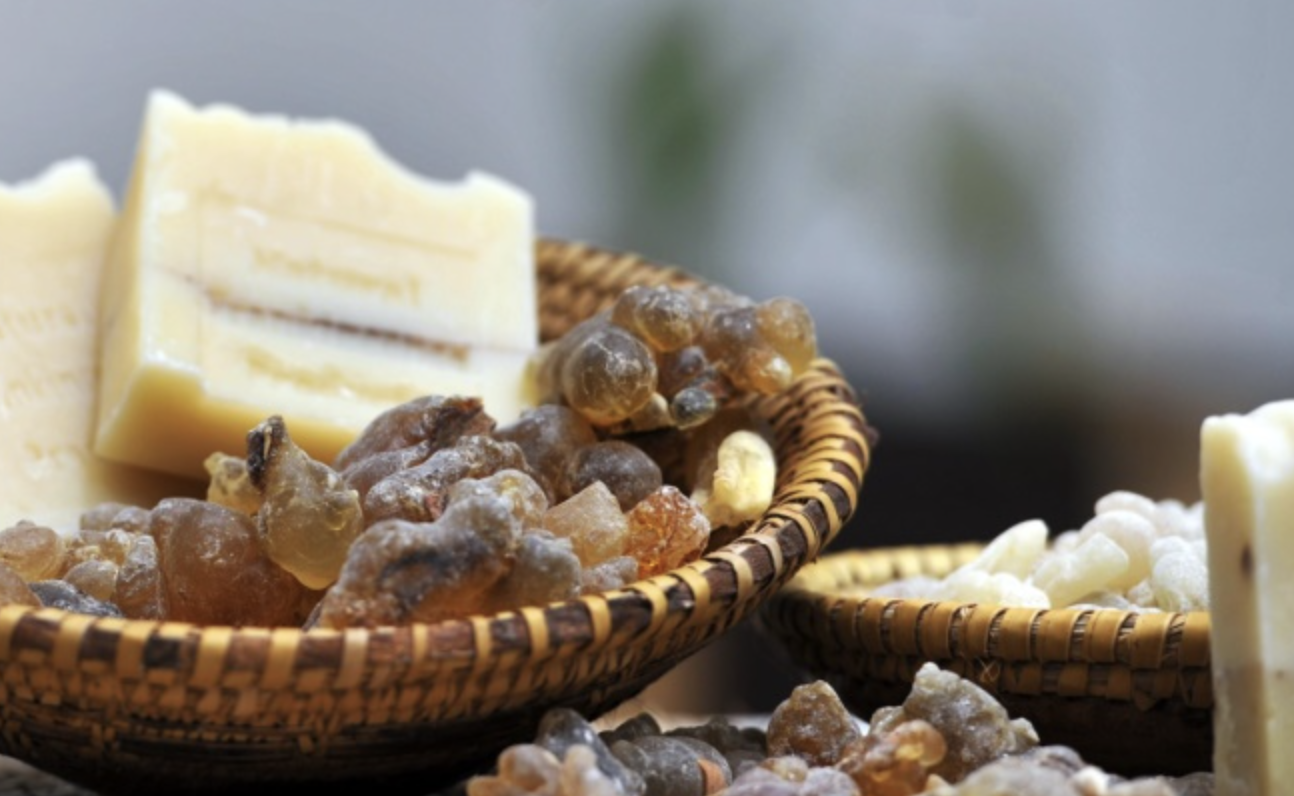
Frankincense: Found in north-eastern parts of Africa, as well as in Oman, Somalia and Yemen, its resin is used for incense, aromatherapy, cosmetics, perfumes and traditional medicines. Conservation status: near threatened
Pygeum: Also listed in ingredients for medicines and herbal products as Prunus, African cherry, red stinkwood or African almond, this tree grows in forests across tropical Africa. Conservation status: vulnerable
Shea: Grows across Africa, from Senegal to Uganda. Used widely in the food industry as a cocoa butter equivalent, it is also popular in cosmetics. Locally, it is used as a healthy cooking oil. Conservation status: vulnerable
Jatamansi: A perennial, aromatic plant that grows in the Himalayas, its roots are harvested for their medicinal properties. Conservation status: critically endangered
Gum arabic: This species grows in Africa and is primarily used in the food and pharmaceutical industries as an additive, emulsifier or stabilizer. Conservation status: not assessed
Goldenseal: Also known as hydraste du Canada or ground raspberry, this species is native to eastern North America and is primarily used for medicinal products. Conservation status: vulnerable
Candelilla: Found in Mexico and confining parts of the United States, candelilla wax was a common ingredient in chewing gum. It is used as a food additive (E902) and in cosmetics and pharmaceuticals, as well as industrial waxes and polishes. Conservation status: not assessed
Argan: Also known as Moroccan oil, and rumored to be processed inside a goat’s butt, argan oil‘s anti-ageing properties make it a popular choice among European and North American consumers of cosmetics and hair products, while its oil is also used to treat a number of ailments, from acne to arthritis. It grows in Algeria, Mauritania, Morocco and the Western Sahara territory. Conservation status: vulnerable
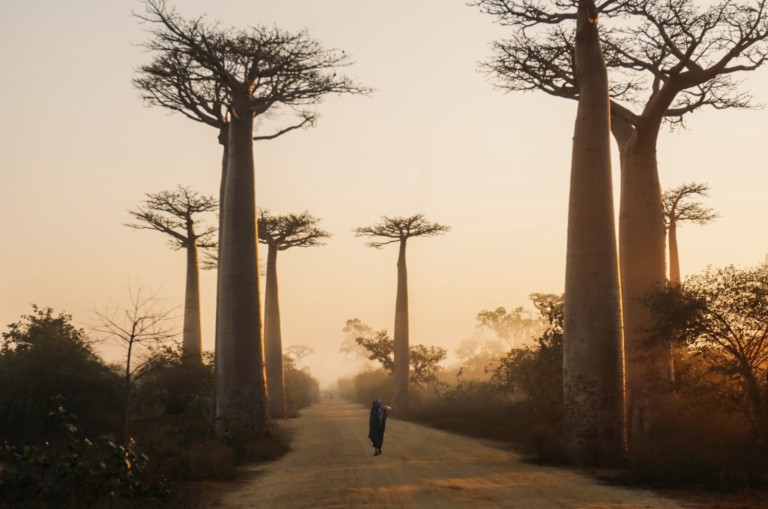
Beautiful alley of baobabs during sunrise in Morondava, Madagascar.
Baobab: The A. digitata variety of this species is native to mainland Africa and famously eaten by our ancestors. Baobab powder is used as a food and beverage ingredient, while its seed oil is used as a cosmetic ingredient. Conservation status: not assessed
Brazil nut: Harvested entirely from the wild, the tree is primarily exploited for its nutritious, edible nuts packed with nutrients and antioxidants such as magnesium, zinc, protein and selenium. Its harvesting has contributed to preserving millions of hectares of Amazonian forests, which is why it is often called the cornerstone of Amazon Forest conservation. Conservation status: vulnerable
Liquorice: This perennial herb is native to Eurasia, northern Africa and western Asia, and is primarily used for medicinal purposes, as a sweetener and in the tobacco industry. Conservation status: least concern
Juniper: Juniperus communis is a species of the temperate and subarctic northern hemisphere. Its berries are a key ingredient in gin manufacturing. They are also used as a food flavouring, an essential oil, an ingredient in cosmetics, and have a long history of use in traditional medicines and for religious purposes. Conservation status: least concern
Feel you are reaching out to a forest of abyss? Even greentech companies like solar energy need good sales skills. Here’s how to find the dream job.
These days, more and more people have become concerned about the environment. This is something that they worry about not only in terms of their personal lives but also their professional ones, and many want to do their bit to ensure a safer and greener future for everyone. This includes doing things such as getting a job with a greener company, and you can find some eco-friendly jobs that offer very good pay. Working towards improving your skills and creating a solid resume using onlineresume examples can help you to secure jobs such as these.
If you want to find top-paying eco-friendly jobs, you need to make sure you take all the necessary steps to boost your chances of success. By finding the right job, you can do your bit forthe green cause as well as earn a good income and benefit from job satisfaction. You can also help to do your bit to make the world a better place while enjoying the chance to earn a good living doing something you are proud of doing. In this article, we will provide some tips on finding top-paying eco-friendly jobs.
Some of the Things You Can Do
There are a few different factors that you should keep in mind if you want to find a well-paid eco-friendly job. Some of the main ones are:
Look at the Area You Want to Work In
One thing to remember is that there are eco-friendly jobs and businesses in all industries, so one of the things that you will need to do is to work out what sort of industry you want to work in. The good news is that you can find eco-friendly jobs in many industries, which means that you have far more leeway when it comes to yourcareer choices. Once you know what sort of industry you are most interested in, you can then start looking for eco-friendly businesses and jobs within that industry.
Study for Relevant Qualifications
Another thing you should do in order to help you to secure top-paying eco-friendly jobs is to ensure you have the skills, knowledge, and qualifications you need. If you already have a job in mind that you are interested in, you should do as much research as you can to find out what is needed to improve your chances of success. You can then turn to internet training and educational sites to get what you need in order to get into the industry and job you are interested in.
Gain Some Work Experience
One of the other things that you can do in order to aid your chances of finding a top eco-friendly job is to gain some work experience. This is something that you can achieve in various ways such as applying to green charities, asking around local businesses, and registering your details for voluntary work online. This can make a big difference when it comes to securing a relevant job.
These are some of the steps that you can take in order to boost your chances of finding an eco-friendly job with a great salary.