White label sustainable aerosols from cans

eco-sleeves

They squirt, spray and lather. Some even give lifesaving bursts of medicine. But truth be told, the aerosol spray container hasn’t changed much in the last 60 years, says Gadi Har-Shai, CEO of the Israeli startup GreenSpense. Traditional aerosols are polluting and dangerous. So he invented a new alternative, the eco-sleeve, using nanotechnology.

“This will definitely contribute to a better and safer world,” he says.

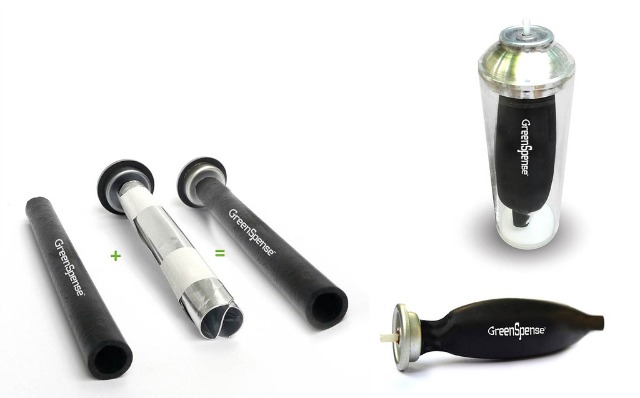
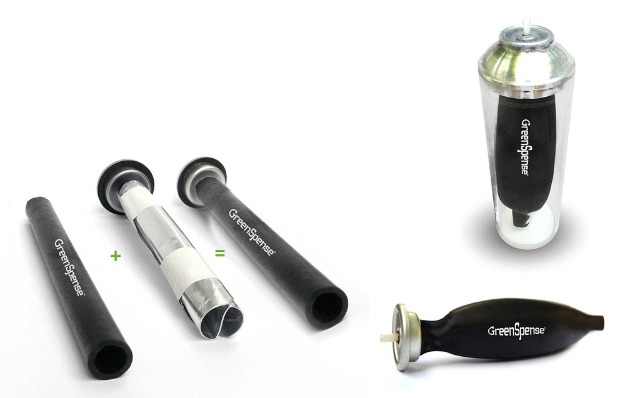
Instead of getting propelled by compressed air in a metal container, the product is air-forced from a sleeve that sits inside any kind of container, much the same way a bagpiper squeezes air from the bladder of the instrument through the pipes.

“Imagine a flexible bag inside the product. Over the bag we have mounted a special sleeve that presses the bag in order to push material out,” explains Har-Shair.

“The special elastic sleeve is based on nano-technology and it is very thin while generating high pressure. There is zero pressure on the external container and all the pressure is directed to the center. Now we can eliminate the traditional metal container,” says Har-Shai.
greenspense eco sleeves


This solution is less costly than metal, and could eliminate the hundreds of thousands of tons of volatile organic compounds and carbon emissions coming from aerosol cans each year.

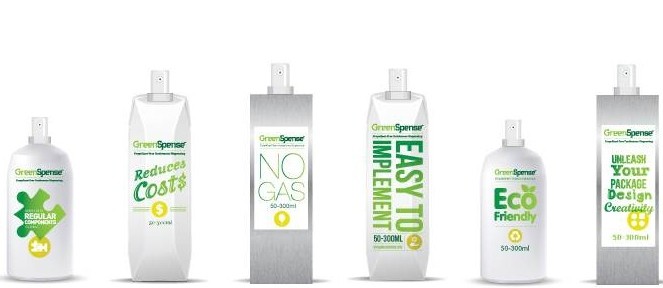
Because the GreenSense sleeve squeezes the product inward rather than outward, the packaging can be made from any kind of material, including biodegradable plastic or recycled cardboard. The shape can even be square – something not possible in the past due to the physics of compressed air.

“You can have a square, or just about any shape –– not just cylindrical,” says Har-Shai.

Banishing ubiquitous aerosols

More than three billion aerosol cans around the world use a standard cylindrical metal canister surrounding an inner compartment, or bag, under extreme pressure. They’re everywhere.

The eco-sleeve will be ready for market by the end of this year.

“They are used in personal care, household products, pharmaceuticals and for technical products, nasal sprays, veterinary products and so on,” Har-Shai says.

“For personal items, we’ve got shaving creams, sun care, deodorants –– some 12 billion products produced every year around the world. This is a big industry that started around World War II but the methods remain the same,” he explains.

“The eco-sleeve mounts over standard pouches used with current dispensers,” he says. “It generates high pressure to provide the usual consumer experience of continuous dispensing, replaces the gas, and as a result, eliminates the need for cylindrical, pressurized metal containers.”

Whereas aluminum aerosol cans cannot be recycled, Har-Shai says the eco-sleeve, made from rubber and other ingredients, can be downgraded to another use.

GreenSpense launched its eco-sleeve this year in Paris at the Aerosol & Dispensing Forum, while the company itself was founded in 2011 in the Misgav Trendlines incubator. Some $750,000 has gone into development so far, and the final product is expected to be ready by the fourth quarter of this year.

Dream clients include L’Oreal, Gillette and Beiersdorf, the company that owns Nivea. PepsiCo has expressed interest, says Bar-Hai.

“We got a lot of attention and have started discussions with major companies, and in parallel are continuing development,” says Har-Shai, an engineer with consulting and development experience at large Israeli companies including Iscar, Scitex and Objet.

The idea was his own. “I started asking myself questions about aerosols and eventually it rolled into a large project.”


::Greenspense


Karin Kloosterman
Karin Kloostermanhttp://www.greenprophet.com
Karin Kloosterman is an award-winning journalist, innovation strategist, and founder of Green Prophet, one of the Middle East’s pioneering sustainability platforms. She has ranked in the Top 10 of Verizon innovation competitions, participated in NASA-linked challenges, and spoken worldwide on climate, food security, and future resilience. With an IoT technology patent, features in Canada’s National Post, and leadership inside teams building next-generation agricultural and planetary systems — including Mars-farming concepts — Karin operates at the intersection of storytelling, science, and systems change. She doesn’t report on the future – she helps design it. Reach out directly to [email protected]
10 COMMENTS

Comments are closed.

TRENDING

Eco organization offices destroyed by Iran missile

Tel Aviv's eco organization, the Heschel Center, was impacted by an Iranian missile.

What are AWG air-water generators, and why they aren’t a golden-bullet solution (yet)

Atmospheric water generators (AWGs) sound like magic: machines that can pull drinking water out of air. The idea is mentioned in the Bible, where the elders would pray for water collected as dew on plants and the catch on turning this into a machine is in the physics. To turn invisible vapor into liquid, you must remove heat, especially the latent heat of condensation.

Jordan’s $6 Billion Aqaba–Amman Desalination Project from the Red Sea Moves Forward

In 2025, the Jordanian government signed agreements with a consortium led by Meridiam and SUEZ, alongside VINCI Construction and Orascom Construction. Under a 30-year concession agreement, the consortium will design, build, finance, operate, and maintain the system before transferring it back to the Jordanian government. The total investment is estimated at approximately $6 billion USD.

The Saudi Startup Turning Desalination’s Toxic Waste Into Its Own Disinfectant

For millennia, the Middle East's water crisis seemed an immutable fact of geography — a region defined as much by what it lacked as by what lay beneath its sands. Today, a convergence of plummeting solar costs, advancing membrane technology, and hard-won engineering expertise is rewriting that story.

Earth building with Dead Sea salt bricks

Researchers develop a brick made largely from recycled Dead Sea salt—offering a potential alternative to carbon-intensive cement.

Should You Invest in the Private Market?

startustartup Unlike public stock exchanges, which offer daily trading, strict...

How to build a 100-year-company

Kongō Gumi is a Japanese construction company, purportedly founded in 578 A.D., making it the world's oldest documented company. What can we learn about building sustainable businesses from them?

From Pilot Plant to Global Stage: How Aduro Clean Technologies’ 2026 Expansion Signals a Turning Point for Chemical Recycling Investors Like Yazan Al Homsi

The company's Next Generation Process (NGP) Pilot Plant in London, Ontario, has officially moved into initial operating campaigns, generating the kind of structured, repeatable data that separates laboratory promise from commercial viability.

How AI Helps SaaS Companies Reduce Repetitive Customer Support Work

SaaS products are designed for large numbers of users with different levels of experience, and also in renewable energy.

Pulling Water from the Air

Faced with water shortage in Amman, Laurie digs up...

Turning Your Energy Consultancy into an LLC: 4 Legal Steps for Founders in Texas

If you are starting a renewable energy business in Texas, learn how to start an LLC by the books.

Tracking the Impacts of a Hydroelectric Dam Along the Tigris River

For the next two months, I'll be taking a break from my usual Green Prophet posts to report on a transnational environmental issue: the Ilısu Dam currently under construction in Turkey, and the ways it will transform life along the Tigris River.

6 Payment Processors With the Fastest Onboarding for SMBs

Get your SMB up and running fast with these 6 payment processors. Compare the quickest onboarding options to start accepting customer payments without delay.

Related Articles

Popular Categories