Fake Wind Towers “Heat” Homes in Abu Dhabi

Richard Allenby-Pratt, wind tower, fake wind tower, energy, Abu Dhabi, art, photography, environmentOn a man-made Abu Dhabi island, fake wind towers heat homes instead of cooling them.

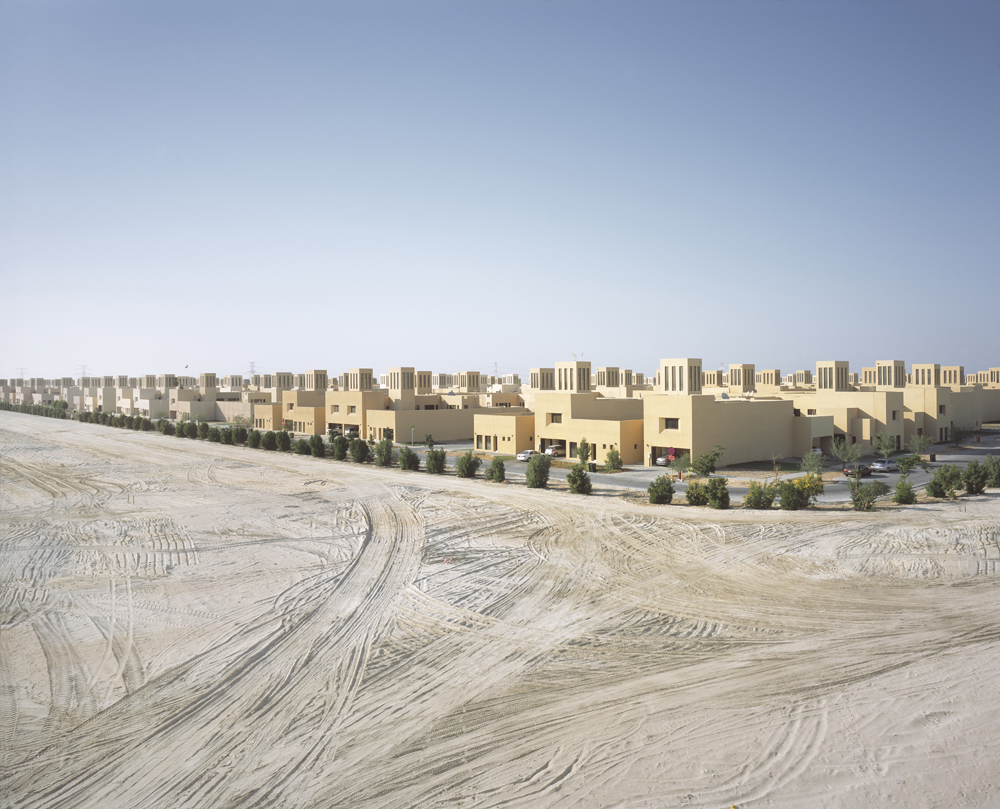
I recently photographed a new housing development on Yas Island, Abu Dhabi. You can see it on Google Earth. The wind tower design originates from Persia. The earliest examples of wind towers, used for cooling houses, in the United Arab Emirates can be seen in a small area known as Bastakiya, by the creek in Dubai. These buildings were built by Persian traders about 100 years ago after Sheikh Maktoum Bin Hasher Al Maktoum became the first of the Dubai Sheikhs to create a tax free trade zone, the basis of a business model still employed by the rulers of Dubai to this day.

The wind tower (see how wind towers work here) offered domestic environmental control in one of a number of ways. It would catch and divert any breeze down into the house, or in windless conditions it would operate as a solar chimney, creating an upward draft of hot air and sucking in cooler air from below.

With the addition of wetted cloths or other evaporation techniques this method could also create a cooling effect.

But the wind tower has now been relegated to a role as a decorative feature, embellishing concrete box housing with a little traditional style.

The sad reality is that these glazed wind towers, if used as functioning rooms, will certainly be increasing these houses’ energy consumption by further burdening the electrical air conditioning system.

An ironic anachronism, surely?

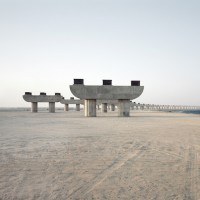
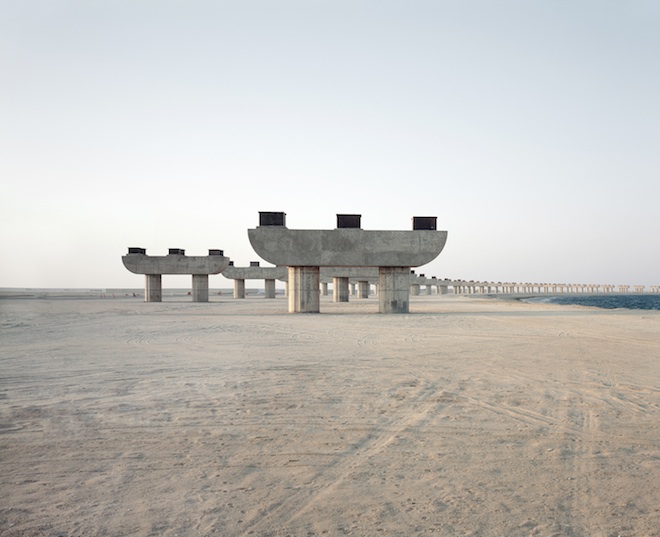
Note from the editor: this photograph is part of a series called “Consumption” that seeks to document consumerism’s impact on the environment. From resource extraction and commodity production all the way down the supply chain to retail stores and waste processing facilities, Richard artfully examines what nature has come to mean in a world that depends on buying stuff.

Google Earth coordinates are at 24° 29′ 58.77″N  54° 36′ 05.47″E.
Richard Allenby Pratt
Richard is a British photographer living and working in Dubai, UAE. His concerns about the sustainability of the way we live and our economic systems only really became urgent after the birth of his son in 2008. As a landscape photographer he found the obvious way to express these concerns was by making photographs of the places impacted on by human activity, and particularly those places that best display the terrifying scale of our consumption. His basic method is to study google earth and then visit the most intriguing and inexplicable places thereby discovered.
1 COMMENT
  1. Thank you. An interesting look into something very foreign to Iowa. Following the link and taking a look at some history of this “underground aqueduct” system was very interesting.
    Keep up the good work. The simplicity of the technology is amazing. And looking at some of the methods we use today that are considered green, such as the system of underground tubing where we use an electric motor to pull air down into the tubing, and back up into a building after it has been cooled somewhat. This is a variation on the qanat, as are the swamp coolers that use electricity to drive warm air through moisture to create a moist cool feel to the air. We’ve managed to grab some ancient and good ideas and still figure a way to consume energy in our implementation of
    them!

Comments are closed.

TRENDING

SolCold wants to cool buildings using sunlight

For centuries people living in hot climates have tried...

The Lote Tree of the Utmost Boundary, explained

Knowing about the concept of the Lote Tree of the Utmost Boundary helps explain a core idea in Islam.

Huge Fish Nursery Discovered Under Freezing Arctic Seas

In 2019, an underwater robot camera exploring the seabed...

EU Ports Still Power Russia’s Arctic Gas Exports Despite Phase-Out Pledge

The findings suggest that rather than declining, Europe’s reliance on Yamal LNG intensified in 2025. Yamal cargoes accounted for 14.3% of the EU’s total LNG imports, equivalent to roughly one in every seven LNG ships arriving at European terminals.The findings suggest that rather than declining, Europe’s reliance on Yamal LNG intensified in 2025. Yamal cargoes accounted for 14.3% of the EU’s total LNG imports, equivalent to roughly one in every seven LNG ships arriving at European terminals.

Iran is sinking in sinkholes from overwatering

What's that sinking feeling? In Iran, the very ground under...

Should You Invest in the Private Market?

startustartup Unlike public stock exchanges, which offer daily trading, strict...

How to build a 100-year-company

Kongō Gumi is a Japanese construction company, purportedly founded in 578 A.D., making it the world's oldest documented company. What can we learn about building sustainable businesses from them?

From Pilot Plant to Global Stage: How Aduro Clean Technologies’ 2026 Expansion Signals a Turning Point for Chemical Recycling Investors Like Yazan Al Homsi

The company's Next Generation Process (NGP) Pilot Plant in London, Ontario, has officially moved into initial operating campaigns, generating the kind of structured, repeatable data that separates laboratory promise from commercial viability.

How AI Helps SaaS Companies Reduce Repetitive Customer Support Work

SaaS products are designed for large numbers of users with different levels of experience, and also in renewable energy.

Pulling Water from the Air

Faced with water shortage in Amman, Laurie digs up...

Turning Your Energy Consultancy into an LLC: 4 Legal Steps for Founders in Texas

If you are starting a renewable energy business in Texas, learn how to start an LLC by the books.

Tracking the Impacts of a Hydroelectric Dam Along the Tigris River

For the next two months, I'll be taking a break from my usual Green Prophet posts to report on a transnational environmental issue: the Ilısu Dam currently under construction in Turkey, and the ways it will transform life along the Tigris River.

6 Payment Processors With the Fastest Onboarding for SMBs

Get your SMB up and running fast with these 6 payment processors. Compare the quickest onboarding options to start accepting customer payments without delay.

Related Articles

Popular Categories