

 A small piece of plastic can save lives, preserve local eco-systems, and cut greenhouse gas emissions: finally, positive press for plastics.
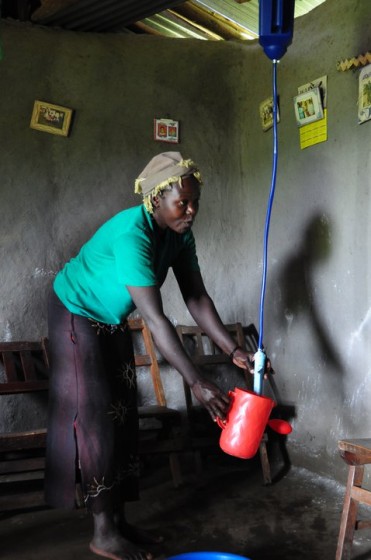
A Swiss-based company has developed portable water purifiers called LifeStraw that can be deployed at point-of-use to instantly convert water from hazardous to drinkable, without electricity and side-stepping the age-old practice of boiling.
Nearly a billion people lack access to safe drinking water. The problem’s particularly acute in sub-Saharan Africa, but nowhere is immune. (I’ve drunk Amman tap water for over a year, a recent confession that earned me a wicked tongue-lashing on the perils of rooftop-tank water, the primary method of water delivery here). Live and learn.
Diarrhea kills about 1.5 million children annually, more than AIDS, malaria and measles combined.
Unsafe drinking water is largely responsible for worldwide diarrheal diseases, particularly affecting the young and poor. Treating water at point-of-source is insufficient as it can be recontaminated during collection, transport, and domestic use; it must also be made safe at the point-of-consumption.
Water filters are the most effective interventions for reducing disease amongst all point-of-use (POU) water treatment methods.
POU treatment allows people to take immediate control over their domestic water quality, and home water treatment is fractionally expensive to conventional infrastructure (such as piped water connections to communal storage tanks). The filters are environmentally attractive too, since household demand for wood drops (no more water boiling), use of the devices slows local deforestation.
Vestergaard Frandsen is an innovative organization specializing in emergency response and disease control products. They developed a pair of complementary safe water tools that hold potential to accelerate progress towards the United Nations’ Millennium Development Goal of reducing by half (between 1990 and 2015) the world population lacking sustainable access to safe drinking water.
The company is guided by a unique Humanitarian Entrepreneurship business model, whose “profit for a purpose” approach has turned social responsibility into its core business.
Almost 1 million of their water filters (LifeStraw and LifeStraw Family) have been distributed throughout the Western Province of Kenya. The project is funded entirely by carbon credits awarded for actual and anticipated reductions in wood fuel use, as household demand for wood drops.
In five weeks, 4.5 million people gained the means to purify their water, with knock-on improvements to family health, education and income.
A great story deserves to be broadcast, and filmmakers Evan Abramson and Carmen Elsa Lopez do just that in their documentary Carbon For Water.
[youtube]http://youtu.be/sH5SZViwTR0[/youtube]
The Carbon for Water project was recognized through the 2012 Environmental Finance awards, winning Carbon Finance Transaction of the Year. A world first, the project annually delivers 4.8 billion liters of safe drinking water to 4.5 million people while preventing 2.9 million tons of carbon dioxide emissions.
“Working with ClimateCare made it possible for us to distribute water filters on a significant scale,” Mikkel Vestergaard Frandsen, CEO of Vestergaard Frandsen explained in a press release. ”Without their support to unlock revenue through carbon finance, we would have been unable to realize such significant emissions reductions or improve the lives of millions of people in Western Kenya.”
“ClimateCare pioneered the use of carbon finance to support safe water projects and we are delighted that the impact of this has been recognized, paving the way to sustainable finance for similar projects.” said ClimateCare director, Edward Hanrahan.
ClimateCare is an independent ‘profit for purpose’ organization committed to tackling climate change, poverty and development issues. Using carbon finance, they multiply positive impacts to scale up and deliver positive results. This project is featured in the July-August awards issue of Environmental Finance magazine,.
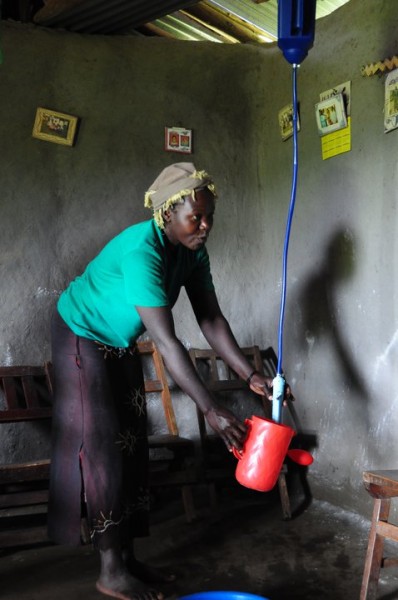
Image of LifeStraw® Family filter in use via Vestergaard Frandsen




I know they are not available in Zaatari camp, where potable water is trucked in and regularly distributed to families via large water containers for individual home use. Thus far, clean water has not been a problem.
Are these devices going to be made available to Syrian refugees who are blighted by snow? Thank you