

 If you are among the 70 or more bloggers who submitted an entry to Masdar’s blogging competition, or simply want to know what it takes to impress the jury of one of the leading promoters of sustainable technology and renewable energy, then this post might appeal to you.
Professor of public and environmental affairs at the University of Wisconsin in the United States, Dallas Blaney took a novel approach to the water-energy debate. Instead of telling us what we already know – that we’re running out of water and scurrying to generate more energy to meet rising demand – Blaney says we need to demystify the relationship between the two.
Distinctly academic, Blaney wastes no words getting to the point of his entry:
While it is generally well known that water is essential to the production of energy, we nonetheless lack a detailed understanding of the quality and quantity of water used in this process (1). Conversely, we know that the treatment and distribution of water is energy intensive, yet we know very little about the energy required or how this demand has changed over time (2). Given the expectation of dramatically higher demands for energy and water over the coming years, this knowledge gap poses a significant threat to the long-term sustainability of our political, social, and economic systems.
This is the crux of the matter. We know that there is some kind of relationship between energy and water, but we don’t have succinct numbers. And until we do, it will be difficult to demand more efficient conservation of either.
Blaney then answers the questions that instinctively arise in response to stating the challenge. How?
First, he says, the issue was raised as a “thematic priority” at the 6th World Water Forum in Marseille last year. He added that another important topic to address is how energy generation impacts water quality. This has become a particular concern in communities subject to “fracking.”
Shortly after this discussion convened, Blaney wrote, Gustaf Olsson published Water and Energy: Threats and Opportunities – further indication that the issue is receiving attention. This is what he said about it:
This book marks the first attempt to develop a comprehensive assessment of the energy-water nexus. Substantive chapters examine the water demands for a range of energy production systems, including crude oil and hydropower.
Up until now, Blaney acts like a good academic. Having this data, in theory, should promote better practices. But what about the throng of people, including 77% of Americans polled, who have no idea where their own water is sourced? How does this data help them?
Blaney realizes that in order to for there to be any kind of progress, real people have to be empowered with useful knowledge too. While more data about the intersection between energy and water might be useful to policy makers, the consumer needs to understand how their choices affect the overall availability of both resources as well.
What is being done to ensure that progression, according to Blaney?
Both The Nature Conservancy and WWF focus specifically on raising awareness within the business community. Capitalizing on their scientific expertise, these organizations have each developed water assessment tools that businesses can quickly and cheaply use to identify water-related inefficiencies and risks in their supply chains or production systems. In contrast, Project WET specializes in the creation of water-related textbooks and curricula for primary school children. Over time, these efforts have expanded beyond the US to reach tens of thousands of students spread across 19 countries.
There’s more, but I urge readers to visit Masdar’s site in order to read the full entry. Once you there, take a look at the UAE post that garnered the most social media attention in addition to all five finalist posts.
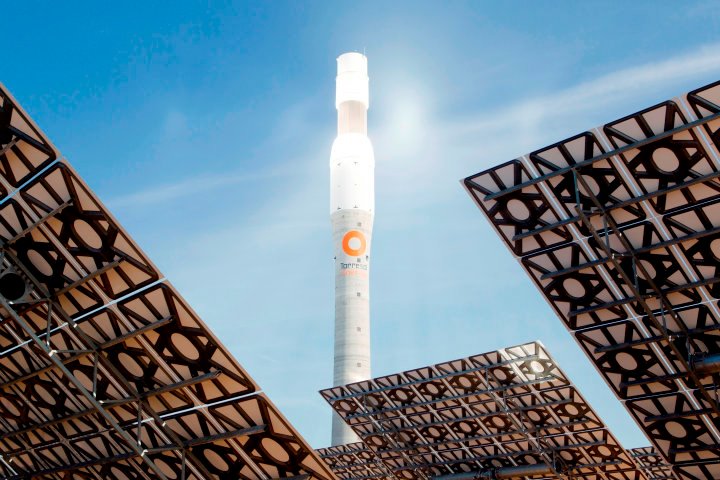
Image of the Gemasolar tower in Spain via Masdar’s Facebook page

You won’t even talk about what actions are needed to save the biosphere, let alone do anything to safely recycle 100% of human-generated waste materials and peacefully reduce the human population with family planning education. So, you self-doom yourselves and everyone to extinction.