Zalul’s App “Tests” the Swimming Water in Israel

maya jacobs zalul, pollution water israel, waze app
Thanks to a network of Israeli divers, and the Health Ministry, Israeli non-profit environmental association Zalul is now keeping the public up to date on the condition of the country’s waterways. By commissioning road-navigation app developer Waze to add a water-pollution application to its popular smart phone service, the founders of Zalul (which means clear in Hebrew) hope to promote safer swimming in addition to pressure on polluters.

While Israel is primarily an arid country, it boasts an arterial network of rivers, lakes and streams. Major rivers such as the Alexander, Yarkon, Yarmuk and Kishon are unfit for swimming, says Maya Jacobs, executive director of Zalul.

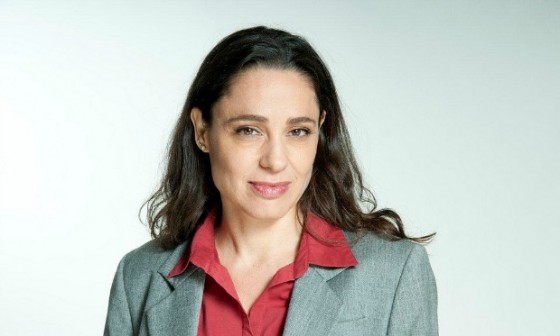
She partnered with Waze to bring attention to the gravity of the problem during Sukkot, an autumn Jewish holiday that originally was a harvest and pilgrimage festival. Today the Israeli public celebrates much of the weeklong holiday by hiking, swimming and camping. Jacobs (pictured above) saw it as a perfect time to launch Zalul’s pollution-alert feature.

“I was driving with a friend of mine using Waze when all these pop-ups starting coming up. And I thought: Why don’t we use them to show people where the rivers are polluted?” she tells me in the story I wrote for ISRAEL21c.

When a logged-in user comes within about 12 miles of a waterway, the application will identify it, inform the user of its health status and identify polluters by way of a pop-up alert. During Sukkot, the organization sent users 120,000 alerts – including one warning of a sewage overflow in Tel Aviv that flooded a popular beach following the season’s first rain. See image of the sewage on the popular beach below.
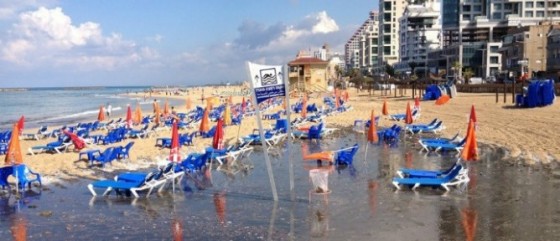
tel aviv, israel beach 2012 sewage zalul, water app from waze

Until now, the Israeli public has relied on news reports or signs posted on public beaches. A real-time alert system would not only be good for public health and safety, Jacobs reasoned; it would also force polluters to face the consequences of growing public awareness.

Certainly other regions, like Florida’s popular Gulf Coast, could use such an application as well, especially after the 2010 oil spill.

As far as she knows, there is no other public service like Zalul anywhere in the world, and Jacobs very much hopes to continue updating it along with Waze or as a standalone application, if interested parties can help support the cause. For now, Zalul must pay to remain part of Waze.

At the same time, Jacobs has a development team working on a social application for surfers, sailors, swimmers, port authorities, fishermen — everyone who cares about the Mediterranean Sea and Israel’s water resources.

Zalul will use this interested public to be the “eyes and ears outside,” taking the collected information to the local authorities in the hope of influencing regional water policy. “We call it a Forum for Defenders of the Sea. In the first stage it will be in Hebrew and then in English,” says Jacobs.

Zalul’s three main targets are mitigating harm from oil and gas drilling off the Mediterranean Coast; preventing Tel Aviv’s raw sewage from going straight to the sea; and putting pressure on polluters.

Jacobs wants the government to step up to the plate to avert a future catastrophe. Unlike other parts of the Med, Israel’s strip of sea is not fed by an active body of flowing water. If there were an oil spill, Israel would have to live with the consequences for a very long time, she tells ISRAEL21c.

But not all the water news from Israel is bad. Parts of the major rivers, including the Alexander and the Kishon, are being rehabilitated. And while Israel’s Lower Jordan River is reduced to a trickle and is not safe for swimmers, the Upper Jordan is fine for swimming, says Jacobs. Happily, the majority of Israel’s streams in the north remain clean, fed by fresh mountain-water runoff.

Karin Kloosterman
Karin Kloostermanhttp://www.greenprophet.com
Karin Kloosterman is an award-winning journalist, innovation strategist, and founder of Green Prophet, one of the Middle East’s pioneering sustainability platforms. She has ranked in the Top 10 of Verizon innovation competitions, participated in NASA-linked challenges, and spoken worldwide on climate, food security, and future resilience. With an IoT technology patent, features in Canada’s National Post, and leadership inside teams building next-generation agricultural and planetary systems — including Mars-farming concepts — Karin operates at the intersection of storytelling, science, and systems change. She doesn’t report on the future – she helps design it. Reach out directly to [email protected]

TRENDING

Eco organization offices destroyed by Iran missile

Tel Aviv's eco organization, the Heschel Center, was impacted by an Iranian missile.

What are AWG air-water generators, and why they aren’t a golden-bullet solution (yet)

Atmospheric water generators (AWGs) sound like magic: machines that can pull drinking water out of air. The idea is mentioned in the Bible, where the elders would pray for water collected as dew on plants and the catch on turning this into a machine is in the physics. To turn invisible vapor into liquid, you must remove heat, especially the latent heat of condensation.

Jordan’s $6 Billion Aqaba–Amman Desalination Project from the Red Sea Moves Forward

In 2025, the Jordanian government signed agreements with a consortium led by Meridiam and SUEZ, alongside VINCI Construction and Orascom Construction. Under a 30-year concession agreement, the consortium will design, build, finance, operate, and maintain the system before transferring it back to the Jordanian government. The total investment is estimated at approximately $6 billion USD.

What Makes Artificial Turf Like AstroTurf Safe? University Research and Independent Testing Reveal Key Factors

A comprehensive analysis published by AstroTurf experts on turf field safety identifies several critical factors that separate premium synthetic surfaces from standard installations.

Endangered sperm whale washes ashore in southern Israel

A large sperm whale has washed ashore on Zikim Beach in southern Israel, marking only the eighth documented case of its kind along the country’s Mediterranean coast since monitoring began.

Should You Invest in the Private Market?

startustartup Unlike public stock exchanges, which offer daily trading, strict...

How to build a 100-year-company

Kongō Gumi is a Japanese construction company, purportedly founded in 578 A.D., making it the world's oldest documented company. What can we learn about building sustainable businesses from them?

From Pilot Plant to Global Stage: How Aduro Clean Technologies’ 2026 Expansion Signals a Turning Point for Chemical Recycling Investors Like Yazan Al Homsi

The company's Next Generation Process (NGP) Pilot Plant in London, Ontario, has officially moved into initial operating campaigns, generating the kind of structured, repeatable data that separates laboratory promise from commercial viability.

How AI Helps SaaS Companies Reduce Repetitive Customer Support Work

SaaS products are designed for large numbers of users with different levels of experience, and also in renewable energy.

Pulling Water from the Air

Faced with water shortage in Amman, Laurie digs up...

Turning Your Energy Consultancy into an LLC: 4 Legal Steps for Founders in Texas

If you are starting a renewable energy business in Texas, learn how to start an LLC by the books.

Tracking the Impacts of a Hydroelectric Dam Along the Tigris River

For the next two months, I'll be taking a break from my usual Green Prophet posts to report on a transnational environmental issue: the Ilısu Dam currently under construction in Turkey, and the ways it will transform life along the Tigris River.

6 Payment Processors With the Fastest Onboarding for SMBs

Get your SMB up and running fast with these 6 payment processors. Compare the quickest onboarding options to start accepting customer payments without delay.

Related Articles

Popular Categories