Israelis Celebrate Tu B’Shvat – A Time for Planting, A time for Renewal.

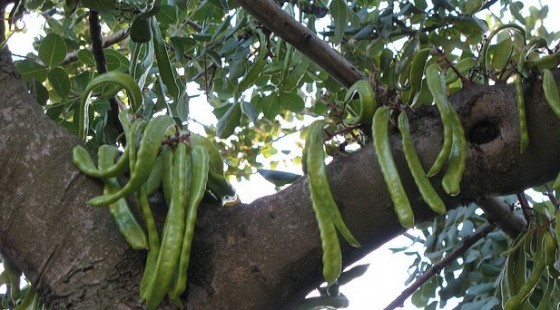
carob tree Israel
Jews around the world celebrated Tu B’Shvat last week. The holiday began as a “new year” for trees – a time when the tithing of fruits was determined. But for the past 100 years it has become known as an ecological holiday.

On Tu B’shvat 1890, a Rabbi took his students to plant trees in the agricultural colony of Zichron Yaakov. The practice soon caught on and was adopted by the Jewish Teachers Union. It was ultimately popularized by the Jewish National Fund (Keren HaKayemet L’Israel), an organization established in 1901 to jumpstart land reclamation and reforestation in Israel.

Environmental organizations in Israel have used the holiday to focus attention on the country’s many ecological problems. Besides numerous tree planting ceremonies, groups have publicized the holiday’s environmental significance.

Trees provide a myriad number of “ecosystem services” in Israel. Many species bear fruit, including dates, apricots, figs, and oranges, just to name a few. Some of those fruits are exported all over the world. Trees also provide shade for people and animals – a particularly important benefit in the desert areas throughout the country’s arid South.

And Israel’s forests are habitat for many species, from songbirds to elusive wolves. At the forefront of many Israeli minds this Tu B’Shvat was the Carmel Forest, the site of a catastrophic forest fire in 2010. The forest’s journey towards regrowth is a palpable symbol of nature’s restorative power.

Thus, in addition to their ecological importance, trees are a symbol of renewal. Israel, currently writhing with political discourse, is facing its own growing pains. Hundreds of thousands of Israelis took to the streets last summer to protest the government’s economic policies.

They complained of a regulatory system rife with cronyism and kickbacks. They brought attention to the lack of housing in major cities. They shined a spotlight on Israel’s neediest people, including Holocaust survivors and the long-term unemployed. They were visible. They were loud. And they were heard.

The Torah, Judaism’s holiest book, teaches that a person “is a tree of the field”. Our spiritual life includes roots, a body, and fruit. The roots symbolize our faith, perseverance and connectedness to place. The trunk, branches and leaves are our intellectual and emotional capacities, including our practical achievements in life. The fruit is the power of our relationships.  This includes the ability to influence others, to plant a seed in another person and see it sprout.

The social protests, which began with a few tents in Tel Aviv, slowly grew into a full-fledged movement. A few individuals, driven by their love of country and sense of social justice, planted a seed of consciousness and patiently tended it. Soon a forest of concerned citizens was knocking at the government’s door.

In a country as complex as Israel, renewal doesn’t happen overnight. It will take time for the fledgling social movement to build strength. Israel won’t see the Carmel Forest return to its original vigor for many years. Ecologists will continue their attempts to conserve species. And problems of pollution and water scarcity will not go away without tremendous effort. But on Tu B’shvat, there is hope.

A classic Jewish story illustrates the importance of cultivating trees for future generations:

An old man was planting a tree.
A young person passed by and asked ‘what are you planting?’
‘A carob tree’, the old man replied.
‘Silly fool’, said the youth. ‘Don’t you know that it takes 70 years for a carob tree to bear fruit?’
‘That’s okay’, said the old man. ‘Just as others planted for me, I plant for future generations.’

And so do Israelis sow the seeds of a just, democratic and sustainable society. Only time will tell whether these efforts will bear fruit. But a tree never grew without a little faith.

Image via tree-species

Joshua Basofin
Joshua Basofinhttp://www.greenprophet.com
Joshua is an environmental attorney and writer living in Tel Aviv. He has worked for several conservation groups in his native United States, including The Nature Conservancy and Defenders of Wildlife. Joshua specializes in laws and policies aimed at protecting natural areas. He has a particular interest in freshwater and marine habitats. Growing up in the suburbs of Middle America, Joshua learned to escape into nature and leave the strip malls and parking lots behind. He has hiked and explored around the world, from South America to Australia to Thailand. Joshua is fascinated by the often polarizing worlds of tradition and modernity. He thrives on studying the intersection of environmental conservation, religion, and human culture. And he may have found his greatest challenge yet in Israel.

TRENDING

Eco organization offices destroyed by Iran missile

Tel Aviv's eco organization, the Heschel Center, was impacted by an Iranian missile.

What are AWG air-water generators, and why they aren’t a golden-bullet solution (yet)

Atmospheric water generators (AWGs) sound like magic: machines that can pull drinking water out of air. The idea is mentioned in the Bible, where the elders would pray for water collected as dew on plants and the catch on turning this into a machine is in the physics. To turn invisible vapor into liquid, you must remove heat, especially the latent heat of condensation.

Jordan’s $6 Billion Aqaba–Amman Desalination Project from the Red Sea Moves Forward

In 2025, the Jordanian government signed agreements with a consortium led by Meridiam and SUEZ, alongside VINCI Construction and Orascom Construction. Under a 30-year concession agreement, the consortium will design, build, finance, operate, and maintain the system before transferring it back to the Jordanian government. The total investment is estimated at approximately $6 billion USD.

The Saudi Startup Turning Desalination’s Toxic Waste Into Its Own Disinfectant

For millennia, the Middle East's water crisis seemed an immutable fact of geography — a region defined as much by what it lacked as by what lay beneath its sands. Today, a convergence of plummeting solar costs, advancing membrane technology, and hard-won engineering expertise is rewriting that story.

Earth building with Dead Sea salt bricks

Researchers develop a brick made largely from recycled Dead Sea salt—offering a potential alternative to carbon-intensive cement.

Should You Invest in the Private Market?

startustartup Unlike public stock exchanges, which offer daily trading, strict...

How to build a 100-year-company

Kongō Gumi is a Japanese construction company, purportedly founded in 578 A.D., making it the world's oldest documented company. What can we learn about building sustainable businesses from them?

From Pilot Plant to Global Stage: How Aduro Clean Technologies’ 2026 Expansion Signals a Turning Point for Chemical Recycling Investors Like Yazan Al Homsi

The company's Next Generation Process (NGP) Pilot Plant in London, Ontario, has officially moved into initial operating campaigns, generating the kind of structured, repeatable data that separates laboratory promise from commercial viability.

How AI Helps SaaS Companies Reduce Repetitive Customer Support Work

SaaS products are designed for large numbers of users with different levels of experience, and also in renewable energy.

Pulling Water from the Air

Faced with water shortage in Amman, Laurie digs up...

Turning Your Energy Consultancy into an LLC: 4 Legal Steps for Founders in Texas

If you are starting a renewable energy business in Texas, learn how to start an LLC by the books.

Tracking the Impacts of a Hydroelectric Dam Along the Tigris River

For the next two months, I'll be taking a break from my usual Green Prophet posts to report on a transnational environmental issue: the Ilısu Dam currently under construction in Turkey, and the ways it will transform life along the Tigris River.

6 Payment Processors With the Fastest Onboarding for SMBs

Get your SMB up and running fast with these 6 payment processors. Compare the quickest onboarding options to start accepting customer payments without delay.

Related Articles

Popular Categories