Water Filter Uses Bacteria Beads to Eat Nitrates

nitrate beads, new water filter, bacteria
Low tech water filters loaded with a nitrate-munching bacterium help clean up fertilizers and feces in water waste.

Rainstorms wash away what nature can’t clean up, but this often comes at a severe environmental price. Water runoff from agricultural fertilizers, animal waste and human sewage are poisoning wells and aquifers with nitrates. These compounds cause harmful algae blooms and pose health risks for pregnant women and formula-fed newborns.

Water companies currently deal with the problem in a very basic way because getting the nitrates out by reverse osmosis is too expensive. They simply dilute the nitrate-laden water, explain professors Amos Nussinovitch and Jaap van Rijn from the Hebrew University of Jerusalem.

The two scientists have developed a novel low-tech solution to take nitrates out of water in a cost-effective, environmentally friendly and non-toxic way.

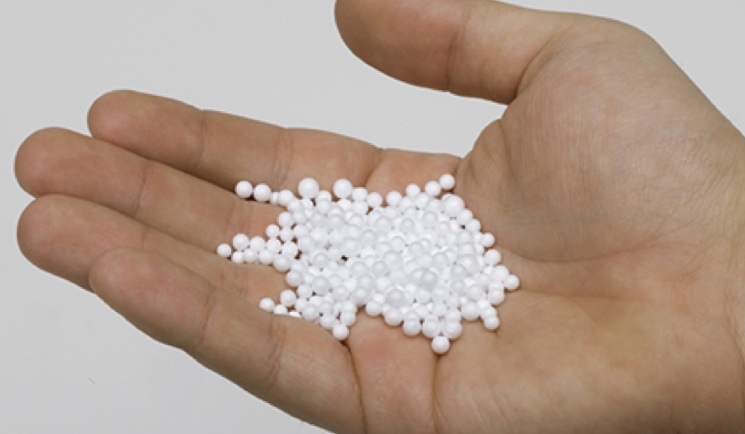
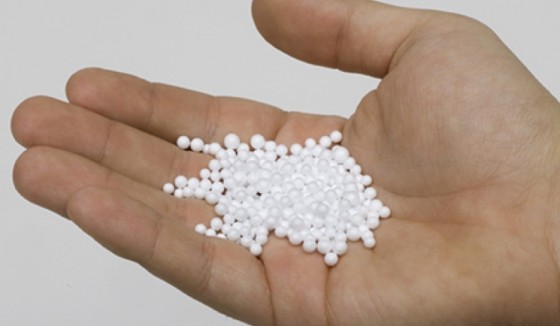
Nussinovitch, an expert in biological carriers, and van Rijn, a specialist in bacteria, paired up to develop a bio-filter composed of tiny Styrofoam-like white beads that carry nitrate-eating bacteria. When added to a water well, aquifer or aquarium, the bio-filter does its job effectively and cheaply.

Showcased at the water conference WATEC

Now in the prototype stage, the product is being tested to see how well it can work in larger bodies of water. It is being developed commercially by the technology transfer arm of Hebrew University, Yissum, and was launched at the WATEC water conference in Tel Aviv in November.

Water infrastructure companies everywhere are paying attention.

Nitrates are an increasing problem for both the developed and developing world. As our populations grow, so does the need for fertilizers, sewage reservoirs and animals for food.

Nitrate is odorless, tasteless and colorless, so only regular testing of wells and aquifers can detect its presence. When they drink nitrate-laden water in formula, newborns’ digestive systems respond by producing high levels of bacteria, leading to the potentially fatal blue baby syndrome as blood oxygen decreases.

Bio-filter bead
Van Rijn, the same man behind an aquaculture technology called Grow Fish Anywhere for fish farming in urban environments, says that this new technology is meant for drinking water and aquarium water, which need to be extremely clean.

The beads work so that “water goes through a matrix and comes out clean,” he tells ISRAEL21c. “For aquaria there are almost no solutions – or the ones that exist are very unreliable. For drinking water there is reverse osmosis, but this is very expensive.”

Nitrate loading is a pressing problem in coastal areas of Israel, where van Rijn says about 50 percent of the wells are polluted due to nitrates, and in places with similar climates, such as California and Colorado.

Yissum is now looking for commercial partners to develop a pilot plant to provide onsite water treatment. It could be hooked up to factories, agriculture processing plants or paper mills, for example.

Nussinovitch says that he has been working with polymers and biodegradable materials all his life. His contribution to the project was developing the biopolymers into an appropriate carrying mechanism to house the bacteria so that beads could entrap the bacteria for the right amount of time before dissolving and releasing nitrogen gas.

The beads in dry form have a long shelf life, and leave no trace behind once dissolved. They work well in both fresh and saltwater conditions.

This story first appeared on ISRAEL21c – www.israel21c.org

Karin Kloosterman
Karin Kloostermanhttp://www.greenprophet.com
Karin Kloosterman is an award-winning journalist, innovation strategist, and founder of Green Prophet, one of the Middle East’s pioneering sustainability platforms. She has ranked in the Top 10 of Verizon innovation competitions, participated in NASA-linked challenges, and spoken worldwide on climate, food security, and future resilience. With an IoT technology patent, features in Canada’s National Post, and leadership inside teams building next-generation agricultural and planetary systems — including Mars-farming concepts — Karin operates at the intersection of storytelling, science, and systems change. She doesn’t report on the future – she helps design it. Reach out directly to [email protected]
4 COMMENTS
    • It probably could be collected, but the amounts are so small and nitrogen is so inexpensive that I’m not sure why you’d want to.

Comments are closed.

TRENDING

Seychelles resumes sooty tern egg collection despite population crash

Known as a biodiversity indicator species, local experts say it's too early to stop protecting these important birds in the Syechelles

Is your groundwater too young? New study finds risks for Parkinson’s and type of water you drink

People whose drinking water came from newer groundwater had a higher risk of developing Parkinson’s disease than those whose drinking water came from older groundwater, according to a preliminary study released March 2, 2026, that will be presented at the American Academy of Neurology’s 78th Annual Meeting taking place April 18–22, 2026, in Chicago and online.

Eco organization offices destroyed by Iran missile

Tel Aviv's eco organization, the Heschel Center, was impacted by an Iranian missile.

What are AWG air-water generators, and why they aren’t a golden-bullet solution (yet)

Atmospheric water generators (AWGs) sound like magic: machines that can pull drinking water out of air. The idea is mentioned in the Bible, where the elders would pray for water collected as dew on plants and the catch on turning this into a machine is in the physics. To turn invisible vapor into liquid, you must remove heat, especially the latent heat of condensation.

Jordan’s $6 Billion Aqaba–Amman Desalination Project from the Red Sea Moves Forward

In 2025, the Jordanian government signed agreements with a consortium led by Meridiam and SUEZ, alongside VINCI Construction and Orascom Construction. Under a 30-year concession agreement, the consortium will design, build, finance, operate, and maintain the system before transferring it back to the Jordanian government. The total investment is estimated at approximately $6 billion USD.

Should You Invest in the Private Market?

startustartup Unlike public stock exchanges, which offer daily trading, strict...

How to build a 100-year-company

Kongō Gumi is a Japanese construction company, purportedly founded in 578 A.D., making it the world's oldest documented company. What can we learn about building sustainable businesses from them?

From Pilot Plant to Global Stage: How Aduro Clean Technologies’ 2026 Expansion Signals a Turning Point for Chemical Recycling Investors Like Yazan Al Homsi

The company's Next Generation Process (NGP) Pilot Plant in London, Ontario, has officially moved into initial operating campaigns, generating the kind of structured, repeatable data that separates laboratory promise from commercial viability.

How AI Helps SaaS Companies Reduce Repetitive Customer Support Work

SaaS products are designed for large numbers of users with different levels of experience, and also in renewable energy.

Pulling Water from the Air

Faced with water shortage in Amman, Laurie digs up...

Turning Your Energy Consultancy into an LLC: 4 Legal Steps for Founders in Texas

If you are starting a renewable energy business in Texas, learn how to start an LLC by the books.

Tracking the Impacts of a Hydroelectric Dam Along the Tigris River

For the next two months, I'll be taking a break from my usual Green Prophet posts to report on a transnational environmental issue: the Ilısu Dam currently under construction in Turkey, and the ways it will transform life along the Tigris River.

6 Payment Processors With the Fastest Onboarding for SMBs

Get your SMB up and running fast with these 6 payment processors. Compare the quickest onboarding options to start accepting customer payments without delay.

Related Articles

Popular Categories