
Qatar Plans To Make Barren Land Arable To Increase Food Security

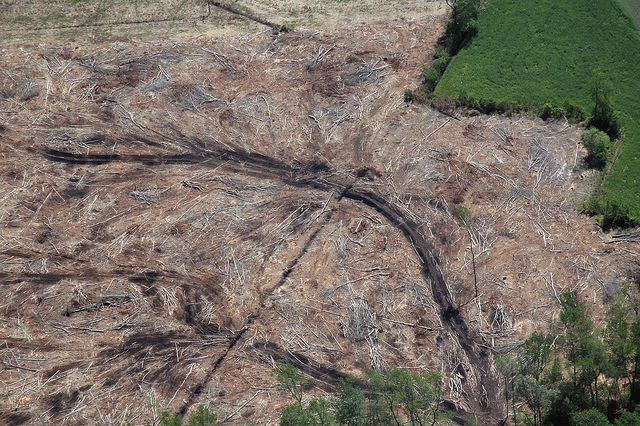
barren-land-agricultureQatar will secure 70% food security in the country by exploiting the latest technology to make its barren land arable.

Roughly as large as Connecticut, Qatar relies almost exclusively on imports for food with only 10% of the country’s edibles produced within its own borders. Unlike other Gulf countries that are usurping African land to expand their agricultural capacity, Qatar intends to transform its own barren land into an agricultural powerhouse. According to Gulf in the Media, the National Food Security Program (NFSP) committee has established a five-stage plan to first identify and then overcome challenges to achieving food independence.

Food prices rise in tandem with oil prices, since the cost of shipping food necessarily increases. As a result, Qatar’s imported food doesn’t come cheap. To counter this problem, the country established their NFSP in 2008.

The 17-member committee will identify challenges, conduct surveys, and analyze data related to exploiting the most modern agricultural methods to render land between Doha and Al Khor arable.

Although the team expects to receive some resistance from middlemen in the current food supply chain, NFSP and its Chairman, Mohamed bin Fahad Al Attiyah, welcome input and investments from the private sector.

Widespread agricultural production in a country with few freshwater resources and an unforgiving desert climate is no easy task. Nonetheless, Qatar will invest huge sums of money on research and developing a progressive information technology hub in order to secure lower food prices.

Their four major foci will be:

  • Agricultural production
  • Managing and desalinating sea water
  • Sustainable energy resources
  • Food processing industries

“We are well on our way to making reliance on food imports a thing of the past,” Al Attiyah told the paper.

:: Gulf in the Media

More on food and the Middle East:

Gulf Countries Are Picking From Sudan’s Breadbasket
A Growing Gulf Dependent On Imported Food

Hungry Persian Gulf States Look To Fungus To Grow Crops

Tafline Laylin
Tafline Laylinhttp://www.greenprophet.com
As a tour leader who led “eco-friendly” camping trips throughout North America, Tafline soon realized that she was instead leaving behind a trail of gas fumes, plastic bottles and Pringles. In fact, wherever she traveled – whether it was Viet Nam or South Africa or England – it became clear how inefficiently the mandate to re-think our consumer culture is reaching the general public. Born in Iran, raised in South Africa and the United States, she currently splits her time between Africa and the Middle East. Tafline can be reached at tafline (at) greenprophet (dot) com.

Read More

1 COMMENT
  1. I have over 38 years of experience in agricultural related activities. I worked in Zambia and Tanzania, where large scale food crops were cultivated.In Tanzania, we acquired 30,000 acres and plans for cultivating all food crops,Oil seeds crops and Pulses.At present I am in India and please consult if you want my experience to be utilized.Having good expore in Organic farming also.

LEAVE A REPLY

Please enter your comment!
Please enter your name here

TRENDING

Desalination experts debunk Aqua Solaire, the floating desalination barge

AI makes it easy to dream, develop, and create images of what could be world-changing ideas, until the reality sets in. A new project making the rounds is Aqua Solaire, an allged French concept for a solar-powered desalination vessel designed to bring drinking water to coastal communities facing drought, storms, and infrastructure failures.

Saving Gourmet Wild Plants For The Future

Think of truffles, a gourmet wild food. The European...

Jordan’s $6 Billion Aqaba–Amman Desalination Project from the Red Sea Moves Forward

In 2025, the Jordanian government signed agreements with a consortium led by Meridiam and SUEZ, alongside VINCI Construction and Orascom Construction. Under a 30-year concession agreement, the consortium will design, build, finance, operate, and maintain the system before transferring it back to the Jordanian government. The total investment is estimated at approximately $6 billion USD.

Middle-Eastern spices and natural medicine (A through C)

In the Middle East, aromatic traditional foods are regarded...

The Saudi Startup Turning Desalination’s Toxic Waste Into Its Own Disinfectant

For millennia, the Middle East's water crisis seemed an immutable fact of geography — a region defined as much by what it lacked as by what lay beneath its sands. Today, a convergence of plummeting solar costs, advancing membrane technology, and hard-won engineering expertise is rewriting that story.

How to quiet noise from construction in your office

Streets need to be resurfaced in New York but the humming and grinding noise is unsettling. Noise is environmental pollution. 

EarthX and a blueprint for sustainable investing

Trammell S. Crow, a Dallas-based businessman and father of four, is focusing his efforts on impact investing, and media that focuses on saving the planet through EarthX.

Mining Afghanistan’s Mineral Discoveries Similar to Avatar

Now that American forces in Afghanistan are commemorating the longest period of any war that America has been involved in, including the 1965-73 Vietnam War, the recent discoveries of large and extremely valuable mineral and metal deposits may finally bring to light a reason to continue the presence of US fighting forces in this war torn and backward country.

From Pilot Plant to Global Stage: How Aduro Clean Technologies’ 2026 Expansion Signals a Turning Point for Chemical Recycling Investors Like Yazan Al Homsi

The company's Next Generation Process (NGP) Pilot Plant in London, Ontario, has officially moved into initial operating campaigns, generating the kind of structured, repeatable data that separates laboratory promise from commercial viability.

Nobul’s Regan McGee on Shareholder Value: “Complacency Is the Silent Killer” 

Why the governance framework designed to protect shareholders so...

Should You Invest in the Private Market?

startustartup Unlike public stock exchanges, which offer daily trading, strict...

How to build a 100-year-company

Kongō Gumi is a Japanese construction company, purportedly founded in 578 A.D., making it the world's oldest documented company. What can we learn about building sustainable businesses from them?

How AI Helps SaaS Companies Reduce Repetitive Customer Support Work

SaaS products are designed for large numbers of users with different levels of experience, and also in renewable energy.

Popular Categories