
Justifying Dubai’s Shopping Malls With LEED

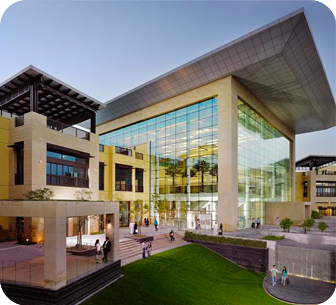
mirdif-center-mall-dubaiIf Mirdif City Center Mall is “green,” the emperor must have been wearing clothes.

Given the choice between a LEED certified building and one without, we’d be nuts to take the first.

Issued by the United States Green Building Council (USGBC), LEED certification and its equivalent in the Middle East – such as the Qatar Green Building Council – inspires a lower carbon footprint.

But no one can convince us that a LEED-certified, 196, 000 square meter shopping mall full of unnecessary stuff is green. Greener, but definitely not green.

The Mirdif City Center was built with the intention of being “the most superior” mall in Dubai’s eastern corridor – the largest and most convenient mall with the best customer service and commercial interaction.

To this end, the Majid Al Futtaim (MAF) Shopping Malls LLC commissioned WSP Green Technologies Sustainability Consultants to assist with its silver LEED rating. In time, it hopes to achieve gold.

In so doing, the mall uses 30% less water and 20% less energy than a building of comparable size, and 50% of construction materials were diverted from the landfill.

Also, the materials used were regionally sourced and had a high recycled content. Customers have easy access to public transportation, and to reduce the heat island effect, both parking areas (that can accommodate 7,000 vehicles) are covered.

Kudos for that. Yet, this is the fifth mall developed in the UAE by MAF (and the 10th in the region) and Mirdif City Center alone boasts over 430 shops to choose from. The firm also has plans to build another 14 malls by 2015.

When they are done, MAF will be responsible for a total of 2.2 million square meters of malls. Each of these will be packed with stuff probably made in and shipped from China – at huge environmental and often social costs (like these jeans), not to mention the combined energy and water necessary to run these places.

The way we see it (or at least the way I see it), MAF has to build according to LEED standards, otherwise they would have a hard time explaining to angry Egyptians (MAP has malls there too) – who can barely afford food – why their energy and water costs are so high.

Better yet, there should be a cap on how many malls one firm should be allowed to build.

A green mall. Hmph.

More on Green Building in the Middle East:

AIA Names Saudi Kaust As Top Green Project

Jordan’s Princess Samaya Praises Kingdom’s First LEED Building
Qatar’s New LEED Convention Center Is Mini Masdar City

Tafline Laylin
Tafline Laylinhttp://www.greenprophet.com
As a tour leader who led “eco-friendly” camping trips throughout North America, Tafline soon realized that she was instead leaving behind a trail of gas fumes, plastic bottles and Pringles. In fact, wherever she traveled – whether it was Viet Nam or South Africa or England – it became clear how inefficiently the mandate to re-think our consumer culture is reaching the general public. Born in Iran, raised in South Africa and the United States, she currently splits her time between Africa and the Middle East. Tafline can be reached at tafline (at) greenprophet (dot) com.

Read More

1 COMMENT
  1. We have to Design a shopping mall in UAE for our Design project this year… Is sad =( (there are more than enough shopping malls here for the next 100 years!!) Although I know there is no way I can like the idea of designing a shopping mall, I am trying to find a way to accept it by green solutions. We can’t call it green, still I’ll feel a little bit better about it if we designed it upon green principles.

LEAVE A REPLY

Please enter your comment!
Please enter your name here

TRENDING

Saving Gourmet Wild Plants For The Future

Think of truffles, a gourmet wild food. The European...

SolCold wants to cool buildings using sunlight

For centuries people living in hot climates have tried...

Middle-Eastern spices and natural medicine (A through C)

In the Middle East, aromatic traditional foods are regarded...

BM Studios is designing systems, not just buildings in the UAE

Balsam Madi is an architect and systems thinker whose work bridges culture, sustainability, and design intelligence across the Middle East and Europe.

EU Ports Still Power Russia’s Arctic Gas Exports Despite Phase-Out Pledge

The findings suggest that rather than declining, Europe’s reliance on Yamal LNG intensified in 2025. Yamal cargoes accounted for 14.3% of the EU’s total LNG imports, equivalent to roughly one in every seven LNG ships arriving at European terminals.The findings suggest that rather than declining, Europe’s reliance on Yamal LNG intensified in 2025. Yamal cargoes accounted for 14.3% of the EU’s total LNG imports, equivalent to roughly one in every seven LNG ships arriving at European terminals.

How to quiet noise from construction in your office

Streets need to be resurfaced in New York but the humming and grinding noise is unsettling. Noise is environmental pollution. 

EarthX and a blueprint for sustainable investing

Trammell S. Crow, a Dallas-based businessman and father of four, is focusing his efforts on impact investing, and media that focuses on saving the planet through EarthX.

Mining Afghanistan’s Mineral Discoveries Similar to Avatar

Now that American forces in Afghanistan are commemorating the longest period of any war that America has been involved in, including the 1965-73 Vietnam War, the recent discoveries of large and extremely valuable mineral and metal deposits may finally bring to light a reason to continue the presence of US fighting forces in this war torn and backward country.

From Pilot Plant to Global Stage: How Aduro Clean Technologies’ 2026 Expansion Signals a Turning Point for Chemical Recycling Investors Like Yazan Al Homsi

The company's Next Generation Process (NGP) Pilot Plant in London, Ontario, has officially moved into initial operating campaigns, generating the kind of structured, repeatable data that separates laboratory promise from commercial viability.

Nobul’s Regan McGee on Shareholder Value: “Complacency Is the Silent Killer” 

Why the governance framework designed to protect shareholders so...

Should You Invest in the Private Market?

startustartup Unlike public stock exchanges, which offer daily trading, strict...

How to build a 100-year-company

Kongō Gumi is a Japanese construction company, purportedly founded in 578 A.D., making it the world's oldest documented company. What can we learn about building sustainable businesses from them?

How AI Helps SaaS Companies Reduce Repetitive Customer Support Work

SaaS products are designed for large numbers of users with different levels of experience, and also in renewable energy.

Popular Categories