The Meat You Eat May Not Be What You Think

Frozen beef sold as fresh cut often looks like this when thawed

Readers who watch the Israeli Kolbotek consumer watchdog  show on Channel 2, may have seen the recent show dealing with the unsavory way some of the country’s beef products are being “imported” into Israel;  and how they are being sold to the general public. Examples of  poor quality, and often tainted meat products being sold as quality and inspected ones, was featured last Tuesday on Kolbotek, and which also included eggs: both which often originate from the Palestinian Authority.
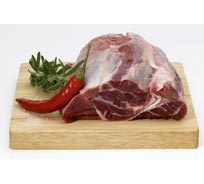
Fresh or frozen? You figure it out.

The scenario happens like this:  you buy what appears to be a fresh beef chuck or shoulder roast that’s being sold in the local supermarket at a very attractive price. The roast looks fresh and has an appealing red color. What you may not know is that the meat that you think is “fresh” is actually thawed out frozen meat being sold as a fresh cut. And unless you know how to tell the difference, you may never know that you’re being had.

Another example of being the victim of unsavory meat marketing practices is eating a steak in a restaurant that may have come from beef being illegally smuggled into Israel in false bottoms or walls of trucks, without veterinary inspection, or refrigeration.

The Kolbotek video clips showed beef packed in boxes and smuggled into Israel inside (of all things) the holding tank of a septic tank cleaning truck! Another clip shows the beef packed behind false walls in a large truck. In both cases, no refrigeration was evident; and according to a Health Ministry inspector the meat may have been subjected to temperatures as high as 60 degrees Celsius before reaching its final destination.

The same treatment happens to eggs as well; and it was shown that large quantities of eggs reach Israel in false bottoms of trucks, and are also subjected to high temperatures before finally being offered for sale in open air markets at “special prices”. Now people can really see what they are buying when they shop for beef and eggs in their local shuk.  And of course, these eggs also find their way to the large bakeries and “konditorias” that make the burekas and cakes we all love.

Returning to the frozen vs fresh beef issue, the program pointed out how one can  find out whether that attractive looking piece of beef in the super market fridge is really a fresh cut or one that was originally frozen. By poking the piece with your finger, a fresh piece leaves a hole where your finger was. In the formerly frozen piece, no mark remains. This is an indication that water has been added to the frozen meat for more weight as well as to help it retain its shape. Readers may recall Miriam Kresh’s informative article on frozen fish being imported into Israel from China – phosphates, added water and all.

It’s the same idea, folks, just a different animal.

A very good article about the frozen vs fresh meat issue came out in Haaretz over a year ago, in which it was noted by a prominent chef, Eyal Levy, that “Israelis love buying large quantities of  a product (in this case meat) at low prices.”

In reference to buying meat, he pointed out that in the case of buying either fresh of frozen meat one gets what one pays for.

::TIS

Read more on meat issues:

Bactochem Barcodes Your Organic Beef With DNA Database

How Vegetarians Can Solve the Middle East Water Crises

Egypt Culls 300,000 Pigs in Response to Swine Flu Virus

Maurice Picow
Maurice Picowhttps://www.greenprophet.com/
Maurice Picow grew up in Oklahoma City, U.S.A., where he received a B.S. Degree in Business Administration. Following graduation, Maurice embarked on a career as a real estate broker before making the decision to move to Israel. After arriving in Israel, he came involved in the insurance agency business and later in the moving and international relocation fields. Maurice became interested in writing news and commentary articles in the late 1990’s, and now writes feature articles for the The Jerusalem Post as well as being a regular contributor to Green Prophet. He has also written a non-fiction study on Islam, a two volume adventure novel, and is completing a romance novel about a forbidden love affair. Writing topics of particular interest for Green Prophet are those dealing with global warming and climate change, as well as clean technology - particularly electric cars.
9 COMMENTS
  1. I still suffer from all the crap i have eaten. Become a vegan while you are still young. There are so many benefits.

  2. Thank you so very much for your very informative stories. My goodness, I definitely plan to become a Vegetarian very soon, Like Today!

Comments are closed.

TRENDING

Eco organization offices destroyed by Iran missile

Tel Aviv's eco organization, the Heschel Center, was impacted by an Iranian missile.

What are AWG air-water generators, and why they aren’t a golden-bullet solution (yet)

Atmospheric water generators (AWGs) sound like magic: machines that can pull drinking water out of air. The idea is mentioned in the Bible, where the elders would pray for water collected as dew on plants and the catch on turning this into a machine is in the physics. To turn invisible vapor into liquid, you must remove heat, especially the latent heat of condensation.

Jordan’s $6 Billion Aqaba–Amman Desalination Project from the Red Sea Moves Forward

In 2025, the Jordanian government signed agreements with a consortium led by Meridiam and SUEZ, alongside VINCI Construction and Orascom Construction. Under a 30-year concession agreement, the consortium will design, build, finance, operate, and maintain the system before transferring it back to the Jordanian government. The total investment is estimated at approximately $6 billion USD.

The Saudi Startup Turning Desalination’s Toxic Waste Into Its Own Disinfectant

For millennia, the Middle East's water crisis seemed an immutable fact of geography — a region defined as much by what it lacked as by what lay beneath its sands. Today, a convergence of plummeting solar costs, advancing membrane technology, and hard-won engineering expertise is rewriting that story.

Are vegetarian babies at risk for being shorter than meat eaters?

Are vegetarian babies at risk for growing shorter than kids who eat meat?

Should You Invest in the Private Market?

startustartup Unlike public stock exchanges, which offer daily trading, strict...

How to build a 100-year-company

Kongō Gumi is a Japanese construction company, purportedly founded in 578 A.D., making it the world's oldest documented company. What can we learn about building sustainable businesses from them?

From Pilot Plant to Global Stage: How Aduro Clean Technologies’ 2026 Expansion Signals a Turning Point for Chemical Recycling Investors Like Yazan Al Homsi

The company's Next Generation Process (NGP) Pilot Plant in London, Ontario, has officially moved into initial operating campaigns, generating the kind of structured, repeatable data that separates laboratory promise from commercial viability.

How AI Helps SaaS Companies Reduce Repetitive Customer Support Work

SaaS products are designed for large numbers of users with different levels of experience, and also in renewable energy.

Pulling Water from the Air

Faced with water shortage in Amman, Laurie digs up...

Turning Your Energy Consultancy into an LLC: 4 Legal Steps for Founders in Texas

If you are starting a renewable energy business in Texas, learn how to start an LLC by the books.

Tracking the Impacts of a Hydroelectric Dam Along the Tigris River

For the next two months, I'll be taking a break from my usual Green Prophet posts to report on a transnational environmental issue: the Ilısu Dam currently under construction in Turkey, and the ways it will transform life along the Tigris River.

6 Payment Processors With the Fastest Onboarding for SMBs

Get your SMB up and running fast with these 6 payment processors. Compare the quickest onboarding options to start accepting customer payments without delay.

Related Articles

Popular Categories